
A sleeping bag that claims a 20°F rating but leaves you shivering by midnight is the fastest way to ruin a multi-day trek. The gap between marketing temperature ratings and real-world comfort is the single biggest trap in the backpacking gear market. Every ounce you carry must earn its place on your frame, and the wrong insulation, shelter, or hydration system adds weight without warmth.
I’m Min — the co-founder and writer behind Gadgets Feed. I’ve spent hundreds of hours cross-referencing temperature test data, field reports, and spec sheets to isolate which sleeping bags, tents, stoves, and packs actually deliver on their promises for backcountry use.
This guide breaks down seven rigorously vetted pieces of equipment that solve real problems on the trail — from a downsized stove that boils water in under four minutes to a framed pack with trampoline ventilation. Whether you’re refining a summer sleep system or building a four-season shelter strategy, these picks represent the sharp end of the awesome backpacking gear market right now.
How To Choose The Best Awesome Backpacking Gear
Building an effective three-season backpacking kit means balancing the weight of each item against its warmth, durability, and packability. A quilt-style sleeping bag with 650-fill down might save you nearly two pounds over a synthetic mummy, but it trades away draft protection in gusty conditions. A freestanding tent with a full-coverage rainfly adds structural confidence under wind load, while a trekking-pole shelter shaves almost a full pound at the cost of setup complexity. Your stove choice depends on whether you prioritize boil speed or fuel efficiency on longer carries. These trade-offs define every decision in the backcountry, and each category below shows you exactly where the compromises land.
Temperature Rating vs. Comfort Rating
The number printed on a sleeping bag’s hang tag is usually a survival limit, not a comfort floor. An EN/ISO-tested comfort rating accounts for the metabolic heat of a sleeping woman wearing a single base layer, while the lower limit assumes a curled position to preserve core temperature. A bag labeled “20°F” may feel comfortable only down to 32°F for a side sleeper. Always check the actual comfort rating in the product’s technical spec sheet and add a 10–15°F buffer for cold sleepers or drafts from a poorly sealed zipper baffle.
Fill Power and Shell Fabric
Down sleeping bags compress smaller and last longer than synthetic fills, but the shell’s denier rating determines how quickly moisture compromises that loft. A 20D nylon shell with DWR treatment resists condensation and light drizzle, while a 10D shell saves weight but demands careful handling against tent floor abrasion. Fill power — 650 vs. 800 vs. 900 — describes how many cubic inches one ounce of down displaces after lofting. Higher numbers mean more warmth per gram, but also a higher price per bag. For three-season backpacking, 650- to 750-fill down offers the best balance of weight savings and cost.
Pack Suspension and Load Transfer
A framed pack with a trampoline mesh backpanel maintains airflow across your entire spine, reducing sweat accumulation on climbs. The hipbelt design determines whether the load sits on your skeletal structure or your shoulders. Look for an adjustable torso length and molded hipbelt wings that wrap around the iliac crest without pressure points. Volume matters too — a 44-liter pack suits multi-day overnights with a compact sleep system, while anything above 50 liters addresses longer carries with bulkier food and fuel loads.
Quick Comparison
On smaller screens, swipe sideways to see the full table.
| Model | Category | Best For | Key Spec | Amazon |
|---|---|---|---|---|
| Osprey Stratos 44L | Pack | Multi-day ventilation | AirSpeed trampoline suspension | Amazon |
| MSR PocketRocket 2 Kit | Stove | Ultra-light solo cooking | 9.9 oz total kit weight | Amazon |
| TETON Sports ALTOS 20° | Sleeping Bag | Warmth-to-weight ratio | 2.8 lbs, Dupont Sonora fill | Amazon |
| Teton LEEF 20° Mummy | Sleeping Bag | Durability on a budget | 3.5 lbs, micro fiber fill | Amazon |
| KAZOO Ultralight 1P Tent | Shelter | Freestanding solo shelter | 3.3 lbs, 3000mm rainfly | Amazon |
| ZOOOBELIVES Alplive T400 | Sleeping Bag | Warm-weather quilt conversion | 1.7 lbs, 650-fill down | Amazon |
| Lormandy 8-Pack Filter Straws | Water Filter | Group hydration redundancy | 1.6 oz per straw, 5,000L life | Amazon |
In-Depth Reviews
1. Osprey Stratos 44L Men’s Hiking Backpack
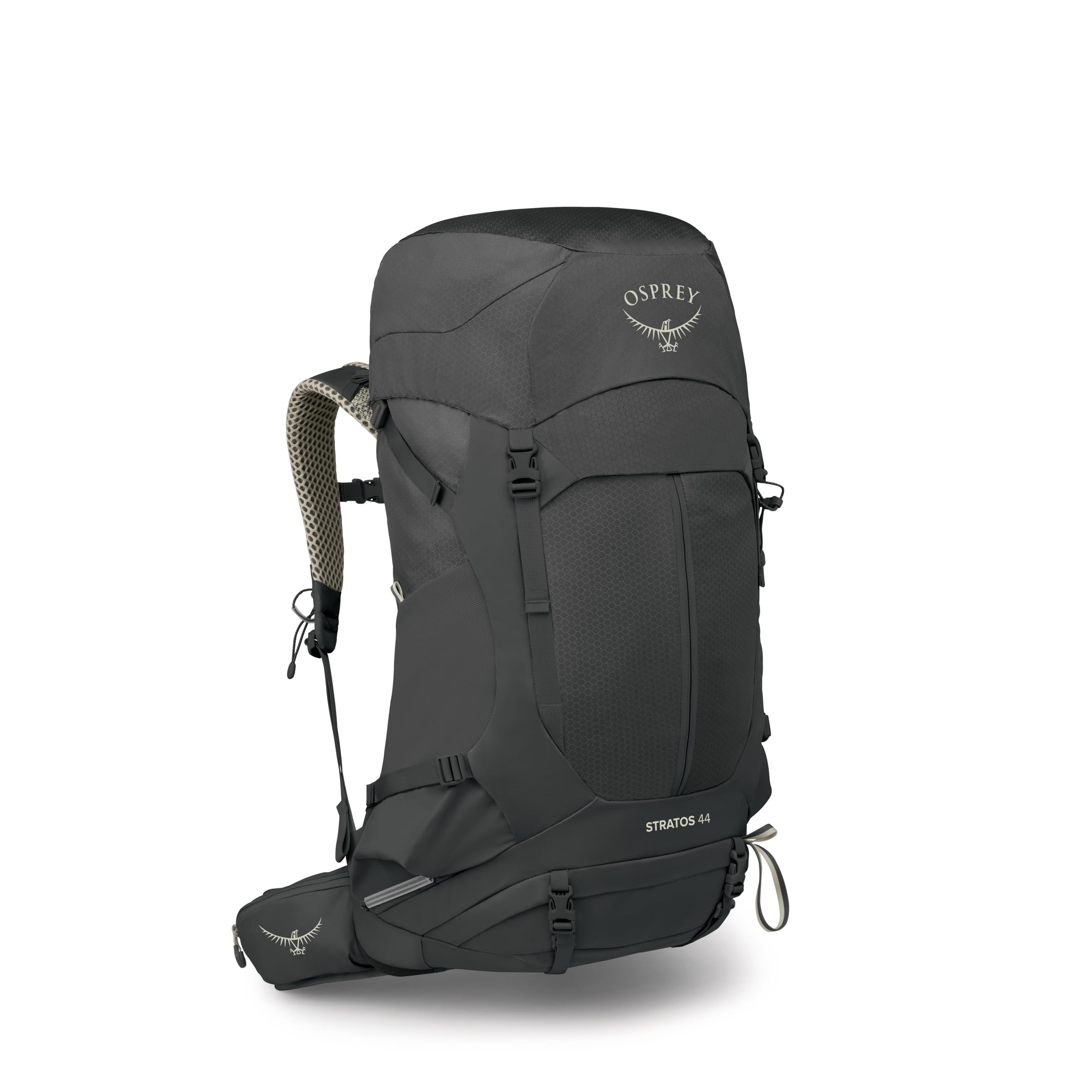
The Stratos 44L uses a LightWire peripheral frame and a mesh trampoline backpanel to keep the load off your spine while maintaining airflow across your entire lower back. At 3.7 pounds, this is a mid-weight framed pack — heavier than frameless ultralight options, but dramatically more comfortable under a 25–35 pound load on uneven terrain. The included recycled nylon raincover lives in its own bottom compartment, so you never forget it when the sky opens up.
Organization is where the Stratos shines. The dual-access main compartment lets you grab items from the bottom without dumping everything out, and the Stow-on-the-Go trekking pole attachment secures poles without slowing your pace. The magnetic sternum strap clicks shut instantly, and the padded ErgoPull hipbelt wraps securely around the iliac crest without pressure on the hip bones. Users consistently report that the adjustable torso length transforms the same pack to fit a 5’8″ hiker as comfortably as a 6’2″ one.
The 44-liter volume hits the sweet spot for a two-night trip with a compact sleep system and a bear canister. It’s slightly tight for a full week of food, but the side compression straps let you lash extra gear externally. The fixed lid has a small zippered pocket for sunglasses and a map, and the two hipbelt pockets are large enough for a phone and a snack bar. This is the pack to choose when comfort on the trail matters more than six extra ounces.
Why it’s great
- Ventilated AirSpeed backpanel keeps sweat accumulation minimal on long climbs
- Adjustable torso length accommodates a wide range of body sizes
- Stow-on-the-Go trekking pole attachment is fast and secure
Good to know
- Hard frame prevents use as a personal item on budget airlines
- Prefers tall, slim water bottles in the side pockets
2. MSR PocketRocket 2 Ultralight Camping and Backpacking Mini Stove Kit
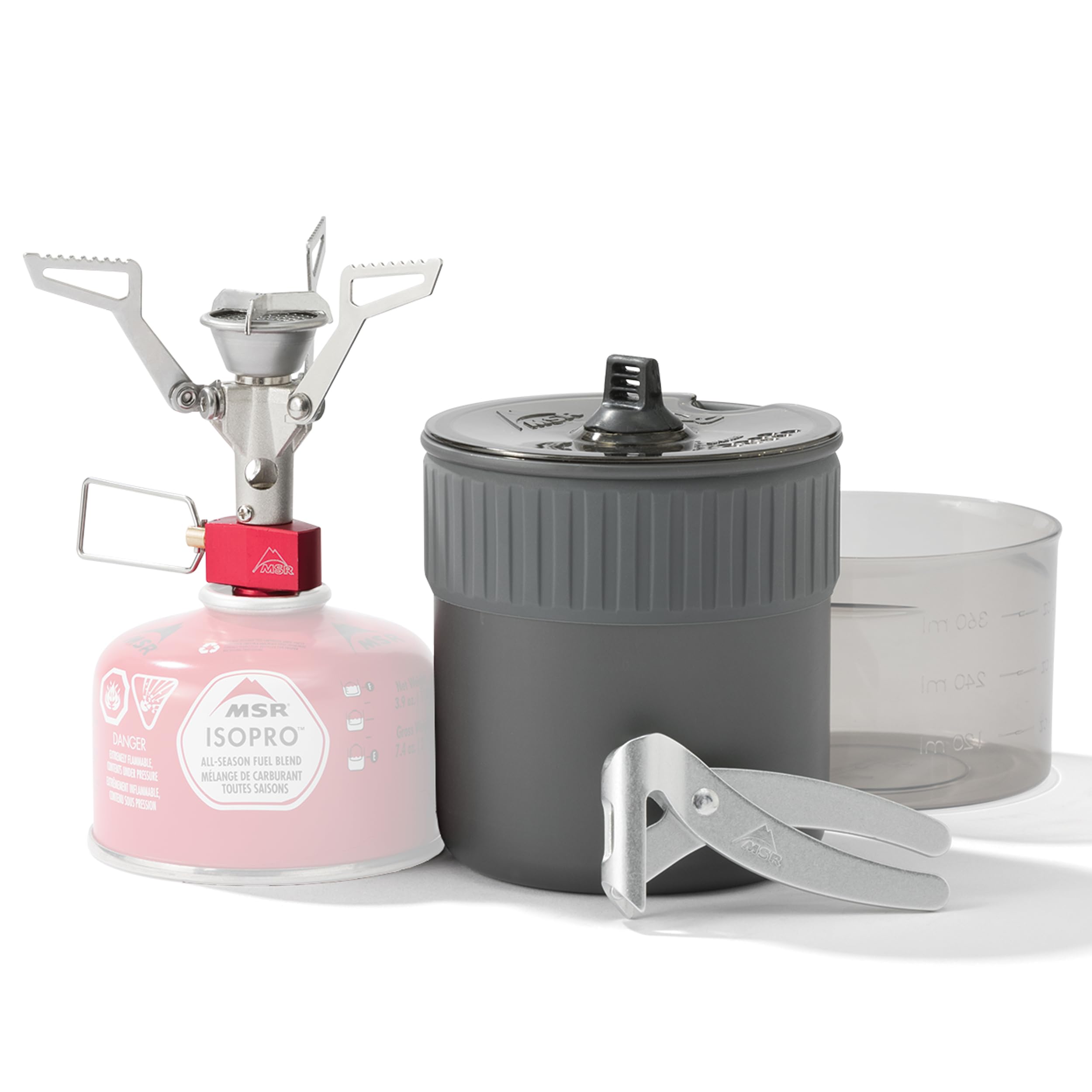
The PocketRocket 2 stove head weighs barely over two ounces and nests entirely inside the included 0.75-liter aluminum pot alongside the fuel canister. The total kit — stove, pot, lid with straining ports, 16-ounce bowl, and pot lifter — fits into a 4x4x5-inch stuff sack that weighs under ten ounces. That makes it one of the most packable cook systems for solo backpackers who want hot meals without carrying a separate standalone stove body.
Boil performance is consistent across a wide range of isobutane canisters. The stove brings one liter to a rolling boil in about three and a half minutes, which is competitive with integrated canister systems like the Jetboil Flash but at a fraction of the weight and bulk. The pot’s insulated grip doubles as an eating vessel, so you don’t need a separate mug. Users report that simmer control is better than most ultra-compact stoves, though the narrow pot base can feel unstable on uneven ground — a careful positioning is recommended.
The stuff sack uses a PFAS-free DWR coating, which is a meaningful environmental upgrade over older DWR treatments. The kit does not include a piezoelectric igniter, so you’ll need to pack a mini Bic or stormproof matches. The plastic bowl on the bottom of the pot should be removed before cooking — direct heat will warp it. For solo trips where every cubic inch matters, this kit punches well above its weight class.
Why it’s great
- Whole cook kit nests inside the pot, saving pack space
- Boils water faster than most standalone stoves under 3 oz
- Simmer control is usable for rehydrating meals gently
Good to know
- Pot sits precariously on small burner head — stirring risks tipping
- No built-in igniter; requires separate lighter or matches
3. TETON Sports ALTOS, 20 Degree Sleeping Bag
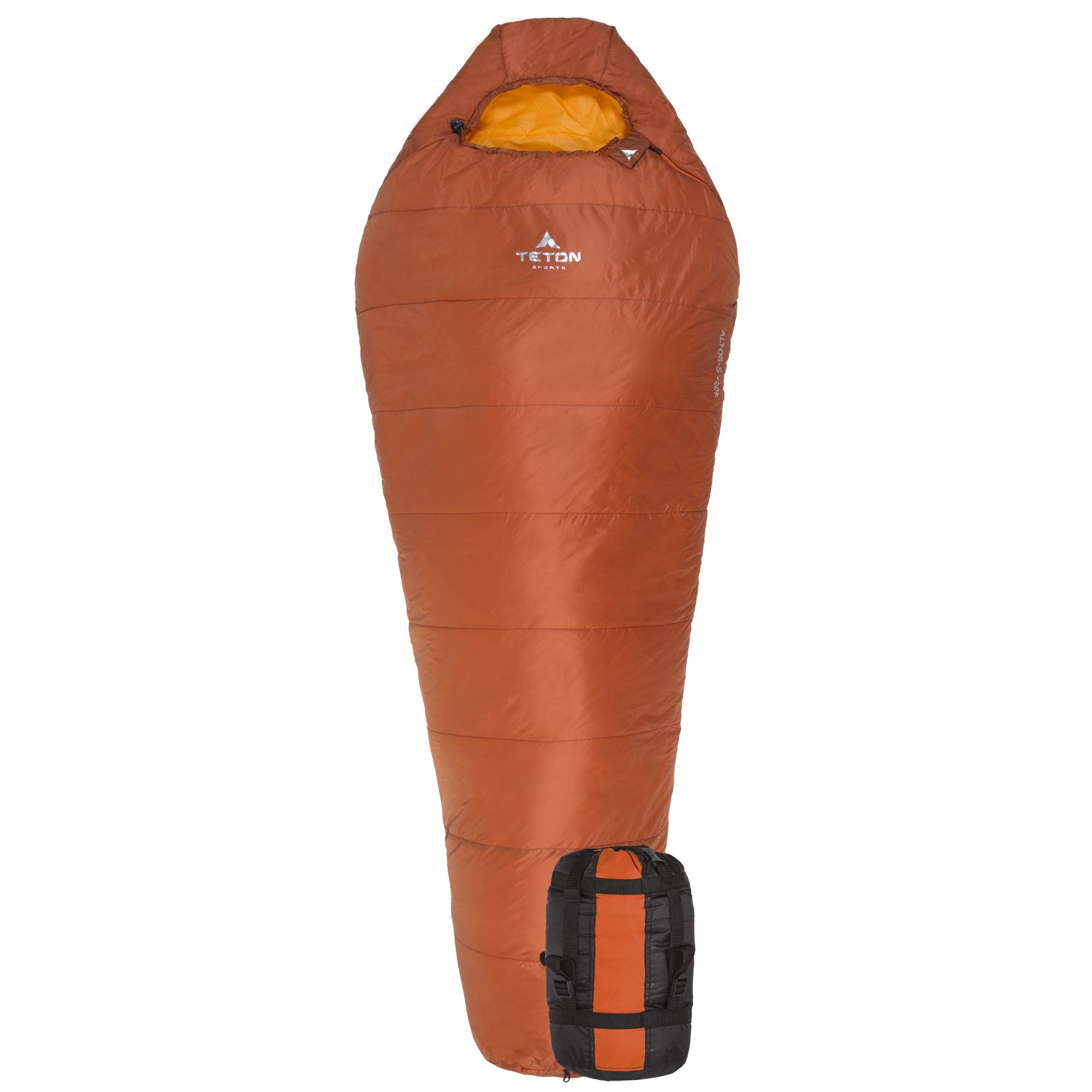
The ALTOS uses Dupont Sonora synthetic fill to deliver warmth that rivals low-fill-power down at a significantly lower price point. Weighing 2.8 pounds and packing down to roughly 11×8.5×8.5 inches in the included compression sack, this mummy bag offers a genuine compromise between packability and cost. Users who have tested it near 28°F with a 4.4 R-value sleeping pad report being warm and comfortable as long as wind was blocked.
The design is roomier than a traditional mummy bag — the built-out footbox gives your toes space to move, and the shoulder girth measures 32 inches across. The polyester ripstop shell feels smooth against skin and resists abrasion from tent floors. A draft tube runs the full length of the zipper, and the hood cinches down around the face to trap heat. Users note that the footbox feels slightly tight for people who sleep with their feet pointed outward, but the extra length in the 84-inch bag accommodates a 6-foot user without compression.
The biggest trade-off is moisture resistance. Synthetic fill doesn’t lose loft when damp like down does, but it also doesn’t dry as fast as hydrophobic-treated down. The bag performs best when paired with a well-sealed tent and a dry sack for storage. The compression sack is well-made with heavy-duty straps, but stuffing the bag requires starting at the foot and working upward to avoid air pockets. For anyone who wants a reliable 20-degree bag without the premium price of down, the ALTOS is the most balanced choice in this lineup.
Why it’s great
- Synthetic fill retains loft better than budget down in damp conditions
- Roomier cut is more comfortable for sprawling sleepers
- Packs smaller than most synthetic bags in its weight class
Good to know
- Comfort rating is realistically around 30°F for cold sleepers
- Footbox can feel restrictive for those who point their toes
4. Teton LEEF Lightweight Mummy Sleeping Bag, 20 Degree

The LEEF is a micro fiber synthetic mummy bag designed around the same temperature floor as the ALTOS, but at a slightly heavier weight and a more accessible price point. Weighing 3.5 pounds with a 30-inch width and 81-inch length, it offers a balance of warmth and durability for hikers who prioritize longevity over pack weight. Users who have spent 60–70 nights in this bag report that the fill resists the lumpy compression that kills loft in cheaper synthetic bags.
The extended footbox gives side sleepers room to sprawl without bunching insulation at the toes. The zipper is smooth with a velcro hood lock that prevents drafts from sliding down your neck. The included compression sack shrinks the bag to roughly a quarter of its loose size, though users consistently note that repacking requires careful technique — layering the bag inside out and pressing out air before cinching the straps. The polyester ripstop shell uses a moss-and-sky color scheme that hides trail grime reasonably well.
The bag also cannot be machine-washed according to the manufacturer’s instructions, which limits cleaning to spot-treating or hand-washing in a tub. For someone building their first three-season sleep system on a tight budget, the LEEF delivers proven warmth and resilience that cheaper entry-level bags often lack. It’s a workhorse mummy that will survive seasons of abuse without failing.
Why it’s great
- Proven durability across 60+ nights without visible loft loss
- Extended footbox and smooth zipper improve comfort at altitude
- Reliable warmth to about 30°F with proper base layer
Good to know
- Repacking into compression sack requires learned technique
- Not machine-washable; cleaning is limited to spot treatment
5. KAZOO Waterproof Backpacking Tent Ultralight 1 Person

The KAZOO 1-person tent uses a single integrated aluminum pole with clip attachments, making setup straightforward even after a long day on the trail. The double-layer construction uses a B3 mesh inner for ventilation and a 210T ripstop polyester rainfly with a 3000mm waterproof rating. Users who tested it through a thunderstorm with frozen rain and light snow reported zero water ingress, thanks to factory-sealed seams and a bathtub floor that keeps ground moisture out.
At 36 inches wide and 83 inches long, the floor area suits one adult up to about 5’10” comfortably, plus a 60-liter pack in the vestibule. The dome shape provides enough headroom to sit upright, though taller users note that inflating a sleeping pad inside requires careful maneuvering. The rainfly includes adjustable vents at the head end for condensation management, and the reflective guy lines help with visibility at night. The tent weighs 3.3 pounds complete with stakes, repair kit, and stuff sack.
The groundsheet is wider than the tent floor, which on sloped terrain can channel water under the fly rather than away from the inner. The outer shell does not attach to the inner mesh at the corners, which slows setup slightly as you align the clip points. The included 14 stakes provide strong wind resistance when fully deployed. For a solo hiker who wants a freestanding shelter under four pounds, the KAZOO delivers solid weather protection at a price that undercuts most comparable models by a significant margin.
Why it’s great
- Freestanding dome design sets up quickly with single aluminum pole
- 3000mm rainfly and sealed seams resist heavy rain and snow
- Large mesh sections provide excellent warm-weather ventilation
Good to know
- Groundsheet extends past fly edge, potentially channeling water underneath on slopes
- Headroom is limited for users over 5’10” sitting upright
6. ZOOOBELIVES Alplive T400 Ultralight Down Sleeping Bag

The Alplive T400 is a 650-fill duck down sleeping bag that compresses to 11×6.7 inches and weighs just 1.7 pounds, making it one of the lightest options in this comparison for warm-weather use. The rectangular shape offers significantly more room to move than a traditional mummy bag, and the envelope design unzips fully to convert into a large quilt. Users report comfortable sleep at temperatures between 40°F and 50°F when paired with an insulated air pad, but the bag-like construction loses heat quickly below that range.
The 20D nylon shell has a durable water-repellent finish that beads up light condensation, and two YKK zippers run the side and bottom for foot venting. Two ZOOOBELIVES bags can zip together to form a double-wide sleep surface, which is a rare feature at this price point. The down has zero detectable odor, which is a concern with low-cost down bags, and the tube-stitched baffles hold the fill evenly without cold spots. The compression sack includes an attached cap that prevents it from getting lost.
The rectangular shape trades thermal efficiency for comfort, so this bag is not suitable for conditions below 45°F without a liner or a serious shelter system. The 20D fabric feels plasticky and rustles against the skin, though users report it’s comfortable when used with a bag liner. The bag’s best use case is as a summer quilt or a lightweight travel blanket for van camping. For backpackers who run hot and want to cut nearly two pounds from their sleep system, the Alplive T400 is an outstanding warm-weather tool.
Why it’s great
- Unzips fully into a rectangular quilt for maximum summer versatility
- Two bags zip together for couples or extra space
- Zero odor from down fill at a very competitive price point
Good to know
- Comfortable only above 45°F — not suited for three-season use
- Fabric feels plasticky and rustles against bare skin
7. Lormandy 8-Pack Straw Water Filter for Camping
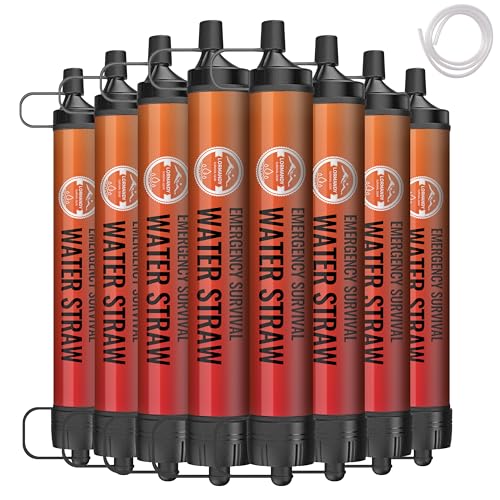
This eight-pack of personal filter straws uses a hollow-fiber membrane with high-precision filtration rated at 0.2 microns to remove bacteria, protozoa, and sediment from surface water. Each straw weighs only 1.6 ounces and has a rated lifespan of 5,000 liters (about 1,320 gallons), which is exceptional for a single-use-sized filter. The kit includes eight straws, one meter of silicone tubing, and eight rope clips, making it suitable for group trips or backup distribution in emergency kits.
The flow rate is about 800 milliliters per minute when sipping, and users can attach the included tubing to a water bottle or gravity bag for hands-free filtering. The BPA-free ABS casing is rugged enough to survive being dropped on rocks, and the straw can be backflushed with the included syringe when the flow slows. Users who tested the filter in mountain streams report that the water clarity and taste were significantly improved, comparable to a Sawyer Mini or similar squeeze filter. The straw does not filter viruses or Cryptosporidium, so it’s best suited for clear mountain streams rather than stagnant or livestock-affected water sources.
The 8-pack format is the key differentiator here. For a family or a small group, distributing one straw per person eliminates the need to share a single squeeze bag and reduces cross-contamination risk. Each straw can also be stored in a get-home bag or EDC kit indefinitely — the manufacturer claims a six-year shelf life. For solo backpackers, a single straw is redundant, but the value per-filter is lower than a dedicated squeeze system. For group trips and emergency preparedness, this is the most efficient way to protect a small team from waterborne illness.
Why it’s great
- 8-pack format enables group hydration without sharing a single filter
- 5,000-liter lifespan per straw provides exceptional service life
- Backflushable design maintains flow rate over extended use
Good to know
- Does not remove viruses or Cryptosporidium
- Included tubing requires cutting into individual straw-length pieces
FAQ
What is the difference between “comfort” and “lower limit” on a sleeping bag?
Can two ZOOOBELIVES bags really zip together into a double?
Does the KAZOO tent require a footprint or groundsheet?
Final Thoughts: The Verdict
For most users, the awesome backpacking gear winner is the TETON Sports ALTOS 20° because it delivers verified 30°F comfort in a lightweight 2.8-pound synthetic package that costs less than half as much as an equivalent down bag. If you want vestibule space and a freestanding shelter for solo trips, grab the KAZOO 1P Tent. And for cooking efficiency on the move, nothing beats the MSR PocketRocket 2 Kit for its sub-10-ounce package and reliable boil performance.