
A dripping door frame every time it rains or a baking-hot entryway in July isn’t just an inconvenience — it’s a slow assault on your home’s exterior. A fixed metal awning solves both problems in one clean installation, channeling rain away from your threshold and blocking the sun’s direct glare before it hits your door or window. The choice comes down to material gauge, tile style, mounting hardware, and projection distance — specs that determine whether your awning still looks tight after the first winter storm or starts sagging by spring.
I’m Min — the co-founder and writer behind Gadgets Feed. I’ve spent hundreds of hours analyzing the structural differences between stamped steel panels, aluminum ripple sheets, and standing-seam configurations to separate the awnings that deliver real weather protection from those that just look the part on Amazon.
Whether you are shading a side door or a wide storefront window, finding the right awning metal porch requires comparing projection depth, panel material, and wind-load capacity side by side.
How To Choose The Best Awning Metal Porch
Picking the wrong awning usually comes down to three overlooked specs: the panel material, the projection depth, and the bracket design. A cheap awning with thin steel and short screws will rattle in a moderate breeze. A well-designed unit with a triangular support frame and stone-coated tiles will stay quiet and solid through years of weather. Focus on these criteria to avoid a second purchase.
Metal Gauge and Panel Type
The thickness of the metal determines how much an awning can resist denting from hail or sagging under wet snow. Look for panels at least 0.6mm thick (aluminum) or 0.8mm thick (steel). Tile-shaped stone-coated steel panels offer the best noise reduction because the sand-textured surface absorbs raindrop impact instead of amplifying it. Smooth ripple or standing-seam panels look cleaner but transmit more drumming sound during heavy rain.
Projection Distance and Slope
Projection is the distance the awning extends outward from the wall. A 24-inch projection covers a standard door threshold and keeps rain off the handle. A 36- to 42-inch projection shields a wider area, including steps or a small landing. The slope angle must be steep enough for water to run off quickly — flat awnings with poor drainage collect debris and accelerate rust. Some premium models offer adjustable tilt angles that let you change the projection and slope seasonally.
Mounting Hardware and Frame Support
The bracket system is the weakest link on budget awnings. Look for triangular steel brackets with at least three anchor points per side, not simple L-brackets. Pre-drilled frames with the main beams already attached to the panels save assembly time and reduce alignment errors. Expansion bolts for concrete and masonry are essential — avoid kits that only include wood screws if you are mounting to brick or stucco.
Quick Comparison
On smaller screens, swipe sideways to see the full table.
| Model | Category | Best For | Key Spec | Amazon |
|---|---|---|---|---|
| DIY DECK 52″ x 31″ | Premium | Heavy weather protection | Stone-coated steel, 31″ projection | Amazon |
| Kozyard Adjustable 82″ | Premium | Adjustable shade angle | Powder-coated iron, 42″ projection | Amazon |
| Awntech Houstonian 80″ | Premium | Standing seam durability | Standing seam steel, 24″ projection | Amazon |
| GDPFN 54″ x 24″ | Premium | Adjustable angle versatility | 0.8mm steel, 24″ projection | Amazon |
| Kozyard 48″ w/ Wings | Mid-Range | Side wind protection | PVC panels, 40″ projection | Amazon |
| RDUIGT Blue 52″ x 31″ | Mid-Range | Stone-coated tile style | Color stone tile, 27″ projection | Amazon |
| RDUIGT Red 52″ x 31″ | Mid-Range | Matching red exterior | Stone-coated steel, 27″ projection | Amazon |
| VEVOR Metal 80″ x 36″ | Budget-Friendly | Wide coverage on a budget | 0.8mm steel, 36″ projection | Amazon |
| VEVOR Aluminum 60″ x 42″ | Budget-Friendly | Lightweight rust resistance | 0.6mm aluminum, 60″ projection | Amazon |
In‑Depth Reviews
1. DIY DECK 52″ W x 31″ H Tile-Shaped Metal Awning
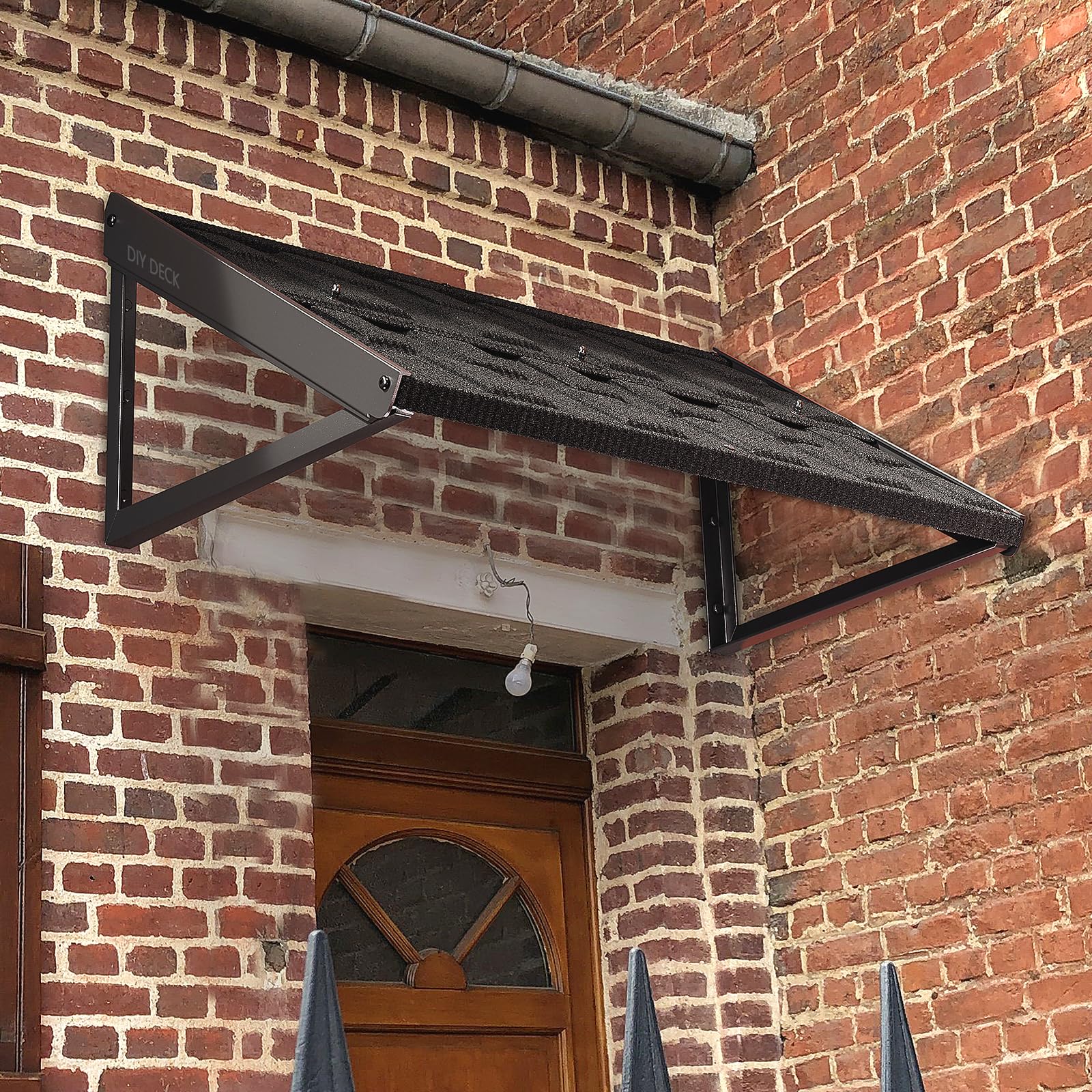
DIY DECK’s 52 x 31 model uses the thickest stone-coated steel panels in this lineup — the sandblasted tile surface dampens rain noise noticeably compared to smooth metal, and the 31-inch projection covers a standard doorway plus the immediate step. The main beams come pre-attached to the tiles, which cuts assembly time roughly in half versus budget competitors that require drilling every bracket from scratch.
The triangular steel brackets are noticeably heavier than the L-brackets found on entry-level awnings, providing three solid anchor points per side for wind resistance. Owners consistently report surviving snow loads and high gusts without rattling. The stone-textured coating adds a matte look that mimics asphalt shingles, making this unit a strong aesthetic match for residential exteriors.
One assembly quirk: the included instructions do not specify the exact masonry bit size for the concrete anchors, which can slow mounting on block walls. The unit is also heavy (the box is large and dense), so planning a two-person install is strongly recommended. For the combination of durability, noise reduction, and visual finish, this is the best all-around choice.
Why it’s great
- Thick stone-coated steel panels reduce rain drumming
- Pre-attached beams make assembly faster than average
- Sturdy triangular brackets hold firm in wind
Good to know
- Missing masonry bit size in the manual
- Heavy unit requires a second person for installation
2. Kozyard Adjustable Door Window Awning 82″ x 42″
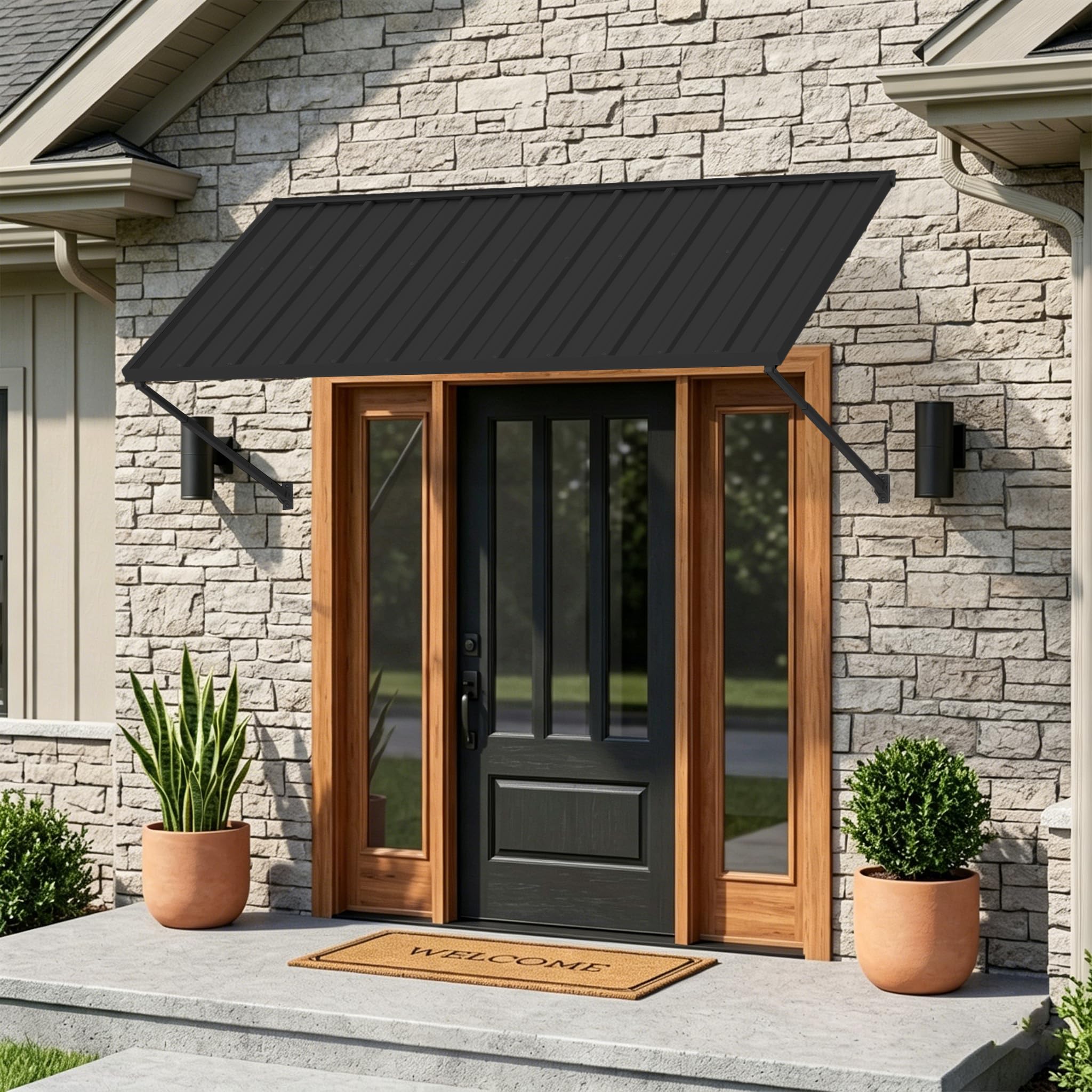
The Kozyard 82-inch wide unit is the only model here with four adjustable tilt positions, ranging from a shallow winter angle to a steep summer setting. The powder-coated iron panels resist rust far better than bare steel, and the 42-inch maximum projection gives you the deepest extended coverage of any premium awning in this guide — enough to cover a wide window or a double door plus the full landing pad.
A built-in front gutter directs rainwater sideways instead of dumping a curtain across the doorway — a detail that matters during windy rain where fixed awnings often let water splash back. The aluminum frame keeps the weight manageable for the size, though the assembly process is involved because the adjustable mechanism adds moving parts. The instructions are clear and many buyers note the finished look rivals custom installations.
The main trade-off is complexity: the 4-level hinge system requires careful alignment during mounting, and the unit needs two people to lift and secure it. The dark gray color is subtle and works with most modern exteriors, but the iron panels can dent if hit directly by large hail. For anyone who wants seasonal control over sun and rain, this is the most functional design available.
Why it’s great
- Four adjustable tilt angles for seasonal control
- Built-in gutter prevents waterfall over the doorway
- Deep 42-inch projection covers wide areas
Good to know
- More complex assembly due to hinge mechanism
- Two-person installation is mandatory
3. Awntech 6′ Houstonian Standing Seam Metal Awning

Awntech’s Houstonian series represents the commercial-grade end of the spectrum — the standing seam panels are formed with interlocking vertical ribs that shed water more efficiently than lap-joint designs, and the 5-year limited warranty is the longest guarantee among these picks. The 80-inch width with a 24-inch projection is optimized for wider single doors or covering an HVAC unit rather than deep overhang coverage.
Owners consistently describe the build as “solid” and note that it has survived multiple seasons of snow and high wind without any flex or panel separation. The included self-tapping screws are the only weak point — several users recommend replacing them with galvanized alternatives to avoid surface rust on the fastener heads. The packaging is excellent and prevents scratches during shipping.
The instructions are somewhat dated and lack clear diagrams for the side trim installation, but an official YouTube video fills the gap. This awning is not ideal if you need a projection deeper than 24 inches — the standing seam profile is not designed for extended cantilevers. For a clean, professional look with proven longevity, the Houstonian is the top-tier option.
Why it’s great
- Standing seam design sheds water efficiently
- 5-year limited warranty backs the build
- Rock-solid frame handles heavy snow loads
Good to know
- Self-tapping screws may rust over time
- Instructions are sparse and dated
4. GDPFN 54″ x 24″ Adjustable Angle Awning
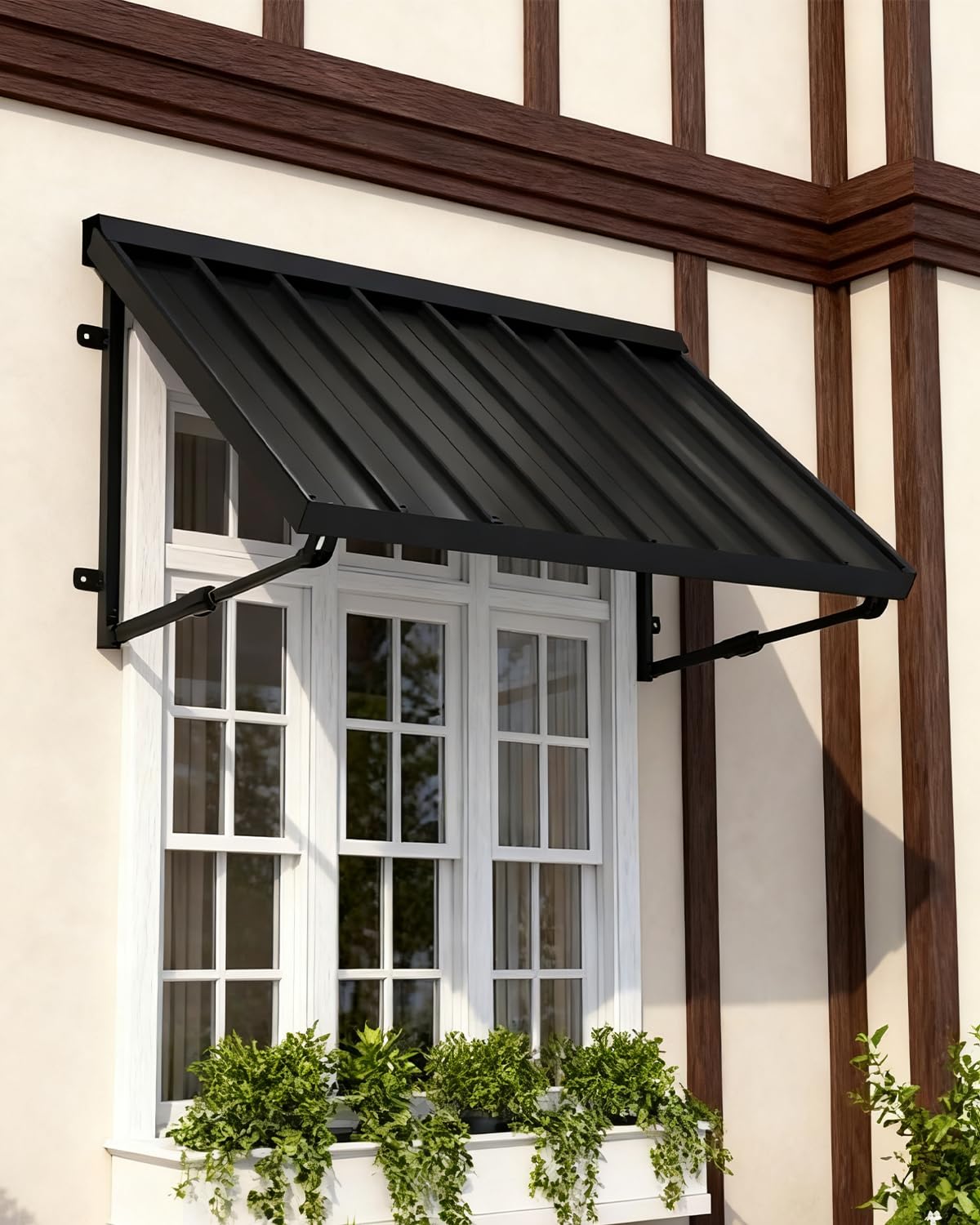
The GDPFN awning brings adjustable-angle capability into the premium tier with a 0.8mm thickened steel panel and adjustable rust-proof joints rated for 54-63 mph winds. The 54-inch width and 24-inch projection fit standard single doors perfectly, and the adjustable bracket system lets you tilt the panel to push summer sun away while opening the angle in winter to let low light pass through.
Buyers praise the immediate reduction in door temperature on sunny days and the fact that the screen door can stay open during rain without water blowing inside. The drainage performance is noticeably better than fixed awnings because tilting down creates a steep runoff path that clears standing water quickly. The classic black finish blends seamlessly with most trim colors.
Assembly is where opinions split — some owners report the parts do not tighten completely, leaving a slight wobble, while others had no issues after using the included video guide. The mismatch between the bracket hole spacing and the wall studs occasionally requires shimming or repositioning. If you need a compact, tiltable awning for a standard doorway, this is a strong contender.
Why it’s great
- Adjustable tilt changes drainage angle on demand
- Thick 0.8mm steel panels resist denting
- Rust-proof joints rated for high wind
Good to know
- Some units have inconsistent bracket fit
- Stud alignment may require shimming
5. Kozyard Window Awning 48″ W x 40″ D with Side Wings
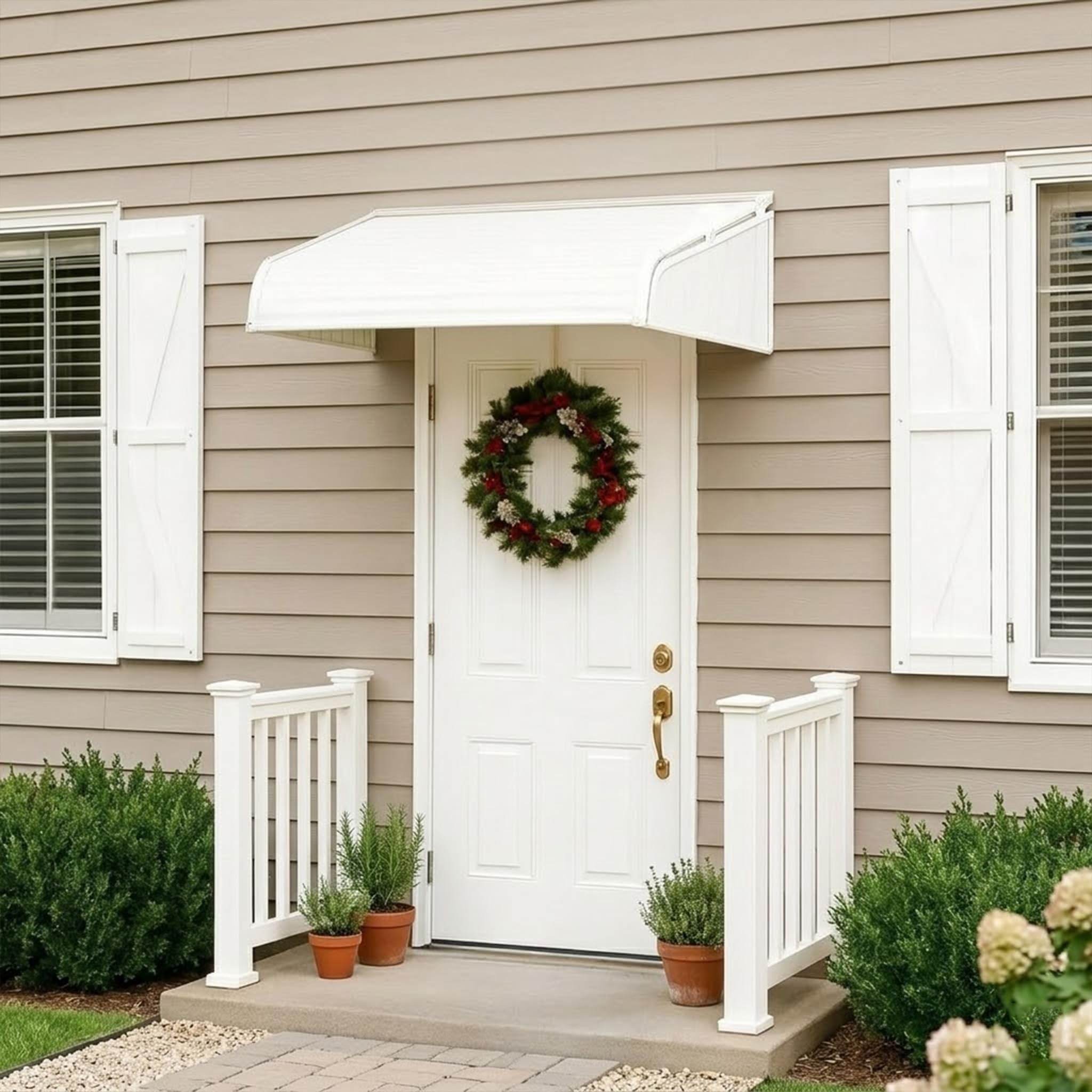
This Kozyard model is the only pick with integrated side panels that block wind-driven rain from curling around the edges — a common failure point for open-sided awnings. The 48-inch width and 40-inch projection pair with two built-in side shields made from impact-resistant PVC panels, creating an enclosed cover that works well over EV chargers, AC units, or side doors exposed to crosswinds.
The aluminum frame is lightweight and corrosion-resistant, keeping the total weight manageable for a two-person install. The PVC slats are waterproof and UV-stabilized, so they do not yellow or become brittle as quickly as lower-grade polycarbonate. Owners consistently note a measurable temperature drop in adjacent rooms after installation, and the snow load rating of 4-5 inches is reasonable for milder winter regions.
The assembly requires finesse — the PVC slats slide into the frame tracks, and missing clips (a reported issue with some units) can leave gaps. The included adhesive for the trim is useless, so picking up exterior-grade silicone sealant beforehand is wise. For covered protection that blocks rain from three directions, this design is unique in this price tier.
Why it’s great
- Side wings block wind-driven rain effectively
- Lightweight aluminum frame resists corrosion
- PVC panels stay UV-stable and waterproof
Good to know
- Some unit batch missing PVC slat clips
- Included adhesive strip is ineffective
6. RDUIGT Blue Fixed Metal Awning 52″ W x 31″ H
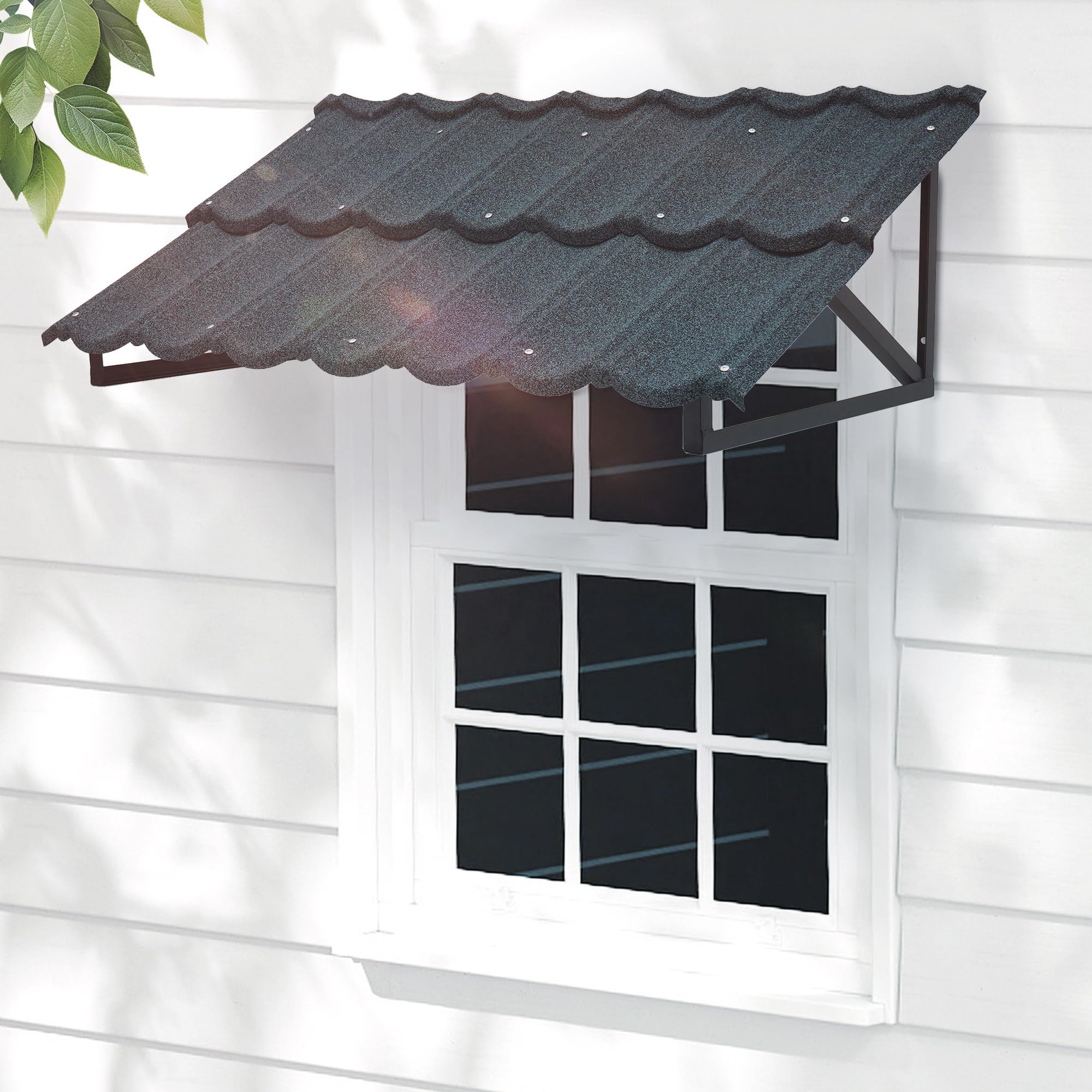
RDUIGT’s dark blue awning delivers the same tile-shaped stone-coated design as the premium DIY DECK model at a mid-range price point. The 52-inch width and 27-inch projection cover a standard exterior door with enough overhang to keep rain off the handle and mail slot. The stone texture adds grip to the surface, which helps deaden the sound of heavy downpours.
Buyers consistently mention that pre-assembling the awning on the ground before mounting saves significant frustration — the bracket-to-panel alignment is easier to manage flat than vertical. The two-piece panel design uses screws at the seam to prevent water leakage, and the powder-coated frame holds up to routine UV exposure without chalking or fading quickly.
The blue color is specific and may not match every home’s trim palette — this is a shade that works best on white, beige, or gray exteriors. Some owners note that the supplied hardware is adequate but not premium, so upgrading to stainless steel screws is cheap insurance. For a colorful, stone-textured awning that quiets rain noise, this is an excellent mid-range pick.
Why it’s great
- Stone-coated tiles dampen rain noise effectively
- Two-piece seam design prevents water leaks
- Dark blue finish stands out against neutral siding
Good to know
- Blue shade is style-specific
- Hardware is functional but not premium-grade
7. RDUIGT Red Fixed Metal Awning 52″ W x 31″ H
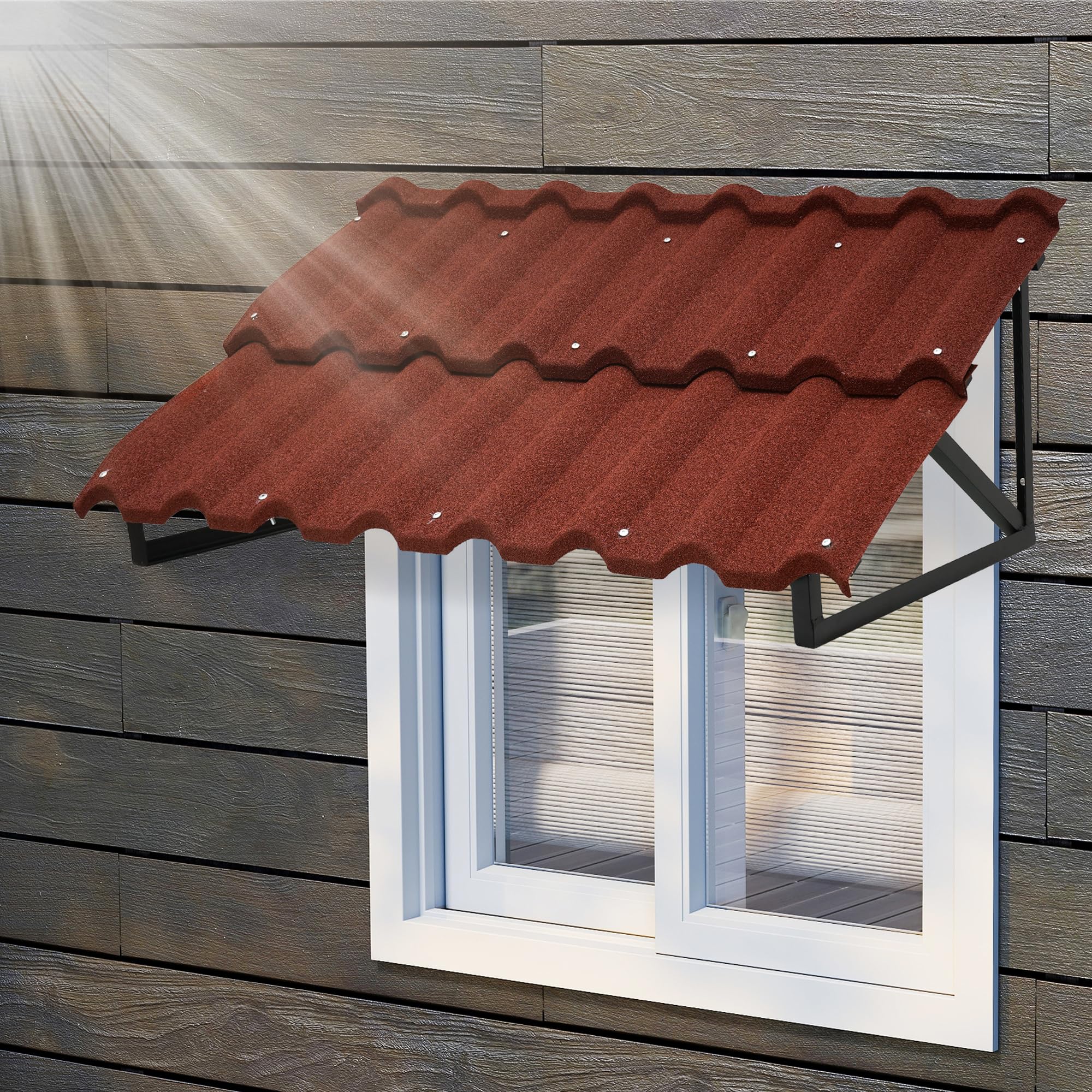
The red variant of the RDUIGT awning shares the same 52 x 31-inch dimensions and stone-coated tile construction as its blue counterpart, making it a direct match for homes with red-toned brick, terra cotta, or burgundy trim. The tile texture and heavy-duty steel frame are identical, so the rain noise dampening and structural rigidity are on par with the best mid-range options.
Owners note that the red color is saturated and does not wash out under direct sun — a common issue with cheaper painted awnings that fade within one season. The powder coating seems well-adhered, and no early rust has been reported in the first year of use. As with the blue version, pre-assembling the entire unit on the ground before mounting simplifies the process significantly.
The same minor limitation applies: the included screws and anchors are adequate but not top-tier, and the bracket design requires careful alignment to avoid visible gaps against the wall. The red finish is less neutral than black or white, so confirm it matches your exterior before buying. For homes that can carry the color, this awning adds real curb appeal.
Why it’s great
- Rich red finish resists UV fading
- Stone-coated tile reduces rain noise
- Steel frame provides solid all-weather support
Good to know
- Red color requires matching exterior trim
- Hardware is adequate but not premium
8. VEVOR Fixed Metal Awning 80″ x 36″
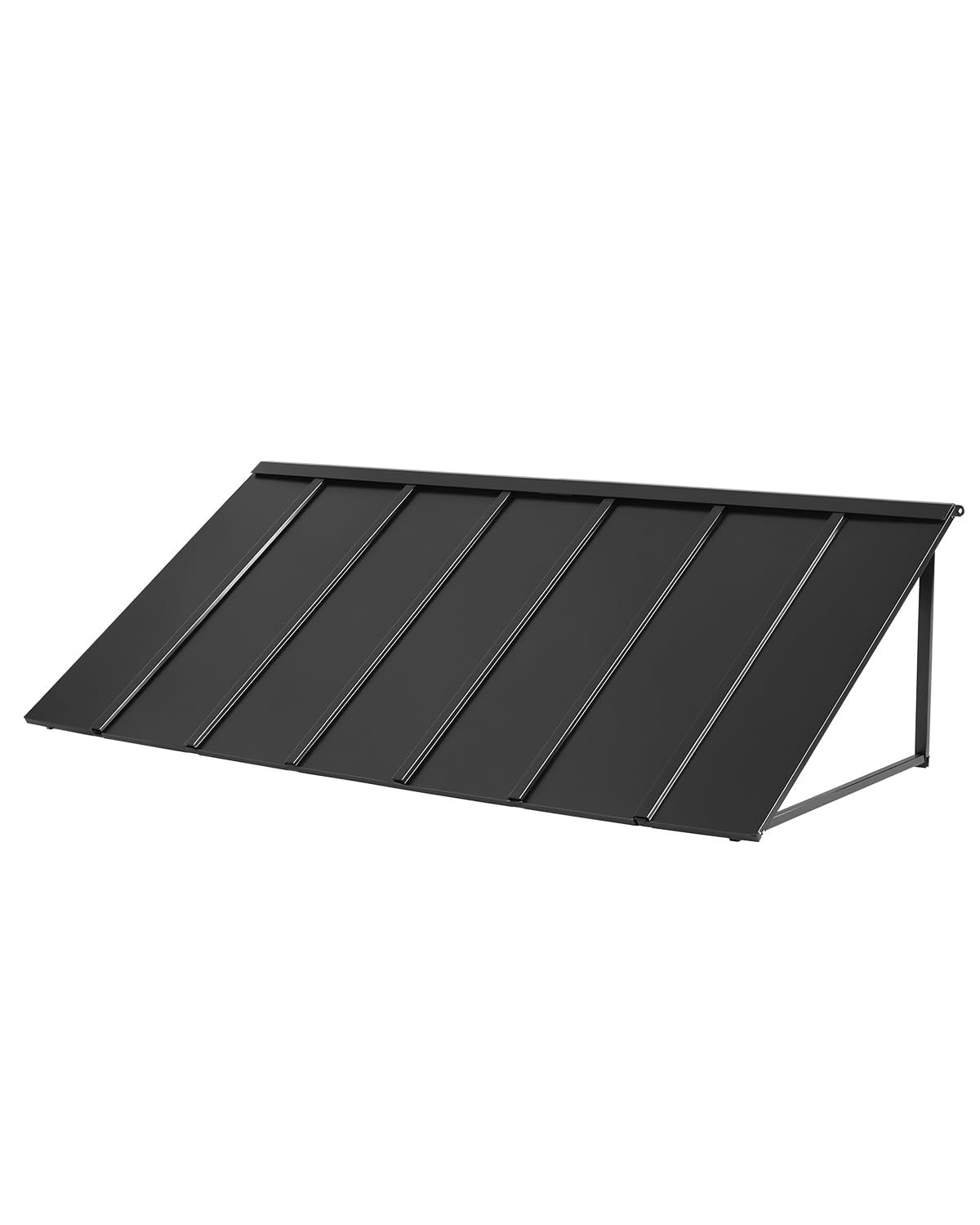
VEVOR’s 80 x 36-inch awning offers the widest coverage in the budget-friendly tier, with an 0.8mm steel panel and a triangular support frame that keeps the structure stable in moderate wind. The 36-inch projection covers French doors or a wide window with room to spare, and the sloped design channels rainwater away from the foundation effectively.
Buyers who installed this over a shed or garage side door report that it looks more expensive than the price suggests, with the black finish blending cleanly into shadows and dark siding. The assembly is straightforward for anyone comfortable with basic tools, though the included zinc-plated screws should be swapped for painted black screws to maintain a uniform look. Some users note minor paint imperfections on the panels, but none that affect structural performance.
The main complaints center on the 80-inch version having non-modular panel sections that do not always align with standard stud spacing, and the center brace can sit slightly uneven if the mounting surface is not perfectly flat. For a budget-friendly option that covers a wide doorway without breaking the bank, this is a solid choice.
Why it’s great
- Wide 80-inch span covers double doors well
- 0.8mm steel provides good dent resistance
- Sloped design sheds rain efficiently
Good to know
- Panels may not align with standard stud spacing
- Center brace can sag slightly on imperfect walls
9. VEVOR Aluminum Awning 60″ x 42″
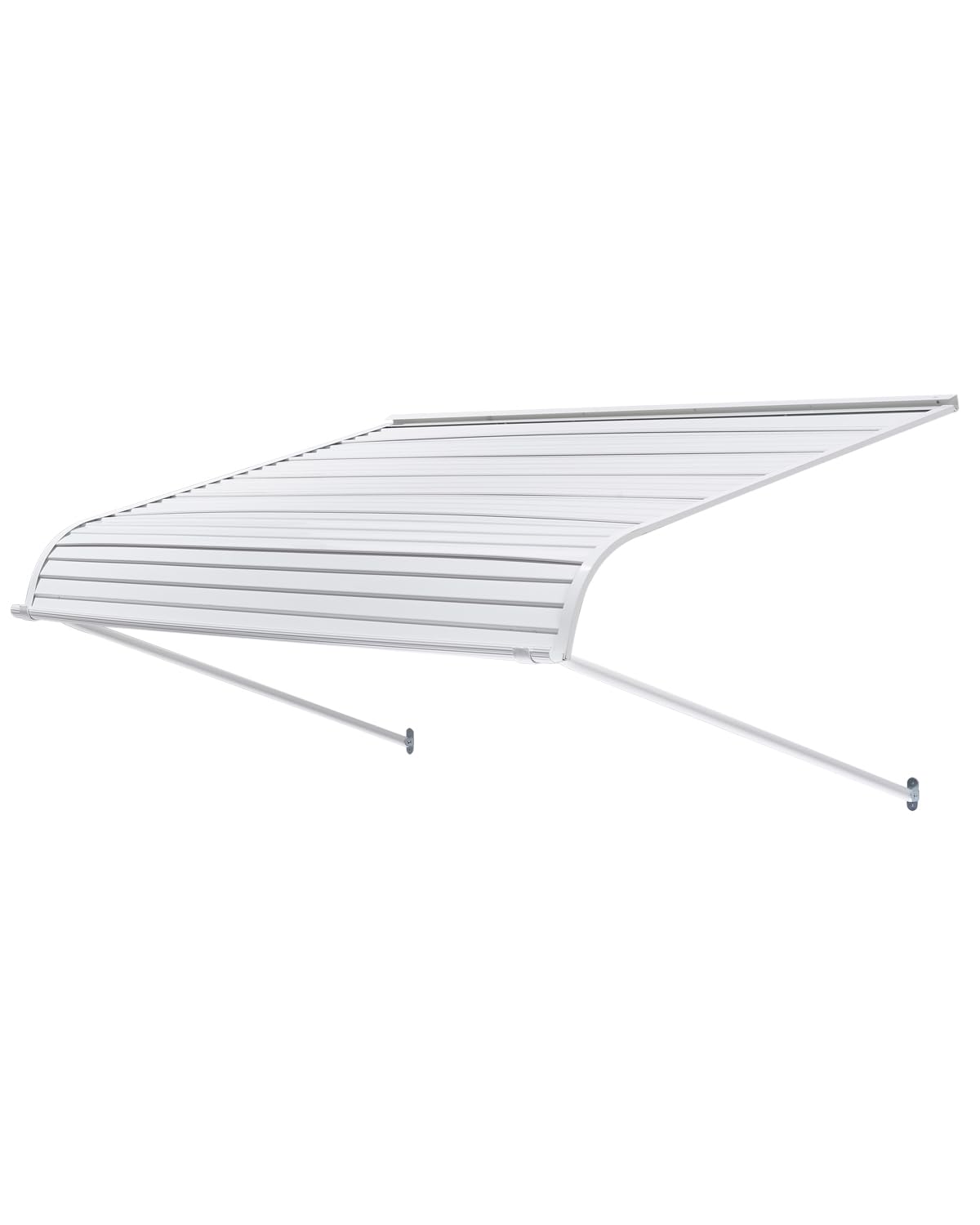
This VEVOR model swaps steel for a 0.6mm aluminum sheet with a 60-inch projection — the deepest reach of any awning in this guide. The 22mm-thick support rods and curved-edge drainage system keep water from pooling, and the white ripple-panel design reflects sunlight better than dark panels, making it a strong choice for windows that face south or west.
At just under 14 pounds, the aluminum construction is significantly lighter than steel awnings, which makes solo assembly feasible if you have a helper just for the final wall mount. The curved edges direct rainwater away from the frame and prevent the rust that often forms on flat cut edges. Owners who replaced old painted metal awnings note that the white aluminum stays cooler to the touch and does not transfer heat to the window frame.
The trade-off for the light weight is reduced dent resistance — a heavy branch or large hail can leave a visible dimple on the 0.6mm aluminum. The assembly instructions rely on vague picture-only diagrams that have frustrated some buyers, and the center support bracket may need bending to fit. For a rust-proof, deep-projection awning that an individual can handle, this is the best budget-friendly pick.
Why it’s great
- 60-inch projection is the deepest available
- Aluminum frame resists rust and corrosion
- Lightweight enough for near-solo assembly
Good to know
- Thin aluminum dents more easily than steel
- Picture-only instructions can be confusing
FAQ
How do I measure the right projection for my door?
Can a metal awning be installed on vinyl siding?
What is the difference between standing seam and tile-shaped panels?
Does an adjustable-angle awning leak at the hinge points?
Final Thoughts: The Verdict
For most users, the awning metal porch winner is the DIY DECK 52 x 31 because its stone-coated steel panels reduce rain noise, the 31-inch projection covers a standard doorway, and the pre-attached beams simplify assembly. If you want adjustable tilt for year-round sun control, grab the Kozyard 82-inch Adjustable. And for a rust-proof, deep-projection option, nothing beats the lightweight VEVOR Aluminum 60 x 42.