
Our readers keep the lights on and my morning glass full of iced black tea. As an Amazon Associate, I earn from qualifying purchases.
Specs are compiled from manufacturer listings and verified buyer reviews and can change over time — please confirm the key details on the product page before buying.
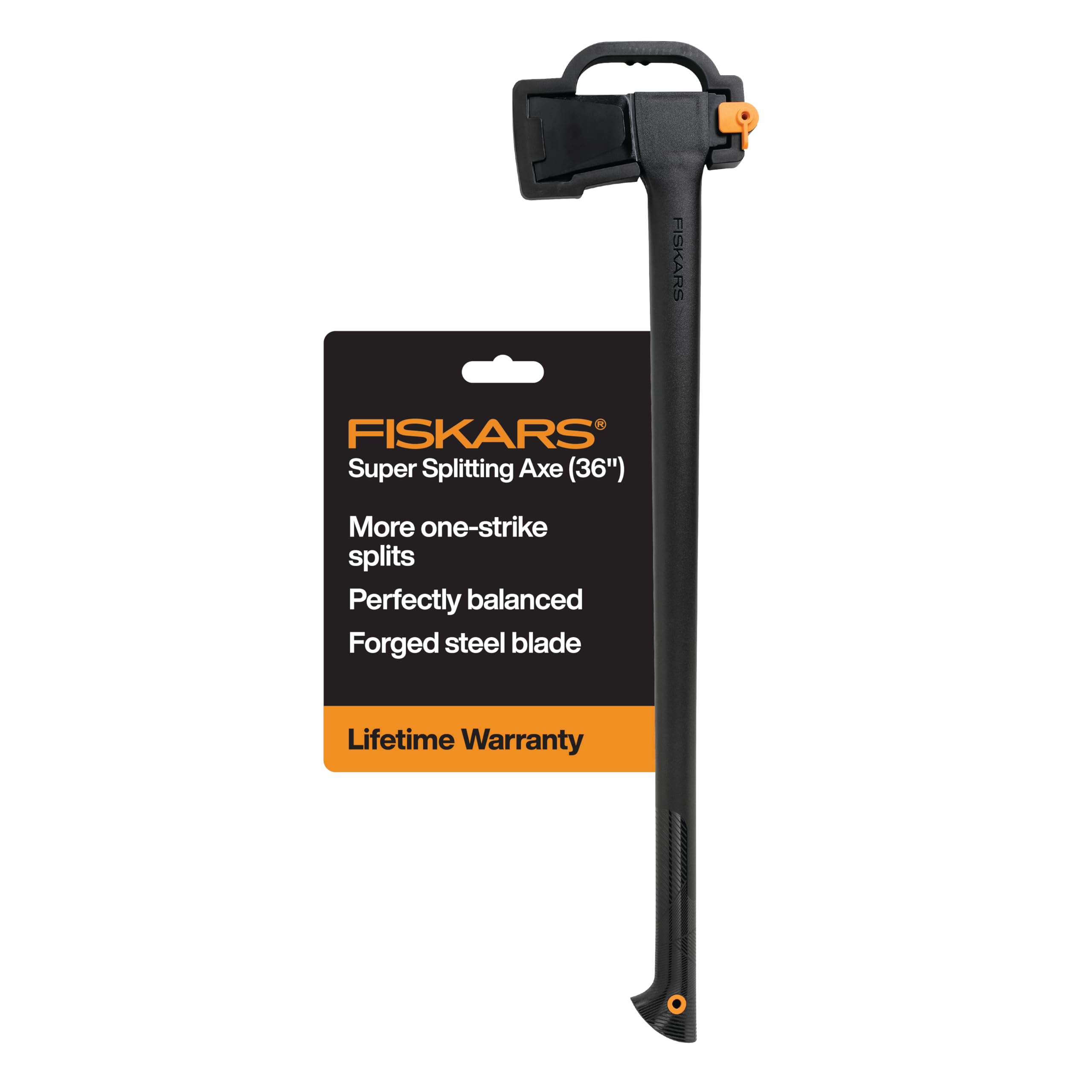
If your firewood pile fights back, the problem is usually the axe, not you — most splitting axes either bounce off seasoned oak or bury themselves so deep you need a second tool to free them. This guide covers nine full-size axes and mauls that split cleanly on the first or second swing, and it tells you plainly which one suits your wood, your height, and your swing. The crowd favorite here is the Fiskars A-Series Super Splitting Axe 36″, at 4.8 stars across 600+ ratings.
I’m Min — the founder and writer behind Gadgets Feed. This guide is built by comparing the manufacturers’ published specifications and the patterns across verified customer reviews, so you get each pick’s real strengths and trade-offs instead of marketing spin.
If you split a stacked cord every winter, this breakdown of the best axe for chopping wood matches each pick to your wood, height, and swing.
Our Picks at a Glance

How To Choose The Best Axe For Chopping Wood
Here is the short version. Match the head weight to your body and the shaft length to your height. Then decide whether you split clean, straight-grained rounds or the knotty, twisted stuff nobody wants. Those two variables decide almost everything about which splitting axe you should own.
Match the head weight to your build, not the wood
A heavier head does more of the work when it lands. But you have to lift it. The 8.5-pound traditional Saxon splitter delivers real power on big rounds — and it is a poor choice if you want to swing for an hour. The 6-pound Fiskars is light enough to keep going but still cracks generous logs.
If you are picking your first dedicated splitting tool, a mid-weight head of around five to six pounds is the sensible starting point. You can always move up once you know your wood and your stamina.
Pick a handle length that fits your height
A longer handle gives you more swing arc, which means more speed at the moment of impact. This matters most for taller users. A 36-inch tool like the Fiskars suits a long reach. A shorter 27.8-inch tool turns into a short, choppy motion for someone with a longer frame.
Shorter axes carry their own advantage. They give better aim, which is why an experienced splitter sometimes reaches for the shorter shaft on precision work.
Read the blade edge and the steel
A convex bevel edge, one that bulges outward before it thins to the cutting edge, pops out of wood more easily than a flat, narrow grind. That is what stops the blade pinching and stalling mid-split. A thin, acute edge bites deeper, but it can get stuck in stubborn rounds.
Forged carbon or alloy steel holds an edge far longer than a low-grade stamped head, so you sharpen far less often. A hardened blade means more swings between touch-ups.
Quick Comparison
| Model | Best For | Head Weight | Overall Length | Handle Material | Amazon |
|---|---|---|---|---|---|
| Fiskars A-Series Super Splitting Axe 36″★ Best Overall | Taller users splitting big logs | — | 37.75″ | Wood / FiberComp | Amazon |
| Hooyman Splitting MaulPremium Pick | Lift-and-drop splitter work | — | 36″ | Fiberglass, Steel, Wood | Amazon |
| THKFWD 27.8″ Splitting AxeBest Looking | Campers and smaller frames | — | 27.8″ | Wood | Amazon |
| Husqvarna Wood Splitting Axe S2800 | Big firewood, low maintenance | 5 lbs | 27.6″ | Fiberglass | Amazon |
| GEDORE OX 620 H-1257 Forestry Axe | Mixed chopping and splitting | 1250 g | — | Hickory, Steel, Wood | Amazon |
| 1844 Helko Werk Classic Forester | Felling and general woodwork | 3-1/2 lb | 31″ | Wood | Amazon |
| THRWCLUB Professional Splitting Axe | Competitive and heavy-duty use | 6 lbs | 32.6″ | Hickory Wood | Amazon |
| 1844 Helko Werk Traditional Saxon | Large rounds and tough logs | 6-1/4 lb | 31″ | Wood | Amazon |
| Gränsfors Bruks Splitting Maul 450 | Thick, knotty chunks | — | 31.50″ | Wood | Amazon |
In‑Depth Reviews
1. Fiskars A-Series Super Splitting Axe 36″, for Medium to Large Size Logs
Our pick — over 4.5★ from 650+ verified ratings; the strongest balance of quality and price.
The long-handled workhorse that turns grown logs into firewood in a single committed swing.
If you are taller than average and tired of a stubby handle cutting your swing short, this is the pick. The Fiskars runs 37.75 inches long — the longest tool here, well past the 27.8-inch THKFWD below — so a full overhead arc lands with real force. That extra length is the whole point for a long-armed splitter. The head weighs six pounds and sits on a shock-absorbing FiberComp handle, so the tool stays light enough to swing all day without the sting of a wooden shaft.
What wins people over is the splitting performance itself — more owners single that out than any other trait. A 66-year-old rural user with fire-pit wood between 10 and 14 inches across reports one swing sending a round to the ground, versus three to five with a regular axe. That is exactly the job this axe is built for. The bevel convex edge, which bulges outward before thinning to the cutting edge, bites deep and then releases, so it does not wedge itself into the wood. The hardened forged steel head keeps its edge longer than a generic stamped blade, which means more splits between sharpenings.
The honest catch is durability at the extreme end. Most buyers report the tool holding up through season after season, but a few describe a chipped or damaged head after hard abuse. Treat mismatched grain and rock-hard knots with respect and this stays a lifetime tool. It arrives ready to use, sharp enough for splitting though not for fine chopping, and the shock-absorbing handle shrugs off overstrikes where a plain wood handle would bruise.
What makes it the top pick
- 37.75-inch length gives taller users a full, safe swing arc.
- Forged steel head retains its edge, so you sharpen far less often.
- FiberComp handle kills the hand sting on solid hits.
- Comes sharp and ready to split straight from the start.
The trade-offs to know
- A few owners mention head chipping after brutal use.
- Not built for fine chopping, only splitting.
- Six-pound head is a load to carry far from the woodpile.
Buy this one if: you want one dependable, long-handled splitting axe that flatters a tall frame and swallows large rounds in one stroke.
Think twice if: you split mostly small kindling or want a tool you can tuck into a pack — the 37.75-inch shaft is a lot of axe to carry.
2. Hooyman Splitting Maul with H-Grip Handle and Sheath
A heavy lift-and-drop maul for splitters who let gravity do the work.
When other axes bounce off a tough round, the Hooyman is the one you grab. Its head is forged from 1045 high-strength steel with a convex grind and an HRC of 45-60 — that hardness rating tells you how well the steel resists denting, so the edge stays sharp through hard use. The 36-inch length gives you the same overhead reach as the Fiskars, but the motion is different: this is a lift-and-drop maul, not an axe you swing like a baseball bat.
Owners rave about the quality and the price-to-value first and foremost, and the durability follows close behind. A splitter who put roughly a cord through it reports no edge dings at all afterward, and clean strikes send logs apart on the first shot nearly every time. The standout design detail is the H-Grip handle, a rubbery coating that turns tacky when wet — in plain terms, the handle gets grippier the more your palms sweat, so it does not slide mid-swing.
Here is the part to weigh up. The rubber near the head wears with heavy use over time, and the sharpness and durability get split reactions overall. Fit matters too: this maul rewards a controlled lift-and-drop and punishes a full axe-style swing, so a beginner used to flinging the head overhand will not get the best out of it. Use it as intended and the raised rubber strip protects the haft when you misjudge a strike.
Swing method matters: this is built for the lift, aim, and drop technique, not a wild overhand chop. Commit to that motion and the heavy head hits true and fast.
Long-haul note: the handle rubber wears where your palm grips near the head — cosmetic rather than structural, and it does not stop the tool working.
Reach for this if: you want a sturdy maul for blunt, powerful, lift-and-drop splitting on straight-grained rounds.
Look elsewhere if: you prefer to swing an axe fast and repeatedly — this weight and swing style favor control, not speed.
3. THKFWD 27.8″ Splitting Axe with Lichtenberg Wood Handle
The showpiece splitting axe — pretty enough to display, portable enough to camp with.
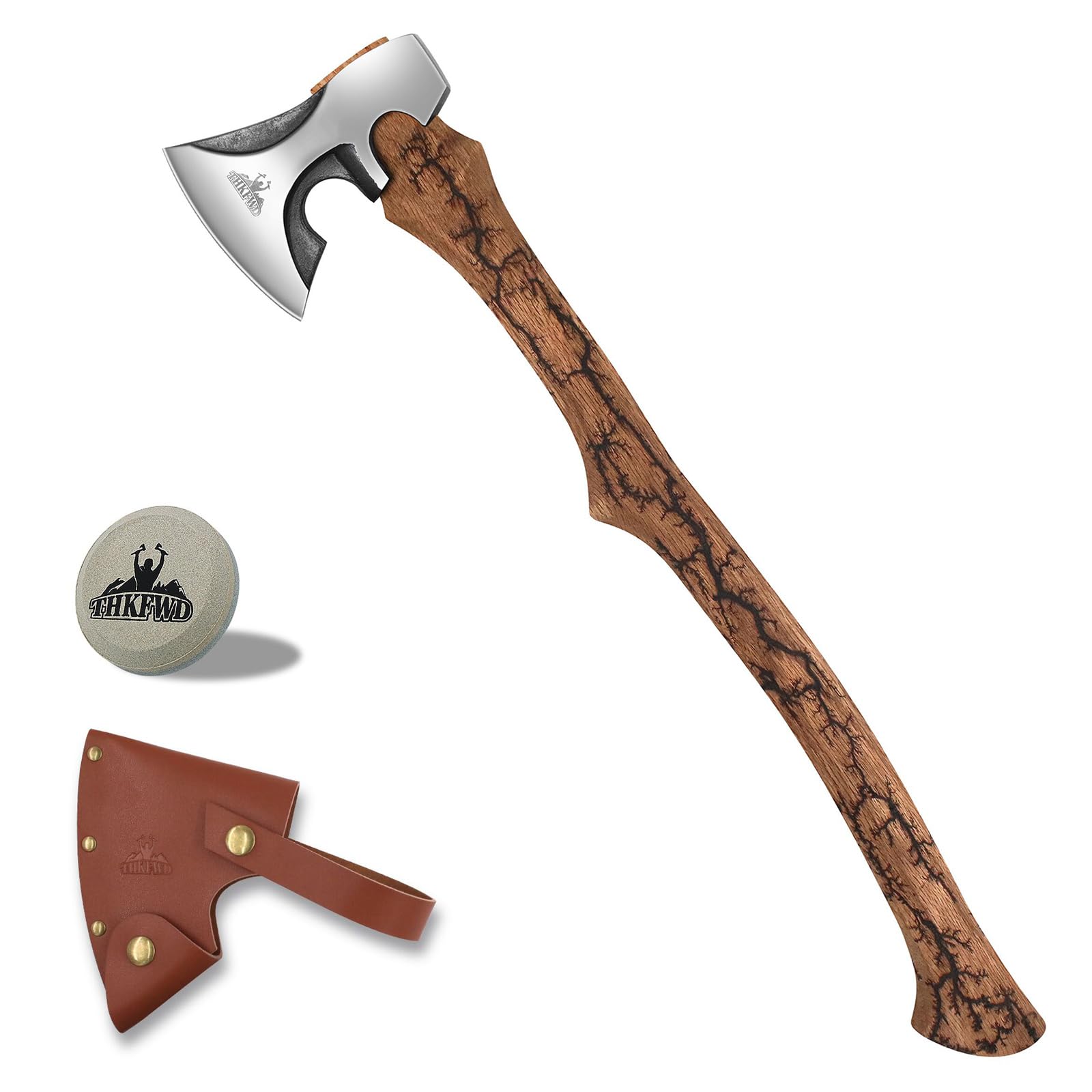
This THKFWD is the cabin-and-campsite charmer of the group. At 27.8 inches long and 6.7 inches wide, it is the most compact full-size axe here — a full 10 inches shorter than the 37.75-inch Fiskars, which makes it easier to aim and to pack. The Lichtenberg pattern burned into the wood handle gives it a look buyers openly call beautiful, and the axe arrives with a leather sheath that has a belt hole plus a sharpening stone. The head is forged from 1065 high-carbon steel, heat-treated to hold an edge longer than a run-of-the-mill stamping.
The feedback on this one is warm and slightly divided. Owners love the feel — an easy, controlled swing that a smaller-framed user finds manageable, thanks to the ergonomic grip. The blade-heavy balance drives the wedge through the wood, and the polished edge can be touched up with a file when it dulls. It handles splitting without needing to be razor-sharp, which suits anyone who splits more than they chop.
Two honest caveats. The edge does dull faster than a premium forged head, so plan to sharpen it more often. And the durability story is a lottery at the tail end — most buyers are delighted, but at least one describes the head shearing off early, and a handle failure has been reported inside the first year. The good news is the seller response: a replacement gets shipped within days when something goes wrong. Weigh that against the fact that this is genuinely one of the best-looking tools in the lineup.
The eye-catcher: the Lichtenberg wood grain and belt-loop leather sheath make this the axe people show off, not hide under a tarp.
The reality check: a shorter 27.8-inch handle means less leverage than the long Fiskars, and the edge wants regular attention to stay sharp.
Best for: campers, gift-givers, and smaller-framed splitters who value a manageable swing and want a sharp, handsome tool in the bag.
skip it if: you split cords of hard, knotty rounds and want the longest handle and the least sharpening — a heavier forged head serves you better.
4. Husqvarna Wood Splitting Axe S2800

The set-it-and-use-it splitter for people who would rather not fuss over their tools.
A five-pound coated steel head on a fiberglass composite handle, and a build that asks almost nothing of you between sessions. The head is coated to slice more freely and resist the drag that a rough finish creates, while the 27.6-inch length sits mid-pack — shorter than the 36-inch Hooyman, longer than a hatchet. That balance is the reason it wins over anyone who wants a tool that just works.
Buyers keep praising how sturdy and durable it feels. This axe does not need coddling: the head will not loosen and the handle will not warp or splinter, so you can leave it by the woodpile without a care routine. Even with its five-pound head, it stays light enough to swing for long stretches. An experienced splitter rates it tough enough to survive the occasional missed swing — the usual killer of cheaper axes. One 70-year-old owner, a woman, says she swings it easily. For splitting bigger firewood, it does exactly what it promises.
The catch is weight and reach. Even fans call it heavier than expected, and one long-armed user wanted six more inches of handle to match their frame. If you are tall, the Fiskars’ 37.75-inch shaft above may suit you better. If you want a low-maintenance tool and a shorter, easier swing, this is the balance.
Why it earns its spot: fiberglass handle and coated head mean no warping, no loosening, and no maintenance ritual — a grab-and-go splitting axe.
The honest caveat: it feels heavier in hand than the spec implies, and shorter-armed buyers may want more handle length for a longer, more powerful swing.
Ideal for: the splitter who wants dependable, weather-proof performance on larger firewood with zero upkeep.
Look past it if: you are tall and want maximum leverage — a longer handle will serve your swing better.
5. GEDORE OX 620 H-1257 Multipurpose Forestry Axe with ROTBAND-Plus
The do-everything forestry axe for splitting firewood one day and limbing branches the next.
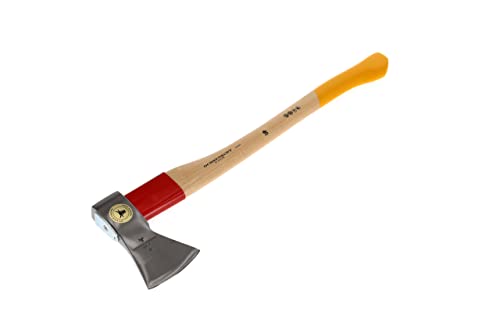
Most axes on this list either split or chop; the GEDORE OX 620 does both. That versatility comes from the ROTBAND-Plus system, which bonds the handle and head into one unit — think of it as a metal collar and anchored joint that keeps the head locked on, even when you miss and hit the haft. The head weighs 1250 grams on a hickory handle, with a fine-polished alloy steel blade and a steel sleeve that shields the wood if your aim slips.
Craftsmanship is what owners notice first — the finish and balance feel like a serious working tool, not a wall hanger. An arborist who uses one daily calls it durable enough to take a year of abuse, and notes it flips easily when switching between wedge-banging and cutting. That in one tool is the whole appeal: it chops branches and splits moderate firewood without skipping a beat. It is also heavier in the head than the length, which helps it bite on angled rounds.
Two flaws to know. It needs sharpening before the first real use — one owner had to strip a clear protective paint off and hone it from the start. And the included sheath is thin and cheap, so you will likely upgrade that. The weight also splits opinion: some find the head too light for the handle, giving an odd balance just below the head. If a single, dedicated splitter is your goal, a heavier forged head is better; for mixed forestry work, this is a beautiful compromise.
Built to take hits: the ROTBAND-Plus joint and steel handle sleeve protect the haft from overstrikes — the exact damage that breaks cheaper axes.
from the start: budget time to sharpen it and clear the protective coating first, and expect to replace the thin factory sheath.
Pick this up if: you want one high-craft axe for a mix of limbing, brush clearing, and firewood splitting.
Leave it if: you split heavily and only split — a purpose-built, heavier splitting head will crush rounds faster.
6. 1844 Helko Werk Germany Classic Forester Full-Size Felling Axe (10495)

A hand-forged felling axe for the cabin owner who wants a tool to hand down.
This is the axe for cutting and taking down trees more than pure splitting — the 3-1/2 pound head provides enough heft for felling work on medium and large trees without over-encumbering the average user. The head is hand-forged in Germany from C50 high carbon steel at 53-56 HRC, that hardness scale number indicating a blade dense enough to hold a keen edge and resist rolling. The 31-inch Grade A American hickory handle is sanded to 150 grit and finished with boiled linseed oil, which is a natural oil that soaks into the wood and keeps it conditioned.
Quality and craftsmanship are what buyers praise most — the drops from hand-forging show up as an individual, tuned tool. Customers note it splitting hard mesquite cleanly, with blade finishing far above typical hardware-store axes, and a large, tall head that suits short, powerful strokes. One owner notes the handle fits larger hands well. It ships with a full-grain leather sheath and a one-ounce bottle of Axe Guard oil to keep rust off the head.
The recurring gripe is the sheath: a user notes it can pull back and expose the edge, which is a genuine safety concern and worth replacing. Heavier than some expect, and a touch rough on the handle until you sand and oil it to taste. Durability lands mixed overall — many report a lifetime tool, while a few have seen the handle crack within months. Felling performance, too, splits opinion: superb on some trees, less convincing on others. This one earns its place if you value craft over raw splitting brute force.
Why it earns a spot
- Hand-forged German C50 carbon steel at 53-56 HRC holds a keen edge.
- Grade A American hickory handle, sanded to 150 grit and linseed-oiled.
- Ships with a leather sheath and protective Axe Guard oil.
What to weigh up
- Factory sheath lets the edge pull back and expose — replace it.
- Heavier than expected and needs a little sharpening from the start.
- A few reviewers point out the handle cracking within months of use.
Choose this if: you cut and fell trees on a property and want a hand-forged general-purpose axe with heirloom build quality.
Pass on it if: your only job is splitting seasoned firewood rounds — a dedicated splitter like the Saxon below does that faster.
7. THRWCLUB 32.6 Inch Professional Wood Splitting Axe (Head 6 lbs)

A timbersports-flavored chopper with a big, polished head and a serious 6-pound swing.
Built with a 6-pound high carbon steel head on a 32.6-inch hickory handle, this THRWCLUB carries a racing-axe pedigree aimed at competitive events and demanding outdoor work. The blade runs 7.5 inches on a 32.6-inch overall length, and the whole tool weighs 7.72 pounds — heavy enough to deliver force on a big swing but light in the hand for its size. The polished finish is not just cosmetic: a smooth surface glides through wood with less friction and resists rust besides.
Buyers rate the overall quality of this axe highly. It arrives with a thickened full-grain leather sheath plus a dual-sided sharpening stone with its own case and two spare handle inserts, so you are set up to maintain it from day one. One owner used theirs for off-roading and put about a cord of wood through it, chopping 4-inch birch and pine with minimal sharpening. Another split a cord and considered the quality overkill for the job, which is a good problem to have.
The catch is a consistency question. The sharpness feedback splits: several owners praise a razor edge, while one received a dull blade with a flat edge. A more serious note from a single user is that the head and stamp were mounted upside down, upsetting the balance — that is a manufacturing miss rather than a design flaw, but worth inspecting on arrival. The handle runs a touch wide for some hands, though it can be adjusted. Striker geometry and fit vary, so check yours before you commit it to hard work.
What you get in the box: the axe, a full-grain leather sheath, a dual-sided sharpening stone with case, and two spare handle inserts — a complete maintenance kit.
Check on arrival: inspect the edge and head mounting before use, since a small number of units have shipped dull or with the head set the wrong way up.
Good fit if: you want a big, polished, competition-style splitting axe with the maintenance kit included.
Rethink if: you want guaranteed out-of-box sharpness and set balance — verify those the moment it lands.
8. 1844 Helko Werk Germany Traditional Saxon Heavy Log Splitting Axe (13588)

The heavy-round specialist that splits like a maul but balances and swings like an axe.
When a round is too big and too knotty for a normal splitter, the Saxon is what you reach for. It carries a 6-1/4 pound C50 high carbon steel head on a 31-inch Grade A hickory handle, and the total package weighs 8-1/2 pounds. The hand-forged German head, hardened to 53-56 HRC, is designed to deliver powerful strikes without pinching or getting stuck in the wood — the exact failure that stops lighter axes cold. There is even a small turnaround hook on the heel that lets you roll a log without bending down to grab it.
Owners describe it as a beast that performs better than a heavier 8-pound maul. The head shape prevents sticking, and one user reports 6-inch logs flying apart while 12 to 14-inch rounds split in three to four blows. After a seven-hour session on wet, knotty wood, the same user reports the edge still sharp and the head still tight. Long rounds that shatter three to five feet apart are the norm here. The build ages gracefully too — the wooden handle takes on character, and the forged steel holds an edge season after season.
The trade-off is weight and length. An 8-1/2 pound tool is a lot to lift, so this is not for all-day, every-log splitting; it is for the tough rounds you save it for. A shorter handle gives precision but costs a little swing power, and one owner wanted more length for heavy levering. Some units also arrive dull, so plan a sharpening session before the first big log. Get past that and it is among the most rewarding splitters you can own.
The power story: a 6-1/4 pound head that out-splits heavier mauls because of its edge geometry and no-stick head shape.
The weight reality: at 8-1/2 pounds it is a save-it-for-the-big-rounds tool, and sharpening from the start may be needed.
Perfect for: the splitter facing a mountain of large, gnarly rounds who wants maul power with axe control.
Not for you if: you split light rounds all afternoon — the 8-1/2 pound load will wear you out.
9. Gränsfors Bruks Splitting Maul 450 (31.50 Inch)

The Swedish heirloom maul that splits the hardest knots and comes sharp from the box.
Made in Sweden with a 31.50-inch handle and a 7-pound overall weight, the Gränsfors Bruks 450 is built for splitting very thick and knotty chunks of wood. The head is forged from alloy steel with a convex edge, the outward-bulging grind that bites deep yet releases cleanly so it does not jam. It comes with a vegetable-tanned leather sheath and an English-language Axebook. This is the attention-to-detail tool in the lineup — the kind of build an owner keeps for decades.
Buyers rave about the quality above everything else. They call it an heirloom tool that splits wood like a dream, and they say it arrives razor-sharp right from the start — much sharper than expected, with built-in grip ridges and a metal collar that protects the handle from overstrike damage. One collector names the overstrike plate as the detail that separates it because it extends handle life. A long-time splitter reports it handles even the hardest woods, sails through wet 12-inch oak in a single controlled swing, and is still razor sharp after a full day of work.
Now the caveats, fairly stated. It is expensive, and while many call it worth it, opinions on value are genuinely mixed. The head rusts easily, so a quick wipe with a nylon pad and a coat of protective oil keeps it clean. The sharp, thin edge can stick deep in stubborn cross-grained rounds and need a wedge to free — the flip side of that keen bite. And a shorter handle makes a full overhead swing harder for some users. None of that dents its standing as a top-tier maul, but it is a tool that rewards care.
Why owners treasure it
- Arrives razor-sharp and stays that way through knots and dense wood.
- Metal overstrike collar protects the handle from missed swings.
- Convex alloy steel edge splits thick, knotty chunks cleanly.
- Includes a vegetable-tanned leather sheath and an Axebook.
Keep in mind
- Premium price and genuinely mixed value opinions.
- Head rusts easily and needs regular oiling to stay clean.
- The thin edge can stick in stubborn cross-grained rounds.
The pick for you if: you want a made-in-Sweden maul that arrives sharp, splits hard knots, and lasts a generation.
Weigh the cost if: you split casually or dislike tool maintenance — this one wants oiling and care to stay at its best.
Understanding the Specs
Head Weight: The Real Power Number
Head weight is the mass doing the splitting work. A heavier head drives deeper on impact, which is why a 6-1/4 pound Saxon head crushes rounds a lighter tool can only dent. But weight cuts both ways: the 8.5-pound Saxon is a save-it-for-the-big-log tool, not one you swing all afternoon. For most people, a five to six pound head is the balance point between power and stamina. Buyers focused on long sessions tend to favor the lighter end, while those breaking up dense, knotty wood reach for the heavier heads.
Handle Length: Leverage and Arc
Handle length controls how much speed you build before impact. A longer shaft like the 37.75-inch Fiskars gives a taller user a full swing arc and more force at the wood. A shorter shaft like the 27.8-inch THKFWD gives better aim and packs down smaller, but costs you leverage. If you are tall, a short handle forces a cramped, choppy motion that both tires you and hits softer. Match the handle to your height and the tool works with you instead of against you.
Blade Geometry and Steel
A convex bevel edge bulges outward before thinning to the cutting point, which lets the blade pop free of the wood instead of pinching. That is what separates a splitter that keeps going from one you have to pry out with a second tool. The steel matters just as much: forged carbon and alloy heads hold their edge far longer than a low-grade stamped blade, so you spend more time splitting and less time sharpening. A 53-56 HRC hardening indicates a dense, wear-resistant head built to keep cutting.
Handles and Overstrike Protection
The handle takes the abuse you never plan for — the missed swings that can crack a haft. Fiberglass composite handles shrug off weather and the odd overstrike, which is why the Husqvarna and Fiskars keep working with minimal care. Wood handles like the hickory on the Helko Werk axes feel warmer and age gracefully, but want conditioning with oil to stay strong. A metal sleeve or collar around the top of the handle, like the one on the Gränsfors and the GEDORE, is your best insurance against breakage.
FAQ
What is the difference between a splitting axe and a chopping axe?
Is one swing enough to split a log with these axes?
How long should the handle be for a splitting axe?
Do I need to sharpen a new splitting axe from the start?
What does the HRC number on a steel axe head actually mean?
Can I use a splitting maul to fell a tree?
How do I stop a splitting axe from getting stuck in the log?
Is a fiberglass handle better than wood for a splitting axe?
How much does head weight affect who can use a splitting axe?
Do these axes come with a sheath?
Final Thoughts: The Verdict
For most people, the best axe for chopping wood is the Fiskars A-Series Super Splitting Axe 36″. Its 37.75-inch handle and six-pound forged head split large rounds cleanly, and the shock-absorbing handle keeps swinging comfortable all day. If your rounds are the huge, knotty kind that laugh at ordinary axes, step up to the 1844 Helko Werk Traditional Saxon and let its 6-1/4 pound head demolish them. And for anyone who wants a low-maintenance splitter that shrugs off weather and missed swings with zero fuss, the Husqvarna S2800 is the one to reach for.
How We Picked
We do not accept paid placement. Every pick is matched to a real buyer and a real use-case; we do not hands-on test units.
Sources & Methodology
Specifications: manufacturer listings and product documentation. Review insights: verified customer reviews, as of September 2026. Pricing: not shown on this page (it changes often); check the current price via the retailer link.
As an Amazon Associate, Gadgets Feed earns from qualifying purchases. This does not affect which products we feature.