
Our readers keep the lights on and my morning glass full of iced black tea. As an Amazon Associate, I earn from qualifying purchases.
Specs are compiled from manufacturer listings and verified buyer reviews and can change over time — please confirm the key details on the product page before buying.
You need an axe that splits firewood fast and rides along on the trail without becoming dead weight. The real choice is between a long splitting maul (a heavy, wedge-shaped head on a long handle) that powers through logs, or a compact hatchet (a short, light axe) that fits in your pack. Pick wrong and you are either wrestling a 28-inch handle in a cramped campsite or spending an hour trying to split a stubborn log with a tool that is too light. Here are eight proven picks so you match the blade to how you actually camp.
I’m Min — the founder and writer behind Gadgets Feed. This guide is built by comparing the manufacturers’ published specifications and the patterns across verified customer reviews, so you get each pick’s real strengths and trade-offs instead of marketing spin.
To feed a bonfire or clear trail debris, the best axe for off roading and camping balances blade length, weight, and handle feel so your first strike is your best strike.
Our Picks at a Glance


How To Choose The Best Axe For Off Roading And Camping
Before you add an axe to your rig or backpack, think about the job it must do. Splitting rounds for a fire needs length and mass behind the blade. Slicing kindling and trimming branches needs a lighter head you can control one-handed. Match the axe’s length and weight to whether you split logs or just trim kindling.
Match the blade length to your job
A longer handle gives you more swing speed and leverage, which is why a 28-inch axe can split a 24-inch round in a single strike. A shorter 9-inch hatchet is easier to pack and control, but it lacks the power for full-on wood-splitting. Choose a 28-inch maul for splitting firewood rounds or a 9-inch hatchet for kindling and trimming.
Look at handle material and shock absorption
Handles fall into two camps: traditional wood like hickory or beech, and engineered materials like FiberComp or glass-filled nylon. Wood feels classic and warm in hand but needs oiling and care. Engineered handles shrug off overstrike damage and absorb shock, which matters when you swing for hours splitting oak.
Check the head attachment for safety
A loose head is a safety hazard that can ruin a trip. Full-tang designs run a single piece of steel through the handle for maximum security. Wedged heads rely on the wood swelling to hold tight. Before heavy use, check the head fit and re-seat or tighten it if it rattles.
Quick Comparison
| Model | Best For | Blade Length | Overall Length | Head Material | Amazon |
|---|---|---|---|---|---|
| Fiskars X25★ Best Overall | Splitting medium to large logs | — | 28 inches | Alloy Steel | Amazon |
| Hitdudu Splitting AxeBest Value Splitter | Budget firewood splitting | 5 inches | 27 inches | Forged Steel | Amazon |
| NedFoss WarthogCompact Carver | Compact camp tasks & carving | 4.2 inches | 9 inches | Stainless Steel | Amazon |
| DWFKHT Bushcraft Axe | Multipurpose chopping & splitting | 5.8 inches | 14.6 inches | 1065 High Carbon Steel | Amazon |
| Cold Steel War Hawk | Tactical breaching & wood chopping | 3.5 inches | 19 inches | 1055 Carbon Steel | Amazon |
| Schrade Bedrock Axe | Backpacking survival & fire starting | 3.8 inches | 11.8 inches | 3Cr13 Stainless Steel | Amazon |
| Kershaw Deschutes | Truck storage & kindling prep | 3.5 inches | 14 inches | 3Cr13 Stainless Steel | Amazon |
| Husqvarna Hatchet | One-handed light wood cutting | — | 15 inches | Alloy Steel | Amazon |
In‑Depth Reviews
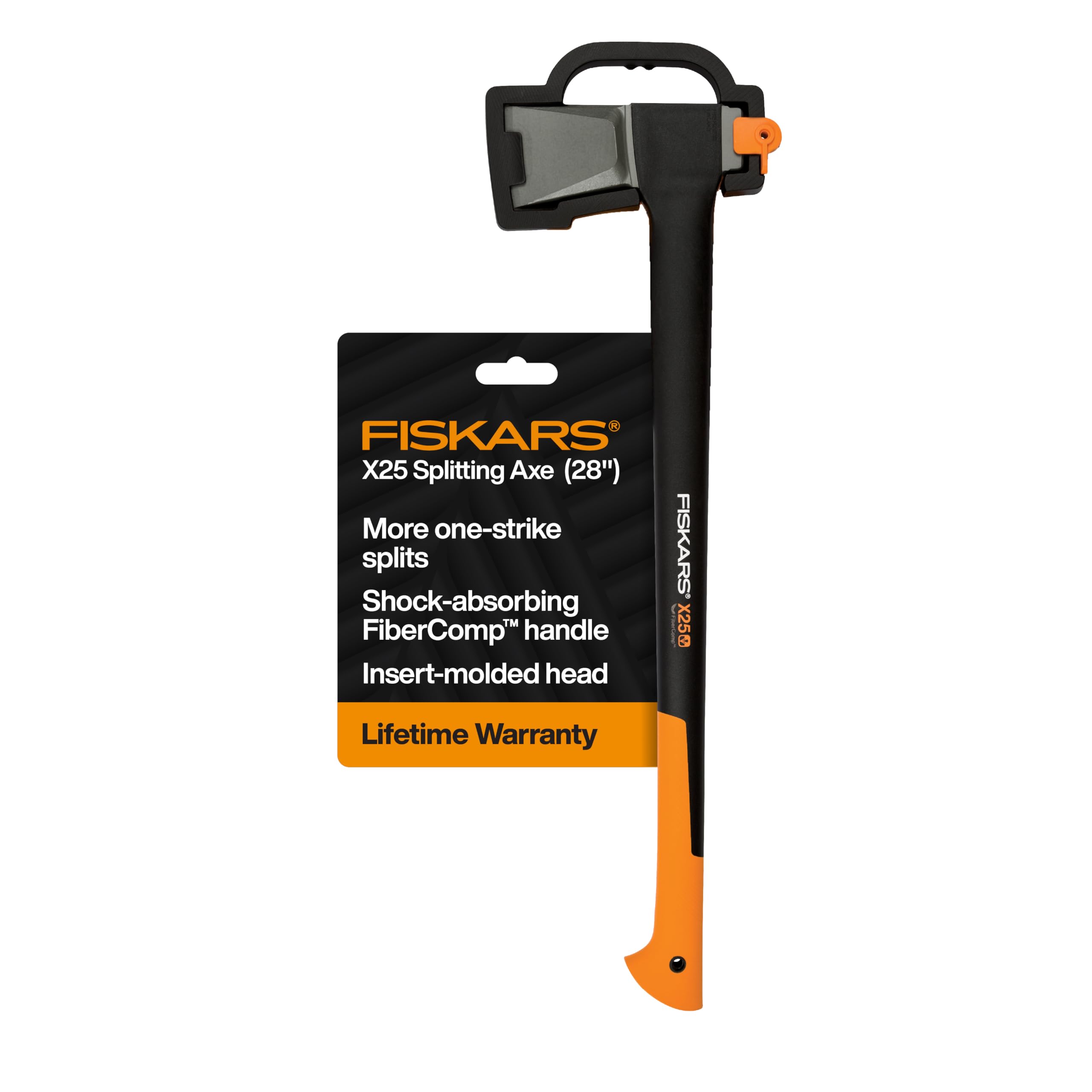
1. Fiskars X25 Splitting Axe
Our pick — over 4.5★ from 550+ verified ratings; the strongest balance of quality and price.
The crowd favorite that turns medium and large logs into split firewood with a single stroke.
This is the axe the review pages keep calling a lightweight workhorse — and the consensus backs it up, with quality being the thing owners praise most. The 28-inch length gives you real leverage for a full swing, yet the FiberComp handle (a shock-absorbing composite that is lighter than steel) keeps it feeling nimble. The advanced bevel convex blade geometry adds power and, just as usefully, makes the blade easier to pull back out of the wood after a strike.
As owners put it: “splits 24-36″ rounds easily.” That reach is why it keeps showing up strapped to Jeep molly panels and stored in motorhomes. The blade arrives sharp, stays sharp on oak and hickory, and the included protective sheath means it can ride loose in a trunk without eating through your gear. The one honest caveat from the reviews is ergonomics — the handle is comfortable for most, but a few found it less agreeable, and a heavier maul still wins for the biggest rounds.
Why the reviews love it
- Splits 24-36″ rounds easily with a single strike
- Lightweight FiberComp handle resists overstrike damage
- Lifetime warranty and protective sheath included
Where it shows limits
- Handle ergonomics get mixed opinions
- Very large logs still call for a bigger, heavier maul
Reach for this if: you split firewood for a family and want one tool that does it in one strike.
Look elsewhere if: your campsite tasks are all small kindling — a compact hatchet will serve you better.
2. Hitdudu Splitting Axe
A budget-friendly 27-inch splitter that punches above its price for summer firewood duty.
At a 5-inch blade length on a 27-inch handle, this maul delivers a solid 19% more reach than the compact NedFoss hatchet below, and it shows in the swing. The heat-treated forged carbon steel blade is built for durable one-strike splits, and the fiberglass handle with an anti-slip rubber grip resists slipping while cutting down hand strain. The flat poll (the back of the head) doubles as a way to start cracks or drive a wedge.
The reviews are a study in “you get what you pay for” — owners genuinely like it for chopping small trees and pruning after storms, and it handles slim camp chores well. But durability is the most-discussed negative by a wide margin: buyers report the head fell off after about a week of heavy abuse, with one fixing it using two-part epoxy putty. Value for the money earns mixed marks because of that. It is a fine first axe for light seasonal work, not a tool for busting up a whole tree.
A real bargain, with a catch: It splits summer firewood and prunes branches great, and the anti-slip grip feels good in hand.
Know before you swing: The most-discussed issue is the head loosening under heavy use — budget for maintenance or stick to lighter chores.
3. NedFoss Warthog Camping Hatchet
A lightweight full-tang hatchet that trades big-swing power for easy one-hand control.
This is the hatchet owners reach for when the job is camp chores, not log splitting. The 4.2-inch stainless steel blade on a 9-inch full-tang handle (one solid piece of steel runs through the grip) makes it easy to control, and the thick 5.0mm blade spine resists chipping and dulling. The thing everyone raves about is the build quality — owners praise the well-made feel, the sharp edge that holds, and the ergonomic etched warthog wood handle.
Compared to the 28-inch Fiskars above, this one is honest about its limits: reviews note it lacks the power for full-on wood-splitting, but it chips away at wood easily and works for field dressing big game. The custom leather sheath wears on a hip or belt, and the compact 15.2-ounce weight disappears in a pack. The few gripes are fit-related — a slippery handle and a sheath that can stick — so it suits adults who want a precise, packable tool rather than a heavy-duty splitter.
A precision camp tool: The compact size and sharp stainless edge make it ideal for bark removal, carving, and pruning on the trail.
Who it is not for: If you need to split full logs for a base-camp fire, the short handle lacks the leverage — that is the Fiskars’ job.
4. DWFKHT Bushcraft Axe
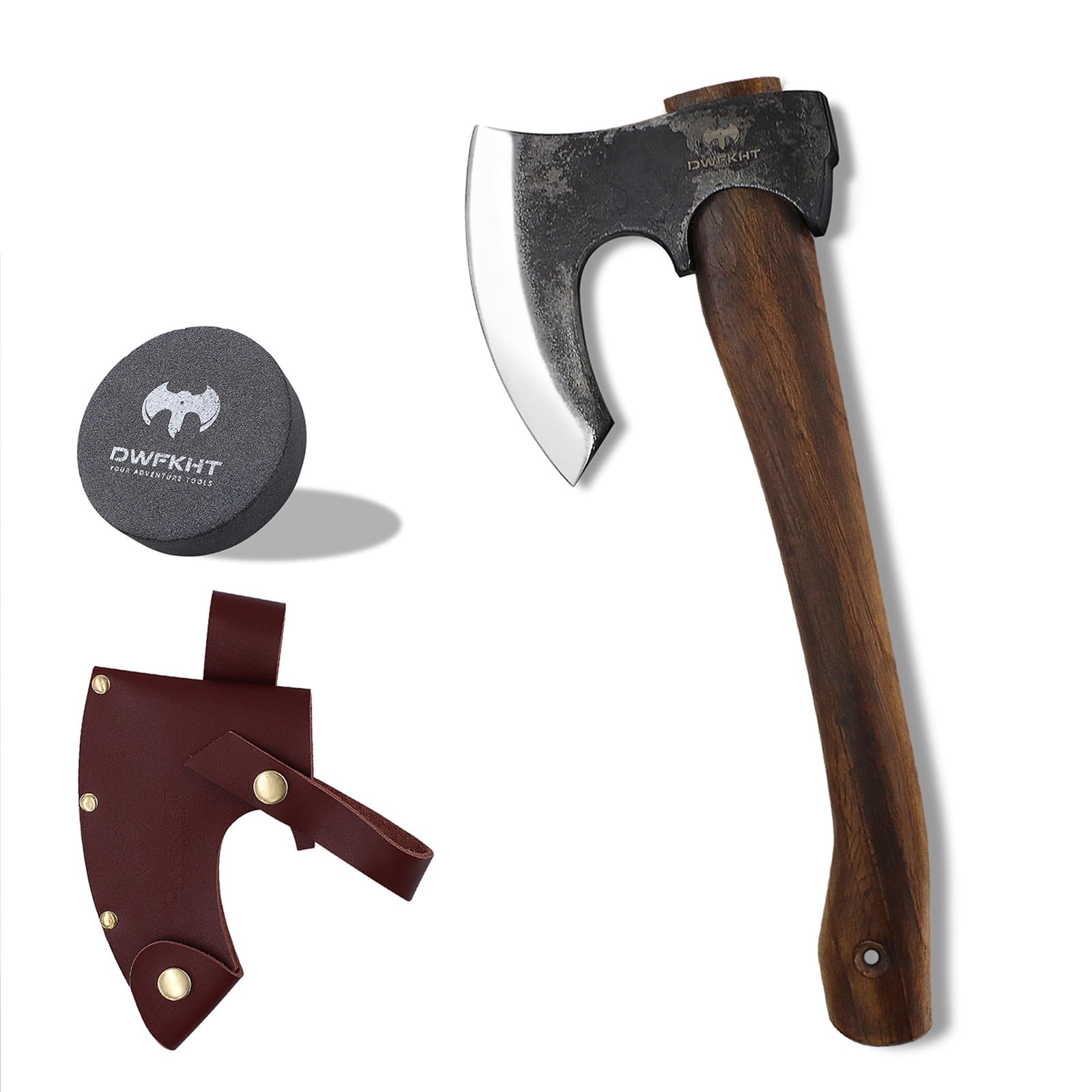
A Norse-style bearded axe with a 5.8-inch blade that handles everything from kindling to carving.
The standout here is the blade: 5.8 inches of 1065 high-carbon steel on a 14.6-inch beech wood handle, weighing 2.2 lbs. That is a 19% bigger blade than the NedFoss above, giving it more bite for chopping and splitting while staying short enough for precise work. Owners with years of experience call the build fine quality and an absurdly good deal, and the wood finish looks even better in person. It arrives sharp from the start with a whetstone and leather sheath included.
The bearded profile (the blade curves down at the heel) lets you choke up close to the head for carving, and it splits, chops, and cuts kindling well. The honest split in the reviews: some call the blade dull and report breakage on first use, while others praise the hard steel — sharpness and durability both land as mixed. A recurring note is the handle needing tightening or reshaping, which suggests a little DIY patience pays off with this one.
Who it suits: Adventure seekers who want one versatile axe for chopping, splitting, and carving on a weekend out.
Who should pass: Buyers who want zero maintenance — this one rewards a bit of handle care and sharpening skill.
5. Cold Steel War Hawk
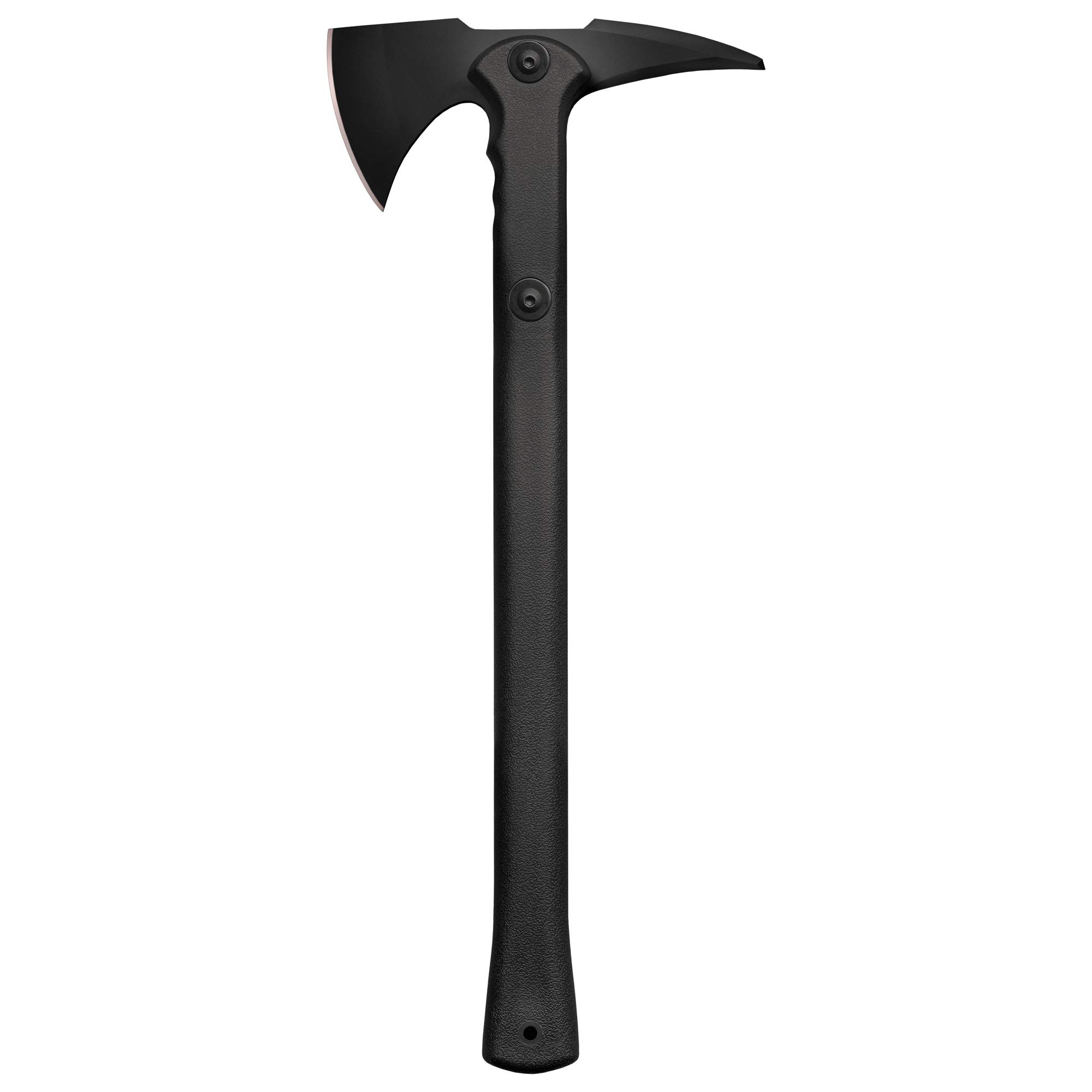
A military-styled tomahawk that splits firewood and doubles as a breaching tool.
This one marches to a different drum. The wide bearded head (a head with a notch below the blade for grip) pairs with a curved reinforced reverse Tanto-style spike (a pointed tip on the back), making it a modern tactical tomahawk built from differentially hardened drop-forged 1055 carbon steel (a type of steel that is tough and holds an edge). At 19 inches overall with a 3.5-inch blade edge and a 29.5-ounce weight, it cuts down trees quickly without dulling, and the spike augers into logs to hook and drag branches. Owners call it “apocalypse proof.”
The durability wins people over, and the blade earns genuine praise for arriving razor-sharp from the start. The long textured polypropylene handle (a tough plastic) gives good grip, though a few owners find it slippery and wrap it for extra traction. The patented articulated Secure-Ex sheath protects the edge well but lacks a belt attachment, which is the most common nitpick. This is a versatile chopper for camp and a conversation piece — just know the handle is replaceable by design, and the two bolts holding it may need an occasional Allen wrench.
What stands out
- Razor-sharp from the start, holds an edge on green wood
- Spike hooks and drags branches, augers logs easily
- Drop-forged 1055 carbon steel survives hard use
Fair warning
- Sheath has no belt attachment
- Handle bolts can loosen with heavy swing — keep a wrench handy
Pick it if: you want a tough, sharp chopper with a spike for camp and tactical use — and you do not mind periodic bolt checks.
skip it if: pure firewood splitting is the only job; the bearded blade favors chopping over clean splits.
6. Schrade Bedrock Axe

A compact 11.8-inch survival axe with a hidden fire starter tucked inside the handle.
At 11.8 inches overall with a 3.8-inch blade on a 3Cr13 titanium-coated stainless steel head, it weighs just 1 lb 6.4 ounces, so it vanishes into a backpack. The ergonomic black rubber grip with finger placements keeps the blade from slipping in your hand, and the hammer pommel (the flat back of the head) works for light pounding.
What wins owners over is the sharpness and the weight — the blade takes a razor edge with minimal effort and holds it, and the balance feels right for one-hand work. The black thermoplastic belt sheath gives quick access, and the steel is easy to sharpen in the field. The honest trade-off: durability gets mixed feedback, with some owners reporting the steel is soft and knicks on unintended metal impacts. Use it for precise camp tasks like kindling and carving, not heavy log splitting.
A fire-starter and an axe in one: For backpackers who pack light, the built-in ferro rod and 11.8-inch length are a winning combo.
The catch: The stainless steel is on the softer side — avoid striking metal or rocks with the edge.
7. Kershaw Deschutes Camp Ax

A well-balanced 14-inch camp axe that lives happily in a truck cab during hunting season.
Owners describe this one as very well balanced and very sharp, and it earns its keep living in the truck for hunting season. The full-tang 3Cr13 stainless steel design has blade cutouts that relieve weight, keeping it at 16 ounces with a 3.5-inch blade. The tan glass-filled nylon handle features textured rubber inserts for a secure grip, and the black-oxide finish hides scratches from real use. It is a trimmer and kindling maker, not a feller — owners call it great for tree and brush trimming.
The sheath is thoughtfully built with webbing slots, a drainage hole, and a removable belt strap, so it rides ready on a pack or in the cab. Compared to the 28-inch Fiskars, this is a far lighter, more precise tool for small wood. The reviews carry a fair warning: the blade is on the thin side, cutting performance and durability get mixed marks, and the thin poll (the back of the head) is not meant for hammering. One owner also saw the plastic sheath crack. It excels at trimming and kindling but is not built for heavy splitting or hammering.
What owners value
- Very well balanced and sharp from the start
- Lightweight 16 oz with a removable belt-strap sheath
- Chopped thick knots and stayed sharp in testing
Where it is limited
- Thin blade is not built for heavy splitting or hammering
- Needs more frequent sharpening on large logs
Choose it for: a balanced, packable axe for trimming, kindling, and truck storage.
Look past it if: you need to split real firewood rounds — the Fiskars X25 is the stronger swing.
8. Husqvarna Hatchet
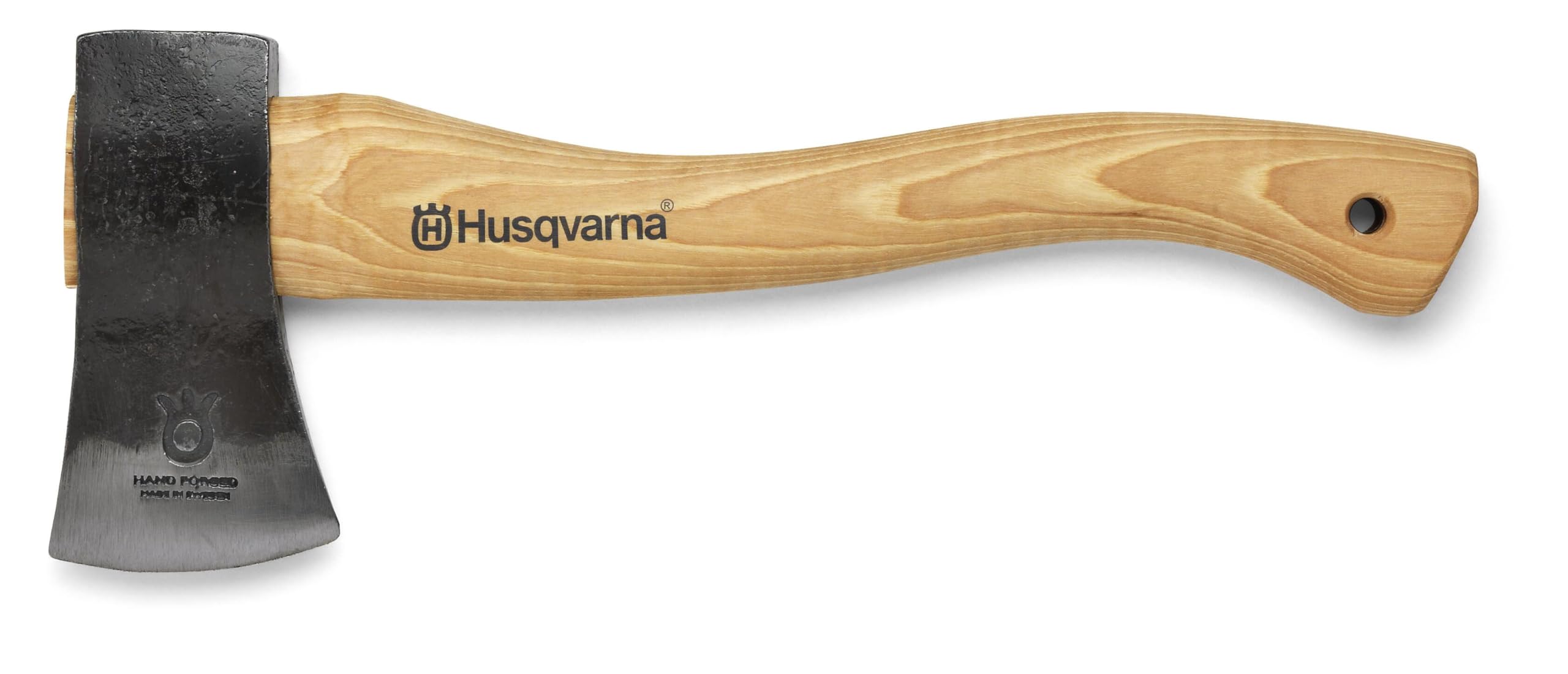
A hand-forged Swedish classic with a hickory handle that owners keep for years.
This is the hatchet that the review pages sum up as Swedish quality — a hand-forged 1.32-pound head on a hickory handle, made in Sweden for one-handed use on light wood cutting. The quality is the thing owners praise most, and the handle and well-balanced head earn repeated compliments. It is built for campsite duties like splitting small fuel and processing kindling, and it fills the gardening role just as well. The leather sheath protects the edge and the blade edge is straight for clean cuts.
There is a real project here for the buyer: the edge commonly arrives dull and the handle unfinished, and multiple owners describe spending hours sanding, oiling, and sharpening to reach shave-sharp. Once tuned, the edge retention is excellent — one owner went 10-plus days camping with no nicks. The durability holds up for many years, which is why it is a favorite despite the mixed sharpness. If you enjoy the ritual of prepping a tool, this one rewards you; if you want ready-to-swing from the start, plan for sharpening time.
Best for: traditionalists who want a hand-forged steel blade and will invest an afternoon in sharpening and oiling the handle.
Think twice if: you want an axe that works perfectly straight from the box — budget some prep time here.
Understanding the Specs
Blade Length vs. Overall Length
Two numbers decide how an axe behaves. Blade length controls how much edge bites into the wood — a 5.8-inch blade like the DWFKHT slices wider cuts, while a 3.5-inch edge on the Kershaw is better for trimming. Overall length sets your swing leverage: the 28-inch Fiskars generates far more power than a 9-inch hatchet, but the short tool is easier to pack and control. Choose blade length and weight based on your splitting or trimming needs, not brand reputation.
Blade Steel and Handle Materials
Carbon steels like 1055 and 1065 hold a sharp edge and sharpen easily, but they can rust if left wet. Stainless steels like 3Cr13 resist corrosion but often run softer. The handle matters just as much: wood like hickory and beech feels classic but needs care, while FiberComp and glass-filled nylon absorb shock and shrug off overstrike damage. A full-tang design — one solid steel piece through the handle — is the strongest head-to-handle connection.
FAQ
What length axe is best for camping and off-roading?
Is a full-tang axe better than a wedged-head axe?
What is the difference between a splitting axe and a hatchet?
Will a camping hatchet work for splitting firewood?
What steel is best for a camp axe blade?
How do I keep the axe head from coming loose?
What is a ferro rod on a survival axe for?
How heavy should a camp axe be?
Is a leather sheath better than a plastic one?
Final Thoughts: The Verdict
For most buyers, the axe for off roading and camping winner is the Fiskars X25 because the 28-inch FiberComp handle (a lightweight, durable composite) and advanced bevel geometry (the angle of the blade edge) deliver one-strike splits on medium and large logs, and the crowd balance of quality and ease is genuinely proven. If you want a compact companion that rides in a pack and handles carving, grab the NedFoss Warthog. And for a tactical edge with a fire-starting bonus on the trail, the Schrade Bedrock Axe is the one to reach for — the built-in ferro rod (a metal rod that throws sparks when scraped) makes it the most versatile single tool in this lineup.
How We Picked
We do not accept paid placement. Every pick is matched to a real buyer and a real use-case; we do not hands-on test units.
Sources & Methodology
Specifications: manufacturer listings and product documentation. Review insights: verified customer reviews, as of August 2026. Pricing: not shown on this page (it changes often); check the current price via the retailer link.
As an Amazon Associate, Gadgets Feed earns from qualifying purchases. This does not affect which products we feature.