
The difference between a good night in the backcountry and a desperate struggle often comes down to one swing. When you are processing firewood, building a shelter, or clearing a trail, a tool that fails—a dull blade, a loose head, a handle that cracks—isn’t just an inconvenience; it’s a liability. The right survival axe must translate every ounce of your energy into clean, powerful cuts without question or compromise.
I’m Min — the co-founder and writer behind Gadgets Feed. I’ve spent countless hours analyzing heat-treat processes, handle geometries, and blade steels to separate genuine bushcraft tools from tactical gimmicks that look mean on a shelf but fail in the field.
After cross-referencing hundreds of field reports and spec sheets, these are the seven contenders that earned a spot as the foundation of your kit. Let’s find out which best axe for survival fits the way you move through the wild.
How To Choose The Best Axe For Survival
A survival axe is a force multiplier. It must split dry wood, limb green trees, and sometimes serve as a hammer or pry tool. The wrong choice means more swings, more fatigue, and more risk. Focus on these four factors to make the right call.
Steel Composition and Heat Treat
1055 carbon steel is the gold standard for impact tools because it is tough—it bends before it breaks. Stainless steels like 420HC resist corrosion but require a thinner edge geometry to cut well, which can lead to chipping under hard use. For a survival environment, prioritize edge retention and impact resistance over rust shyness; a patina or a light oil coat is a small price to pay for a blade that won’t shatter.
Handle Length and Head Weight
A 19- to 26-inch handle gives you two-handed leverage for splitting rounds without being too long to pack on a rucksack. Head weight in the 1.3 to 2.6 pound range provides enough momentum to cleave through knotty wood without wearing out your shoulder after ten cuts. Light hatchets under 1 pound are fine for carving and kindling, but they lack the mass for serious firewood processing.
Handle Material and Grip
Hickory and American ash absorb shock naturally and can be re-hung if the handle breaks. Composite and polymer handles are waterproof and lighter but transmit more vibration to your hands. Tactical users often prefer G10 or fiberglass for their durability in wet conditions, but these materials can develop hot spots during prolonged use. Grip texture matters—a slippery handle in freezing rain is a dropped axe waiting to happen.
Sheath and Carry Options
A quality leather sheath protects the edge and your pack, but it must be snug enough to retain the blade while allowing a one-hand draw. Kydex sheaths with MOLLE compatibility offer better retention and attachment flexibility for tactical loadouts, but they can scuff the finish. Secure-Ex and nylon sheaths are lightweight and affordable, though their long-term durability is lower than leather or Kydex.
Quick Comparison
On smaller screens, swipe sideways to see the full table.
| Model | Category | Best For | Key Spec | Amazon |
|---|---|---|---|---|
| Gransfors Bruks Scandinavian Forest Axe | Premium | Felling & Limbing | 2.6 lbs head / 25 in hickory | Amazon |
| HX OUTDOORS Mercenarys Tactical Axe | Premium | Tactical & Rescue | G10 handle / 440C steel | Amazon |
| Gerber Gear Downrange Tomahawk | Premium | Breaching & Multi-Tool | 420HC steel / pry bar | Amazon |
| Gerber Gear Freescape Hatchet | Mid-Range | Camp Splitting | 17.3 in / PTFE forged steel | Amazon |
| Husqvarna Hatchet | Mid-Range | Classic Craftsmanship | 1.32 lbs head / Swedish steel | Amazon |
| Cold Steel Drop Forged Tomahawk | Value | Throwing & Light Chopping | 1055 carbon steel / 19 in handle | Amazon |
| NedFoss Warthog Camping Axe | Budget | Backpacking & Carving | 5 mm full tang / stainless steel | Amazon |
In‑Depth Reviews
1. Gransfors Bruks Scandinavian Forest Axe

The Gransfors Bruks Scandinavian Forest Axe is the benchmark for bushcraft reliability. Hand-forged in Sweden with a 2.6-pound head and a 25-inch hickory handle, it delivers the perfect balance of mass and leverage for felling small to medium trees and processing firewood on site. The curved blade geometry bites deep and releases cleanly, reducing the number of swings needed to split a round.
Out of the box, the edge is sharp enough to shave with, but the poll (the back of the head) arrives with a raw, unmachined surface that many users sand smooth. The vegetable-tanned leather sheath fits snugly and won’t mar the blade, and the included Axebook provides solid instruction for maintenance. A 20-year guarantee backs this purchase, reflecting the manufacturer’s confidence.
This axe is not a multitool—it is a dedicated cutting instrument. If you need a hammer or pry bar, carry separate tools. The premium investment pays off in longevity and user experience, especially for those who process several cords of wood per season. For the purist who values old-world craftsmanship married to modern heat-treat science, this is the final answer.
Why it’s great
- Superior Swedish steel holds a razor edge
- Ergonomic hickory handle reduces fatigue
- High-quality leather sheath with brass rivets
Good to know
- Requires sanding and oiling the handle out of box
- No hammer or pry functionality
2. Gerber Gear Freescape Hatchet

The Gerber Freescape Hatchet splits the difference between a full-size axe and a pocket hatchet. Its 17.3-inch overall length and forged steel head with a PTFE coating reduce friction on each strike, allowing the blade to pass through wood rather than bounce off. Weighing 32.6 ounces, it is light enough for one-handed use on small limbs but heavy enough to split 4-inch diameter rounds with a few focused blows.
The composite handle incorporates a soft-touch over-mold that absorbs shock better than bare wood or nylon. The included sheath is functional but bulky; many users replace it with a custom leather option for a lower profile on the pack. The PTFE coating must be removed from the edge for peak sharpness, a simple step with a fine stone.
Where this hatchet truly shines is camp splitting. It handles dry hardwoods and green softwoods equally well, and its balance makes it a natural for limbing tasks. It is not designed for heavy felling or for use as a pry bar, but as a mid-weight camp axe, it outperforms tools in its price tier by a wide margin.
Why it’s great
- PTFE coating reduces friction for cleaner cuts
- Shock-absorbent composite handle
- Sharp, durable forged steel head
Good to know
- Stock sheath is bulky for pack carry
- Edge coating must be removed for best performance
3. Husqvarna Hatchet
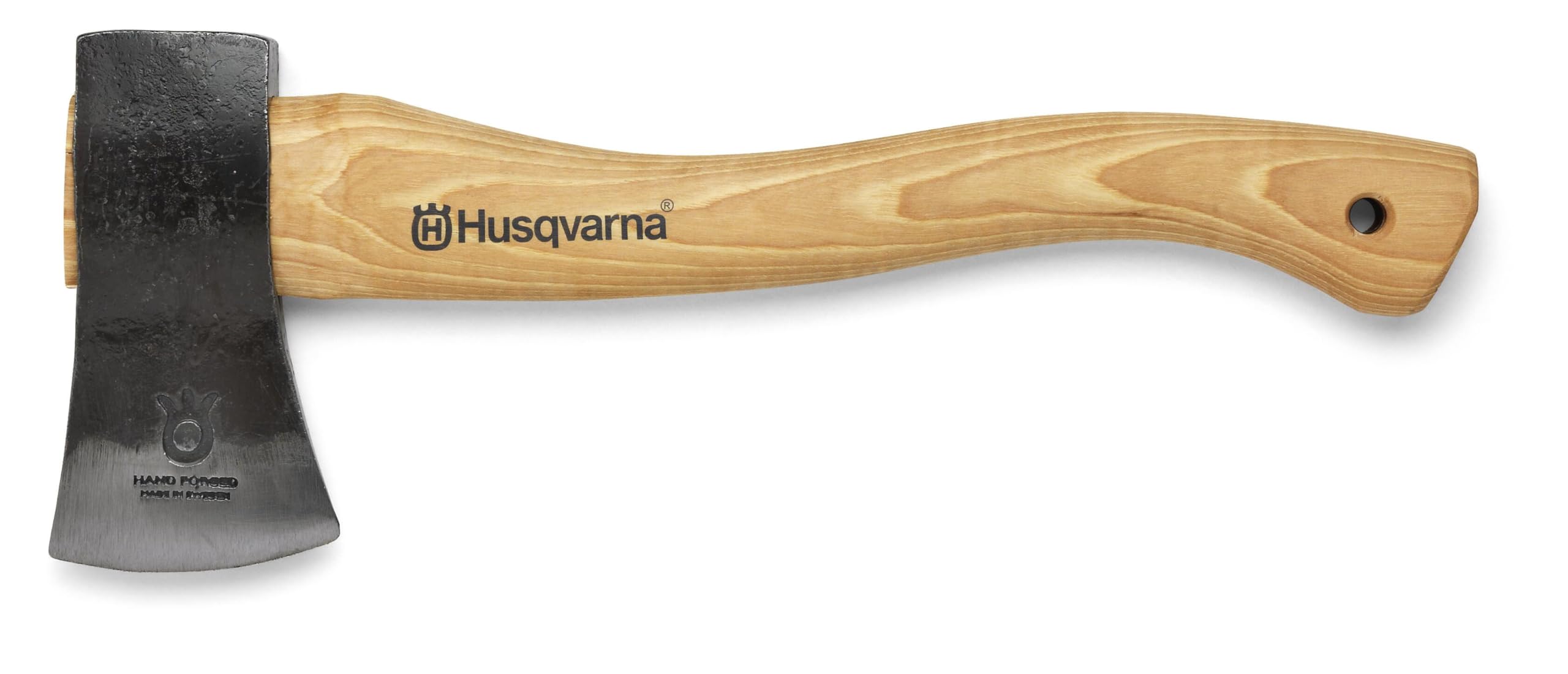
Husqvarna’s hatchet proves that old-world manufacturing doesn’t require a fortune. Forged in Sweden with Swedish alloy steel, the 1.32-pound head is paired with a tight-grained hickory handle for classic shock-dampening performance. The 14.97-inch length keeps it compact enough to tuck into a daypack while providing sufficient reach for one-handed chopping on light wood.
The leather sheath is top-grain and stitched with brass rivets, offering protection that rivals sheaths on axes costing three times as much. Many users note that the factory edge requires significant work—expect to spend thirty minutes to an hour with a file and stone to establish a proper bevel. The handle arrives lacquered; sanding it down and applying tung oil or linseed oil improves the grip substantially.
This is a hatchet that rewards those willing to put in a little finishing work. Once dialed in, it holds an edge well and feels balanced in the hand. It is not suitable for heavy splitting or felling, but for kindling, carving, and light camp tasks, it is an exceptional tool at an accessible price point.
Why it’s great
- Hand-forged Swedish steel head
- Excellent leather sheath with brass rivets
- Comfortable hickory handle with tight grain
Good to know
- Edge is dull and needs filing out of box
- Lacquered handle is slippery; requires refinishing
4. Gerber Gear Downrange Tactical Tomahawk
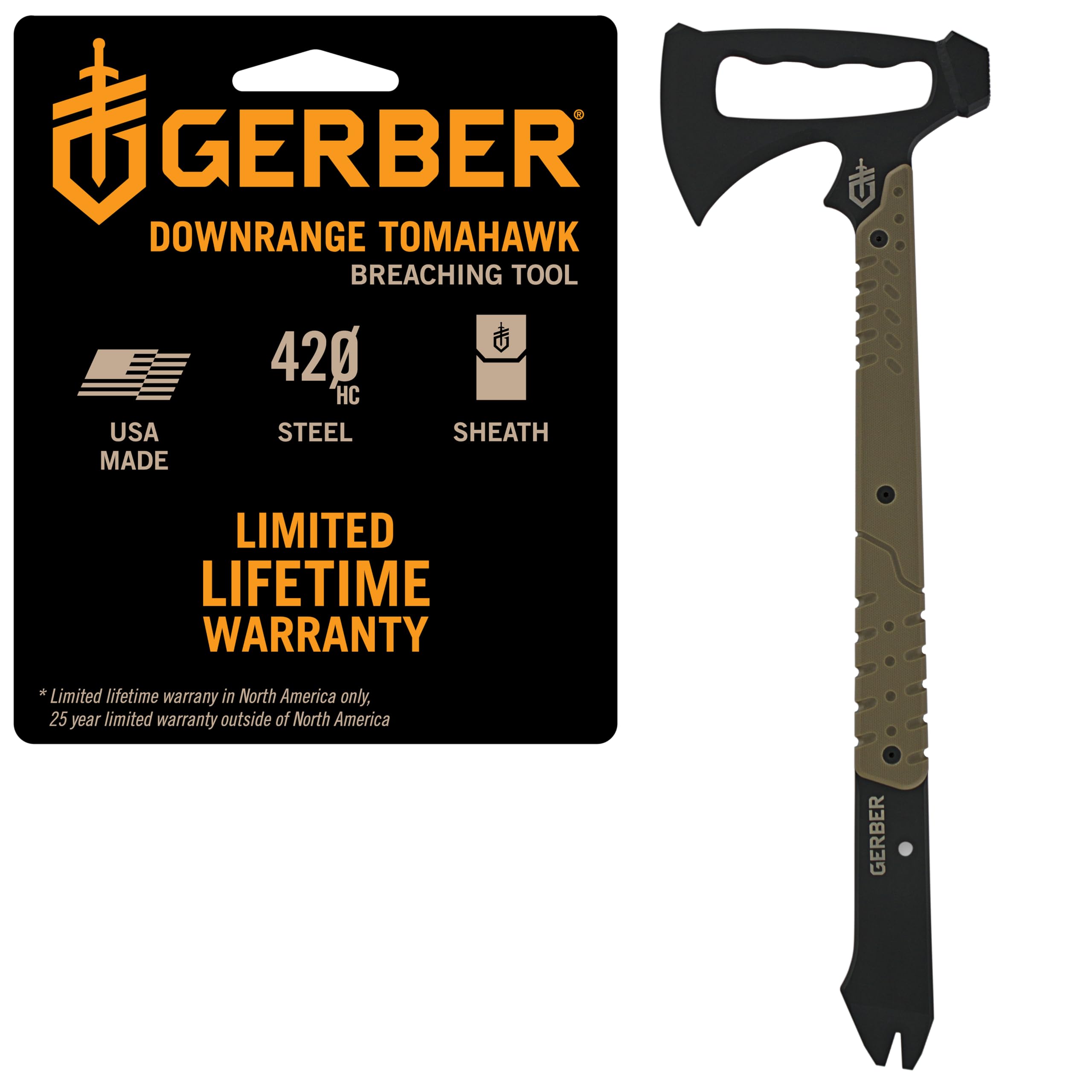
The Gerber Downrange Tomahawk is a multi-tool disguised as an axe. Its 420HC steel head integrates a beveled axe edge, a hammer surface, and a pry bar into a single full-tang design. The Cerakote finish resists corrosion in wet environments, and the fiberglass handle with a MOLLE-compatible sheath makes it a natural fit for tactical loadouts or overlanding rigs.
Weighing 1.9 pounds with a 22-inch overall length, it is heavier than a pure hatchet but offers versatility that a dedicated cutting tool cannot match. The pry bar is robust enough to open crates or pull nails, and the hammer head delivers controlled strikes on stakes or metal. The blade arrives serviceably sharp but benefits from a session with a diamond stone to reach its full potential.
This is not the tool for felling trees or processing large volumes of firewood. The rectangular handle profile can cause hand fatigue during extended chopping sessions, and the sheath is thinner than many users prefer. However, for a vehicle survival kit or a tactical breaching role, the Downrange Tomahawk consolidates three tools into one durable package.
Why it’s great
- Integrated axe, hammer, and pry bar in one tool
- Full-tang 420HC steel with Cerakote finish
- MOLLE-compatible sheath for tactical carry
Good to know
- Rectangular handle can cause fatigue
- Edge needs significant sharpening out of box
5. HX OUTDOORS Mercenarys Tactical Engineer Axe
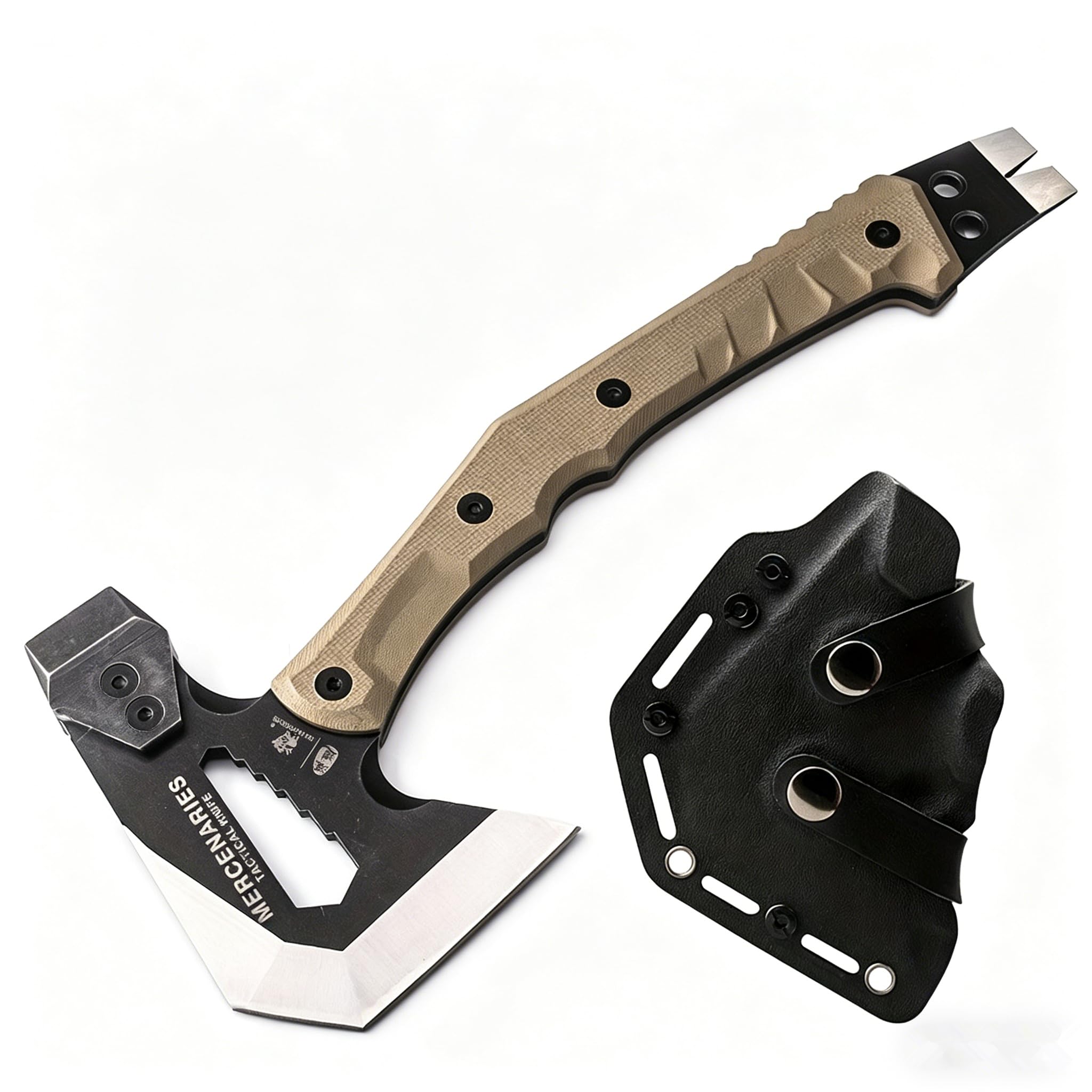
The HX OUTDOORS Mercenarys Axe brings modern materials to the survival segment. Its 440C stainless steel blade resists rust in coastal or wet environments, and the full-tang construction with G10 handle scales offers rigidity that wooden handles cannot match. The design includes a hammer poll and a pry bar/notch, making it a legitimate multi-tool for rescue, camping, or home defense scenarios.
The Kydex sheath is a standout feature—it secures the blade with an audible click and carries a MOLLE clip for pack or belt attachment. At 742 grams, the weight is noticeable in a daypack, but the heft translates to chopping authority on smaller diameter wood. Users report that the G10 scales can be slick with wet hands, so adding grip tape or wearing gloves is recommended for safety.
Where this axe falls short is comfort during extended use. The finger grooves in the handle are molded for medium-sized hands; larger palms may find them restrictive. The set screws that secure the hammer pad are painted rather than thread-locked, so a dab of blue Loctite is a smart preemptive fix. For the tactical user who needs a rust-proof, hard-use tool with multiple functions, this is a compelling option.
Why it’s great
- Rust-resistant 440C stainless steel blade
- Kydex sheath with MOLLE compatibility
- Hammer and pry bar functions included
Good to know
- G10 handle is slippery when wet
- Hammer pad screws need thread-locking
6. Cold Steel Drop Forged Tomahawk

The Cold Steel Trench Hawk delivers serious value for its price point. The drop-forged 1055 carbon steel head is differentially hardened—the edge is hard for sharpness while the body remains softer to absorb shock. The polypropylene handle is durable and waterproof, though its smooth surface becomes slick when wet. At 19 inches, the handle provides good leverage for chopping without being unwieldy in close quarters.
The Secure-Ex sheath retains the blade positively and includes holes for paracord lashing, allowing you to customize the carry system. Out of the box, the edge is sharp enough for most camp tasks, and the spike is needle-point for piercing applications. Users report that with some practice, this tomahawk is accurate for throwing, though the blade geometry leans more toward combat design than dedicated woodcraft.
Durability is the main concern. Several field reports note the handle cracking or the head loosening after repeated throwing into hard logs. For light camping, backpacking, or as a truck tool, the Trench Hawk is a capable performer. Just do not expect it to survive heavy daily felling or sustained abuse without maintenance.
Why it’s great
- Differentially hardened 1055 steel head
- Durable polypropylene handle is waterproof
- Secure-Ex sheath with paracord lashing points
Good to know
- Handle is slippery when wet
- Not built for repeated heavy throwing
7. NedFoss Warthog Camping Axe

The NedFoss Warthog is a full-tang hatchet built for precision tasks rather than heavy splitting. Its 4.2-inch stainless steel blade is 5 mm thick, offering stiffness for carving, bark removal, and light limbing. The wood handle features an etched warthog pattern that provides decent grip, though some users find the fit too small for larger hands.
The included leather sheath is aesthetically pleasing and secures to a belt, but the retention is loose; the blade can work its way out during active carry. Weighing only 15.2 ounces, this hatchet disappears in a backpack and is ideal for day hikes where weight is critical. The edge arrives sharp enough for slicing paper, and the stainless construction means minimal maintenance in humid climates.
Where the Warthog falls short is chopping power. The head weight of 15.5 ounces lacks the momentum to drive through larger rounds, requiring many strikes to split even wrist-thick wood. It is better suited for making kindling, carving tent stakes, and food prep than for firewood processing. For the ultralight backpacker who needs a capable carving tool, it is a solid choice at a budget-friendly price.
Why it’s great
- Full-tang construction for durability
- Lightweight at 15.2 ounces
- Sharp stainless steel edge out of box
Good to know
- Head is too light for serious splitting
- Sheath retention is weak
FAQ
Is a tomahawk better than a hatchet for survival?
How often should I sharpen my survival axe?
Can I use a survival axe to split firewood?
What length handle is best for a survival axe?
Final Thoughts: The Verdict
For most users, the winner of the best axe for survival is the Gerber Gear Freescape Hatchet because it delivers the most balanced combination of weight, durability, and cutting performance for the widest range of camp tasks. If you value traditional craftsmanship and are willing to put in finishing work, the Husqvarna Hatchet offers hand-forged Swedish steel and a premium sheath at an accessible price point. And for the tactical survivalist who needs an integrated hammer and pry bar, the Gerber Gear Downrange Tomahawk merges three tools into one pack-friendly footprint.