
A dull axe isn’t just frustrating—it’s dangerous. A properly honed bit bites into the wood instead of glancing off, reducing fatigue and preventing the kind of wild rebounds that lead to injury. The difference between a tool that fights you and one that works with you often comes down to the stone in your hand.
I’m Min — the co-founder and writer behind Gadgets Feed. I’ve spent countless hours comparing abrasive materials, grit micron ratings, and field performance data to separate the functional tools from the ones that waste your time.
This guide breaks down the technical specs, real-world reviews, and practical trade-offs to help you find the right best axe sharpening stone for your specific needs and budget.
How To Choose The Best Axe Sharpening Stone
Selecting an axe sharpening stone isn’t about finding the highest grit number. Axe steel is typically softer and tougher than kitchen knife steel, and the bit geometry relies on a convex edge that needs aggressive material removal before any refinement. You need a stone that cuts fast, fits your hand, and matches the task.
Grit Sequence for Axes
Avoid the temptation to start with a fine stone. Axes often arrive with rolled edges, small dings, or factory grinds that need reshaping. A coarse grit between 120 and 220 removes metal quickly to set a new bevel. Once the edge is true, a medium grit around 320 to 400 refines the cut. Finer grits above 600 are generally unnecessary for wood processing—they produce a polished edge that dulls faster under impact.
Stone Material vs. Steel Toughness
Silicon carbide stones cut aggressively and load less than natural stones, making them a solid choice for carbon steel axe heads. Diamond stones remove material up to five times faster than traditional oil stones and require no lubricant, but their hardness can scratch softer steels if you apply too much pressure. Ceramic stones offer a middle ground with consistent wear and a finer finish without the need for messy oil.
Puck Size and Ergonomics
A 3-inch puck fits most palm sizes and stores easily in a pack or belt sheath, but a 3.8-inch or 4-inch stone provides a larger working surface that helps maintain a consistent angle across the entire axe bit. The thickness also matters—a stone that is too thin forces your fingers dangerously close to the blade edge. Look for a thickness of at least 1 inch for safe handling.
Quick Comparison
On smaller screens, swipe sideways to see the full table.
| Model | Category | Best For | Key Spec | Amazon |
|---|---|---|---|---|
| SHARPAL 216N | Diamond | Fast material removal | 220 / 600 grit diamond | Amazon |
| Helko Werk #22100 | Premium Ceramic | Professional field use | 120 / 320 grit ceramic | Amazon |
| Wisemen Trading Puck | Ceramic | Honing and finishing | 240 / 400 grit ceramic | Amazon |
| WATL Dual Grit | Whetstone | Razor-sharp throwing axes | 400 / 1000 grit stone | Amazon |
| Angerstone 3.8″ | Corundum | Budget-friendly field kit | 180 / 320 grit, 3.8″ diameter | Amazon |
| Norton Crystolon | Silicon Carbide | Classic field puck | Coarse/ Fine silicon carbide | Amazon |
| Whitby Abrasives 4″ | Carborundum | Large-surface sharpening | 120 / 240 grit, 4″ diameter | Amazon |
In‑Depth Reviews
1. SHARPAL 216N Dual-Grit Diamond Sharpening Stone

The SHARPAL 216N uses industrial monocrystalline diamonds electroplated onto a stainless steel base, giving it a cutting speed up to five times faster than traditional oil or water stones. The 220-grit extra coarse side handles heavy material removal on rolled axe edges, while the 600-grit fine side refines the bevel for a working edge that still bites into wood rather than sliding off. Users report restoring a severely dull hatchet to hair-shaving sharpness in under five minutes without any lubricant.
The ergonomic handle design keeps your fingers safely away from the blade edge, and the diamond surface stays flat over long use—unlike water stones that dish out over time. The stone measures 3.15 inches square, so it offers more working surface than the typical 3-inch puck while remaining packable. The included carrying pouch adds convenience for field carry, and the magnetic notch on the handle helps secure the disc during storage.
Sharpening dry means no messy oil bottles or water cups to fumble with at the campsite, which is a major advantage when you need to dress an edge quickly. The diamond grit is also easy to clean—a quick rinse removes metal swarf without loading. For anyone who sharpens multiple tools, from lawn mower blades to machetes, this stone provides the fastest path from dull to functional.
Why it’s great
- Aggressive 220-grit side reshapes damaged edges rapidly
- No oil or water required, simplifying field use
- Diamond coating stays flat and wears slowly
Good to know
- Diamond grit can scratch softer steels if too much pressure is applied
- Some users prefer a 300-grit intermediate over the 220/600 jump
2. Helko Werk Dual Grit Axe Sharpening Stone #22100
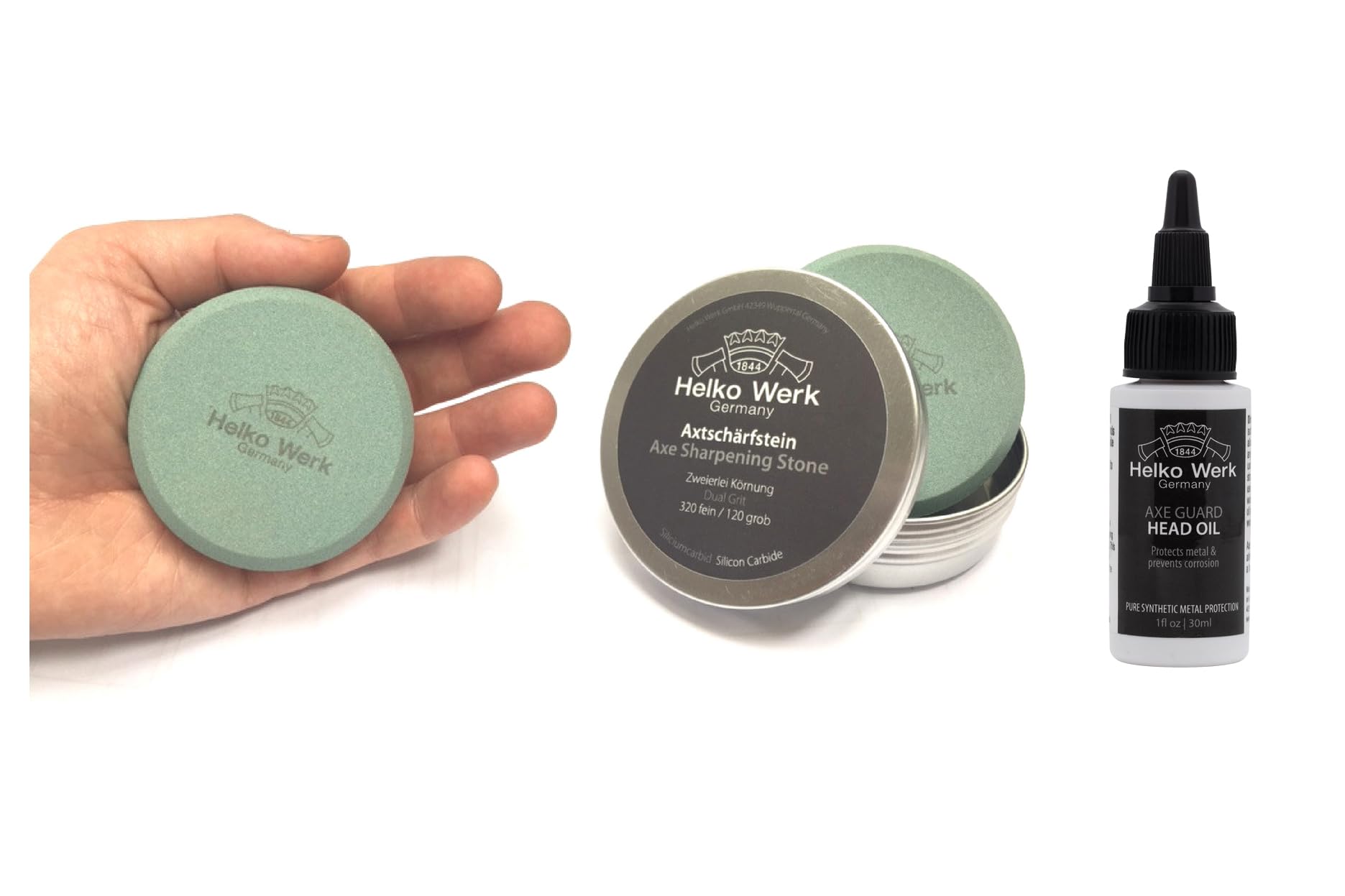
The Helko Werk stone is manufactured in Germany from ceramic silicon carbide, a material choice that balances aggressive cutting with consistent wear over time. The 120-grit gray side is designed for restoring dull or rolled edges, while the 320-grit green side provides a refined finish suitable for touch-ups in the field. The contoured shape fits naturally in the palm, and at 3 inches in diameter with a 1-inch thickness, it offers enough material to keep your fingers clear of the blade.
A bottle of Axe Guard Head Oil is included, which doubles as honing oil for best results, though the stone can be used with water or dry if needed. Users report that a 20-minute session combining a Helko file with both sides of this puck transforms a pack axe into a hair-shaving edge. The stone comes in an aluminum protective case, adding durability for packing inside a tool kit or backpack without worrying about chipping.
While the 120/320 grit pairing is perfectly matched for axe geometry, some users note that the coarse side could be more aggressive for severe edge damage. That said, for routine maintenance and field sharpening of axes, hatchets, and splitting mauls, this stone delivers consistent results that justify its position. It works well on tomahawks and garden tools too, making it a versatile addition to any outdoor toolkit.
Why it’s great
- Dual-grit sequence matches axe steel hardness well
- Includes honing oil and protective aluminum case
- Contoured shape provides secure, comfortable grip
Good to know
- Coarse side at 120 grit may not be aggressive enough for badly nicked edges
- Premium pricing reflects German manufacturing and accessories
3. Wisemen Trading Dual Grit Sharpening Puck
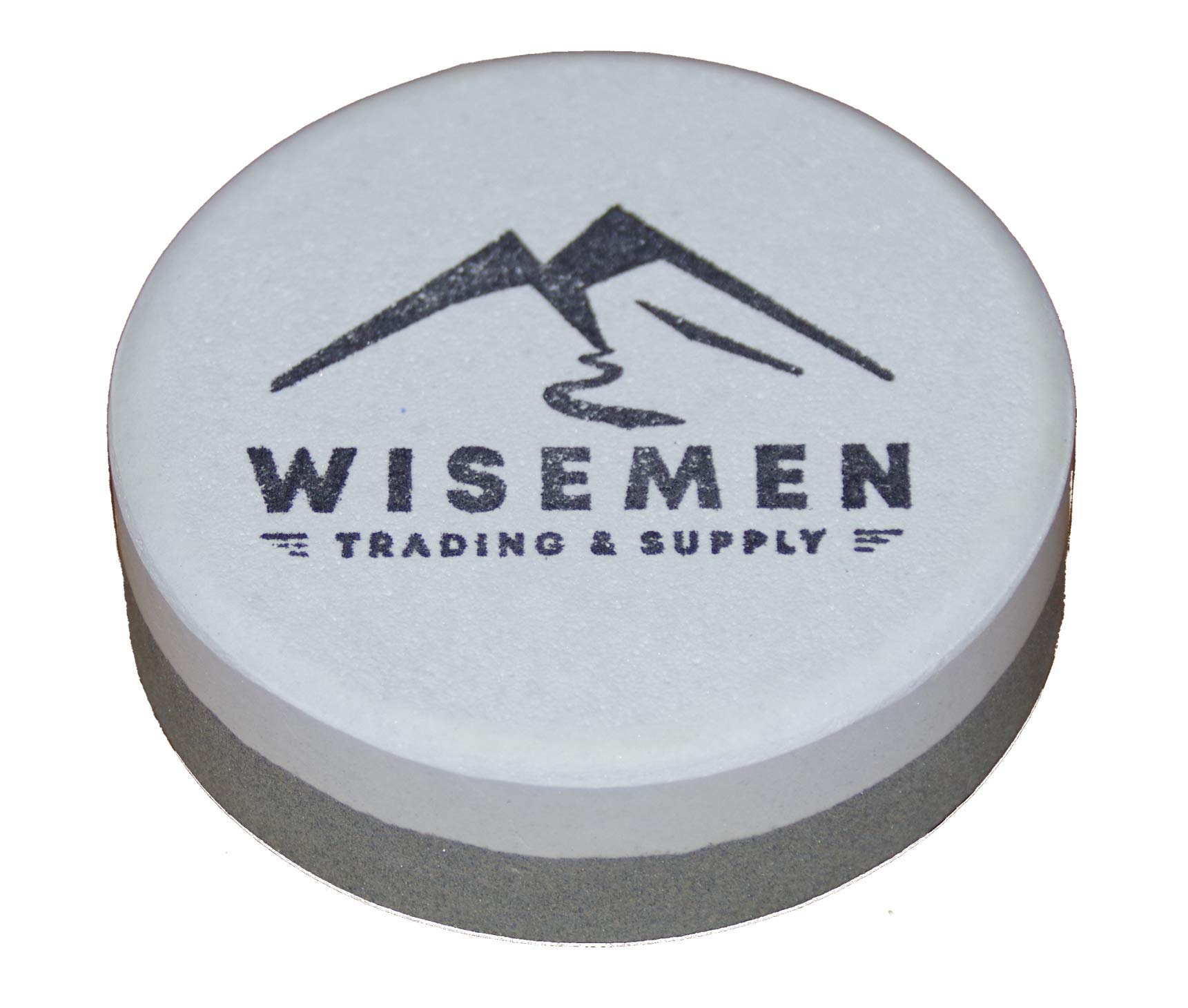
The Wisemen Trading puck is made in the USA from ceramic material and offers a 240-grit medium side paired with a 400-grit fine side. This grit pairing is better suited for honing an already established edge than for reprofiling a severely dull axe. Users report that the medium side raises a burr quickly on a Cold Steel Trail Boss, and the finer side refines the edge to a hair-popping sharpness suitable for camp tasks.
At 3 inches in diameter and 7/8-inch thick, this puck is compact enough to fit in a day pack or belt pouch without adding noticeable weight. The ceramic material requires no oil or water, which simplifies field sharpening—just run the blade across the stone and check the burr. The textured surface on the sides provides additional grip even with wet or gloved hands.
One point to note is that the printed brand logo on the stone may fade after contact with rusty blades, but this cosmetic issue does not affect performance. Users who have used traditional wet stones report that this ceramic puck sharpens kitchen knives in 30 to 45 seconds each with no mess. For anyone who needs a dedicated honing tool for axes and machetes rather than a coarse reprofiling stone, this puck delivers exactly that.
Why it’s great
- 240/400 grit pairing produces a refined working edge quickly
- Ceramic material requires no lubricant
- Made in the USA with consistent quality
Good to know
- Not aggressive enough for edge repair on badly damaged axes
- Small diameter limits the sharpening surface area
4. WATL Official Dual Grit Axe & Hatchet Sharpening Stone

The WATL stone is the official sharpening accessory of the World Axe Throwing League, and its 400/1000 grit pairing reflects the needs of competition throwers who require a razor-sharp edge for clean stick performance. The 400-grit gray side removes small burrs and touches up the bevel, while the 1000-grit tan side polishes the edge to a mirror finish. This grit range is finer than what most bushcraft users need, but for throwing axes that demand bite without excessive drag, it works well.
At just over 3 inches in diameter and 1 inch thick, the stone is highly portable. The WATL branding ensures a standardized product endorsed by a league that sees thousands of axe throws per week. Users note that two to three passes on the fine side restore a throwing axe to competition-ready sharpness with minimal effort. The stone must be soaked in water for 15 to 20 minutes before use for best results, which is an important consideration if you plan to use it in the field without a water source.
No instructions are included in the packaging, and the grit sides are not clearly labeled—the gray side is 400 grit and the tan side is 1000 grit. This is a minor inconvenience for experienced sharpeners but could confuse beginners. For anyone serious about axe throwing or who wants a polished edge for splitting kindling, the WATL stone delivers precisely what the league demands.
Why it’s great
- 1000-grit fine side produces a polished, razor-sharp edge
- Endorsed by the World Axe Throwing League for consistent results
- Compact and easy to carry in a throwing axe bag
Good to know
- Requires soaking in water before use, less convenient for dry field work
- No instructions or grit markings included
5. Angerstone Axe Sharpener – 3.8″ Oversized Stone
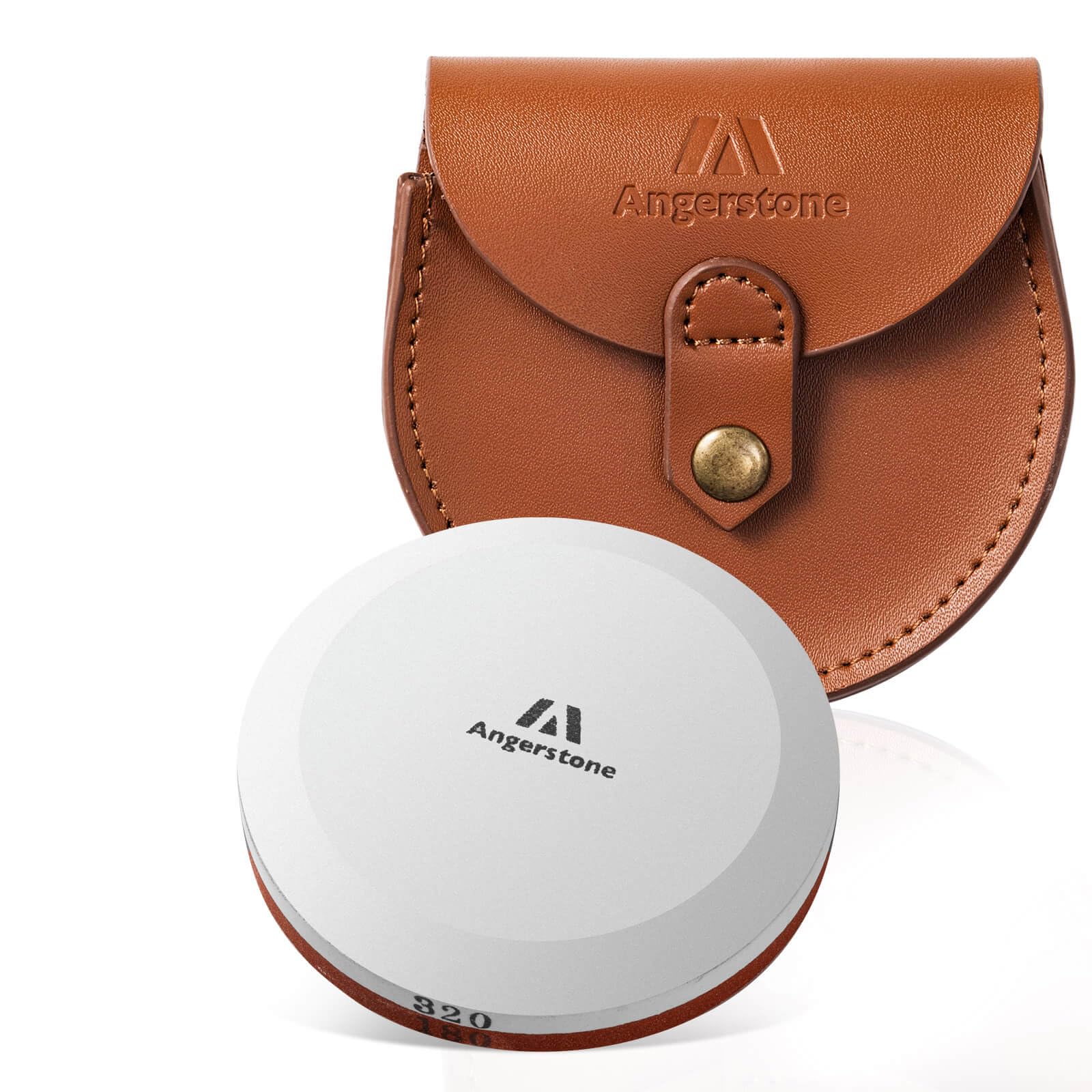
The Angerstone 3.8-inch sharpening stone is made from high-quality corundum fired using high-temperature technology, which gives it a dense structure that cuts efficiently without dishing out prematurely. The 180-grit coarse side handles edge repair on dull axes and hatchets, while the 320-grit fine side smooths the edge for a working finish. The significantly larger surface area compared to standard 3-inch pucks provides more stability and makes it easier to maintain a consistent angle across the axe bit.
The included cowhide leather pouch with reinforced stitching and a copper rivet snap adds practical storage that attaches to a belt or waistband. The stone measures 3.8 inches in diameter and 1 inch thick, offering enough material to grip safely even with wet hands. Users report that the stone sharpens effectively when wet, and the larger diameter reduces the number of passes needed to dress an edge.
One observation from customer use is that the stone sheds fine dust during sharpening, so it is best used outdoors or over a wastebasket to keep the work area clean. The dust is very fine and does not indicate structural wear—it is a normal break-in characteristic of fired corundum stones. For a budget-friendly entry into field sharpening that includes a genuine leather sheath, the Angerstone delivers a solid combination of size and function.
Why it’s great
- Larger 3.8-inch diameter provides more stable sharpening surface
- Includes genuine leather belt pouch with copper rivet snap
- 180/320 grit pairing covers edge repair and finishing
Good to know
- Stone sheds fine dust during use, best used outdoors
- Must be wet for optimal cutting performance
6. Norton Crystolon Axe & Hatchet Sharpening Stone

The Norton Crystolon puck is a silicon carbide sharpening stone that has been a staple in tool maintenance for decades. The coarse side is designed for repairing damaged edges and fast stock removal, while the fine side refines the cut for an even blade. The 3-inch diameter fits comfortably in the palm, and the retail packaging makes it easy to store in a tool box or vending machine application.
Users note that the coarse side raises a burr quickly on hatchets and machetes, and the fine side produces a workable edge suitable for field tasks. The stone requires honing oil for best performance, though some users report using it wet with acceptable results. The silicon carbide construction resists loading and maintains its cutting aggression even after extended use.
One common observation is that the coarse side is not aggressive enough for heavy edge repair on large felling axes or splitting mauls, but it handles hatchets and camp knives well. The fine side polishes to a high level, and some users prefer it for knife honing after using a more aggressive puck for the initial edge setting. For a classic, no-frills puck that works reliably, the Norton Crystolon is a time-tested choice.
Why it’s great
- Proven silicon carbide construction resists loading
- Coarse side removes material quickly for edge repair
- Fine side produces a high-quality polished edge
Good to know
- Requires honing oil for best results
7. Whitby Abrasives 4″ Dual Grit Axe Sharpening Stone
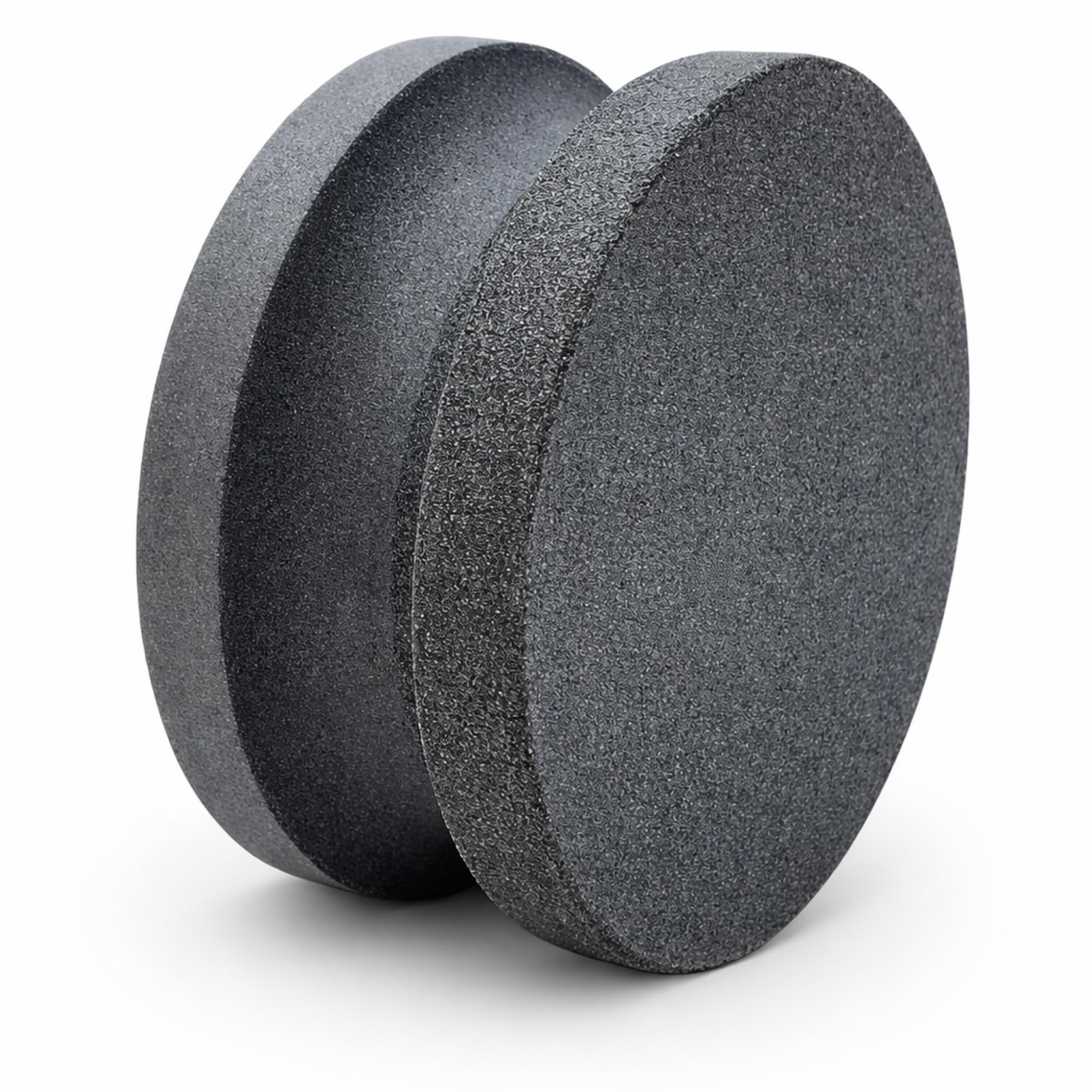
The Whitby Abrasives stone measures 4 inches in diameter and 1.57 inches thick, making it the largest puck in this lineup. The 120-grit coarse side handles heavy edge repair, burr removal, and reshaping of dull axe bits, while the 240-grit fine side smooths the edge for finishing and touch-ups. The recessed finger groove design provides a secure grip and keeps your hand positioned away from the blade edge during sharpening.
Manufactured from durable silicon carbide, this stone cuts aggressively on tough outdoor blades including axes, hatchets, lawn mower blades, and machetes. The larger surface area allows you to cover more of the blade in fewer strokes, reducing the time needed to dress an edge. Users report that the stone sharpens well straight out of the box, though a few noted that the stone was slightly concave and required flattening on a granite block before first use.
The compact dimensions—approximately 100 mm by 40 mm—make it easy to store in a toolbox, shed, or camp gear. The stone works dry or with water, giving you flexibility depending on your situation. For anyone who sharpens large tools regularly and wants a stone that provides more working surface than the standard 3-inch puck, the Whitby Abrasives stone is a practical, no-frills choice that gets the job done.
Why it’s great
- Largest diameter at 4 inches offers maximum sharpening surface
- 120-grit coarse side handles heavy edge repair effectively
- Recessed finger groove improves grip and safety
Good to know
- Some units may arrive slightly concave and require flattening
- Heavier than smaller pucks at 0.5 kg
FAQ
What grit should I start with on a dull axe?
Can I use a knife sharpening stone on an axe?
Do I need to use oil or water on an axe sharpening stone?
Final Thoughts: The Verdict
For most users, the best axe sharpening stone winner is the SHARPAL 216N because its diamond surface cuts faster than any other material in this roundup, and it requires no oil or water for field use. If you want a premium field kit with an included aluminum case and honing oil, grab the Helko Werk #22100. And for a budget-friendly stone that offers a larger sharpening surface and a genuine leather sheath, nothing beats the Angerstone 3.8″.