
Our readers keep the lights on and my morning glass full of iced black tea. As an Amazon Associate, I earn from qualifying purchases.
Specs are compiled from manufacturer listings and verified buyer reviews and can change over time — please confirm the key details on the product page before buying.
Your toddler only needs one bike gear: a helmet that actually stays on. The real test is whether a squirmy two-year-old will keep the helmet on long enough to matter.. This guide cuts through the noise on the baby bike helmet market, focusing on features that make a helmet genuinely safe and wearable for the youngest riders..
I’m Min — the founder and writer behind Gadgets Feed. This guide is built by comparing the manufacturers’ published specifications and the patterns across verified customer reviews, so you get each pick’s real strengths and trade-offs instead of marketing spin.
We break down the key specs like head circumference ranges and ventilation, then dive into nine specific models that stand out for their safety, comfort, and kid-approved designs.
Our Picks at a Glance


How To Choose The Best Baby Bike Helmet
Buying a helmet for a baby or toddler isn’t the same as buying one for yourself. Their heads are a different shape, their necks are weaker, and they have absolutely no patience for something uncomfortable. To make a good choice, you need to look past the cute characters and focus on the specs that determine real protection and real willingness to wear it.
Measure the Head, Not the Age
Measure your child’s head with a soft tape just above the eyebrows to find the right size. A helmet labeled for a 2-year-old might be too big for your 27th-percentile kid or too small for a 95th-percentile one. Always pair the helmet’s stated head circumference range with your actual measurement, and remember that a loose helmet can slide and fail to protect in a fall.
Look for the Safety Certifications
In the United States, a real helmet will state it complies with the CPSC Safety Standard for Bicycle Helmets. Some models go further and add the ASTM F1447 standard, which covers similar impact protection for multi-sport use. These certifications mean the helmet’s shell and foam have been tested to absorb the energy of a crash to protect the skull.
Prioritize an Adjustable Fit System
A helmet that fits today might not fit in three months, so look for one with some kind of adjustment mechanism. The most common is a dial at the back that tightens or loosens the fit, letting it grow with your child. A good fit system, plus extra padding inserts, can turn a decent helmet into one that will last multiple seasons.
Quick Comparison
| Model | Best For | Head Size | Vents | Weight | Amazon |
|---|---|---|---|---|---|
| Raskullz Infant Helmets★ Best Overall | Character-loving toddlers | 48-52cm | Aerodynamic cooling vents | 10.56 oz | Amazon |
| Bimalsic Toddler HelmetBest Value | First bike rides | 45-49cm (XS) | 12 vents | 0.29 kg | Amazon |
| Hisyll Shark Toddler HelmetBest Design | Fun, unique designs | 50-54cm | 11 vents | 7.36 oz | Amazon |
| BELL Toddler Zoomer | Pinch-free buckling | 48-52cm | 7 vents | 10.24 oz | Amazon |
| Bell Infant Sprout | One-step adjustability | 47-52cm | 7 vents | 9.6 oz | Amazon |
| HUGGAH Kids Bike Helmet | Multi-sport versatility | 48-50cm (XS) | 14 vents | 8.48 oz | Amazon |
| OutdoorMaster Toddler Helmet | Sun protection | 48-52cm | 10 vents | 0.42 kg | Amazon |
| Thousand Jr. Toddler Helmet | Customization & style | 45-49cm | 11 vents | 0.6 kg | Amazon |
| Giro Scamp MIPS II | Advanced protection | XS (Age 1+) | Roc Loc Jr. System | 16 oz | Amazon |
In-Depth Reviews
1. Raskullz Infant Helmets
Our pick — over 4.5★ from 750+ verified ratings; the strongest balance of quality and price.
The adorable owl design that toddlers actually ask to wear, complete with 3D wings and a beak.
The defining feature here is the character design — a bright pink owl with 3D wings, brows, and a beak that stands out on the shelf. It’s more than just a gimmick; The charm is the practical key to safety: a toddler who loves the helmet will keep it on.. The owner feedback sums it up perfectly: a toddler who loves her helmet “receives compliments” and “willingly wears” it, which means it stays on her head where it can do its job.
Your child’s head gets solid protection here, meeting the U.S. CPSC Safety Standard for Bicycle Helmets (a federal safety requirement for bike helmets sold in the U.S.). It’s designed for kids 1-3 years old and fits most heads measuring 48-52cm, though one owner noted it “runs big for small heads.” Fit is a recurring topic — some find it perfect, others find it loose, so measure your child’s head before buying. The extended head coverage adds extra protection for the back of the skull, so you worry less about falls backward.
At 10.56 ounces, it’s not the lightest option, but the adjustable straps help dial in a secure fit. The trade-off some mentioned is heat — it can get warm in the summer despite the aerodynamic cooling vents. Durability reports are mixed, with some saying it holds up after 6 months of use while others report shell warping, so it’s a helmet for daily neighborhood rides rather than hardcore mountain trails.
kid-approved protection
- 3D character design that toddlers love wearing
- Compliant with U.S. CPSC safety standards
- Adjustable straps for a customized fit
- Aerodynamic cooling vents for airflow
check the fit first
- Fit is inconsistent for some, often running big for small heads
- Reports of shell warping after extended use
- Can feel hot in summer weather
the crowd-pleaser pick: This is for the parent whose kid fights every piece of clothing. The cute design solves the biggest problem — getting the helmet on and keeping it on.
check the fit first: Because it runs large for some, measure your child’s head and expect a snug, not loose, fit to get the real safety benefit.
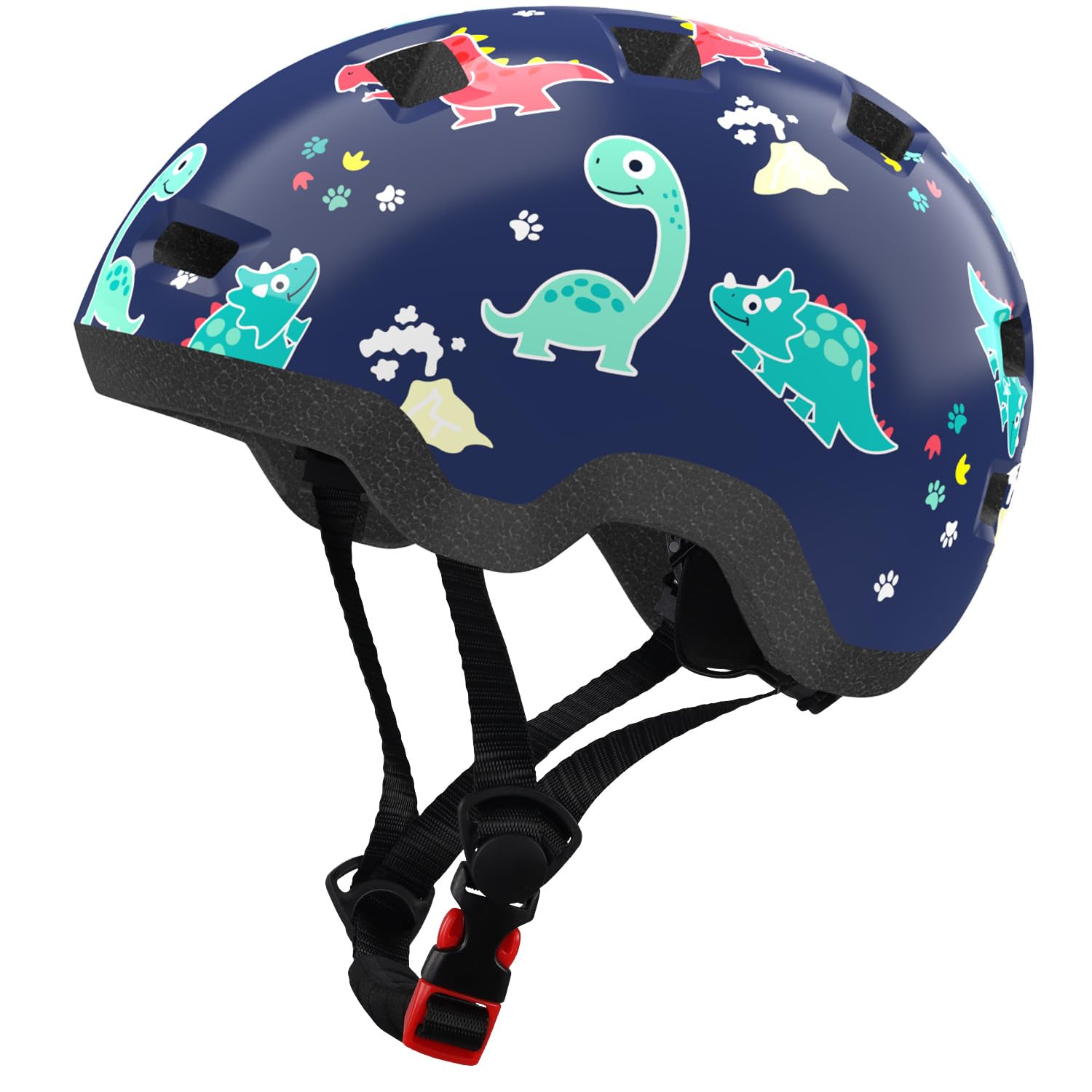
2. Toddler Helmet,Adjustable Lightweight Baby Infant Bike Helmet for 1-6 Year
A featherweight first helmet with a dial fit so simple a toddler can use it.
This Bimalsic helmet earns its value badge by nailing the fundamentals at an entry-level price. It’s certified to both the U.S. CPSC 1203 and ASTM 1447 standards, meaning it’s been tested for bicycle and multi-sport impact protection. The 12 strategically placed vents actively channel airflow, a feature that matters because kids get sweaty fast on a warm afternoon ride.
The XS size is designed for infants from 6 months to 2.5 years, covering head sizes from 45 to 49 cm. One size up (S) covers 48 to 54 cm for kids 2-6 years old, and the brand wisely suggests sizing up if a head measures around 48 cm. The turning dial at the back is easy for even a child to use, and the two sets of interchangeable pads (4mm and 7mm) let you customize the fit as your little one grows.
The feedback is overwhelmingly positive on quality, with owners noting it fits a 6-month-old well and is “lightweight and easy to adjust.” The dinosaur design gets lots of love, and the soft, absorbent padding has no rough edges. One owner noted that a fall off a balance bike ended safely — the real-world scenario every parent buys for.
the starter helmet: This is the one to pick for a baby or young toddler just moving up to a balance bike. It meets two safety standards (the U.S. CPSC and the European EN 1078), and the adjustable dial lets you fine-tune the fit as your child grows — so you get premium-level confidence without the premium price.
size up when in doubt: If your child’s head is near the upper limit of a size range, the brand recommends the larger size for a longer, more comfortable fit.
3. Toddler Bike Helmet 2-4 Years Boys Girls
The shark-topped helmet that’s 43% lighter than the Raskullz, so tiny necks don’t feel the strain.
This Hisyll helmet leads with its weight: at just 7.36 ounces, it is significantly lighter than the 10.56-ounce Raskullz, which is a huge deal for a toddler whose neck muscles are still developing. The ultra-light design uses a PC (polycarbonate) shell with high-density EPS foam to absorb impact effectively, so safety doesn’t come at the cost of comfort.
The shark theme, complete with silicone spikes on top, is the headliner for kids. It’s recommended for ages 2-5 and fits head circumferences of 50-54cm. The 11 vents are designed to reduce drag and take away excess heat, keeping heads breathable in the hot summer. The inner pad is removable for cleaning, a practical touch for a piece of gear that sees a lot of sweat and dirt.
Owners are charmed by the design, calling it “unique” and “good looking,” with a couple of noted concerns. The most mentioned trade-off is that this helmet is not adjustable, and some found it too big for their 3-year-olds. There’s also a specific note about the print cover falling easily in the heat, so it’s not the best choice for scorching climates.
the style-forward choice: Perfect for the toddler who needs a cool factor to get on board. The shark look is a guaranteed hit, and the light weight makes it easy to forget you’re wearing it.
measure carefully: With no adjustment system, buying the right size is critical. If you’re between sizes, this one might not be forgiving enough.
4. BELL Toddler Zoomer Bike Helmet
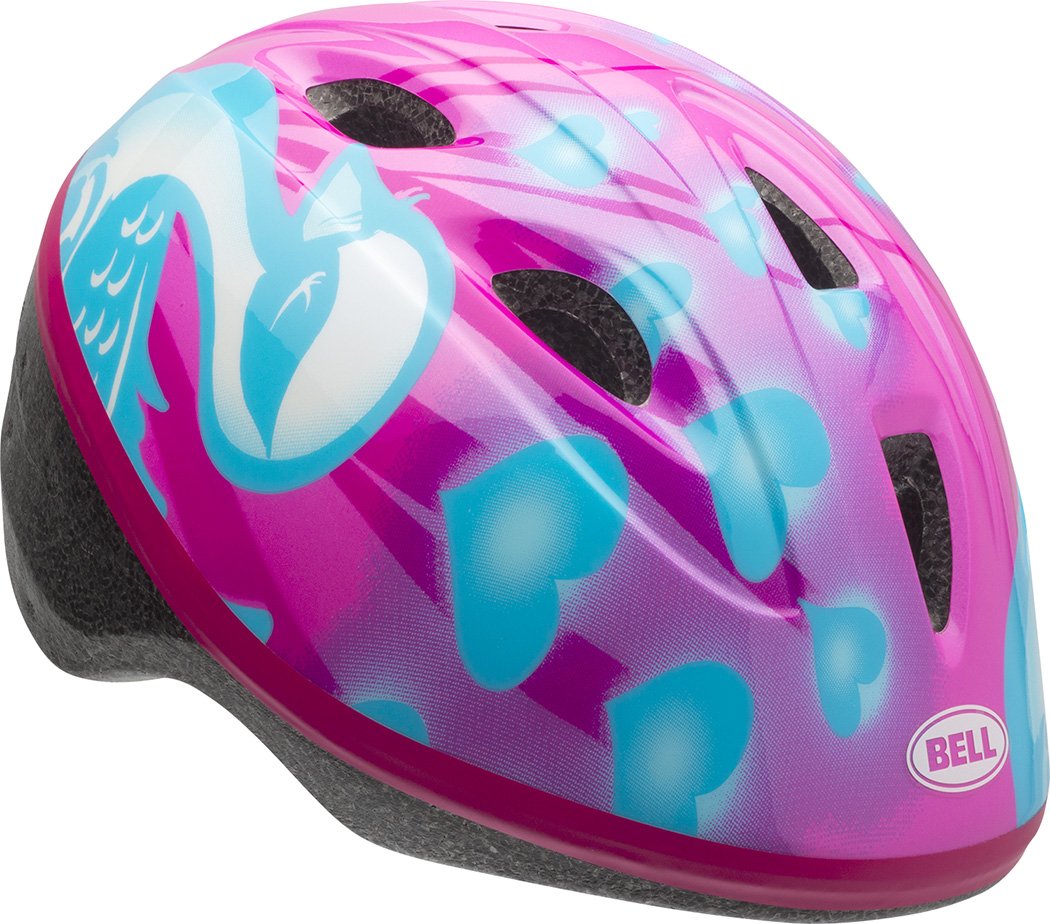
A trusted brand’s no-fuss answer to getting a secure fit without a fight.
BELL is a name parents recognize, and the Zoomer delivers the brand’s hallmark features in a toddler package. The True Fit system self-adjusts for a proper fit every time, which removes the guesswork of dialing in straps. The patented Pinch Guard buckle ensures pinch-free buckling, so a squirming toddler’s skin stays safe during the process.
Compliance is solid with the U.S. CPSC Safety Standard, and the extended rear coverage area adds protection right where a toddler needs it most. With 7 vents, it keeps heads cooler than a fully enclosed model, though it’s not the most ventilated on this list. The weight comes in at 10.24 ounces, and it fits head sizes of 48-52cm.
Buyers report it fits two and three-year-olds well, with one saying it “perfectly fit my 2.5-year-old’s head,” and the colors are a hit — one parent notes the pink is “not obnoxious.” The main watch-out is sizing: some report it runs small, fitting a 2-year-old snugly despite a 3+ label. So measure your child’s head first, then buy.
the low-maintenance fit: Great for busy parents who want a helmet that adjusts itself and buckles without pinching. The extended rear coverage adds a layer of safety for active toddlers.
size up for larger heads: If your child is at the top of the size chart, consider moving up a size, as this model tends to run slightly small.
5. Bell Infant Sprout Bike Helmet

A tried-and-true silhouette with a one-step fit system for the smallest heads.
The Sprout is designed after the classic bicycle helmet, with a low profile that provides great coverage in a variety of colors. It’s recommended for kids aged 1 and up, fitting most heads measuring 47-52cm. This is a true first-helmet size, designed for the 1.5-year-old just starting to explore on two wheels.
Its True Fit system is the star, allowing for easy one-step adjustment every time you ride. That simplicity is a huge win during a pre-ride wrestling match. The patented Pinch Guard buckle ensures pinch-free buckling, and the seven vents keep your little one cool while they learn the ropes. At 9.6 ounces, it’s a reasonable weight for a baby’s head.
Families report it works well for 1.5-year-olds, with one noting their child “gets excited to wear it every day.” Reviewers describe it as “snug and secure,” “easy to adjust,” and “very sturdy,” with quality the most-praised aspect, followed by appearance. The trade-off is sweat — a couple of parents mention a sweaty head on hot days, and the fit can be a little loose if your child is on the smaller side of the size chart.
the reliable classic: For parents who want a proven, simple design from a trusted brand that won’t break the bank. The one-step fit is a lifesaver for daily rides.
best for average-sized heads: If your 1-year-old is at the 30th percentile, this might slide around, so measure carefully before you commit.
6. Kids Bike Helmet for Toddlers, Boys and Girls
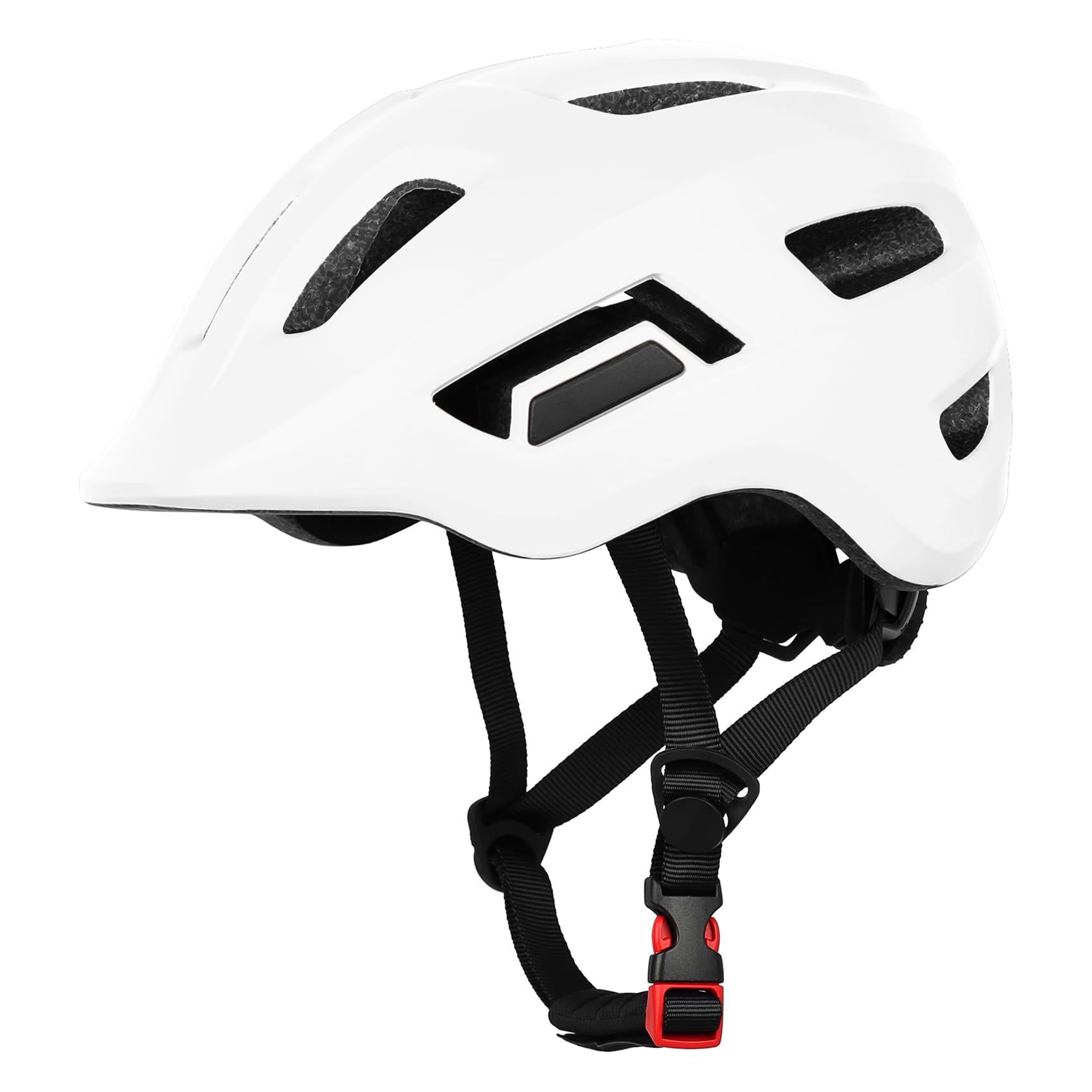
The slim-profile helmet that a pediatric physical therapist felt confident recommending.
This HUGGAH helmet stands out for its shape. Instead of the typically rounded toddler helmet, it has a slimmer, more aerodynamic profile that stays in place without shifting around. The significance of this was highlighted by a parent who is a Physical Therapist, noting they felt “much better endorsing this helmet than the constantly shifting versions we have tried.”
Safety comes from a hard PC outer shell and a lightweight EPS foam interlayer, both designed to absorb impact. The X-Small size fits head circumferences of 48-50cm, suitable for ages 1-3, and a Small size goes up to 51-54cm for older kids. It’s adjustable via a dial at the back, and the soft chin straps with a quick-release buckle ensure stability.
Ventilation is a standout spec with 14 well-designed vents — the most on this list — which provide sufficient airflow to keep heads dry and comfortable for longer. The removable and washable foam lining is a practical touch. It’s lightweight at 8.48 ounces, and owners repeatedly call it “lightweight and safe and looks good,” with a small size even fitting some adults with heads under 23 inches.
the active-kid’s helmet: Made for multi-sport use — bike, kick scooter, skateboard, or inline skates. The slim profile and top-tier ventilation make it comfortable for high-energy play.
watch the growth: The X-small fits snugly for ages 1-3, so if your toddler has a larger head, you might jump sizes sooner than expected.
7. OutdoorMaster Toddler Kids Bike Helmet Multi-Sport

The sun-shielding helmet with a built-in visor and a shell built for maximum impact resistance.
OutdoorMaster’s toddler helmet brings a premium feature to the table: a built-in visor that shields little eyes from the sun and provides better visibility while learning to ride. This is a thoughtful touch that helps a toddler focus on the path ahead rather than squinting. The ABS outer shell is engineered to resist impact, paired with high-quality EPS foam for shock absorption.
The fit is highly customizable, with two sets of interchangeable pads for a snug fit and a size adjustment dial for extra tightness. The adjustable fit covers the head circumferences of most kids aged 1 and above, specifically 48-52cm. Easy-adjust nylon straps and a no-chafing chin pad complete the comfort package, and the 10 vents keep kids cool on longer rides.
Owners are impressed with the build quality and appearance, with one noting their toddler “would demand to wear the helmet non stop! Just around the house.” The simple design fits well and is lightweight, and the shell is durable. The main feedback caveat is durability — while many find it sturdy, a few have reported the outer shell coming unglued from the inner foam over time.
the all-day comfort choice: For the kid who wears a helmet constantly, the comfortable fit, sun visor, and lightweight design make it easy to keep on. It’s a great match for bikes, scooters, and boards.
treat the shell with care: A few owners saw the outer shell separate from the foam, so it’s best for gentle neighborhood use rather than rough handling.
8. Thousand Jr. Toddler Helmet

A sleek, minimalist helmet that grows with your child and lets them personalize their ride.
The Thousand Jr. is the style-forward option, trading cartoon characters for a clean, modern aesthetic with a vegan leather interior. It encourages creativity by including a removable, reflective stickers pack, letting your toddler make it their own — and those reflective stickers add a visibility bonus for evening rides. It looks like a scaled-down adult helmet, which some kids prefer.
Fitting heads from 45cm to 49cm, it’s one of the smaller options on this list, designed to grow with a child from age 1. The dial fit system allows for precise adjustments and enables the helmet to grow with your child, a key feature for longevity. It includes two sets of padding for a custom fit, and the 11 vents with interior cooling channels provide active ventilation.
The fit is praised for handling even a 99th-percentile head, with highly adjustable straps. The lightweight design is a highlight for younger wearers, and the stickers are a fun bonus. It’s certified for biking, roller skating, and skateboarding in North America and Europe, meeting both CPSC and CE standards. The main point of mixed feedback is the magnetic strap feature, which several customers noted isn’t quite as advertised.
the design-forward pick: For parents who want a sleek, safety-certified helmet that looks great and grows with their child. The stickers add a personal touch kids love.
manage expectations on the str: The magnetic closure has been flagged as not living up to its billing, so treat it as a standard strap rather than a premium magnetic system.
9. Giro Scamp MIPS II Youth Bike Helmet
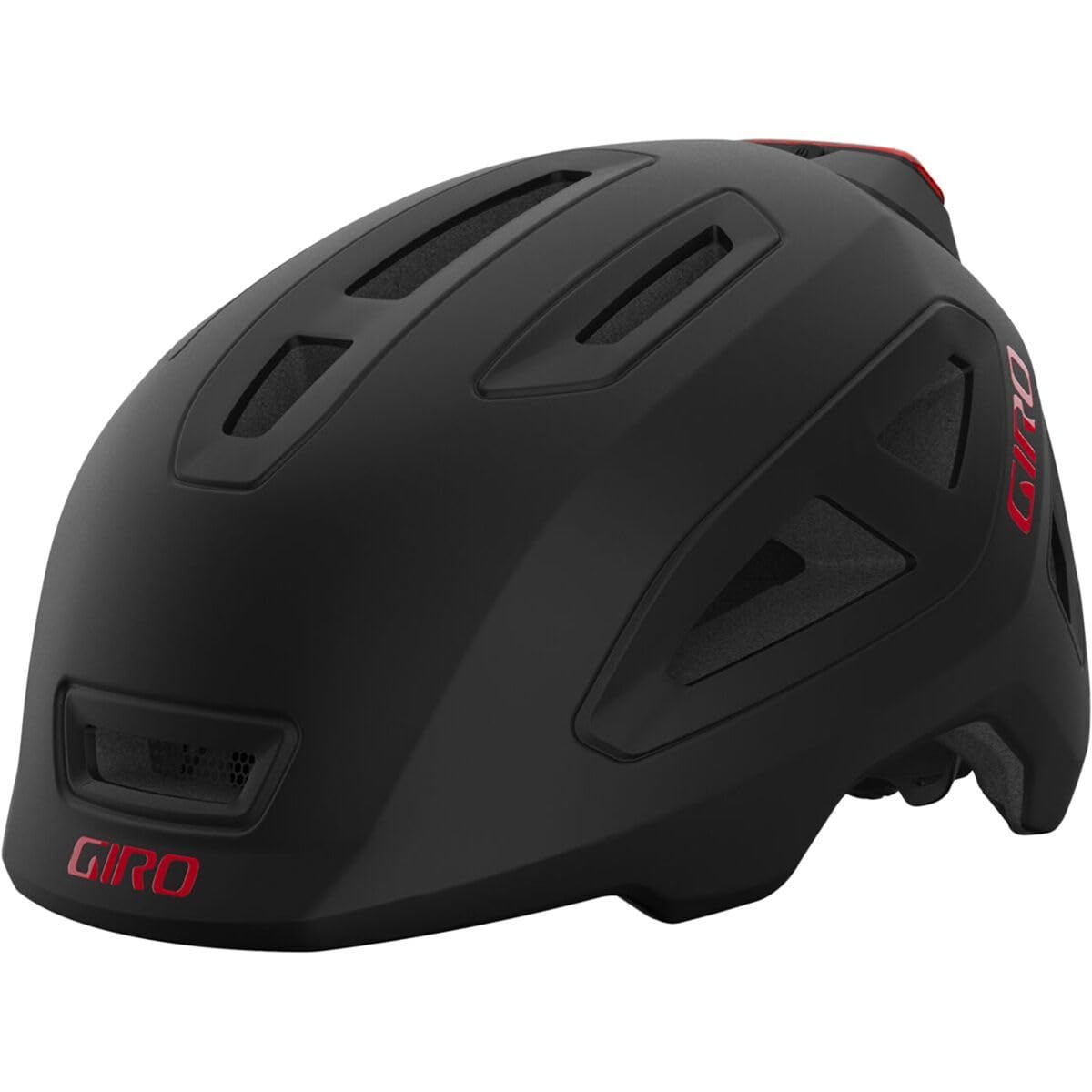
The gold standard in toddler head protection, with MIPS technology and a 265-gram featherweight build.
The Giro Scamp MIPS II is the premium choice for parents who want the best protection available. Its standout feature is MIPS technology uses a low-friction layer to redirect rotational energy from angled impacts, enhancing concussion protection.. One owner highlighted this, calling it “the lightest and most compact helmet out there,” weighing in at just 265 grams.
The two-piece shell construction combines a tough outer hard shell with a polycarbonate lower shell permanently fused to the liner. This gives durability without excess weight. The Roc Loc Jr. fit system is specifically shaped to match the curvature of a child’s head, with a large, rubberized knob that makes it easy for adults to adjust the tension quickly.
It’s a favorite among parents, with one family buying it “6 times for family” members. The fit works well for a 2.5-year-old, and the ratcheting clasp prevents pinching. It’s comfortable, breathable, and easy to adjust. The only noted gripes are that the straps can loosen over time and the price point is higher — “pricey but worth it” is a common refrain.
the safety-focused investment: For parents who prioritize the latest safety tech like MIPS and are willing to pay for it. This is the helmet you buy when you want the best.
expect to re-tighten: The straps loosen with use, so it’s a small maintenance task to keep the fit secure. It’s a minor trade-off for top-tier protection.
Understanding the Specs
Head Circumference & Sizing
The single most crucial spec is the head circumference range, measured in centimeters. A helmet that’s too big can shift and leave the forehead exposed, defeating its purpose. Always measure just above the eyebrows and compare to the stated range. A dial-fit system or extra padding can help bridge the gap between sizes and extend the life of the helmet.
Ventilation
Ventilation is about comfort, which directly affects whether a child will keep the helmet on. More vents mean better airflow to wick away heat and sweat. Look for helmets with at least 7 vents, and up to 14 for high-activity play. Interior cooling channels actively capture and pass air through, making a sweaty summer ride much more bearable.
Shell & Impact Protection
The outer shell is your first line of defense. Polycarbonate (PC) and Acrylonitrile Butadiene Styrene (ABS) are common, impact-resistant materials. Inside, the helmet uses Expanded Polystyrene (EPS) foam, which is designed to crush on impact and absorb the energy of a crash rather than transferring it to the skull. Look for explicit statements about compliance with the CPSC standard.
Safety Certifications
All helmets must clearly state they meet safety certifications to be considered safe. The key one in the U.S. is the CPSC Safety Standard for Bicycle Helmets. Some go further with ASTM F1447, which covers multi-sport use. Premium helmets may add MIPS (Multi-directional Impact Protection System) technology to help with rotational forces.
FAQ
How do I measure my baby’s head for a helmet correctly?
Is a loose baby bike helmet safe?
What is the best age to start using a baby bike helmet?
How can I get my toddler to actually wear their helmet?
What is MIPS and does my baby need it?
Can my child use a bike helmet for other activities like scooting or skating?
How long will this helmet fit my growing toddler?
What should I do with a helmet after a crash?
Final Thoughts: The Verdict
For most kids, the winner is the Raskullz Infant Helmets because the character design solves the biggest barrier: getting a toddler to wear it. If you want a durable, adjustable first helmet for a baby, the Bimalsic Toddler Helmet is an unbeatable value. And for maximum impact protection with MIPS technology, the Giro Scamp MIPS II is the top-tier choice.
How We Picked
We do not accept paid placement. Every pick is matched to a real buyer and a real use-case; we do not hands-on test units.
Sources & Methodology
Specifications: manufacturer listings and product documentation. Review insights: verified customer reviews, as of August 2026. Pricing: not shown on this page (it changes often); check the current price via the retailer link.
As an Amazon Associate, Gadgets Feed earns from qualifying purchases. This does not affect which products we feature.