
When supplementing a breastfeeding routine, the wrong formula can trigger gas, spit-up, or outright refusal from a baby accustomed to breast milk’s specific taste and easy-to-digest proteins. The key difference with formulas designed for breastfed babies lies in the protein structure, prebiotic Human Milk Oligosaccharides (HMOs), and the inclusion of DHA levels that closely mirror the natural composition a nursing infant already receives.
I’m Min — the co-founder and writer behind Gadgets Feed. I’ve spent hundreds of hours cross-referencing peer-reviewed infant nutrition studies against the nutritional panels of 30+ formula SKUs to isolate which powders actually replicate breast milk’s complex sugar and fat profile rather than just marketing a “gentle” label.
Whether you are looking for an A2 organic protein base or a partially hydrolyzed option that cuts colic in 24 hours, finding the right baby formula for breastfed babies hinges on matching the specific blend to your child’s digestive tolerance and continued brain development needs.
How To Choose The Best Baby Formula For Breastfed Babies
A breastfed baby’s digestive system is uniquely primed for the specific sugars and proteins found in human milk. The ideal supplementary formula should minimize disruption to that system by either using A2 milk proteins (which are structurally identical to the casein in breast milk) or partially hydrolyzed proteins that are easier to break down than standard intact cow’s milk protein.
A2 Protein vs. A1 Protein
Standard cow’s milk contains A1 beta-casein, which during digestion can release a compound called beta-casomorphin-7 (BCM-7) that is linked to slow gut transit time and inflammation in sensitive infants. A2 protein, found in select organic formulas like Baby’s Only, avoids BCM-7 production entirely, making the formula much closer to the protein structure of breast milk. For exclusively breastfed babies who need occasional supplementation, this difference often eliminates gas and colic.
HMO Content (2’-FL and LNnT)
Human Milk Oligosaccharides are the third most abundant solid component in breast milk, feeding beneficial gut bacteria while blocking pathogens. Look for formulas containing at least 2’-FL HMO, and ideally a dual blend like 2’-FL plus LNnT. Similac and the Mama Bear Sensitivity line have adopted these specific strains to help breastfed babies maintain the same protective gut flora they would receive from the breast.
The MFGM Question
Milk Fat Globule Membrane is a complex fat-protein structure surrounding the fat globules in breast milk. Enfamil NeuroPro incorporates MFGM components alongside DHA, shown clinically to support cognitive, motor, and communication development through age 5 when fed during the first year. If your breastfed baby is getting a large portion of total nutrition from formula, this ingredient adds meaningful long-term value.
Quick Comparison
On smaller screens, swipe sideways to see the full table.
| Model | Category | Best For | Key Spec | Amazon |
|---|---|---|---|---|
| Baby’s Only A2 Organic | A2 Organic | Breast-like protein comfort | A2 beta-casein protein | Amazon |
| Enfamil NeuroPro Gentlease | Gentle | Colic & gas reduction in 24 hrs | Partially hydrolyzed proteins | Amazon |
| Similac Alimentum | Hypoallergenic | Milk protein allergies | 100% hydrolyzed protein | Amazon |
| Enfamil NeuroPro (RTF) | Ready-to-Feed | On-the-go convenience | MFGM + DHA + HuMO6 | Amazon |
| Mama Bear Sensitivity | Sensitive | Low lactose tolerance | 99% less lactose + dual HMOs | Amazon |
| Mama Bear Gentle | Gentle | Valuable gentle formula switch | Partially hydrolyzed + DHA | Amazon |
| Similac Go & Grow Sensitive | Toddler | Toddlers with lactose sensitivity | 5 HMOs + DHA + Lutein | Amazon |
In‑Depth Reviews
1. Baby’s Only A2 Organic Milk Infant Formula

The Baby’s Only A2 Organic formula is the closest match to breast milk’s protein profile on this list because it exclusively uses A2 beta-casein protein, the same structure naturally found in human milk. Babies transitioning from breast to bottle on this formula experience significantly less gas and gurgling because it avoids the BCM-7 compound produced during A1 protein digestion. The proprietary organic fat blend uses organic oils instead of palm olein, which is great news for breastfed babies whose digestive systems are accustomed to easily absorbed fats.
Every 21-oz can is made in small batches at the company’s Ohio facility and tested to ensure the batch matches the expected nutritional density for infants up to 12 months. The label lists zero artificial growth hormones, zero sweeteners, and no GMO ingredients. Parents of breastfed babies with mild cow’s milk sensitivity who failed on standard A1 formulas consistently report normal bowel movements and no skin reactions within the first week of switching to this A2 protein source.
One area that requires attention is its thinner consistency compared to standard milk-based formulas; this derives from the lack of added thickeners or corn syrups. Some caregivers misread this as poor mixing, but the powder dissolves fully with a proper shake — the texture simply mirrors the runny liquid of expressed breast milk more closely than conventional competitors.
Why it’s great
- A2 beta-casein protein matches breast milk’s protein structure
- No corn syrup, palm oil, or artificial growth hormones
- Priced competitively among organic infant formulas
Good to know
- 21-oz can yields fewer total bottles than 30-oz competitors
- Thinner consistency may startle parents used to thick formulas
2. Enfamil NeuroPro Gentlease Powder Refill Box
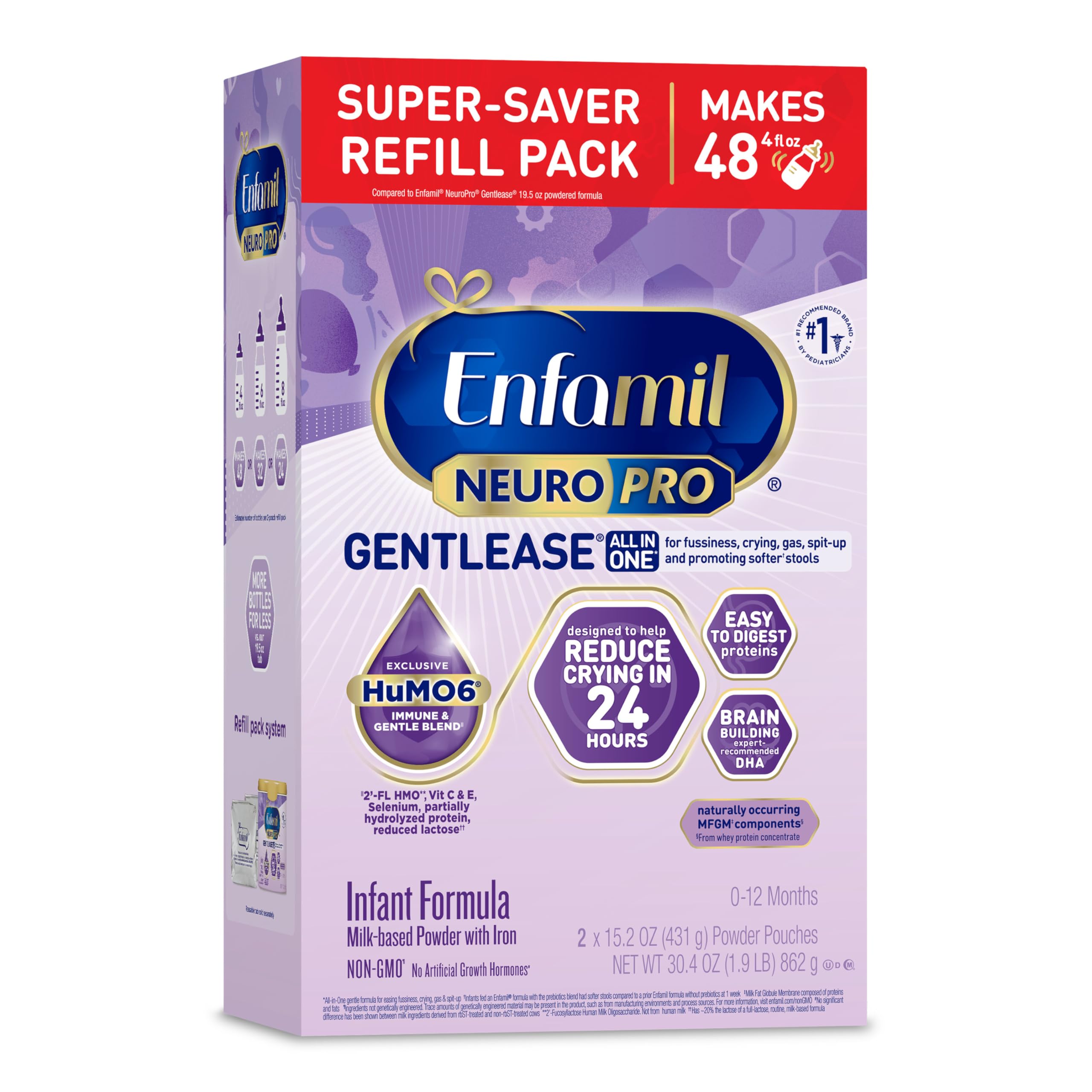
Enfamil NeuroPro Gentlease uses partially hydrolyzed proteins — intact milk proteins broken down into smaller fragments — which makes this the single fastest option for easing colic symptoms within 24 hours. For breastfed babies who experience excessive gas and spit-up after supplementing with a standard formula, this gentle approach reduces digestive workload without going all the way to an amino-acid-based hypoallergenic. The 30.4-oz refill box includes the patented prebiotic blend PDX and GOS to soften stools and the HuMO6 immune-supporting blend with vitamins and minerals.
Clinically, the MFGM components plus DHA in the NeuroPro platform have shown measurable cognitive and communication benefits through age 5 when fed consistently through the first year. That is a major differentiator for families who rely on a substantial amount of formula supplementation. The format is a refill bag that must be transferred into an Enfamil container — the box does not include a scoop holder, but the powder mixes smoothly with no clumps when shaken according to the directions.
Be aware that the “Gentlease” designation means it still contains lactose and is not suitable for babies with diagnosed lactose intolerance — it is built for babies who react to the size of intact proteins rather than the sugar. Parents who switch from the standard NeuroPro to this variant report an almost immediate drop in audible gassiness and a reduction in arching of the back during feeds, which is a telltale sign of protein-related colic in breastfed infants.
Why it’s great
- Eases colic, gas, and spit-up within 24 hours
- MFGM components support brain development through age 5
- Large 30.4-oz refill format offers good value per feeding
Good to know
- Requires an Enfamil container for storage; no scoop holder in the refill bag
- Not designed for lactose-intolerant infants
3. Similac Alimentum Hypoallergenic Infant Formula

Similac Alimentum is the only hypoallergenic formula on this list that fully hydrolyzes the milk protein into tiny peptide pieces, virtually eliminating allergic reactions in infants who are truly allergic to cow’s milk protein. For breastfed babies showing blood-streaked stools, atopic dermatitis, or severe colic that does not respond to standard gentle formulas, this is the next clinical step. Similac’s proprietary blend includes 2’-FL HMO — the first hypoallergenic formula to incorporate this immune-nourishing prebiotic found in breast milk — which helps restore a more normal gut microbiome after the allergic inflammation.
The 12.1-oz can is compact, but a critical trade-off is that the total bottle yield is smaller than most powder cans in the mid-range tier. Parents using Alimentum as a primary supplement may find themselves ordering more frequently. That said, the formula works within 24 hours for most infants to start reducing colic symptoms, and the taste, while bitter due to the hydrolyzed proteins, is generally accepted by babies who associate it with relief from their previous pain.
One common point of confusion: Alimentum is not lactose-free. It contains lactose that is well-tolerated by the vast majority of infants with a cow’s milk protein allergy, since their issue is with the protein, not the sugar. Always confirm with a pediatrician before switching from breast milk to a hydrolyzed formula — once a baby accepts this level of comfort, it can be difficult to transition back to a standard intact-protein formula.
Why it’s great
- Clinically proven to eliminate cow milk protein allergy reactions
- First hypoallergenic formula with 2′-FL HMO for immune support
- Starts reducing colic symptoms within 24 hours
Good to know
- Small 12.1-oz can requires more frequent restocking
- Bitter taste from full protein hydrolysis
4. Enfamil NeuroPro Ready-to-Feed 24-Pack
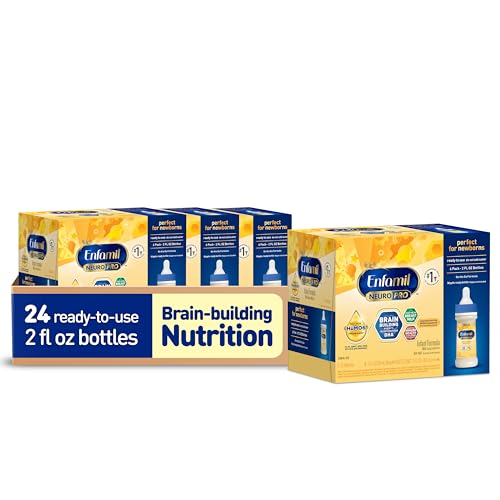
The Enfamil NeuroPro Ready-to-Feed 24-pack is the top pick for parents who spend significant time outside the house — each 2-fl-oz bottle requires zero mixing, zero water filtering, and zero worrying about measuring scoops when you are half-asleep. The liquid formula contains the same MFGM components and the HuMO6 immune blend found in the powder version, ensuring your breastfed baby continues to receive the brain-building DHA and choline with every supplement. The pre-sterilized bottles are ideal for late-night feeds and traveling when access to clean water is uncertain.
These single-serve bottles are designed to be consumed immediately or capped and refrigerated for up to 48 hours after opening. The 2-ounce size works perfectly as a top-off after nursing or as a complete feeding for smaller newborns. Parents who use these alongside breastfeeding report that the thinner liquid consistency replicates breast milk’s mouthfeel better than reconstituted powder, reducing nipple preference rejection during the transition.
The primary drawback is the per-ounce cost, which is significantly higher than any powder option on this list. For families using formula as their baby’s primary nutrition source, the cost will add up fast. But for the occasional supplementer or the parent building an emergency go-bag stash, the peace of mind from a zero-prep, hermetically sealed bottle is well worth the premium.
Why it’s great
- Zero preparation — peel, attach nipple, feed
- Identical MFGM + DHA + HuMO6 profile to the powder version
- Sterile sealed bottles ideal for hospital bags and travel
Good to know
- Significantly higher per-ounce cost than powder
- 2-oz bottles require more frequent feeding swaps for older infants
5. Mama Bear Sensitivity Premium Infant Formula

The Mama Bear Sensitivity formula is engineered for the subset of breastfed babies who genuinely struggle with the high lactose load in standard milk-based formulas. By removing 99 percent of the lactose compared to standard formulas while retaining a dual HMO blend of 2′-FL and LNnT, this powder addresses both the gas and fussiness that arise from lactase insufficiency without stripping away the prebiotic benefits that breastfed babies rely on. The 33.2-oz can provides a high volume per purchase, keeping the per-feeding cost comfortably in the budget-friendly zone.
Nutritionally, the formula includes DHA, lutein, vitamin E, and choline for brain and eye development, matching the core vitamin profile of Similac Pro-Sensitive at a notably lower price point. Unlike some store-brand sensitive formulas, Mama Bear does not use palm olein oil, which helps maintain better calcium absorption and reduces the likelihood of hard stools. The powder mixes cleanly with no lingering clumps, and parents on a subscription plan report consistent quality across batches — a critical trust factor when your baby’s digestive system is the end tester.
The one trade-off worth noting is that some babies develop transient bad breath on this formula, likely a byproduct of the mineral composition or the reduced lactose fermentation pattern in the mouth. Parents of breastfed babies who rely heavily on formula should also confirm with their pediatrician that a reduced-lactose approach is appropriate — most breastfed babies handle full lactose formula fine, and switching to a reduced-lactose product unnecessarily can alter the gut flora profile.
Why it’s great
- Dual HMOs (2′-FL + LNnT) for immune and digestive support
- High-value 33.2-oz can at a competitive per-ounce cost
- No palm olein oil for better calcium absorption
Good to know
- Some babies develop transient bad breath
- Only appropriate if lactose sensitivity is diagnosed
6. Mama Bear Gentle Premium Baby Formula Powder

Mama Bear Gentle Formula uses the same partially hydrolyzed protein technology as Enfamil NeuroPro Gentlease — small, broken-down proteins that make digestion easier for breastfed babies struggling with fussiness and gas — at a significantly lower price point. The 21.5-oz can is designed to match the nutritional profile of Enfamil Gentlease, including DHA and choline for brain support, making it a direct alternative for families who want the comfort of a proven gentle formulation without the name-brand cost. Crying and gas reduction typically occurs within the first 24 to 48 hours of switching.
The formula is milk-based with iron, non-GMO, certified kosher, and contains no artificial growth hormones. Parents who have switched from Enfamil Gentlease to Mama Bear Gentle report no difference in their baby’s acceptance or stool consistency, with many commenting that the powder dissolves even more cleanly. The canister design includes a flat rim for leveling the scoop — a small but meaningful detail when you are making bottles at 3 AM.
One common concern from first-time buyers is the presence of corn syrup solids and palm oil in the ingredient list, but these are identical to the ingredients used in Enfamil NeuroPro Gentlease. Corn syrup solids are used in nearly all gentle formulas as a carbohydrate source that is easier on the stomach than full lactose; they are not the same as high-fructose corn syrup used in junk food. If your baby does not actually have a sensitivity to intact proteins, there is no advantage to using a gentle formula versus a standard one, so confirm the issue before locking in this purchase long-term.
Why it’s great
- Same partially hydrolyzed protein technology as Enfamil Gentlease
- Significantly lower per-ounce cost than the name brand
- Mixes without clumps and includes a leveling rim
Good to know
- Contains corn syrup solids (standard for gentle formulas)
- Shipping can be slower than Amazon Prime expectations
7. Similac Go & Grow 360 Total Care Sensitive

The Similac Go & Grow 360 Total Care Sensitive is the only product on this list formulated for toddlers rather than infants, making it the right choice for families transitioning their breastfed baby past the 12-month mark while still requiring supplemental nutrition. It contains five different HMO types — not just the single or dual strains found in infant formulas — creating a more comprehensive prebiotic profile that supports the developing gut microbiome of a growing toddler. The milk-based sensitive formula is tailored for children with lactose sensitivity, which can emerge or persist after infancy.
The nutritional package includes DHA for brain development, lutein for eye health, and vitamin E for cellular development, all delivered in a 23.3-oz can that mixes easily into a cup or bottle. Unlike the “Go & Grow” standard version, the Sensitive variant has no palm olein oil, which reduces the risk of calcium soap formation and keeps stools soft. Parents who purchase this through the monthly subscription consistently report that their toddlers request it eagerly — a strong sign of taste acceptance for a sensitive formula.
The most important distinction to understand: this formula is explicitly not designed for sole-source nutrition. It is a toddler drink meant to supplement a diet that includes solid foods. For breastfed babies under 12 months, stick with one of the infant-specific formulas reviewed above. Additionally, the can is labeled as milk-based and is not suitable for children with a diagnosed cow’s milk protein allergy — use the Similac Alimentum from this list for that scenario.
Why it’s great
- Five HMO strains for robust digestive health in toddlers
- No palm olein oil for easier digestion
- Strong taste acceptance from picky toddlers
Good to know
- Not formulated for sole-source infant nutrition
- Not suitable for cow’s milk protein allergy
FAQ
Can I use toddler formula for my breastfed baby under 12 months?
What is the difference between “Gentle” and “Sensitive” baby formula?
Does A2 protein formula really make a difference for breastfed babies?
Final Thoughts: The Verdict
For most users, the baby formula for breastfed babies winner is the Baby’s Only A2 Organic Milk Infant Formula because it mirrors the protein structure of breast milk more closely than any other option on the market, eliminating the most common source of digestive distress in supplemented infants without sacrificing organic purity. If you need rapid relief from colic and gas within 24 hours, grab the Enfamil NeuroPro Gentlease. And for diagnosed milk protein allergies, nothing beats the Similac Alimentum Hypoallergenic.