
A new baby means your hands are never free, and the wrong carrier can turn a quick trip to the grocery store into a painful, sweaty ordeal. You are face-to-face with a choice: a flimsy fabric sling that digs into your shoulders or a bulky structured seat that feels like a weight vest. The real test isn’t just comfort—it’s whether the carrier distributes your growing baby’s weight properly without you having to constantly re-adjust the straps or worry about your lower back. A solid ergonomic design, breathable paneling, and a supportive waist belt make the difference between a carrier you wear for ten minutes and one you rely on for hours.
I’m Min — the co-founder and writer behind Gadgets Feed. I’ve spent countless hours analyzing the ergonomic specs, weight ratings, and real-world user feedback of dozens of Baby Front Carriers to separate the shoulder-savers from the back-breakers.
Whether you need a breathable mesh model for summer walks or a hip-seat design for heavy toddlers, this guide covers the top contenders so you can find the absolute best baby front carrier for your family’s routine.
How To Choose The Best Baby Front Carrier
Choosing a baby front carrier isn’t just about picking a color you like—it’s about ensuring your baby’s hip development is supported while your own spine doesn’t pay the price. You are balancing weight capacity, breathability, ease of use, and carrying positions against your daily routine, from quick grocery runs to long hikes. The wrong choice here leads to back pain, a fussy baby, and a carrier that sits unused in the closet.
Ergonomic Hip Seat & Waist Belt
The single most critical feature is a supportive waist belt that transfers the baby’s weight from your shoulders to your hips. Without it, all the strain concentrates on your upper back and neck. Look for a wide, padded belt (at least 4 inches) and a firm hip seat that promotes the “M” position—knees higher than the bottom—which is the gold standard for healthy hip development.
Breathable, All-Season Fabric
Babies run hot, and so do parents. A carrier made of 3D mesh or breathable linen allows airflow, preventing the sweat pooling that happens with solid polyester panels. Mesh carriers are ideal for warm climates or summer walks, while carriers with a zippered temperature-regulation panel that reveals mesh underneath offer year-round versatility. Avoid thick, non-breathable fabrics if you live in a humid area.
Weight Capacity & Position Versatility
A carrier that only supports 7–25 lbs will be outgrown before your baby can walk. Opt for a model that spans from newborn (around 7 lbs) to toddler (up to 45 or even 50 lbs). More positions—front inward, front outward, back carry, hip carry—give you flexibility as your baby grows and their curiosity increases. However, remember that forward-facing carry is typically recommended only after 5–6 months when baby has strong neck control.
Quick Comparison
On smaller screens, swipe sideways to see the full table.
| Model | Category | Best For | Key Spec | Amazon |
|---|---|---|---|---|
| Ergobaby Omni Deluxe | Premium | All-day ergonomic support | 7-45 lbs, 4 positions, mesh | Amazon |
| WildBird Aerial | Premium | Breathable linen, stylish | 7-45 lbs, linen, cross straps | Amazon |
| BabyBjörn Free | Premium | Quick on/off, built-in back support | 7-26.5 lbs, 3D mesh, back brace | Amazon |
| Momcozy 2-in-1 Hip Seat | Mid-Range | Active babies, detachable hip seat | Up to 44 lbs, 6 positions, 3D mesh | Amazon |
| BabbleRoo 6-in-1 | Mid-Range | Big babies, lots of pockets | 7-50 lbs, 6 ways, lumbar support | Amazon |
| Boppy ComfyFit | Mid-Range | Hybrid wrap/comfy for larger bodies | 8-35 lbs, adjustable straps, JPMA cert | Amazon |
| Ergonomic Hip Seat Carrier | Budget | Affordable versatility, temperature panel | 12-33 lbs, 6 positions, zippered mesh | Amazon |
In‑Depth Reviews
1. Ergobaby Omni Deluxe Baby Carrier
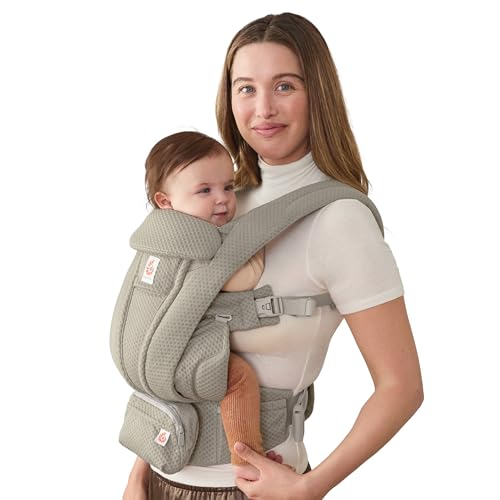
The Ergobaby Omni Deluxe earns the top spot because it solves the two biggest complaints parents have: weight distribution and breathability. Its patented bucket seat and adjustable back panel support babies from 7 lbs all the way up to 45 lbs across four positions—inward, outward, back, and hip carry. The 3D breathable mesh keeps both you and your baby cool, which is critical during warm-weather walks or if you tend to run hot.
What sets the Omni Deluxe apart is how it handles the transition between parents of different sizes. The cross-back or H-back strap options and intuitive adjustment points allow a fast, precise fit without fumbling with tangled straps. Four built-in storage pockets plus a removable pouch mean you can stash your phone, keys, and a pacifier without needing a separate diaper bag. The privacy sun hood doubles as a nursing cover, adding real versatility for daily errands.
Parents report that even with a 28-pound toddler, the lumbar support keeps the wearer’s back pain-free during long hikes or airport sprints. The International Hip Dysplasia Institute certifies it as hip-healthy, meaning your baby’s legs sit in the correct “M” position every time. The lightweight mesh construction also means it packs down smaller than heavier structured carriers, making it easy to toss into a stroller basket.
Why it’s great
- Breathable 3D mesh prevents overheating
- Four carrying positions with easy transitions
- Excellent lumbar support for heavy toddlers
- Multiple storage pockets keep essentials handy
Good to know
- Premium price point reflects high build quality
- Hip carry requires a slight learning curve initially
2. WildBird Aerial Buckle Carrier
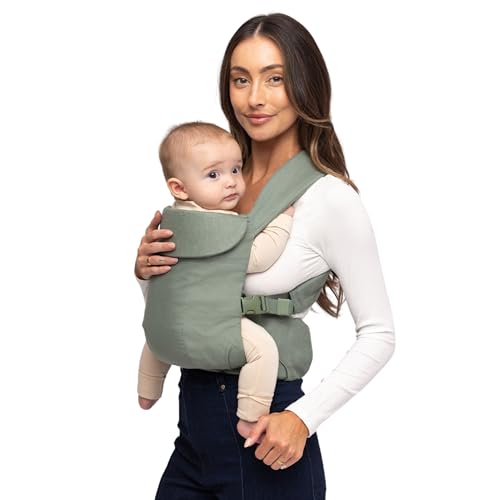
The WildBird Aerial is built from breathable linen—a fabric choice that sets it apart from the polyester crowd. Linen breathes naturally, wicks moisture, and gets softer with every wash, making it an excellent choice for parents who prioritize comfort during all-day wear. It supports babies from 7 to 45 lbs and offers front inward and back carry positions, which covers the most common scenarios for daily use.
Padded cross straps distribute the weight evenly across your shoulders without digging in, and the unique lumbar support pad helps prevent the lower back fatigue that plagues cheaper carriers. The design is deliberately minimal; it lacks a bulky hip seat, but the structured waist belt transfers the load effectively to your hips. Parents report that the carrier fits wearers from 5’3″ to 6’1″ and accommodates sizes ranging from XS to 4XL depending on the version you choose.
One key limitation is the lack of a forward-facing carry position—babies must face inward or ride on your back. For caregivers who want only ergonomic inward-facing holds, this is a trade-off that buys better weight distribution and a cleaner silhouette. The linen also washes well in the machine, and the removable chest clip for back carry makes it easy to adjust as your baby grows. It is a durable, long-term investment for the minimalist parent.
Why it’s great
- Natural linen fabric is breathable and softens over time
- Excellent weight distribution with padded cross straps
- Fits a wide range of body sizes (XS-4XL)
- Machine washable for easy care
Good to know
- No forward-facing carry position available
- Higher price point than many structured carriers
3. BabyBjörn Baby Carrier Free
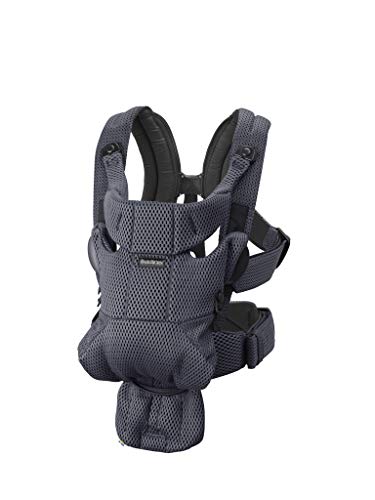
The BabyBjörn Free is engineered for speed: you can put it on and get your baby situated in under a minute without needing a second pair of hands. Its built-in back support brace and waist belt lock in a secure fit, while the sliding seat height adjustment allows you to dial in the perfect depth as your baby grows. The 3D mesh version is noticeably cooler than traditional polyester carriers, drying quickly after a wash or a sweaty walk.
This carrier supports front inward and front outward positions, covering the two most-used modes for newborns and older infants. The padded shoulder straps are wide but not bulky, and the waist belt is substantial enough to prevent digging. Parents consistently mention that the BabyBjörn Free eliminates shoulder and neck pain, even when carrying a 26-pound baby for extended periods. The adjustable head and neck support folds down when baby is awake and provides a secure spot for napping.
The weight cap of 26.5 lbs is lower than many competitors, meaning your child will outgrow it sooner—typically around 18–24 months. It also lacks a hip or back carry option, so it is strictly a front-facing carrier. If you only need a comfortable, fast-to-use carrier for the first 18 months and you prioritize breathability and on/off speed above all else, this is a top-tier choice. The simple clip-and-go design makes it a favorite for dads and grandparents.
Why it’s great
- Exceptionally easy to put on and take off solo
- Built-in back support brace relieves spinal pressure
- 3D mesh is cool, breathable, and quick-drying
- Sliding seat adjusts as baby grows
Good to know
- Weight limit stops at 26.5 lbs, shorter use window
- No back carry or hip carry positions
4. Momcozy Baby Carrier with Hip Seat

The Momcozy 2-in-1 Hip Seat Carrier offers a unique detachable hip seat that doubles as a standalone baby perch for quick moments—like when you’re just holding your baby on your hip for a few minutes at the store. It supports six carrying positions: cradle, hip, forward-facing, inward-facing, and back carry. The 10mm thick cushion absorbs shock and relieves pressure, making it comfortable for parents carrying toddlers around 35–40 lbs.
The X-structure design allows one-person instant wear; you can put it on without help, adjust the Velcro waistband, and secure the buckles in seconds. The 3D contoured waist support distributes pressure across your waist, abdomen, and shoulders, which is noticeably better than simpler belt-free carriers. The breathable 3D air mesh construction ensures airflow even during long walks, preventing the sweat buildup you often get with thick foam panels.
Users appreciate that the upper carrier portion can be folded into a pocket when not in use, saving space in your diaper bag. The main durability concern comes from the snap closures on the shoulder straps—a few users report they can loosen over time, allowing the zipper to slide. For mid-range price point, the versatility is impressive, but parents who plan to wear the carrier daily for hours should monitor the strap hardware for long-term wear.
Why it’s great
- Detachable hip seat offers quick, hands-free options
- Six versatile carrying positions cover every stage
- Breathable 3D mesh keeps both wearer and baby cool
- One-person wear design is fast and intuitive
Good to know
- Snap closures can loosen with heavy daily use
- Waist belt may be snug for waists over 45 inches
5. BabbleRoo 6-in-1 Baby Carrier
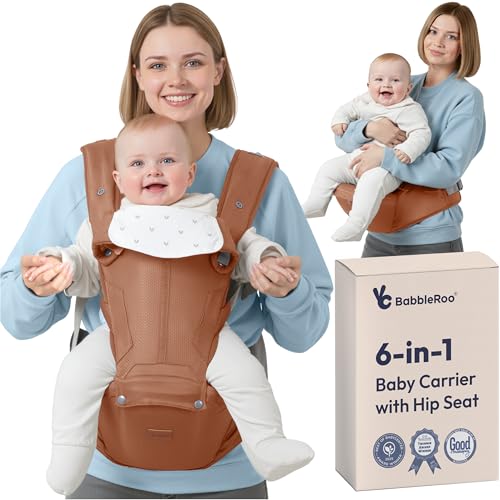
The BabbleRoo 6-in-1 stands out for its exceptionally high weight capacity—it supports babies from 7 lbs all the way up to 50 lbs, which covers the bulk of the toddler years. The dense, firm hip seat is ergonomically shaped to keep your baby’s back straight and legs in a healthy “M” position, preventing the slump you see in poorly designed carriers. For parents of larger or heavier babies, this carrier ensures weight stays on your hips rather than pulling your shoulders forward.
It comes with a removable bib that is perfect for teething babies who drool or chew on the straps, and the hidden hood provides sun coverage or privacy for nursing. Multiple storage pockets and a bottle holder mean you can carry essentials without an extra bag. The adjustable shoulder straps and waist belt fit a wide range of body types, and users praise the 30-second setup time once you get the hang of the hip strap’s Velcro adjustment.
The one recurring feedback is that the hip Velcro can be tricky to tighten while simultaneously holding a squirmy baby—you may need a second hand or a bit of practice. That said, the carrier feels robust and durable, with dense padding that doesn’t compress after months of use. For the price, it delivers features typically found in carriers that cost more, making it a strong mid-range contender for families who want a single carrier to last from infancy through preschool years.
Why it’s great
- High weight capacity holds up to 50 lbs
- Dense hip seat keeps baby’s back straight
- Removable bib and hidden hood add real utility
- Multiple pockets and bottle holder for essentials
Good to know
- Hip Velcro adjustment is tricky with one hand
- A bit bulkier than minimalist wrap-style carriers
6. Boppy ComfyFit Adjustable Baby Carrier

The Boppy ComfyFit is the best of both worlds: it combines the soft, stretchy comfort of a wrap-style carrier with the structured support of a buckle carrier. The fabric is 88% polyester and 12% spandex, giving it a flexible yet supportive feel that molds to both your body and your baby’s. It is JPMA certified for safety and requires no infant insert for newborns—simply adjust the arm straps, wraps, and belt for a custom fit across different body sizes.
This carrier is particularly praised by plus-size and large-chested women who often struggle to find carriers that fit properly without digging into their shoulders or riding up. The padded waist belt and wide shoulder straps distribute weight evenly, and the hybrid design eliminates the wrestling match you get with traditional wraps. It supports three positions: newborn face-in (frog position), baby face-in with legs out, and front face-out, covering the essential stages from 8 to 35 lbs.
The ComfyFit packs down small into its own pouch, making it a great option for stashing in a diaper bag for quick walks or store runs. It is machine washable, which is a lifesaver for inevitable spit-up incidents. However, the stretchy nature of the fabric means it can take a minute longer to get on compared to fully structured carriers—you need to tighten the straps correctly to avoid sagging. For parents who want wrap-like coziness with buckle-carrier security, this is a unique, well-built solution.
Why it’s great
- Stretchy wrap fabric with structured support and adjustability
- Excellent fit for plus-size and larger-chested parents
- No infant insert needed, easy to adjust for newborns
- Packs into its own pouch for portable storage
Good to know
- Stretchy material requires extra tightening for secure fit
- Setup time is slightly longer than buckle-only carriers
7. Ergonomic Baby Carrier with Hip Seat (Multi-Position)

This entry-level carrier punches above its weight by including a zippered temperature-regulation panel that reveals a breathable 3D mesh layer underneath—a feature typically reserved for carriers that cost significantly more. It supports babies from 12 to 33 lbs across six positions: front-inward, front-outward, hiking, single strap, hip, and backpack. For parents on a budget who want versatility, this carrier offers a surprising amount of flexibility.
The large padded waistband and lumbar support help maintain healthy posture, preventing the back pain that plagues cheaper, belt-less carriers. A sleeping hood is included to support napping babies and block out light. However, the weight distribution is less refined than premium models—parents carrying a 30-pound toddler may still feel some shoulder strain after extended wear. The carrier also lacks the high-end fabric choices and precision adjustments of pricier options.
The main trade-off comes in fit inclusivity: the waist strap may not accommodate sizes above a US 14/16 comfortably, which is a common complaint from larger-bodied users. For parents within the size range, this carrier delivers solid value, but those with broader frames should double-check the waist measurements. If you need a carrier that works from 12 lbs up to toddlerhood without breaking the bank, and you prioritize ventilation via the mesh panel, this is a smart budget-friendly pick.
Why it’s great
- Temperature-regulation panel with zippered mesh for all-season use
- Six carrying positions cover most scenarios
- Padded waistband and lumbar support reduce back strain
- Budget-friendly price with impressive feature set
Good to know
- Waist strap may be too small for plus-size parents (US 14/16+)
- Weight distribution can feel less balanced with heavier toddlers
FAQ
What is the “M” position and why is it important for a baby front carrier?
How do I know if my baby is too big for a front-facing carry?
Final Thoughts: The Verdict
For most users, the baby front carrier winner is the Ergobaby Omni Deluxe because it balances breathable mesh, long-term weight support up to 45 lbs, and a versatile four-position design that grows with your child from day one. If you want a carrier with a detachable hip seat for quick errands, grab the Momcozy 2-in-1 Hip Seat Carrier. And for a breathable linen option that prioritizes style and community, nothing beats the WildBird Aerial.