
Every parent knows the sound: the relentless whimper and sudden crankiness that signals another wave of sore, swollen gums. Baby teether toys exist to deliver relief, but with dozens of shapes, materials, and claims on the shelf, picking the one that actually calms your baby without creating new problems can feel overwhelming. The wrong teether slips from tiny hands, collects lint, or simply fails to reach the molars that hurt most.
I’m Min — the co-founder and writer behind Gadgets Feed. After spending countless hours cross-referencing pediatric feeding guidelines, analyzing silicone food-grade certifications, and comparing texture maps for every popular teether on the market, I built this guide to cut through the noise.
If your little one is gnawing on everything in sight, you need a best baby teether toy that matches their exact developmental stage and oral motor needs — not just the cutest design on the shelf.
How To Choose The Best Baby Teether Toy
Teethers are small, but the wrong one can delay self-feeding skills or frustrate a desperate baby. Focus on three things: material safety, texture strategy, and grip geometry.
Material Safety: Silicone Versus Fabric Versus Plastic
Food-grade silicone is the gold standard because it is non-porous, free of BPA and phthalates, and can withstand dishwasher cycles and freezer temperatures without degrading. Fabric teethers, like cotton activity rings, offer varied sensory play but absorb moisture and require thorough drying to prevent mold. Hard plastic teethers, once common, risk cracking or leaching additives and are now largely replaced by medical-grade silicone alternatives across the premium and mid-range tiers.
Texture Mapping: Nubs, Ridges, and Smooth Zones
A teether should not be uniformly smooth. Babies need different textures to massage incisors, canines, and molars. Look for teethers with raised nubs on one side, gentle ridges on another, and a smooth section for the tongue to explore. This variety promotes oral motor development and keeps the baby engaged longer than a flat, one-note surface.
Grip Design and Anti-Drop Features
Tiny hands have weak palmar grasps. Teethers with a central bar, a wrist strap, or a handle shape that forces the baby to hold the toy instead of dropping it within seconds make a massive difference in real-world relief. Models with an interior grab ring or a no-drop cage design reduce the number of times you bend over to pick the toy off the floor.
Quick Comparison
On smaller screens, swipe sideways to see the full table.
| Model | Category | Best For | Key Spec | Amazon |
|---|---|---|---|---|
| Mushie No-Drop Sensory | Premium | Independent holding & self-soothing | Interior grab ring, 4.25 in x 4 in | Amazon |
| Teetherpop Fillable Freezable | Premium | Cold therapy with breastmilk or puree | Spill-proof sippy slits, 6-24 mo | Amazon |
| ezpz Oral Development Tools | Premium | Pre-feeding & spoon practice | 3-piece set, 100% silicone, 3+ mo | Amazon |
| Itzy Ritzy Bitzy Busy Ring | Mid-Range | Car seat / stroller sensory play | Cotton fabric, crinkle + jingle, 0+ mo | Amazon |
| Nuby IcyBite Ocean Rings | Mid-Range | Long-lasting chilled gum relief | purIce gel fill, stays cold longer, 3+ mo | Amazon |
| Garkoko Wrist Teether | Budget | Anti-drop wrist design for active babies | Silicone, 3.74 in x 2.4 in, 4-18 mo | Amazon |
| Innobaby Birthstone Ring | Budget | Birth-month themed gift with strong chomping | 3.75 in x 2.25 in, silicone, 0+ mo | Amazon |
In‑Depth Reviews
1. Mushie No-Drop Sensory Teether

The Mushie No-Drop Teether achieves what most teethers cannot: it stays in the baby’s hand. The interior grab ring is large enough for a 3-month-old’s fisted grasp yet shaped so the toy rotates naturally toward the mouth. Each of the four silicone nubs carries a distinct texture — some ridged, some dotted, one smooth — which gives the baby a reason to keep turning and chewing rather than dropping the toy in frustration.
At 4.25 inches across and 4.5 inches tall, this teether is substantial enough to prevent accidental swallowing but light enough for a baby to wave. The blush hue resists visible staining from drool or pureed foods, and the silicone surface wipes clean with a damp cloth or a quick trip through the top rack of the dishwasher. Parents who clip a pacifier leash to the center ring can further reduce floor drops during restaurant outings.
The only catch is the price premium: this sits at the top of the market for a single teether. However, given that multiple verified reviewers report their baby using it continuously from 3 months to 6 months and beyond, the cost-per-use is actually lower than cheaper alternatives that get abandoned after two weeks.
Why it’s great
- Interior handle keeps the toy in baby’s hand far longer than ring-only designs
- Four distinct nub textures provide varied gum stimulation and maintain interest
- BPA-, BPS-, PVC-, and phthalate-free food-grade silicone for total peace of mind
Good to know
- Premium price point for a single teether unit
- Some babies with very small hands can slip through the grab ring and drop it sideways
2. Teetherpop Fillable Freezable Teether
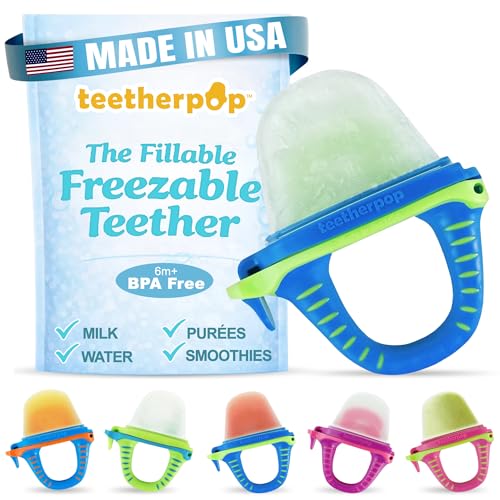
The Teetherpop reimagines the teether as a tiny popsicle mold. You fill the silicone reservoir with breast milk, formula, or puree, cap it, and freeze it for about 45 minutes. The result is a cold, flavorful chew that soothes inflamed gums while delivering a controlled taste of the frozen contents through tiny sippy slits at the top. Parents report virtually no dripping when the toy is held upside down — a major improvement over bulb-style feeder designs that dribble everywhere.
The sponge-like silicone exterior is soft enough to prevent gum bruising but firm enough to provide resistance for a 6-month-old actively chewing. The shape is short and wide, perfectly proportioned for a baby’s palmar grasp. A clean plastic cap snaps over the nibbling end for storage between uses, which keeps the fridge clean and the teether sanitary. Multiple reviewers note that buying two Teetherpops is wise so one is always frozen and ready.
The teether is recommended for babies 6 months and older due to the liquid contents, though some parents introduced it at 3-4 months with expressed breast milk under supervision. The only genuine limitation is that this is not a room-temperature go-to toy — it is specifically a cold-therapy tool, so you will still need a silicone ring or fabric toy for everyday non-frozen chewing.
Why it’s great
- Spill-proof sippy slits resist leaking even when the toy is inverted
- Frozen breastmilk or puree provides dual relief: cold numbness + familiar taste
- Includes storage cap to keep the freezer organized and the teether sanitary
Good to know
- Requires advance freezing and prep — not a grab-and-go toy for immediate relief
- Made in the USA from food-grade silicone but only recommended for 6 months+
3. ezpz Oral Development Tools (3-Pack)
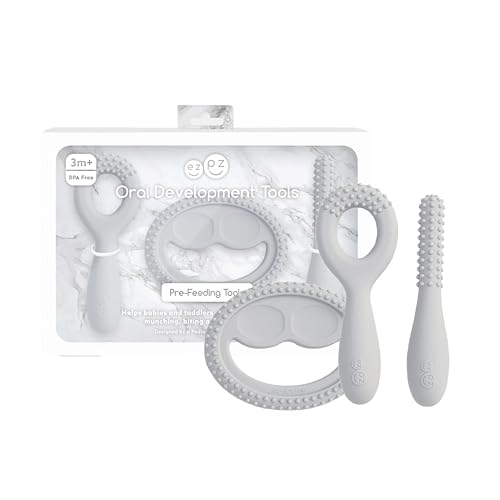
The ezpz Oral Development Tools blur the line between teether and feeding utensil. This three-piece set includes a smile-shaped tool, a narrow loop, and a stick-shaped tool — each made from a single piece of soft, food-grade silicone. The feeding expert behind the design focused on sensorimotor movements: the smile shape encourages lip closure, the loop promotes lateral tongue movement, and the stick target stimulates the bite-and-release reflex that babies need before they can safely swallow solid food.
Patents aside, the real-world benefit is durability. I have seen teethers that disintegrate after three dishwasher cycles — these tools come out looking new after repeated high-heat washes. The 3-month+ age rating means you can introduce them well before solids, dipping them in breast milk or formula to familiarize the baby with the sensation of a tool entering the mouth. By 6 months, parents report their babies independently using the stick tool to scoop puree and guide it to their gums.
The kit does require active supervision — these are not toys for unattended play due to their slim profile. The primary trade-off is that they are not designed for intense gnawing on molars; they are oral motor trainers first and teethers second. For babies who are already chomping hard on everything, a chunkier silicone ring may serve better for pure chewing relief.
Why it’s great
- Designed by a pediatric feeding expert to support pre-feeding and speech milestones
- Three distinct shapes target different oral motor skills (lip closure, tongue movement, bite)
- Dishwasher-safe food-grade silicone holds up to daily high-heat cleaning
Good to know
- Slim profile requires active parent supervision — not for passive solo chewing
- Best suited as a developmental tool rather than a heavy-duty molar relief teether
4. Itzy Ritzy Bitzy Busy Ring
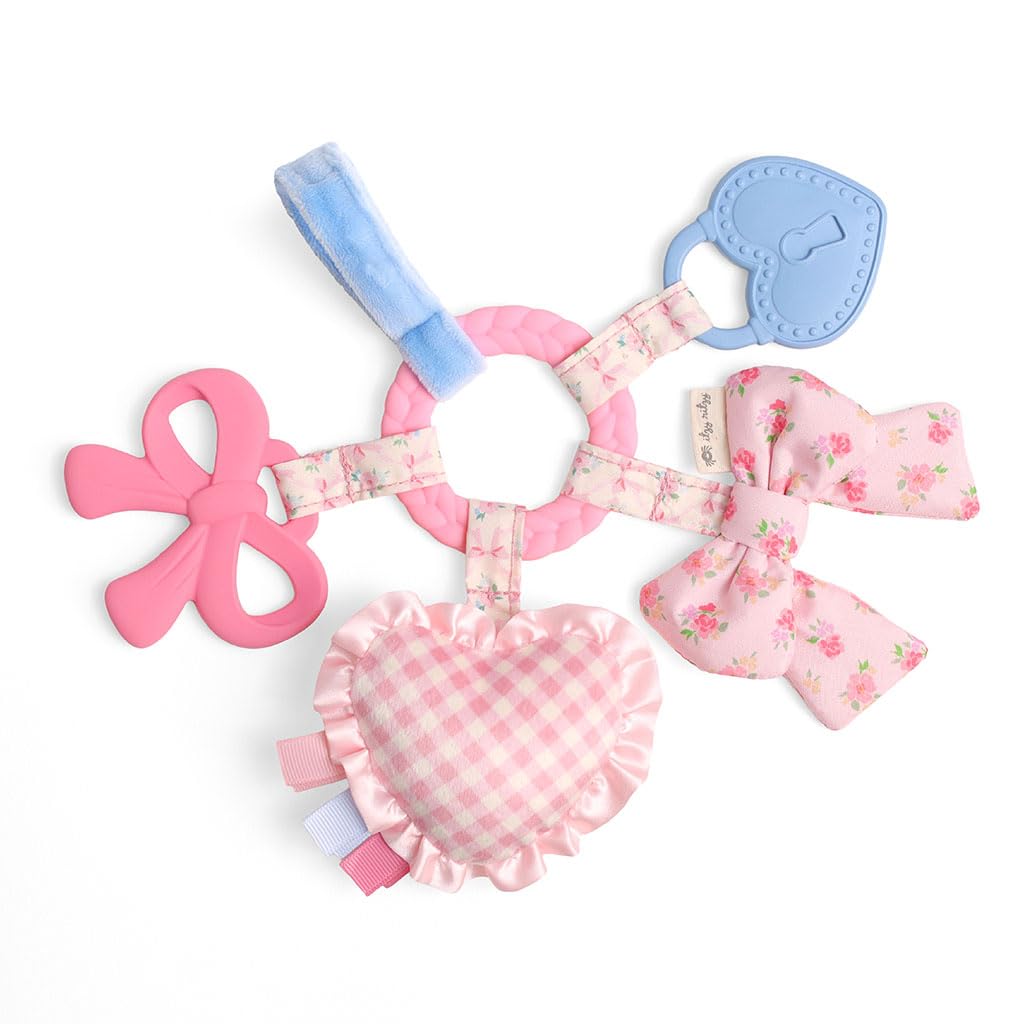
The Itzy Ritzy Bitzy Busy Ring is a fabric-based activity toy that doubles as a teether. A braided cotton ring serves as the chewing surface, while dangling charms — a crinkle rainbow, a jingle bell cloud, and textured ribbons — provide multi-sensory stimulation. The entire unit attaches to a car seat handle or stroller bar via a reinforced Velcro strap, making it a staple for parents who need baby entertained and chewing during errands.
At 0 months and up, this is one of the earliest teething solutions on the list. The braided cotton ring is softer than silicone, which is ideal for babies who are still in the mouthing stage rather than full-force chewing. The crinkle paper inside the rainbow charm and the gentle jingle bell offer auditory feedback that keeps babies reaching and grasping — a feature no silicone-only teether provides. Reviewers consistently praise the build quality, noting that the toys stay securely sewn even after months of washing.
The catch is that cotton absorbs drool and baby food and requires thorough air drying to prevent mildew. The Velcro strap, while sturdy, can lose grip over many wash-and-wear cycles. This is a sensory toy that happens to be a teether, not a dedicated gum-massage tool — for hard-core teething pain, you may still need a silicone ring alongside it.
Why it’s great
- Combines teething with auditory and visual stimulation (crinkle, jingle, textures)
- Velcro strap attaches securely to car seats and strollers for on-the-go relief
- Soft cotton braid is gentle for pre-teething mouthing from birth onward
Good to know
- Cotton material absorbs moisture and needs thorough air drying to prevent mold
- Velcro attachment may weaken after repeated washing and reattachment
5. Nuby IcyBite Ocean Rings

The Nuby IcyBite Ocean Rings use a proprietary purIce gel that stays cold significantly longer than water-filled teethers. The set contains three textured rings in different sizes and colors, allowing you to rotate them so one is always chilled and ready while the others are being chewed or washed. Each ring is made of a soft, flexible plastic shell over the gel core, which provides a gentle give when the baby bites down compared to a solid silicone block.
The variety of textures across the three rings means babies can choose their preferred chewing surface: one ring has raised bumps, another has smooth ridges, and the third has a nubby overall pattern. This is a budget-friendly cold-therapy solution that delivers at the same level as premium chillable teethers. Multiple reviewers confirm the rings fit perfectly in tiny fists and that the gel remains cool for a full teething session after 30 minutes in the fridge.
Do not freeze these rings — the purIce gel should be refrigerated only, as freezing can cause the gel to expand and deform the plastic shell. The plastic exterior, while soft, is not as durable as silicone; some users report surface cracking after weeks of vigorous chewing and repeated washing.
Why it’s great
- purIce gel retains cold longer than water-filled competitors for sustained relief
- Three different ring textures in one set provide variety for changing preferences
- Affordable entry point into cold-therapy teething without the premium markup
Good to know
- Plastic shell may develop surface cracks under heavy, prolonged chewing
- Refrigerate only — freezing can damage the gel core and outer material
6. Garkoko Wrist Teether Toy
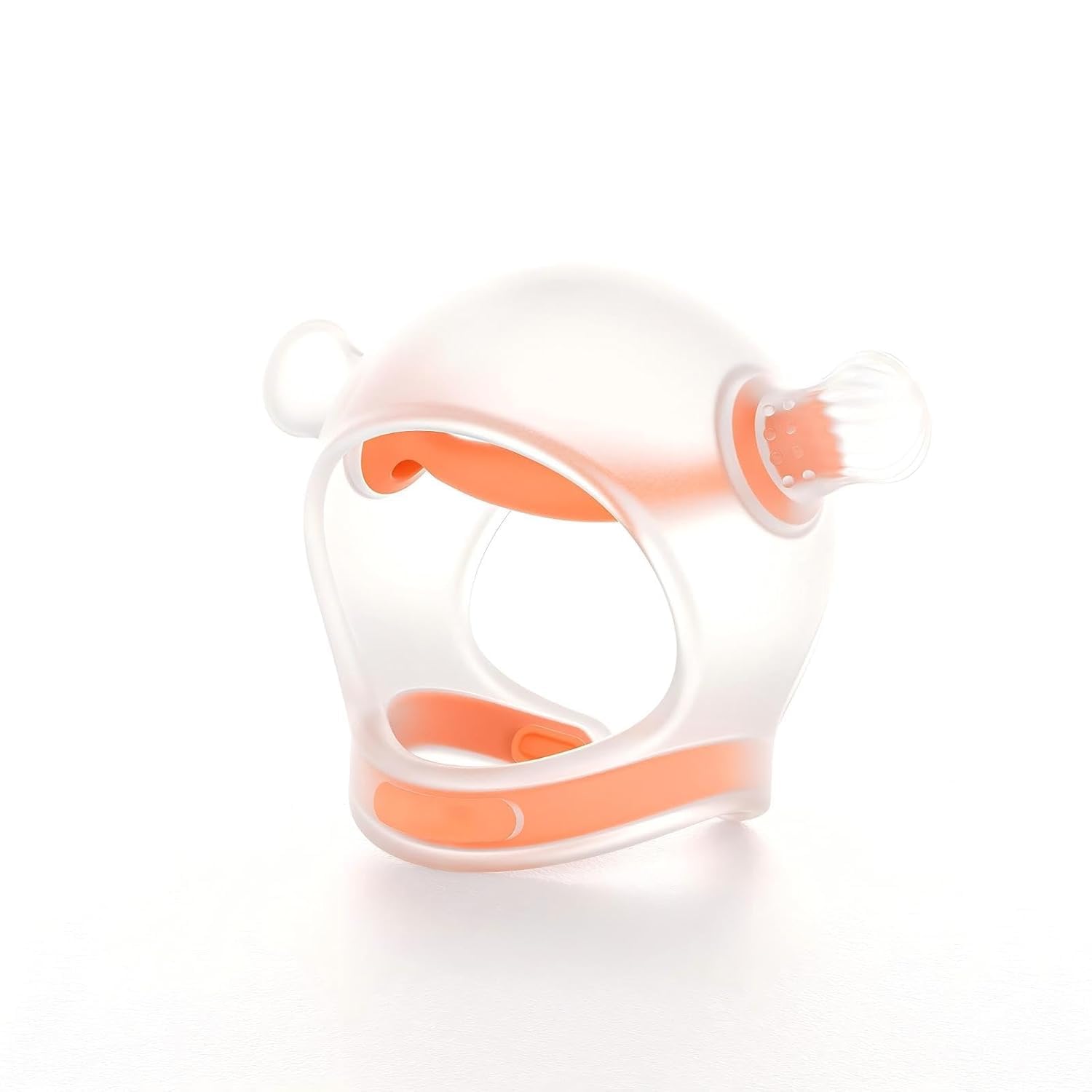
The Garkoko Wrist Teether solves the universal baby teether problem: gravity. The teether features a loop that slides over the baby’s wrist, so even when the baby opens their hand, the toy stays within reach. The main chewing zone is a soft silicone pad covered with raised massage points, while the outer edges are firmer silicone for babies who need more resistance to satisfy their bite reflex.
Breastfed babies who refuse pacifiers often resort to finger-sucking, and this teether mimics that shape while providing a sanitary alternative. The wrist band is adjustable and fits babies from about 4 months through toddlerhood. The silicone material is BPA-free and easy to rinse under running water after every use. Reviewers note that the wrist design forces the baby to keep the teether on long enough to figure out how to bring it to their mouth — a clever workaround for distracted chewers.
The wrist strap itself is not ventilated, so drool can pool against the baby’s skin if left on for extended periods. The teether is also relatively small — at 3.74 inches by 2.4 inches — so it works best as a supplemental teether rather than a primary relief tool for babies with multiple sore spots.
Why it’s great
- Wrist-loop design prevents the teether from falling and getting lost or dirty
- Combination of soft massage points and firm edges suits different chewing pressures
- Adjustable strap grows with the baby and fits a wide age range
Good to know
- Non-ventilated wrist strap can trap drool against the baby’s skin
- Small surface area may not provide enough coverage for full-mouth teething pain
7. Innobaby Birthstone Ring Teether
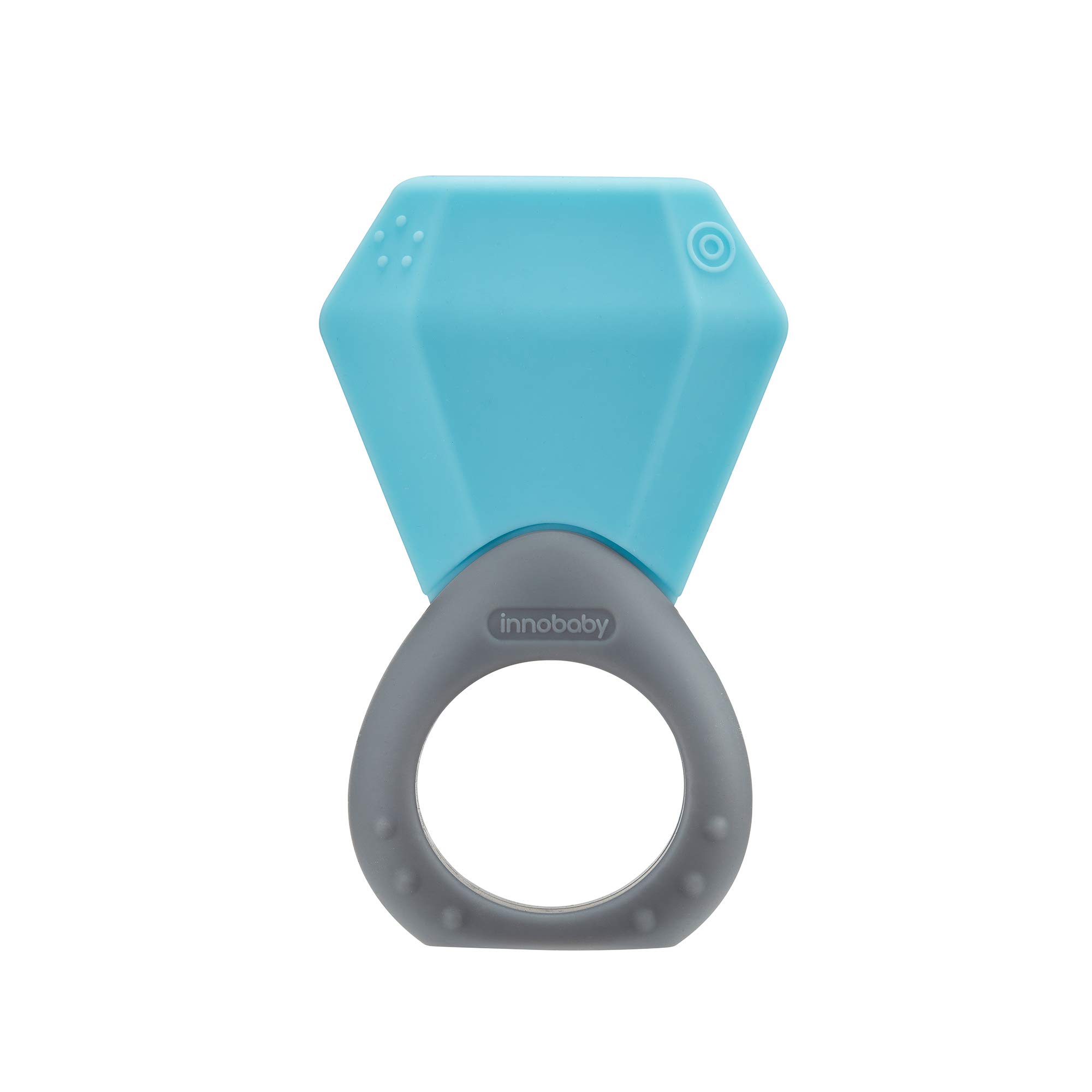
The Innobaby Birthstone Ring is a straightforward silicone ring teether that wins on concept. Each of the twelve color options matches a birthstone month, making this a go-to gift for baby showers and first birthdays. The ring measures 3.75 inches by 2.25 inches with a flat, wide surface that fits comfortably in a baby’s fist and reaches the back molars better than many smaller teethers.
The silicone is BPA-, phthalate-, PVC-, latex-, and lead-free — the full suite of safety certifications. It is top-rack dishwasher safe and freezer safe, giving parents flexible cleaning and chilling options. The 2018 National Parenting Products Award winner has maintained a strong following because the design is simple: no moving parts, no hidden crevices, no assembly. It is a solid slab of silicone that does one thing well.
Some babies find the flat surface too uniform and lose interest compared to teethers with varied nub textures. The ring also lacks a handle or wrist strap, so it falls to the floor frequently once the baby’s grip loosens. It is an excellent backup or travel teether, but for babies who need tactile variety or anti-drop engineering, the Mushie or Garkoko designs serve better.
Why it’s great
- Beautiful birthstone color system makes it a memorable and personalized gift
- Dishwasher safe and freezer safe for convenient chilling and sanitizing
- Wide flat silicone surface reaches back molars effectively
Good to know
- Uniform flat texture lacks the nub variety that keeps babies engaged
- No handle or strap means it drops to the floor as soon as the baby relaxes their grip
FAQ
At what age should I introduce a baby teether toy?
Can I freeze a silicone teether or should I only refrigerate it?
How do I clean a fabric teether without damaging it?
Final Thoughts: The Verdict
For most users, the best baby teether toy winner is the Mushie No-Drop Sensory Teether because its interior grab ring keeps the toy in the baby’s hand, and its four distinct silicone textures provide the variety that prevents boredom and promotes oral motor development. If you want targeted cold therapy with breastmilk or puree, grab the Teetherpop Fillable Freezable Teether. And for babies who are transitioning from mouthing to self-feeding, nothing beats the ezpz Oral Development Tools designed by a pediatric feeding expert to build the skills needed for safe solids.