
One rear-end collision, one phantom parking lot ding, one he-said-she-said at a four-way stop — that is all it takes to realize why a single forward-facing camera leaves you dangerously exposed. A back and front dash cam captures the full picture, eliminating the blind spots in your driving record that can cost you hundreds in insurance disputes or lost claims.
I’m Min — the co-founder and writer behind Gadgets Feed. For this guide, I dug through countless hours of technical spec sheets, cross-referenced sensor types against real-world low-light performance, and analyzed user recorded footage quality to separate units that merely record from those that provide genuine, court-ready clarity.
Whether you drive a sedan, an SUV, or a fleet vehicle, this guide breaks down the critical specs and real-world trade-offs to help you find the best back and front dash cam that fits your specific needs and budget.
How To Choose The Best Back And Front Dash Cam
Not all dual-channel dash cams are created equal. The rear camera is often the weak link, dropping to a lower resolution that makes license plates unreadable. Focus on the total system — not just the headline front-sensor resolution — to avoid a setup that only covers half your story.
Sensor Quality & Night Vision
The single most important component is the image sensor. Look for Sony STARVIS or STARVIS 2 sensors, which dramatically improve low-light sensitivity without washing out highlights. Pair this with a wide aperture of F1.5 or F1.6 and Wide Dynamic Range (WDR/HDR) to handle headlight glare and dark shadows.
Recording Resolution Balance
A front camera boasting 4K is impressive, but if the rear camera only outputs 720p — or has a grainy sensor — you lose crucial detail. Ideally, both channels should capture at least 1080p, with premium models offering 2.5K or 4K on both ends. Higher frame rates (60fps) also help freeze plate numbers at highway speeds.
Parking Mode Type
The three common parking modes are motion detection, time-lapse, and collision detection. Time-lapse offers the best evidence continuity and saves storage space, but all modes require a hardwire kit (sold separately) to avoid draining your car battery. Verify the dash cam’s voltage cutoff settings before buying.
Connectivity & Storage
Built-in 5GHz WiFi enables much faster video downloads than older 2.4GHz modules, saving you the hassle of removing the SD card. A built-in GPS module that embeds speed, coordinates, and route data directly into your video is essential for insurance claims and legal disputes. Always buy a high-endurance U3-rated card for continuous loop recording.
Quick Comparison
On smaller screens, swipe sideways to see the full table.
| Model | Category | Best For | Key Spec | Amazon |
|---|---|---|---|---|
| Vantrue S1 Pro | Premium | AI Safety & 60fps Clarity | STARVIS 2 Sensor, 1440p@60fps | Amazon |
| AZDOME M550 Max | Premium | 3-Channel Complete Coverage | 4K Front + 2.5K Rear | Amazon |
| REDTIGER F7N Pro | Premium | Value 4K Dual Recording | STARVIS 2, F1.5 Aperture | Amazon |
| Nanoby M1 | Mid-Range | Cabin & Rear Trio Monitoring | 4K+1080P+1080P 3-Channel | Amazon |
| Coolcrazy N8 | Mid-Range | High-Speed 5GHz WiFi | 4K + STARVIS, 60fps | Amazon |
| 70mai A410 | Entry-Level | Budget-Friendly Reliable Setup | 2.5K+1080P, Built-in GPS | Amazon |
| virrow X5 | Entry-Level | Value 4K Front + Touchscreen | 4K+2.5K, 3.39″ Touch | Amazon |
In‑Depth Reviews
1. Vantrue S1 Pro Dash Cam Front and Rear
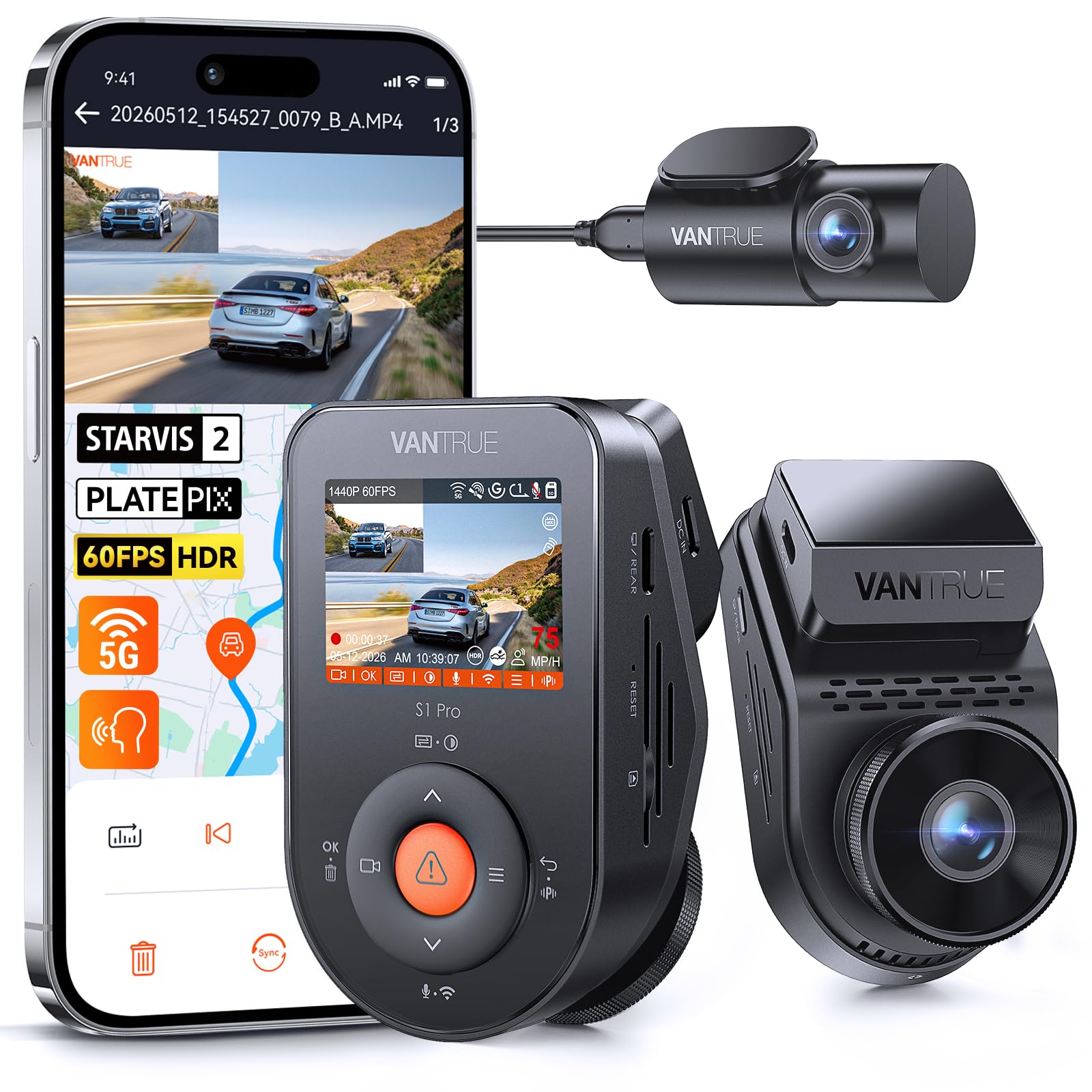
The Vantrue S1 Pro is the benchmark for a premium back and front dash cam, integrating a STARVIS 2 sensor and PlatePix technology to deliver exceptional clarity at night. The dual 1440p front and rear cameras can record at 60fps, essentially doubling the frames per second to freeze license plates on fast-moving highways. The AI-powered ADAS and Blind Spot Detection (BSD) system adds a layer of driver alertness that is genuinely useful in heavy traffic.
The 5GHz WiFi module is a major upgrade — a three-minute 1440p video downloads to your phone in about a minute, eliminating the delay of older 2.4GHz connections. The built-in GPS embeds speed and route data directly into the footage, which the desktop GPS Player can overlay on a map for precise accident reconstruction. The 160-degree wide-angle lenses cover multiple lanes with minimal barrel distortion.
Parking mode offers four options including motion detection with 15-second pre-recording and time-lapse. The supercapacitor power source handles extreme temperatures from 14°F to 158°F without battery swelling. The one downside is the sensitivity of the G-sensor on vehicles with stiff suspension — but this is easily adjusted in the slightly labyrinthine menu. It also supports SD cards up to 1TB, an industry-leading capacity.
Why it’s great
- Outstanding STARVIS 2 night vision with 60fps dual recording.
- Fast 5GHz WiFi for quick phone downloads and app control.
- AI driver alerts (ADAS/BSD) add genuine safety value.
Good to know
- Menu interface can feel overwhelming with many options.
- G-sensor is overly sensitive on bumpy roads without adjustment.
2. AZDOME M550 Max 3 Channel Dash Cam
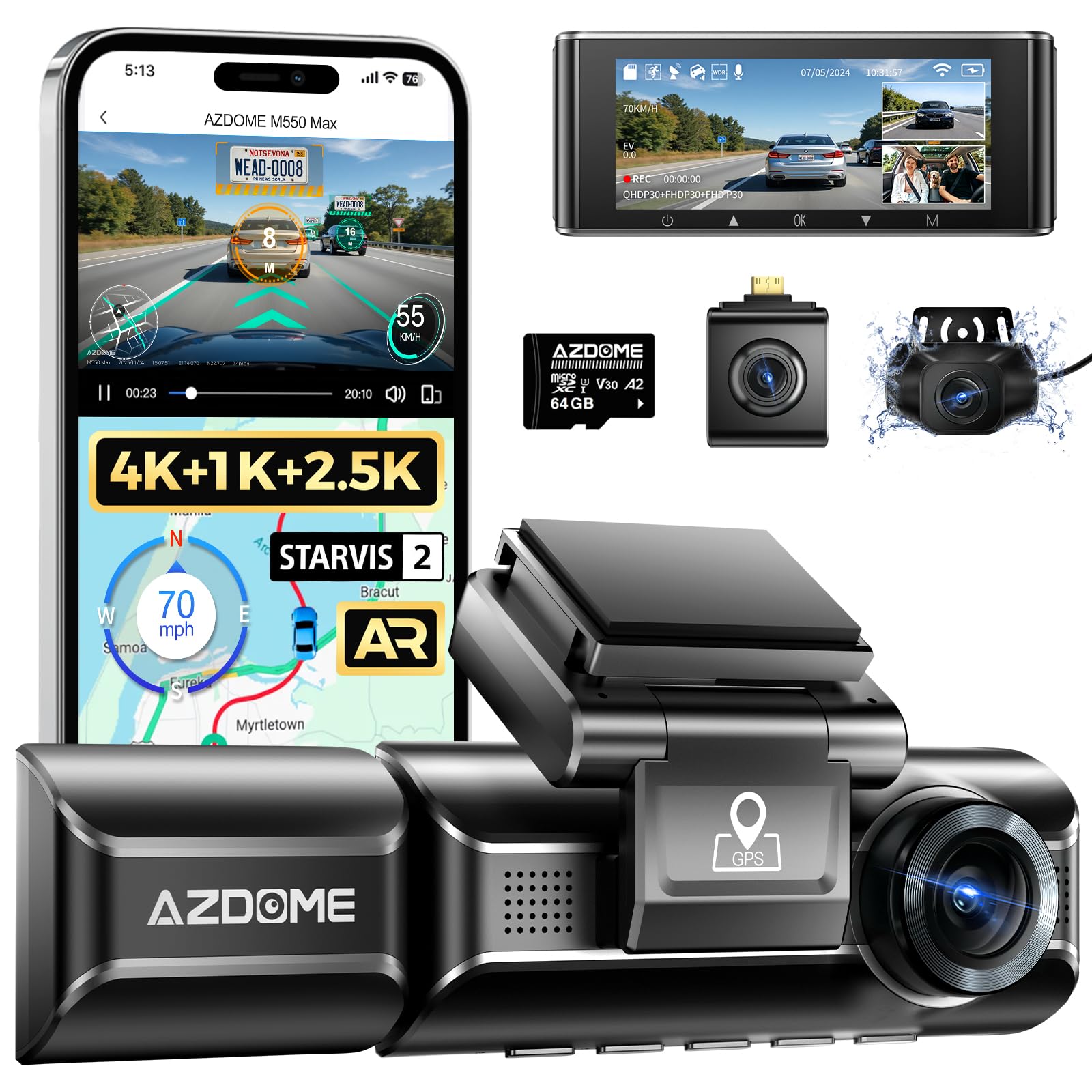
The AZDOME M550 Max is a compelling package for drivers who need full 360-degree coverage. Unlike typical dual-channel units, this dash cam captures a 4K front view, a 2.5K rear view, and a 1080P cabin view simultaneously, all on a 3.19-inch LCD screen. The rear benefits from an IP68 waterproof rating, making it robust against rain and car washes, and utilizes a 150-degree wide-angle lens that covers the rear quarter panels.
The dual STARVIS sensors — one for the front and one for the rear — ensure that both channels perform well in low light, avoiding the common issue where the rear camera turns into a grainy mess at dusk. The app offers timeline playback and route map review, and the included fatigue reminder system is a thoughtful extra for long-haul drivers. The magnetic mount simplifies removal and reattachment, which is convenient when transferring between vehicles.
One design consideration is the windshield angle: on vehicles with steeply raked windshields, the front camera can capture too much sky and too little road. The manufacturer’s support team has been responsive in providing replacement brackets to address this. The app interface, while functional, is occasionally buggy with WiFi connectivity. It ships with a 64GB card and supports up to 512GB maximum.
Why it’s great
- Triple-channel recording captures front, rear, and cabin views.
- 2.5K rear resolution is sharper than typical 1080P rear cams.
- IP68 waterproof rear camera for outdoor durability.
Good to know
- Front camera install angle may need adjustment with bracket.
- App WiFi connectivity can be inconsistent.
3. REDTIGER F7N Pro Dash Cam Front and Rear
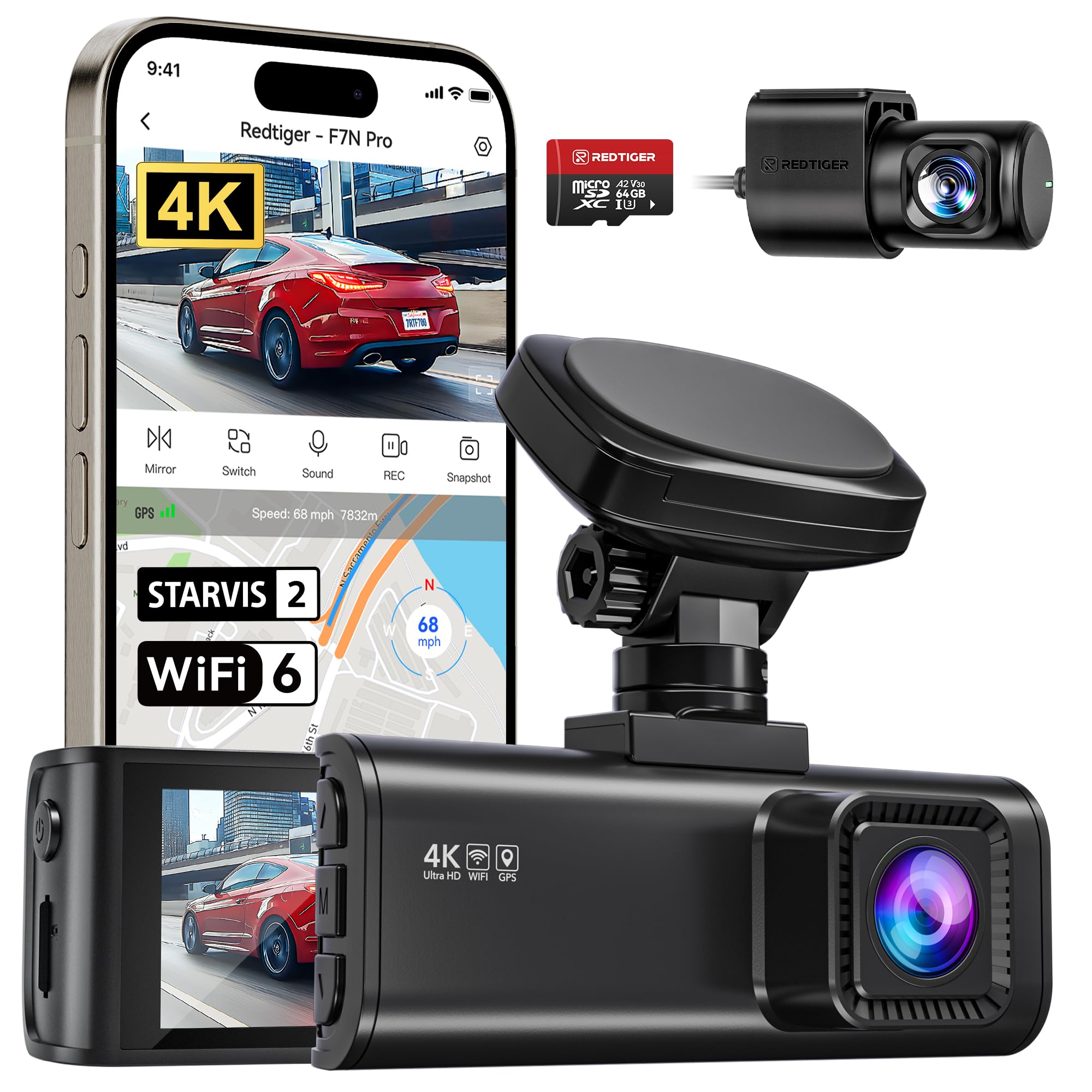
The REDTIGER F7N Pro offers STARSVIS 2 sensor performance at a price point that undercuts many competitors without slashing core features. The front camera captures 4K UHD (3840x2160P) while the rear records at 1080P Full HD, but the real differentiator is the F1.5 front and F1.8 rear aperture combination — allowing more light intake than typical F2.0 setups. This translates to significantly better low-light video with less noise.
The built-in GPS module is reliable and quick to lock a signal, embedding speed and route data into each video. The REDTIGER app, while functional, is not the most aesthetically modern interface. Some users note the menu system resembles a 90s Garmin, but it remains perfectly usable for adjusting G-sensor sensitivity, resolution, and parking mode settings. The electrostatic sticker mount ensures strong adhesion to the windshield without leaving residue.
After a year of use, the F7N Pro consistently delivers clear front footage, with the rear being sufficient rather than spectacular. The customer support from REDTIGER is a notable strength — they have a track record of promptly shipping replacements for any hardware issues. The 170-degree front and 140-degree rear lenses offer broad coverage, though the lack of 5GHz WiFi means downloads are slower than newer models.
Why it’s great
- STARVIS 2 sensor with wide F1.5 front aperture for night footage.
- Excellent customer service and responsive warranty support.
- 4K front + 1080P rear with solid loop and G-sensor management.
Good to know
- Lacks 5GHz WiFi; 2.4GHz downloads are slower.
- User interface and app design feel dated.
4. Nanoby M1 3 Channel Dash Cam

The Nanoby M1 is a well-engineered triple-channel dash cam designed for rideshare drivers and families needing cabin monitoring. The front records at 4K resolution, with the rear and interior cameras capturing 1080P each, giving you three distinct angles. The interior camera benefits from four infrared LEDs and an F1.6 aperture, which makes it genuinely usable in dark cabins for peace of mind during passenger transport.
The inclusion of 5.8GHz WiFi is the headline connectivity feature — it claims download speeds up to 8MB/s, which is roughly four times faster than standard 2.4GHz models. In practice, transferring 4K footage is noticeably quicker, making the app-based review experience far less frustrating. The 3.18-inch IPS display is bright and crisp, with an intuitive menu that is easier to navigate than many competitors. The car charger even includes an extra USB port for charging secondary devices.
The adhesive mount is designed to handle summer heat without falling off, a common complaint with suction cup mounts. The three cameras are individually adjustable, allowing for precise angle tuning for sedans, SUVs, and trucks. The body is slightly bulkier than a standard two-channel unit due to the three lenses and larger screen. The build quality feels premium, and the lifetime technical support adds long-term value.
Why it’s great
- Three-channel recording with 4K front and infrared cabin camera.
- Fast 5.8GHz WiFi for quick app transfers and playback.
- Includes extra USB port on the charger for other devices.
Good to know
- Larger size due to three-channel LCD screen.
- Buttons are small and require some familiarization.
5. Coolcrazy N8 Dash Cam Front and Rear
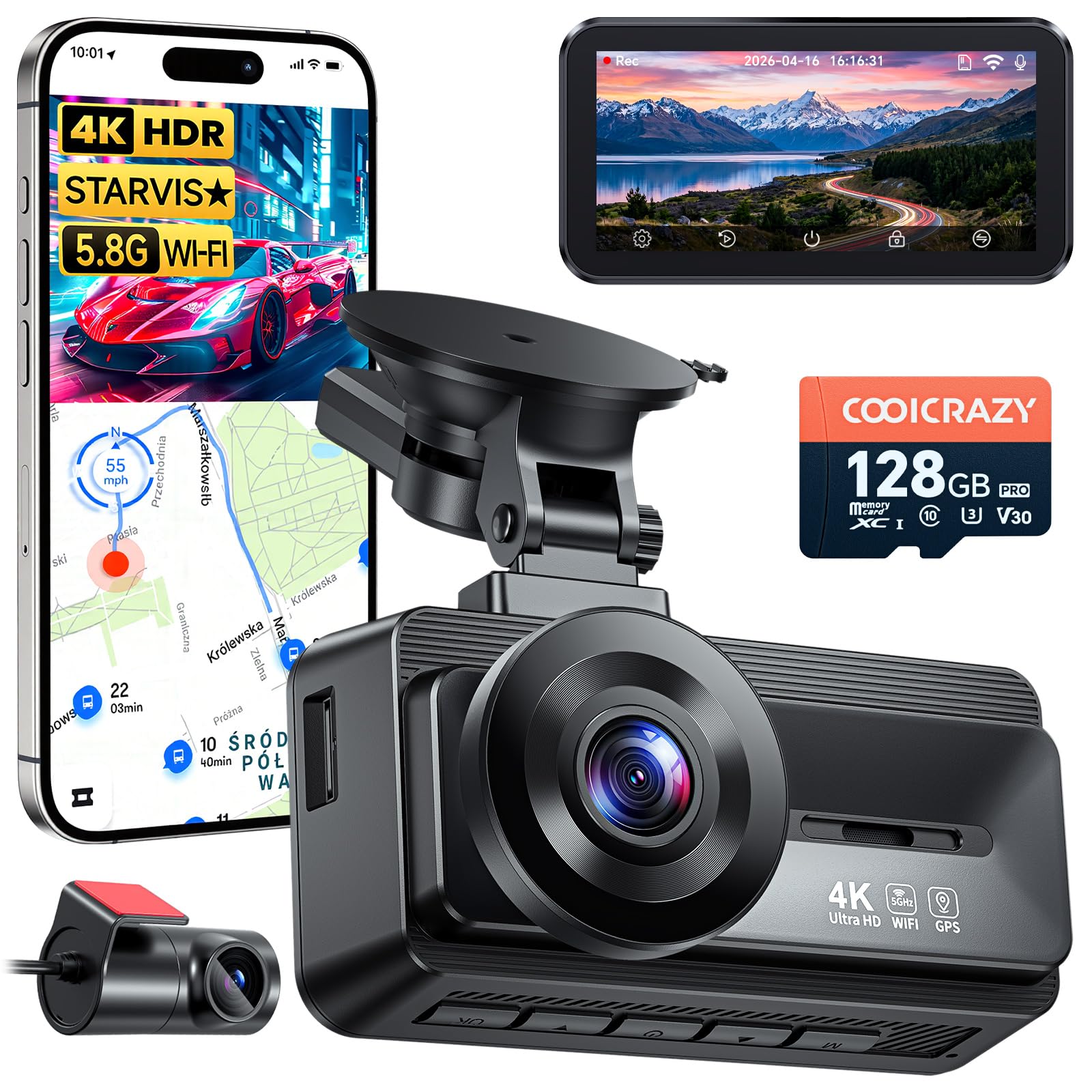
The Coolcrazy N8 breaks the price-to-resolution barrier with a 4K front camera using a STARVIS sensor and 60fps frame rate at a mid-range price point. The 170-degree front and 150-degree rear ultra-wide angles provide excellent lane-to-lane coverage, minimizing blind spots without introducing severe fisheye distortion. The included 128GB memory card is a generous bonus — double the storage of most competitors at this price level.
The 5GHz WiFi is a welcome feature for fast video downloads, and the built-in GPS locks quickly (within 20-30 seconds) to embed speed and location data on footage. The suction cup mount is reinforced with a mechanical pin to prevent vibration; some users have noted the nut for this pin can be loose on arrival, but customer support is responsive with replacements. The loop recording and G-sensor collision lock function as expected, preserving accident clips automatically.
The night vision performance, while good for the price, does not match the absolute top-tier STARVIS 2 sensors found in premium models. License plates are readable at moderate distances but can blur at highway speeds in extreme low light. The app connection process can be fiddly on the first attempt — some users prefer transferring the SD card to a computer. The rear camera adhesive can lose grip in extreme heat, so an electrostatic sticker mount is recommended.
Why it’s great
- 4K front at 60fps with STARVIS sensor for sharp detail.
- Generous 128GB card included in the box.
- 5GHz WiFi for significantly faster file transfers.
Good to know
- Phone app can be difficult to connect initially.
- Rear camera adhesive may fail in extreme heat over time.
6. 70mai A410 Dash Cam Front and Rear
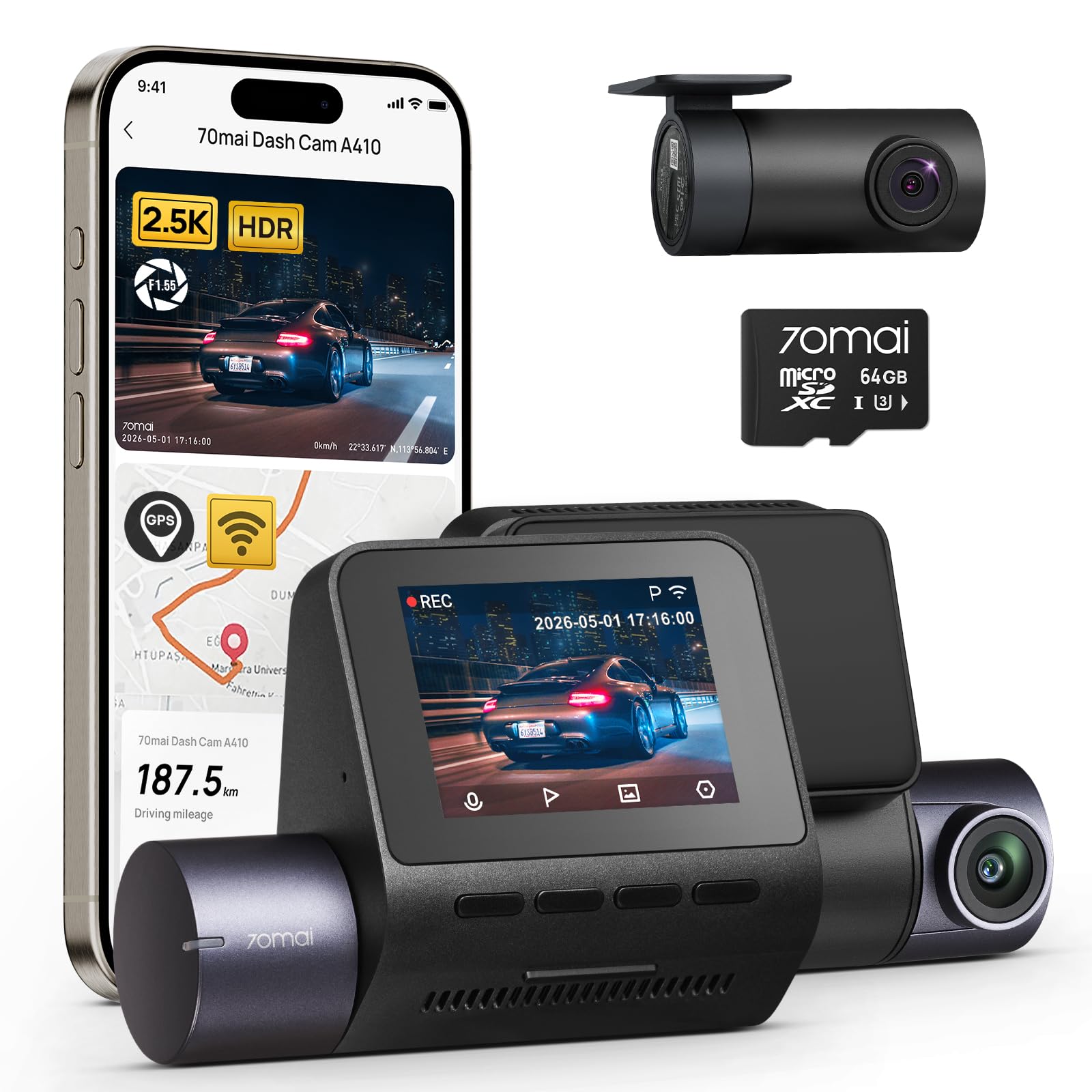
The 70mai A410 is an excellent entry-level back and front dash cam that prioritizes reliability over flashy specs. The front camera records at 2.5K (2560x1440P) while the rear captures 1080P — a balanced resolution pair that avoids the common pitfall of a low-resolution rear camera. The F1.55 aperture and HDR technology combine to produce usable night footage in urban and suburban environments, making license plates legible from a reasonable distance.
The built-in GPS is a standout inclusion at this price level, embedding coordinates, speed, and timestamps directly into your footage for court-admissible records. The electrostatic sticker mount is a thoughtful detail — it sticks firmly to the windshield without leaving sticky residue, ideal for leased vehicles. The 125-degree front lens is narrower than the 170-degree options, but the lack of barrel distortion means plates at the edges are easier to read.
The 70mai app provides straightforward access to footage, though the WiFi connection is 2.4GHz only, so larger 2.5K video files take a while to download. The included 64GB card is sufficient for moderate commutes, and the camera supports up to 256GB. Some users report the rear camera cable is very long (almost excessively so), but this is convenient for larger vehicles. The internal battery is user-replaceable after 1-2 years of typical use.
Why it’s great
- Built-in GPS and electrostatic sticker mount at an approachable price.
- Balanced 2.5K front and 1080P rear with solid HDR night vision.
- Compact design fits neatly behind the rearview mirror.
Good to know
- WiFi is 2.4GHz only; large file downloads are slow.
- 125-degree front angle is narrower than ultra-wide alternatives.
7. virrow X5 Dash Cam Front and Rear
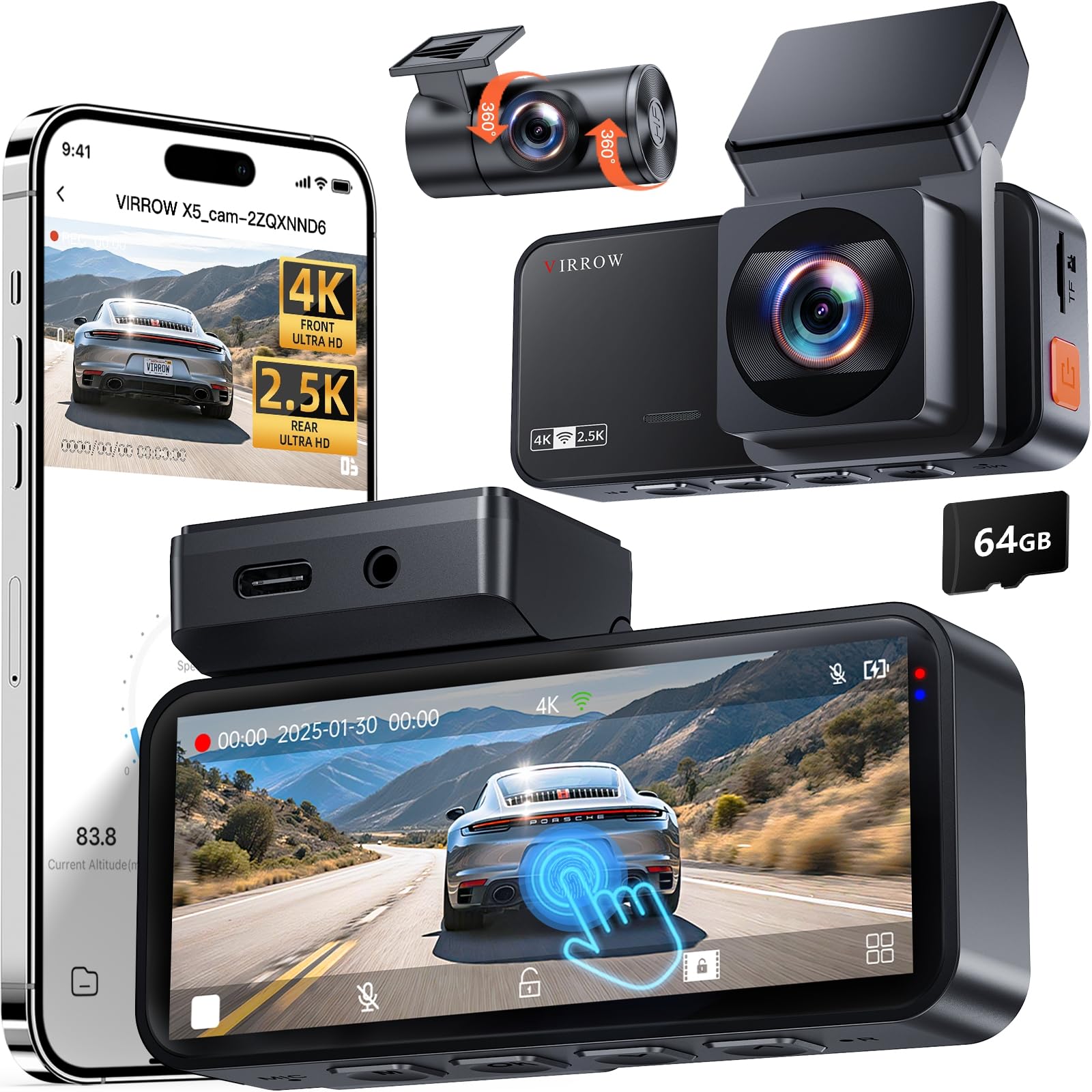
The virrow X5 offers a 4K front and 2.5K rear combination that is rare at the entry-level price tier, making it a strong contender for budget-conscious shoppers who still want sharp rear detail. The 3.39-inch touchscreen is one of the largest in its class, allowing for intuitive menu navigation and direct video playback without needing the app. The 170-degree front and 165-degree rear lenses provide impressive coverage, reducing the risk of blind-spot incidents.
The included SC2336 sensor, combined with an F1.8 aperture and WDR technology, helps maintain clarity in mixed lighting conditions. The built-in G-sensor automatically locks footage during collisions, and the loop recording system with the free 64GB card keeps the unit running without manual maintenance. The parking guard requires a hardwire kit but offers motion-detected recording and time-lapse modes for 24-hour protection.
The build quality is serviceable for the price, but there are compromises: the Wi-Fi module is 2.4GHz, leading to slower file transfers than 5GHz competitors, and the app’s auto-reconnect feature can be inconsistent. Some user reports mention the mounting bracket is sensitive to drops, and the thin jack connector may be damaged if the camera is knocked loose. When it works — and for most users it works flawlessly — the video quality is genuinely impressive for the investment.
Why it’s great
- 4K front and 2.5K rear recording at an entry-level price point.
- Large 3.39-inch touchscreen for easy on-camera controls.
- 170-degree front lens minimizes blind spots effectively.
Good to know
- Only 2.4GHz WiFi, so transferring 4K videos is slower.
- Mounting hardware can be fragile; handle with care during install.
FAQ
What resolution should my rear dash cam be?
Do I need a hardwire kit for parking mode?
Is a built-in GPS necessary for a dash cam?
Can a rear dash cam record through tinted windows?
Final Thoughts: The Verdict
For most drivers, the back and front dash cam that delivers the best balance of clarity, intelligence, and build quality is the Vantrue S1 Pro — its STARVIS 2 sensor, 60fps recording, and fast 5GHz WiFi set a new standard for dual-channel performance. If you need complete three-channel coverage for a rideshare or family car, the AZDOME M550 Max provides stunning 4K front detail alongside solid rear and cabin video. And for budget-conscious buyers who refuse to compromise on reliability, the 70mai A410 packs built-in GPS and balanced resolution into an easy-to-install package that punches above its price tier.