
A backdraft damper is the silent gatekeeper of your home’s ventilation system. When your exhaust fan shuts off, that flimsy plastic flap is the only thing standing between you and a blast of freezing air, unwanted odors from a neighbor’s cooking, or a swarm of insects crawling up your ductwork. The wrong damper rattles, leaks, or fails to close — turning a simple mechanical part into a constant annoyance.
I’m Min — the co-founder and writer behind Gadgets Feed. I focus on the mechanical details that separate an effortless install from a frustrating weekend project, analyzing spring tension, blade materials, and seal quality across dozens of HVAC accessory subcategories.
This buying guide stacks seven inline and wall-mount models against each other, covering every common duct size from 3 inches to 12 inches. After comparing steel, aluminum, and galvanized constructions, along with spring-loading mechanisms and rubber gaskets, you’ll know exactly which back draft damper fits your fan’s airflow and your installation without guesswork.
How To Choose The Best Back Draft Damper
Selecting a backdraft damper is simple in concept but easy to mess up in practice. The three variables that define a good fit are duct diameter, installation orientation, and the airflow static pressure your fan produces. Ignore any one of them and the damper either won’t open fully or won’t seal shut.
Duct Size and Damper Fit
Measure the inside diameter of your rigid metal or plastic duct, not the fan collar. Most dampers are designed to insert fully into the duct, so an 8-inch damper is typically 7.9 inches across to slide inside an 8-inch pipe. For flexible ducts, you’ll need steel duct clamps to secure the damper in place — the foam or rubber seal alone won’t hold.
Spring Tension vs. Fan Static Pressure
A damper with a very strong spring might snap shut beautifully, but if your bathroom fan runs at a low 70 CFM, the flaps may not open at all. Conversely, a damper with a weak spring will open easily but may not close fully against a strong outdoor wind. Match the spring resistance to your fan’s rated static pressure — manufacturers like Fantech design light springs specifically for low-CFM residential fans.
Material and Seal Quality
Galvanized steel housings resist rust in humid environments and last longer than standard painted steel. Aluminum blades are lighter and resist corrosion, while stainless steel axles and springs prevent the hinge from seizing over time. A rubber strip or foam gasket that lines the inner edge of the damper eliminates the metallic rattle of blades snapping shut and provides an airtight seal against backdrafts.
Quick Comparison
On smaller screens, swipe sideways to see the full table.
| Model | Category | Best For | Key Spec | Amazon |
|---|---|---|---|---|
| Fantech 9800004 RSK-6 | Inline Insert | Low-CFM fans | 6″ Duct, lightweight aluminum blades | Amazon |
| Broan-NuTone 641 Wall Cap | Wall Cap | High-CFM range hoods | 6″ Duct, aluminum gravity flap | Amazon |
| Broan-NuTone 636 Roof Cap | Roof Cap | Roof terminations | 3″/4″ Duct, steel with bird screen | Amazon |
| Vent Systems 8″ Inline | Inline Insert | Standard mid-range fans | 8″ Duct, double spring closure | Amazon |
| FRESH SPEED 8-Inch Shutter | Inline Insert | Dryer ducts and basic barriers | 8″ Duct, aluminum blades with rubber seal | Amazon |
| Vent Systems 12″ Inline | Inline Insert | Large-diameter HVAC ducting | 12″ Duct, heavy-duty galvanized steel | Amazon |
| Dayton 12″ Wall Shutter | Wall Mount | Shops and greenhouses | 12″ panel shutter, G-90 galvanized steel | Amazon |
In‑Depth Reviews
1. Fantech 9800004 RSK-6 Backdraft Damper, 6″ Duct
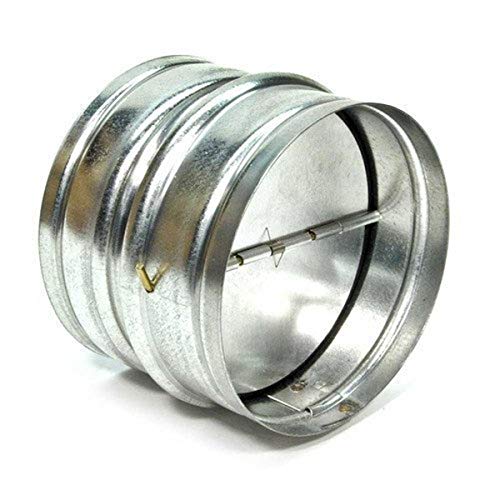
The Fantech RSK-6 is engineered for exactly one job: sealing a 6-inch duct against backdrafts without interfering with low-volume fans. Its lightweight aluminum blades and minimal spring tension allow the damper to open at static pressures as low as 70 CFM, which is critical for small bathroom exhaust fans that lack the force to push heavier flaps. The galvanized steel collar resists rust in humid environments, and the rubber gasket around the blade edge kills the metallic rattle that cheaper dampers produce with every gust.
Multiple verified buyers report that this damper stops cold air backflow even at outdoor temperatures of -10°F, and the tight seal also blocks mice and insects from entering through the duct. The round design fits neatly into standard 6-inch rigid pipe or a round reducer, and the light spring ensures the blade closes under its own weight without relying solely on gravity. A square-mounted installation is possible with duct putty, but the RSK-6 truly shines when inserted inline in a horizontal or vertical run of metal ductwork.
The trade-off is that the same sensitivity that makes it ideal for low-static fans means it may not fully close against a strong, sustained wind if installed on an exterior wall without a protective cap. Some users note that the spring tension is noticeably weaker than competing models, which is intentional — Fantech optimized for low-CFM operation. For a standard 110 CFM bath fan, the damper opens silently and completely, then snaps shut the moment airflow stops.
Why it’s great
- Opens reliably at very low static pressures.
- Integral rubber gasket prevents blade rattle and improves seal.
- Compact lightweight design fits in tight duct runs.
Good to know
- Light spring may not seal against strong outdoor wind.
- Designed for rigid ducting; flexible ducts require steel clamps.
2. Broan-Nutone 6″ Round Duct Wall Cap, Aluminum 641-1
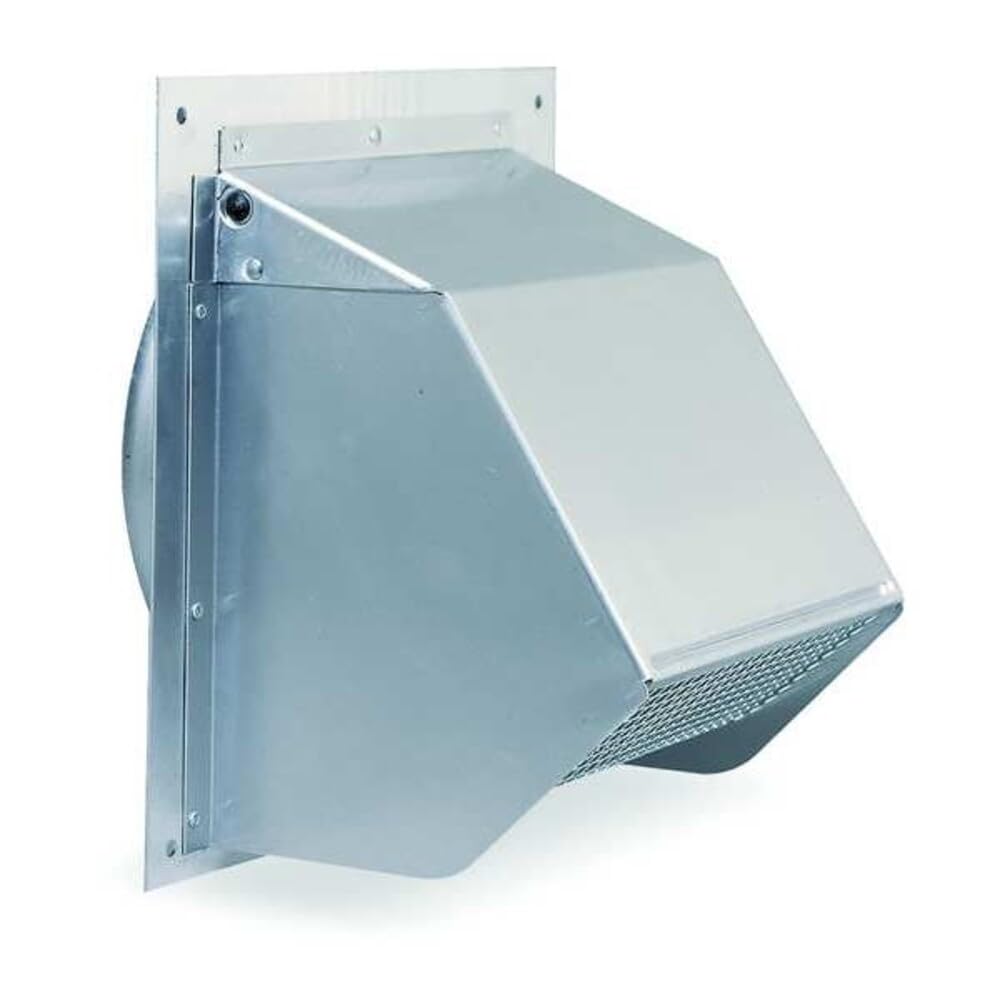
Broan’s 641 wall cap combines a gravity-operated backdraft damper with an integrated bird screen in a single aluminum housing designed for 6-inch round ducts. The gravity flap uses no spring — it relies on its own weight and the vertical tilt of the cap to seal shut, which makes it completely silent and eliminates any spring fatigue over time. The thick aluminum construction feels significantly more substantial than stamped-steel alternatives and handles continuous high-CFM exhaust from a range hood or bath fan without warping or rattling.
Real-world installations confirm that the damper handles 750 CFM exhaust without issue, while the spring on the internal flap still opens easily at moderate fan speeds. The front screen uses a 1/4-inch mesh that effectively excludes birds, rodents, and large insects, though users note that the rubber sealing gasket leaves a slight gap that smaller bugs can exploit — a quick spray with bug repellent solves this. The short 1.25-inch duct collar may require a duct extension for deeper wall cavities, but the over-all profile is compact enough for tight exterior wall mounting.
Installation requires cutting a square or round hole and securing the cap to the siding, and some users reported needing a chisel to replace an older, differently shaped cap. Once mounted, the unit looks clean and professional, and the gravity flap closes positively the moment the fan power drops. This is the right choice for anyone who wants a permanent exterior termination that doesn’t rely on spring-loaded internals.
Why it’s great
- Silent gravity flap with no spring to wear out.
- Thick aluminum resists corrosion and dents.
- Built-in bird screen prevents pest entry.
Good to know
- Duct collar is short; may need an extension for deep walls.
- Small gaps in rubber seal may let in tiny insects.
3. Broan-NuTone 636 Steel Roof Vent Cap for 3″ and 4″ Round Duct
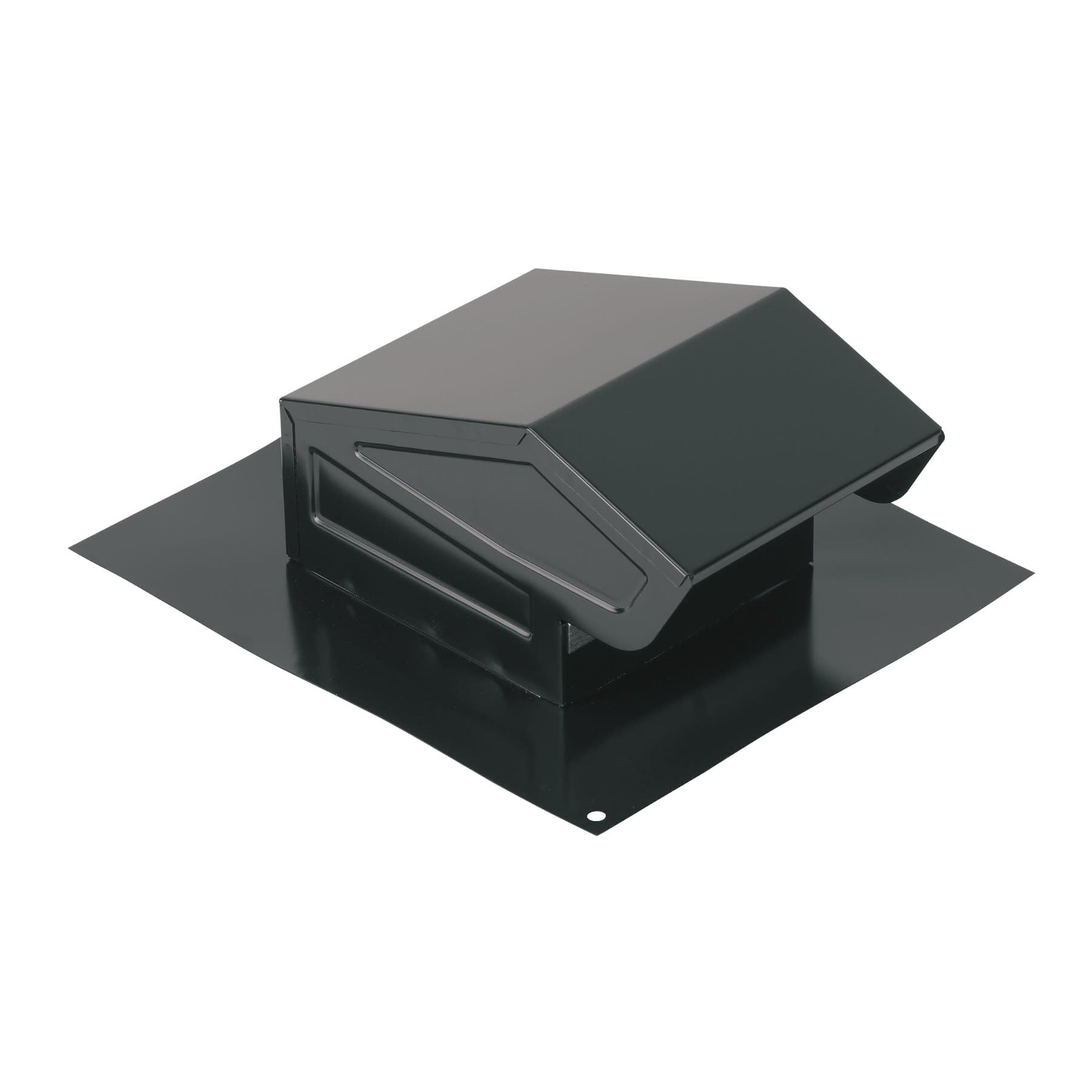
The Broan-NuTone 636 integrates a built-in backdraft damper and a removable bird screen into a heavy-gauge steel housing with a black powder-coat finish made specifically for pitched roof installations. It accommodates both 3-inch and 4-inch round ducts, which covers the universal collar size for most residential bathroom ventilation fans. The damper flap inside the cap seals against the housing to block cold air from falling down the duct and into the bathroom, and the screen prevents nesting animals from turning the exhaust path into a home.
Customers consistently praise the 636 as a direct replacement for builder-grade roof caps that rust and fail within a few years — the steel construction with powder-coat finish significantly outlives white-painted aluminum caps that flake after one season. The pack includes the cap, the damper, and the bird screen, though you will need to buy the duct collar separately if your existing pipe doesn’t already have one. Some contractors prefer to paint the black cap white to match their roof, and the steel substrate holds paint well after a light scuffing.
One detail to note: the cap is engineered for rigid ducting, not flexible tubing. If you’re connecting to a flexible duct, you’ll need to rivet a metal bracket to a short rigid pipe under the roof deck and then clamp the flex tube to that pipe. The cap itself is surprisingly heavy for its size — the steel is not thin — and it feels solid once mounted through the roof sheathing.
Why it’s great
- Built-in damper and bird screen in one unit.
- Steel with powder-coat finish resists rust.
- Fits both 3-inch and 4-inch duct collars.
Good to know
- Duct collar sold separately; not included.
- Designed for rigid ducting only; flexible tubing requires adapter.
4. Vent Systems 8” Inch Backdraft Damper

The Vent Systems 8-inch inline damper stands out in the mid-range segment for its dual-spring design that delivers aggressive closure force — the flaps snap shut with a decisive motion that many competitors can’t match. The housing is formed from galvanized steel, the blades are aluminum, and the axle and spring are stainless steel, so there are no rust-prone components in the assembly. A foam gasket lining the inner perimeter muffles the sound of blade closure and improves the air seal against the housing.
Field installs show this damper works reliably in both horizontal and vertical duct runs, but the strength of the dual spring creates a practical constraint: fans with low static pressure, particularly units below about 80 CFM, may fail to push the flaps fully open. Some users resolved this by removing one of the two springs, but that defeats the purpose of the design. For mid-range and high-CFM fans like a 140 CFM Panasonic or a range hood exhausting at 300+ CFM, the damper opens easily and seals positively the moment airflow stops.
Quality control is the recurring concern: several buyers report receiving units with bent flaps or misaligned springs, and a one-star review calls out two consecutive defective dampers. These appear to be batch-specific issues rather than a universal flaw, but they’re frequent enough to warrant checking the unit immediately upon arrival. If you get a clean one, it outperforms everything in its price tier on seal tightness and noise dampening.
Why it’s great
- Dual spring snaps flaps shut with authority.
- Foam gasket reduces blade noise significantly.
- Corrosion-resistant materials throughout.
Good to know
- Spring tension too strong for low-CFM (sub-80 CFM) fans.
- Reported quality control issues; inspect on arrival.
5. FRESH SPEED 8-Inch Backdraft Damper Shutter

The FRESH SPEED 8-inch backdraft damper delivers the core functionality you need from an inline insert at a price that makes it the obvious choice for budget-conscious projects. The housing is galvanized steel, the blades are aluminum, and the axle and spring are stainless steel — the same material spec as more expensive competitors. It includes both an inner rubber seal to cut down on flap chatter and an outer foam strip to prevent air leakage around the damper body inside the duct.
Buyers confirm it fits perfectly inside standard 8-inch rigid metal or plastic pipe and also works in flexible ducts when secured with steel duct clamps. The spring tension is moderate: it opens reliably with a standard dryer or bath fan operating at typical CFM without struggling, and it seals well enough to block cold air backdrafts and associated rattling from wind gusts. Multiple users note that it eliminated the loud flapping sound their previous damper made in windy weather, making the bathroom fan noticeably quieter.
The downsides are minor relative to the price point. The outer foam strip can shift during insertion if you don’t lubricate it with a dab of dish soap. More critically, a small number of reviews mention that the flaps can occasionally stick open or closed after months of use, requiring a manual tap or adjustment. If you’re building a system that needs zero maintenance, a premium model with better pivot bushings may be worth the extra cost, but for the vast majority of DIY bathroom, garage, and dryer vent installs, this damper gets the job done.
Why it’s great
- Full metal construction with corrosion-resistant parts.
- Inner rubber seal eliminates blade rattle.
- Easy installation into rigid or flexible ducting.
Good to know
- Flaps may occasionally stick after prolonged use.
- Outer foam strip can shift during insertion without lubrication.
6. Vent Systems 12″ Inch Backdraft Damper

When your ventilation system runs on 12-inch ductwork — common in commercial kitchens, large workshops, and whole-house exhaust systems — the Vent Systems 12-inch damper brings the same heavy-duty construction philosophy as its 8-inch sibling. The housing is galvanized steel, the central hinge is stainless steel, and the aluminum flap is thick enough to resist flexing under high static pressure. The dual-spring mechanism and perimeter foam gasket are consistent with the smaller model, providing aggressive closure and noise reduction for large-volume airflows.
Installation follows the same push-in-until-seated procedure as smaller inline dampers, and the 12-inch diameter fits standard 12-inch rigid pipe without modification. Users confirm that the damper works well in horizontal runs near roof terminations for range hoods and in trunk lines for kitchen exhaust systems, where it prevents cold air from falling back into the building and blocks condensation from migrating into the duct. The spring tension is stout — it will not open with a gentle whisper of airflow, so it requires a serious exhaust fan or HVAC system mover.
Quality control mirrors the 8-inch version: some shipments arrive with bent flaps or misassembled springs, and a single negative review nails the failure rate. If the unit arrives in good condition, it’s a heavy-duty performer that seals tight. If you need a 12-inch damper and can’t tolerate the risk of a defective unit out of the box, the Dayton wall shutter is a mechanically simpler alternative worth considering.
Why it’s great
- Heavy-gauge galvanized steel handles large duct runs.
- Dual-spring closure and foam gasket for quiet sealing.
- Simple inline insert design fits standard 12-inch pipe.
Good to know
- Requires high static pressure to open; not for low-CFM fans.
- Similar quality control issues as the 8-inch model.
7. Dayton 12″ Backdraft Damper/Wall Shutter

The Dayton 12-inch wall shutter is mechanically different from every other damper on this list: it’s a framed panel that mounts into a 12.5-inch by 12.5-inch rough opening in a wall, not an inline cylinder that inserts into a duct. It uses three independently hinged aluminum blades with felted edges that rest on nylon bushings and pivot on stainless steel pins. The frame is G-90 galvanized steel, which is the highest corrosion-resistance rating in the galvanizing standard — far more durable than standard G-60 or plain painted steel.
This shutter is the ideal solution for commercial exhaust applications, greenhouses, workshops, and other spaces where a shuttered wall vent paired with a fan is the primary ventilation mechanism. The blades open when the fan pushes air out and close by gravity when the fan stops, with no spring mechanism to wear out or misalign. Users report that the build quality is exceptional: the frame is thick, the pin joints are smooth, and the felt seals keep the blades from chattering in the wind. One workshop owner called it “solid” and mentioned that the only missing feature is a vent lock to hold the blades open without running a fan.
Because the shutter sits in an open wall frame, it lets in outside light and air whenever the blades are open, and the felt seals are not airtight — a small amount of airflow will pass even when closed. It’s not a substitute for an inline damper in a ducted exhaust system, but for a direct wall exhaust portal where reliability and durability matter more than absolute seal tightness, the Dayton shutter is a clear top-tier choice.
Why it’s great
- G-90 galvanized steel frame resists rust aggressively.
- Gravity-operated blades with no springs to fail.
- Nylon bushings and stainless steel pins ensure smooth pivoting.
Good to know
- Not an airtight seal; some airflow passes when closed.
- Requires a 12.5″ x 12.5″ rough opening in the wall.
FAQ
Can I install a backdraft damper vertically instead of horizontally?
What size damper do I need for my 6-inch fan collar?
Why does my backdraft damper rattle in the wind?
Final Thoughts: The Verdict
For most users, the back draft damper winner is the Fantech 9800004 RSK-6 because it balances light spring tension with a reliable rubber seal, opening easily for low-CFM bath fans while closing tight against cold air. If you need an exterior termination with a gravity flap and integrated bird screen, grab the Broan-Nutone 641 Wall Cap. And for large-diameter commercial-style wall exhaust, nothing beats the Dayton 12″ Wall Shutter for structural durability and corrosion resistance.