
A back girth that shifts, rolls, or rubs during a ride doesn’t just compromise your saddle’s stability—it puts your horse’s comfort and your safety on the line. Choosing the right rear cinch for your western saddle means understanding how material, width, and hardware interact with your horse’s conformation and your riding style.
I’m Min — the co-founder and writer behind Gadgets Feed. I’ve poured hours into cross-referencing customer feedback and technical specs across the equestrian market to isolate the back girths that genuinely hold up under real ranch and arena conditions.
Whether you ride trails, rope cattle, or compete in the show pen, this guide cuts through the marketing to deliver the most reliable details on every best back girth for western saddle listed here based on real owner experiences and measurable build quality.
How To Choose The Best Back Girth For Western Saddle
A rear cinch does more than hang behind the front girth—it prevents the saddle from tipping forward on steep terrain and keeps the back of the rigging secure. Picking the wrong length, material, or hardware can cause rubbing, pressure sores, or a loose saddle that shifts under load.
Measure Buckle-to-Buckle, Not End-to-End
Most riders order a 28″ or 32″ back cinch only to discover the fleece padding or billet straps eat into the usable length. Always check the buckle-to-buckle measurement listed in the specs, and size down an inch if your horse has a short flank or you’re replacing a stretched-out mohair girth.
Match Material to Riding Intensity
Latigo leather offers unmatched durability and a traditional look, but it requires break-in and regular conditioning to stay supple. Fleece-covered nylon provides instant softness and moisture-wicking for sensitive horses, while alpaca or mohair blends breathe better in hot climates and are naturally non-irritating against bare skin.
Hardware That Won’t Fail Mid-Ride
Stainless steel roller buckles are the benchmark for back girths because they allow smooth adjustment without twisting the strap and resist rust even after repeated washings. Avoid painted or chrome-plated buckles that flake or corrode after a few months of use.
Quick Comparison
On smaller screens, swipe sideways to see the full table.
| Model | Category | Best For | Key Spec | Amazon |
|---|---|---|---|---|
| Weaver Equine Airflex Roper Cinch | Premium Nylon | Intense roping & trail riding | Cool flex foam core, 1.6 lbs | Amazon |
| Professional’s Choice SMX Merino Wool Cinch | Premium Wool | Sensitive horses & all-day wear | Removable 100% merino liner | Amazon |
| Classic Equine Classic Roper Cinch | Premium Natural Fiber | Natural material purists | 100% Alpaca body, 26″–36″ | Amazon |
| Challenger Carved Leather Rear Flank Cinch | Mid-Range Leather | Show ring & trail aesthetics | Hand-tooled floral finish, 3″ wide | Amazon |
| Intrepid International Western Fleece Cinch | Mid-Range Fleece | Broad-chested horses needing cushion | 5-layer nylon over heavy fleece | Amazon |
| Weaver Leather Latigo with Holes | Budget Leather | Traditional tie-off & center-fire rigging | 1.5″ x 60″ latigo leather | Amazon |
| WEMBILS Leather Flank Cinch Set | Budget Complete Set | Riders needing billets included | 32″ cinch + 24″ billet, roller buckle | Amazon |
In‑Depth Reviews
1. Weaver Equine Airflex Roper Horse Cinch
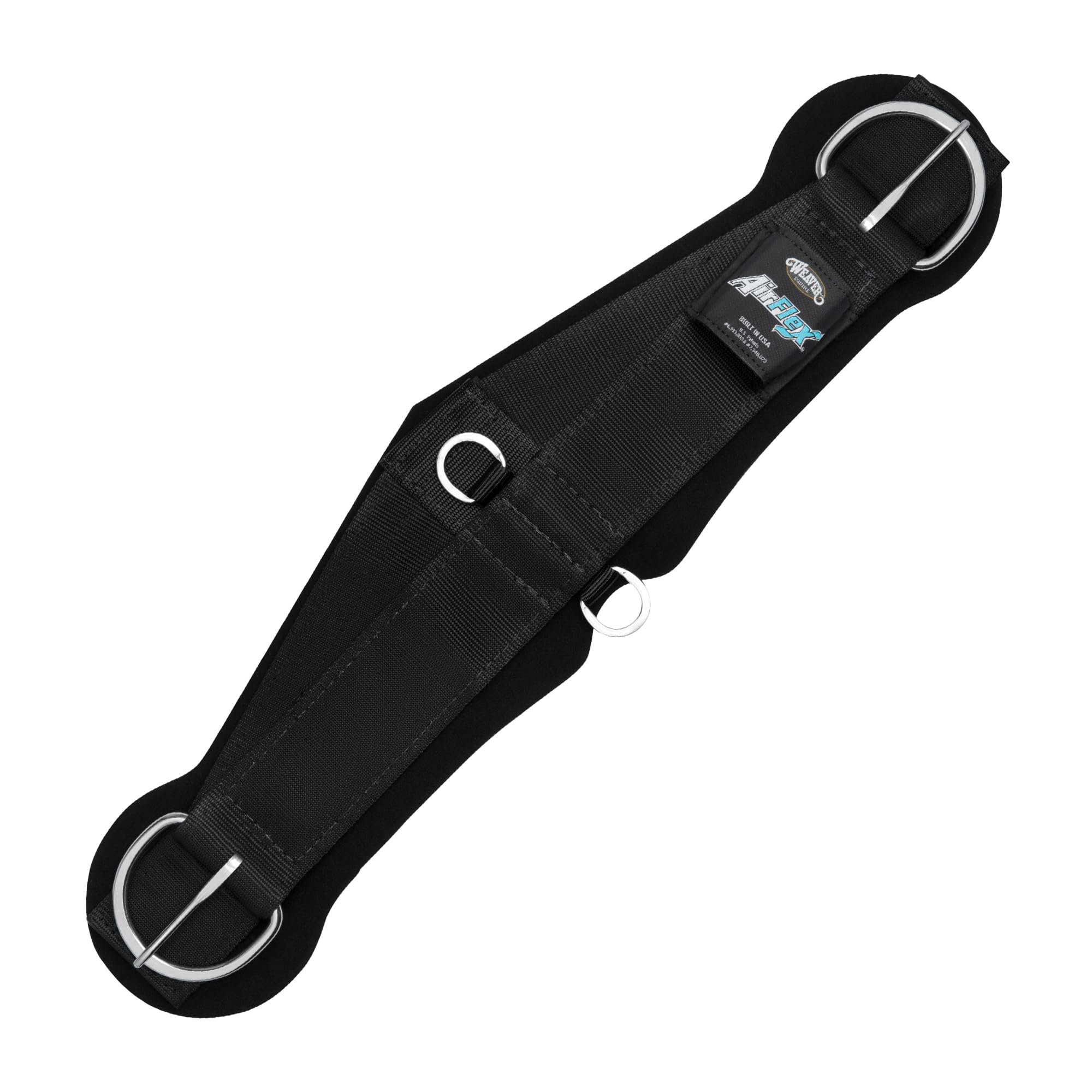
The Airflex Roper Cinch is the closest thing to a pressure-dissipating suspension system you’ll find on a western back girth. Its white cool flex foam core stays lightweight and doesn’t absorb heat the way neoprene does, which matters when you’re roping or trail riding in direct sun. The equal-pull design spreads tension evenly across the cinch body rather than concentrating it at the buckles, reducing the chance of galling behind the elbow or along the flank.
Riders with sensitive horses report that this girth eliminates the ear-pinning and cow-kicking triggered by mohair or rough leather. The flat stainless steel buckles lie flush against the latigo, making accurate tightening simple without hardware digging into the horse’s side. At 1.6 pounds, it’s light enough for endurance rides yet tough enough for heavy roping sessions.
One trade-off is the price point, which sits firmly in the premium tier. A few owners mention that the neoprene inner layer can still trap sweat on extremely hot days if you don’t allow proper drying time between rides, though the open-cell foam breathes better than solid neoprene competitors. Overall, the Airflex justifies its cost with consistent, rub-free performance over years of regular use.
Why it’s great
- Cool flex foam core stays cool and won’t absorb sweat like traditional materials
- Equal-pull design distributes pressure evenly across the entire cinch body
Good to know
- Premium price point places it above entry-level budget options
- Neoprene inner layer requires thorough air drying between uses to prevent moisture buildup
2. Professional’s Choice SMX Comfort-Fit Western Merino Wool Cinch
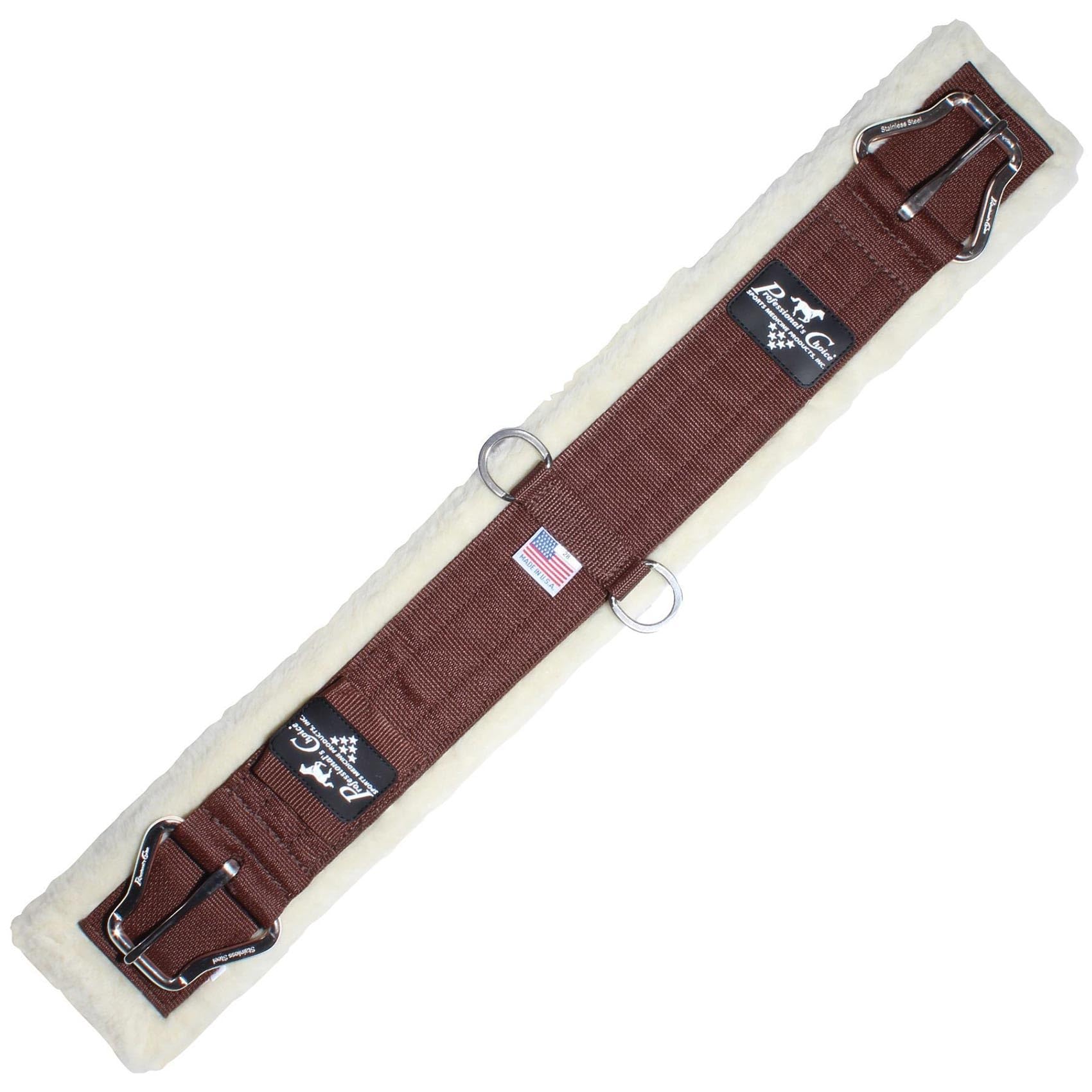
Professional’s Choice engineered the SMX around the horse’s skin health first. The 100% merino wool liner wicks moisture away from the coat and dries quickly, preventing the damp rub zone that causes cinch sores on longer rides. Because the liner detaches with Velcro tabs, you can toss it in the washing machine and clip it back on without unthreading the whole cinch from the saddle.
The heavy-duty webbing core gives this back girth structure without stiffness, and the stainless steel roller buckles make cinching up smooth even when the wool is packed with dust and hair. Riders with dropped rigging on treeless saddles report that the 28″ inch size fits perfectly where standard 32″ cinches would leave too much slack. The chocolate brown color hides dirt better than lighter fleece or mohair options.
Some users note that the Velcro attachment points can collect hay and debris over time, and the wool liner may pill after frequent washing. The SMX also runs slightly shorter buckle-to-buckle than advertised because of the fleece overlap covering the hardware, so consider ordering one size up if your horse has a deep flank. For horses prone to girthiness, this is still the most comfortable mid-range option available.
Why it’s great
- Removable merino wool liner machine-washes easily without disassembling the entire cinch
- Roller buckles reduce friction when tightening, preventing latigo binding
Good to know
- Velcro attachments may catch hay and require occasional cleaning
- Liner pilling is normal after several wash cycles, though performance remains unaffected
3. Classic Equine Classic Roper Cinch

Classic Equine built this roper cinch around natural fiber performance with 100% alpaca material, which is softer than cashmere yet stronger than mohair when braided into a cinch. The alpaca fibers don’t absorb sweat the way cotton does, so the girth stays dry and doesn’t develop that sour smell after a week of heavy use. Riders switching from fleece to this cinch often need to size down because alpaca stretches slightly over the first few rides.
The dual roller buckles—one solid buckle and one roller buckle—give you the option to fine-tune tension on one side without loosening the other. This is particularly useful when using a dropped rigging where the cinch sits farther back and needs asymmetrical adjustment. The 26″ version fits medium-framed quarter horses and Arabians perfectly, while the 32″ works for larger warmbloods.
A handful of reviews mention that the alpaca fiber can shed small fibers during the first few uses, so brushing it off before tacking up prevents them from irritating the horse’s coat. The price reflects the premium natural material, but owners report the cinch lasting multiple seasons without losing its shape or softness. For riders committed to “animal on animal” tack, this is the best natural-fiber back girth available.
Why it’s great
- Alpaca fiber is softer than cashmere and resists moisture buildup better than synthetic blends
- Dual roller buckle system allows independent side adjustment for asymmetrical rigging
Good to know
- Sheds small fibers initially and requires brushing before first use to prevent irritation
- Natural fiber construction stretches slightly, so sizing down is recommended compared to fleece girths
4. Challenger Horse Western Carved Leather Rear Flank Cinch
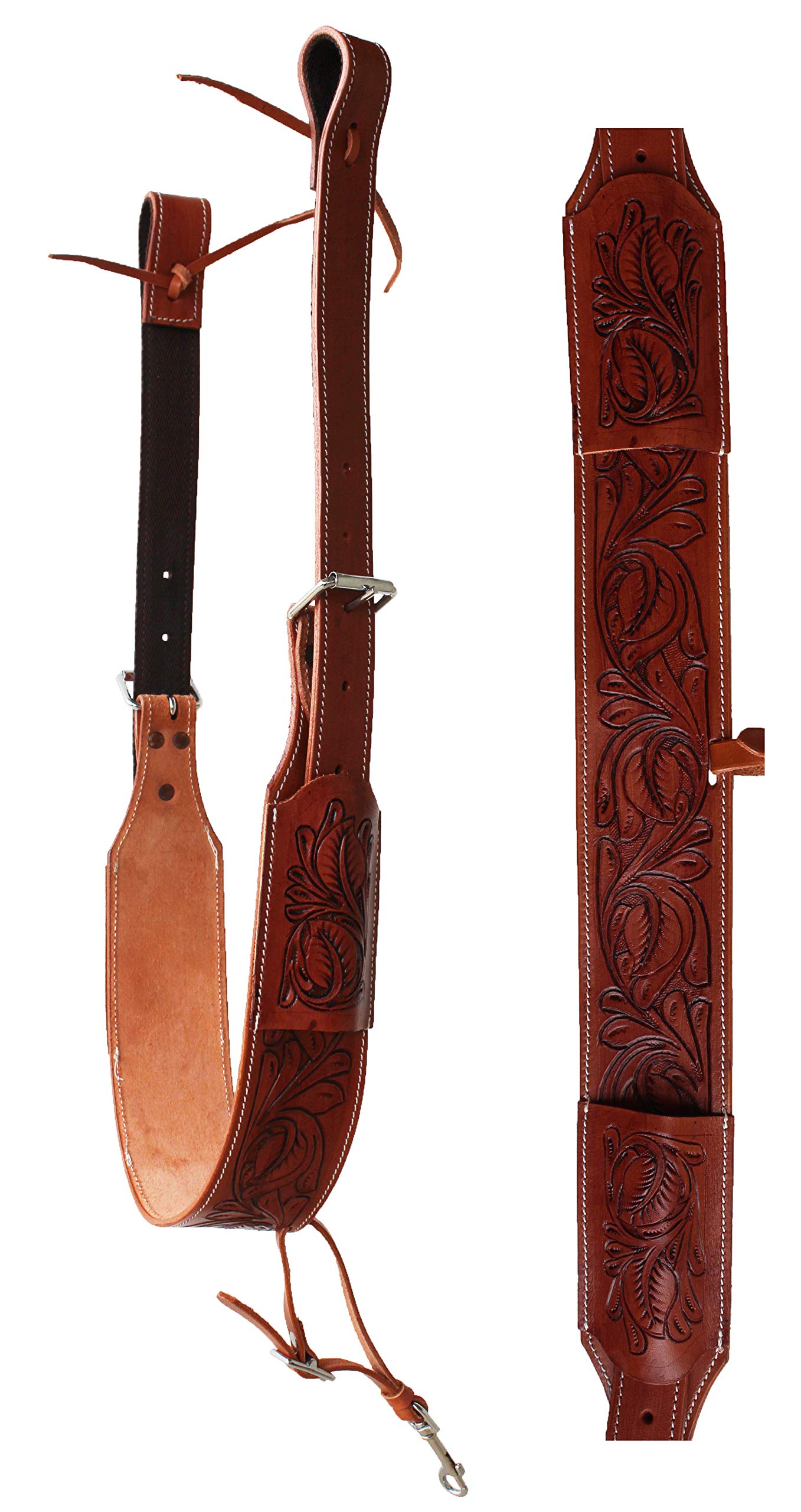
The Challenger carved leather rear cinch proves that a back girth can be both functional and visually striking. The hand-tooled floral pattern runs the full 3″ width of the cinch body, making it a natural match for show saddles with tooled leather fenders and horn wraps. More importantly, the nylon reinforcement sewn into the back of the billets prevents the leather from stretching out of shape after repeated cinching.
The 32″ x 3″ dimensions provide broad coverage across the flank, distributing pressure better than narrow 1.5″ straps. The billets measure 20″ long and 2″ wide, giving you enough strap to thread through most saddle rigging without excess flapping. Buyers consistently comment that the quality exceeded expectations at this price tier, with supple cowhide that doesn’t require months of break-in.
One shortcoming is that the built-in connector strap is functional but basic, and some riders wish the entire set included higher-end roller buckles rather than standard slotted ones. The floral tooling also means this cinch is less practical for wet, muddy conditions where the leather needs regular cleaning and conditioning to keep the pattern from fading. For arena and show use, however, this is the best-looking leather rear flank cinch at its price.
Why it’s great
- Hand-tooled floral finish matched to show saddle aesthetics without sacrificing structural integrity
- Nylon-reinforced billet backs prevent leather stretch and extend the cinch’s usable lifespan
Good to know
- Connector strap and buckles are functional but basic compared to premium roller-buckle sets
- Tooled leather requires regular conditioning and is not ideal for heavy mud or rain exposure
5. Intrepid International Western Fleece Cinch Girth

Intrepid International’s fleece cinch solves the problem of cinch galls and rub marks on horses with sensitive skin or rounder barrel conformations. The five layers of nylon sandwiched between heavy fleece create a plush cushion that compresses evenly, preventing the hard edge of the girth from digging into the horse’s flank. Riders who tried string girths and still saw irritation report zero rubbing after switching to this fleece design.
The stainless steel D-rings and buckles resist corrosion even after multiple hose-offs, and the fleece cover stays soft without matting down after a few rides. This cinch works especially well on horses that need extra padding behind the elbow, where the fleece distributes pressure over a larger surface area than leather or mohair alternatives. The 36″ size fits wide-bodied quarter horses and drafts comfortably.
One downside is that the fleece padding at the ends makes this girth feel larger than its labeled size, so you may need to drop down one size compared to leather or nylon cinches. The fleece also traps moisture and debris, requiring regular brushing and occasional machine washing to prevent odor buildup. For deep-pocketed riders on a budget who prioritize horse comfort over traditional material, this is a reliable pick.
Why it’s great
- Five-layer nylon core with heavy fleece covering provides maximum cushion for sensitive horses
- Stainless steel hardware resists rust and holds up through repeated washing and wet conditions
Good to know
- Fleece padding at the ends adds bulk, so sizing down by one inch is often necessary for proper fit
- Fleece material traps hay, dust, and moisture and needs regular cleaning to stay fresh
6. Weaver Leather Latigo with Holes
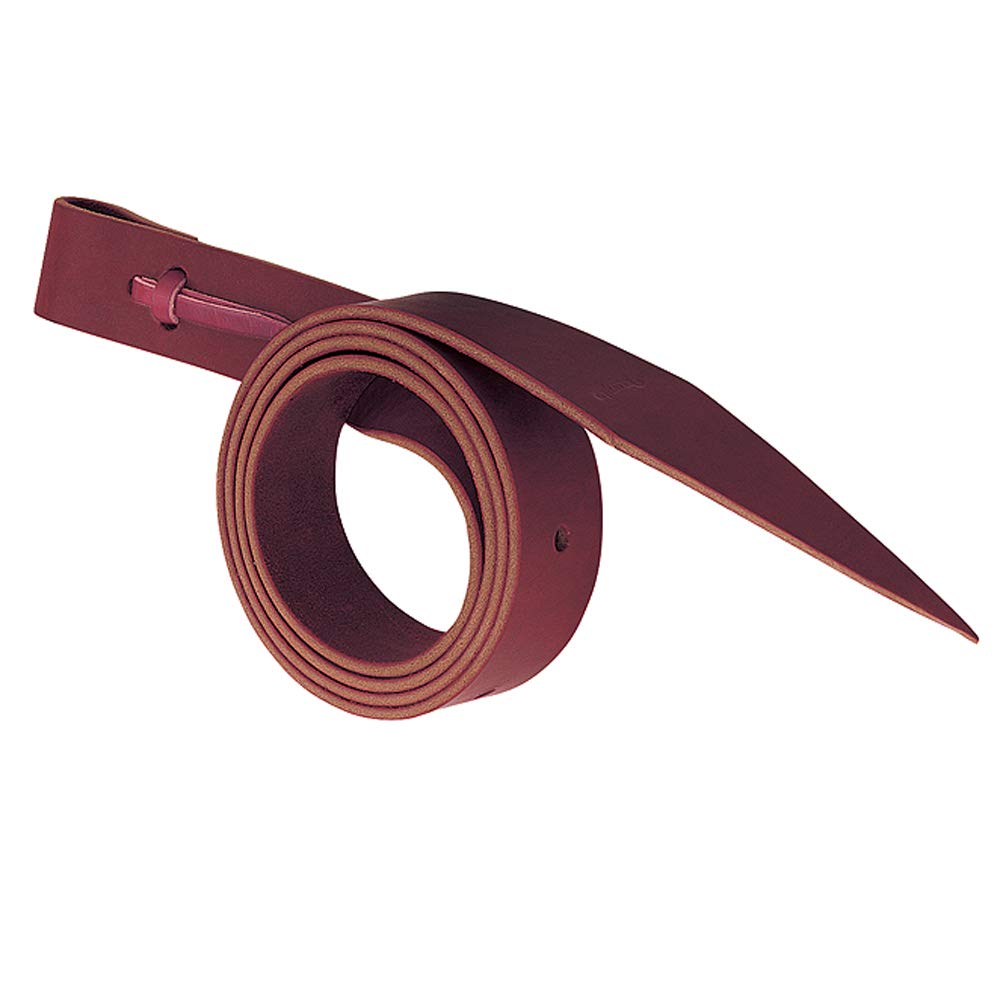
Weaver’s latigo back cinch strip is essential for riders who prefer traditional tie-off methods over modern buckle systems. The pre-punched holes allow precise adjustment without cutting or splicing the leather, and the burgundy latigo matches classic western tack sets. Riders using center-fire rigging or dropped rigging appreciate the 60″ length, which gives plenty of strap to thread through saddle rings and tie securely.
The leather is heavy-duty yet flexible out of the package, requiring minimal break-in compared to stiff economy latigos. Multiple reviews highlight that this latigo prevents the dangerous slipping that happens with nylon latigos, which can come untied under heavy load. For ranchers and trail riders who ride long hours, the reliability of a properly tied leather latigo is a genuine safety upgrade.
A few buyers note that the leather tie is sold separately, so you need to order one if your saddle doesn’t come with a matching tie. The 1.5″ width is standard for most western saddles, but some modern roping saddles with wider rigging may prefer a 2″ version. This is not a full rear cinch assembly—it’s a replacement or backup latigo for riders who already own a cinch body.
Why it’s great
- Pre-punched holes enable precise length adjustment without cutting the leather
- Supple latigo material is flexible right out of the package, reducing break-in time
Good to know
- Leather tie is sold separately and is not included with the latigo strap
- 1.5-inch width may feel narrow for wider saddle rigging systems designed for 2-inch latigos
7. WEMBILS Leather Flank Cinch Set

This WEMBILS set delivers a complete rear cinch assembly—cinch body, billets, and stainless steel roller buckle—at an entry-level price that undercuts most competitors. The 32″ cinch paired with 24″ billets gives you enough strap length to fit most saddle configurations, and the genuine leather construction feels more substantial than the price suggests. Double stitching throughout the stress points ensures the billets won’t separate under heavy roping loads.
The smooth padded underside adds a layer of comfort that prevents the leather from digging into the horse’s flank, which is a common issue with budget leather girths that skip the padding to save cost. Buyers who couldn’t find quality back cinches in local tack stores report being pleasantly surprised by the workmanship and thickness of the leather. The roller buckle makes tightening and releasing smooth, even when wearing gloves.
The main compromise is the generic finish—the leather has a plain brown appearance without tooling or stain variation, making it less suitable for show rings where aesthetics matter. A few customers mention that the buckle finish isn’t as polished as premium stainless hardware, though it hasn’t shown signs of rust after several months of use. For riders who need a functional, complete rear cinch set without paying for cosmetic extras, this is the most cost-effective option.
Why it’s great
- Complete set includes cinch body, billets, and roller buckle with no separate purchases needed
- Double stitching at stress points provides reliability that exceeds expectations at this price
Good to know
- Plain leather finish lacks decorative tooling and is better suited for trail or ranch work than showing
- Buckle finish is functional but less polished than premium stainless steel alternatives
FAQ
How tight should a back cinch be on a western saddle?
Do I need a connector strap for the front and back cinch?
What size back cinch do I need for a 15-hand quarter horse?
Final Thoughts: The Verdict
For most riders, the best back girth for western saddle winner is the Weaver Equine Airflex Roper Cinch because it combines pressure-dissipating foam with durable nylon webbing for all-day comfort across roping, trail, and arena work. If you need a removable liner that machine-washes easily, grab the Professional’s Choice SMX Merino Wool Cinch. And for traditionalists who want natural fiber against the horse’s skin, nothing beats the Classic Equine Alpaca Roper Cinch.