
Our readers keep the lights on and my morning glass full of iced black tea. As an Amazon Associate, I earn from qualifying purchases.
Specs are compiled from manufacturer listings and verified buyer reviews and can change over time — please confirm the key details on the product page before buying.
That grinding knot between your shoulder blades or the ache in your lower back after a long day at a desk has a fix that doesn’t cost a fortune. You need something that targets the exact spot, not a giant tube that rolls you off balance. This guide walks you through a handful of very different tools—from a simple wooden wand to a peanut-shaped ball—each built to hit a different kind of back pain.
I’m Min — the founder and writer behind Gadgets Feed. This guide is built by comparing the manufacturers’ published specifications and the patterns across verified customer reviews, so you get each pick’s real strengths and trade-offs instead of marketing spin.
We looked at firmness, size, portability, and real-world customer experiences to sort through the noise and find the back massage roller that actually deserves a spot in your home gym or travel bag.
Quick Picks
- Body Back FSA Eligible Wood Back Roller — Precision Tool
- Krightlink Foam Roller High Density — Multi-Zone
- Chirp Wheel Foam Roller – 4-Inch Mint — Travel Hero
- TriggerPoint Universal Double Massage Ball 8-Inch — Targeted Duo
- Deep Recovery Yoga Foam Roller – 12-inch — Compact Starter
How To Choose The Best Back Massage Roller
Not all back rollers are the same. The wrong one can be too soft to dig into a knot or too hard to use comfortably on a first try. Focus on these three things to avoid a bad buy.
Density and Firmness
The biggest surprise for most buyers is how hard or soft a roller feels. A high-density foam roller like an EPP (expanded polypropylene) can feel almost rock-solid, which is great for deep tissue work but painful for beginners. A softer foam is gentler on sensitive areas but won’t release a stubborn trigger point. Look at the material: PVC and EVA blends tend to be firmer and longer-lasting.
Shape and Design
A standard cylinder works fine for large muscle groups, but a wheel with a spinal channel (a groove down the middle) cradles your vertebrae, so you don’t roll directly over bone. Peanut-shaped double balls let you work on either side of the spine. A wooden stick with a groove gives you pinpoint pressure exactly where you want it. Your body shape and pain location determine which design fits best.
Size and Portability
If you travel or store your roller in a small apartment, a 12-inch model fits in a suitcase, while a 24-inch wheel takes up more floor space. Weight matters too: a lightweight foam roller at 4.8 ounces is easier to pack than a 2.25-pound model with a plastic core. Think about where you will use it most — on a carpet, on a tile floor, or in a gym bag.
Quick Comparison
On smaller screens, swipe sideways to see the full table.
| Model | Best For | Material / Density | Size | Weight | Amazon |
|---|---|---|---|---|---|
| Body Back Wood Roller | Pinpoint spinal pressure | Sustainably sourced hardwood | 15.5 x 2.5 in | 1.1 lbs | Amazon |
| Krightlink Foam Roller | Multi-zone deep tissue | High-density PVC/EVA | 13 x 5.1 in | 2.25 lbs | Amazon |
| Chirp Wheel 4-Inch | Spinal decompression & travel | ABS core / EVA foam | 4 x 4 x 24 in | 9.6 oz | Amazon |
| TriggerPoint Double Ball | Targeted peanut-style release | EVA foam (firm/extra firm) | 8.66 x 5.31 x 8.27 in | 0.74 lbs | Amazon |
| Deep Recovery Travel Roller | Budget travel & sensitive areas | Soft EPP foam | 12 x 4 in | 4.8 oz | Amazon |
In‑Depth Reviews
1. Body Back FSA Eligible Wood Back Roller

The wooden rod that feels like a masseuse’s elbow in your own hands.
This is not a foam roller — it is a 15.5-inch sculpted hardwood stick with a deep centered groove that fits right over your spine. You lie on it and let your body weight apply the pressure exactly where you need it, making it feel like a very targeted, deep massage. The rubber grip rings on the ends keep it from sliding away on tile, wood, or carpet, which is helpful because if you shift your position even slightly, the pressure point changes.
Buyers report it is excellent for self-massage of the neck and spine, calling it a very sturdy wood tool that effectively moves tight muscles and cracks bones. Another owner mentioned that a 5-minute session two or three times a day provides direct pressure like a masseuse and improves recovery from desk work. Unlike the Chirp Wheel’s 24-inch foam wheel, which cushions your vertebrae, this 2.5-inch diameter rod delivers a much more direct, intense line of pressure — at 15.5 x 2.5 inches versus 4 x 4 x 24 inches, you feel each bump and knot more acutely.
One honest trade-off: it is better for your upper and middle back than your lower back, and the rounded design can feel too intense on a carpet for older or heavier users. It is also not meant for anyone with a current spine injury. But if you want the closest thing to a real hands-on massage from a tool, this is the one.
Best for pinpoint relief: If you have specific knots in your rhomboids or along your spine from computer use and you want something more precise than a foam cylinder, this wooden roller delivers.
A fair warning: Not a good choice if you have a spine injury or prefer a soft, cushioned feel against your back.
Reach for this if: you want a durable, natural-wood tool that lets you apply your own body weight for deep, targeted pressure on upper and middle back knots.
Look elsewhere if: you need a soft, beginner-friendly roller or have an existing spinal injury.
2. Krightlink Foam Roller High Density

A dense foam roller with textured zones that mimic fingers, palm, and thumb.
This 13-inch roller stands out because of its patented triple-grid massage zones — different sections on the surface are designed to feel like a finger, a palm, and a thumb pressing into your muscles. It is made from a high-density PVC and EVA blend, which means it will not lose its shape after months of use, and at 2.25 pounds, it has a solid, substantial feel compared to the 4.8-ounce Deep Recovery travel roller. The 5.1-inch diameter gives it a wider contact area than a wooden stick, so it spreads the pressure out more while still digging deep.
One reviewer at 215 pounds noted that the firm prongs allow a deeper massage than a standard round roller, and that it excels on the anterior delt, pec, and AC joint. Another buyer reports using it every day to crack their back easily. There is a trade-off: a few users found it too large for the upper hamstring and returned it, recommending a longer 15-inch model for that area. It comes with a nylon mesh bag, making it easy to take to the gym or store away.
Compared to the 9.6-ounce Chirp Wheel, which focuses on a spinal channel for decompression, this roller gives you a more aggressive, textured deep-tissue experience across a wider area. If you want variety in pressure points and a tool that handles your calves, quads, and back equally well, this is a strong pick.
Why it works
- Patented triple-zone grid mimics hand massage
- High-density PVC/EVA core won’t flatten over time
- Comes with a portable mesh carry bag
The drawbacks
- Too large for some smaller muscle groups like upper hamstrings
- Very firm feel can be uncomfortable for beginners without warming up first
Best for: anyone who wants a versatile, durable foam roller with textured zones for deep-tissue work on large muscle groups.
skip it if: you have a small frame and need a roller that fits into tight spots like the upper hamstring.
3. Chirp Wheel Foam Roller – 4-Inch Mint
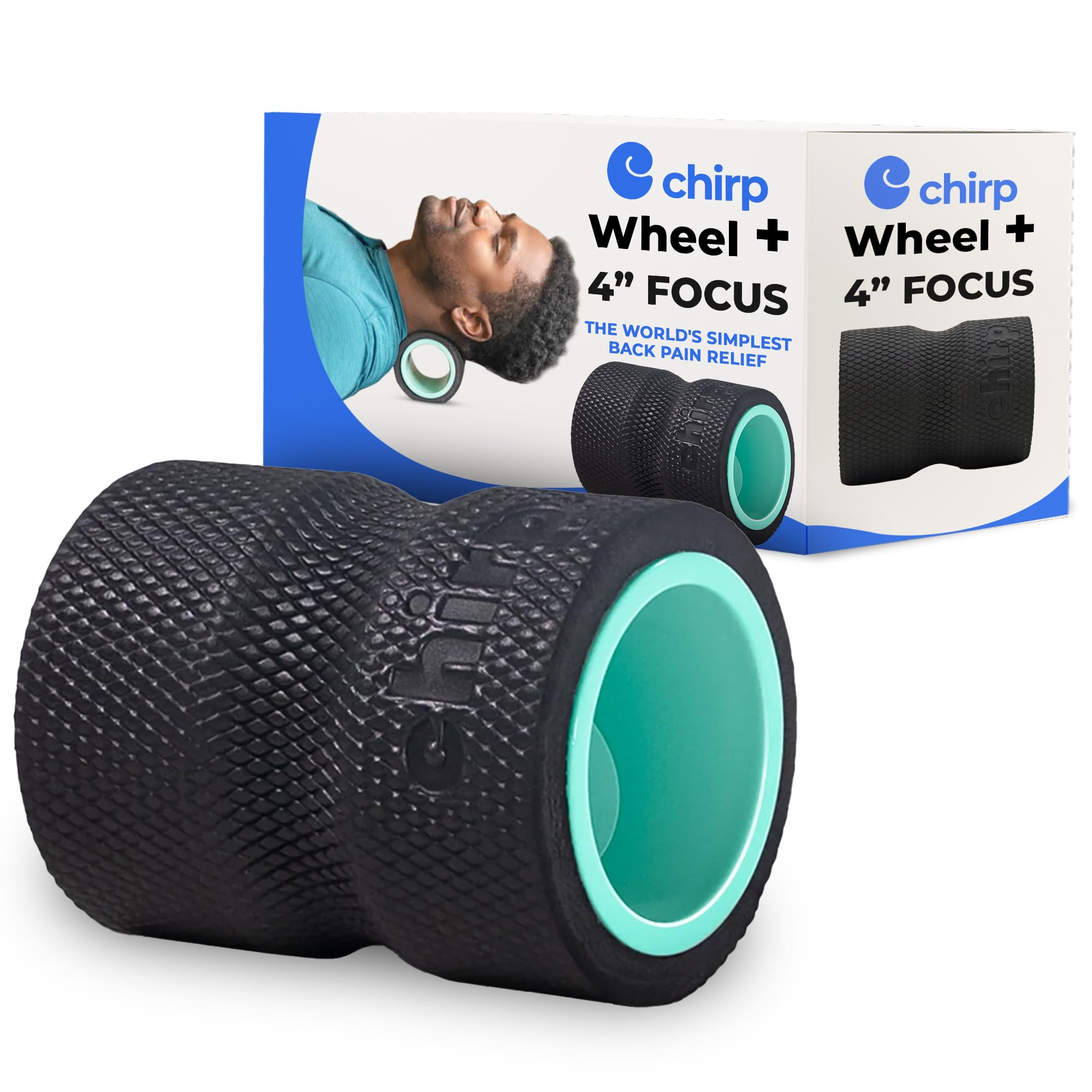
The wheel-shaped roller that cradles your spine while you stretch.
This is the most travel-friendly wheel design on the list. At 4 inches wide and 24 inches long (essentially the width of your torso), it rolls under you like a wheel, and the built-in spinal channel keeps your vertebrae from pressing directly against hard foam. The ABS core and cushioned EVA foam support up to 500 pounds, so it is sturdy enough for heavier users. At just 9.6 ounces, it is noticeably heavier than the 4.8-ounce Deep Recovery travel roller, but that weight comes from the durable reinforced build that lasts years.
Owners mention it instantly relieved severe lower back pain in a 300-pound user after a week, noting the pain returns less with use. Another long-term owner said they take it everywhere and that it lasts over 3 years while alleviating upper back and shoulder pain from driving or computer use. The 4-inch width makes it easy to target the neck and upper back, and reviewers call it the perfect size to feel “unstuck” after 20 years of C7-T1-T2 pain.
One thing to note: it is not a deep-tissue tool like the Krightlink grid roller — it focuses on gentle spinal decompression and muscle stretching rather than grinding into trigger points. If you have acute lower back pain and want a safe, easy way to stretch, this is your pick. If you need to obliterate a deep knot, go for the Body Back wood roller instead.
Best for spinal decompression on the go: The spinal channel and lightweight wheel design make it ideal for travel and gentle daily stretching.
The trade-off: It lacks the aggressive texture needed for deep trigger-point release on large muscles.
Perfect for: travelers, desk workers, and anyone with mild to moderate back pain who wants a safe, easy spinal stretch.
Not the best for: people who need intense deep-tissue massage or have chronic knotting that requires pinpoint pressure.
4. TriggerPoint Universal Double Massage Ball 8-Inch

A peanut-shaped twin ball that slides right alongside your spine.
This 8-inch double-ball design is built specifically to work on either side of your spinal column without putting pressure on the bones themselves. The textured EVA foam surface adds grip and helps increase mobility during recovery. It is compact enough at 0.74 pounds to toss into a gym bag or suitcase, making it a strong alternative to the 24-inch Chirp Wheel if space is tight. The shape is also ideal for targeting large muscles like glutes, hamstrings, and quads.
Reviewers consistently describe the material as very sturdy and effective. One reviewer noted it works super well at stretching their lower back and that they usually crack at least a few times while using it. Another experienced user called it life-altering for deep muscle tension, though they cautioned it is very hard and can be painful initially — meaning it is not for beginners. One reviewer pointed out that you need some experience to avoid injury, as the firmness is intense.
Compared directly to the Deep Recovery travel roller (which buyers describe as stiff but usable on a bed), the TriggerPoint ball is significantly firmer and more targeted. It is a pro-level tool. If you have experience with foam rolling and want a travel-friendly shape that avoids spinal pressure, this is a great buy. If you are new to massage rollers, start with the Chirp Wheel instead.
What makes it stand out
- Peanut shape leaves your spine free from direct pressure
- Very sturdy, dense foam won’t break down
- Fits easily in a gym bag for on-the-go relief
What to know before buying
- Very firm and may be painful for new users
- Requires some experience to use safely on the spine
Ideal for: experienced roller users who want a compact, spine-safe tool for deep lower back and glute release.
Not for: beginners or anyone looking for a soft, gentle massage experience.
5. Deep Recovery Yoga Foam Roller – 12-inch
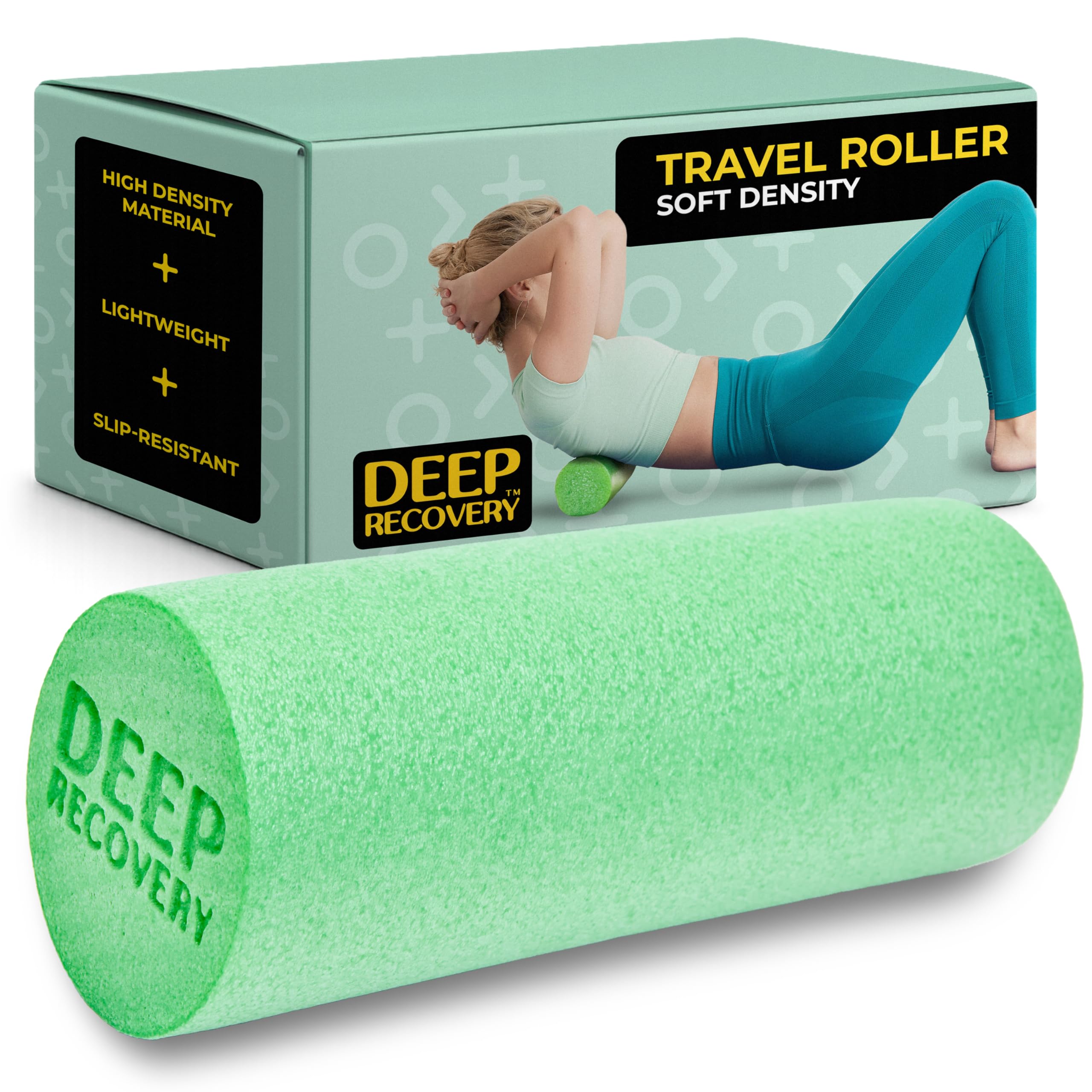
A lightweight, soft-foam travel roller that won’t beat you up on first use.
This is the softest option on the list, made from EPP (expanded polypropylene) foam that provides gentler pressure for sensitive areas. At 12 inches long and 4 inches wide, it is the smallest full-body roller here, and at 4.8 ounces versus the Chirp Wheel’s 9.6 ounces, it is especially easy to pack. It is designed for myofascial release (a technique that relaxes tight connective tissue) and can be used on your back, legs, and shoulders. The compact size makes it a natural pick for packing in a suitcase or carrying to the gym.
Customers note it is stiff but manageable — one owner said they just used it on the bed until they got used to it. Another noted it is a firm foam roller that is lightweight and good for travel, but the hard logo badge in the middle can be painful on the spine and is best peeled off. A key limitation that came up in reviews: several buyers mentioned it is too soft for hamstrings and glutes, especially for men, and a harder roller is recommended for those areas.
This is the budget-friendly entry point. It does not dig as deep as the TriggerPoint double ball or the Krightlink grid roller, but if you are new to rolling or have very sensitive muscles, this softer foam lets you ease into it without pain. Just know that as you get stronger, you will likely outgrow it.
Great for sensitive beginners and travelers: The soft EPP foam and tiny footprint make it easy to use and pack, even on an airplane.
What to expect: It is not firm enough for deep hamstring or glute work, and the brand logo in the middle can dig into your spine if you don’t remove it.
Pick this if: you want an inexpensive, lightweight roller to start with and plan to use it mostly on your back and legs.
pass on it if: you need a firm, dense roller for deep muscle work on larger body parts like glutes and hamstrings.
Understanding the Specs
Density and Material
The material of the roller directly controls how deep the massage feels. EPP foam is lighter and softer — good for travel and sensitive areas. EVA foam is denser and more durable, holding its shape over years of use. PVC blends are often the firmest and most aggressive. A higher-density roller will also be heavier: compare the 4.8-ounce Deep Recovery EPP roller to the 2.25-pound Krightlink PVC/EVA roller to feel the difference in heft.
Shape and Spinal Safety
A standard cylinder applies pressure across your entire back evenly. A wheel with a spinal channel (like the Chirp Wheel) has a groove that keeps your vertebrae from pressing against the foam. A peanut-shaped double ball (like the TriggerPoint) lets you target muscles on either side of the spine independently. A wooden stick with a groove (like the Body Back roller) gives you the most direct pressure but requires careful positioning. Your comfort level and any back issues should guide which shape you choose.
FAQ
What density foam should a beginner start with?
Can I use a back massage roller every day?
Is a wooden roller better than foam?
What size roller is best for travel?
How do I clean a foam roller?
What is the difference between a foam roller and a massage gun?
Will a back roller help with poor posture?
How long should I use a back massage roller each session?
Can a foam roller help with sciatica pain?
What is the weight limit for a foam roller?
Final Thoughts: The Verdict
If you want one dependable pick, the ideal back massage roller is the Body Back Wood Roller because it gives you the most precise, masseuse-like pressure for upper back and neck knots in a durable, natural-wood design. If you want a versatile foam roller that handles deep tissue on large muscle groups, grab the Krightlink Foam Roller. And for gentle spinal decompression and travel-friendly relief, the standout is the Chirp Wheel 4-Inch.
How We Picked
We do not accept paid placement, and we did not hands-on test every unit. Instead, we match each pick to a real buyer and use-case by comparing the manufacturers’ published specifications against the patterns in verified customer reviews — so you get each pick’s real strengths and trade-offs instead of marketing copy.
Sources & Methodology
Specifications: manufacturer listings and product documentation. Review insights: verified customer reviews, as of July 2026. Pricing: not shown on this page (it changes often); check the current price via the retailer link.
As an Amazon Associate, Gadgets Feed earns from qualifying purchases. This does not affect which products we feature.
Product prices and availability are accurate as of the date/time indicated and are subject to change. Any price and availability information displayed on Amazon at the time of purchase will apply to the purchase of this product. As an Amazon Associate I earn from qualifying purchases.
CERTAIN CONTENT THAT APPEARS ON THIS SITE COMES FROM AMAZON. THIS CONTENT IS PROVIDED "AS IS" AND IS SUBJECT TO CHANGE OR REMOVAL AT ANY TIME.
Amazon and the Amazon logo are trademarks of Amazon.com, Inc. or its affiliates.