
Our readers keep the lights on and my morning glass full of iced black tea. As an Amazon Associate, I earn from qualifying purchases.
Specs are compiled from manufacturer listings and verified buyer reviews and can change over time — please confirm the key details on the product page before buying.
A lifting belt stabilizes your spine and core under heavy loads, reducing the risk of lower-back strain. It works by giving your core something to push against, so your spine stays stable when the bar gets heavy. This guide breaks down nine of the most reliable back support for lifting options, from competition-grade leather to flexible nylon and work-ready braces.
I’m Min — the founder and writer behind Gadgets Feed. This guide is built by comparing the manufacturers’ published specifications and the patterns across verified customer reviews, so you get each pick’s real strengths and trade-offs instead of marketing spin.
The best back support for lifting fits snugly, holds firm under load, and stays comfortable through a full session.
Our Picks at a Glance
How To Choose The Best Back Support For Lifting
Your first decision is material, and it shapes everything else. A leather belt gives rigid, uncompromising support for maximal lifts. A nylon belt flexes with you and works better for workouts with lots of movement. A hybrid blends both worlds. Match the material to what you actually do in the gym.
Thickness and width set the rigidity
Thicker leather, measured in millimeters, means a stiffer wall for your abs to brace against. Wider belts, measured in inches, spread that pressure across more of your torso. A 4-inch width is the versatile middle ground, while a wider back panel adds support at the cost of some flexibility.
Closure type changes your workout flow
Prong buckles are the classic choice for heavy, slow lifts where you set the belt once. Velcro and self-locking straps adjust infinitely and come off in a second between sets, which suits high-rep or Olympic-style training. The trade-off is that velcro can wear out over time, while leather prongs rarely fail.
Quick Comparison
| Model | Best For | Material | Thickness | Closure | Amazon |
|---|---|---|---|---|---|
| Dark Iron Genuine Leather★ Best Overall | Overall powerlifting | Genuine Leather | 5 mm | Double Prong | Amazon |
| Iron Bull 7mm LeatherCompetition Pick | Competition approved | A-Grade Leather | 7 mm | Double Roller Buckle | Amazon |
| Jaffick Leather BeltStyle Pick | Style-focused lifters | Buffalo Leather | 6 mm | Double Prong | Amazon |
| Rip Toned Nylon Belt | Budget-friendly training | Nylon | 6 inch | Hook & Loop | Amazon |
| Harbinger Foam Belt | Light workouts & yard work | Foam Blend | 4.5 inch | Hook & Loop | Amazon |
| DMoose Auto-Lock Nylon | Quick-release training | Nylon | 4 inch | Self-Locking Buckle | Amazon |
| DMoose 5mm Leather | Competition training | Suede Leather | 5 mm | Double Prong | Amazon |
| NeoHealth Back Brace | Work & lifting on the job | Neoprene | — | Hook & Loop | Amazon |
| Element 26 Hybrid | Leather support, nylon adjust | Leather & Nylon | 7 mm | Self-Locking | Amazon |
In‑Depth Reviews
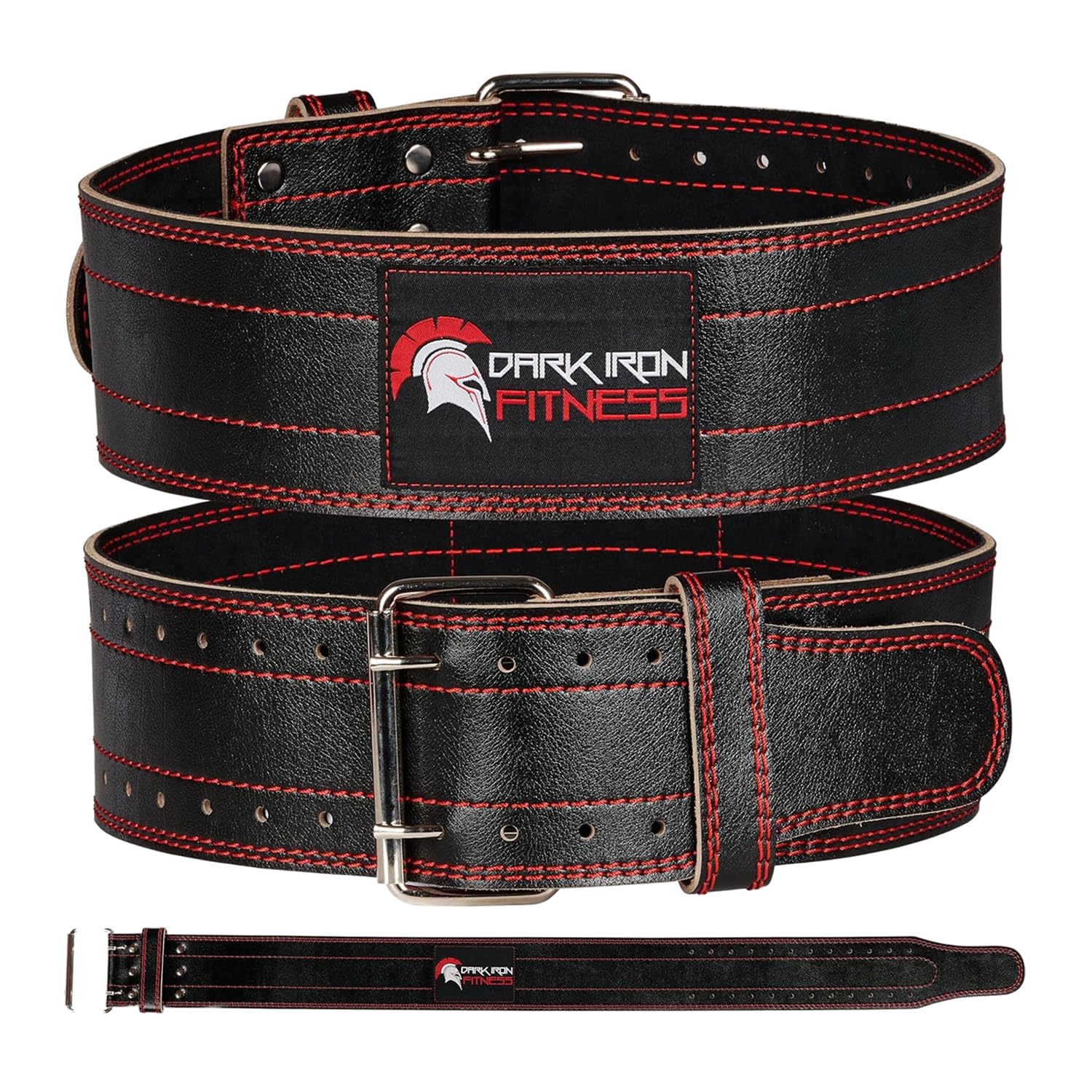
1. Dark Iron Genuine Leather Weightlifting Belt
Our pick — over 4.5★ from 24,500+ verified ratings; the strongest balance of quality and price.
The crowd favorite that blends old-school leather rigidity with a fit that rarely digs in.
The defining spec here is quality — it is the most-praised trait by a wide margin, with over 3,000 owners calling out the craftsmanship. The 5-millimeter thick genuine leather holds your core firm during squats and deadlifts, while the double-row stitching along the edges is built to survive the heaviest sessions.
You get a 4-inch width that balances support and comfort, and the suede interior keeps it from pinching around your midsection. Sizing runs from XS to XL covering a 22-inch to 49-inch waist, with 12 adjustment holes at 1-inch intervals so you can dial in a precise fit. A buyer who returned a defective belt with no holes got a replacement easily, then added 20 lbs to their 1RM squat.
Some owners note the unpadded edges can dig into bare skin, so wearing it over a shirt is the smarter move. The support it offers is the second most-mentioned positive, making it a reliable pick for powerlifting, CrossFit, and even warehouse work.
What owners rave about
- Leather quality earns the most praise by far — well over 3,000 call it out
- Reinforced double-stitching holds up through frequent heavy use
- 12 adjustment holes give a precise, snug fit
The honest trade-offs
- Unpadded edges can irritate bare skin
- An occasional unit arrives with a manufacturing flaw
Reach for this if: you want a leather belt that will last for years and support serious powerlifting while staying affordable.
Look elsewhere if: you prefer a padded interior for high-rep work in a tank top.
2. Iron Bull Strength 7mm Leather Weight Lifting Belt
A competition-ready 7 mm leather belt that feels broken-in right from the start.
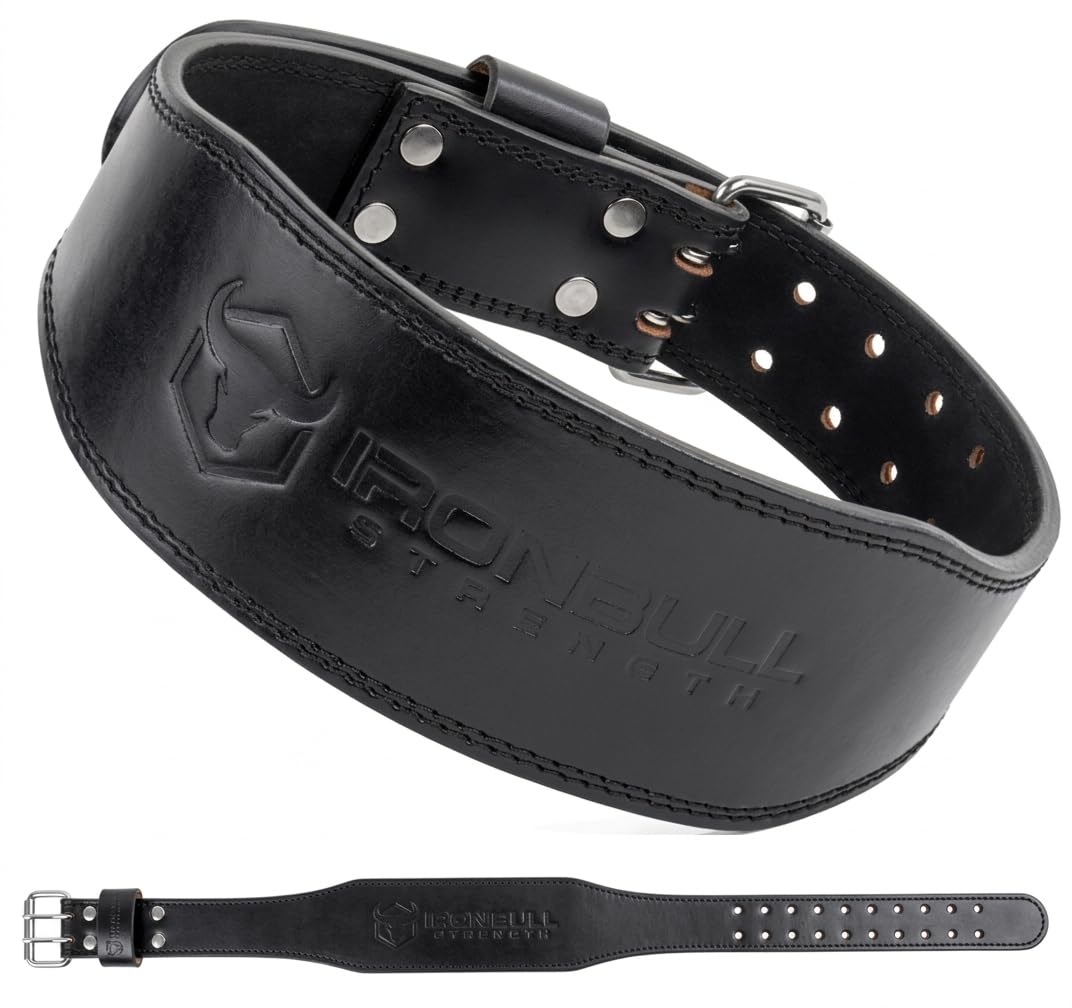
For lifters chasing sanctioned totals, this belt ticks the boxes — it carries IPF, USAPL, USPA, IPL, USAW, and IWF certifications. The 7-millimeter A-Grade leather gives you a stiffer wall than the 5 mm Dark Iron above, which means more feedback when you brace for a max deadlift.
The 4-inch tapered design narrows to 2 inches at the front, keeping it flexible and undisruptive on overhead and front lifts. Owners praise the double stitching and the precision-made steel double roller buckle, and several note it needs no break-in period at all. A 5-foot lifter says it hugs the body well, which speaks to how the taper adapts to different torsos.
The main sizing caveat is that some find it runs small, so measure your true waist rather than trusting your pant size. You also get a lifetime warranty against manufacturing defects and a 30-day satisfaction guarantee, which takes the risk out of the purchase.
The core strength: competition approval across six federations plus a 7 mm rigid core makes this the choice for serious meet lifters.
One caution: order up a size if you are between measurements, since the fit runs snug for some.
3. Jaffick Weight Lifting Belt for Ladies
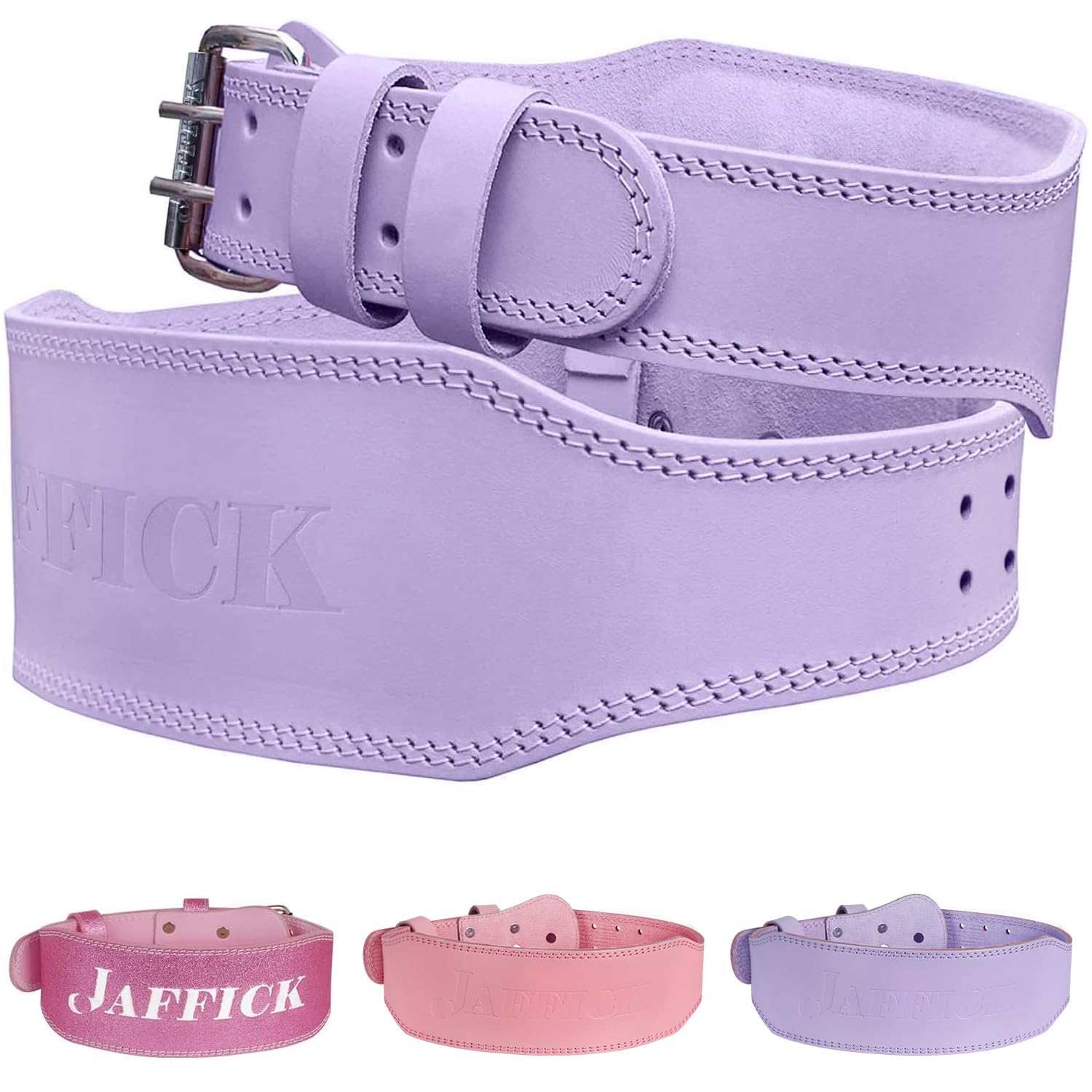
A 6 mm buffalo leather belt that brings serious support and a look that turns heads at the gym.
Appearance is the second most-praised trait here, with nearly 30 owners calling it an eye-catcher — but the support is no joke. The 100% genuine buffalo hide leather is 6 mm thick, softer to the touch than standard cowhide yet sturdy enough to boost pressure absorption on squats and deadlifts.
The back panel is 4-1/6 inches wide and padded with a 20 mm sponge, which owners say helps with posture without pinching the waist. It comes in sizes from S (21″–27″) to XL (36″–42.5″), and a 5-foot-1 owner with a short torso found the low-waist design a perfect fit for her frame. The adjustable roller buckle uses twin prongs with reinforced rivets to prevent slipping.
The trade-off is that the 6 mm thickness makes it a bit less flexible than a 5 mm belt, so it suits slower, heavier lifts better than fast Olympic movements. For anyone who wants protection without sacrificing style, this is the pick.
What wins people over: the padded 20 mm lumbar support and a tapered waist that avoids pinching — comfort and looks in one package.
Who should skip: lifters who need maximum flexibility for snatches or cleans.
4. DMoose 5mm Genuine Leather Belt
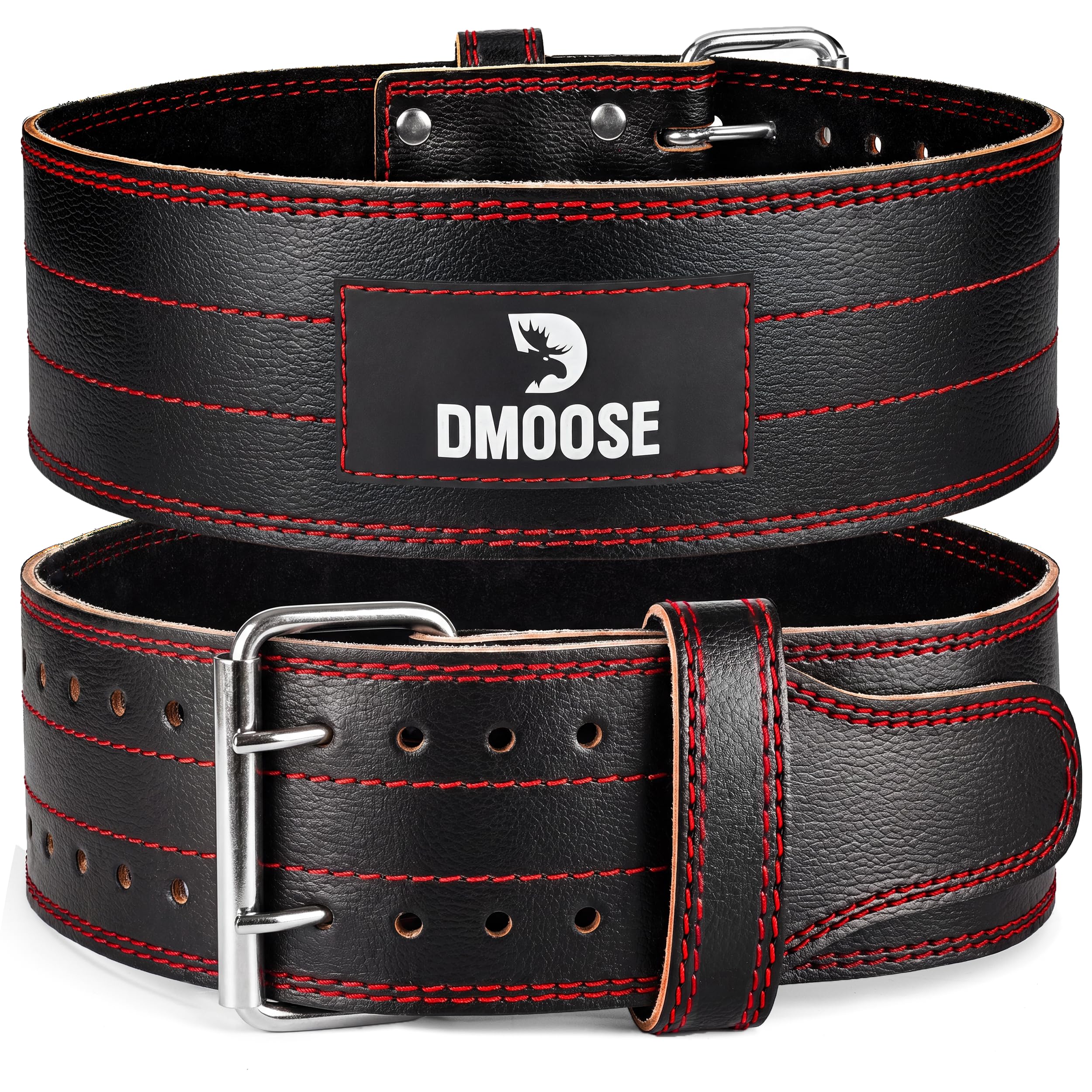
A 5 mm suede leather belt with the competition approvals to back up its claims.
Quality is the standout theme in the reviews, and the sweat-free suede leather construction is the reason. The 5-millimeter thickness and 4-inch lumbar pad deliver strong lower-back support, meeting USPA and IPL standards for competitive powerlifting. An XL fits a 41-inch belly measurement with two holes to spare, which tells you the sizing chart is honest.
The double-pronged coated buckle keeps a secure, adjustable fit, and one owner found it held his abdomen tight enough for heavier barbells. It is built to last through tough workouts, and the lifetime satisfaction guarantee backs that promise. Compared to the Jaffick above, this one trades a bit of style for a cleaner, more competition-focused profile.
The recurring gripe is a single belt loop that can create a small leather protrusion on the side, which some find annoying during presses. The company has been responsive, sending replacements when issues came up, and the belt still works well for squats and bench.
The standout spec: IPL and USPA approval at a 5 mm thickness makes this a legitimate competition option.
The catch: the single belt loop can leave a small leather flap that some owners trim or ignore.
5. Element 26 Hybrid Leather Belt
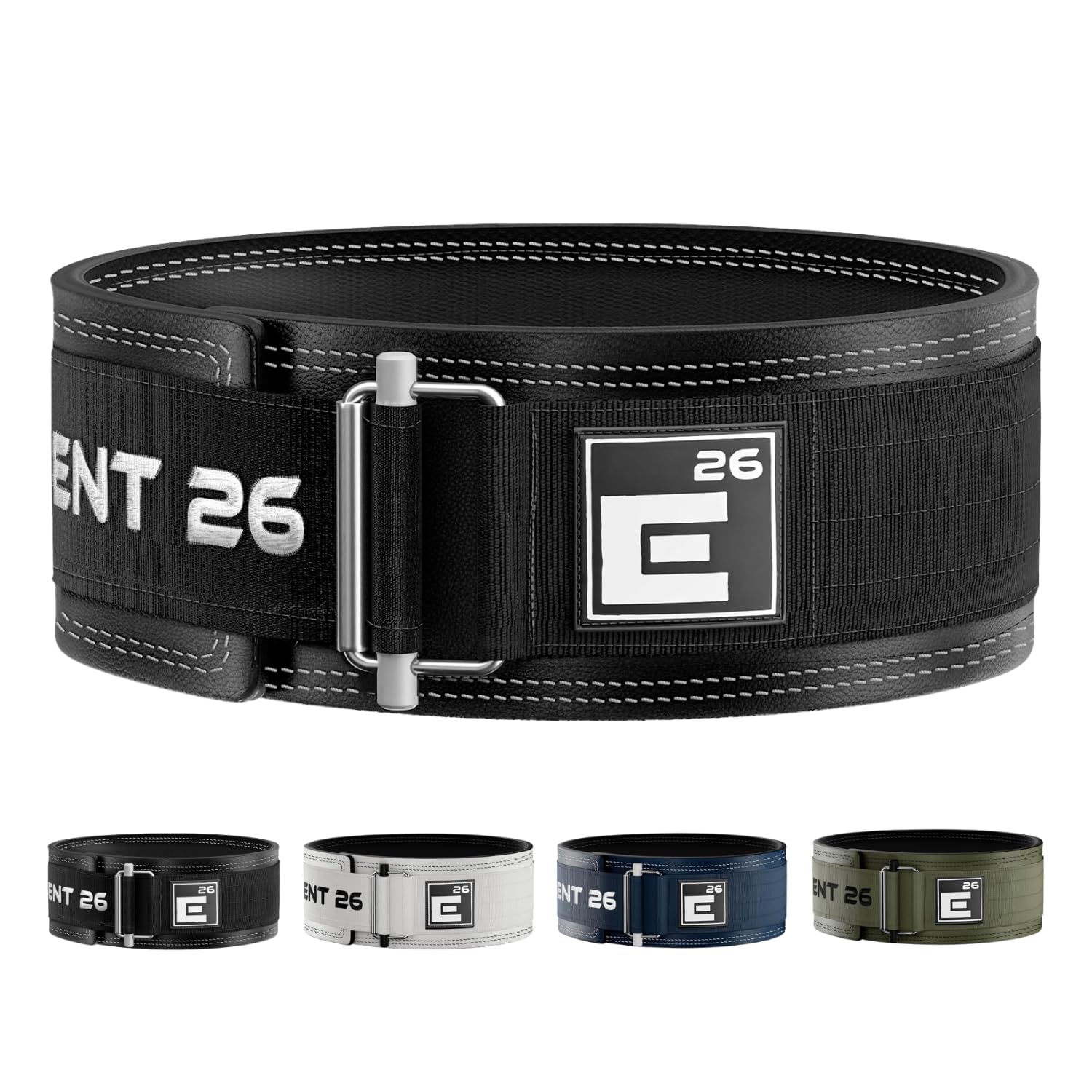
Patented hybrid tech that gives you leather stability with nylon-style infinite adjustment.
You get the best of both worlds with this belt: the easy adjustability of nylon and the firm support of 7 mm thick leather. The patented hybrid design lets you fine-tune tightness infinitely, unlike a prong belt with fixed holes. The self-locking system cinches down and holds tight through your entire lift, so you don’t have to re-tighten mid-set.
The locking mechanism is the third most-praised feature, with 21 owners highlighting how secure it feels. It is built in a US Veteran-run factory from high-quality leather, nylon, and steel, and the design was tune by a Doctor of Physical Therapy for intra-abdominal pressure. One owner bought it twice — once for training and once for competition — calling it the best belt they have ever owned.
The honest downside is velcro longevity. One owner noted the velcro wore out after a year of weekly use, loosening during reps, though others report it holds well. The locking bar also takes a moment to master, and sizing is tricky — measure your true waist, not your pants size.
Why it stands out: the self-locking system delivers the security of a prong with the quick adjust of velcro, in a 7 mm leather shell.
Think twice if: you plan to use it daily for years — velcro is the eventual weak point, not the leather.
6. DMoose Auto-Locking Nylon Belt
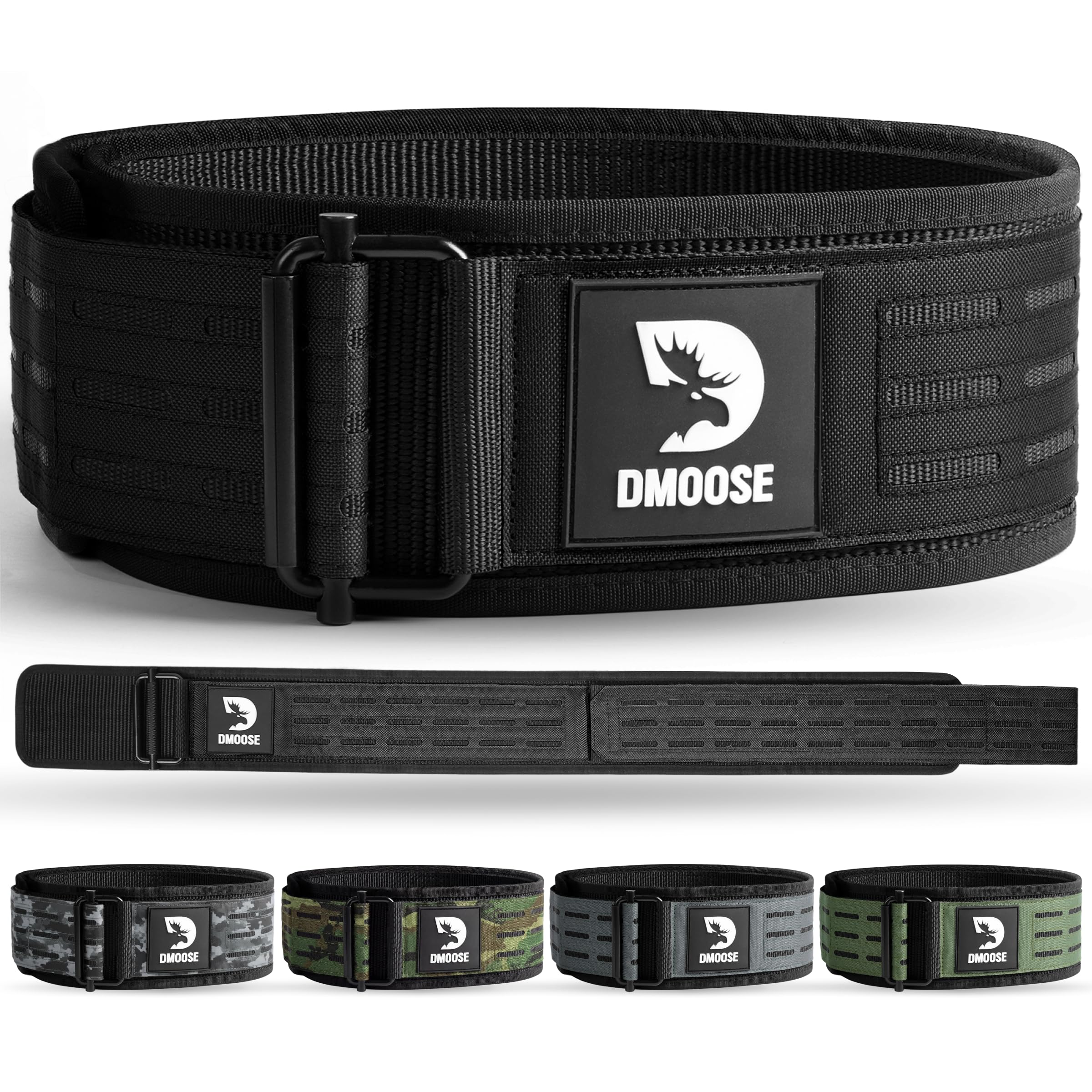
The auto-locking nylon belt that makes quick changes between sets genuinely easy.
Quality is the most-praised attribute here, with 34 owners calling it out, and the self-locking buckle is the reason it feels more premium than its price suggests. A quick-release flick loosens or removes the belt between sets in seconds, which beats fumbling with prongs mid-workout. The 4-inch uniform width distributes pressure evenly across your lower back.
The lightweight nylon flexes with your body instead of digging in like stiff leather, so you can wear it for full gym or home sessions without discomfort. One buyer with a 32-33 inch bellybutton measurement reports the Medium fits perfectly, confirming the sizing tip to measure around your navel. It also comes with a 1-year warranty for confidence.
The mixed feedback centers on getting it tight enough — it is not quite as easy to cinch as a prong belt, though owners agree it is not difficult either. If you switch between lifts often, the speed of this closure is a real advantage.
Best for: lifters who want a secure, lightweight belt for functional training and hate stopping to adjust prongs.
Not ideal for: maximal 1RM attempts where a stiff leather wall gives more bracing.
7. NeoHealth Back Brace with Suspenders
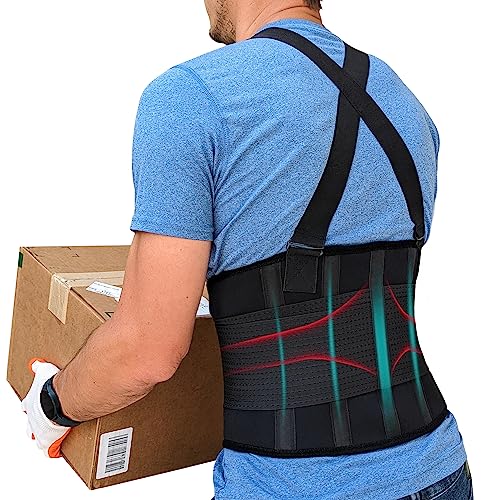
The work-ready brace with suspenders that stays put through a full shift of lifting and carrying.
This one is built for jobs, not just the gym — construction, warehouse work, and moving are the scenarios it targets. The back support is the most-praised feature, with 15 owners highlighting how it holds up through long shifts, and the adjustable suspenders are the key differentiator. They distribute weight more evenly and keep the brace securely positioned so it does not ride up as you bend.
Its neoprene shell and reinforced lumbar pad stabilize the spine and improve posture during lifting and carrying. One owner used it for three days of chainsaw work and log loading and found it prevented back stiffness entirely — “saves back” was the verdict. Another with a past back surgery uses it for beekeeping and says it really helps.
Sizing runs smaller than expected and the brace is firm, so measure carefully and expect a break-in period. Comfort gets mixed feedback — some find it exceptionally comfortable, others find it stiff at first. It is a tool for work, not a snug leather lifting belt, so set your expectations accordingly.
What makes it special: the suspender straps solve the biggest frustration of work braces — keeping the belt in place during a full shift.
Who this is for: anyone doing physical labor all day, from beekeeping to warehouse work, who needs protection more than precision.
8. Rip Toned Weight Lifting Belt
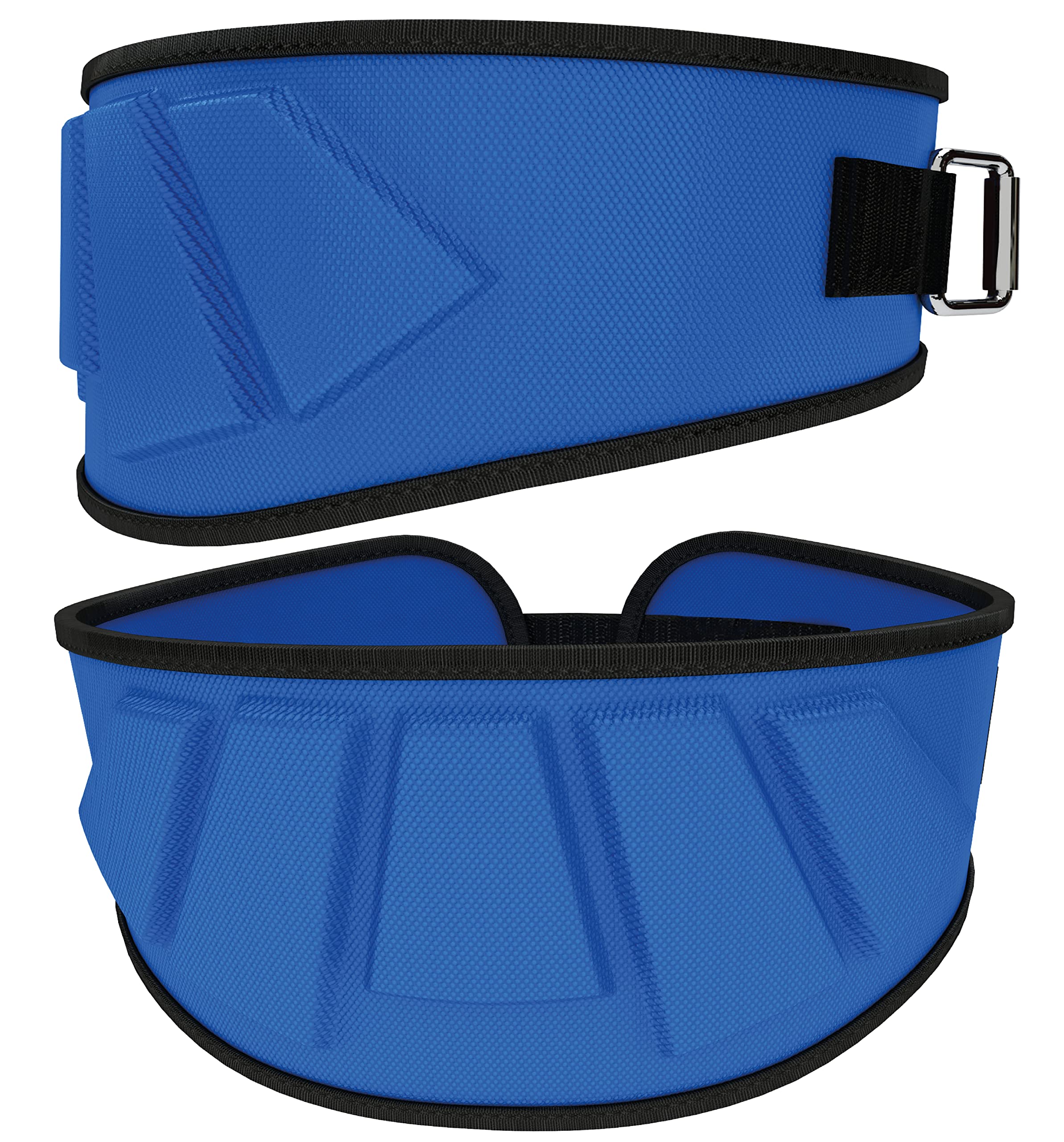
A 6-inch nylon belt that gives Olympic-style lifters freedom of movement on a budget.
Quality leads the praise here with 160 owners calling it out, and the 6-inch nylon design is the reason it works so well for clean and jerks, lunges, and push presses. The hip notches are a clever detail — they prevent the belt from digging into your hips during deep squats, preserving your form. The dual-lock velcro keeps it secure, and one small female lifter found it sturdy enough to support her deadlift PR.
The webbed strap feeds through a steel hook and secures with velcro, and owners say the design gives “half effort” thanks to a fulcrum effect. It is fully adjustable, washable, and backed by a lifetime replacement warranty. For a budget price, you get moderate support with excellent mobility — the right trade for lifters who move fast.
The velcro is the weak point, collecting debris and loosening after months of hard use, though the warranty replacement process was fast when it failed. Sizing is the bigger complaint, with one owner measuring a 39-inch waist finding the Large only fit at its tightest. Order down and double-check the sizing chart.
The upside
- 6-inch width with hip notches lets you move through deep squats freely
- Dual-lock velcro stays secure and is easy to adjust
- Lifetime warranty covers the velcro wear
Where it trips up
- Sizing chart runs big — measured 39″ fit only at the tightest on a Large
- Velcro frays and picks up debris over time
Pick this if: you want a flexible, low-cost belt for Olympic lifts and high-rep work, not max singles.
skip it if: you need rigid support for heavy squats or deadlifts — the nylon flexes more than leather.
9. Harbinger Weightlifting Belt, Foam, 4.5″ Width

A 4.5-inch foam belt that is just right for exercise classes, light lifting, and yard work.
This is the belt for days when you need support without the stiffness of thick leather. The 4.5-inch width stabilizes your core and lower back, while the low-profile steel roller buckle stays out of the way. Owners use it in exercise classes and in the yard, calling it “great back support” for everyday activity.
The premium hook-and-loop fastener holds stronger than older Harbinger models and does not snag, and the belt meets IWF competition standards. Quality is the most-praised trait with 19 owners happy with the build. The foam construction keeps it light and comfortable, and it fits both men and women from small to x-large.
The honest limit is that it is not built for serious powerlifting — one owner notes the adhesive strap is too small for the belt to feel completely supportive under heavy loads. Sizing also runs small, so check the measurements carefully. This is a light-to-moderate workout belt, and it excels at that job.
the balance: a low-profile foam belt with a steel buckle that stays out of your way during class or chores.
Not for: heavy 1RM attempts — for that, step up to the leather options above.
Understanding the Specs
Thickness (Millimeters)
This is the stiffness dial for leather belts. A 5 mm belt gives solid support and some flexibility — a good entry point. A 7 mm belt is noticeably stiffer, giving you a rigid wall to brace against for heavy squats and deadlifts. The trade-off is that thicker leather needs more time to break in and feels less flexible for front or overhead lifts.
Width (Inches)
This controls how much of your torso the belt covers. A 4-inch width is the versatile standard, spreading pressure evenly without restricting movement. A wider back panel, like 4.5 or 6 inches, adds support but can dig into your ribs or hips on certain lifts. Tapered designs that narrow at the front offer a compromise — support in the back, freedom in the front.
FAQ
How tight should a lifting belt feel?
What is the difference between a 5mm and 7mm leather belt?
How do I measure my waist for a lifting belt?
Is a prong buckle or velcro closure better?
Can I use a gym lifting belt for work and manual labor?
Will a lifting belt prevent back injuries?
How long does a leather lifting belt last?
Why should I choose a tapered belt over a straight one?
Final Thoughts: The Verdict
If you want one dependable pick, the back support for lifting winner is the Dark Iron Genuine Leather Belt because its 5 mm leather construction and double-prong buckle give you the rigidity serious lifters need, and thousands of owners praise its quality. If you want competition certification with a thicker 7 mm core, choose the Iron Bull Strength Belt. And for fast, mobile training where you change loads often, reach for the DMoose Auto-Locking Belt.
How We Picked
We do not accept paid placement. Every pick is matched to a real buyer and a real use-case; we do not hands-on test units.
Sources & Methodology
Specifications: manufacturer listings and product documentation. Review insights: verified customer reviews, as of August 2026. Pricing: not shown on this page (it changes often); check the current price via the retailer link.
As an Amazon Associate, Gadgets Feed earns from qualifying purchases. This does not affect which products we feature.