
Our readers keep the lights on and my morning glass full of iced black tea. As an Amazon Associate, I earn from qualifying purchases.
Specs are compiled from manufacturer listings and verified buyer reviews and can change over time — please confirm the key details on the product page before buying.
If you’re here, you’ve probably already tried the stretches, the heating pads, and the awkward floor exercises—and your back still feels tight and achy. A back traction device works by gently decompressing your spine, creating space between the vertebrae to relieve pressure on nerves and discs. This guide breaks down the top-rated devices, from full inversion tables to portable stretchers, so you can pick the one that fits your space, your body, and your specific kind of back pain.
I’m Min — the founder and writer behind Gadgets Feed. This guide is built by comparing the manufacturers’ published specifications and the patterns across verified customer reviews, so you get each pick’s real strengths and trade-offs instead of marketing spin.
Finding the right back traction device for your home starts with knowing if you want a full inversion setup or a simple portable stretcher. We’ve studied the data on the most popular options to help you decide.
Our Picks at a Glance


How To Choose The Best Back Traction Device
Match the device to your pain pattern, your physical condition, and your home setup. The biggest mistake buyers make is jumping to the most aggressive or expensive option without checking if they have the mobility to use it safely or the space to store it.
Match the Traction Style to Your Pain
Inversion tables hang you upside down to use gravity to decompress the spine, which is great for lower back pressure but can be intense. Static stretchers arch your back over a curved surface to gently separate the vertebrae while you lie down. Dynamic devices use inflatable airbags to apply and release targeted traction on the lumbar region, often combining it with massage and heat. Consider which position you can comfortably hold before choosing.
Check the Weight Capacity and Build
Every device has a specific weight limit, so verify yours before buying. A heavier user needs a sturdier steel frame with a higher capacity to feel secure. Look at the materials—heat-treated steel or alloy steel frames are hallmarks of durable build quality, resisting wobble during use. The weight of the unit itself also matters: a lighter stretcher is portable, while a heavier table offers stability but is hard to move.
Quick Comparison
| Model | Best For | Weight Capacity | Item Weight | Traction Method | Amazon |
|---|---|---|---|---|---|
| TEETER EP-560★ Best Overall | Full inversion therapy | 300 lb | 65 lbs | Inversion Table | Amazon |
| Electric Lumbar TractionTherapeutic Powerhouse | Targeted relief with heat & massage | — | 2.43 kg | Dynamic Airbag | Amazon |
| True Back StretcherPortable Value Pick | Portable, on-the-floor relief | — | 4 lbs | Static Arch | Amazon |
| Teclor Inversion Table | Taller users needing a higher capacity | 350 lb | — | Inversion Table | Amazon |
| Sotion Full Body Massage Mat | Full-body stretching with heating | — | 10 lbs | Airbag Stretching | Amazon |
| Fisher Traction Device | Portable, doorknob-hook decompression | 230 lb | 2.1 pounds | Doorknob Pull | Amazon |
| Stamina InLine Traction | Standing traction for mobility issues | 250 pounds | 29 pounds | Upright Traction | Amazon |
| Posture Pump 4100-D | Cervical and lumbar decompression | — | 2.16 pounds | Air Pump Support | Amazon |
| Teeter DEX II | Inversion & core strength combined | 350 lb | 60 pounds | Roman Chair Inversion | Amazon |
In‑Depth Reviews
1. TEETER EP-560 Inversion Table
Our pick — over 4.5★ from 500+ verified ratings; the strongest balance of quality and price.
The gravity-powered gold standard that lets you hang upside down with total confidence.
This is the inversion table that others measure themselves against, and the reason is simple: it’s the only one registered with the FDA as a 510(k) medical device. That means it’s officially indicated for specific conditions like herniated disc, sciatica, and spinal stenosis, which is a huge vote of confidence for a home therapy tool. The frame is built from heat-treated steel, a material choice that explains the rock-solid feel — buyers report it stays stable even with a 260 lb user, describing it as “solid at 260lbs; no wobble.”
The comfort system is where TEETER shows its design maturity. The patented wrap-around ankle cups hold your feet securely, while the easy-dial 2-position foot platform lets you customize the fit so you can truly relax into the stretch. The ComforTrak backrest allows your body to slide naturally for better decompression, and the Grip-and-Stretch Handholds add extra stretching options. Assembly is a common bright spot, with most people finishing it in under an hour using the included instructions, though at 65 pounds it’s a two-person job to move into place.
The foldable design is a practical win — it stores away in seconds without any disassembly, which is essential for a device this size. The lumbar support is a point of debate; some find it slightly too arched, so it’s worth considering if you prefer a perfectly flat backrest. There’s also a free Teeter Move app included to guide your sessions, which adds real value for beginners learning inversion therapy.
Why It’s the Crowd Favorite
- class-leading stability and durable heat-treated steel construction
- FDA-registered for specific back conditions
- Folds flat for storage without tools
Who Should Think Twice
- Heavy unit that needs help to move
- Lumbar arch may not suit those wanting a completely flat backrest
Reach for this if: you want the most trusted, feature-complete inversion table from the brand that basically invented the category.
Look elsewhere if: you have no space for a large unit or need something you can travel with.
2. Electric Lumbar Traction Device
A smart, electric approach that combines traction with heat and electrotherapy for multi-angle relief.
This device is a full home therapy station rather than a simple stretcher, and it’s built for people who want more than just a static pull. Its defining feature is the dual intelligent airbags that dynamically apply and release traction, mimicking the movement a physical therapist would guide you through. This is a clear step up from a traditional fixed-position stretcher, which can only hold your spine in one stretched posture. It also packs a 20-level electrotherapy function (a TENS-like unit that uses electrical pulses to relax muscles), 3-level vibration massage, and thermal therapy that reaches 113 to 131℉.
The most striking feedback from users is how quickly it works for serious conditions. Owners mention it “relieves herniated disc (L5 S1) pain; acute ‘vice grip’ pain vanished after first use.” Others note it works better than chiropractic care for their sciatica, and the whole family ends up using it. The LED screen controller gives you precise control over the 23 programs, making it easy to personalize each session.
The honest caveat here is that it’s powerful, and the manufacturer’s own instructions stress using it gradually — starting at the lowest setting for both time and height. Comfort is a mixed point, with some users reporting mild discomfort as they adjust. Also be aware of the listed contraindications, which include osteoporosis, spinal stenosis, and pregnancy, so it’s not for everyone. One UK-based buyer flagged receiving a US plug, so check the power adapter situation before purchasing.
Standout Feature: The combination of dynamic airbag traction and 20-level electrotherapy in one unit is rare at this level.
Important Note: Read the contraindications and start slow — this is a powerful device, not a casual relaxation tool.
3. True Back FDA-Registered Stretcher
A lightweight, drug-free arch that you can throw on a bed and feel working almost instantly.
If the idea of an inversion table seems like too much, this simple curved stretcher is the opposite end of the spectrum. It’s a no-power, high-arc device that you lie on to gently stretch your spine, and it weighs just 4 pounds — a dramatic difference from the 65-pound TEETER EP-560 above, making it a genuinely portable option. Made in the USA and FDA-registered, it’s designed to relieve back pain and sciatica while increasing your flexibility and range of motion.
The effectiveness data is the strongest of any device here, with a significant number of owners citing how well it works for pain relief. The stories are compelling: one chronic sufferer used it for a month, starting with three pillows and graduating to none, and by week four could raise their arms overhead for the first time. Another long-term user avoided chiropractor visits entirely over two years. The devise is placed on a firm mattress or the floor, and users note you can flip it to target the upper or lower back.
The main trade-off is comfort, which gets a mixed reception. Several heavier users found the built-in foam inadequate, with one 240 lb owner adding 1/4″ insulating tape under the ledges to improve the padding. It also takes a few sessions to figure out the correct placement, so patience is required. But for the price, portability, and the sheer volume of “life-saver” testimonials, it’s a remarkable entry-level tool.
What Wins People Over
- Extremely light and portable at 4 lbs
- Proven track record for improving posture and relieving tension
- No assembly, no power, no learning curve
The Trade-Off
- Stock foam padding is thin for heavier users
- Requires practice to find the precise alignment spot
Best for: budget-conscious buyers and travelers who want a proven, portable stretcher.
Heavier users should note: plan on adding extra padding for a truly comfortable session.
4. Teclor Inversion Table

A beefy, high-capacity table that handles taller and heavier users with ease.
Where some inversion tables feel like they’re built for an average-sized person, this Teclor model is explicitly designed to accommodate a wider range of bodies. The weight capacity is a standout 350 lbs, and the height adjustment spans from 4’3″ to 6’8″, which is an exceptionally tall range. The backrest is also wider and longer than standard at 30.3in long and 15.3in wide, providing more surface area for ergonomic support during your inversion sessions.
Functionality is the top reason owners recommend it, with buyers describing how it reduces lower back tension and provides relief comparable to physical therapy traction. It comes with a safety belt for extra security and an extra-long handle that makes it easy to control your angle. Assembly is reportedly straightforward, often done in about an hour, and the QR video guide is a helpful addition.
The honest assessment is that quality and fit are mixed, and a few issues crop up with regularity. Some users report the headrest fabric can rip over time, and a few noted the foot lock mechanism wore out after a few months. There are also some who found it didn’t fit together perfectly at first. For a table that otherwise feels heavy-duty, these are niggling durability concerns, but the sheer capacity and adjustability make it a strong contender for taller users who feel cramped on other tables.
Biggest Draw: The 350 lb capacity and 6’8″ max height are tough to beat for larger frames.
Who Might Skip: Those bothered by reports of fabric wear on the headrest over extended use.
5. Sotion Full Body Massage Mat

A full-body stretch and heat therapy session that feels more like a spa treatment than a device.
This massage mat stretches your whole body in 3D instead of pulling one point. Airbags inside move you up and down, curve your spine, and twist your neck, back, waist, hip, and legs left and right. It’s quieter and gentler than vibration or roller massagers, and it works on a bed, sofa, or the floor — but the manufacturer warns against using it on chairs or recliners.
The quality is the most-discussed aspect by far, with hundreds of owners praising the build and the experience. It heats up quickly with 3 heat levels reaching 115℉/130℉/149℉, and the stretching is effective enough that it’s often described as mimicking a hands-on massage. One massage therapist was pleasantly surprised by how effective the heat and airbags are. Many users report it’s a “life saver between Chiro appointments” and that it dramatically improves their sleep quality.
It fits users from 5’0″ to 6’2″ thanks to an adjustable neck height, and at just 10 lbs with a handle, it’s easy to fold up and move. The main quirks are the noise level—the airbags and neck pillows can hiss or thump, which may startle pets—and the fact that it’s not a true traction device in the clinical sense. If you’re looking for a relaxing, heat-infused stretch that helps you unwind and sleep, this is a fantastic pick. If you want aggressive clinical decompression, look at the inversion tables instead.
The Experience
- Full-body stretching and heating therapy in one mat
- Lightweight, foldable, and portable for home use
- High praise for mimicking a hands-on massage
The Honest Caveats
- Airbag inflation creates noticeable noise/thumping
- Not a substitute for clinical traction on a specific disc
Reach for this if: you want a relaxing evening ritual that combines gentle stretching with deep heat.
Look elsewhere if: your primary goal is aggressive, targeted spinal decompression.
6. Fisher Traction Patented Device

A genius doorknob-hook design that brings clinical-style pull-and-release traction to your living room.
Developed by Dr. Jeff Fisher after 35+ years of clinical practice, this device takes portability to a whole new level. It weighs just 2.1 pounds and folds into a compact size, yet it delivers what the brand calls Negative G-Force technology for controlled traction. The concept is simple: you hook it to a doorknob, lie down, and use the patented Release Strap to perform pull-and-release cycles. The manufacturer claims this motion improves disc hydration and helps slow spinal degeneration, making it a smart preventive tool.
For the right user, the results are dramatic. One owner who completed a “21-day challenge” reported their severe lower back pain was eliminated and they now sleep pain-free, after failing with pull-up bars, inversion tables, and other devices. Another says it saved them thousands by reducing chiropractor visits to monthly. The included knee wedges help position your hips correctly to target the lumbar spine.
However, this is the most polarizing device in the lineup, and it requires patience to master. Several owners found the setup—attaching to the doorknob and scooting into the right tension—to be a hassle, and some reported the head strap can feel crushing on the skull. The effectiveness is mixed, with one user with an L5-S1 disc issue unable to find the correct angle. It’s also only rated for users under 230 lbs. This one is best for disciplined users who are willing to learn the technique and use it consistently.
Brilliant Concept: Portable, non-electric decompression that works on a simple doorknob.
The Catch: There’s a real learning curve to find the perfect setup and angle for your body.
7. Stamina InLine Traction Control System
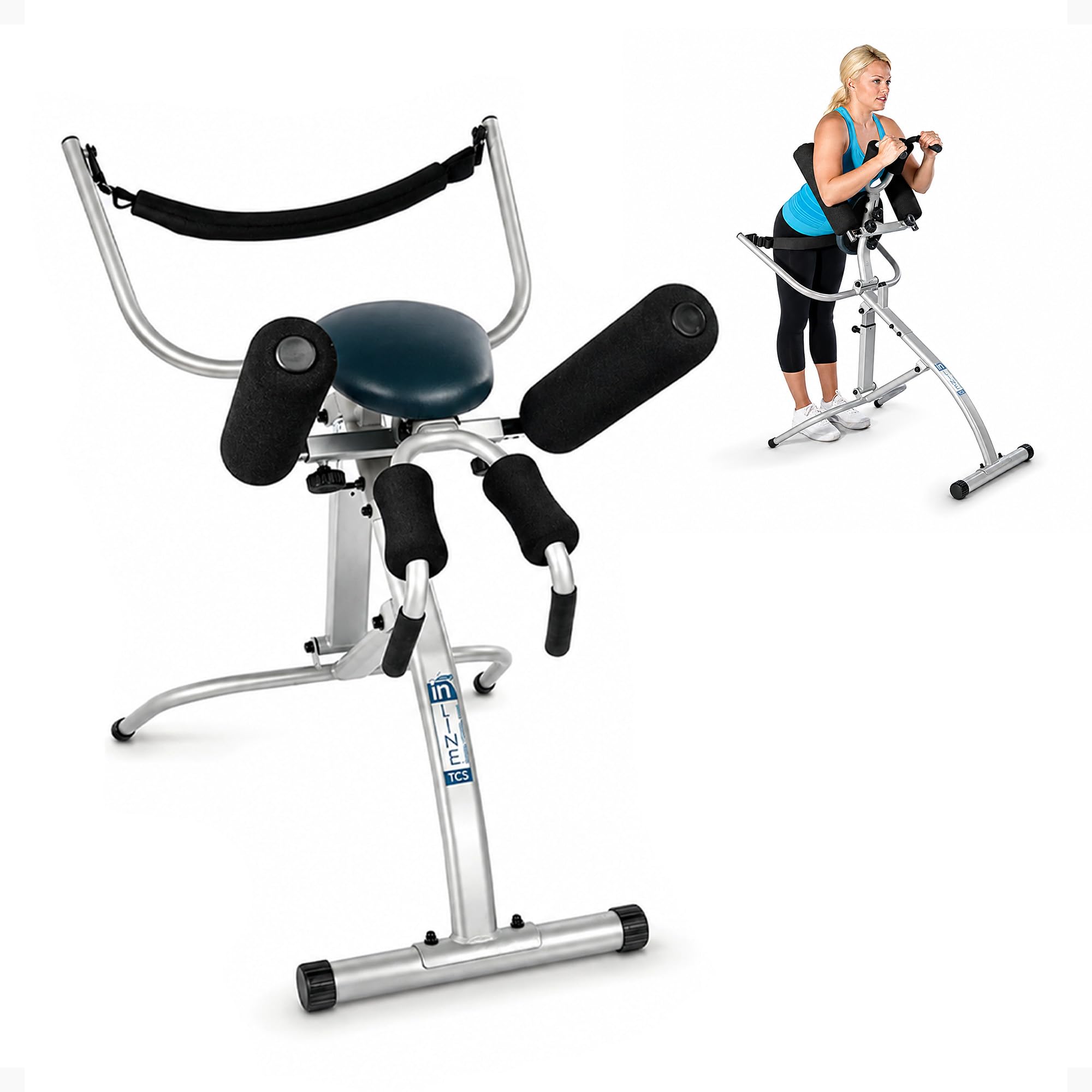
The perfect answer for anyone who can’t go upside down but still wants deep spinal traction.
This is the standout option for people who are wary of inversion tables, whether due to high blood pressure, limited mobility, or just the discomfort of being upside down. The InLine system lets you stretch your back, hips, and legs from a flat-footed, standing position. It targets pain relief and posture correction by using a padded lap belt that you adjust to align with your hips, and wide arm supports that let you lean forward to apply controlled traction to your spine.
The effectiveness of this machine is its top praise, with a huge number of owners reporting relief for chronic back pain and bulging discs. Many say it produces results comparable to clinical traction they’ve received at a doctor’s office, with the bonus of doing it at home. Buyers also frequently note the mobility benefit—one user could stand upright and walk normally immediately after a session. It’s a sturdy steel build rated at 250 pounds, and it cleverly allows you to adjust the height and width to target upper or lower back.
Assembly takes about 45 minutes, and most find it straightforward. A few units arrived with welding or part misalignment issues, and it puts some pressure on your hips when you bend forward — a concern if you have hip problems. It also needs 33 x 27 x 43 inches of floor space, so it won’t tuck into a closet.
The Big Wins
- Provides traction without going upside down or lying on the ground
- Exceptional at targeting upper and lower back pain
- Sturdy steel frame with a 250 lb capacity
What to Consider
- Large footprint needs dedicated floor space
- Some reported manufacturing quality inconsistencies
Best for: anyone with mobility restrictions, high blood pressure, or a fear of inversion tables.
Think twice if: you have hip pain when bending forward or have very limited floor space.
8. Posture Pump Model 4100-D
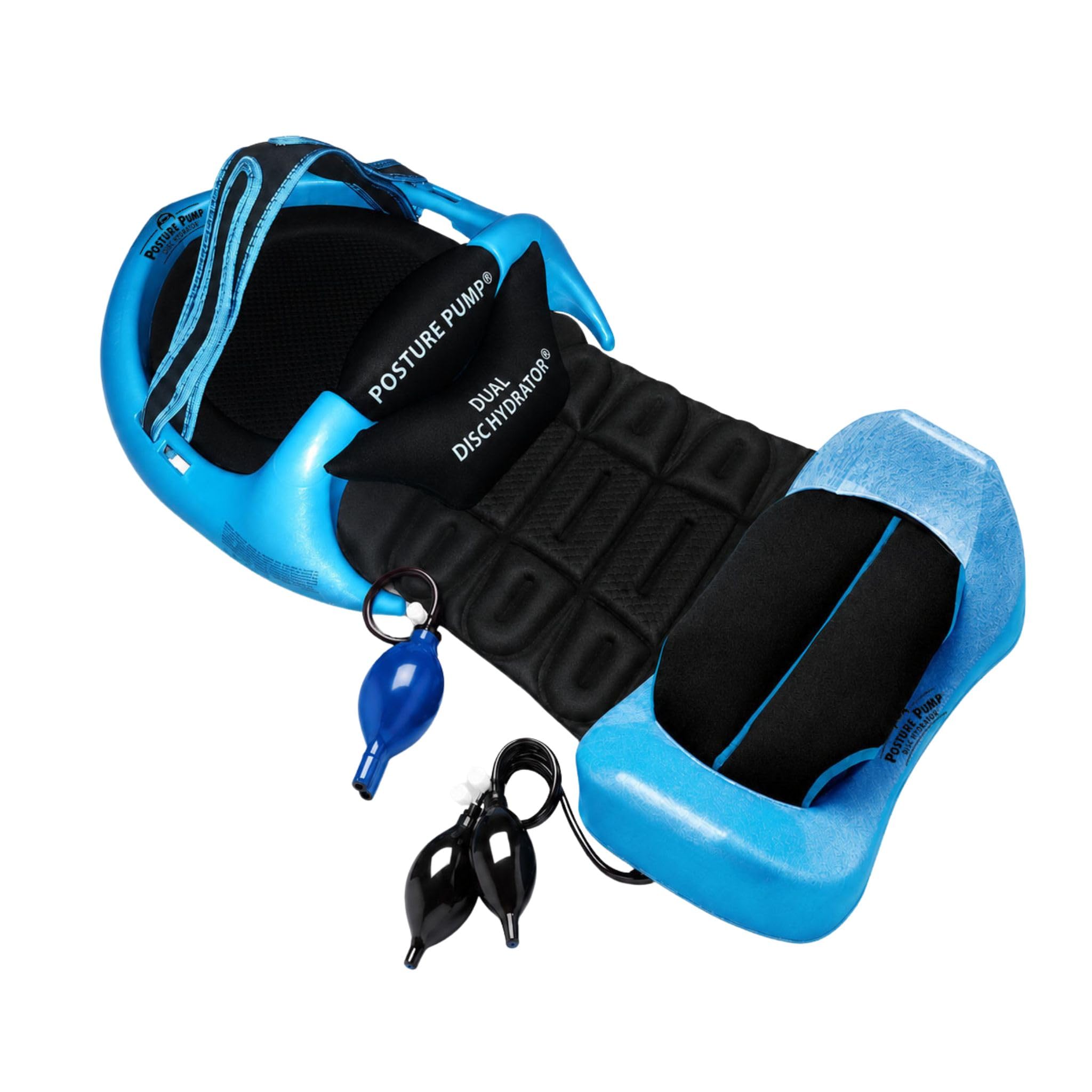
A precision air-pump system that attacks both “nerd neck” and lower back compression at once.
The Posture Pump is a different beast entirely, focusing on resting support for both the cervical (neck) and lumbar (lower back) regions simultaneously. It combines the Dual Disc Hydrator Model 1400-D for the neck and the Elliptical Back Rocker Model 2000 for the lower back into one system. Instead of dynamic movement, it uses one cervical hand pump and two lumbar hand pumps to independently inflate the support sections, creating a gentle, sustained decompression while you lie down. White release buttons let you control the pressure reduction when you’re done, and a sculpted cervical cradle keeps your head stable.
For the right user, it’s a genuine life-changer. Customers note it “helped relieve major pain in knee and neuropathy pain in my foot,” which speaks to the downstream effects of nerve pressure relief. Another user with bulging discs in the thoracic area found instant relief and better posture after using it. It comes as two detachable components, so you can use the neck unit or the back unit independently, and it requires zero assembly—just pump and lie down.
The recurring theme in reviews is that the materials feel “cheap for the price,” and the value-for-money verdict is genuinely split. It’s a simple collection of inflatable pads and pumps, so the price tag feels high when you first open the box. However, the effectiveness data is positive enough that most forgive the premium. It also requires patience to find the correct placement and right amount of pressure—it’s not a “just lie down” device. Expect a learning curve, and start with short sessions.
Why It’s Unique: It’s the only pick here that treats cervical and lumbar compression together.
The Reality Check: Simple materials meet a complex price tag—buy for the proven effect, not the feel.
9. Teeter DEX II Inversion & Core Trainer
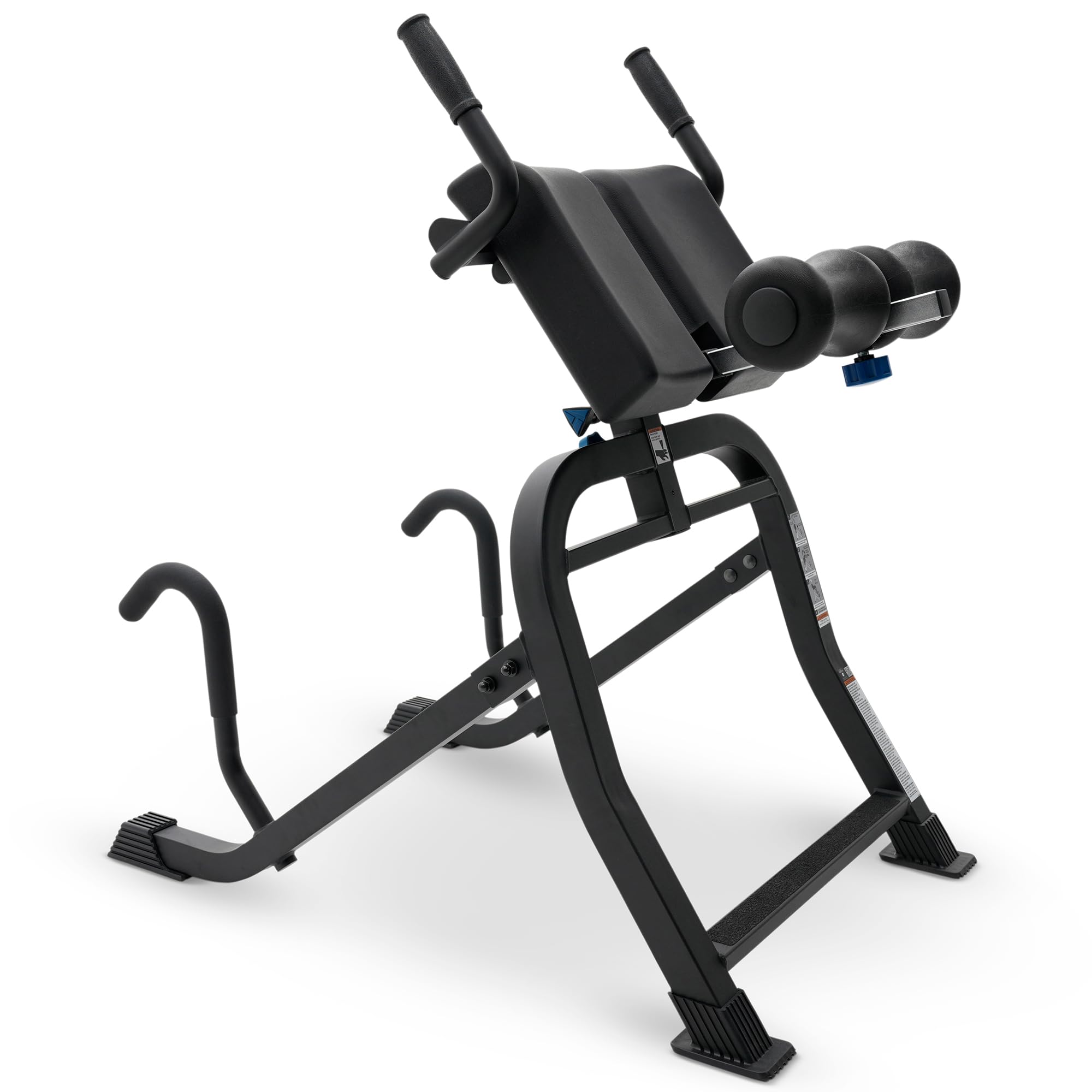
A commercial-grade inversion chair that doubles as a core-strengthening Roman chair.
This is the premium, do-it-all option that rethinks what an inversion device can be. Instead of strapping your ankles, the DEX II uses a 90/90 posture—you rotate forward into a hip-supported inversion that targets lower back pain with zero load on your ankles. This is a standout for anyone with ankle issues who has always wanted to try inversion therapy. It’s also an FDA-registered device, indicated for back pain, herniated discs, and sciatica, giving it clinical credibility.
What makes it a standout is its versatility. Beyond decompression, it functions as an improved Roman chair for back extensions, abs crunches, and core work. The platform features durable traction grips and lower handles for a wide range of moves, including pushups, pullups, dips, leg raises, and anchoring resistance bands. It supports users up to 350 lb and heights from 4’8″ to 6’6″, with a high-density contoured foam lap cushion that adjusts via a spring-loaded mechanism.
Owners describe it as a superior alternative to traditional inversion machines, noting how the waist-hanging design avoids the foot straps that can hurt. The build quality and pain relief are consistently praised, with users reporting immediate spinal and sciatic relief, even comparing it favorably to machines used at the VA. The main drawbacks are its size and mounting difficulty—it’s bulky and heavy at 60 pounds, and shorter users (under 5’3″) may need to stand on tiptoes to get into position. A 5-year full warranty and the free Teeter Move app add substantial value.
Why It’s Worth the Premium
- Zero ankle loading makes inversion accessible to more people
- Doubles as a full core-strength trainer
- Commercial-grade steel with a 5-year warranty
Who Should Pass
- Short users who might struggle to mount the seat
- Those without room for a heavy, bulky unit
Reach for this if: you want one machine that handles both decompression and strength training for the long haul.
Look elsewhere if: you’re 5’3″ or shorter or have limited storage space.
Understanding the Specs
Weight Capacity & User Height
This is the most critical safety specification for any traction device or inversion table. You must ensure your weight falls safely below the posted limit—for example, the Teclor handles 350 lb while the Fisher Traction is rated for users under 230 lbs. Height adjustability matters just as much, ensuring the pads, belts, and footrests line up with your body’s natural pivot points for effective and safe stretching.
Traction Method: Static vs Dynamic vs Inversion
Static stretchers (like the True Back) hold you in one arched position to gently separate vertebrae. Dynamic devices (like the Electric Lumbar Traction unit) use airbags to apply and release pull in a rhythmic motion. Inversion tables (like the TEETER EP-560) rely on gravity to decompress the spine by hanging you upside down. Your mobility, comfort, and specific condition will dictate which method feels best.
FAQ
What is the difference between an inversion table and a back stretcher?
How does a dynamic airbag traction device work?
Is it safe to use an inversion table if I have high blood pressure?
Can I use a back traction device for a herniated disc?
How do I know which weight capacity I need?
Why are some of these devices FDA-registered and others are not?
How long should a typical traction session last?
Can I take a traction device with me when I travel?
Will a traction device help with sciatica nerve pain?
What are the contraindications for using an electric lumbar traction device?
Final Thoughts: The Verdict
For the majority of shoppers, the back traction device winner is the TEETER EP-560 because it combines FDA-registered credibility, a 300 lb capacity, and a foldable steel design that makes inversion therapy feel secure. If you want heat and massage built into your session, grab the Electric Lumbar Traction Device. For a travel-friendly, budget stretcher that still relieves pain, the True Back Stretcher is the one to reach for.
How We Picked
We do not accept paid placement. Every pick is matched to a real buyer and a real use-case; we do not hands-on test units.
Sources & Methodology
Specifications: manufacturer listings and product documentation. Review insights: verified customer reviews, as of August 2026. Pricing: not shown on this page (it changes often); check the current price via the retailer link.
As an Amazon Associate, Gadgets Feed earns from qualifying purchases. This does not affect which products we feature.