
A backcountry backpack’s real job is to shove the weight off your shoulders and onto your hips, so you can carry a multi-day load without wrecking your back by mile ten. Everything else — pockets, rain covers, how easy it is to adjust — only matters once that core fit is right. For most people, the Osprey Rook 65L wins because it gives you Osprey’s trusted build quality, a ventilated backpanel, and a built-in rain cover in a 3.7-pound package that handles weekend trips and five-day treks without breaking your budget. If you need to haul a week’s worth of gear off-trail, go for the Osprey Aether Plus 70L. And for a budget-friendly starter pack, the Teton Explorer 65L gets you on the trail with solid features at a low entry cost.
I’m Min — the co-founder and writer behind Gadgets Feed. This guide is built by comparing the manufacturers’ published specifications and the patterns across verified customer reviews, so you get each pick’s real strengths and trade-offs instead of marketing spin.
Choosing the right backcountry backpack means matching capacity, suspension type, and weight to the terrain and duration you actually hike. This guide shows you how each contender stacks up on those factors.
How To Choose The Best Backcountry Backpack
Picking a backcountry backpack comes down to three fit-and-feel factors that decide whether you finish your trip feeling good or counting the miles to camp. Volume, suspension style, and adjustability are the main levers, and each one changes how the pack behaves when you load it up.
Volume: 55L vs 65L vs 70L
Volume is the most visible spec, but bigger is not always better. A 55-liter pack like the Osprey Aether 55L fits weekend trips of two to three nights well — it forces you to pack light and keeps your total carry weight manageable. A 65-liter to 70-liter pack, like the Osprey Aether Plus 70L, adds room for a bear canister, extra fuel, and colder-weather gear on a five-to-seven-day trip. The catch is that a larger pack weighs more empty and encourages you to bring more than you need, so match the volume to your longest planned trip, not an emergency scenario.
Suspension and Frame Type
The frame turns a backpack from a sack into a carrying system. Internal frame packs (like all five picks here) use a rigid frame sheet or a lightweight wire frame — called a LightWire frame on the Osprey Rook — to transfer load from your shoulders to your hips. A perimeter frame, like the aluminum stay (a metal rod that gives the pack structure) in the Kelty Asher, wraps the frame around the outside of the pack to keep the load balanced and stable. The key spec to look for is the “optimal carry weight range,” which tells you the load the pack is designed to handle comfortably. The Kelty Asher carries 30-50 pounds well, while the Osprey Aether 55L is built for heavier loads up to 55 pounds and keeps them stable on technical terrain.
Ventilation and Backpanel Design
A sweaty back on a hot climb is not just uncomfortable — it can lead to chafing on a multi-day trip. Ventilated backpanels use tensioned mesh (a fabric panel pulled tight to create a gap) or sculpted foam channels to create an air gap between your back and the pack. The Osprey Rook uses AirSpeed suspension, which is a tensioned mesh panel that springs away from your back. The Kelty Asher uses the Amp Flow ventilated back panel, which uses foam shaping and mesh to reduce sweat. The Teton Explorer uses open-cell foam lumbar pads with molded channels for airflow at a lower price point. If you hike in hot, dry conditions, a well-ventilated backpanel is as important as any other feature.
Quick Comparison
On smaller screens, swipe sideways to see the full table.
| Model | Category | Best For | Key Spec | Amazon |
|---|---|---|---|---|
| Osprey Aether Plus 70L | Premium | Week-long expeditions with heavy gear | 70L capacity, 5.65 lb | Amazon |
| Osprey Aether 55L | Premium | Stable carry on technical terrain | 55L capacity, 4.87 lb | Amazon |
| Osprey Rook 65L | Mid-Range | Lightweight multi-day hikes | 65L capacity, 3.7 lb | Amazon |
| Kelty Asher 65L | Mid-Range | Entry-level with expert adjustability | 65L capacity, 3 lb 5 oz | Amazon |
| Teton Explorer 65L | Budget-Friendly | Value-first weekend warriors | 65L capacity, 4.5 lb est. | Amazon |
In‑Depth Reviews
1. Osprey Aether Plus 70L

The Osprey Aether Plus 70L’s 70-liter capacity (27% more space than the Aether 55L) makes it the top pick for anyone hauling a week’s gear, a bear canister, and still needing balance on rocky descents. Its custom Fit-on-the-Fly hipbelt and shoulder straps let you dial in the fit without tools, anchoring this lineup for trips of five days or longer in remote terrain.
It excels at carrying heavy loads steadily, handling 40 pounds easily and more without complaint. The removable top lid converts into a DayLid daypack for summit hikes, while dual front panel zippered pockets keep your map, snacks, and first aid kit within reach. The included rain cover uses PFC-free, bluesign-approved fabric, and buyers report it beats the Gregory Baltoro 75L on comfort, especially for the removable daypack and easy-access water bottle pockets.
It is not light — at 5.65 pounds, you feel the extra heft before loading it, and the main compartment divider is not fully removable, which some find limiting. But for the gear hauler who needs organization, stability, and the ability to carry 35-plus pounds in comfort over long distances, the Aether Plus 70L is the definitive choice.
Why it’s great
- Huge 70L capacity fits a bear canister and 5+ days of gear
- Removable top lid becomes a functional daypack for summit hikes
- Custom hipbelt and shoulder straps adjust on the fly for a precise fit
Good to know
- Heavy pack at 5.65 lb, noticeable even before loading
- Main divider is not fully removable, limiting some packing flexibility
2. Osprey Aether 55L
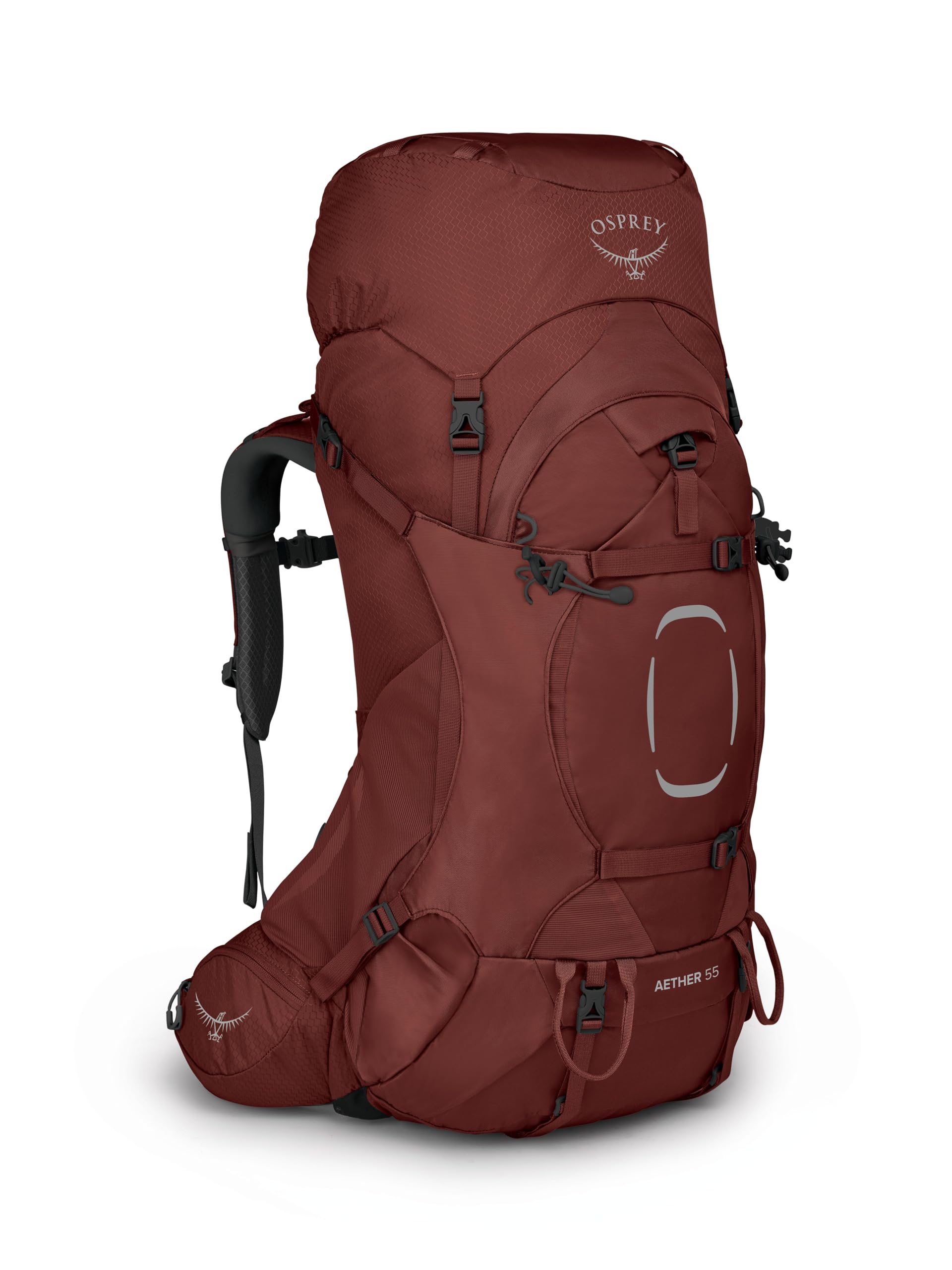
The Osprey Aether 55L is lighter than the top pick by nearly a full pound (4.87 lb vs 5.65 lb) and narrower at 9.8 inches deep, which makes it far more nimble on technical trails where you need to squeeze through tight spaces. Where the top pick shines for massive loads, the 55L is built for a stable, close-to-body carry that keeps you balanced on uneven ground. For weekend trips and three-to-four-day pushes where every pound of pack weight counts, this is the premium choice.
It uses the same AirScape suspension — an injection-molded foam backpanel that molds to your back for a close fit while still allowing airflow — and the same custom Fit-on-the-Fly hipbelt and shoulder straps, so you get the same fine-tuned adjustability in a smaller package. Owners mention that when packed correctly, the weight distributes evenly and straps do not dig in, making it comfortable for long days. One reviewer heading to Peru for trekking chose this pack specifically because it fit their 6’2″ broad-shouldered frame when smaller packs did not.
The honest trade-off is that at 4.87 pounds it is heavier than many 55-liter competitors. Customers note that while it can carry up to 55 pounds, a more realistic comfort ceiling is around 30 to 35 pounds. It is also overkill for one-night trips. But for the hiker who wants premium adjustability and a stable platform for moderate-weight loads on technical terrain, choose the Aether 55L over the top pick.
Where it shines
- Custom hipbelt and shoulder straps dial in a precise fit for different body shapes
- Narrow 9.8-inch depth keeps the load stable on technical terrain
- Included rain cover and removable sleeping bag divider add versatility
Worth noting
- At 4.87 lb, it is heavier than many 55-liter packs
- Real-world comfort tops out around 30-35 lb, despite the 55 lb max spec
3. Osprey Rook 65L

One reviewer noted finishing a 26-mile day with 30 pounds on their back and feeling fine enough to do it again the next morning. That is the kind of real-world comfort the Osprey Rook 65L delivers. At 3.7 pounds, it is 1.17 pounds lighter than the Osprey Aether 55L — a huge difference when you spend all day carrying it. It uses an adjustable AirSpeed suspension, a tensioned mesh backpanel that springs away from your back to create an air channel that reduces sweating even on hot climbs.
The Rook is a straightforward, no-fuss pack that handles itself well on any trail. It comes with an integrated rain cover that tucks into its own pocket, a zippered sleeping bag compartment with a floating divider, and it is compatible with Osprey’s Daylite daypack for side trips. Reviewers praise the sturdy zippers, tough fabric, padded belt and shoulders, and angled water bottle pockets that are easy to reach without taking the pack off. The removable sleeping bag compartment lets you customize your storage layout.
The standout spec here is the weight-to-feature ratio: a 65-liter capacity in a 3.7-pound package with a built-in rain cover and a ventilated backpanel is rare at this level.
What stands out
- Lightweight 3.7 lb design saves significant weight over other 65L packs
- Integrated rain cover stows in its own pocket, always ready when weather turns
- AirSpeed mesh backpanel keeps your back cool and dry on hot climbs
The trade-offs
- No outer mesh pocket for quick-access items like a wet jacket
- No direct back-access zipper to the main compartment
4. Kelty Asher 65L
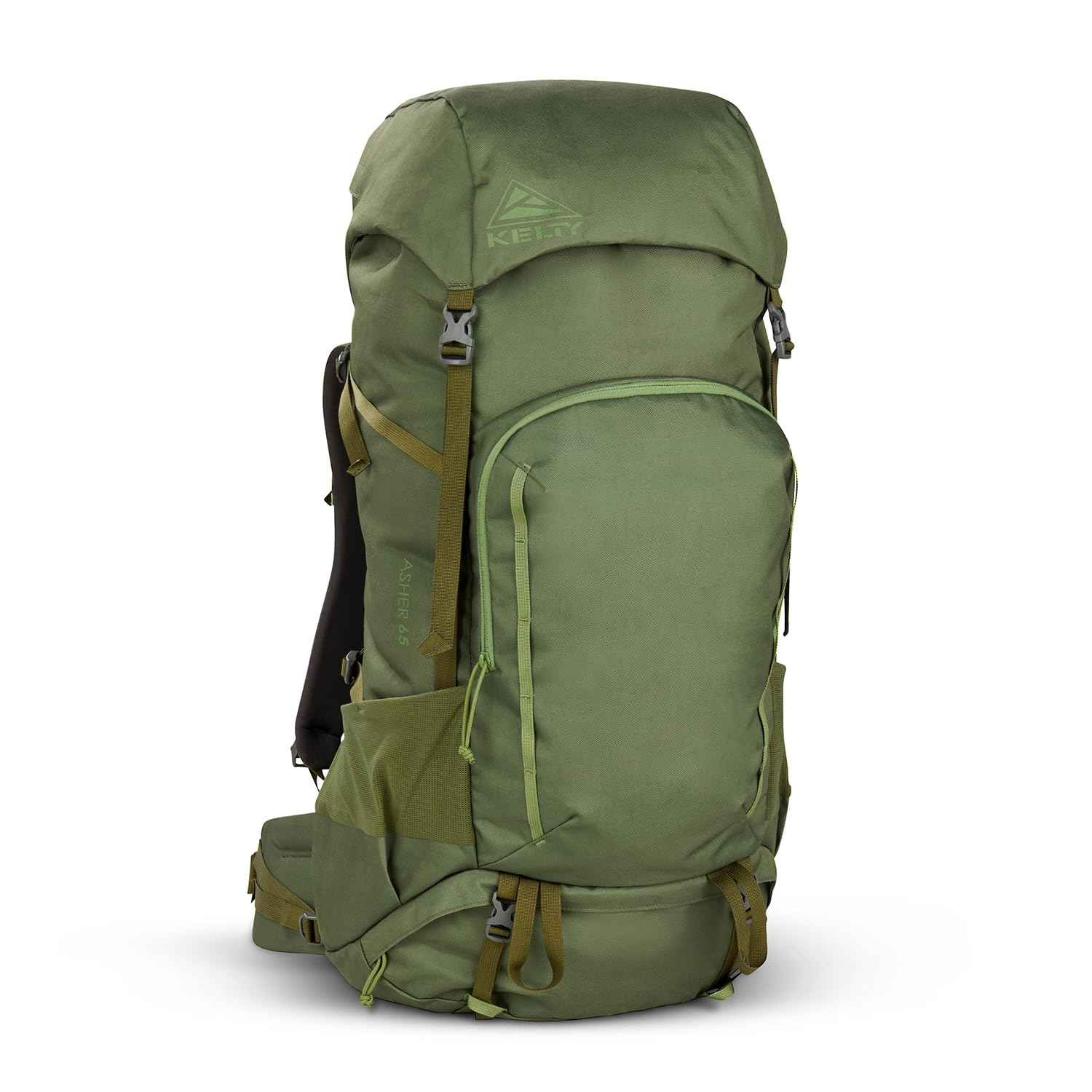
The single number that matters most in this category is torso length range, and the Kelty Asher 65L scores 15.5 to 21 inches, adjusted through Kelty’s Fit Pro system, which uses a simple sliding mechanism you can tweak on the fly. That range covers a huge swath of body sizes, from shorter hikers to tall ones, without needing to swap frames. At just 3 pounds 5 ounces, the Kelty Asher 65L is the lightest pack in this lineup — a full 2.4 pounds lighter than the Osprey Aether Plus 70L, making it the pack to reach for when every ounce matters on a long-distance hike.
It carries 30 to 50 pounds comfortably, supported by an advanced perimeter frame with an aluminum stay that keeps the load balanced and stable. The Amp Flow ventilated back panel uses foam shaping and airflow channels to reduce sweat buildup. One buyer mentioned using the pack for multi-day hikes over two to three years with no issues, calling the build quality excellent. Another reviewer noted that the wide opening, which they initially disliked, became a favorite feature for easy access after daily use.
The downside is that the materials feel slightly lighter-duty than premium packs — a few reviewers described the hip belt and shoulder padding as “mediocre” and the fabric as “slightly flimsy,” though it holds up well under normal loads. For the budget-conscious hiker who values a precise torso fit and a lightweight carry over bombproof fabric, the Kelty Asher 65L delivers an exceptional amount of adjustability at a friendly price.
The upsides
- Ultralight 3 lb 5 oz weight is ideal for carrying over long distances
- Fit Pro system adjusts torso length from 15.5 to 21 inches on the fly
- Perimeter frame with aluminum stay keeps heavy loads balanced
Keep in mind
- Materials feel lighter-duty and may not withstand heavy abuse
- Hip belt and shoulder padding are adequate but not premium quality
5. Teton Explorer 65L
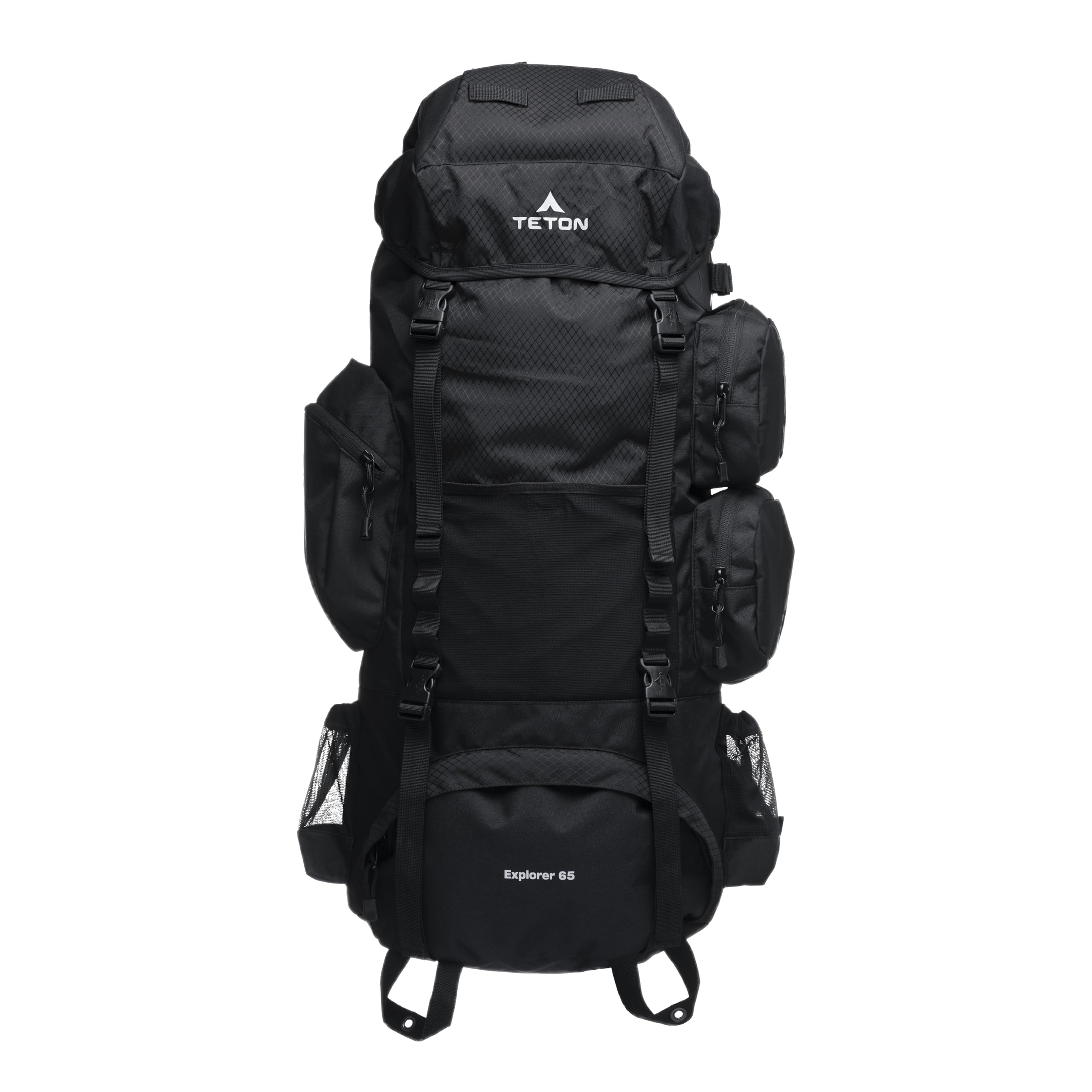
What you actually get at this lower price is a feature-rich internal frame pack with a hidden rain cover tucked in the bottom pocket and a multi-position torso adjustment that fits medium and tall adventurers, plus your choice of 65-liter, 75-liter, or 85-liter sizes. The 600D PolyUrethane coating is durable enough for regular use, and the pack includes a rain cover that saves you buying one separately. Buyers consistently praise the comfort: one owner reported carrying 47 pounds comfortably with good balance, and another said the pack handled 45 pounds with no problem.
What you give up compared to premium packs is some weight and refined materials. At roughly 4.5 pounds, it is notably heavier than the Kelty Asher or Osprey Rook. The fabric is not as supple as the recycled nylons Osprey uses, the side mesh pockets are small for large water bottles, and there is no backup waist buckle. But the hidden rain cover is a smart touch, and the multi-position torso adjustment ensures a good fit for medium and tall hikers without the premium price tag.
The Teton Explorer is built for the budget-conscious hiker who wants a capable, durable pack that can handle a 50-pound load without breaking, with all the essential features — adjustable torso, generous capacity, and an included rain cover — for the lowest entry cost. If you are new to backcountry hiking or outfit multi-day trips only a few times a year, this is your best value bet. It is the exact right starting point for the first-time backcountry pack buyer who needs a solid, comfortable, no-regrets entry into multi-day hiking.
Why we’d pick it
- Hidden rain cover in the bottom pocket keeps you dry without extra purchases
- Adjustable torso fits a wide range of body sizes for a comfortable carry
- Available in 65L, 75L, and 85L sizes to grow with your trips
A few caveats
- Heavier than premium packs; side mesh pockets struggle with large water bottles
- No backup waist buckle — carrying a spare buckle is recommended
Understanding the Specs
Torso Length and Hipbelt Fit
The most important fit measurement on a backcountry backpack is your torso length — the distance from the base of your neck (the C7 vertebra, the bony bump at the top of your spine) down to the top of your hip bones. A pack that is too long sits low and digs into your lower back; one that is too short puts all the weight on your shoulders. Look for packs with adjustable torso systems — sliding panels or ladder-style straps — that let you dial in a fit within one or two inches of your actual measurement. The hipbelt should wrap around the top of your hip bones, not your waist, because the hipbelt is what transfers the load from the frame to your legs.
Internal Frame vs. Perimeter Frame
An internal frame uses a rigid frame sheet, a wire frame, or a combination of both hidden inside the pack’s fabric. This keeps the load close to your back for better stability on uneven terrain — Osprey’s LightWire frame is a good example. A perimeter frame, like the aluminum stay in the Kelty Asher, wraps around the outside of the pack and keeps the load balanced but can shift the weight slightly further from your spine. For technical off-trail hiking, internal frame packs generally feel more stable. For maintained trails and lighter loads, perimeter frames offer good value and simpler construction.
FAQ
Is a 65-liter backpack too big for a beginner backpacker?
How do I know if an internal frame pack fits my torso length?
Do I need a rain cover for a backcountry backpack, or is the pack waterproof?
What is the difference between a daypack and a backcountry backpack for a single overnight trip?
Final Thoughts: The Verdict
Across the board, the backcountry backpack winner is the Osprey Rook 65L because it packs Osprey’s trusted build quality, a ventilated AirSpeed backpanel, and an integrated rain cover into a 3.7-pound package that handles everything from weekend trips to five-day treks while staying affordable. If you need to haul a week’s worth of gear off-trail, grab the Osprey Aether Plus 70L for its huge capacity and customizable fit. And for a budget-friendly starter pack that includes a hidden rain cover and adjustable torso, the standout is the Teton Explorer 65L for getting on the trail with solid features at a friendly entry cost.