
Nothing kills the joy of a summit sunrise like a soggy, flavorless mush that was supposed to be dinner. The weight on your back, the calories you burned, and the miles still ahead demand a meal that delivers real nutrition, not just filler. The difference between a great trip and a miserable one often comes down to what’s inside your food bag.
I’m Min — the co-founder and writer behind Gadgets Feed. I’ve spent countless hours analyzing freeze-dry rehydration ratios, calorie densities, and ingredient sourcing to cut through the marketing hype in the backpacking food aisle.
This guide breaks down seven distinct options to help you find the best backcountry meals that match your trail style, whether you prioritize weight, taste, or pure nutritional density.
How To Choose The Best Backcountry Meals
Every option here solves a different problem on the trail. Some prioritize speed and convenience, others focus on clean ingredients, and a few are built for extreme caloric output. Understanding your own trip length, cooking tolerance, and dietary needs narrows the field fast.
Caloric Density and Real Serving Sizes
Never trust the “servings per pouch” number on the box. A two-serving freeze-dried pouch is often a single serving for a hungry adult after a ten-mile day. Look at total pouch calories and protein grams listed on the back — that number is your real dinner. Options hovering around 600–700 calories per pouch are the sweet spot for a solo backpacker.
Rehydration Time and Water Absorption
Not all freeze-dried meals hydrate at the same rate. Thicker sauces, larger meat chunks, and dense legume blends require more soak time and sometimes extra water. A meal that needs 15 minutes versus one that needs 8 minutes can feel like an eternity at the end of a cold, rainy day. Check user feedback on actual hydration behavior — not just the package instructions.
Ingredient Integrity and Additives
Some brands lean heavily on sodium and preservatives to mask bland textures, while others use whole-food ingredients with minimal processing. If your stomach is sensitive on the trail — and many hikers struggle with digestion at altitude — a cleaner ingredient list with no artificial flavors, colors, or excessive gums is worth the premium.
Quick Comparison
On smaller screens, swipe sideways to see the full table.
| Model | Category | Best For | Key Spec | Amazon |
|---|---|---|---|---|
| Peak Refuel Basecamp Bucket 3.0 | Premium Assortment | Real meat & high protein density | Double protein vs. standard | Amazon |
| Mountain House Just in Case 3-Day Kit | Emergency Assortment | Weekend trips & preparedness | 1,706 cal/day for 72 hours | Amazon |
| BIGHORN Butter Chicken & Rice (4-pack) | Premium Entrée | Bold flavor & generous portions | 2,840 cal / 140g protein per pack | Amazon |
| Nomad Nutrition Sampler Pack (9 meals) | Plant-Based Variety | Vegan, gluten-free eaters | Low sodium, whole ingredients | Amazon |
| Greenbelly Backpacking Meals (5-count) | No-Cook Meal Bars | Stoveless, ultra-light hiking | 650 cal per pouch, zero prep | Amazon |
| Mountain House Chicken & Mashed Potato | Classic Freeze-Dried | Reliable flavor & 30-year shelf life | GFCO certified gluten-free | Amazon |
| Harmony House Backpacking Kit (18 cups) | DIY Dehydrated Mix | Customizable, additive-free meal making | 70+ servings per 4.5 lb kit | Amazon |
In‑Depth Reviews
1. Peak Refuel Basecamp Bucket 3.0
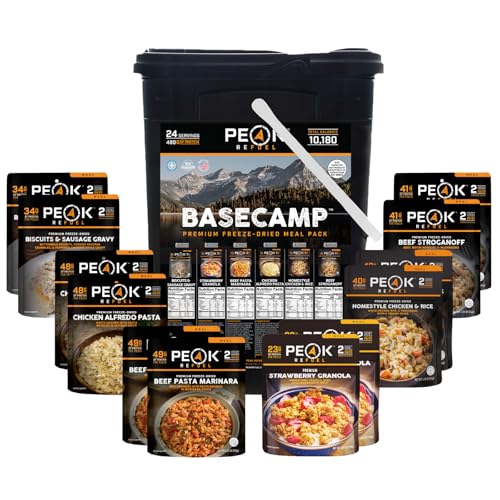
The Basecamp Bucket is the gold standard for anyone who refuses to eat textured vegetable protein masquerading as meat. Peak Refuel uses 100% USDA-inspected meat with nearly double the protein per serving compared to most competitors. Each meal requires about a cup of boiling water and a 10-minute steep, which is faster than average for this protein density.
The bucket itself doubles as a rodent-proof container, a genuine consideration for car campers and basecamp setups. The variety pack includes biscuits and gravy, which reviewers consistently call surprisingly good — a rare compliment for a dehydrated breakfast. The total 65.92 ounces of food covers a solid week of solo camping without feeling like you’re rationing.
The main limitation is shelf life, estimated at under five years, which matters less for active trips and more for long-term emergency storage. Also, nearly every meal in this bucket contains dairy — lactose-sensitive hikers should look elsewhere. For pure flavor and protein density, this bucket sets the bar.
Why it’s great
- Highest meat content and protein density in this guide
- Rodent-proof bucket ideal for car camping and basecamp
- Requires less water and shorter rehydration than most competitors
Good to know
- Shorter shelf life than Mountain House (under 5 years)
- Dairy is present in nearly every meal
2. Mountain House Just in Case 3-Day Emergency Kit
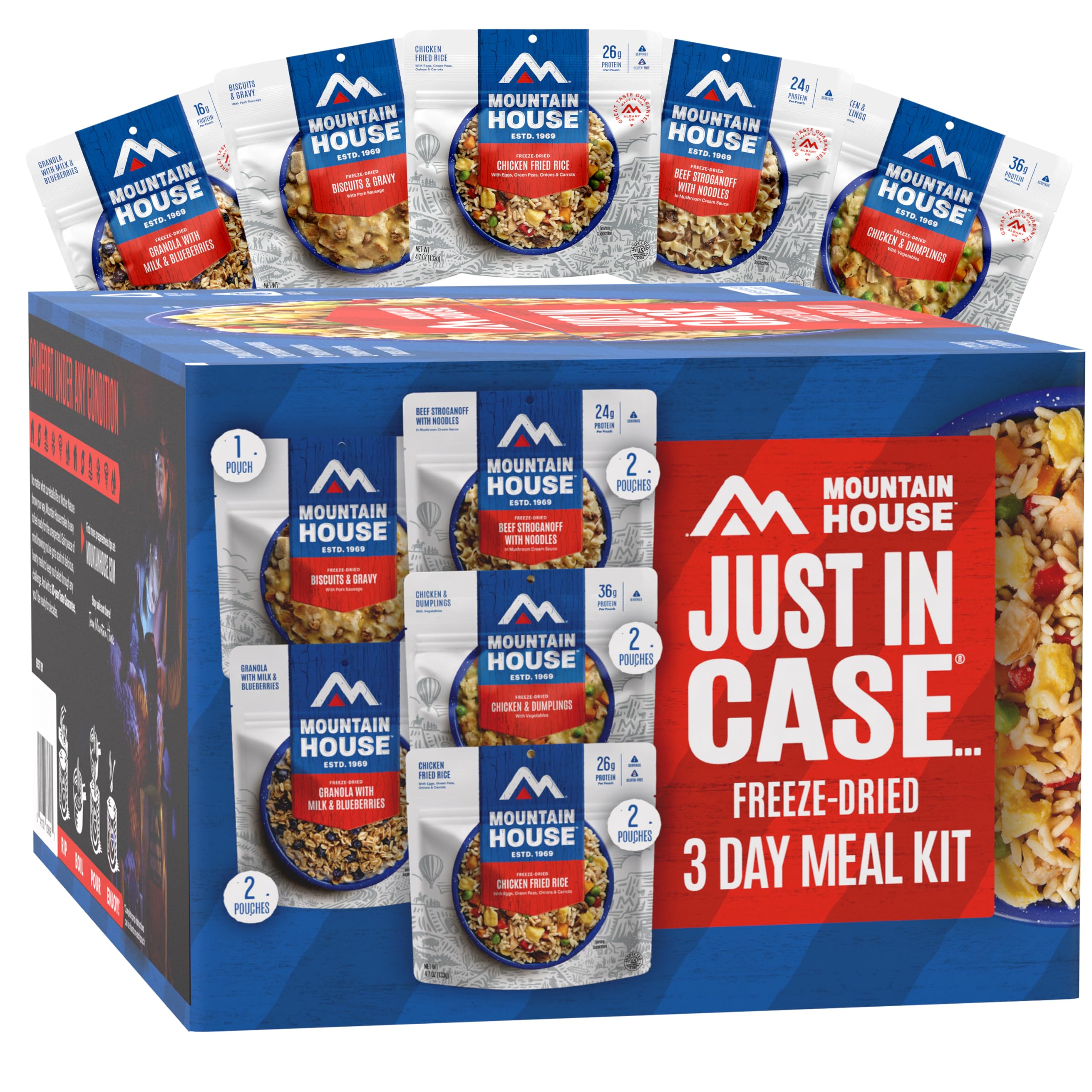
This 9-pouch kit delivers 1,706 calories per day for a full 72 hours, making it the most convenient grab-and-go option for weekend warriors and preppers alike. The selection includes Beef Stroganoff, Chicken Fried Rice, Chicken & Dumplings, Biscuits & Gravy, and Granola with Milk & Blueberries — a balanced rotation across breakfast, lunch, and dinner.
Mountain House’s 30-year taste guarantee means you can stash this kit in a closet or under the truck seat and forget about it until you need it. The pouches are lightweight at 3.6 pounds total, and they can be prepared with room-temperature water if you double the hydration time — useful in power-outage scenarios or when you’re low on fuel.
Some users note the Biscuits & Gravy is the weakest link in this assortment, and the meals can turn soupy if you add the full water volume. Using slightly less water and letting the pouch rest for 12–15 minutes rather than the listed 8–10 yields a better texture. Consistent, reliable, and practically indestructible in storage.
Why it’s great
- 30-year shelf life backed by a taste guarantee
- Can rehydrate with cold water in a pinch
- Well-rounded flavor rotation for short trips
Good to know
- Biscuits & Gravy is a divisive meal
- Requires careful water measurement to avoid soupiness
3. BIGHORN Mountain Food Butter Chicken & Rice (4-pack)
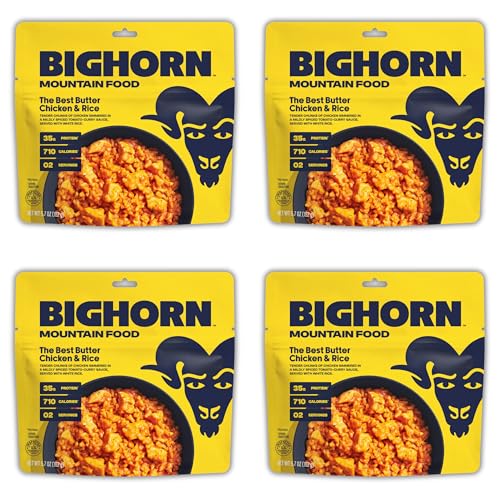
If you crave a genuinely flavorful sauce at elevation, BIGHORN delivers. The butter chicken rehydrates with visible chunks of tender meat and a sauce that tastes like curry, not like a soup packet. Each pack contains two servings, totaling 2,840 calories and 140 grams of protein across the four-pouch bundle.
The rehydration process requires less water than many freeze-dried competitors — a fact that can trip up first-time users who follow standard volume recommendations. Add the minimum water listed, then let the pouch sit for at least 12 minutes. Doubling the soak time yields a rice texture that actually resembles cooked rice rather than porridge.
Nutritional density is high, which is exactly what you want for strenuous alpine hiking, but the fat and sodium content is substantial for everyday consumption. Portions are large — two hungry adults shared two-thirds of a single pouch in one reviewer’s test. A solid choice for cold-weather trips where you need maximum motivation to eat dinner.
Why it’s great
- Authentic butter chicken flavor with real meat texture
- Low water requirement improves packing efficiency
- Generous portion size for big appetites
Good to know
- High fat and sodium content for a single meal
- Easy to over-water and dilute the sauce
4. Nomad Nutrition Sampler Pack (9 Meals)

Nomad Nutrition fills a specific gap in the freeze-dried aisle: plant-based meals that don’t rely on sodium bombs or artificial flavors. Each of the 9 entrée-sized pouches — including Hungarian Goulash, Kathmandu Curry, and Irish Shepherd’s Pie — uses whole-food ingredients without gluten, nuts, or chemical preservatives.
The sampler format lets you explore flavors without committing to a bulk purchase. Rehydration takes 10–15 minutes, but some vegetables require extra soak time to fully soften. The portions are smaller than traditional freeze-dried meals, which is actually a benefit for bear canister packing efficiency and reducing post-trip trash weight.
Taste reviews are consistently positive on flavor, with special praise for the Shepherd’s Pie and Southwest Breakfast Skillet. The Cali Bowl with olives and the Southwest Skillet divide opinions. At 9.6 ounces total for the full sampler, this is one of the lightest kits in the guide, though the price per calorie is higher than standard options.
Why it’s great
- Clean ingredient list with no gluten, nuts, or chemicals
- Compact packaging works well in bear canisters
- Two-year shelf life for flexible trip planning
Good to know
- Portions are small — budget two pouches per hungry adult
- Some vegetables need longer rehydration than stated
5. Greenbelly Backpacking Meals Variety (5-count)

Greenbelly rewrites the definition of a backcountry meal by removing the stove entirely. Each pouch contains two soft, fluffy bars delivering 650 calories with a balanced 30/30/30 macro split of carbs, protein, and fat. No boiling water, no cleanup, no dishes — just open, eat, and keep moving. The resealable packaging doubles as a trash bag, which is a small but appreciated detail.
The bars are handmade within a week of shipping, explaining the fresh taste that reviewers describe as “like a cereal bar on steroids.” Texture is dense and slightly flaky, somewhere between a Rice Krispie treat and a soft granola bar, not the brick-like density of standard protein bars. The packaging is tough to open without a knife, so pack cutting tools accordingly.
While the nutritional density is excellent, the bars are dry and require water to eat comfortably — this isn’t a con so much as a reality of the format. Users report feeling full for 7+ hours, making these ideal for long, high-exertion days where stopping to cook feels wasteful. Best used as trail fuel rather than a sit-down dinner experience.
Why it’s great
- Completely stoveless — zero prep or cleanup
- High 650-calorie count per pouch in compact form
- Resealable packaging and handmade freshness
Good to know
- Dry texture requires water to swallow easily
- Packaging is difficult to open without a knife
6. Mountain House Chicken & Mashed Potato Dinner
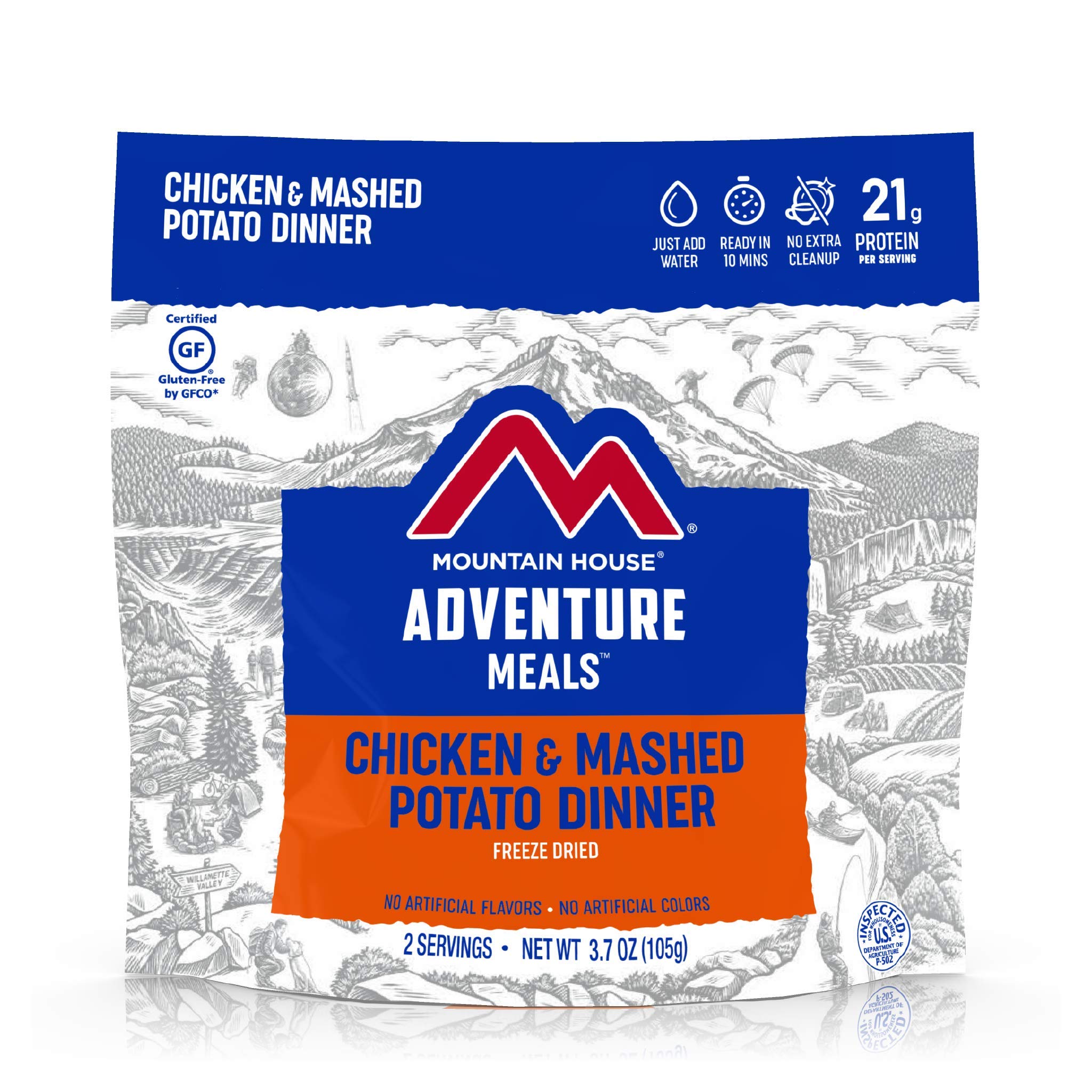
This is the backpacking meal that everyone has tried at least once, and for good reason. Chicken and creamy mashed potatoes with herbs and chives rehydrate into something that genuinely resembles a home-cooked plate. The 4.48-ounce pouch delivers two servings on paper but is a filling single portion for a hungry hiker.
Mountain House’s freeze-dry process locks in texture without artificial flavors or colors, and the GFCO certification makes this a safe bet for gluten-sensitive users. Prep time is under 10 minutes with hot water, and the pouch retains heat for an unusually long time — reviewers recommend transferring to a bowl for faster cooling if you want to eat immediately.
Seasoning is intentionally mild, which some users find bland but others appreciate as a base for adding their own garlic, rosemary, or pepper. The mashed potato component requires careful pouring to avoid clumping. At this price point, it’s the most accessible entry into freeze-dried backpacking cuisine without sacrificing quality.
Why it’s great
- Proven, reliable flavor profile for over 30 years
- Certified gluten-free by GFCO
- Fast 10-minute prep with minimal cleanup
Good to know
- Mild flavor may need additional seasoning
- Potato flakes can clump if poured too fast
7. Harmony House Foods Backpacking Kit (18 cups)
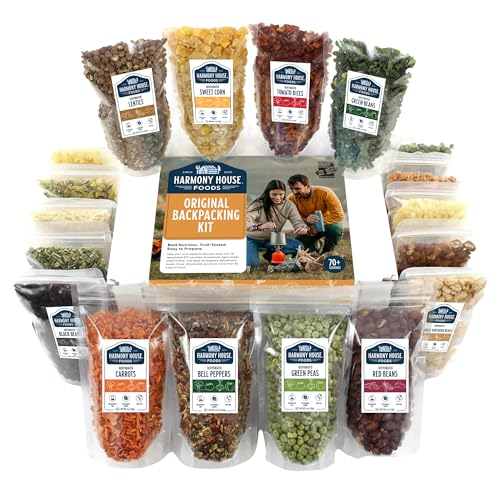
This is not a pre-assembled dinner pouch — it’s a bulk kit of individually dehydrated vegetables, beans, and lentils that you season and combine yourself. Winner of Backpacker Magazine’s Editor’s Choice award, the kit weighs 4.5 pounds total and yields over 70 servings. That’s enough volume to build unique meals — Mexican, Italian, Creole, Indian — by adding noodles, rice, or broth base.
The ingredients are air-dried at peak nutrient value with no additives, preservatives, or pesticides, which explains the strong, fragrant vegetable aroma when you open the pouches. Some items — particularly peas and green beans — hydrate more slowly than others. The cabbage, peppers, carrots, celery, onions, beans, and tomatoes are the standout performers that rehydrate quickly and taste fresh.
Creating a satisfying meal requires more work than a freeze-dried pouch: you need to portion ingredients, add water, cook for longer than typical freeze-dry directions, and bring your own seasoning. The trade-off is total control over sodium, spices, and caloric density. Ideal for trip leaders, thru-hikers building custom menus, or anyone avoiding the chemical footprint of commercial meal additives.
Why it’s great
- Ultimate customization — you control every ingredient and seasoning
- 70+ servings from a single 4.5 lb kit
- No preservatives, pesticides, or chemical additives
Good to know
- Requires cooking and seasoning — no sit-and-eat convenience
- Some vegetables need longer hydration than expected
FAQ
How much water do freeze-dried meals really need?
Can I cold soak backcountry meals to save fuel?
Final Thoughts: The Verdict
For most users, the best backcountry meals winner is the Peak Refuel Basecamp Bucket 3.0 because it delivers the highest real-meat protein density and the most satisfying post-hike flavor in the bunch. If you want stoveless simplicity and maximum calorie density, grab the Greenbelly Backpacking Meals. And for customizing every ingredient on a long trip, nothing beats the Harmony House Backpacking Kit.