
That sinking feeling when your backpack shifts mid-climb, throwing off your balance on a tight ridge line. Or the frantic dig through a frozen main compartment for your probe while precious seconds tick away. A purpose-built backcountry ski bag is the difference between a fluid day in the alpine and a frustrating—or dangerous—fight with your gear.
I’m Min — the co-founder and writer behind Gadgets Feed. My focus on this guide has been evaluating how each bag balances the non-negotiable technical demands of avalanche safety access, ski carry stability, and hydration freeze protection against real-world weight and durability metrics.
After analyzing over a dozen packs against the criteria that matter most to serious skiers and snowboarders, this guide breaks down the top contenders to help you find the best backcountry ski bag for your specific mission profile and body type.
How To Choose The Best Backcountry Ski Bag
The right backcountry ski bag is defined by three interlocking pillars: how it carries your skis, how it organizes your avalanche safety gear, and how it manages hydration in freezing conditions. A resort backpack lacks the dedicated features—like a snow-shedding backpanel, insulated hose routing, and quick-access probe pocket—that a touring bag must have to perform safely and efficiently.
Ski and Snowboard Carry Systems
Look for at least two of the three standard methods: A-frame (skis vertically on either side), diagonal (one ski angled across the pack’s back), and vertical snowboard carry. A-frame is best for tight tree runs, while diagonal carry is more stable during long traverses. The attachment points must be durable and tool-free, allowing changes without removing your gloves.
Avalanche Safety Compartment Access
A dedicated avalanche safety compartment with separate, elasticized sleeves for your shovel handle and probe is non-negotiable. The compartment should have a quick-pull zipper on the front panel or backpanel that allows extraction without opening the main body of the pack, saving critical seconds in a worst-case scenario.
Hydration System Freeze Resistance
An insulated reservoir sleeve and a zippered, insulated tube sleeve running through the shoulder strap are essential. Standard hydration bladders freeze solid at around 32°F in an uninsulated pack, rendering them useless. Look for packs that include a reservoir with a specifically designed insulated harness system to extend usable temperature range to below 20°F.
Quick Comparison
On smaller screens, swipe sideways to see the full table.
| Model | Category | Best For | Key Spec | Amazon |
|---|---|---|---|---|
| Osprey Soelden 32L | Mid-Range | All-day backcountry missions | 32L capacity / 2.47 lb | Amazon |
| Osprey Soelden 25L | Mid-Range | Short day tours & quick climbs | 25L capacity / 2.3 lb | Amazon |
| Osprey Kamber 20L | Mid-Range | Resort hike-to & light touring | 20L capacity / 2.62 lb | Amazon |
| Osprey Glade 20L | Mid-Range | Winter hydration & fat biking | 20L cap / 2.5L reservoir | Amazon |
| Dakine Fall Line Roller | Premium | Air travel with 2+ ski pairs | 175cm / 5 lb / 360° padding | Amazon |
| Thule RoundTrip 80L Duffel | Premium | Gear organization for trips | 80L / dedicated boot pocket | Amazon |
| Gonex Rolling Ski Bag | Mid-Range | Budget-friendly flight travel | Adjustable 175-190cm / PVC | Amazon |
| CamelBak Powderhound 12L | Entry-Level | Lap-day resort carry | 12L / 2L reservoir / 31.4 oz | Amazon |
| Deuter Alproof 30L SL | Premium | High-stakes terrain with airbag | 30L / Alpride E2 airbag sys. | Amazon |
In‑Depth Reviews
1. Osprey Soelden 32L Ski and Snowboard Backpack
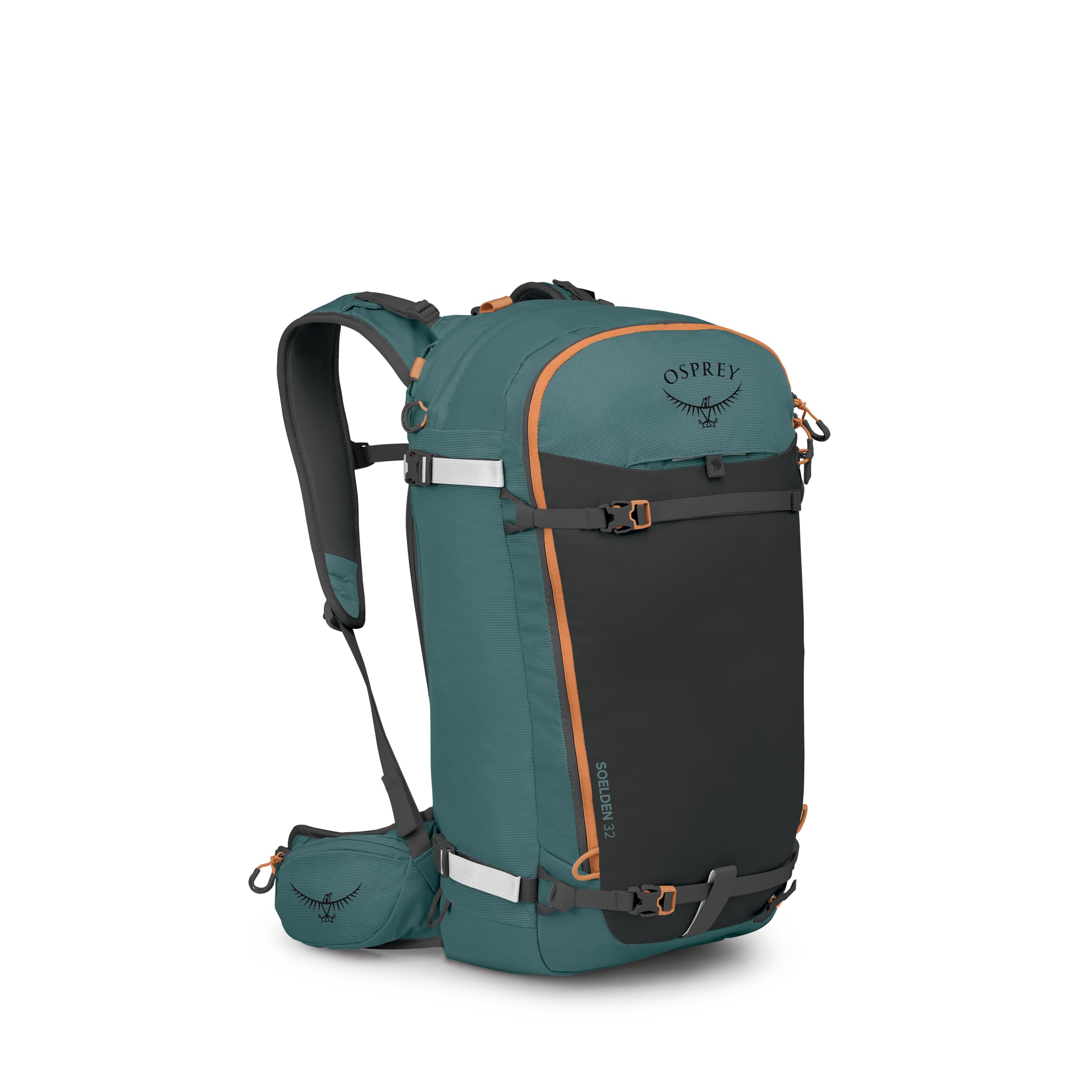
The Osprey Soelden 32L hits the sweet spot of backcountry utility. Its 32-liter capacity is large enough for a full day of gear—extra layer, food, water, probe, shovel, and first-aid kit—without becoming a bulky hindrance on tight boot packs. The front J-zip avalanche compartment provides fast, separated access to your shovel handle and probe blade, which is the critical feature that defines a true backcountry pack versus a resort bag.
The LightWire frame transfers load effectively to the hipbelt, making climbs feel more stable even when the pack is fully loaded. The diagonal and A-frame ski carry systems use simple, glove-friendly hardware, and the vertical snowboard carry accommodates both orientations. The 100% recycled ocean-sourced nylon fabric sheds snow well and resists abrasion from sharp ski edges.
Weighing just 2.47 pounds for a 32-liter pack, the Soelden delivers an excellent power-to-weight ratio. The gender-neutral design fits most adult torsos well, though women with shorter torsos may prefer a dedicated SL fit. The beavertail deployable pocket is surprisingly useful for stashing a shell or carrying snowshoes.
Why it’s great
- Quick-access J-zip avalanche compartment is perfectly organized for shovel and probe.
- LightWire frame provides excellent load transfer for a pack under 2.5 pounds.
- Sustainable 100% recycled ocean-sourced nylon construction is durable and snow-shedding.
Good to know
- No included hydration reservoir – you’ll need to add your own bladder.
- The gear loops on shoulder straps are minimal compared to some competing packs.
2. Osprey Soelden 25L Ski and Snowboard Backpack
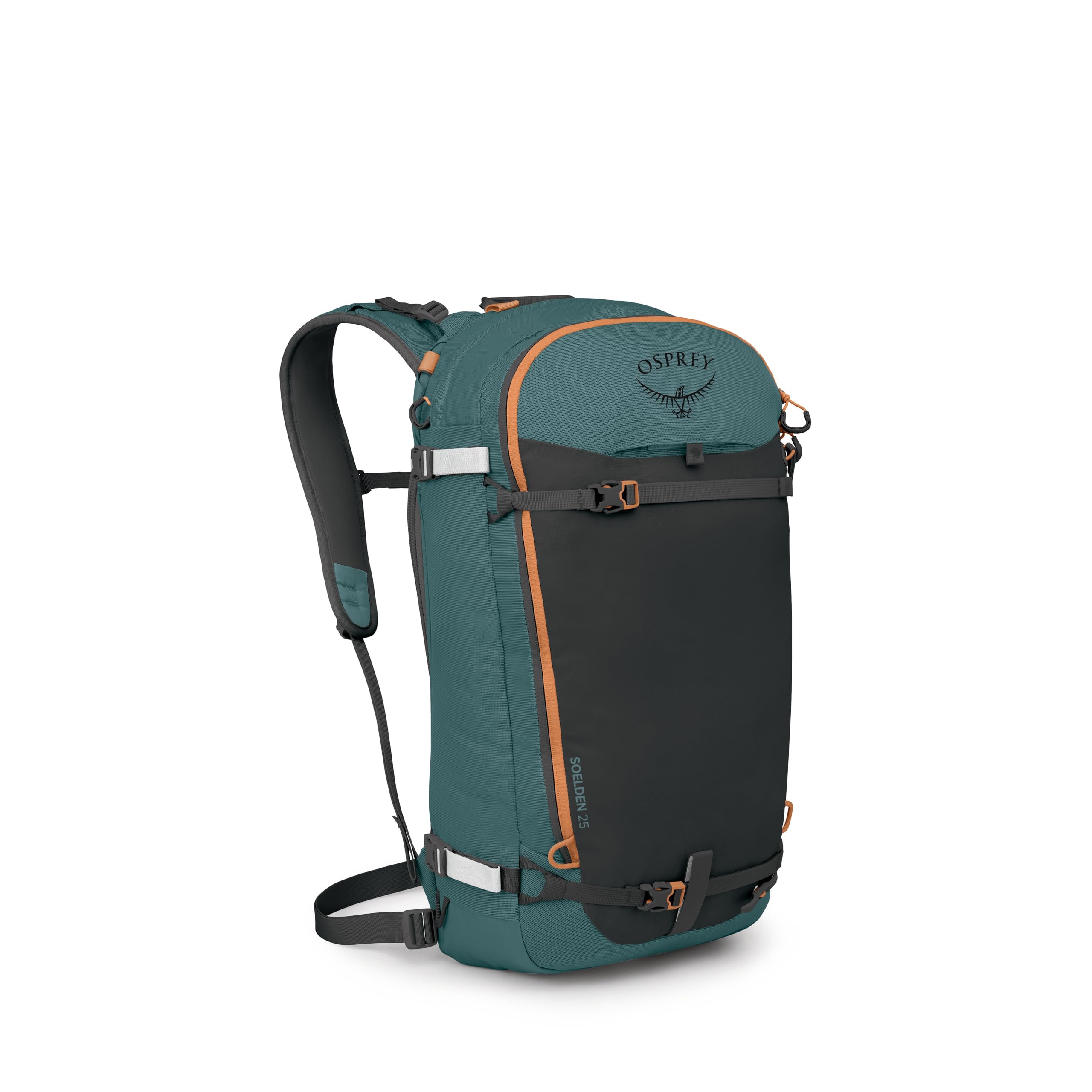
The Soelden 25L is essentially the same award-winning design as its 32-liter sibling, but in a more compact form factor that excels for short-day tours, morning laps, or resort hike-to access where you don’t need a full second layer or an extra liter of water. The carry systems are identical: A-frame, diagonal ski carry, snowboard carry, and ice tool attachment all use the same robust hardware.
The snow-shed backpanel is a standout design choice. Instead of mesh or foam that collects and freezes snow, this panel uses a slick, curved surface that allows snow to slide off, preventing ice buildup on your back. The GPS/radio internal carry with mic harness webbing attachment points makes this a solid choice for guides or skiers who need constant comms access.
At 2.3 pounds, it’s lighter than the Kamber 20L despite offering more volume, thanks to the streamlined design and recycled nylon fabric. The ice tool carry sleeve with toggle and bungee is secure and doesn’t rattle. For skiers who prioritize weight savings for faster ascents, the Soelden 25L is the optimal spec.
Why it’s great
- Snow-shed backpanel is genuinely effective at preventing ice buildup during ascents.
- Includes GPS/radio internal carry with mic clip webbing for guides.
- Very lightweight at 2.3 pounds, scaling up for alpine traverses.
Good to know
- 25L fills up quickly if you’re carrying a camera or drone.
- The beavertail is smaller than the 32L version, limiting snowshoe carry.
3. Osprey Kamber 20L Men’s Backcountry Ski and Snowboard Backpack

The Kamber 20L is a dedicated backcountry-specific pack that prioritizes organization and thoughtful pocket placement over absolute minimalism. The large front panel J-zip opens to a small gear pocket with internal mesh organizers and a key clip, which is perfect for stashing goggles, sunscreen, and snacks without rummaging through the main compartment. The internal hydration reservoir pocket has a zippered insulated hose sleeve that routes through the shoulder strap.
The ski and snowboard carry system is excellent. The vertical snowboard carry uses two straps, and the diagonal ski carry is quick to engage without removing the pack. The stow-away helmet carry can be deployed from either the front or top position, a clever detail for transitioning from skinning to descending. The dual zippered hipbelt pockets are large enough to hold a smartphone sized like an iPhone SE.
Some users note the zippers are stiff when new, which is a common break-in period for Osprey packs with weather-resistant zipper coatings. The 2.62-pound weight is slightly heavier than the Soelden 25L despite 5 fewer liters, which matters for gram-conscious tourers—but the added pocket structure is worth it for skiers who value organization.
Why it’s great
- Excellent internal organization with dedicated goggle, tool, and valuables pockets.
- Dual-position helmet carry works well for both ascents and descents.
- Insulated hydration hose routing is effective for preventing freeze-up.
Good to know
- Zippers may feel stiff initially and require break-in.
- Weighs more per liter than the Soelden series.
4. Osprey Glade 20L Ski and Snowboard Hydration Backpack
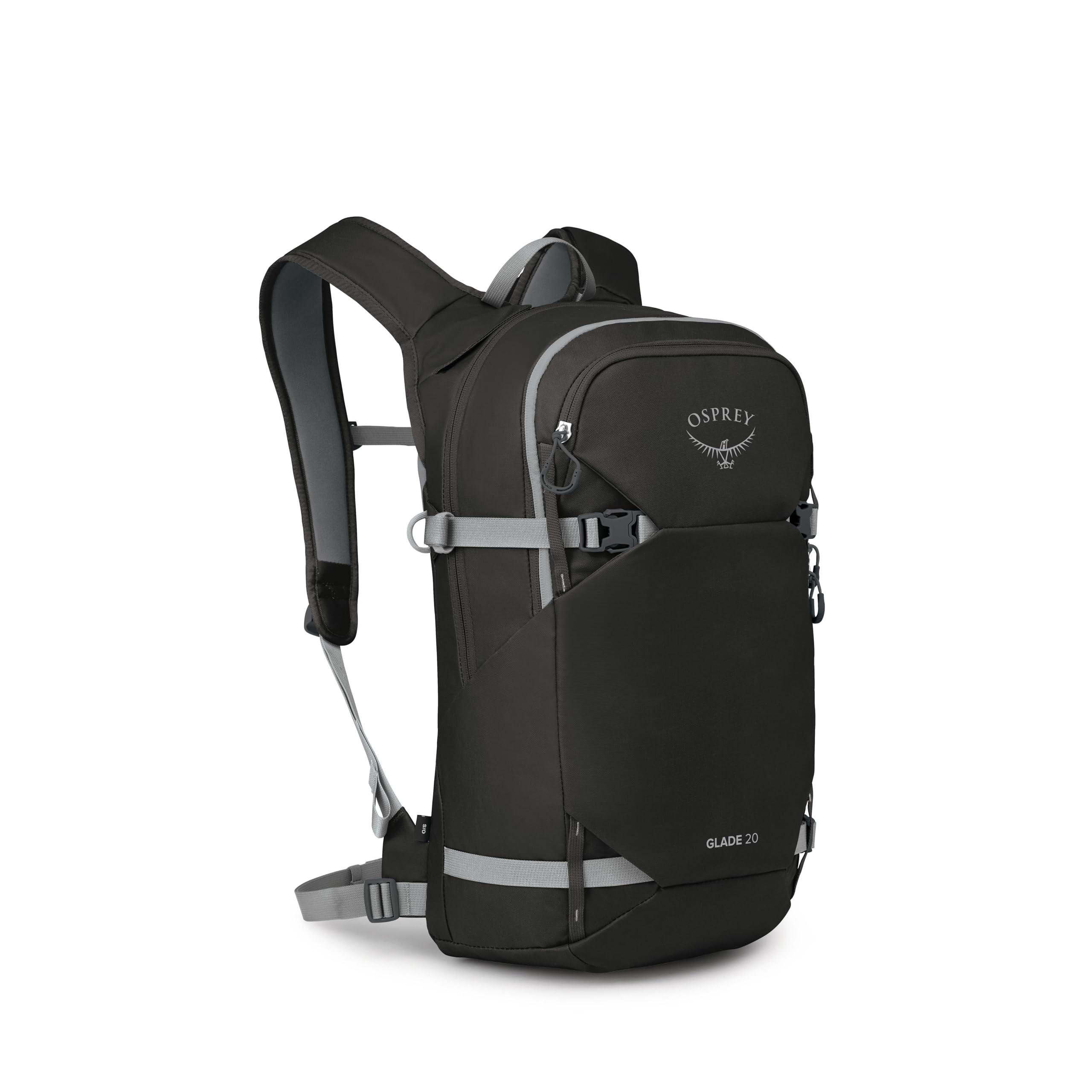
The Osprey Glade is the only pack in this lineup that comes with a purpose-built winter hydration system. The included 2.5L Hydraulics reservoir paired with the THERMOLITE-lined insulated harness is the most effective freeze-resistance solution in the mid-range tier. The insulation extends along the entire drinking tube and bite valve, keeping water liquid even in single-digit Fahrenheit temps.
The 20-liter volume is designed for alpine skiing, fat biking, and snowshoeing—activities where you don’t need a full change of clothes but must stay hydrated. The avalanche safety gear compartment is dedicated and fast to access, with a separate zipper that doesn’t open the main body. The NanoTough fabric is both water and abrasion resistant, tested to resist snags from branches and gear edges.
The fit is stable for dynamic movement, and the included adjustable sternum strap helps prevent the pack from shifting during aggressive downhill turns. The removable waist belt adds versatility. For skiers whose primary concern is staying hydrated without frozen drinking lines, the Glade is the standout pick. The 2.31-pound weight is acceptable given the integrated reservoir system.
Why it’s great
- Includes a 2.5L reservoir with THERMOLITE insulated harness for real sub-freezing hydration.
- NanoTough fabric is genuinely water and abrasion resistant, tested on alpine terrain.
- Dedicated avalanche safety compartment with fast, independent access.
Good to know
- 20L capacity is limited for multi-day or gear-intensive backcountry missions.
- The reservoir adds weight and occupies internal volume compared to an empty pack.
5. Dakine Fall Line Ski Roller Bag
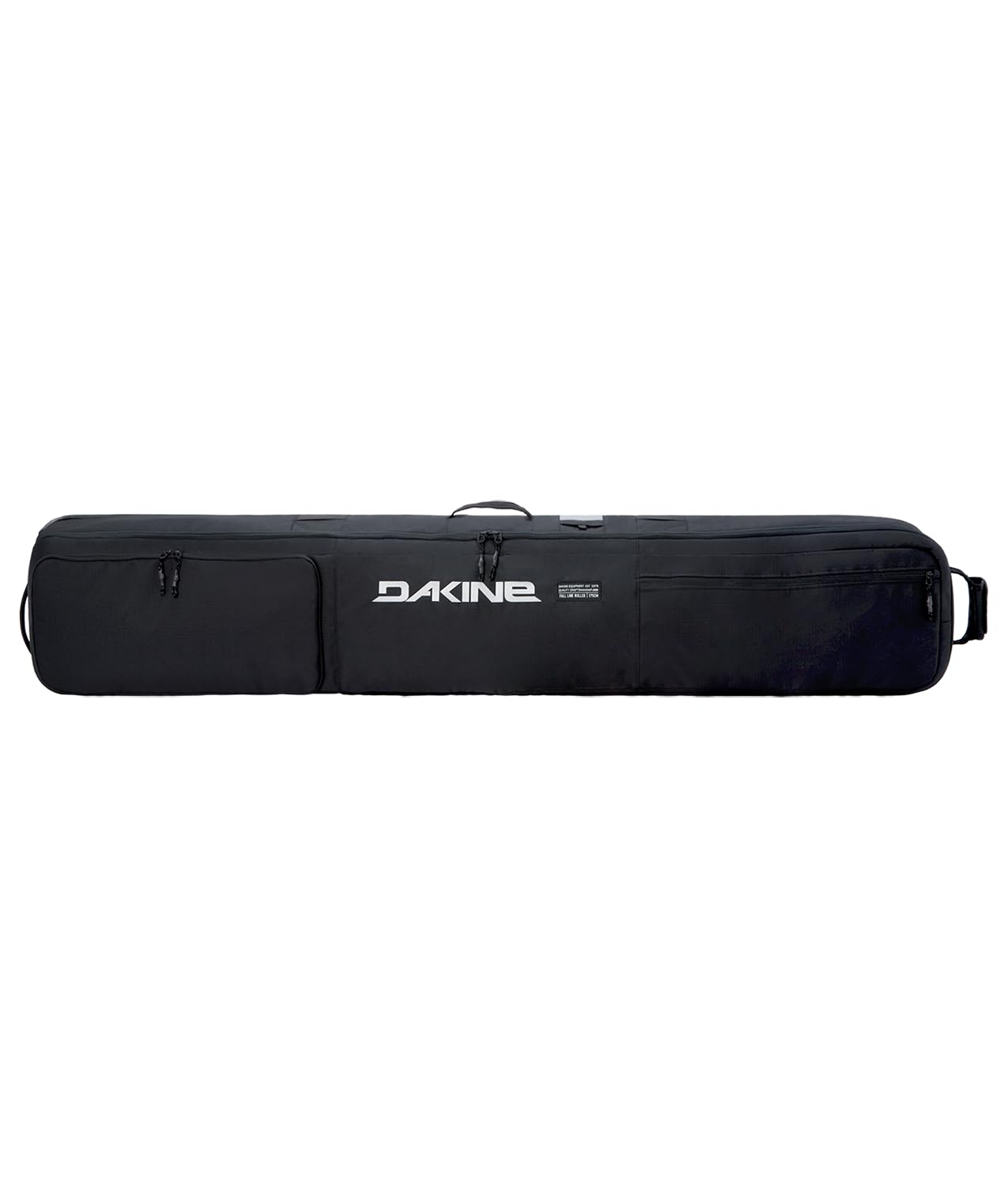
The Dakine Fall Line Ski Roller Bag is a high-volume travel solution, not a daypack. It’s designed to transport up to two pairs of skis plus a pair of boots, poles, and outerwear to your destination. The 360-degree padded construction is lined with tarp material on the inside, ensuring that sharp ski edges and bindings don’t cut through to the outside during baggage handling.
The internal webbing anchor straps prevent your skis from shifting around inside the bag, which is a common failure point in cheaper roller bags where gear collects in one corner and creates handling imbalances. The removable boot bag is a smart inclusion—it keeps dirty, wet boots separate from your outerwear and can be used as a carry-on if needed. The end handle allows you to pair it with rolling luggage for one-handed airport navigation.
The heavy-duty urethane wheels are the highlight, rolling smoothly over terminal floors, carpet, and even ice patches. The bag weighs 5 pounds empty, which is substantial, so you need to be mindful of airline weight limits—especially with two pairs of skis and boots inside. The 175-centimeter length accommodates most skis up to about 190 cm with room to spare.
Why it’s great
- 360-degree padding and tarp lining offers true protection from ski edges and bindings.
- Urethane wheels roll smoothly over varied airport surfaces, including ice.
- Removable boot bag keeps boots organized and doubles as a separate carry-on.
Good to know
- Weighs 5 pounds empty, which can push baggage over airline weight limits when full.
- No fixed handle at the top opposite the wheels; relies on a detachable strap.
6. Thule RoundTrip 80L Snow Duffel

The Thule RoundTrip 80L Duffel is engineered for skiers who need to transport all their gear—boots, helmet, goggles, gloves, jacket, pants, and casual clothes—in one organized bag. The dedicated boot compartment is the headline feature: it fits boots up to a US size 13 / Mondopoint 30.5 and includes a standing mat so you can change into your boots without standing on a cold, wet airport or parking lot floor.
The separate helmet and goggle compartment keeps your goggles scratch-free and your helmet from crushing softer items in the main compartment. The “last on, first off” design philosophy means this pocket is positioned for easy access at the top of the bag. The main compartment is large enough for a full ski outfit plus several days of casual clothes. The luggage pass-through strap attaches directly to Thule’s rolling ski bag for a single-unit airport transport.
The polyester ripstop material wipes clean easily and is water-repellent for light snow and rain. At 1.53 kilograms (about 3.4 pounds), it’s reasonably lightweight for an 80-liter duffel. The three webbing handles plus the removable shoulder strap provide versatile carry options. The interior grid pockets help organize smaller items, though loose accessories can shift to the bottom when carried.
Why it’s great
- Dedicated boot compartment with standing mat is perfect for cold parking lot changes.
- Helmet and goggle pocket protects delicate equipment from crushing.
- Luggage pass-through strap pairs neatly with Thule rolling ski bags for travel.
Good to know
- Small items can slip out of the interior grid pockets when the bag is carried by handles.
- 80 liters may be excessive for weekend trips; consider if you truly need the volume.
7. Gonex Snowboard Bag with Wheels

The Gonex Snowboard Bag delivers robust travel protection at a budget-friendly price point. The shell is built from 57% 1200D polyester and 43% PVC, creating a waterproof, wear-resistant exterior that stands up to baggage handling and weather. The interior is lined with a waterproof polyethylene layer to keep moisture away from your gear—important when packing wet boots or snow-covered boards.
The internal two-mode storage system has dedicated straps for both snowboard and ski configurations. You can switch between the two without removing the straps, and the padded interior cushions against impacts. The adjustable length feature extends the bag from 175 cm to 190 cm, accommodating most modern skis and snowboards. The 10-centimeter diameter wheels are larger than standard, rolling over curbs and rough pavement without jamming.
The bag includes four pockets—two internal and two external—for organizing gloves, socks, goggles, and other essentials. The YKK zippers are smooth and durable. At just under 11 pounds empty, the weight is a trade-off for the heavy-duty protection, which is appropriate for car or checked luggage travel but less ideal for short-distance rolling. The detachable straps can double as ski-carrying straps for shuttle access.
Why it’s great
- PVC and 1200D polyester shell is genuinely waterproof and abrasion-resistant.
- Adjustable length (175-190 cm) fits a wide range of ski and snowboard sizes.
- Large 10cm wheels roll well over uneven terrain like parking lots and curbs.
Good to know
- Weighs nearly 11 pounds empty, which is heavy for air travel weight restrictions.
- Length adjustment hardware is effective but can be tedious to change in the field.
8. CamelBak Powderhound 12 Snow Hydration Pack
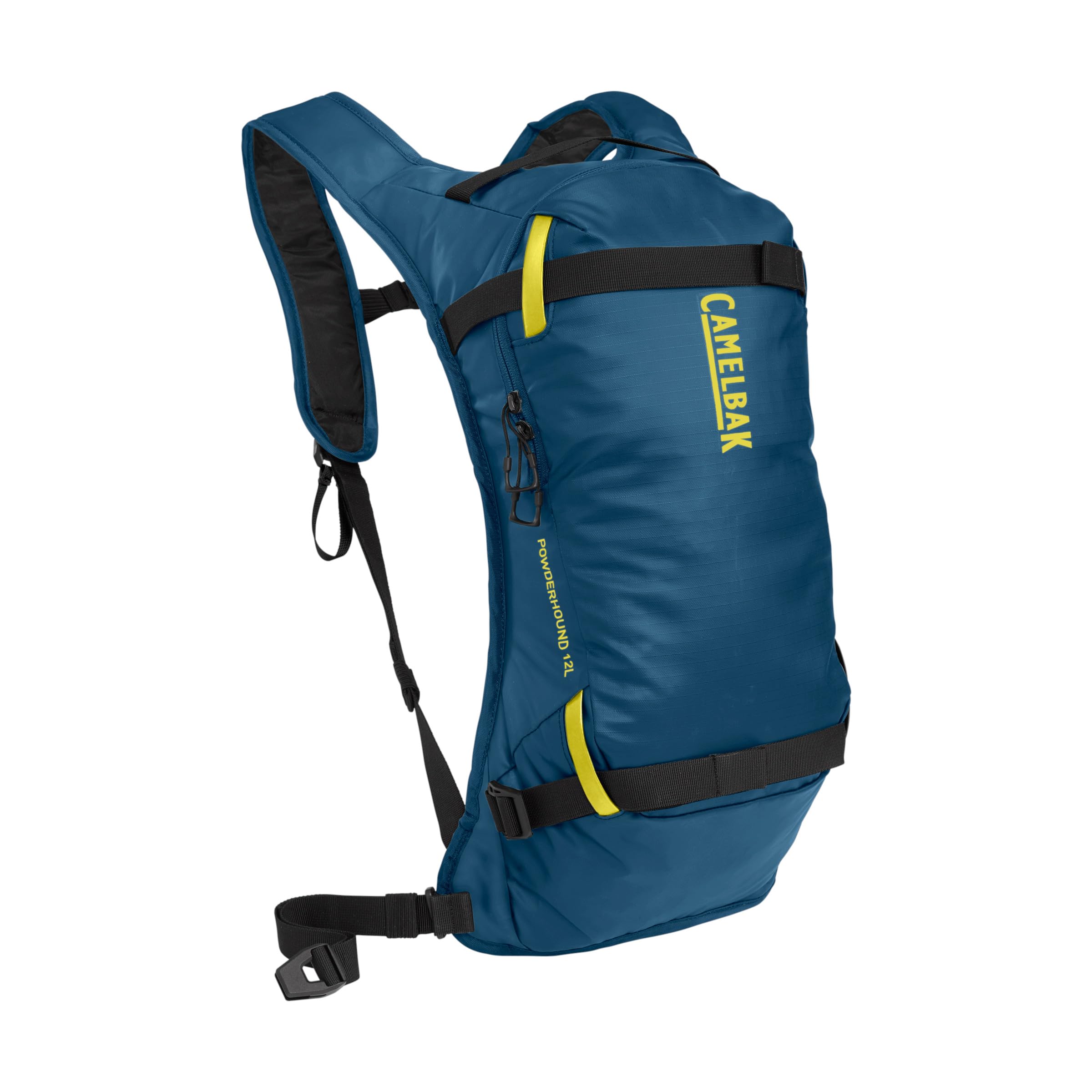
The CamelBak Powderhound 12 is a minimalist hydration pack designed for resort skiing and snowboarding, not extended backcountry tours. Its 2-liter reservoir is included, and the insulated drinking tube harness helps prevent freezing on the chairlift. The snow-repellent materials keep the exterior from accumulating ice in wet conditions, a common upgrade over standard daypacks.
The ski carry system supports both A-frame and diagonal carry, which is impressive for a 12-liter pack. The lift-access harness allows the pack to swing forward without removing it—a genuine convenience for grabbing a snack or adjusting goggles in the chairlift line. The removable waist belt and adjustable sternum strap help keep the pack stable during dynamic riding.
With a 12-liter capacity, your carrying options are limited to the bare essentials: a layer, snacks, keys, and the reservoir. There is no dedicated avalanche safety compartment, so this is strictly for resort or side-country use, not true backcountry missions. The 31.4-ounce weight is reasonable for a pack with an integrated hydration system. It’s an excellent choice for skiers who prioritize hydration and comfort over gear volume.
Why it’s great
- Includes a 2-liter anti-freeze reservoir with insulated tube harness ready to go.
- Lift-access harness allows forward rotation for quick chairlift access.
- Snow-repelling materials effectively shed snow and slush during wet days.
Good to know
- 12-liter capacity and lack of avalanche compartment limit it to resort/sidecountry use.
- Not sufficient volume for a full day of backcountry touring gear.
9. Deuter Women’s Alproof 30L SL Avalanche Backpack
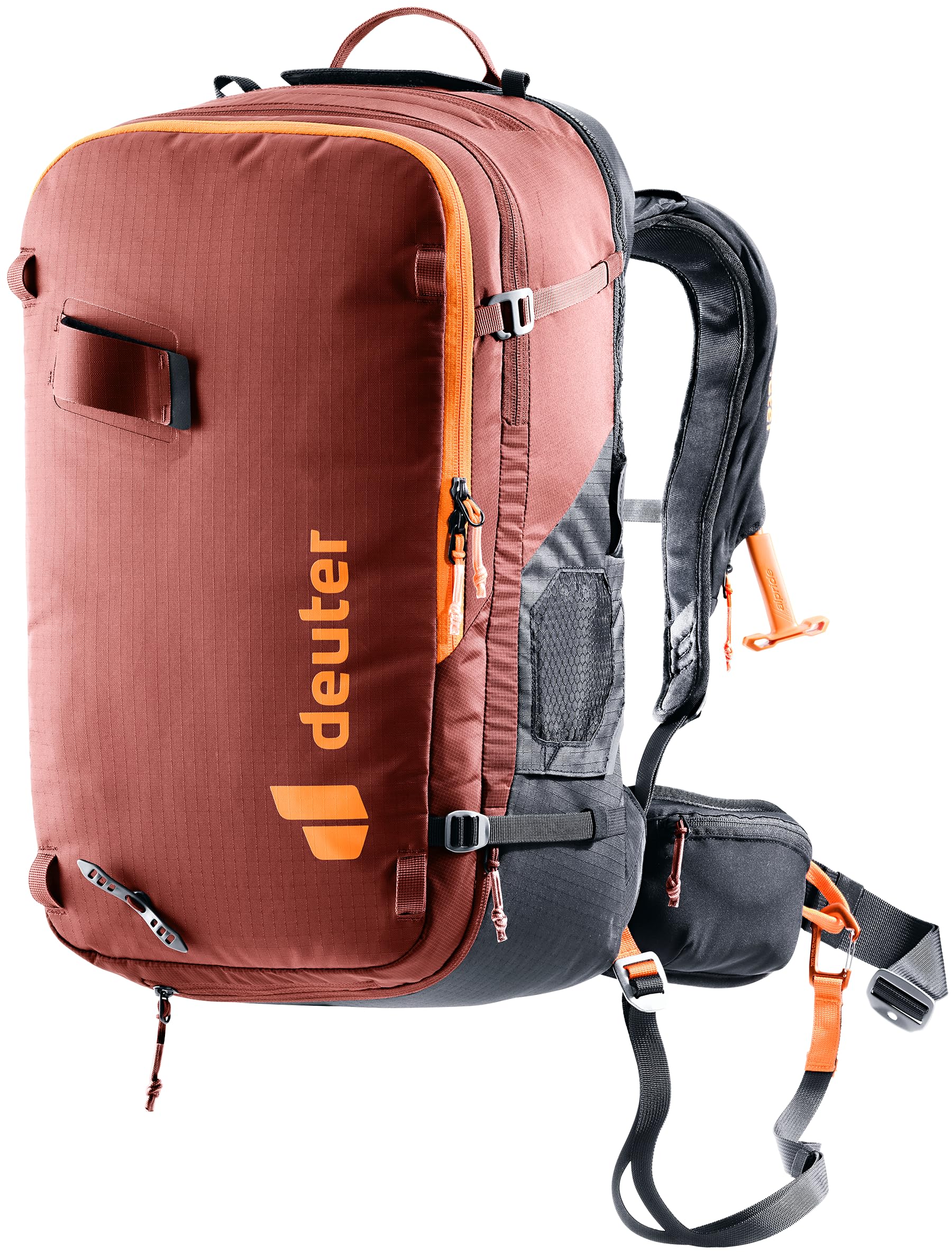
The Deuter Alproof 30L SL is the pinnacle of backcountry safety, integrating the fully electric Alpride E2 avalanche airbag system. Unlike canister-based systems that require refills, this system uses two supercapacitors that can be recharged via USB and deployed multiple times per trip—a massive logistical advantage. The airbag deploys in under three seconds, producing high pressure to inflate the 170-liter airbag without any chemical propellant.
The “SL” designation means it’s built on a women’s-specific frame with narrower shoulder straps and a shorter torso length, which translates into better weight distribution and comfort for female skiers. The safety compartment includes a zippered valuables pocket with a key clip, fleece-lined goggle pocket, and two modular gear straps for diagonal ski and snowboard attachment. The snow-resistant fabric on the back system prevents ice accumulation during long ascents.
At 30 liters, the pack provides sufficient volume for a full day of backcountry gear plus the airbag system. The hydration compatibility with Deuter’s 3-liter Streamer Reservoir (sold separately) includes insulated tube sleeves on both shoulder straps. The padded hip fins with gear loops keep the load secure. This pack is a substantial investment, but for skiers who regularly venture into avalanche-prone terrain, the Alproof is the most complete integrated safety solution available.
Why it’s great
- Integrated Alpride E2 electric airbag can be deployed multiple times per trip and recharged via USB.
- Women’s-specific SL fit provides superior comfort and load distribution for female skiers.
- Dedicated avalanche compartment with organized shovel/probe sleeves for fastest access.
Good to know
- Very high investment point, reflecting the advanced airbag technology and Deuter build quality.
- Airbag system adds weight and occupies internal volume compared to a non-airbag pack.
FAQ
Can I use a regular hiking backpack for backcountry skiing?
How much volume do I need for a day of backcountry skiing?
What’s the difference between A-frame and diagonal ski carry?
How does a snow-shedding backpanel help?
Final Thoughts: The Verdict
For most users, the backcountry ski bag winner is the Osprey Soelden 32L because it provides the best balance of volume, lightweight construction, avalanche safety organization, and versatile ski carry systems for full-day missions. If you want the most effective freeze-resistant hydration system out of the box, grab the Osprey Glade 20L. And for uncompromised avalanche safety with a rechargeable airbag system, nothing beats the Deuter Alproof 30L SL.