
A backcountry ski boot has a single job it must do both ways: deliver a powerful, precise downhill turn when the skin track ends, and let you hike for hours without feeling like your feet are clamped in a vice. Most boots fail at one or the other — they either ski like a slipper or walk like a concrete block. The real test is how a boot manages that contradiction.
I’m Min — the co-founder and writer behind Gadgets Feed. I’ve spent hundreds of hours combing through flex ratings, walk-mode mechanisms, and last widths, cross-referencing technical specs with real user data across the mid-range and premium tiers to find the boots that actually reconcile uphill efficiency with downhill control.
Whether your terrain is rolling meadow-skipping or committing alpine couloirs, this guide breaks down the flex profiles, cuff rotation, and weight calculus that define best backcountry ski boots for skiers who refuse to compromise their turns for the skin track.
How To Choose The Best Backcountry Ski Boots
Backcountry boots are a system of compromises. The perfect boot for a 5,000-vert day in the Wasatch is wrong for a two-hour dawn patrol in the East. Before you shop, lock in your terrain, your skiing ability, and your tolerance for climbing weight on your feet.
Flex Index: Your Downhill Muscle
Flex ratings (typically 100–130 for backcountry) measure the boot’s forward resistance. A 100 flex is approachable for intermediate skiers and long tours; a 130 flex transmits every edge pressure into the ski but punishes poor technique on the descent. Match flex to your weight and skiing aggression — not to your ego.
Walk Mode & Cuff Rotation
Not all walk modes are equal. The critical spec is cuff rotation: how many degrees the upper cuff pivots backward when unlocked. A 40-degree rotation lets you stride naturally; a 15-degree rotation still clamps your shin on the up track. Pair this with a smooth, slop-free lock mechanism — a walk mode that rattles downhill defeats its purpose.
Last Width & Fit Volume
Last width (measured in millimeters across the forefoot) dictates compatibility with your foot shape. A 98mm last fits narrow feet; 102mm suits medium-to-wide feet. Backcountry boots often run a touch wider than alpine boots to accommodate thicker socks and blood flow during long ascents. Never buy a boot that pinches in the shop — it will not pack out enough.
Weight vs. Warmth
Every gram of insulation and liner plushness adds ounces to your stride. A boot that weighs under 1,800 grams per boot is a performance touring tool; a boot over 2,200 grams is a crossover alpine model better suited for resort sidecountry laps. For multi-day missions, weight savings on your feet compound into real energy savings.
Quick Comparison
On smaller screens, swipe sideways to see the full table.
| Model | Category | Best For | Key Spec | Amazon |
|---|---|---|---|---|
| Nordica HF 110 | Premium Touring | Comfort-first touring with easy entry | 102mm last, GripWalk soles | Amazon |
| Kenetrek Mountain Extreme | Premium Approach | Heavy mountaineering and rocky terrain | 7mm nylon midsole, 10″ cuff | Amazon |
| Nordica HF 100 | Mid-Range Touring | Insulated all-mountain touring | PrimaLoft insulation, 40° shell opening | Amazon |
| Fischer RC One 8.5 HV | Mid-Range Alpine | Expert skiers with wider feet | 8.5 flex, high-volume fit | Amazon |
| Burton Photon BOA | Value Snowboard | Snowboard-specific backcountry | Dual-Zone BOA, Imprint 3 liner | Amazon |
| La Sportiva Makalu | Budget Mountaineer | Classic leather mountaineering | Full shank, 3mm Idro-Perwanger leather | Amazon |
| MSR Lightning Ascent | Budget Snowshoe | Technical snowshoe for steep alpine | 4.33 lbs/pair, 360° traction frame | Amazon |
In‑Depth Reviews
1. Nordica Men HF 110 Boots
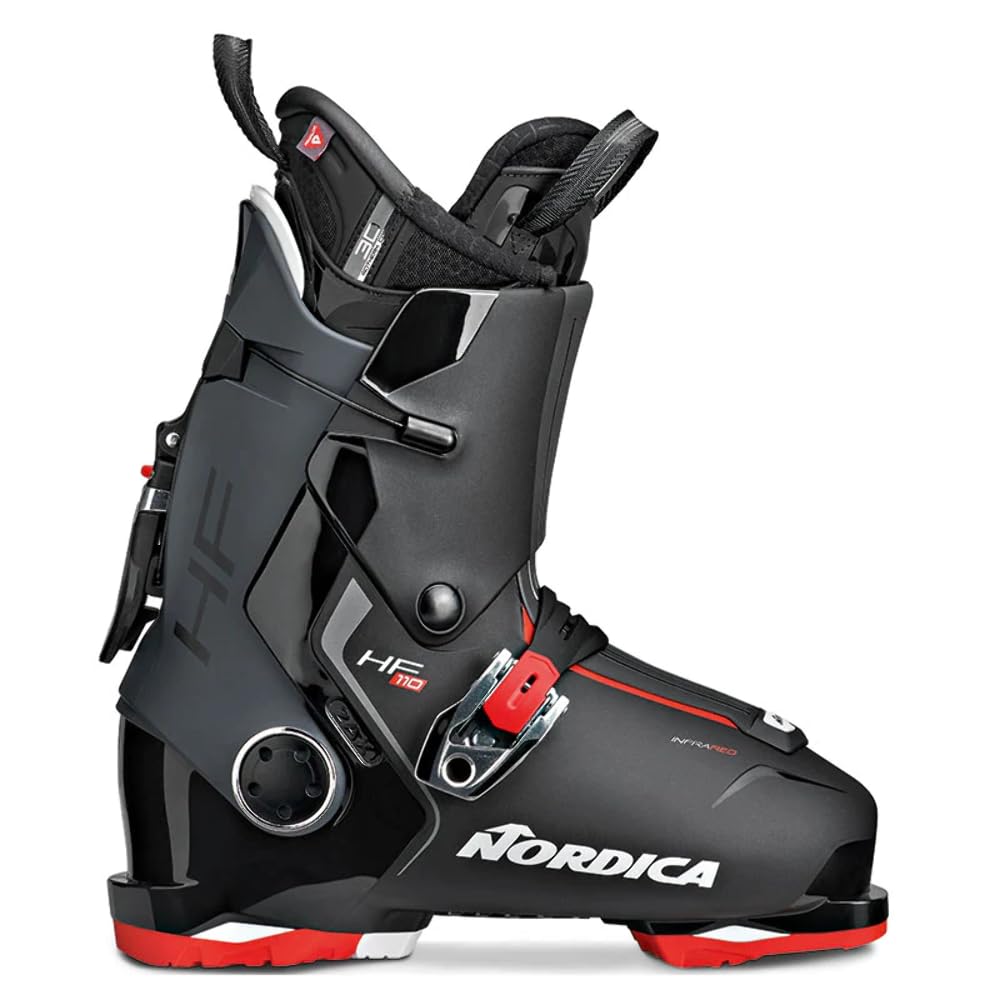
The Nordica HF 110 redefines what a touring boot can be by eliminating the struggle of entry without sacrificing edge-to-edge transmission. Its rear-entry design swings open 40 degrees, so a fused ankle or a stiff back doesn’t end your day before the skin track starts. The 110 flex hits the sweet spot for intermediate-to-advanced skiers who want enough spine to drive a stiff ski through crud but don’t need the telegraphic feedback of a 130-race boot.
Under the hood, the 3D Cork Fit PrimaLoft liner molds to your foot using body heat and cork granules, creating a pocket that resists packing out over 100-plus days. The 102mm last accommodates medium-wide feet comfortably, and the GripWalk soles (included in the box) provide confident traction on icy ridge scrambles and packed trailhead lots. At roughly 2,100 grams per boot, it’s not the lightest touring option, but the walk-mode cuff rotation is generous enough to make long approaches feel natural.
Experienced users consistently report that the HF 110 eliminates the dreaded heel lift problem common to rear-entry designs, thanks to a single overlapping strap that cinches the ankle pocket tight. The main compromise is marginal — the 102mm last may feel roomy for narrow-footed skiers, and the rear-entry leverage can make overtightening easier than with traditional overlap shells. For skiers over 50 or anyone nursing lower-leg injuries, this boot is a revelation.
Why it’s great
- Rear-entry design solves boot struggle for injured or older skiers
- 3D Cork Fit liner molds precisely and holds its shape
- GripWalk soles included for safe walking on mixed surfaces
Good to know
- Heavier than pure touring boots at 2,100+g per boot
- 102mm last may feel sloppy for very narrow feet
2. Kenetrek Men’s Mountain Extreme Non-Insulated
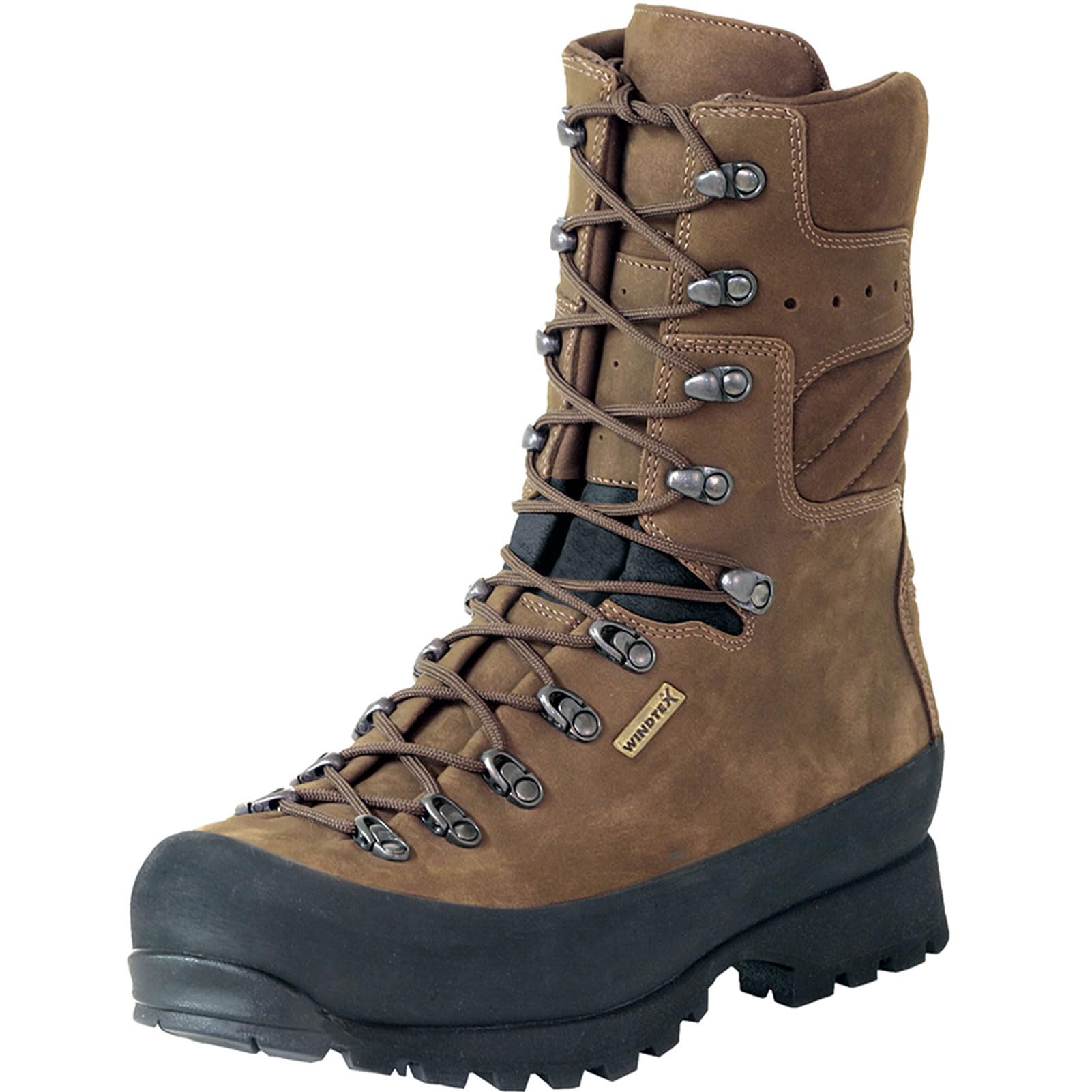
The Kenetrek Mountain Extreme is the boot you reach for when the approach involves talus, scree, and exposed ridgelines before you click into your bindings. Built around a 7mm nylon midsole, it provides a platform stiff enough to edge a ski boot into hard snow or kick steps up a couloir. The 10-inch cuff height offers calf support that standard touring boots cannot match, making it a hybrid between a ski boot and a mountaineering boot.
Reinforced double and triple stitching at high-wear areas, combined with a Windtex waterproof membrane that reviewers say breathes better than Gore-Tex, makes this a durable companion for multi-season use. The K-Talon outsole uses aggressive lugs that bite into loose rock and wet logs, and the non-insulated version is warmer than expected because the dense materials block wind effectively. Users report 800-plus rough miles before the boots need replacement.
The trade-off is stiffness: this boot requires a significant break-in period of 50 miles or more, and it is not suitable for casual resort days or light meadow-skipping. It also runs heavier than dedicated touring boots — the structural reinforcement adds ounces that compound on long climbs. If your backcountry includes technical alpine terrain where you’re kicking steps and scrambling, the Kenetrek is the correct tool.
Why it’s great
- 7mm nylon midsole provides unmatched stiffness for edging and step-kicking
- 10-inch cuff delivers superior ankle and calf support on steep terrain
- Double-stitched construction withstands years of abuse
Good to know
- Long break-in period with initial blister risk
- Heavy weight penalizes long tours without technical sections
3. Nordica HF 100 Durable Warm Insulated

The Nordica HF 100 brings the same easy-entry philosophy as its higher-flex sibling but lands at a more accessible price point. The 100 flex is forgiving enough for intermediate skiers advancing into touring, yet the infrared technology allows targeted shell customization at pressure points — a feature typically reserved for boots costing significantly more. This means you can heat-mod the shell around a bunion or a narrow heel without a trip to a fitter.
PrimaLoft insulation gives the HF 100 a warmth advantage over uninsulated touring boots, making it a strong choice for cold-weather dawn patrols and resort-adjacent sidecountry. The Instep Volume Control in the heel wedge lets you dial in or reduce instep pressure with a simple rotation, addressing the most common fit complaint among skiers with high-volume feet. The easy-entry shell opens to 40 degrees, and users with fused ankles or limited mobility consistently report this as the most accessible boot they have used.
At roughly 2,000 grams per boot, the weight is on par with other 100-flex touring models, but the insulation adds a warmth that non-insulated boots lack for sub-zero starts. The main drawback is the single strap over the instep — some skiers find it harder to secure the heel fully compared to boots with a separate ankle strap. For skiers prioritizing warm, pain-free touring on cold days, this is a compelling value proposition.
Why it’s great
- Infrared shell customization targets pressure points without a bootfitter
- PrimaLoft insulation keeps feet warm in sub-20°F conditions
- Instep Volume Control adjusts fit for high-arch or high-volume feet
Good to know
- Single instep strap may allow minor heel lift for some foot shapes
- Heavier than dedicated lightweight touring boots
4. Fischer RC One 8.5 HV Alpine Skis Boots
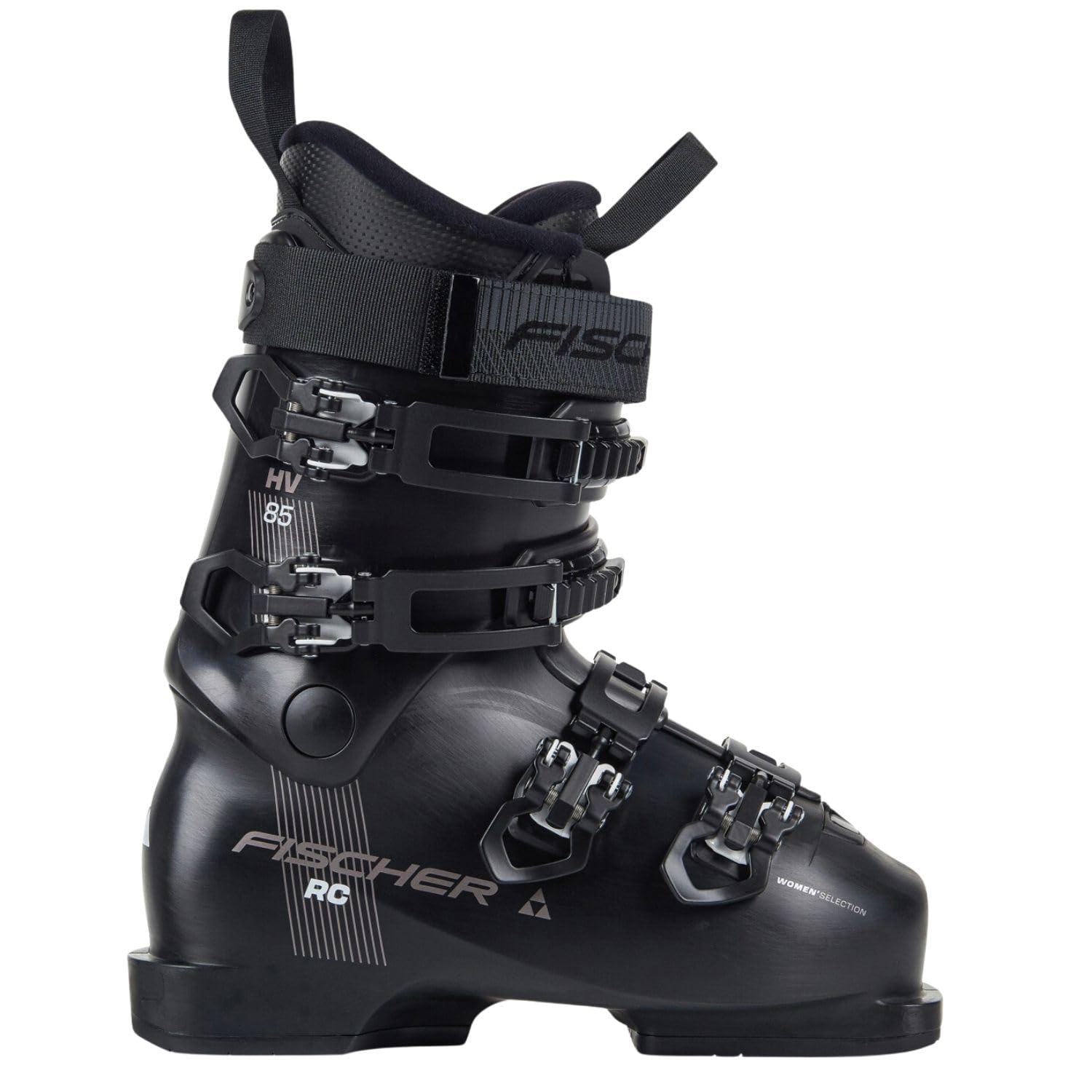
The Fischer RC One 8.5 HV is built for advanced and expert skiers who refuse to downsize their foot volume. The high-volume last provides a generous 102mm-plus fit in the forefoot, making it one of the few performance boots that accommodate wide feet without requiring punches or extensive grinding. The 8.5 flex index (roughly equivalent to a 120 in other brands) delivers the precision and power transmission that aggressive skiers demand when laying trenches on firm snow.
Fischer uses a polyurethane shell that resists cold-weather stiffening, so the flex stays consistent from the first chair to the last. The adjustable liner and cuff alignment allow for a personalized fit that addresses wide calves and pronation issues. Multiple reviewers note that the boot molds to the calf quickly, reducing the break-in period compared to stiffer alpine boots.
The RC One is primarily an alpine boot — its walk mode is functional but does not offer the cuff rotation range of a dedicated touring boot. This makes it best suited for lift-accessed backcountry and sidecountry laps where you spend more time skiing than hiking. For skiers who need a high-volume fit and demand alpine-level downhill performance, this boot delivers without compromise.
Why it’s great
- High-volume last fits wide feet out of the box
- Consistent flex across temperature ranges
- Adjustable cuff and liner accommodate wide calves
Good to know
- Walk mode offers limited cuff rotation for touring
- Sizing runs large — check the mondo point conversion carefully
5. Burton Men’s Photon BOA Snowboard Boots
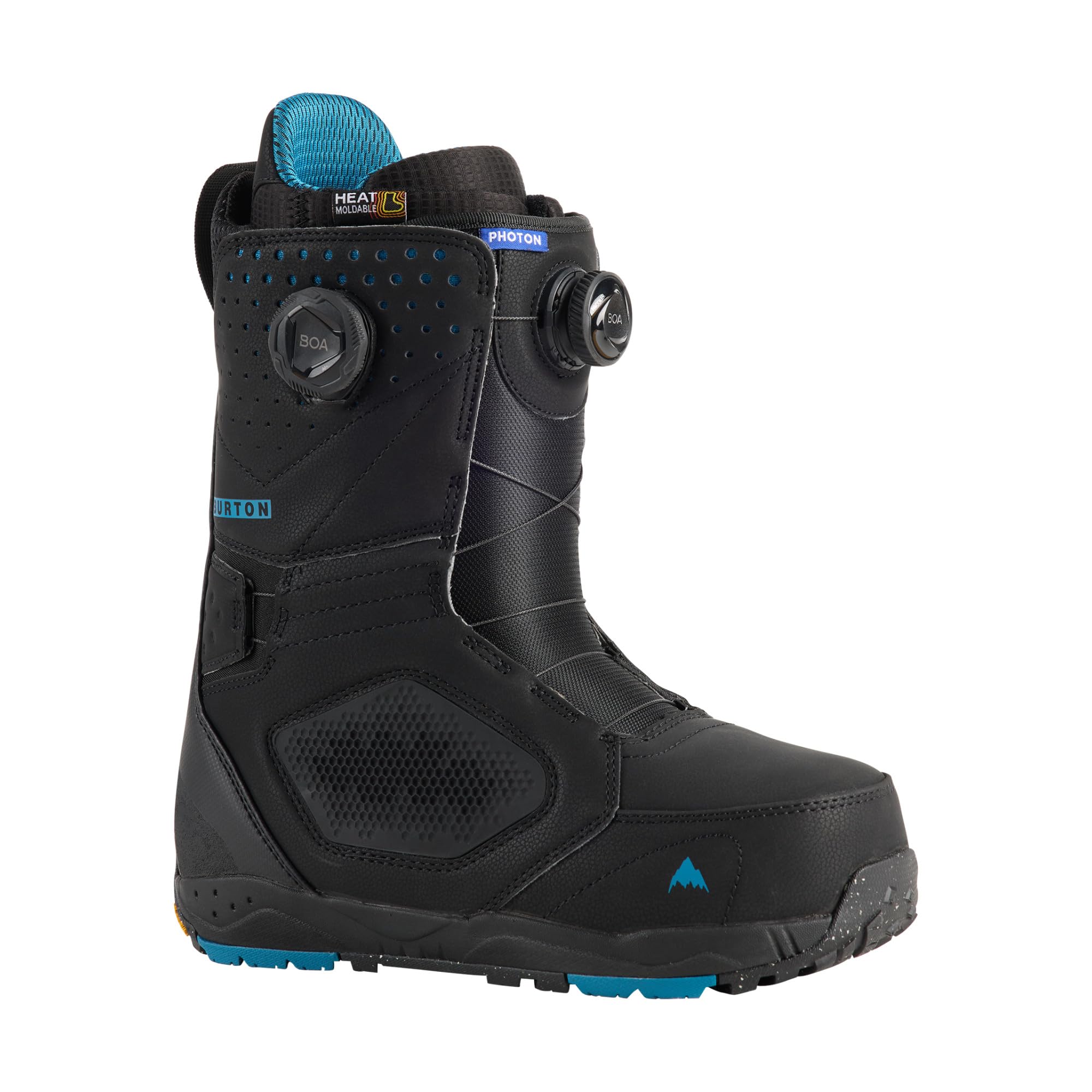
The Burton Photon BOA is a snowboard boot, not a ski boot, but it earns a spot here for snowboarders who take their splitboard into the backcountry. The Dual-Zone BOA system with Coiler and Lockdown technology lets you independently tension the lower forefoot and upper calf zones, mimicking the zone control of a traditional lace-up without the hassle of frozen laces. The 1:1 firm flex PowerUp tongue pairs with the Imprint 3 heat-moldable liner to create a responsive connection to the board.
The EST-optimized midsole lowers the boot’s center of gravity, improving board feel for technical splitboard descents through variable snow. The Vibram Traction Lug outsole uses 30% recycled rubber and provides grip on icy skin tracks and rocky transitions. Total Comfort Construction means the boot feels broken in from day one, eliminating the painful break-in period common to stiffer snowboard boots.
Reviewers consistently praise the warmth at sub-25°F temperatures and the easy-adjust BOA dials that work with thick gloves. The main consideration is that the BOA system can be overtightened, leading to pressure points if you are not deliberate with the dial. For splitboarders who want a stiffer boot for edging on the descent without sacrificing walkability on the skin track, the Photon is the benchmark.
Why it’s great
- Dual-Zone BOA provides independent heel and calf tension
- Heat-moldable liner shortens break-in and improves fit
- Vibram outsole grips well on mixed terrain transitions
Good to know
- Burton sizing runs small — order a full size up from street shoe
- BOA dials are easy to overtighten, creating hotspots
6. La Sportiva Men’s Makalu Leather Boots

The full-steel shank provides a platform stiff enough for crampon compatibility on technical alpine terrain, while the 3mm Idro-Perwanger roughout leather upper resists abrasion from rock and scree. This is not a dedicated backcountry ski boot — it is a mountaineering boot that can handle approach work for ski descents that require a long, technical hike.
The Vibram Fire and Ice outsole grips wet rock and hard snow, and the full shank lets you front-point up steep couloirs with confidence. The high ankle cuff offers support for heavy packs, and the Dry-Best waterproof membrane keeps feet dry through creek crossings and wet snow. Multiple reviewers report the boot lasts years of heavy use, with the leather developing a custom fit over time.
The Makalu demands a significant break-in period — expect 50 miles before the leather softens around your ankle and instep. It is heavy for pure ski touring, and the inflexible sole makes walking on pavement awkward. For skiers whose backcountry approach involves alpine climbing, glacier crossings, or mixed terrain where you need crampons, the Makalu is the affordable workhorse.
Why it’s great
- Full-steel shank handles crampons and technical mixed terrain
- 3mm leather upper is extremely durable and abrasion-resistant
- Proven design with a long track record of reliability
Good to know
- Long break-in with risk of blisters
- Not suitable for lightweight touring or resort skiing
7. MSR Lightning Ascent Snowshoes

The MSR Lightning Ascent is a snowshoe, not a boot, but it deserves mention for skiers who prefer snowshoes for spring approaches or deep-snow access when skis are not an option. At 4.33 pounds per pair, it’s an ultralight technical snowshoe designed for steep, exposed terrain. The 360-degree Traction Frames provide edge-to-edge grip on traverses, and the steel DTX crampons bite into alpine ice and hardpack.
The Paragon binding system uses a one-piece contouring strap that wraps around the boot securely without creating pressure points, making it compatible with a wide range of boot shapes and sizes. The Ergo Televator heel lift flips up for steep ascents, reducing calf fatigue. The binding fits men’s shoes from size 4.5 to 15, so it works with bulky mountaineering boots.
The 8-by-25-inch platform provides flotation for up to 220 pounds, and the narrower profile reduces tripping on trail-breaking steps. Users note that the televators are easily operable with trekking poles. The main limitation is that the 25-inch length can catch on underbrush in tight trees. For skiers who need a snowshoe for spring ski approaches or postholing in deep powder, the Lightning Ascent is the gold standard.
Why it’s great
- Ultralight at 4.33 lbs/pair for technical snowshoeing
- 360° traction frames provide grip on traverses and sidehills
- Paragon bindings fit a wide range of boot sizes comfortably
Good to know
- 25-inch length can trip in tight, brushy terrain
- Weight limit of 220 lbs may be restrictive for heavier loads
FAQ
Can I use alpine ski boots for backcountry touring?
What is the ideal flex for backcountry ski boots?
Why does last width matter for touring boots?
Final Thoughts: The Verdict
For most users, the best backcountry ski boots winner is the Nordica HF 110 because it combines a 110 flex with a rear-entry design and GripWalk soles, solving the boot struggle while delivering real downhill performance. If you want a premium mountaineering boot for technical alpine approaches, grab the Kenetrek Mountain Extreme. And for budget-conscious skiers who need warmth and an easy-entry shell, nothing beats the value of the Nordica HF 100.