
A backcountry ski jacket isn’t a resort shell. The difference is motion: you generate serious heat climbing skin tracks, then you need immediate, static warmth on a wind-scoured ridge. One jacket rarely does both well, but the right one lets you regulate temperature without stopping to swap layers. Moisture management and packability are the real battlegrounds — a jacket that soaks through from sweat or takes up half your pack fails the mission.
I’m Min — the co-founder and writer behind Gadgets Feed. I spend hundreds of hours each season cross-referencing fabric weights, insulation fill powers, and seam construction data from real-world field reports and technical spec sheets to isolate what actually works when you’re miles from the trailhead.
This guide breaks down nine of the best performing shells and insulated jackets by their real specs, not marketing claims. Whether you prioritize a breathable waterproof membrane or a sub-20-ounce down layer that disappears into a stuff sack, you’ll find a verified choice for your terrain with this best backcountry ski jacket roundup.
How To Choose The Best Backcountry Ski Jacket
Selecting a backcountry jacket requires weighing breathability against weather protection. Resort jackets prioritize insulation and comfort at a lodge; backcountry jackets prioritize moisture transfer, packability, and durability against rock and ice. The wrong choice leads to clammy overheating or inadequate wind protection at altitude.
Membrane & Lamination Matter
A 3-layer laminate (3L) bonds the face fabric, membrane, and inner liner into one piece. This eliminates the separate mesh liner found in 2.5-layer or 2-layer jackets, improving durability and breathability. For backcountry use, 3L Gore-Tex Pro ePE or similar high-end membranes are the benchmark because they handle abrasive backpack straps and wet snow without delamination.
Insulation Strategy: Static vs. Active
Down jackets with fill power ratings of 800 or higher offer the best warmth-to-weight ratio for breaks and summits. Synthetic insulation, like Rab’s Cirrus or The North Face’s Heatseeker, retains warmth when wet but packs larger and weighs more per gram of loft. Many backcountry skiers prefer a waterproof shell over a thin synthetic mid-layer, then add a down hoody for stops — the classic belay jacket approach.
Quick Comparison
On smaller screens, swipe sideways to see the full table.
| Model | Category | Best For | Key Spec | Amazon |
|---|---|---|---|---|
| Arc’teryx Beta AR | Premium Shell | Alpine climbing & wet backcountry | 3L Gore-Tex Pro ePE, 80d-100d face | Amazon |
| Rab Mythic Ultra | Ultralight Down | Summit static warmth | ~1.25 lbs, 900+ fill down | Amazon |
| Arc’teryx Beta Jacket | Versatile Shell | 3-season hiking & backcountry | Gore-Tex ePE, lightweight, packs small | Amazon |
| The North Face Freedom Insulated | Resort Hybrid | Resort & sidecountry | 80g Heatseeker synthetic, 2L DryVent | Amazon |
| Helly Hansen Garibaldi 2.0 | Premium Insulated | Wet snow & backcountry access | Sealed seams, thumb retainer, 2.63 lbs | Amazon |
| Rab Neutrino Pro | Lightweight Down | Technical climbing cold | 19.9 oz, tight-fitting, non-removable hood | Amazon |
| Obermeyer Raze | Mid-Range Insulated | Tree skiing & resort | 2-way stretch, light insulation, arm pocket | Amazon |
| Helly Hansen Alpha 3.0 | Performance Insulated | Resort to sidecountry | 2.3 lbs, Life Pocket, sealed seams | Amazon |
| Rab Cirrus Alpine | Budget Synthetic | Hiking & spare pack layer | PrimaLoft synthetic, packs into stuff sack | Amazon |
In‑Depth Reviews
1. Arc’teryx Beta AR Men’s Jacket
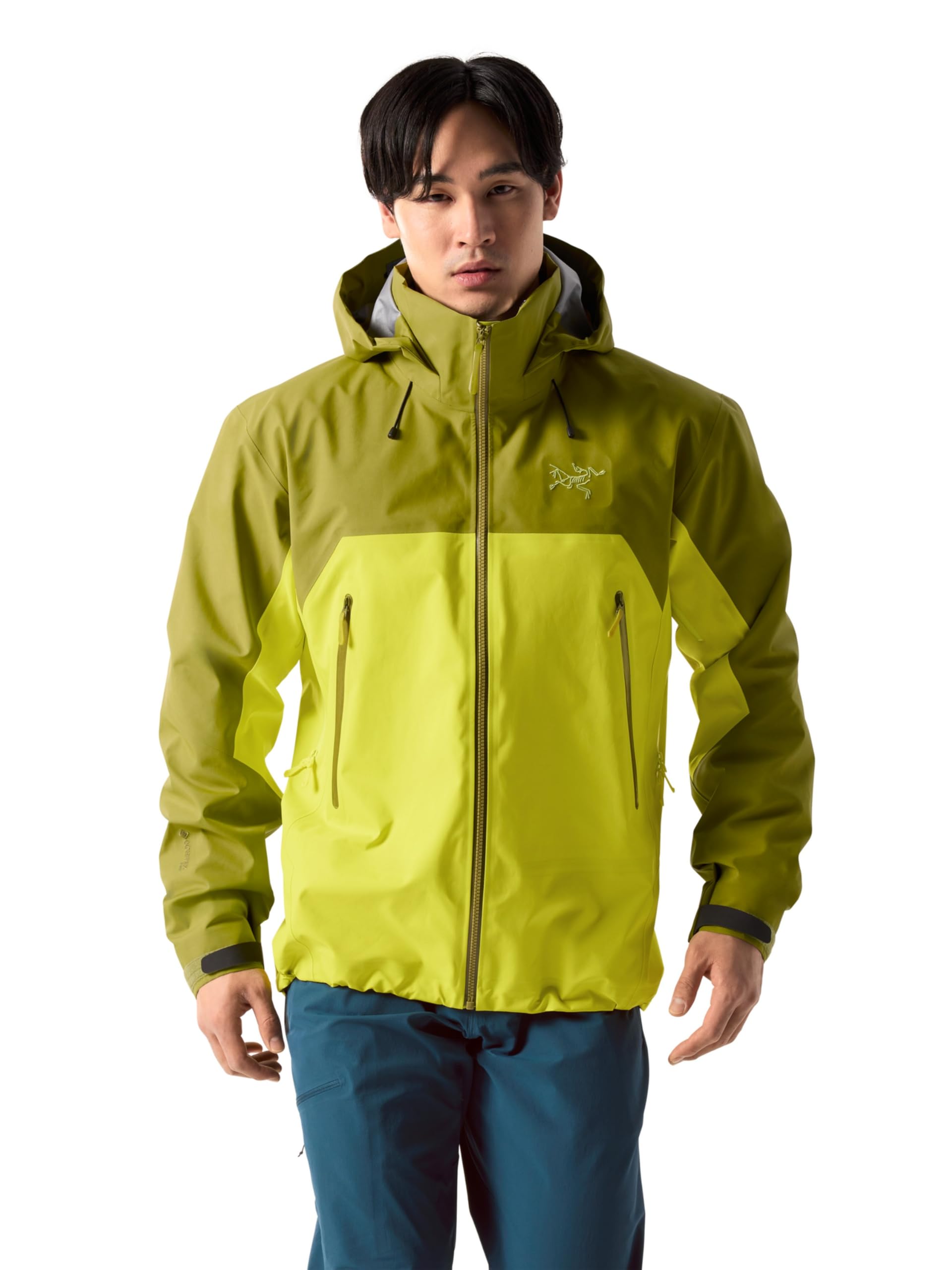
The Arc’teryx Beta AR is the definitive 3-layer backcountry shell. It uses 3L Gore-Tex Pro ePE with a 80d plain weave recycled nylon on the body and a tougher 100d in high-wear zones. This combination sheds wind-driven precip and resists abrasion from backpack straps and granite. The helmet-compatible DropHood rotates with your head, and WaterTight external zippers keep moisture out. Reviewers consistently note the build quality justifies the premium tier of this jacket.
At 5’11” and 160 lbs, one reviewer described the medium as an excellent fit — lighter and less noisy than the previous Beta SV model. Users in rainy Washington and the Middle East confirm the Pro ePE membrane breathes well enough for active use. The 126 to 135 gsm fabric weight keeps packability reasonable for a shell that offers serious protection.
One concern: sleeves run very long. A 6’4″ reviewer found the large sleeves covered their knuckles. If you have shorter arms or prefer a trim fit, expect to evaluate sizing carefully. The single chest pocket layout may feel minimal to skiers accustomed to eight pockets. Nonetheless, for a dedicated backcountry shell, this is the benchmark for rugged weatherproofing.
Why it’s great
- 3L Gore-Tex Pro ePE offers unmatched breathability and durability for alpine conditions
- 80d/100d face fabric resists abrasion without excessive weight
- Helmet-compatible DropHood moves naturally with head rotation
Good to know
- Sleeve length is generous; may require hemming for some body types
- No insulated liner — must be layered with a puffy for static cold
- Single chest pocket only; limited organization compared to resort jackets
2. Rab Men’s Mythic Ultra Jacket

The Rab Mythic Ultra is the lightest insulated jacket in this roundup at roughly 1.25 pounds. It uses 900+ fill goose down, providing an exceptional warmth-to-weight ratio for static breaks on exposed summits. The 10-denier Pertex Quantum outer fabric cuts grams aggressively, making it a favorite among ski mountaineers who need a summit layer that disappears into a knuckle-sized stuff sack. The athletic cut fits a 5’11”, 175 lb reviewer perfectly with room for a thin base layer.
Reviewers consistently highlight the Mythic Ultra’s incredible warmth for its weight. One user waited months to purchase and found the men’s small offered extra length and room to layer underneath for a woman’s frame. The color options add a visual bonus, but the real win is the sub-one-pound interior down weight that delivers alpine warmth without bulk.
The hood is the main trade-off. It lacks the rear Velcro adjustment found on the Neutrino Pro, and with a beanie or helmet, head rotation becomes limited — your face presses into the chin guard. This is a pure summit belay jacket, not a touring piece you want zipped up while climbing. Consider sizing up if you plan to wear thick mid-layers underneath.
Why it’s great
- Exceptionally light at ~1.25 lbs with 900+ fill down for summit warmth
- Packs incredibly small for emergency alpine use
- Trim athletic cut pairs well under a shell
Good to know
- Hood lacks rear adjustment; limited head mobility with helmet
- 10-denier face fabric is fragile against abrasive rock and ice
- Not breathable enough for active uphill use; best for static stops
3. Arc’teryx Beta Jacket Men’s
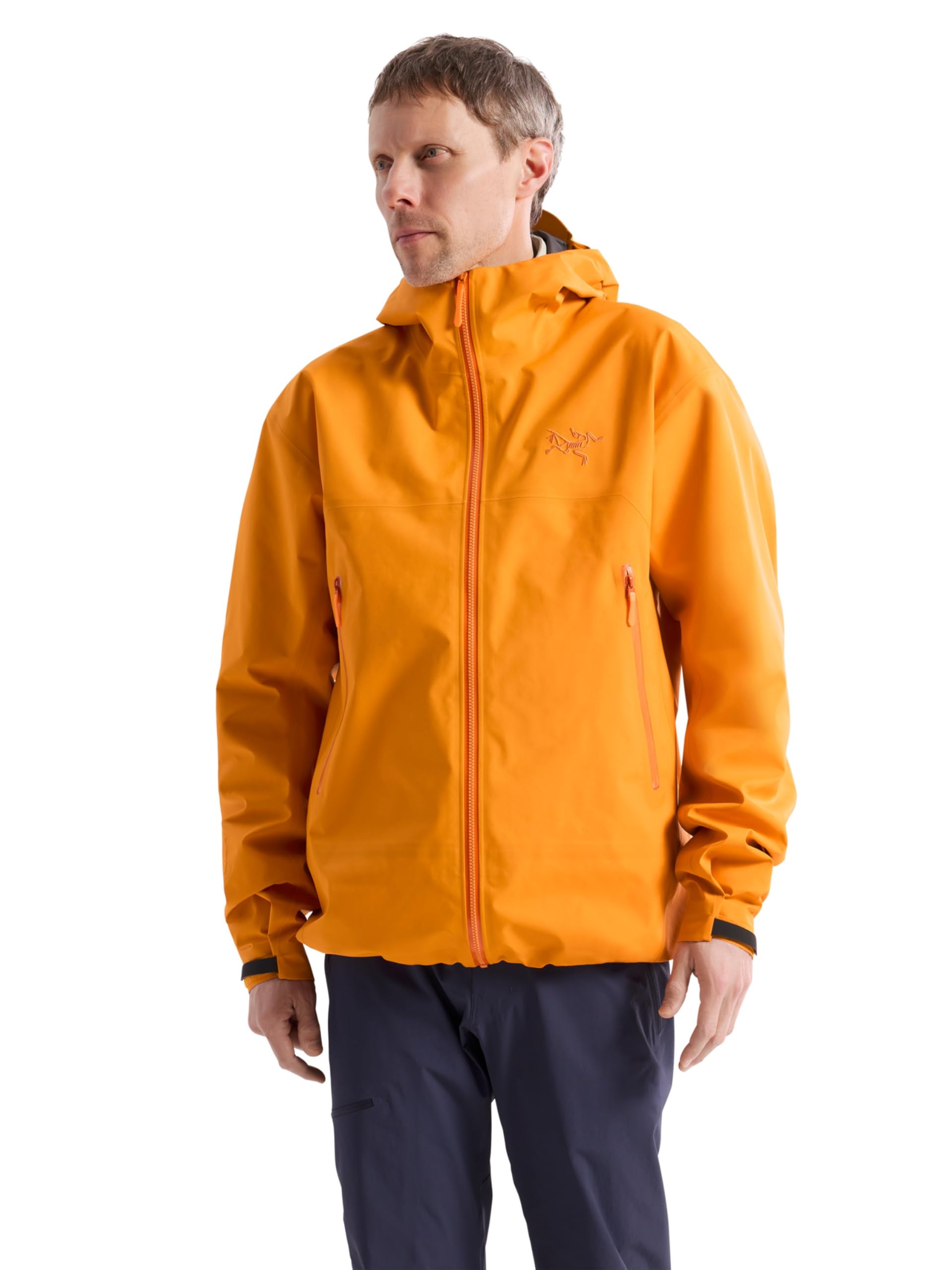
The standard Arc’teryx Beta Jacket strips back the Pro membrane to a non-Pro Gore-Tex ePE 3L laminate, saving weight and cost while retaining the same waterproof and windproof performance for most backcountry use. Reviewers at 5’11” and 160 lbs found the medium fits perfectly for hiking, fishing, and prolonged rain in the Pacific Northwest. It packs easily and dries faster than heavier shells, making it a viable option for multi-day traverses where pack weight matters.
Users describe it as significantly lighter and less crinkly than the Beta SV or Beta AR. One reviewer wore it hiking in the mountains across varying elevations and appreciated its adaptability to changing weather. The ePE membrane is also PFC-free, aligning with evolving environmental standards for outdoor gear. The minimal feature set keeps weight down: one chest pocket, no powder skirt, and a compact hood that fits under a helmet.
Sizing runs smaller than some Arc’teryx cuts. Gauge your fit carefully — one reviewer had to return a medium because it was too snug. The jacket is not insulated, so for backcountry use above treeline, you will need to layer a fleece and a down hoody underneath. It is best suited for skiers who want a light, breathable shell for active touring and occasional rain or snow showers.
Why it’s great
- Lightweight Gore-Tex ePE 3L with excellent breathability for active use
- PFC-free membrane aligns with modern environmental standards
- Packs down efficiently for multi-day traverses
Good to know
- No powder skirt or insulated liner; requires layering for cold
- Sizing runs small; consider going up one size
- Minimal pocket design limits backcountry organization options
4. THE NORTH FACE Men’s Freedom Insulated Jacket
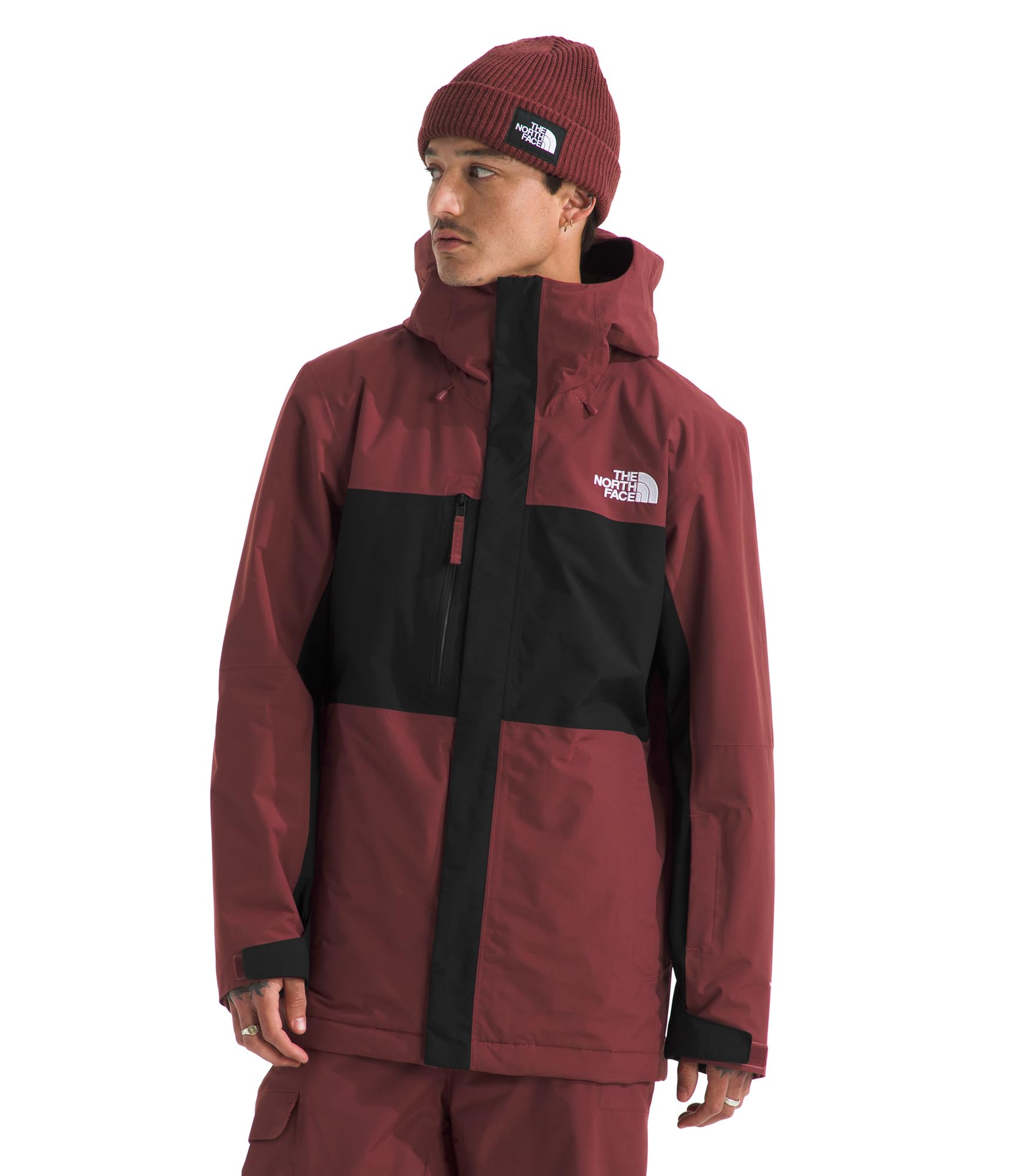
The North Face Freedom Insulated bridges the gap between resort comfort and backcountry capability. It uses a 2-layer DryVent shell with 80 grams of Heatseeker synthetic insulation in the body. The DWR finish is non-PFC, and the 100% recycled nylon face fabric adds environmental credibility. Reviewers confirm it is light when held but genuinely warm — one user reported comfort in -20°F temps. The helmet-compatible hood and underarm vents allow temperature management during sidecountry transitions.
This jacket is packed with features: a snap-down powder skirt with gripper elastic, a zip wrist pocket with integrated goggle wipe, an internal mesh pocket, and a ticket loop. For skiers who spend time on chairlifts, the insulation is a benefit that pure shells lack. The fit is true to size — a 5’11”, 165 lb reviewer found the look great with enough room for a mid-layer.
For sustained uphill skinning, you will overheat. The non-PFC DWR may degrade faster than a factory-applied PTFE treatment. This jacket is best suited for backcountry access days with one or two short uphills followed by resort laps, not for full-day wilderness traverses.
Why it’s great
- Integrated synthetic insulation provides warmth without an extra layer
- Excellent feature set with powder skirt, goggle wipe, and secure pockets
- Non-PFC DWR and 100% recycled nylon reduce environmental impact
Good to know
- 2L DryVent isn’t as breathable as 3L membranes for sustained uphill efforts
- Heavier than a shell + down combo for self-supported backcountry trips
- Non-PFC DWR may need reapplication more frequently
5. Helly-Hansen Men’s Garibaldi 2.0 Insulated Ski Jacket
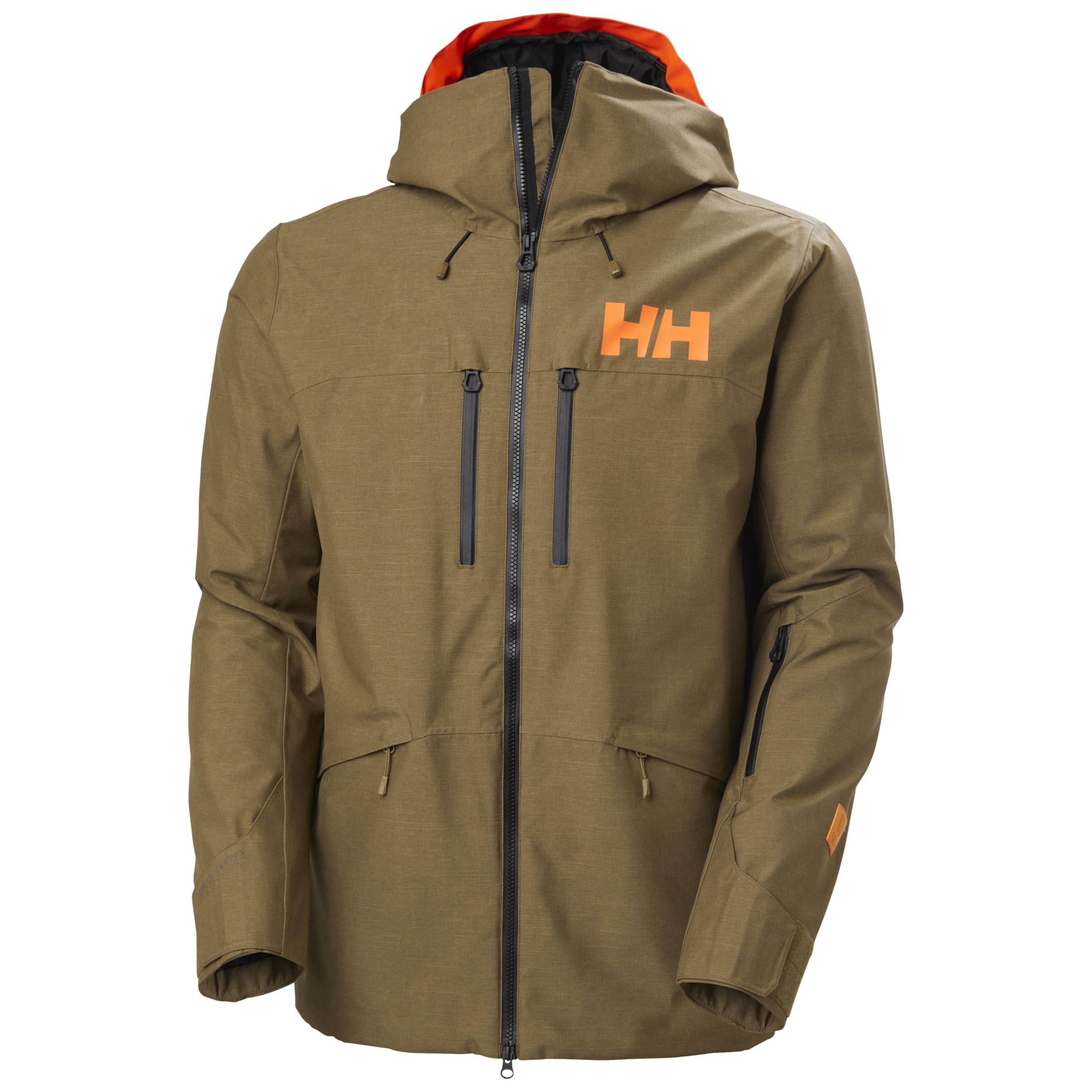
The Garibaldi 2.0 is Helly Hansen’s premium insulated shell for skiers who expect a quiet, durable, and completely sealed jacket. Reviewers confirm the weather-sealed zippers, silk-like inner layer, and thumb retainers set it apart. The fabric innovation makes it lighter and more flexible than HH’s previous designs while retaining a relaxed fit that accommodates layers. One 1.75m, 70 kg user noted the medium ran slightly oversize in the body but settled into place during skiing.
The jacket includes sleeve vents for dumping heat on uphills, an Ikon card pocket, and a durable outer shell that handles wet snow without soaking through. One reviewer called it the best ski jacket they have owned, citing the comfort indoors and warmth outside. The 2.63-pound weight is heavier than a dedicated tour shell, but the sealed seams and high-quality zippers make it a confidence-inspiring choice for wet Pacific Northwest or Northeast backcountry transitions.
The insulation is fixed, so you cannot strip it down for warm days. The relaxed fit may feel baggy for tall athletes seeking a trim aerobic cut. If your backcountry mission involves long skin tracks above treeline with temperatures below freezing, this jacket is overbuilt. It excels when storm conditions demand absolute sealing and you value comfort over minimum weight.
Why it’s great
- Fully weather-sealed zippers and seams for extreme wet snow protection
- Silk-like inner layer and thumb retainers increase comfort and warmth
- Durable shell fabric withstands brush and backpack strap abrasion
Good to know
- Fixed insulation cannot be removed for warm touring conditions
- Relaxed fit feels oversized for athletic builds
- Heavier than a pure shell + down belay setup
6. Rab Men’s Neutrino Pro Hoody
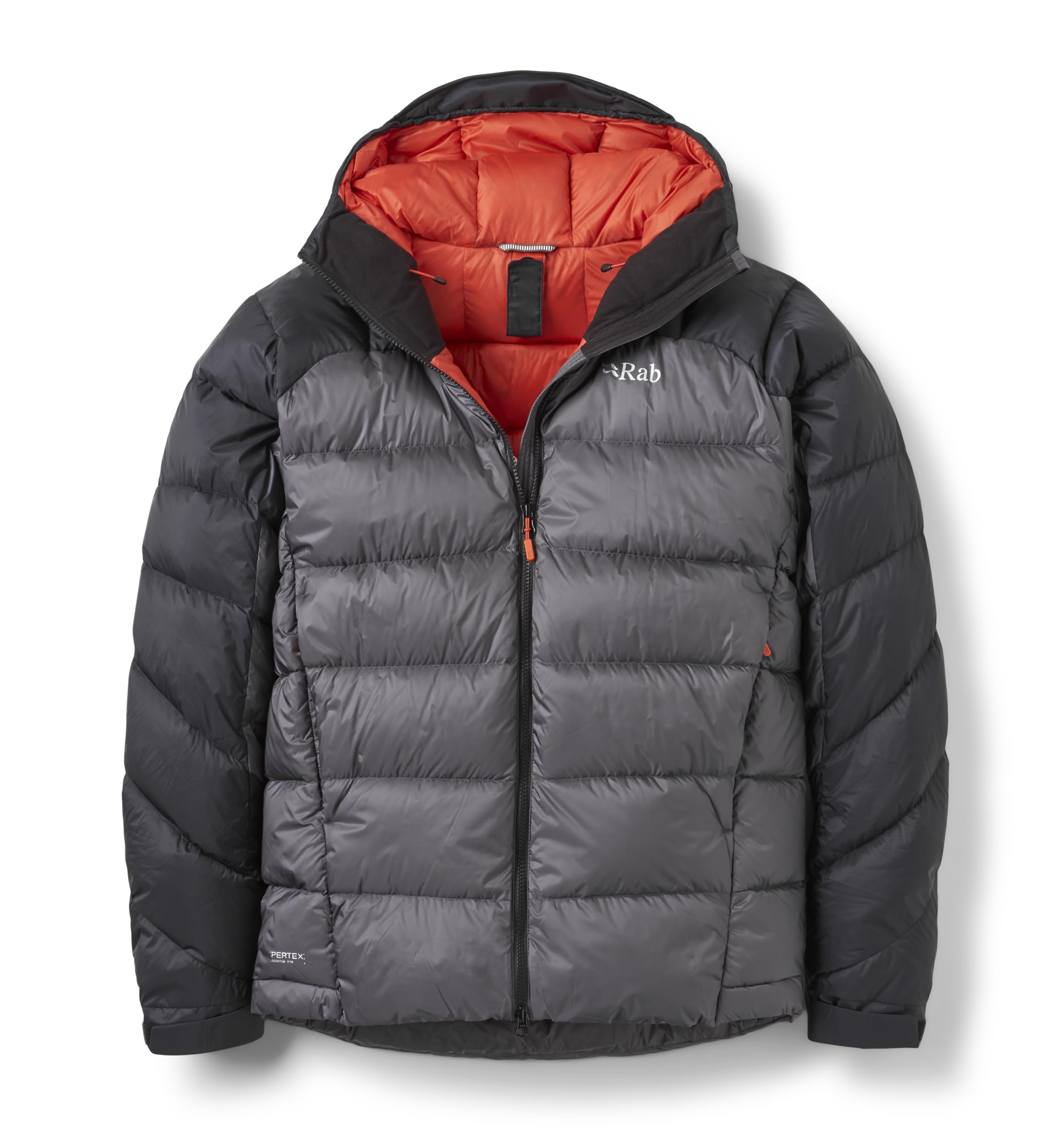
The Neutrino Pro is Rab’s technical down jacket for climbing and mountaineering at 19.9 ounces. It uses 800 fill European goose down treated with a Nikwax hydrophobic finish, maintaining loft in damp conditions better than untreated down. Reviewers confirm it is very light for its warmth, though it requires layering for active use. One 5’7″, 135 lb female reviewer found the men’s medium fits snugly at the hips, hugging the body to minimize heat loss. The 5’7″, 175 lb male reviewer in a medium noted it was tight.
The jacket excels for static warmth during belays and summit breaks. Users emphasize it is super warm when stationary but almost certainly too warm for hiking or moderate activity. The Pertex Quantum Pro outer fabric provides wind resistance and handles light moisture, though it is not a full waterproof shell. The non-removable hood is bulky when rolled up, but the adjustable drawcord system maintains coverage around a helmet.
Down leakage is a minor complaint: brown feathers show through light-colored fabric, creating dirty spots. The hood is non-removable, which some users find annoying. If you run warm or prioritize packability over maximum warmth, the lighter Mythic Ultra may be a better choice. The Neutrino Pro is best for cold-weather climbing where weight savings matter more than hood flexibility.
Why it’s great
- Very light at 19.9 oz with 800 fill down for its warmth category
- Hydrophobic down treatment resists moisture better than standard down
- Tight, athletic fit maximizes heat retention for belay use
Good to know
- Non-removable hood is bulky and looks odd when rolled
- Down leakage visible through light-colored fabrics
- Too warm for active use; designed for static cold conditions
7. Obermeyer Mens Raze Ski Jacket
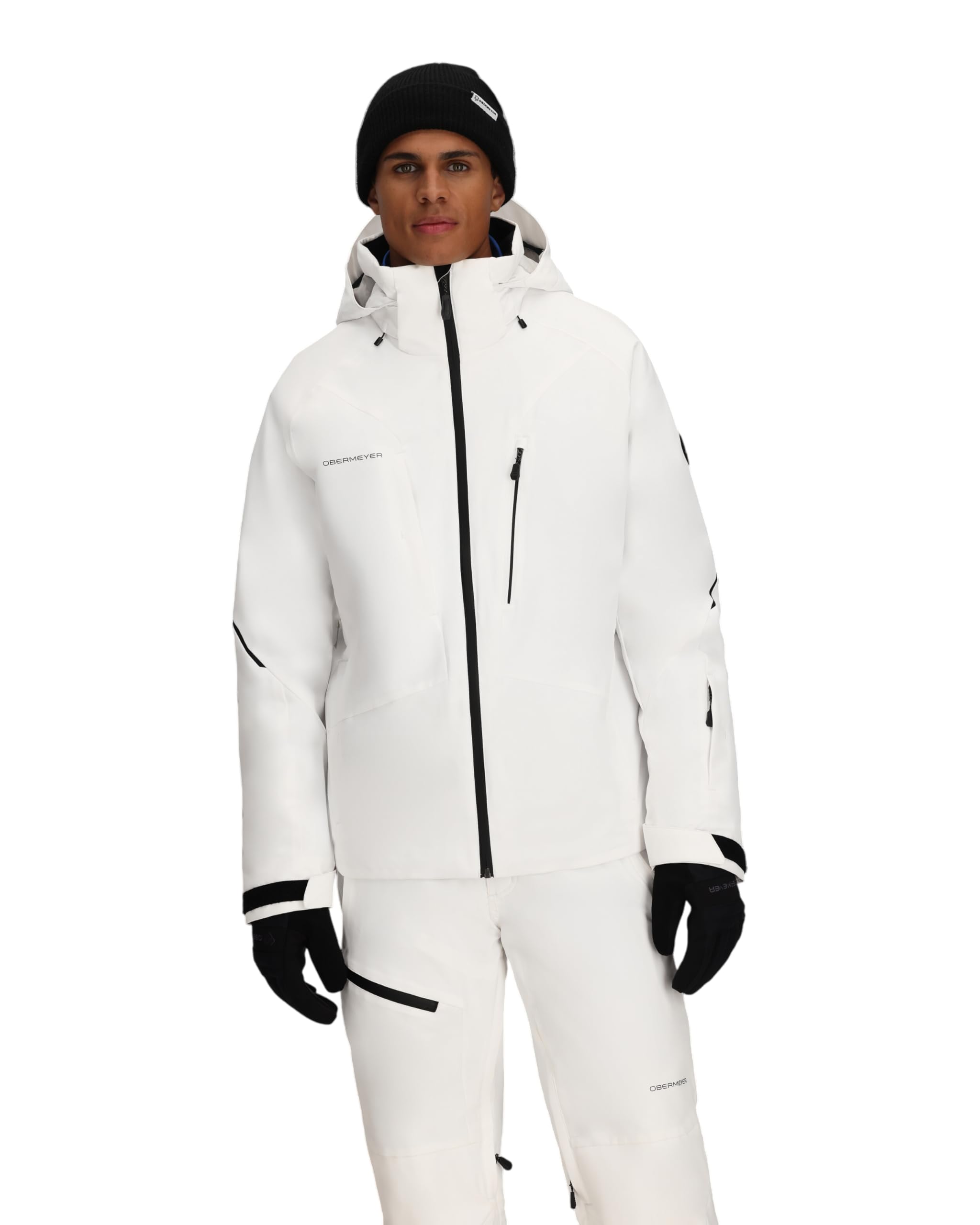
The Obermeyer Raze delivers 2-way stretch fabric that moves with dynamic skiing motions. Reviewers note the jacket is light on insulation but comfortable combined with a thin base and a light mid-layer down to around 15°F. The length is shorter than many jackets — stopping above the hip — which improves mobility for tree skiing and deep squatting turns. The arm pocket is a practical feature for RFID pass storage, now standard at most resorts.
Waterproofing holds up in rain, according to one verified buyer. The jacket vents well via underarm pit zips, and the color options are vibrant. One user bought it for their son and praised the venting and style. The fit runs true to size with enough room for a mid-layer.
The insulation is too light for deep winter backcountry missions where you might stop for extended periods. The 2-way stretch fabric is not as durable as a 3L Gore-Tex shell against abrasive ice and rock. This jacket is better suited in the out-of-bounds sidecountry context where mobility and venting are priorities, and you can retreat to a warm car or hut. For sustained alpine conditions, a more technical shell is required.
Why it’s great
- 2-way stretch fabric improves mobility for dynamic skiing motions
- Arm pocket for RFID pass is convenient and functional
- Good length — doesn’t ride up over the hips
Good to know
- Light insulation may require extra layers for static cold conditions
- Stretch fabric less durable against rock and ice abrasion
- Waterproofing adequate for light rain but not sustained alpine precipitation
8. Helly Hansen Alpha 3.0 Jacket for Men
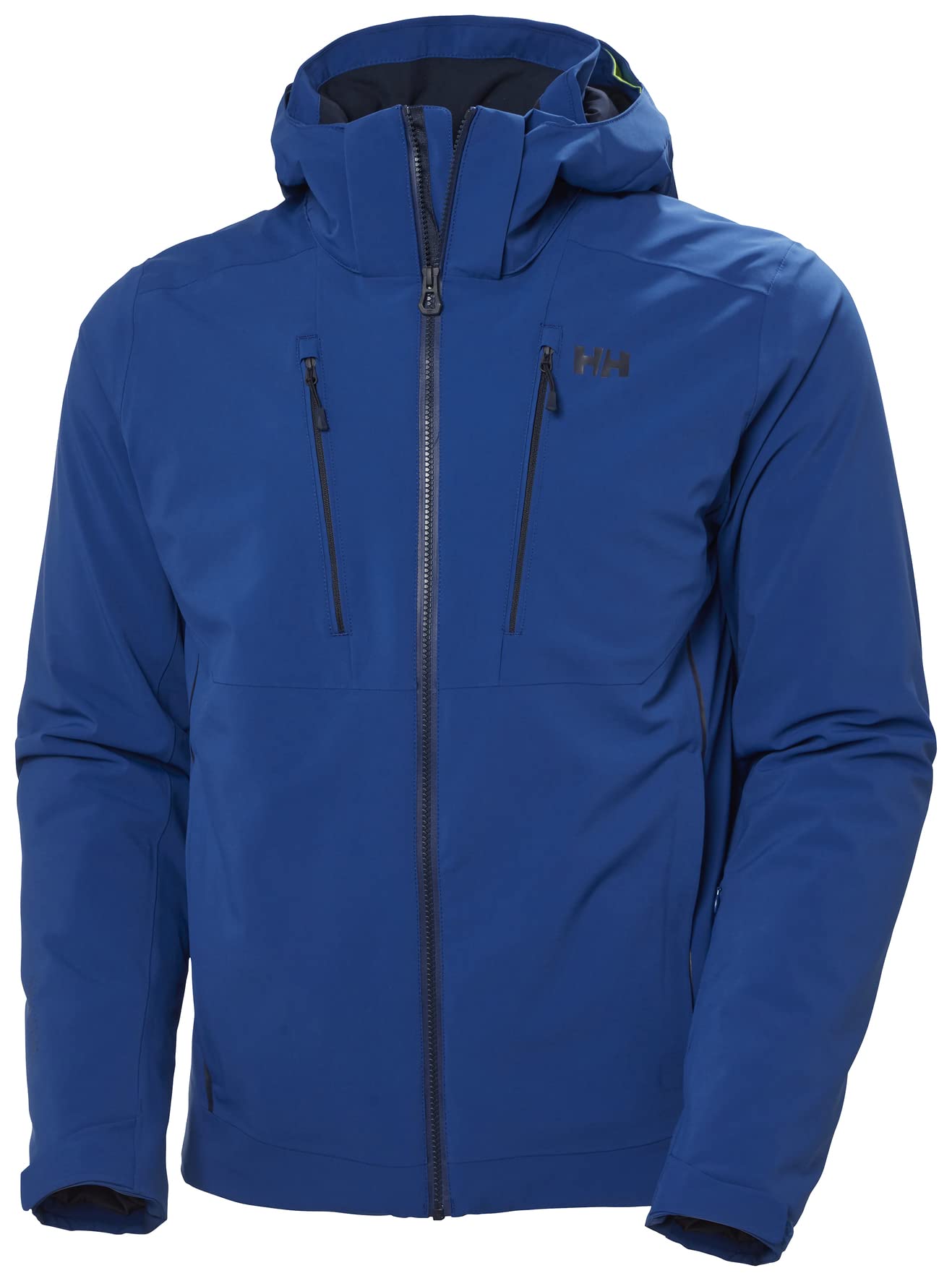
The Alpha 3.0 is Helly Hansen’s proven all-rounder for resort and backcountry approaches. It weighs 2.3 pounds and uses a proprietary HELLY TECH waterproof/breathable membrane with sealed seams. The Life Pocket is a clever insulation layer designed to preserve cell phone battery life in cold temps — a verified reviewer saw their phone hold charge while running a GPS app in -8°F conditions. Tested in wet snow and subzero temps, the Alpha 3.0 kept the user completely dry and comfortable.
Reviewers praise the true-to-size fit — a 5’7″, 190 lb user in Large found it perfectly roomy for layering. The jacket is soft, flexible, and not bulky, which allows full range of motion for skiing. The powder skirt works reliably, the zippers feel quality, and the sealed seams provide confidence in mixed precipitation. One user noted the HH Alpha Lifaloft adds back vents and cosmetic differences, but the Alpha 3.0 on sale is a strong value proposition.
For sustained uphill touring, the insulation becomes a liability. The 2.3-pound weight is heavier than a shell plus a lightweight down layer. The HELLY TECH membrane does not match the breathability of Gore-Tex Pro for continuous high-output climbing. This jacket is best for resort skiers who occasionally venture into sidecountry or short skin tracks where pack weight is not the primary concern.
Why it’s great
- Life Pocket effectively preserves phone battery in extreme cold
- Sealed seams and quality zippers deliver reliable weather protection
- Flexible, soft construction allows full range of motion
Good to know
- Insulation is too heavy for long sustained uphill efforts
- Less breathable than 3L Gore-Tex shells for high-output touring
- Weight of 2.3 lbs is noticeable compared to shell + down systems
9. Rab Men’s Cirrus Alpine Jacket
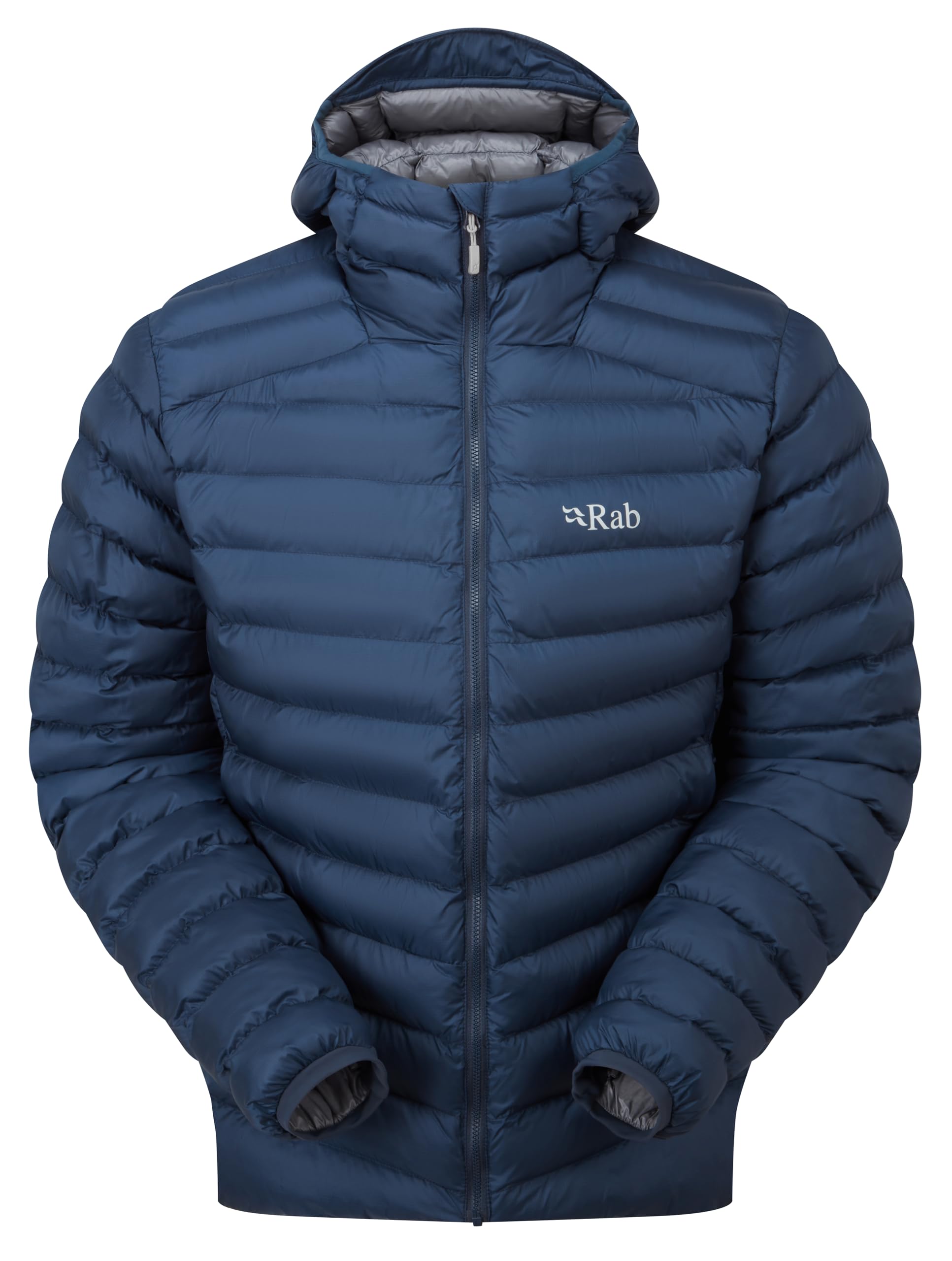
The Rab Cirrus Alpine is a synthetic insulated jacket designed for hiking and mountaineering as a spare pack layer. It uses PrimaLoft synthetic insulation that performs well when damp, unlike down. Reviewers confirm it packs into its own stuff sack for minimal storage. The classic fit is comfortable and the quilted silhouette provides even heat distribution. One 6’1″, 205 lb user in Large found it slim-fitting but comfortable, noting the synthetic insulation feels similar to down for less cost.
Customer feedback consistently rates the Cirrus Alpine as super comfortable, warm, and perfect for hiking. It runs snug — a 5’7″, 175 lb user in Medium found it a little tight, and broader-shouldered users recommend sizing up. The jacket is cheaper than Rab’s down alternatives, making it an accessible entry point into Rab’s mountaineering line. The synthetic insulation retains warmth if you sweat or encounter light moisture, which is critical for active backcountry use where dry conditions are not guaranteed.
The Cirrus Alpine is less packable than Rab’s Cirrus Flex or down equivalents. The quilted pattern can catch on brush. It is not windproof enough for exposed ridges without a shell over it. This is a budget-friendly midweight layer for day tours where you want a spare warm layer without the cost of down. For deep winter or mountaineering objectives, layer a waterproof shell over it.
Why it’s great
- PrimaLoft synthetic insulation performs well when damp
- Packs into its own stuff sack for easy storage
- Affordable entry point into Rab’s backcountry lineup
Good to know
- Runs snug; consider sizing up for layering or broader builds
- Less packable than down equivalents of the same warmth
- Not windproof enough for exposed alpine ridges without a shell
FAQ
Can I use a resort ski jacket for backcountry touring?
What is the difference between Gore-Tex Pro and standard Gore-Tex ePE?
How do I layer a backcountry ski jacket system?
Final Thoughts: The Verdict
For most users, the best backcountry ski jacket winner is the Arc’teryx Beta AR because its 3L Gore-Tex Pro ePE shell handles alpine conditions while layering perfectly with a down hoody for static warmth. If you prioritize ultralight summit performance, grab the Rab Mythic Ultra. And for a budget-friendly synthetic layer that packs small and stays warm when damp, nothing beats the Rab Cirrus Alpine.