
Nothing ruins a clean caulk line faster than a deep, empty gap that swallows the sealant whole. A backer rod fills that void, giving the caulk something to push against so it forms a proper, long-lasting seal instead of dripping into the abyss. Choosing the right diameter, density, and material is the difference between a professional-grade repair and a frustrating, wasteful mess.
I’m Min — the co-founder and writer behind Gadgets Feed. I’ve spent years researching construction consumables and analyzing how sealant geometry, foam density, and cell structure affect joint longevity, so you get recommendations based on real specs, not shelf hype. (And Homer 🐱 inspected the entire roll pile with one unimpressed paw before approving the final lineup).
Whether you’re sealing a foundation crack, fixing a window draft, or prepping a concrete joint, this guide breaks down the seven best options to help you choose the right backer rod for caulking for your specific project.
How To Choose The Best Backer Rod For Caulking
Picking the wrong backer rod leads to sealant failure, wasted material, and extra labor. Focus on diameter, cell structure, and material compatibility to get a professional result every time.
Diameter: Size Your Rod to the Gap
Industry standards recommend a backer rod that is 25% to 50% wider than the joint’s width. This slight oversize creates a compression fit that holds the rod in place without adhesive. For a 3/8-inch gap, a 1/2-inch rod provides the right squeeze. Measuring the gap precisely before buying saves you from having to double up or trim down excessively.
Cell Structure: Closed vs. Open Cell
Closed-cell rods are non-absorbent, water-resistant, and firm, making them perfect for exterior concrete joints and wet areas. Open-cell rods are softer, more compressible, and can absorb sealant, which is sometimes desirable for interior gaps where flexibility is needed. For most outdoor caulking jobs, a closed-cell polyethylene rod is the safest, most durable choice.
Length and Value
Backer rods are sold in rolls ranging from 30 feet to 250 feet. For a single window or door frame, a 30- to 50-foot roll is plenty. For driveway expansion joints or contractor-level work, a 100-foot or longer bulk roll saves money per foot and prevents mid-project shortages. Consider the total linear footage of all your gaps before choosing.
Quick Comparison
On smaller screens, swipe sideways to see the full table.
| Model | Category | Best For | Key Spec | Amazon |
|---|---|---|---|---|
| Sashco 30381 | Closed-Cell Polyurethane | Professional-grade weatherproof joints | 3/8″ x 100′ — ASTM C 1330 Type C | Amazon |
| Frost King C22CP | Bulk Contractor Pack | High-volume gap sealing on a budget | 1/2″ x 250′ — Polyurethane foam roll | Amazon |
| Gordon Glass 1/2″ | Closed-Cell Polyethylene | Standard concrete joint backing | 1/2″ x 100′ — Non-absorbent backup | Amazon |
| zzhxkjhky 1/2″ x 200′ | Large-Volume Foam | Long driveway or patio projects | 1/2″ x 200′ — Flexible closed-cell foam | Amazon |
| Storystore 3/8″ x 32′ | Starter Roll | Small DIY repairs and crafting | 3/8″ x 32′ — Polyester closed-cell foam | Amazon |
| zzhxkjhky 3/8″ x 40′ | Value Cut-to-Length | Moderate interior and exterior gaps | 3/8″ x 40′ — Compressible foam rod | Amazon |
| BHUCUTU 1/2″ x 33′ | Budget Multi-Pack | Quick fixes and multi-surface use | 1/2″ x 33′ — Water-resistant foam rope | Amazon |
In‑Depth Reviews
1. Sashco 30381 Pre-Caulking Filler Rope
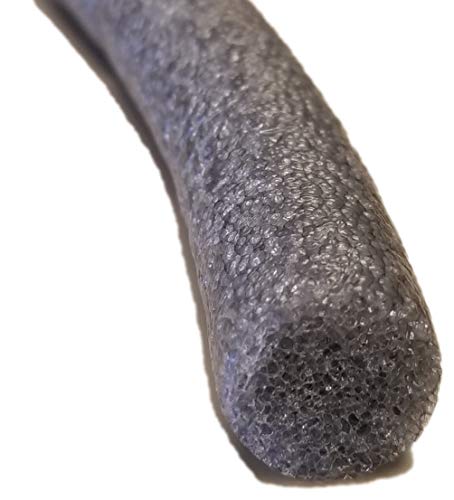
The Sashco 30381 is the reference standard for any caulking job that needs to endure weather, movement, and time. Its 3/8-inch diameter and 100-foot length are a versatile fit for most residential gaps, and the closed-cell polyurethane construction repels water on contact, protecting the joint from freeze-thaw damage.
It complies with ASTM C 1330 Type C, a specification that guarantees consistent density, non-staining properties, and compatibility with all common sealants including silicone, polyurethane, and acrylic. The rod is soft enough to press into tight spots with a finger but firm enough to stay put without sagging, even in vertical wall joints.
Users consistently report that it holds up well in demanding applications like filling gaps between bathroom tiles and floorboards, sealing door frames against wind noise, and providing a clean base for caulking concrete expansion joints. Its premium price per foot is justified by its reliable, repeatable performance on critical seals.
Why it’s great
- ASTM C 1330 Type C certified for professional-grade consistency
- Closed-cell polyurethane resists water and freeze-thaw cycles
- Pliable enough for tight corners without crumbling
Good to know
- Premium cost per foot compared to generic foam rods
- Only available in a single diameter (3/8-inch) roll
2. Frost King C22CP Caulk Saver Bulk Pack

The Frost King C22CP is built for volume. With a full 250 feet of 1/2-inch diameter closed-cell polyurethane foam, this contractor pack is the best value for anyone sealing long driveway expansion joints, multiple window frames, or extensive foundation cracks. The 1/2-inch size compresses nicely into gaps up to about 3/4-inch wide.
The foam has a resilient, spongy feel that bounces back after compression, ensuring a snug fit even in irregular cracks. It is moisture-repellent by design, which prevents water from wicking up behind your sealant. Users appreciate that it saves significant caulk material — filling the gap with rod first reduces the amount of sealant needed by up to 80% on deep joints.
Some users note that while it flattens easily for thin gaps, it is less effective for sound dampening in very deep hollow spaces. It works best as a caulk backing rod for gaps up to half an inch deep, where its flexibility and resilience shine. The bulk length means you won’t run out midway through a weekend project.
Why it’s great
- 250-foot roll delivers the lowest cost per linear foot in this lineup
- Resilient polyurethane foam compresses and recovers well
- Moisture-repellent for exterior concrete and foundation work
Good to know
- Flattens under heavy compression, losing some gap-filling height
- Not designed for sound-dampening in deep hollow cavities
3. Gordon Glass 1/2″ Closed Cell Backer Rod

Gordon Glass delivers a straightforward, no-nonsense polyethylene closed-cell backer rod that handles the standard concrete joint and paving crack jobs with ease. The 1/2-inch diameter and 100-foot run hit the sweet spot for medium-scale projects like sidewalks, patios, and garage floor joints.
Polyethylene foam is naturally inert and non-staining — it will not react with the sealant or bleed discoloration over time. The closed-cell structure ensures the rod stays dry and does not absorb moisture, a critical property for joints that see rain, sprinklers, or ground water. It is also non-impregnated and non-bleeding, which means it won’t leach chemicals that could weaken the bond.
Users have found creative secondary uses, including making homemade Nerf darts, but its primary value is as a reliable, economical backing for concrete sealants. Some note that the 100-foot roll can arrive coiled with slight kinks, but these relax after a few minutes out of the box. It is a workhorse product for anyone who needs consistent performance without premium pricing.
Why it’s great
- Inert polyethylene will not stain or react with sealants
- Non-absorbent closed-cell foam stays dry in wet environments
- Good value at 100 feet for medium-scale concrete repairs
Good to know
- Can arrive with kinks and flat spots from shipping compression
- Diameter must be matched carefully to avoid undersizing
4. zzhxkjhky 1/2″ x 200′ Backer Rod

The zzhxkjhky 1/2-inch by 200-foot rod is the longest single roll in this roundup, designed for large-scale jobs like long driveway expansion cuts, big patio perimeters, or commercial floor joints where you don’t want to splice multiple shorter rolls together. The foam is soft and bendable, making it easy to navigate around corners and curves.
It is described as water-resistant and non-absorbent, which is adequate for exterior concrete slabs that experience typical rainfall. The material feels slightly less dense than premium rods from Sashco or Frost King, but for basic caulk backing in moderate climates, it holds the sealant well and prevents the dreaded “caulk sink” into deep voids.
User feedback echoes that it is easy to cut with scissors and installs quickly by pressing into the gap. The main trade-off is that the foam can feel a bit flimsy compared to denser alternatives, so for very deep gaps that require a stiffer rod, you might need to double up or choose a higher-density option. For the sheer length and reasonable cost, it is a smart pick for covering serious ground.
Why it’s great
- 200-foot roll minimizes splicing on long continuous joints
- Soft, flexible foam conforms to curves and irregular gaps
- Easy to cut and install without special tools
Good to know
- Lower density than premium rods, feels slightly flimsy
- Not ideal for very deep gaps requiring a stiffer backing
5. Storystore 3/8″ x 32′ Backer Rod
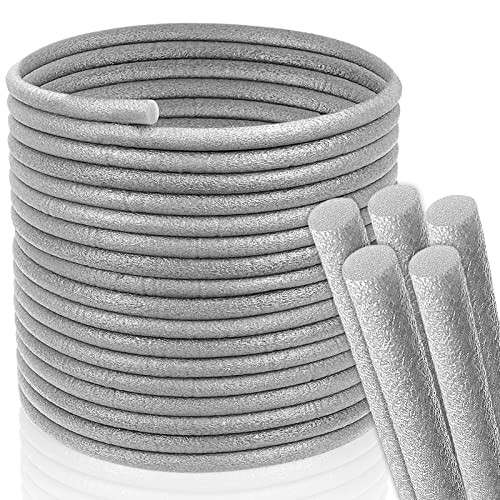
The Storystore 3/8-inch by 32-foot rod is the go-to option for smaller DIY jobs like a single door frame, a few window gaps, or a short section of concrete crack repair. Its 32-foot run is ample for most around-the-house fixes without leaving a huge surplus to store. Made from closed-cell polyester foam, it offers good flexibility and a low-density compressibility that makes it easy to push into tight joints.
The rod is waterproof and non-absorbent, so it will not trap moisture against the sealant. Users have used it successfully for caulking log home gaps, filling cracks in concrete steps, and even for crafting projects like ring holders and dog ear protectors. The gray color blends well with most sealant colors and concrete backgrounds.
Some users note that the rod’s small diameter and shorter length limit its application to narrow gaps — it is not designed for wide expansion joints. The polyester foam is slightly less durable than polyurethane, but for indoor and light exterior use, it performs admirably. If your project is small and focused, this is a tidy, affordable solution.
Why it’s great
- Short 32-foot roll is perfect for quick, single-room repairs
- Waterproof closed-cell foam resists moisture damage
- Flexible enough for crafting and creative secondary uses
Good to know
- Polyester foam wears faster than polyurethane in harsh weather
- Only 3/8-inch diameter limits it to narrow gaps
6. zzhxkjhky 3/8″ x 40′ Backer Rod
The 3/8-inch by 40-foot rod from zzhxkjhky is a straightforward budget option aimed at users who need a moderate length for multiple small-to-medium gaps without paying for a premium brand. The foam is soft, bendable, and easy to cut with regular scissors, making installation quick and frustration-free.
It is designed for filling pavement cracks, wall joints, and gaps in planks, and also works as a crafting material for ring holders and dog ear protection. The closed-cell construction offers a basic water-resistance level, though it is worth noting that this particular model is listed as “not water resistant,” so it is best suited for interior use or dry environments where standing water is unlikely.
Users report that the rod gets the job done for flooring installation gaps, simple concrete crack filling, and other typical caulk-saving tasks. The main criticism is that it is less dense than some alternatives, which means it compresses more easily and may not hold its shape as firmly in deep gaps. For light-duty repairs and a tight budget, it is a sensible choice.
Why it’s great
- 40-foot length covers multiple small repair tasks
- Soft, bendable foam is easy to cut and install
- Budget-friendly for non-critical interior projects
Good to know
- Not water resistant, avoid wet exterior applications
- Low density may not provide firm backing for deep joints
7. BHUCUTU 1/2″ x 33′ Foam Backer Rod
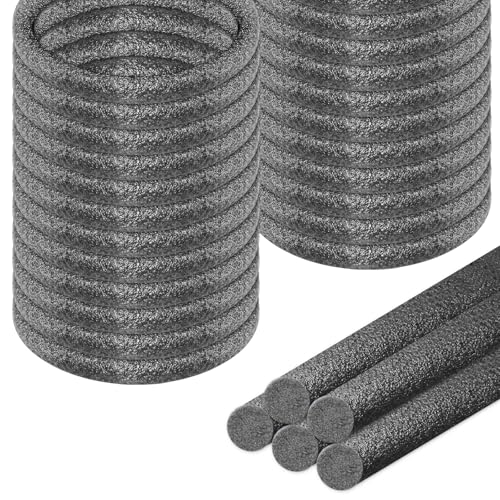
The BHUCUTU 1/2-inch by 33-foot foam rod is the most affordable entry point for anyone who needs a quick fix for concrete cracks, sidewalk joints, or window gaps. It is made from high-quality foam that is water-resistant and temperature-resistant, designed to hold up in typical outdoor conditions without degrading quickly.
The rod is soft enough to compress adequately into a gap but firm enough to provide a backing surface that keeps the caulk from sinking. Users have praised it for blocking cold drafts from sliding windows in winter and for filling cracks in cement with minimal effort. The flexibility also makes it easy to twist multiple strands together for extra-large gaps.
Some users note that the price per foot is higher than bulk rolls, and a few have remarked that local hardware stores sometimes offer a better deal for the same diameter. But for convenience and a one-and-done purchase that ships to your door, this rod covers the basics well. If your project is small and you value simplicity, it gets the job done.
Why it’s great
- Water and temperature resistant for basic outdoor durability
- Easy to twist multiple strands together for wider gaps
- Flexible and easy to cut for quick installation
Good to know
- Higher per-foot cost compared to bulk contractor rolls
- Some users report local hardware stores offer similar rods for less
FAQ
Can I use backer rod for gaps wider than the rod itself?
How deep should the backer rod sit below the surface?
Will backer rod stick to my sealant or substrate?
Final Thoughts: The Verdict
For most users, the backer rod for caulking winner is the Sashco 30381 because of its ASTM-certified consistency, water-resistant closed-cell construction, and reliable performance in both interior and exterior joints. If you want the best value for high-volume projects, grab the Frost King C22CP bulk pack for its incredible 250-foot length and low cost per foot. And for simple, small-scale DIY repairs around the house, nothing beats the Storystore 3/8″ x 32′ rod for its tidy size and easy handling.