
Our readers keep the lights on and my morning glass full of iced black tea. As an Amazon Associate, I earn from qualifying purchases.
Every ounce you save on a shelter gets eaten up by the rain gear you wish you hadn’t needed. The tension between a backpack that carries the weight and a tent that keeps you dry is where most weekend trips either soar or end prematurely. A balanced system — not the lightest individual piece — is what separates a good trip from a miserable one.
I’m Min — the co-founder and writer behind Gadgets Feed. I’ve spent hundreds of hours cross-referencing fabric denier, pole materials, hydrostatic head ratings, and real-world pack volume data to separate marketing specs from what actually works on a multi-day traverse.
Whether you are load-bearing for a solo thru-hike or splitting gear with a partner, choosing the right backpack and tent combination is the single most impactful decision you can make for your backcountry comfort and safety.
How To Choose The Best Backpack And Tent
The two most physically demanding pieces of gear you will ever own must work as a system. A tent that just fits inside a pack that doesn’t fit your torso means a miserable carry every step. The best backpack and tent pairings share a common goal: distribute the weight of the shelter efficiently across a frame designed for your body.
Torso Fit vs. Pack Volume
Total liters mean nothing if the hip belt sits at your ribs. A proper framed backpack must have an adjustable torso length — look for multi-position ladder systems or sliding velcro panels. Most adults fall between 16 and 21 inches. A 75-liter pack with a fixed torso that is too long will cause chafing and shoulder fatigue before the first mile is done.
Hydrostatic Head and Fabric Denier
The floor of your tent is the most failure-prone surface. A minimum of 2000mm hydrostatic head (HH) for the floor and 1500mm for the rainfly is the baseline for reliable protection. Below that, seam-taping quality becomes a gamble. Fabric denier on the floor should be at least 40D for durability, especially on rocky or root-laden ground. Ultralight 15D floors save ounces but demand a footprint every single night.
Freestanding vs. Trekking-Pole Shelters
Freestanding tents with aluminum pole frames allow you to pick up the entire pitch and relocate it mid-campsite. Trekking-pole tents save substantial weight — often under 3 pounds — but require proper stake tension and cannot be set up on wooden tent platforms or hardpack without specific anchors. Your choice depends on whether you value setup flexibility or pack weight more.
Quick Comparison
On smaller screens, swipe sideways to see the full table.
| Model | Category | Best For | Key Spec | Amazon |
|---|---|---|---|---|
| TETON Sports 75L Explorer | Framed Pack | Multi-day carrying comfort | 75L volume, adjustable torso | Amazon |
| Naturehike Mongar 2P | 3-Season Tent | Space-to-weight value | 5.3 lbs, 3000mm HH floor | Amazon |
| ALPS Mountaineering Lynx 1 | Solo Tent | Entry-level durability | 4.1 lbs, 75D rainfly | Amazon |
| Kelty Discovery Trail 1P | Ultralight Tent | First-time backpackers | 3.4 lbs min weight, Quick Corners | Amazon |
| OneTigris COSMITTO 2P | 3-Season Tent | Storm-ready feature set | 1500mm HH, 20D ripstop | Amazon |
| Naturehike Mongar UL 2P | Ultralight Tent | Weight-conscious pair | 4.19 lbs, 15D nylon fly | Amazon |
| Kelty Grand Mesa 2P | 3-Season Tent | Easy family setup | 4.1 lbs, color-coded clips | Amazon |
| Featherstone Backbone 1P | Trekking Pole Shelter | Ultralight solo missions | 2.4 lbs min weight, sil-nylon | Amazon |
| OneTigris JOVIAN 4P | Family Tent | Car camping with headroom | 12.3 lbs, 5000mm floor | Amazon |
In‑Depth Reviews
1. TETON Sports 75L Explorer

The TETON Sports 75L Explorer is a framed backpack built for the real weight of a multi-day load. Its multi-position torso adjustment system accommodates medium to tall adventurers, shifting the load from the shoulders to the lumbar pad. The open-cell foam lumbar support and molded airflow channels reduce sweat build-up on long climbs, a detail many packs at this level skip entirely.
External organization is thoughtful: the sleeping bag compartment has its own zippered access, multi-directional compression straps stabilize shifting loads, and the included rainfly tucks into a hidden bottom seam. Side mesh pockets fit 32 oz bottles, though 1L Nalgene bottles will feel snug. The ice axe loops are non-adjustable but work fine for trekking poles with rubber tips.
Customers consistently report comfort with loads up to 47 lbs, and the frame distributes that weight evenly across the hips. The rainfly survived heavy downpours on Appalachian Trail sections without a drop inside. Beginners and experienced backpackers alike praise the fit-to-price ratio. The main compromise is the lack of hipbelt pockets, which means snacks and a phone live in the lid or side pockets.
Why it’s great
- Adjustable torso fits multiple body types
- Included rainfly stows discreetly
- Handles 45+ lbs with balanced lumbar support
Good to know
- No waist-mounted pockets for quick-access gear
- Side mesh pockets too small for wide bottles
2. Naturehike Mongar 2 Person Tent

The Naturehike Mongar 2P delivers a full rectangle floor and two vestibules at a weight that competes with shelters costing twice as much. The 210T polyester rainfly and floor both carry a 3000mm hydrostatic head rating — more than enough to handle sustained heavy rain. The B3 mesh inner tent blocks even the smallest gnats while promoting cross-ventilation through dual doors.
Setup takes under three minutes after the first pitch thanks to the Y-frame aluminum pole structure. The inner tent clips onto the poles rather than using sleeves, which shaves setup time and reduces fabric stress at the attachment points. The two vestibules each offer enough room for a backpack and boots, keeping the sleeping area clear of damp gear. When fully staked, the tent holds its shape in gusty winds without excessive fabric flutter.
Condensation control is a strong suit here: the top vents can be propped open even in light rain, which prevents that clammy interior feeling on humid nights. The interior width of 53.2 inches fits two 25-inch sleeping pads side by side with no overlap. The included footprint adds ground protection and extends the life of the floor fabric. A small but welcome detail is the gear loft for stashing a headlamp and glasses within arm’s reach.
Why it’s great
- Full rectangle floor fits two standard pads
- 3000mm HH on both fly and floor
- Dual vestibules provide gear storage
Good to know
- 5.3 lbs is heavy for dedicated ultralighters
- Stakes may bend on hard-packed ground
3. ALPS Mountaineering Lynx 1

The ALPS Mountaineering Lynx 1 is built with a 75D 185T factory-sealed rainfly and a 75D 185T 2000 mm poly taffeta floor — fabric weights that prioritize puncture resistance over pack weight. The freestanding aluminum two-pole design pitches taut with minimal effort, and the 90-inch floor length accommodates taller sleepers without foot-box intrusion. The center height of 36 inches allows for comfortable seated dressing inside.
Ventilation is handled by half-mesh walls that move moisture out while keeping mosquitoes out. The vestibule stores a pack and boots outside the sleeping area, and the interior mesh pocket and gear loft keep small items organized. The packed size of 17 by 5 inches fits into the main compartment of most mid-size packs without dominating the space. Setup time averages under 15 minutes even on the first attempt.
Owners consistently note the ruggedness of the zippers and the reliability of the seam-sealed construction in extended rain. The factory stakes are lightweight and will need upgrading to MSR Groundhogs for serious wind or hard ground. The 4.1-pound total weight is heavier than ultralight alternatives but offers a clear trade-off in long-term durability for frequent use.
Why it’s great
- 75D fabric handles rough ground without tears
- Full coverage rainfly with sealed seams
- Gear loft and mesh pockets for organization
Good to know
- 4.1 lbs is heavy for solo backpacking
- Included stakes are not wind-worthy
4. Kelty Discovery Trail 1P
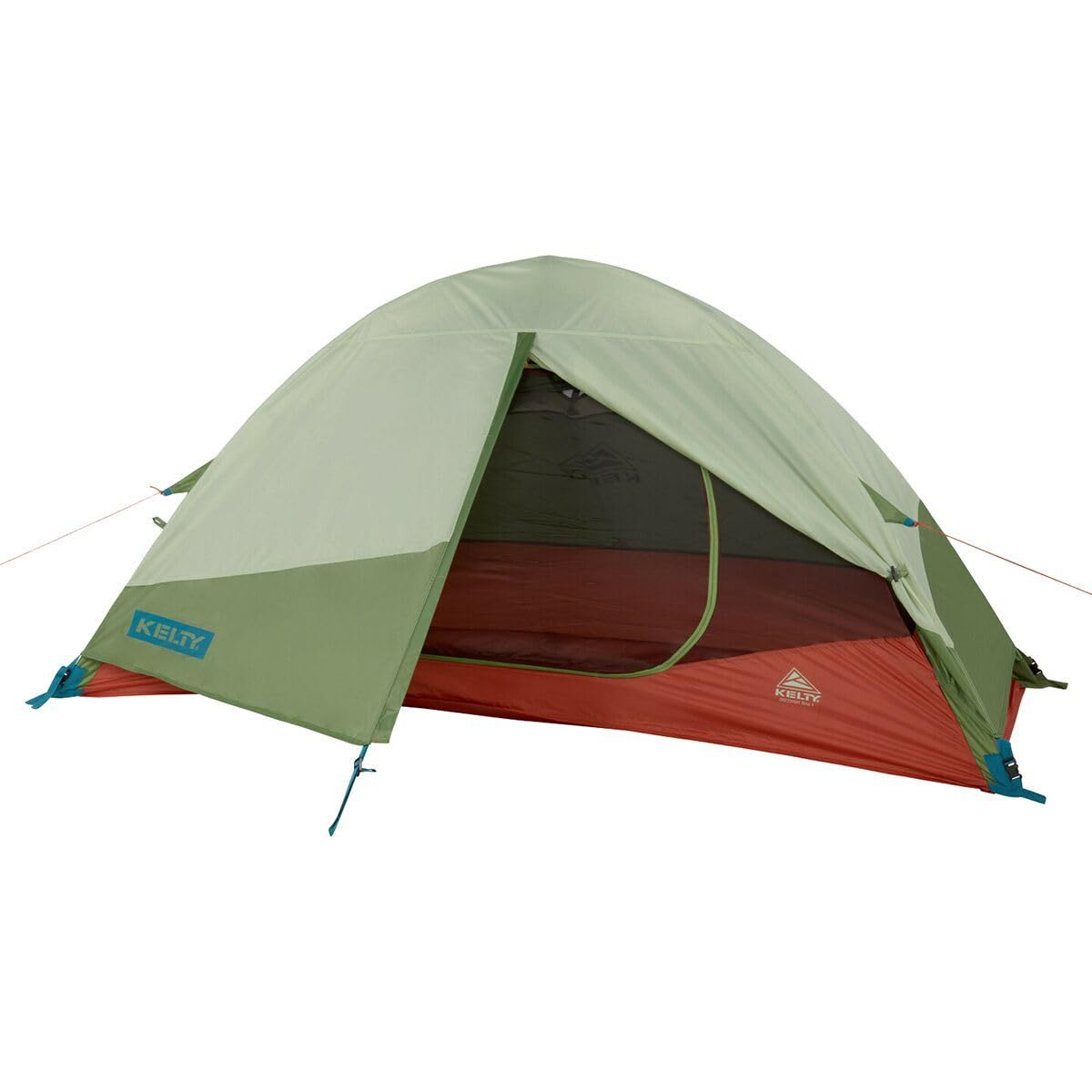
The Kelty Discovery Trail 1P is engineered for first-time backpackers who want a lightweight tent without the learning curve. The Quick Corners system aligns the pressfit aluminum poles into position before the clips snap down, reducing fumbling on cold or wet evenings. The single-door, single-vestibule layout keeps the packed weight low while still offering a dry entry sequence when the rainfly is deployed.
The 19-square-foot floor is tight for a full-size pad with extra gear inside, but the 40-inch peak height allows upright sitting. The fly includes a vent that helps manage condensation when properly staked out. Kelty uses DWR/PFC-free fabrics, a thoughtful environmental specification that also reduces off-gassing when the tent is new. The shark-mouth stuff sack simplifies packing — no more wrestling with a bag that is too small for its contents.
User reports confirm the tent survives 50 mph gusts when staked well, though the stock aluminum stakes should be replaced. The mesh panels provide good airflow but let in morning sun early. Color-coded rainfly clips match the pole attachments, making fly installation obvious even in fading light. The tent is a reliable entry point for weekend trips where weight and simplicity matter more than interior elbow room.
Why it’s great
- Quick Corners make setup intuitive
- 3.4 lbs min weight is backpack-friendly
- PFC-free fabric treatment
Good to know
- Single door limits entry/exit options
- Vestibule is tight for a 50L pack
5. OneTigris COSMITTO 2 Person Tent

The OneTigris COSMITTO 2P packs a 20D plaid ripstop polyester fly with a 1500mm hydrostatic head, combined with a 75D nylon floor for ground-level durability. The hexagon-shaped outer tent sheds wind effectively, and the internal vestibules — rare at this price — allow cooking and gear storage under the fly while keeping the inner tent dry. The pole structure uses three aluminum alloy sections that lock into place with a satisfying click.
Setup takes under five minutes after the first pitch, and the Line Loc 3 tensioners allow one-handed guyline adjustment. The interior dimensions — 7.2 feet long by 4.3 feet wide — fit two adults on standard sleeping pads with room for small gear bags at the foot end. The dual zippered entrances mean neither occupant has to crawl over the other during midnight bathroom breaks. The mesh inner panels provide 360-degree views without the fly, great for stargazing on clear nights.
Owner feedback highlights the seam-sealing quality and the absence of leaks after two weeks of continuous rain exposure. The fly vents include rain-blocking flaps that maintain airflow during downpours. The included stakes are robust enough to withstand hammer blows on rocky soil. The packed size of 23.6 by 6.3 inches stows horizontally in most 60L+ packs. The main trade-off is the weight — roughly 5 pounds — which places it in the mid-range for a two-person shelter.
Why it’s great
- Internal vestibules for wet gear storage
- Hexagon shape handles high winds
- One-hand guyline tension adjusters
Good to know
- 5 lbs weight is not ultralight
- Zippers can snag on rainfly fabric
6. Naturehike Mongar UL 2 Person Tent
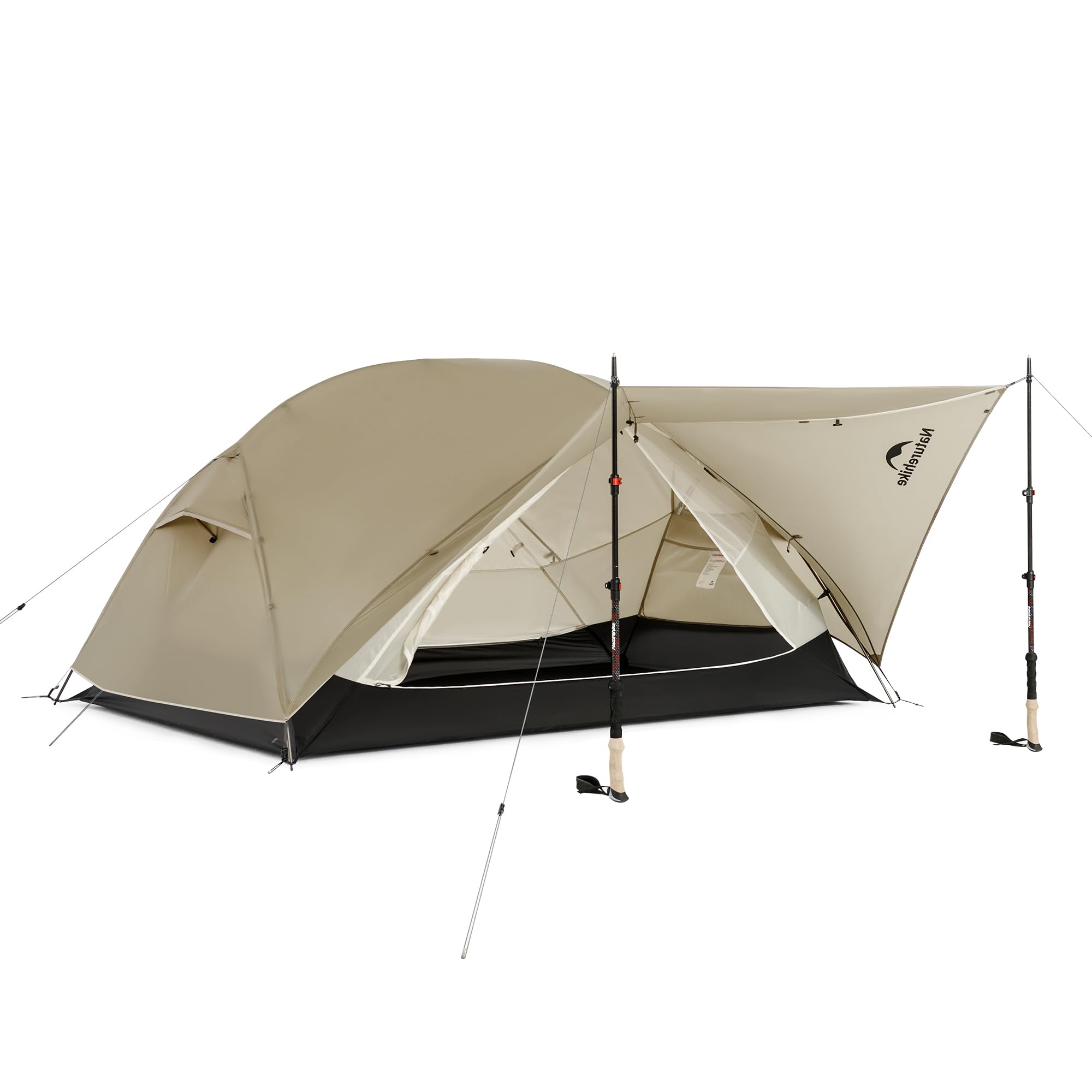
The Naturehike Mongar UL is an upgraded version of the standard Mongar, swapping the polyester for lighter 15D nylon on the fly and 20D nylon on the floor, both coated with silicone for waterproofing at 1500mm+ and 3000mm+ respectively. The 8.5mm aluminum alloy poles keep the total weight at 4.19 pounds while maintaining a freestanding structure. The packed size of 16 by 6.3 inches slips into a side pocket on most framed packs.
The standout feature here is the expandable awning integrated into the vestibule. This adds covered space for cooking or sitting out of the rain without needing to buy a separate tarp. Tensioning the awning is simple and creates a dry zone that keeps entry gear dry during wet weather. The dual doors and dual vestibules mirror the standard Mongar layout, but the lighter materials shave nearly a pound from the total carry weight.
Ventilation is improved over the original with adjustable vestibule height and large mesh windows. The interior is 82.7 inches long and 51.2 inches wide, fitting two standard pads without overlapping. The included tent footprint adds protection for the 20D floor, which is necessary on abrasive surfaces. Setup is straightforward for one person, and the pole sleeves are reinforced at stress points to prevent tearing over time. The main consideration is handling the thin nylon fabric with care to avoid punctures from sharp tent stakes or rough ground.
Why it’s great
- 4.19 lbs is competitive for a 2P freestanding tent
- Expandable awning adds versatile dry space
- Includes footprint and dual vestibules
Good to know
- 15D fly fabric requires careful handling
- Awning zippers can snag during adjustment
7. Kelty Grand Mesa 2P
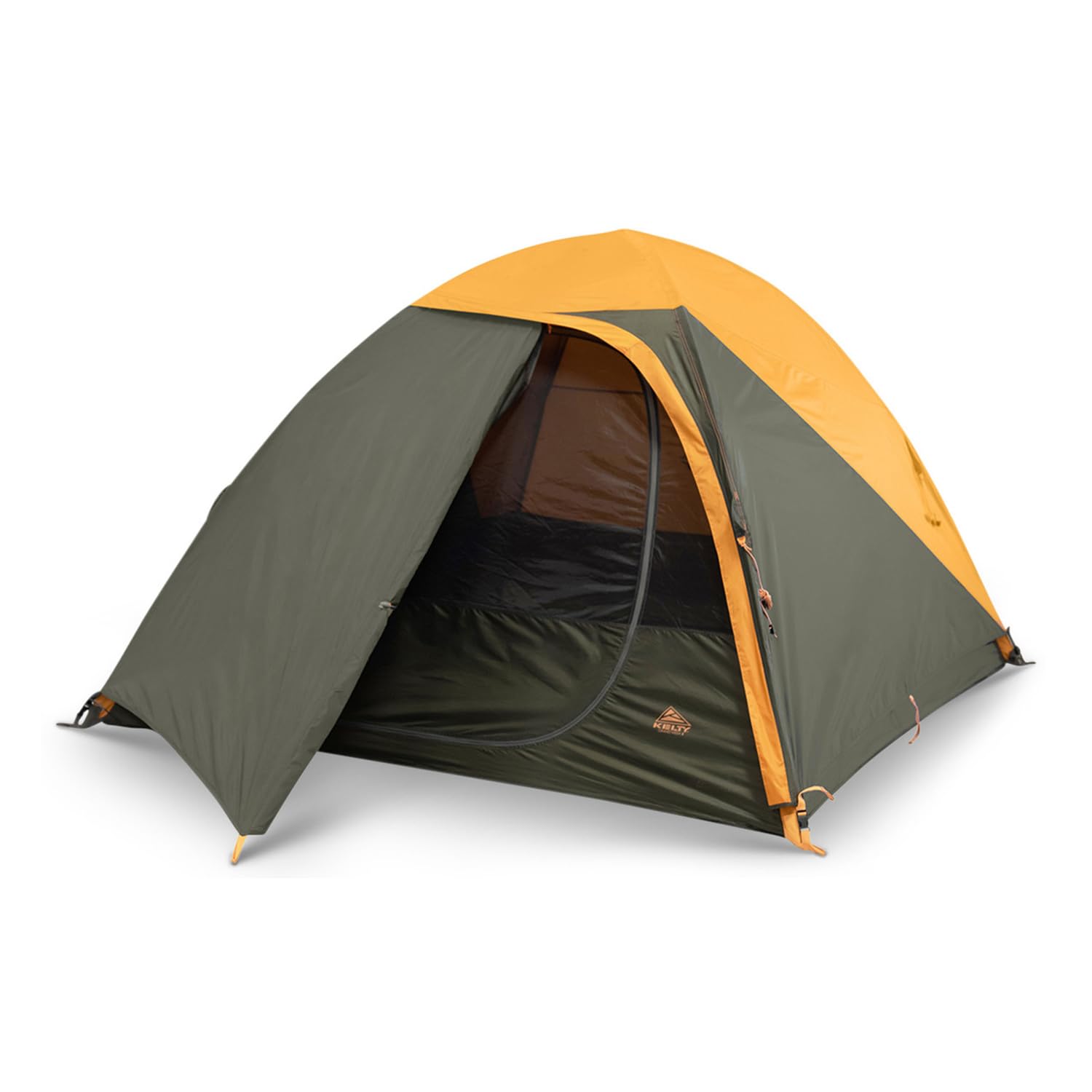
The Kelty Grand Mesa 2P is a freestanding dome tent that balances weight, durability, and price. The 68D polyester fly and floor resist abrasion better than lighter nylon alternatives, and the fully taped seams create a reliable waterproof seal. The two pressfit aluminum poles and color-coded clip attachments make setup so fast that many users report sub-5-minute pitches. The single-door, single-vestibule design keeps the pack weight at 4.1 pounds.
The interior floor measures 98 by 80 inches — spacious enough for two adults and some gear, or for one person who wants room to spread out. The 56-inch peak height allows comfortable kneeling and gear sorting inside. The Kelty Quick Corners system locks the pole ends into reinforced corner pockets, which prevents the poles from slipping during assembly. The shark-mouth stuff sack is sized to fit the tent and poles without forcing, a detail that matters when packing up in the rain.
User feedback highlights the tent’s ability to stay bone dry during heavy rain and its lack of condensation issues when the fly is properly staked out. The vestibule provides enough room for boots and a pack. The included stakes are functional but upgrading to heavier models improves performance in loose soil. The packed size is bulkier than dedicated ultralight options, but for car camping trips or short carries, this tent delivers reliability that justifies its reputation.
Why it’s great
- Fast setup with color-coded clips
- 68D fabric resists wear on rocky sites
- Roomy 54 sq ft interior for two people
Good to know
- Packed size is bulky for pack storage
- Ground cover must be purchased separately
8. Featherstone Backbone 1P

The Featherstone Backbone 1P is a trekking-pole shelter that drops to 2.4 pounds minimum trail weight — the lightest tent in this guide by a significant margin. Made from sil-nylon with seam-taped construction and a TPU waterproof zipper, it is designed for solo backpackers who count every gram. The 40/60 pole placement angles the interior to provide extra headroom at the top while tapering the foot box to reduce fabric and weight.
The floor measures 85 by 20 inches, fitting a full-size sleeping pad with room for a small gear storage area at the head. The dual vestibules each offer space for a pack and boots, keeping wet gear outside the sleeping envelope. Pitching requires trekking poles adjusted to the desired height and a stake for each corner, plus additional guy lines for wind stability. The compression stuff sack reduces the packed volume to a size that fits inside the smallest of frameless packs.
User reports highlight the tent’s excellent water resistance in sustained rain, though condensation management depends on site selection and proper ventilation. The mesh panels and large vents provide good airflow when the fly is staked out with the vent poles. The included Y-stakes and mini groundhog-style stakes are functional and lightweight. The tent is a dedicated 1P shelter — not convertible to 2P — which means the weight savings are real for solo hikers. The zippers require two hands to operate smoothly, and there is no included groundsheet.
Why it’s great
- 2.4 lbs is exceptionally light for a 1P shelter
- Dual vestibules keep gear separate
- Sil-nylon packs down to a tiny bundle
Good to know
- Requires trekking poles for setup
- Condensation can be an issue in humid conditions
9. OneTigris JOVIAN 4 Person Tent

The OneTigris JOVIAN 4P is a generously sized family shelter built with a 210D Oxford fabric floor and separate floor mat, both rated to 5000mm hydrostatic head — a spec that surpasses most backpacking tents by a factor of two. This tent is designed for base camp or car camping where weight is not the primary constraint. The 6.8 by 7.8 foot floor with a 4.9-foot peak height provides enough space for four adults or two adults with cots and gear.
Setup is straightforward thanks to the pole sleeve and clip system. The outer rainfly and inner tent can be pitched together or separately, allowing dry setup in rain if you pitch the fly first. The dual doors and large low windows promote cross-ventilation, and owners confirm that condensation is rarely an issue even on humid nights. The included footprint adds 5000mm HH protection underneath, meaning ground moisture is effectively blocked.
Owner feedback consistently mentions how the tent’s 12.3-pound weight prevents it from being backpacking gear, but for truck camping, rafting, or family car camping, it offers premium weather protection. The semicircular vestibule at the entrance provides a dry staging area for boot removal. The robust zippers and mesh panels show no signs of wear after extended use. The packed size of 30 liters means it demands a dedicated spot in the vehicle. This is a shelter built for comfort and resilience, not weight savings.
Why it’s great
- 5000mm HH floor stops ground moisture completely
- 4.9 ft peak height allows comfortable standing
- Dual doors and low windows for ventilation
Good to know
- 12.3 lbs is not suitable for backpacking
- Packed size is large for storage
FAQ
How many liters of pack capacity do I need for a week-long trip with a tent inside?
Should I buy a trekking-pole tent or a freestanding tent for my first backpacking trip?
Can I use a 75L frameless pack with a 5-pound tent?
Final Thoughts: The Verdict
For most users, the backpack and tent winner is the TETON Sports 75L Explorer paired with the Naturehike Mongar 2 Person Tent because the pack’s adjustable torso handles loads up to 45 lbs and the tent’s 3000mm HH floor and dual vestibules provide reliable weather protection. If you want ultralight weight, grab the Featherstone Backbone 1P. And for family car camping, nothing beats the OneTigris JOVIAN 4P.