
The Appalachian Trail asks for 2,190 miles of relentless vertical gain, unpredictable weather, and gear that must perform mile after mile. The single most impactful piece of equipment you will carry is the pack on your back — a bad fit here means blistered hips, raw shoulders, and a trip cut short.
I’m Min — the co-founder and writer behind Gadgets Feed. I’ve spent countless hours analyzing load-transfer systems, torso adjustment ranges, fabric denier ratings, and real-world durability reports to separate the packs that genuinely support a thru-hike from those that will fail within the first hundred miles.
The right choice balances a supportive internal frame, a ventilated back panel for sweat management, and a volume that forces you to keep your base weight honest. After rigorous comparison of nine leading models, this guide delivers the definitive verdict on the best backpack for appalachian trail.
How To Choose The Best Backpack For Appalachian Trail
Selecting a pack for the AT is not about brand loyalty — it is about matching your torso length, your total gear weight, and your personal tolerance for ventilation and access. Every component matters when you are living out of the pack for five to seven months.
Volume: 50L to 65L is the Sweet Spot
A pack between 50 and 65 liters forces you to carry only what you need while still accommodating a bear canister, a three-season sleeping bag, a shelter, and four days of food. Anything larger tempts you to overpack, adding pounds that compound over 2,190 miles. The premium and mid-range packs in this guide all fall within this critical range.
Suspension and Load Transfer
The frame transfers weight from your shoulders to your hips. Look for an internal frame with a lightweight wire or perimeter stay that contours to your back. The hip belt should wrap around your iliac crest — not ride above it. Adjustable torso lengths (15.5 to 21 inches) allow you to dial in the perfect carry, which is essential for avoiding the shoulder pain that derails many early attempts.
Ventilation and Sweat Management
On the AT you will climb in humidity that rivals a rainforest. Tensioned mesh back panels (like Osprey’s AirSpeed or Deuter’s Aircomfort) hold the pack body away from your spine, creating an airflow channel that dramatically reduces sweat accumulation. Sealed foam back panels trap heat and moisture, leading to premature chafing and discomfort.
Durability and Weather Protection
Ripstop nylon in the 100D to 420D range offers a balance of weight and tear resistance. An integrated rain cover is not optional — the AT sees rain for days at a stretch. Check that the cover is removable and stows in its own pocket so you never leave it behind in a hostel.
Quick Comparison
On smaller screens, swipe sideways to see the full table.
| Model | Category | Best For | Key Spec | Amazon |
|---|---|---|---|---|
| Rab Nitron 25L | Daypack | Fast day hikes & trail running | 18–25L volume / 1lb 7oz | Amazon |
| Night Cat 100L | Expedition | Extended treks & heavy gear | 100L / adjustable back length | Amazon |
| Kelty Asher 55L | Mid-Range | Entry-level multi-day trips | 55L / 3lb 2oz / Fit Pro tech | Amazon |
| Kelty Asher 65L | Mid-Range | Longer resupply stretches | 65L / 3lb 5oz / 30–50lb carry | Amazon |
| The North Face Terra 55 | Mid-Range | Thru-hike comfort & access | 53–57L / U-zip access | Amazon |
| Osprey Rook 65L | Premium | Ventilated all-day carry | 65L / AirSpeed suspension / 3.7lb | Amazon |
| Deuter Aircontact Lite 50+10 | Premium | Lightweight long-distance hiking | 50+10L / 3.6lb / VariQuick fit | Amazon |
| Osprey Farpoint Trek 55 | Premium | Travel & trail hybrid use | 55L / AirSpeed / 4.23lb | Amazon |
| Deuter Futura Air Trek 60+10 | Premium | Maximum ventilation on trail | 60+10L / Aircomfort / spring steel frame | Amazon |
In‑Depth Reviews
1. Osprey Rook 65L

The Osprey Rook 65L uses the brand’s proven AirSpeed suspension — a tensioned mesh back panel that creates a pronounced air gap between the pack and your spine. This is not a marketing gimmick; on a 2,000-foot climb in 80°F humidity, the airflow channel genuinely reduces the soaking sweat layer that leads to chafing. The LightWire frame transfers load efficiently to the sculpted hip belt, and the 3.7-pound weight is reasonable for a fully-featured 65L pack.
Storage is thoughtfully laid out: a zippered sleeping bag compartment with a floating divider, two angled water bottle pockets that you can reach without removing the pack, and an integrated raincover that stows in its own pocket. The body fabric feels robust against brush and rock scrapes. The torso adjustment is simple and secure, accommodating a wide range of heights with a single Velcro-style repositioning of the harness.
For an AT thru-hike, the 65L volume hits the sweet spot — enough space for a bear canister and four days of food without encouraging overpacking. The lack of a large front mesh pocket is the only real compromise; you lose the ability to stuff a wet jacket or tent fly into an external stash. Experienced hikers who value ventilation and load stability over ultralight grams will find the Rook 65L the most balanced performer on this list.
Why it’s great
- AirSpeed back panel keeps you cool on long climbs
- Integrated raincover eliminates a common forgotten item
- Adjustable torso fits most body types precisely
- Angled water bottle pockets accessible while walking
Good to know
- No large front mesh stuff-it pocket
- Not ultralight at 3.7 pounds
- No rear-panel access for gear retrieval
2. Deuter Futura Air Trek 60+10

Deuter’s Aircomfort system is the gold standard for back ventilation. The Futura Air Trek 60+10 uses a permanently elastic spring steel frame that holds the mesh back panel away from your body, and the double-layer mesh creates a pump effect — every step pushes warm, moist air out and draws cooler air in. On paper this sounds like minor engineering detail; on the trail it means you finish a 15-mile day with a dry back while your hiking partner is peeling a soaked shirt off their skin.
The VariSlide system allows precise back length adjustment without tools, and the pivoting ergonomic shoulder straps adapt to the natural slant of your shoulders. The hip belt uses a pull-forward adjustment that tightens evenly without twisting. Storage is generous: a dedicated bottom compartment for a sleeping bag, a large front stash pocket, two expandable mesh side pockets, and zippered hip belt pockets for snacks and a phone. The 60+10L capacity expands via a height-adjustable lid, giving you flexibility for longer resupply carries.
At 210D recycled polyamide with 600D polyester reinforcements, the fabric balances durability and weight well. The included raincover has held up across seasons of use. The only notable departure from current trends is the lack of a full-length U-zip access — you load through the top and bottom compartments. This is a traditional design that rewards disciplined packing, and for AT veterans who know their gear layout, it remains a fast, reliable system.
Why it’s great
- Aircomfort system provides industry-leading back ventilation
- Spring steel frame contours to natural spinal curve
- Separate bottom sleeping bag compartment
- Expandable 60+10L volume for long resupplies
Good to know
- No U-zip main compartment access
- Weight is moderate for its class
- Requires organized packing to use efficiently
3. Osprey Farpoint Trek 55L
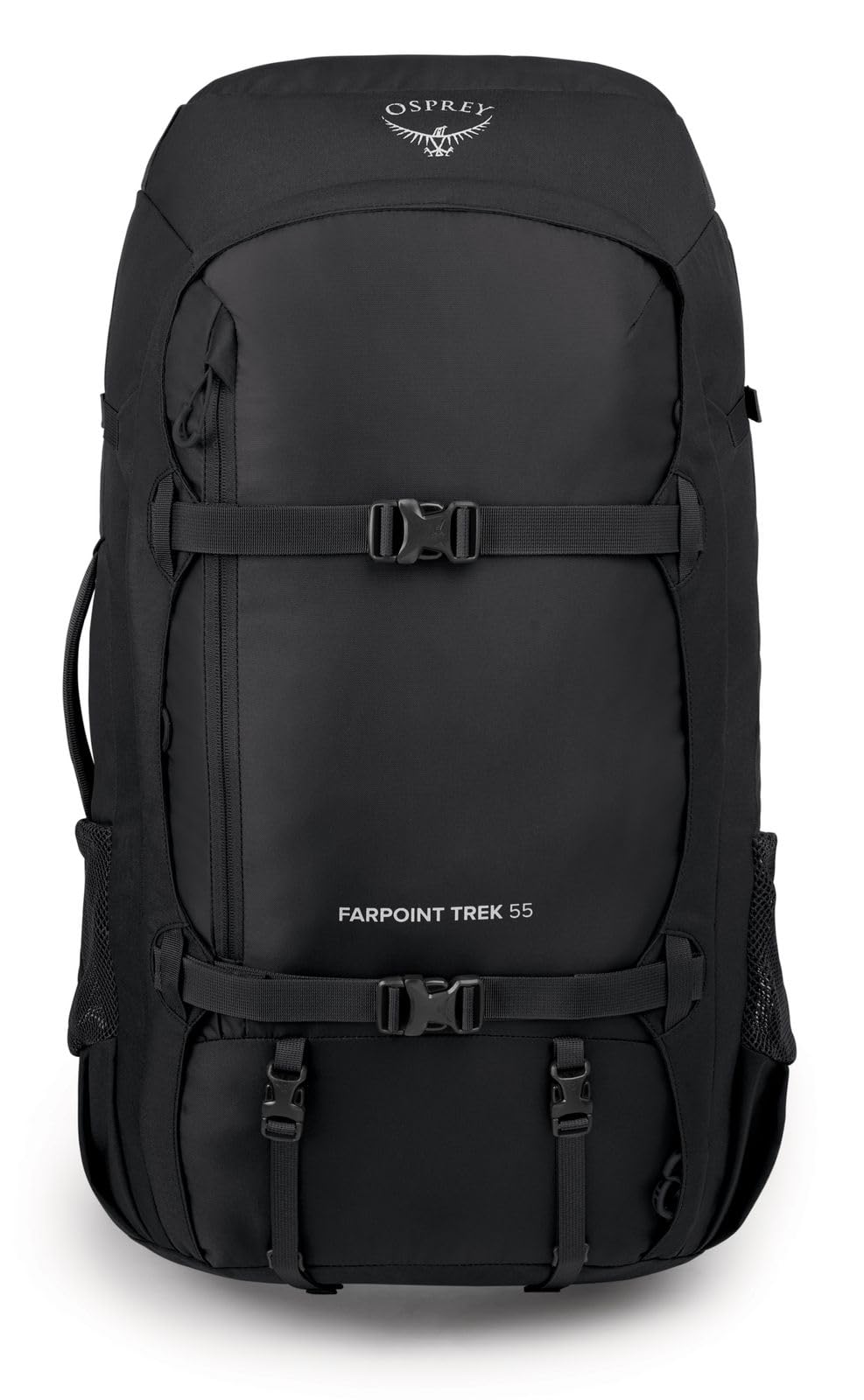
The Farpoint Trek 55L blurs the line between backpacking pack and carry-on luggage, a hybrid concept that makes sense for AT hikers who need to fly to trailheads or take resupply zero days in town. The full-length U-zip access means you can open the entire pack like a suitcase — a genuine time-saver when rifling through gear in a hostel bunk or at a laundromat. The AirSpeed suspension carries over from Osprey’s hiking line, providing the same tensioned mesh ventilation that the Rook offers.
The AirCover is the standout feature: a single unit that functions both as a raincover and as a checked-bag protector for airline travel. It straps over the entire harness when you check the pack and deploys as a raincover on trail. The 420D recycled nylon fabric feels tougher than the Rook’s material, which is reassuring when the pack is sliding through baggage carousels. The hip belt is removable for travel mode, and the shoulder straps tuck behind a zippered flap, creating a clean silhouette for overhead bins.
At 4.23 pounds, it is the heaviest pack in this premium tier. The trade-off is extraordinary versatility: you can go straight from the trail to a flight without repacking. The side pockets are tight when the main compartment is full, making it difficult to stow a 1L Nalgene bottle one-handed. For the AT hiker who values organizational flexibility and needs a single pack that works for both the trail and the travel that bookends a thru-hike, the Farpoint Trek 55L is an excellent fit.
Why it’s great
- Full-length U-zip allows suitcase-style packing
- AirCover doubles as raincover and travel protector
- Removable hip belt and stowable straps for air travel
- Durable 420D recycled nylon fabric
Good to know
- Heaviest pack in this tier at 4.23 pounds
- Side water bottle pockets too tight when bag is full
- Hybrid design sacrifices some dedicated trail features
4. Deuter Aircontact Lite 50+10

The Aircontact Lite 50+10 is Deuter’s answer for the long-distance hiker who wants a sub-4-pound pack without sacrificing load transfer. The X-frame is constructed from lightweight yet rigid materials that keep the pack close to your center of gravity, and the hollow-chamber foam in the back panel uses a pump effect to channel air movement. At 3.6 pounds, it undercuts most premium 60L options by half a pound — a savings that matters when those ounces add up over a 2,190-mile journey.
The VariQuick adjustable back length is one of the fastest systems to dial in on trail. You loosen a single strap, slide the harness to your desired height, and lock it. No Velcro panels, no tools. The hip fins are ergonomically padded and use a pull-forward adjustment that cinches evenly across the iliac crest. The lid is detachable, and the 10-liter expansion via the height-adjustable lid gives you flexibility for the longer carries between resupply points in Virginia or New Hampshire.
The fabric uses 140D ripstop with 600D reinforcements in high-wear areas, and over 50% recycled content is a plus for environmentally conscious hikers. However, this pack does not include a raincover in the box — an odd omission at this price point. You will need to budget for a separate cover or a pack liner. The separate bottom compartment and the stretch mesh side pockets are well-executed, and the ice axe/trekking pole loops are robust enough for the rocky sections of Pennsylvania and the Whites.
Why it’s great
- Lightweight 3.6lb design with strong load transfer
- VariQuick tool-free torso adjustment
- Expandable 50+10L volume via adjustable lid
- Recycled fabric content with 600D reinforcements
Good to know
- No raincover included
- Lid adjustment can be fiddly when fully loaded
- Not as ventilated as the Aircomfort system
5. The North Face Terra 55
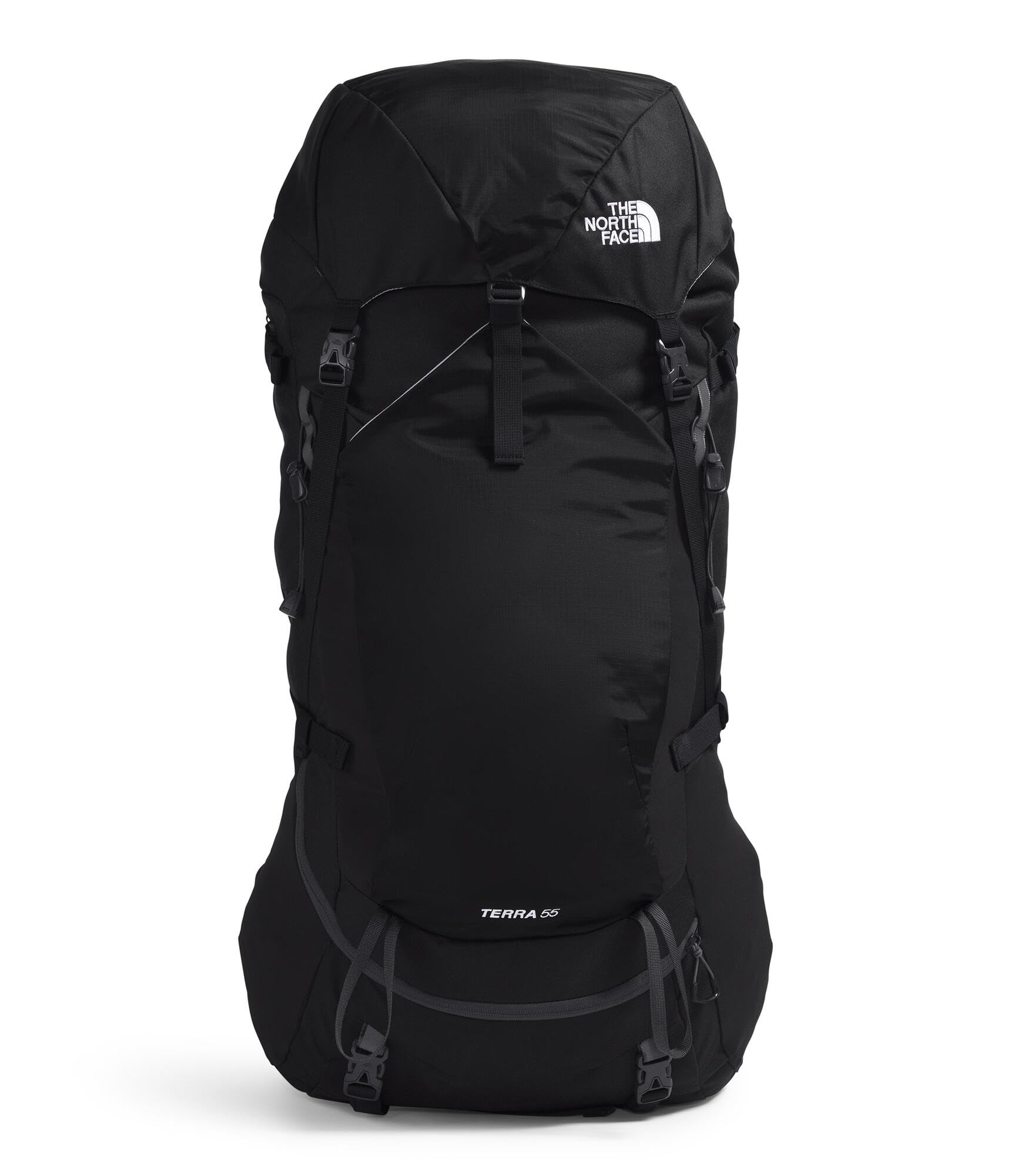
The North Face Terra 55 brings a long-respected design to the AT. The full-length U-zip runs from the top of the pack nearly to the bottom, giving you the same suitcase-style access as the Osprey Farpoint Trek but in a dedicated hiking package. The cinch-top main opening with a removable lid adds a traditional load-in option. The padded back panel and shoulder straps are optimized for comfort rather than ultralight grams — the S/M size weighs 4 pounds, placing it in the same weight class as the Osprey Farpoint Trek.
The hip belt is generously padded and the load lifter straps allow fine-tuned weight distribution. Ice axe and trekking pole attachments are standard, and the side compression straps double as sleeping pad holders. The two stretch bottle pockets are angled for reachability, and the internal hydration sleeve fits a 3L reservoir. The removable frame sheet offers rudimentary structure — it is less sophisticated than Osprey’s LightWire or Deuter’s spring steel, but it keeps the pack simple and reduces potential failure points.
For AT hikers who prioritize easy access to their gear over cutting every gram, the Terra 55 delivers. The polyester fabric is durable and the zippers feel solid. The S/M size runs 53L and the L/XL runs 57L, so volume is slightly smaller than the 65L options — this forces a leaner pack, which is often a good discipline. The main compromise is the weight and the somewhat basic suspension compared to premium-tier competitors. If you are on a mid-range budget and want a reliable pack that opens wide, the Terra 55 is a strong candidate.
Why it’s great
- Full-length U-zip for fast gear access
- Comfortable padded hip belt and shoulder straps
- Hiking pole and ice axe attachments included
- Available in two torso sizes (S/M and L/XL)
Good to know
- Heavy at 4 pounds for the S/M size
- Frame sheet is less supportive than wire frames
- No integrated raincover included
6. Kelty Asher 55L
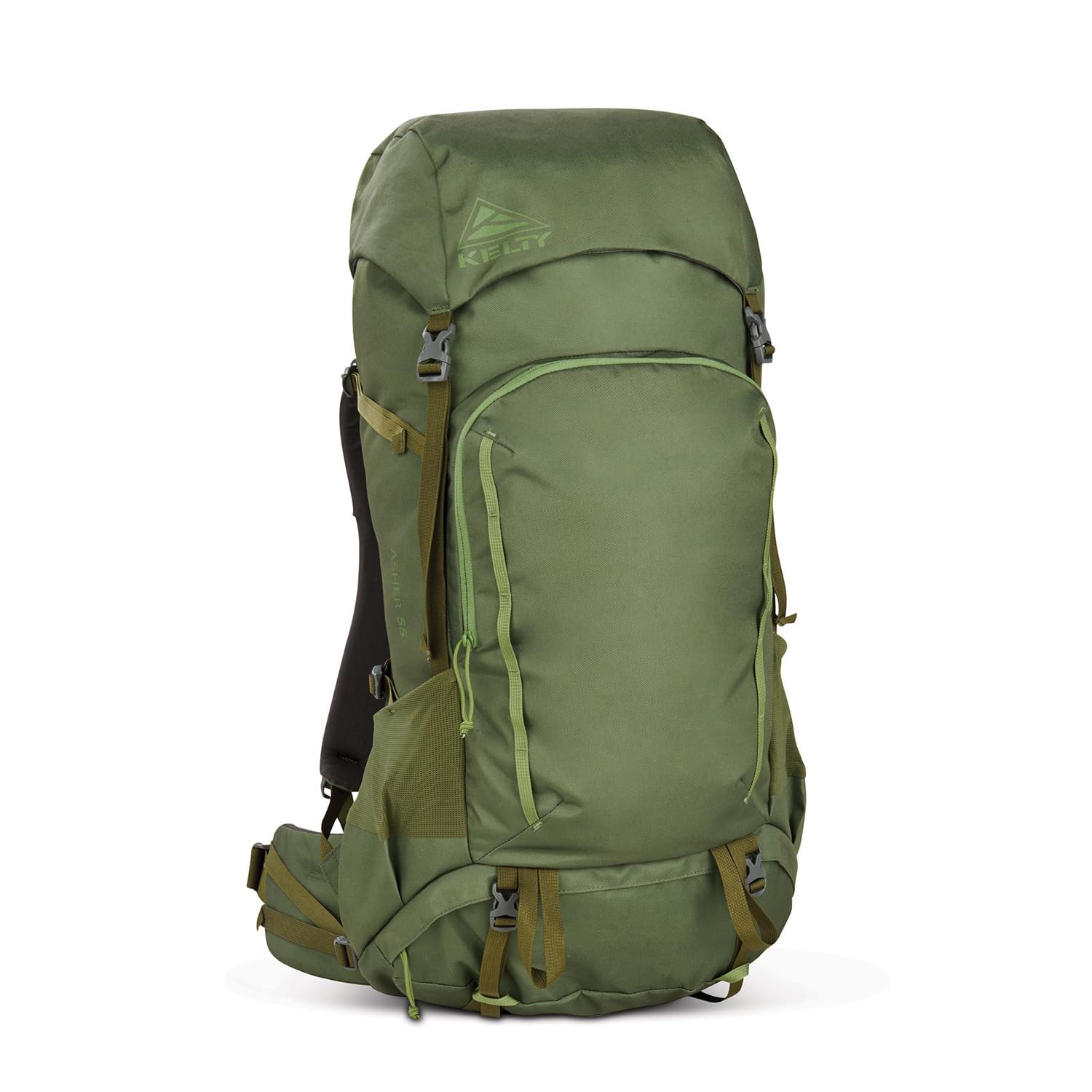
The Kelty Asher 55L represents an impressive value proposition in the mid-range category. It packs an advanced perimeter frame with an aluminum stay — the same type of load-bearing structure found in packs costing twice as much. The Fit Pro torso adjustment is on-the-fly and intuitive, letting you dial in the length without stopping to remove the pack. The Amp Flow ventilated back panel uses contoured foam channels to reduce sweat buildup, though it is not as airy as Osprey’s tensioned mesh or Deuter’s Aircomfort.
The sleeping bag compartment is zippered and separated by a floating divider, a feature often omitted at this price level. Load lifter straps, compression straps, and hydration compatibility are all present. The 55L volume is ideal for AT sections or a full thru-hike if you keep your base weight under 15 pounds. The optimal carry weight range of 20–40 pounds gives you room for a bear canister and up to five days of food before you hit the ceiling.
The polyester shell fabric with PFC-free DWR is less abrasion-resistant than the 420D nylon used on premium packs. Long-term durability in rocky, brush-filled sections like the Mahoosuc Notch or the Roan Highlands may be a concern for a full thru-hike. Several users noted the materials feel slightly flimsy under heavy loads, though the pack held up for multiple seasons in the field. For the price-conscious hiker looking for a comfortable, feature-rich entry into backpacking, the Kelty Asher 55L is a fantastic starting point.
Why it’s great
- Perimeter frame with aluminum stay for strong load transfer
- Fit Pro tool-free torso adjustment
- Hydration compatible with sleeping bag compartment
- Excellent value for the feature set
Good to know
- Fabric feels less durable than premium nylon packs
- Hip belt padding is mediocre for heavy loads
- Ventilation is adequate, not exceptional
7. Kelty Asher 65L
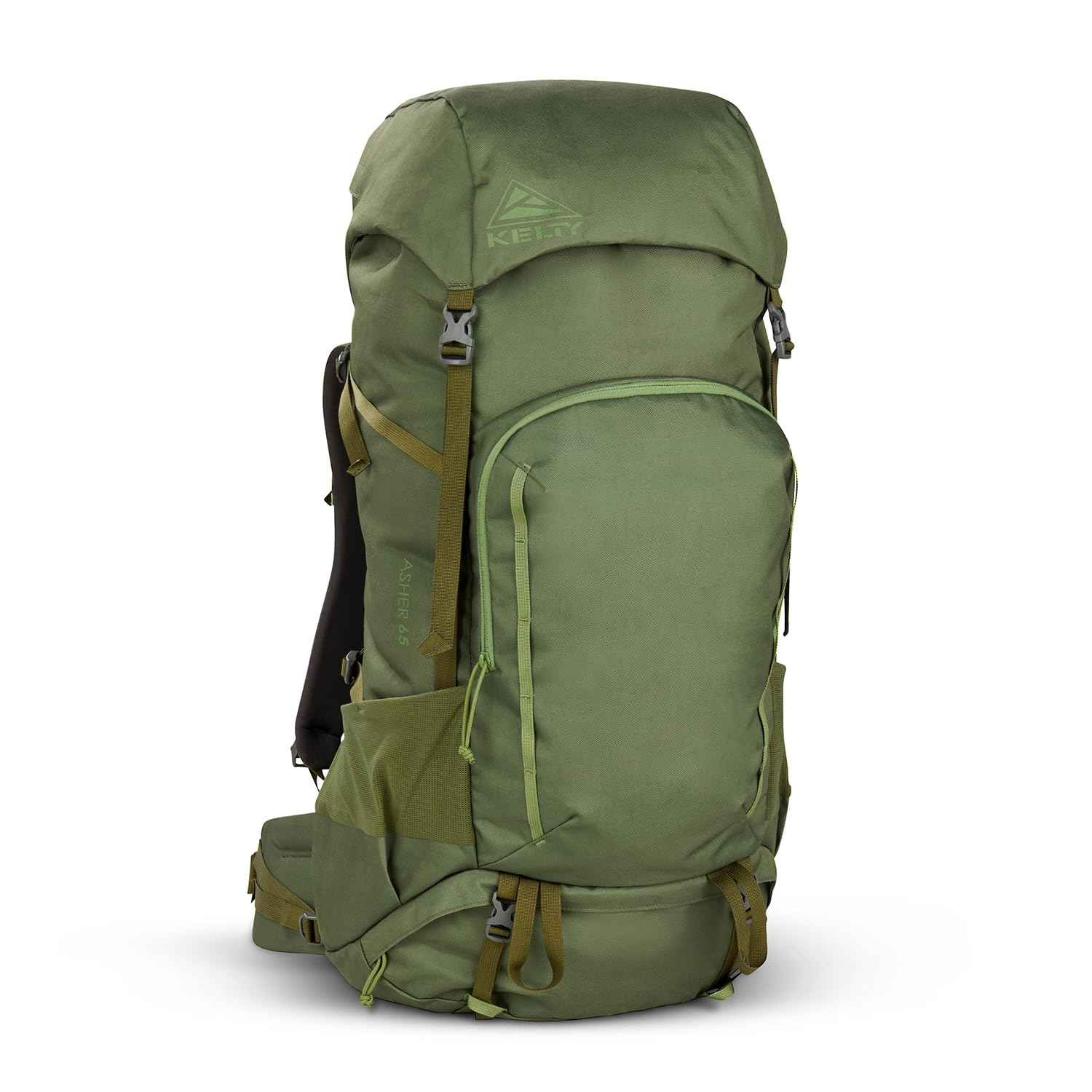
The Kelty Asher 65L is the same core design as the 55L but scaled up for longer carries and bulkier gear. The optimal carry weight range climbs to 30–50 pounds, which gives you the capacity to haul the extra food and fuel required for a full week between resupply drop-offs in the Hundred Mile Wilderness or Shenandoah. The same Fit Pro system and Amp Flow back panel carry over, so the fit and ventilation characteristics are identical to the 55L version.
The extra 10 liters of volume come primarily from a taller main compartment and a slightly deeper sleeping bag section. The dimensions increase to 30x14x15 inches, and the weight ticks up to 3 pounds 5 ounces — still reasonable for a 65L framed pack. The perimeter frame with aluminum stay handles the increased load capacity without flexing or sagging, and the load lifter straps allow you to dial the weight onto your hips effectively.
The fabric concern remains: the polyester shell is not as abrasion-resistant as the nylon used on Osprey or Deuter packs. Hikers who expect to bushwhack, slide down rocky slopes, or drag the pack over granite outcrops may see accelerated wear. However, for the hiker who needs the extra volume and is willing to accept a slightly shorter lifespan for a dramatically lower cost of entry, the Kelty Asher 65L delivers a strong value. Several users reported multiple seasons of reliable use with no structural failures.
Why it’s great
- 65L capacity with 30–50lb optimal carry range
- Same Fit Pro adjustment and perimeter frame as 55L
- Lightweight for a 65L framed pack at 3lb 5oz
- Great value for extended multi-day trips
Good to know
- Polyester fabric less durable than premium nylon options
- Hip belt padding is basic for heavy loads
- Ventilation is moderate, not top-tier
8. Rab Nitron 25L
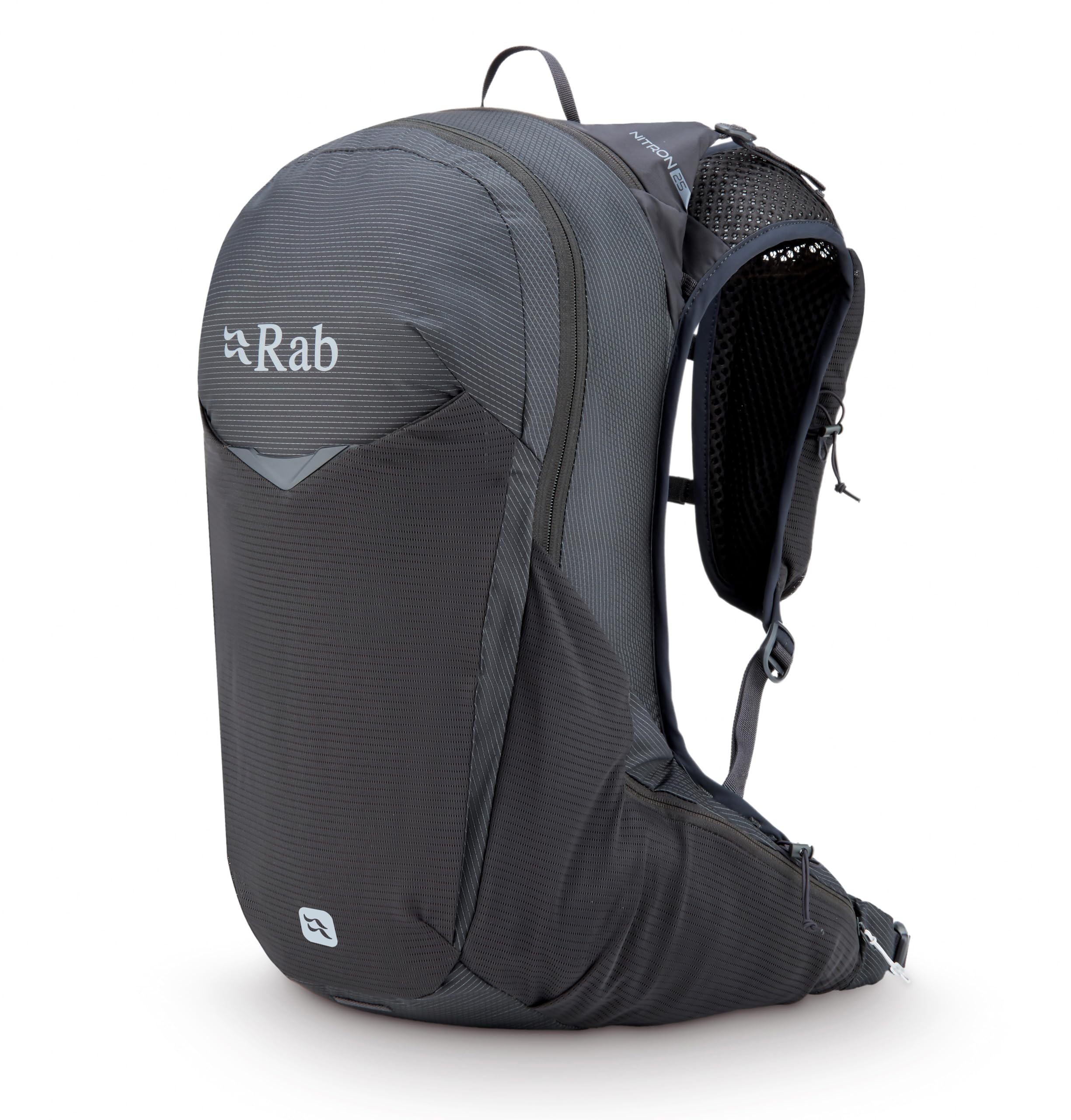
The Rab Nitron 25L is not a thru-hiking pack, but it earns a place in this guide as a dedicated daypack for AT section hikers, trail runners, and anyone who needs a lightweight companion for side trips off the main trail. At 1 pound 7 ounces, it is one of the lightest hydration-compatible packs on the market. The Air Contour suspension uses a body-hugging harness with double chest straps inspired by running vests, resulting in zero bounce at a jogging pace — a genuine advantage for the faster-paced hiker.
The EVA back panel provides cushioned comfort without adding bulk. The internal sleeve is sized for a 3L hydration reservoir, and the pass-through sleeve along the shoulder strap gives you on-trail access to the hose. Storage is clever: a zippered harness pocket for gels and snacks, a front stash pocket for stuffing a wind shell, and a Flash stash harness pocket for a phone or compass. The trekking pole attachments accommodate both folding z-poles and standard poles, a small but appreciated detail.
The fabric is 100D Robic nylon with a Hydroshield coating, which is impressively light but not built for the constant abrasion of a full AT thru-hike. This is a specialized piece of gear for the fast-and-light crowd. For the AT hiker who plans to slackpack a section or needs an ultralight weekend daypack for town days and summit pushes, the Rab Nitron 25L is an exceptional choice that prioritizes speed and minimal weight over volume and durability.
Why it’s great
- Ultralight 1lb 7oz design with bounce-free suspension
- Running-vest inspired harness for active movement
- Hydration compatible with 3L reservoir sleeve
- Smart pocket layout for snacks and phone access
Good to know
- Too small (25L) for multi-day backpacking
- Lightweight fabric less abrasion-resistant
- Best suited for fast day hikes and trail running
9. Night Cat 100L
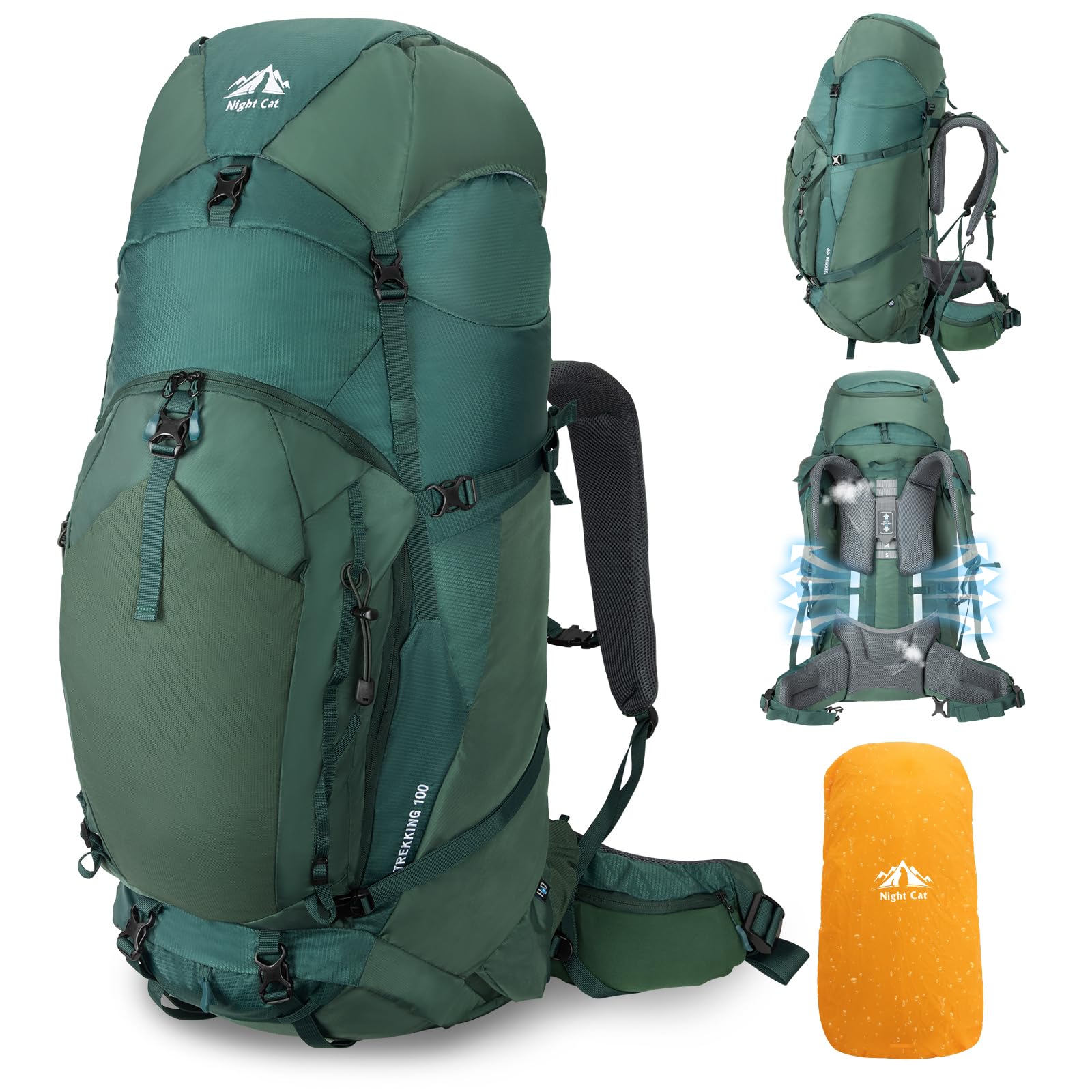
The Night Cat 100L is a budget-friendly expedition pack designed for the hiker who needs to carry gear for a group or support a base camp setup. At 100 liters, it is far larger than what an individual AT thru-hiker would typically carry, but it holds appeal for those doing trail maintenance, leading youth groups, or packing for a family. The internal frame with an adjustable torso length accommodates a wide range of body types, and the large ventilated back panel attempts to manage sweat on strenuous tours.
The pack is divided into main, base, and lid compartments, with front access to the main compartment for easier gear retrieval. Equipment loops, a hiking pole attachment, and hydration system preparation are all present. The included raincover is welcome at this price point. The nylon fabric is lightweight but the durability is the major question mark — several users reported the pack tearing at the bottom within days of use on an extended trip, which is a critical failure for any backpacking pack.
The weight is reasonable for a 100L pack at 4.4 pounds, and the multiple adjustment points mean you can fine-tune the fit. However, the reliability concerns make this a risky choice for a long-distance AT attempt. For short-term use, car camping, or gear hauling where failure does not strand you miles from the nearest road, the Night Cat 100L offers a massive volume at a low cost. For a dedicated AT thru-hike, the durability data strongly suggests choosing a pack with a proven track record.
Why it’s great
- Massive 100L capacity for group gear or expedition loads
- Adjustable torso length for custom fit
- Raincover included at a low price point
- Multiple compartments and front access for organization
Good to know
- Durability is a major concern — reported tearing on trail
- Too large for a typical individual AT thru-hike
- Build quality inconsistent with premium options
FAQ
What size backpack do I need for a full Appalachian Trail thru-hike?
How much should a backpack weigh for the Appalachian Trail?
Is a ventilated back panel actually necessary on the AT?
Final Thoughts: The Verdict
For most users, the best backpack for appalachian trail winner is the Osprey Rook 65L because it perfectly balances the AirSpeed ventilated suspension, a 65L volume that accommodates all AT gear configurations, and a durable construction that will last the full trail without costing a fortune. If you want maximum ventilation on hot, humid climbs, grab the Deuter Futura Air Trek 60+10. And for the hybrid hiker who needs to fly to trailheads and back, nothing beats the versatility of the Osprey Farpoint Trek 55L.