
A cheap duffel stuffed with loose water bottles and expired granola bars isn’t a plan—it’s a liability. When a wildfire evacuation order or a sudden power outage hits, the difference between chaos and control often comes down to a single piece of gear: a backpack purpose-built to carry your survival essentials. The wrong bag splits at the seams under the weight of a first aid kit; the right one keeps your hands free, your gear organized, and your critical supplies accessible the moment you need to move.
I’m Min — the co-founder and writer behind Gadgets Feed. I’ve spent hundreds of hours analyzing the technical specifications, real-world customer feedback, and material science behind emergency preparedness packs so you don’t have to guess which bag will hold up when it matters most.
This guide breaks down the specific features—from MOLLE webbing density to water-resistant denier counts—that separate a true emergency-ready pack from a gym bag with a first-aid kit thrown inside. Here is my researched take on the best backpack for emergency kit needs in 2024.
How To Choose The Best Backpack For Emergency Kit
Selecting a backpack for an emergency kit isn’t about color or brand loyalty—it’s about structural integrity under load, modular expandability, and real-world carry comfort during a high-stress evacuation. Here are the critical factors to evaluate before you buy.
Fabric Denier and Zipper Strength
The foundation of any survival pack is its fabric. Look for 1050D nylon—like 5.11 Tactical and Kelty use—which offers superior abrasion and tear resistance compared to the 600D or 420D found on budget packs. YKK zippers, ideally #10 gauge, are the industry standard for preventing blowouts when your bag is overstuffed with medical gear and water rations.
Carry System and Hip Belt
An emergency kit can easily weigh 20–30 pounds. A basic shoulder harness without a load-bearing hip belt will cause fatigue and back pain within half a mile. Packs like the Kelty Redwing 50 include a removable waist belt with a metal stay to transfer weight off your shoulders, which is non-negotiable for longer evacuations or if you have to carry a child’s supplies too.
Modular Attachments vs. Pre-Packed Inserts
You face two competing strategies: a pre-stocked kit (Ready America, Blue Coolers) offers convenience and guaranteed compatibility but less customization, while a shell pack (5.11 RUSH, Kelty Redwing) gives you total control over placement of individual items like trauma shears or a water filter. Your choice depends on whether you prioritize grab-and-go speed or tailored organization.
Quick Comparison
On smaller screens, swipe sideways to see the full table.
| Model | Category | Best For | Key Spec | Amazon |
|---|---|---|---|---|
| 5.11 Tactical RUSH 24 2.0 | Premium Shell | Modular bug-out builds | 37L / 1050D Nylon | Amazon |
| 5.11 Tactical RUSH 12 2.0 | Premium Shell | Compact EDC + survival | 24L / 1050D Nylon | Amazon |
| Kelty Redwing Tactical 50 | Premium Shell | Long-distance evacuation | 50L / Aluminum Frame | Amazon |
| Ready America 72 Hr Deluxe | Pre-Stocked Kit | 4-person family grab-bag | 33-piece / 4-person | Amazon |
| Lightning X EMS Responder | Medical Specialist | Trauma & advanced first aid | 250-piece / 18-lb kit | Amazon |
| Emergency Zone Deluxe 2-4P | Mid Pre-Stocked Kit | 1-2 person grab-bag | 53-piece / 2-person | Amazon |
| Blue Coolers Blue Seventy-Two | Entry Pre-Stocked Kit | Budget 1-person starter | 36-piece / 1-person | Amazon |
In‑Depth Reviews
1. 5.11 Tactical RUSH 24 2.0

The 5.11 RUSH 24 2.0 represents the sweet spot between carry capacity and mobility. At 37 liters, this pack is large enough to hold a multi-day survival load—including a 15-inch laptop, hydration bladder up to 3 liters, and a full trauma kit—but compact enough to not snag on door frames during a rapid evacuation. The 1050D water-repellent nylon and #10 YKK zippers give it a structural integrity that cheaper packs simply cannot match.
What sets this apart for emergency use is the MOLLE webbing platform that wraps the front and sides, allowing you to attach external pouches for a water filter, radio, or extra medical shears without cluttering the main compartment. The contoured yoke shoulder straps and back panel ventilation channels ensure you can carry a 30-pound load for miles without excessive sweating or shoulder digging. Users consistently report the bag surviving years of daily carry and range use without a single stitch failure.
The RUSH 24 is an empty shell—you provide the contents. This is a strength if you want to curate every item in your kit, but it does mean you’ll spend additional time and money sourcing individual components. For the serious prepper who values modularity and legendary durability, this is the gold standard.
Why it’s great
- 37L is the ideal capacity for a solo bug-out bag without being oversized
- 1050D nylon and military-grade zippers ensure it will outlast the contents inside
- Full MOLLE platform offers unlimited modular expansion for specialized gear
Good to know
- No water bottle side pockets—you’ll need a MOLLE bottle pouch
- Empty shell requires you to purchase and organize all survival supplies separately
2. 5.11 Tactical RUSH 12 2.0

The RUSH 12 2.0 is the smaller sibling in 5.11’s lineup, but it punches well above its weight class for urban emergency kits. At 24 liters, it is intentionally compact—designed for a single person’s 72-hour essentials like a first aid kit, food bars, water pouches, a space blanket, and a multi-tool. The same 1050D nylon construction and water-repellent finish that define the RUSH 24 are present here, so you get the same bombproof durability in a lighter, faster package.
Internally, the pack includes a padded laptop sleeve that fits up to a 15-inch device, a fleece-lined eyewear pocket, and multiple admin organizers for small items like compasses, lighters, and bandages. The rear hydration compartment doubles as a hidden CCW pocket with a loop panel, a feature preppers appreciate for securing critical documents or a backup power bank. Despite its smaller size, the MOLLE webbing on the front flap still allows for external attachment of a radio pouch or a small med kit.
If your scenario is primarily urban—office evacuation, earthquake grab-bag, or car trunk kit—the RUSH 12 is easier to stash and faster to deploy than a full-size pack. The trade-off is limited space for bulky items like a sleeping bag or extra clothing layers. Buyers consistently praise the zipper quality and stitch precision, calling it a bag that looks new years later. It’s the ideal minimalist shell for the prepper who prioritizes speed over volume.
Why it’s great
- Small footprint fits under a desk, in a car trunk, or in a closet corner
- 1050D nylon and heavy-duty zippers match the durability of packs twice its price
- Hidden CCW compartment adds a layer of security for valuables
Good to know
- 24L is tight if you need to include a change of clothes above base essentials
- No external water bottle pocket—requires MOLLE attachment
3. Kelty Redwing Tactical 50
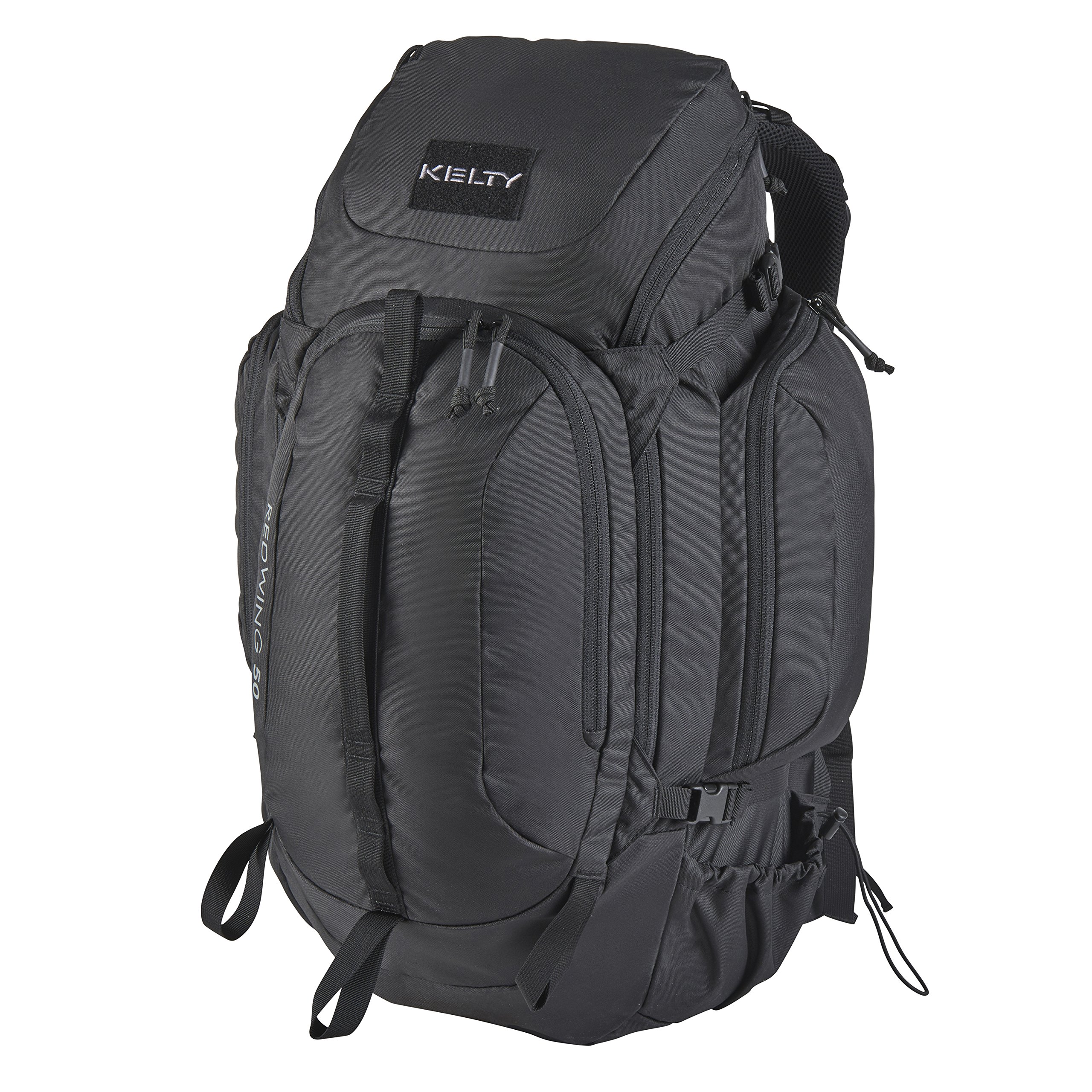
The Kelty Redwing Tactical 50 is the only pack on this list that includes a true internal frame with aluminum stays, making it the clear choice for extended evacuations where you’ll be walking miles with a loaded pack. The 50-liter capacity provides generous room for a multi-day survival load including a sleeping bag, shelter, food for 72+ hours, and advanced medical supplies—all while keeping the weight distributed properly across your hips and shoulders.
Kelty built this pack to meet military specifications, and it shows in the details. The hybrid-loading U-zipper design allows for clamshell-style opening, which makes packing and repacking vastly easier than top-loaders. The Dynamic AirFlow back panel uses a mesh suspension system that keeps your back cool—a critical comfort feature during a stress-filled evacuation. Side compression straps stabilize the load, and the pass-through side pockets can hold trekking poles or a collapsed monopod for signaling.
At 4.1 pounds empty, the Redwing is heavier than the 5.11 RUSH packs, but that weight is justified by the load-bearing frame and superior ventilation. Users consistently note that the removable waist belt with a metal stay transfers weight so effectively that 30 pounds feels manageable. The trade-off is a less modular MOLLE system compared to 5.11—you get PALS webbing on the front, but not full-wrap coverage. If your emergency plan involves walking to a rally point, this pack earns its keep.
Why it’s great
- Aluminum frame and load-bearing hip belt support heavy loads over distance
- Clamshell U-zipper opening simplifies packing and repacking
- AirFlow back panel significantly reduces sweat during physical exertion
Good to know
- Heavier than tactical packs—4.1 lb empty before adding gear
- PALS webbing is less extensive than true MOLLE packs like 5.11
4. Ready America 72 Hour Deluxe Emergency Kit (4-Person)
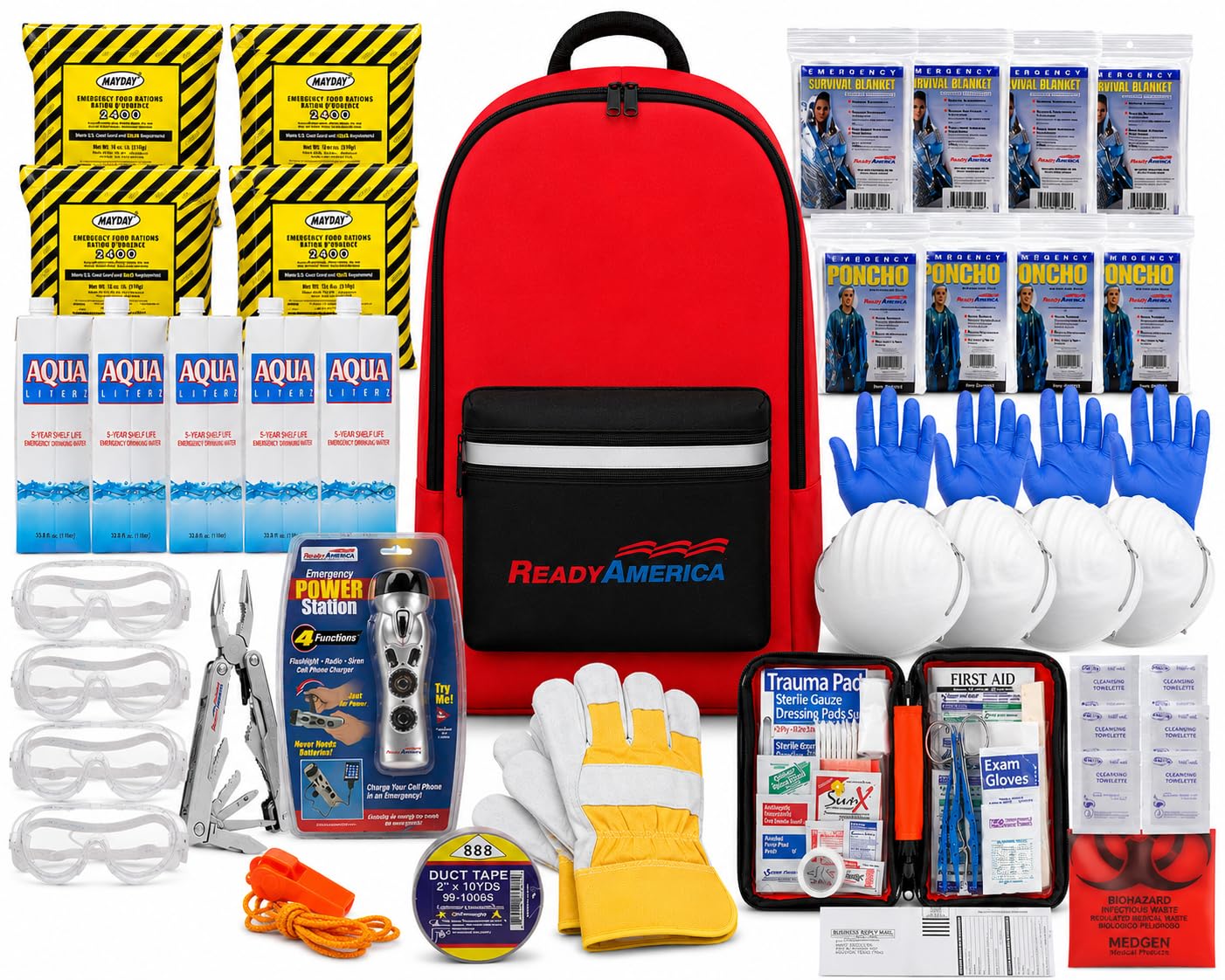
The Ready America 72 Hour Deluxe kit is the most complete pre-assembled solution on this list, designed to sustain four people for three days. At , it bundles 33 distinct components including four 2400-calorie food bars, four 1-liter water cartons with a 5-year shelf life, a 107-piece first aid kit, four emergency ponchos and survival blankets, N95 dust masks, safety goggles, leather work gloves, a multi-tool, and a 4-function hand-crank power station with flashlight, AM/FM radio, siren, and cell phone charger.
The backpack itself is a durable nylon pack with multiple compartments designed to keep all these items organized and accessible. It weighs 9.44 kg (20.8 lb) fully loaded, which is realistic for a family grab-bag you’d keep near the front door. The inclusion of a hand-crank power station is a standout feature—it means you can charge a phone or listen to emergency broadcasts without relying on grid power or disposable batteries. The 5-year shelf life on food and water means you can rotate the kit only once every half-decade.
The primary drawback is the lack of customization—the internal layout is fixed, so you can’t easily add a trauma kit or a water filter without removing included items. Some users noted the water supply is insufficient for four people for a full 72 hours (4 liters total), so plan to supplement with extra pouches. For families who want a no-think emergency solution out of the box, this is the most complete package available.
Why it’s great
- Everything included—food, water, first aid, shelter, hygiene, and power
- Hand-crank power station eliminates dependency on batteries or outlets
- 5-year shelf life on consumables reduces maintenance burden
Good to know
- Water supply (4 liters) is short of the recommended 1 gallon per person/day
- Fixed layout limits the ability to swap tools or add trauma gear
5. Lightning X Stocked EMS/EMT Trauma & Bleeding First Aid Responder Medical Backpack

The Lightning X PB89 is not a generic bug-out bag—it is a purpose-built EMS responder pack designed for trauma care. It includes over 250 medical items curated by former EMTs, covering CPR, airway management, hemorrhage control, splinting, burn care, wound cleansing, and diagnostic tools like a stethoscope and blood pressure cuff. This is the only pack on the list with dedicated compartments for real-world emergency medical response, not just boo-boo first aid.
The bag itself measures 13″ x 9″ x 18″ and features four main exterior compartments plus a rear velcro compartment, all organized with internal mesh pockets and elastic keepers to secure supplies. The MOLLE loops on the exterior allow for attaching additional pouches like a hemostatic dressing pouch or a headlamp. The top flip clip is designed to attach to a car headrest, making it a viable vehicle-rescue pack. The water-resistant fabric and military-grade zippers ensure it survives being dragged across asphalt at a crash scene.
At 18 pounds fully loaded with the included supplies, this is a heavy pack, but every gram is dedicated to medical utility—not food or shelter. It is not a standalone survival kit; you would need a separate bag for food, water, and clothing. Its ideal role is as a dedicated medical module within a larger bug-out setup, or as a vehicle-based trauma bag. For EMTs, trained first responders, or anyone with medical training who wants a ready-to-deploy trauma kit, this is the definitive choice.
Why it’s great
- Over 250 real-world medical supplies—not just band-aid padding
- Designed by former EMTs with compartmentalization for rapid access
- Car headrest attachment makes it perfect as a vehicle response pack
Good to know
- Does not include food, water, or shelter—medical only
- Heavy (18 lb loaded) and specialized; not a general-purpose survival kit
6. Emergency Zone Deluxe Survival Kit 2-4 Person
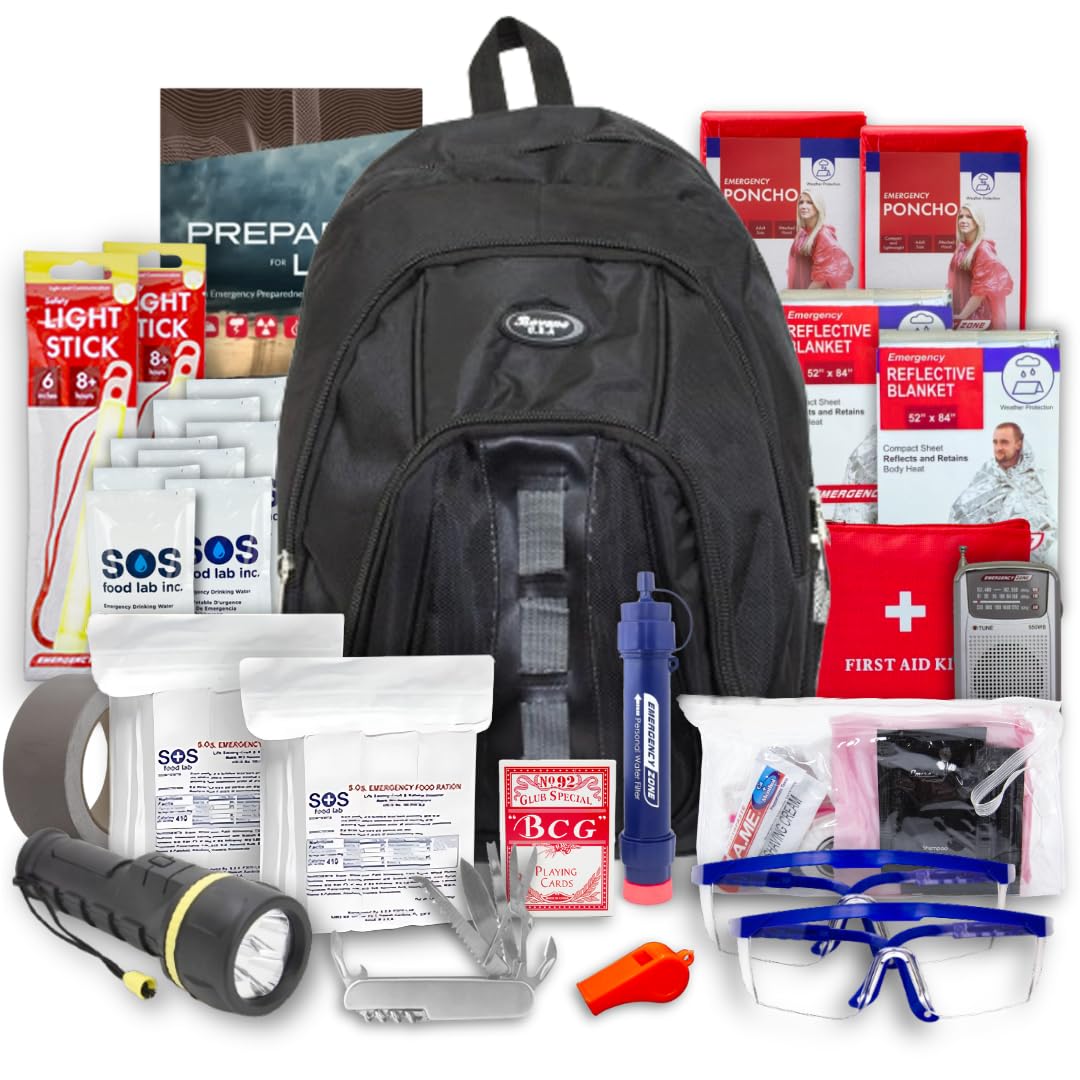
The Emergency Zone Deluxe kit occupies a sweet spot between budget grab-bags and premium full-family kits. It is designed for two people for 72 hours, with 53 pieces including S.O.S. brand food rations, emergency water pouches, a Frontier Straw Filter that purifies up to 30 gallons from any source, a 53-piece basic first aid kit, a flashlight, an emergency blanket, a light stick, and a whistle. The inclusion of a water filter is a significant upgrade over entry-level kits, effectively solving the water shortage problem that plagues cheaper options.
The backpack is discreet in appearance—intentionally designed to stay under the radar so you don’t broadcast your preparedness status during a crisis. Users after 6 years reported the bag remained functional, with only the meal bars and water pouches needing replacement due to the 5-year shelf life. The zippers and stitching held up well, and the bag offered enough space to add a few personal items like a change of socks or extra toilet paper. The Frontier Straw Filter is a genuine value-add, turning any stream or puddle into a drinkable source.
The primary shortcomings are the same as any pre-stocked kit in this price range: you get one roll of toilet paper and a basic first aid kit that lacks trauma components. If you have medical training, you will want to supplement the first aid kit with tourniquets and hemostatic gauze. For a family of two, or a single person who wants a turnkey kit with the critical water filter included, this is arguably the best value proposition on the list.
Why it’s great
- Frontier Straw Filter provides unlimited clean water from natural sources
- Discreet, low-profile design avoids drawing attention during evacuations
- Strong build quality with zippers that last through years of storage
Good to know
- Small first aid kit—plan to upgrade with trauma-specific supplies
- Only one roll of toilet paper is included for 2 people for 3 days
7. Blue Coolers Blue Seventy-Two 72 Hour Emergency Backpack

The Blue Coolers Blue Seventy-Two is the entry-level anchor of this guide, designed as a no-frills starter kit for one person for 72 hours. It includes a triple-pocket reinforced backpack, a 2400-calorie food bar with a 5-year shelf life, five 4.22 oz emergency drinking water pouches, a 36-piece first aid kit, an emergency whistle/compass combo, a battery-free crank flashlight, an emergency blanket, a rain poncho, a dust mask, and a tissue pack. The backpack dimensions are 14.8 x 9.9 x 4.4 inches with a lightweight 120-gram fabric construction.
For this price point, the value is undeniable: you get the three essential survival categories—food, water, and shelter—packed into a bag that is light enough for a child to carry. Users consistently praised the backpack’s spaciousness, noting there was room left over for personal items like a change of pants, socks, and toiletries. The crank flashlight, while basic, works without batteries—a critical feature in a power outage. The included compass/whistle combo provides basic navigation and signaling capability that many budget kits omit.
The limitations reflect the price. The first aid kit is minimal and lacks trauma-grade supplies like tourniquets or hemostatic gauze. The water supply is only five 4.22 oz pouches (about 21 ounces total), which falls far short of the recommended 1 gallon per person for 72 hours. The backpack material feels thin compared to the 1050D nylon of premium packs, and several users noted the first aid kit’s packaging was difficult to open. This kit is best viewed as a starting point—a foundation to which you can add your own supplies as your preparedness level grows.
Why it’s great
- Complete starter kit under budget-friendly pricing with all three survival essentials
- Lightweight and compact—easy to store in a car trunk or office drawer
- Battery-free crank flashlight works when everything else is dead
Good to know
- Water supply (21 oz) is critically low—you must add more pouches or a filter
- First aid kit is basic and lacks trauma/bleeding control items
FAQ
What is the ideal liter capacity for a solo emergency backpack?
Should I buy a pre-stocked kit or an empty shell pack?
What zipper quality should I look for in an emergency pack?
Final Thoughts: The Verdict
For most users, the best backpack for emergency kit winner is the 5.11 Tactical RUSH 24 2.0 because its 37-liter capacity, bombproof 1050D nylon construction, and full MOLLE platform offer the ideal balance of durability, modularity, and everyday carry practicality. If you want a complete family-ready grab-bag with food and power included, grab the Ready America 72 Hour Deluxe Kit. And for medical-trained individuals who need a dedicated trauma response pack, nothing beats the Lightning X EMS Responder Backpack.