
A poorly fitted pack turns a scenic ridgeline into a misery of chafed hips, numb shoulders, and a wobbly load that fights every step. Over the course of a multi-day trek, the difference between a dialed-in suspension system and a generic frame bag is measured in miles of enjoyment lost, not ounces of weight. The right internal frame, hip belt construction, and torso adjustability are non-negotiable for anyone planning to carry 30 pounds or more over varied terrain.
I’m Min — the co-founder and writer behind Gadgets Feed. I’ve spent hundreds of hours cross-referencing frame designs, fabric denier ratings, load-lifter geometry, and real-world durability reports from long-distance hikers to separate the packs that genuinely support a multi-day carry from those that merely look the part.
Whether you are preparing for a section hike of the Appalachian Trail or a weekend in the backcountry, this guide breaks down the exact specifications that matter. You’ll learn how suspension systems, torso fit, and volume interact when you are miles from the trailhead — and which packs earn their place as the best backpack for long-distance hiking.
How To Choose The Best Backpack For Long-Distance Hiking
Selecting a pack for extended trips is a decision that lives and dies on three pillars: frame design, fit adjustability, and volume. A bag that looks tough in the store can still punish your spine if the load-transfer geometry is wrong. Here are the key factors to prioritize.
Internal Frame and Suspension
The internal frame — typically an aluminum stay or a peripheral wire frame — is what transfers the pack’s weight from your shoulders down to your hips. A rigid, well-curved stay keeps the load stable against your back, preventing sway when you scramble over rocks. Cheaper packs use single flat stays that twist under heavy loads; premium designs use dual contoured stays or a wire frame that wraps around the lumbar. Look for a frame that includes load-lifter straps at the top of the shoulder straps — these pull the pack inward toward your body and are the single biggest comfort upgrade for any load over 25 pounds.
Hip Belt Construction and Padding
The hip belt is where 70 to 80 percent of your pack’s weight should rest. A thin, unshaped belt will dig into your iliac crest after a few hours, while a thick, contoured foam belt with a stiffened wrap distributes the load evenly across your pelvis. Measure your hip circumference before buying, and check whether the belt comes in multiple sizes or is one-size-fits-all. Packs with a fixed belt designed for a specific torso range generally transfer weight more efficiently than adjustable belts that compromise on wrap stiffness.
Volume and Packed Weight Capacity
Volume is measured in liters. For a 2–3 day trip, 40–55 liters is typical. For 5–7 days, you need 55–70 liters. For expeditions of a week or more, 70+ liters is common. However, the spec that few beginners check is the pack’s recommended maximum load. A 65-liter pack designed for 30 pounds will feel floppy at 50 pounds. Look for the manufacturer’s optimal carry weight range — Kelty provides this explicitly; Osprey builds its frames around a specific load envelope. Overloading a pack beyond its intended weight range compromises the suspension’s ability to keep the load in place.
Quick Comparison
On smaller screens, swipe sideways to see the full table.
| Model | Category | Best For | Key Spec | Amazon |
|---|---|---|---|---|
| Osprey Kestrel 58L | Premium | Technical multi-day terrain | AirScape backpanel, 4.88 lb | Amazon |
| Osprey Kestrel 48L | Premium | Fast-and-light overnight trips | Fixed hipbelt, 4.62 lb | Amazon |
| Osprey Rook 65L | Premium | Ventilated 5–7 day carries | AirSpeed suspension, 3.7 lb | Amazon |
| Kelty Asher 65L | Mid-Range | Custom torso fit on a budget | Fit Pro system, 3 lb 5 oz | Amazon |
| Kelty Asher 55L | Mid-Range | Weekend backpacking intro | Aluminum stay, 3 lb 2 oz | Amazon |
| Teton 65L Explorer | Mid-Range | Heavy-load beginners | Multiposition torso, 5 lb | Amazon |
| Mardingtop 65L+10L | Budget | MOLLE customization | Expandable to 75L, 5.4 lb | Amazon |
| MOUNTAINTOP 70L | Budget | Large capacity entry-level | Aluminum frame plate, 4.4 lb | Amazon |
| Mardingtop 60L Military | Budget | Modular budget build | MOLLE system, 4.49 lb | Amazon |
In‑Depth Reviews
1. Osprey Kestrel 58L Men’s Backpacking Backpack
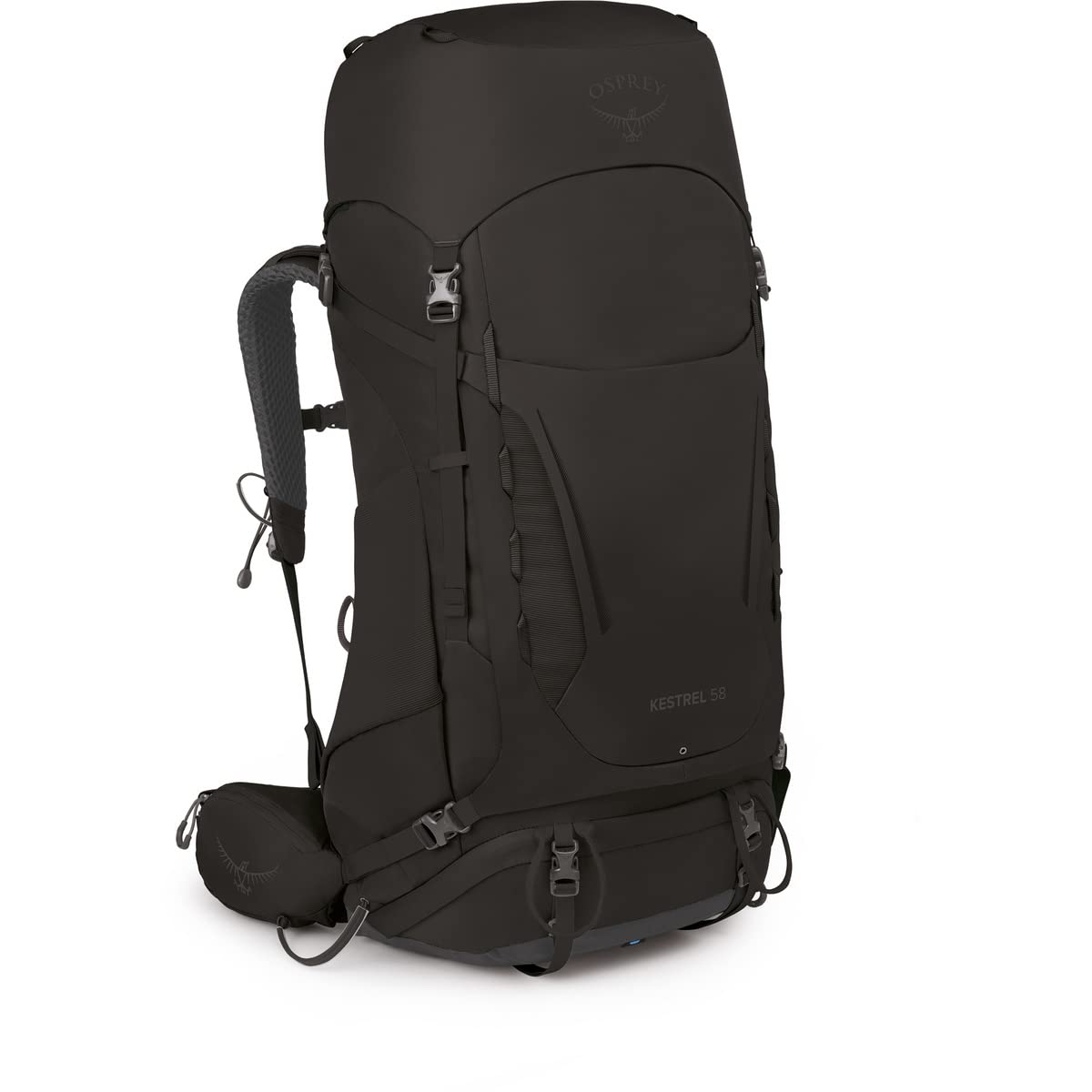
The Osprey Kestrel 58L packs the brand’s proven AirScape backpanel into a rugged 58-liter package weighing just 4.88 pounds. The injection-molded foam backpanel provides a stable, breathable fit that keeps the load close to your center of gravity, which is critical when scrambling over rocky passes or boulder fields. The Fit-on-the-Fly hipbelt adjusts dynamically, allowing you to fine-tune the wrap angle and padding position as your body changes over the course of a long day.
Long-distance hikers consistently report that this pack handles loads of 35–40 pounds without the frame creaking or shifting. The integrated rain cover is stowed in its own pocket, and the front-panel access lets you dig out a puffy jacket without unpacking the entire bag. The 58-liter volume splits the difference between a multi-day overnight and a week-long trek, making it the most versatile capacity in the Kestrel line.
The only real trade-off is weight — at nearly five pounds, it is heavier than ultralight options, but the durability of the 210-denier nylon and the reinforcement at high-wear zones justify the heft for hikers who value longevity over every gram. The bright interior whistle is a deliberate safety feature, though some users find it loud when they brush against brush.
Why it’s great
- Adjustable Fit-on-the-Fly hipbelt adapts to body changes on trail
- Integrated rain cover and front-panel access for quick gear retrieval
- Durable 210-denier nylon construction holds up to heavy brush and abrasion
Good to know
- At 4.88 lb it is not an ultralight pack
- Backpanel may feel firm for slender frames under 20 lb loads
2. Osprey Rook 65L Men’s Backpacking Backpack

The Osprey Rook 65L uses the AirSpeed suspension system, which creates a tensioned mesh backpanel that arches away from your spine. This design generates significant airflow across your lower back, a major advantage when hiking in warm climates or on steep climbs where sweat accumulation is a problem. The LightWire frame transfers load to the hipbelt efficiently, and at 3.7 pounds it is one of the lightest full-featured 65-liter packs available.
Users appreciate the integrated and removable rain cover, the zippered sleeping bag compartment with a floating divider, and the angled water bottle pockets that allow one-handed retrieval without removing the pack. The torso adjustment is straightforward, accommodating a range of 15.5 to 21 inches via a simple ladder system. Hikers carrying loads around 30 pounds report excellent stability and no frame sag over 10-plus-mile days.
The suspension does push the load slightly farther from the back than a direct-contact frame, which can reduce load-transfer efficiency for very heavy carries above 40 pounds. Additionally, the pack lacks a large stretch mesh front pocket, so wet layers or a map need to be stowed inside the main compartment or in the side pockets.
Why it’s great
- AirSpeed mesh backpanel reduces back sweat significantly on hot climbs
- Lightweight 3.7 lb frame for a full-featured 65L pack
- Integrated rain cover and floating sleeping bag divider add convenience
Good to know
- Suspension pushes load away from back, less efficient above 40 lb
- No large external mesh pocket for quick-access layers
3. Osprey Kestrel 48L Men’s Backpacking Backpack
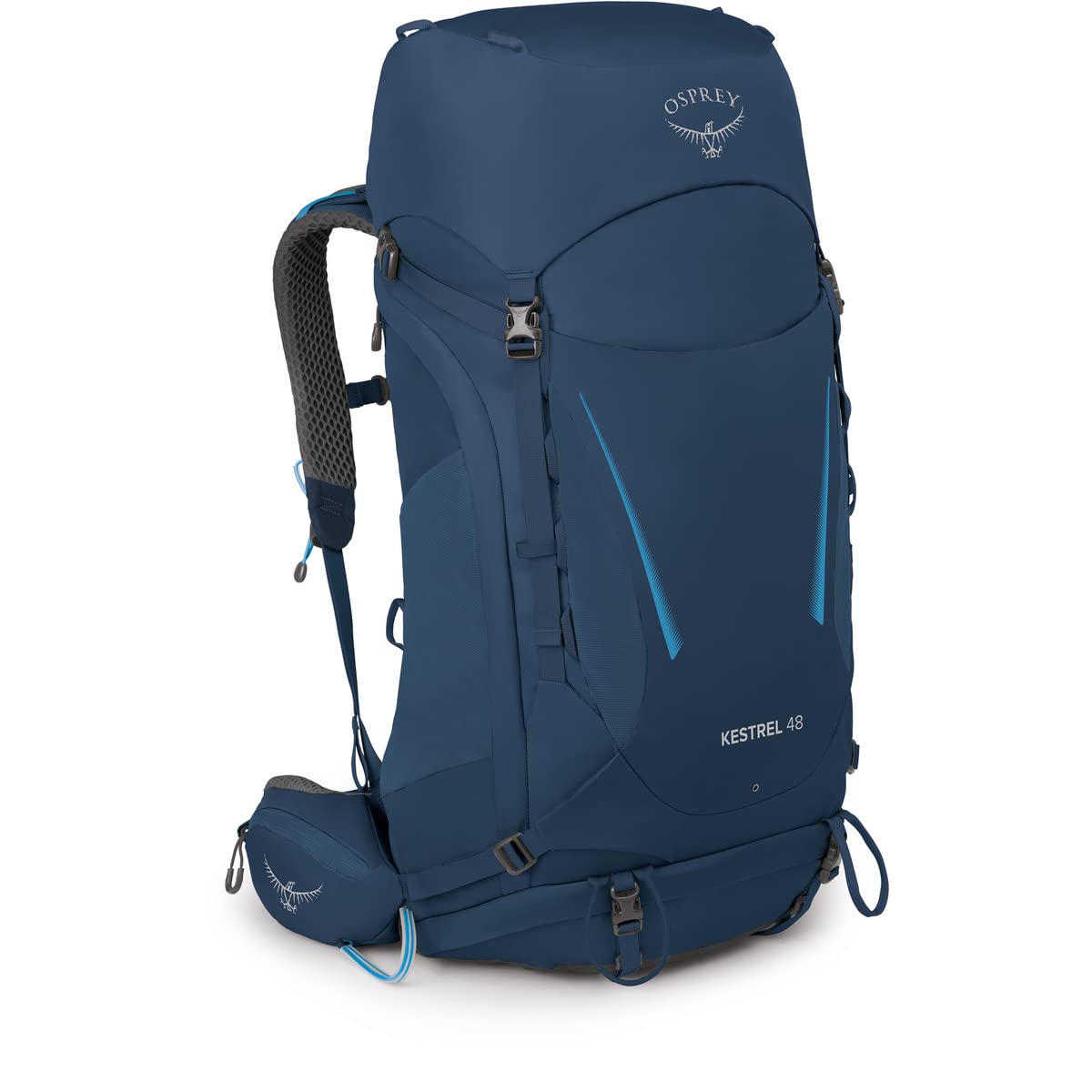
The Kestrel 48L is Osprey’s mid-volume workhorse, designed for hikers who want a compact, carry-on-friendly pack that still delivers full frame support. The AirScape backpanel provides a close-to-body fit that feels stable on technical terrain, and the fixed hipbelt wraps securely around the pelvis for efficient load transfer. The 48-liter capacity is ideal for 1–3 night trips where you are packing a lightweight tent, a 20-degree bag, and a cook system.
Testers consistently highlight the thick shoulder straps and waist pads — noticeably denser than Osprey’s Talon line — which prevent pressure points even when the pack is loaded to 25–30 pounds. The integrated rain cover, trekking pole attachments, and daisy-chain lash points make it trail-ready out of the box. The stretch side pockets are easy to access while wearing the pack, and the front pocket provides quick stash space for a rain jacket.
The 48-liter volume means you have to be disciplined with gear selection; there is no room for luxury items on a week-long trip. The fixed hipbelt also limits torso fit range compared to the adjustable Fit-on-the-Fly system on the 58L Kestrel. Users with very long torsos may find the M/L size maxes out before achieving a perfect fit.
Why it’s great
- Compact 48L size is airline carry-on compliant for travel
- Thick shoulder and waist pads eliminate hot spots under moderate loads
- Integrated rain cover and trekking pole attachments included
Good to know
- Fixed hipbelt limits torso fit adjustment range
- 48L volume forces minimal gear selection for longer trips
4. Kelty Asher 65L Backpacking Backpack
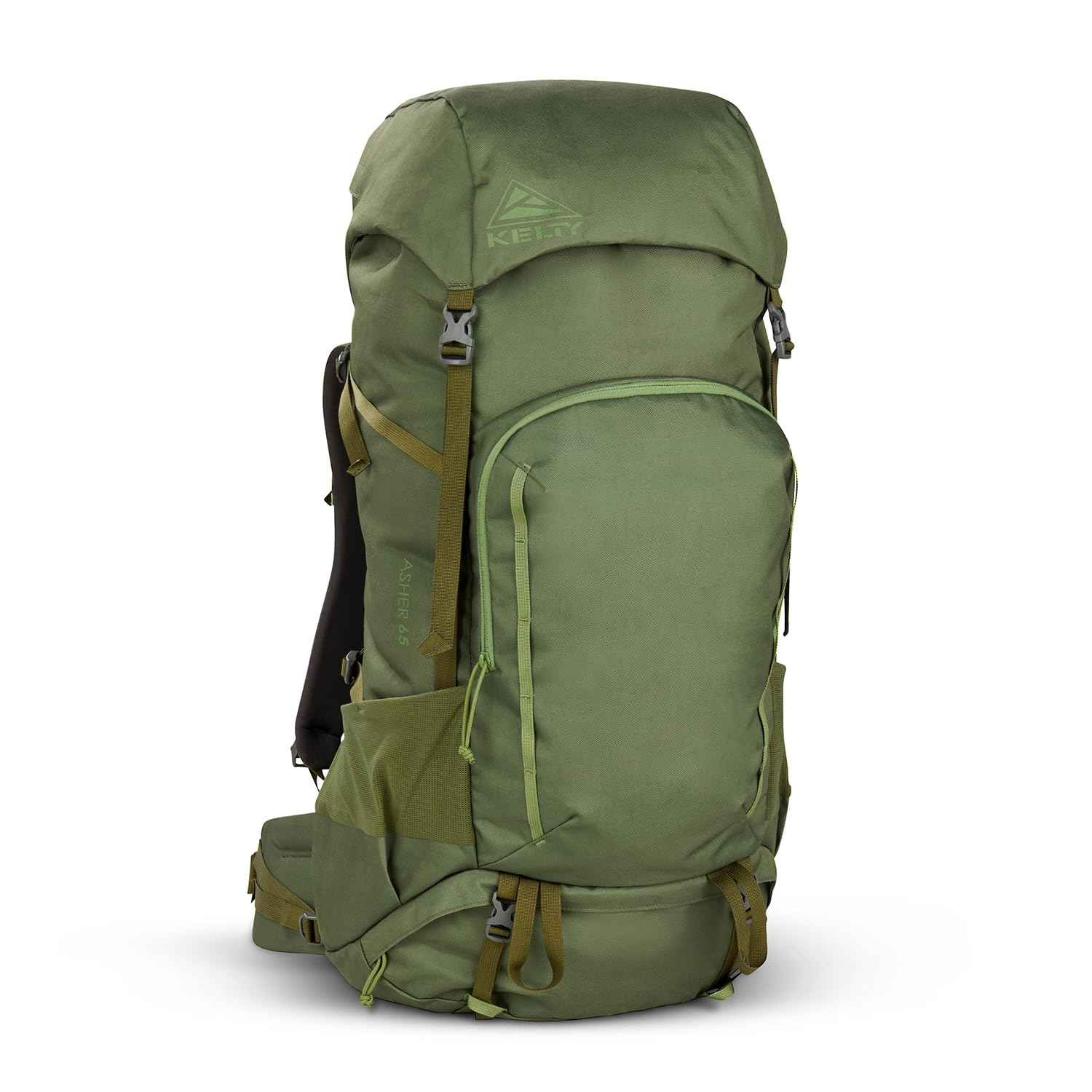
Kelty’s Asher 65L brings Fit Pro technology — a tool-free torso adjustment system — into the mid-range price bracket. The Fit Pro dial allows you to shift the shoulder yoke up or down in increments without removing the pack, making it easy to dial in the fit when you shed a puffy jacket mid-climb or pass the pack to a hiking partner. The advanced perimeter frame with an aluminum stay keeps loads stable up to the recommended 30–50 pound window.
The Amp Flow ventilated back panel reduces direct contact with your back, promoting airflow on warm days. The 65-liter capacity splits into a main compartment, a zippered sleeping bag compartment, and multiple organizational pockets on the lid and hip belt. Hikers who have used this pack for 2–3 years report that the 210-denier nylon shell resists abrasion and the C0 DWR coating holds up well through rain exposure without delaminating.
The hip belt padding, while adequate for loads under 40 pounds, is less dense than the Osprey Kestrel’s belt. Users carrying 45 pounds or more may notice the belt digging into the iliac crest after long miles. The side mesh pockets also run slightly tight — large Nalgene bottles can be a struggle to insert and retrieve.
Why it’s great
- Tool-free Fit Pro torso adjustment for on-the-trail fine-tuning
- Amp Flow back panel promotes airflow on warm hikes
- Durable 210-denier nylon with PFC-free DWR finish
Good to know
- Hip belt padding is less dense than premium competitors
- Side pockets are snug for wide Nalgene bottles
5. Kelty Asher 55L Backpacking Backpack
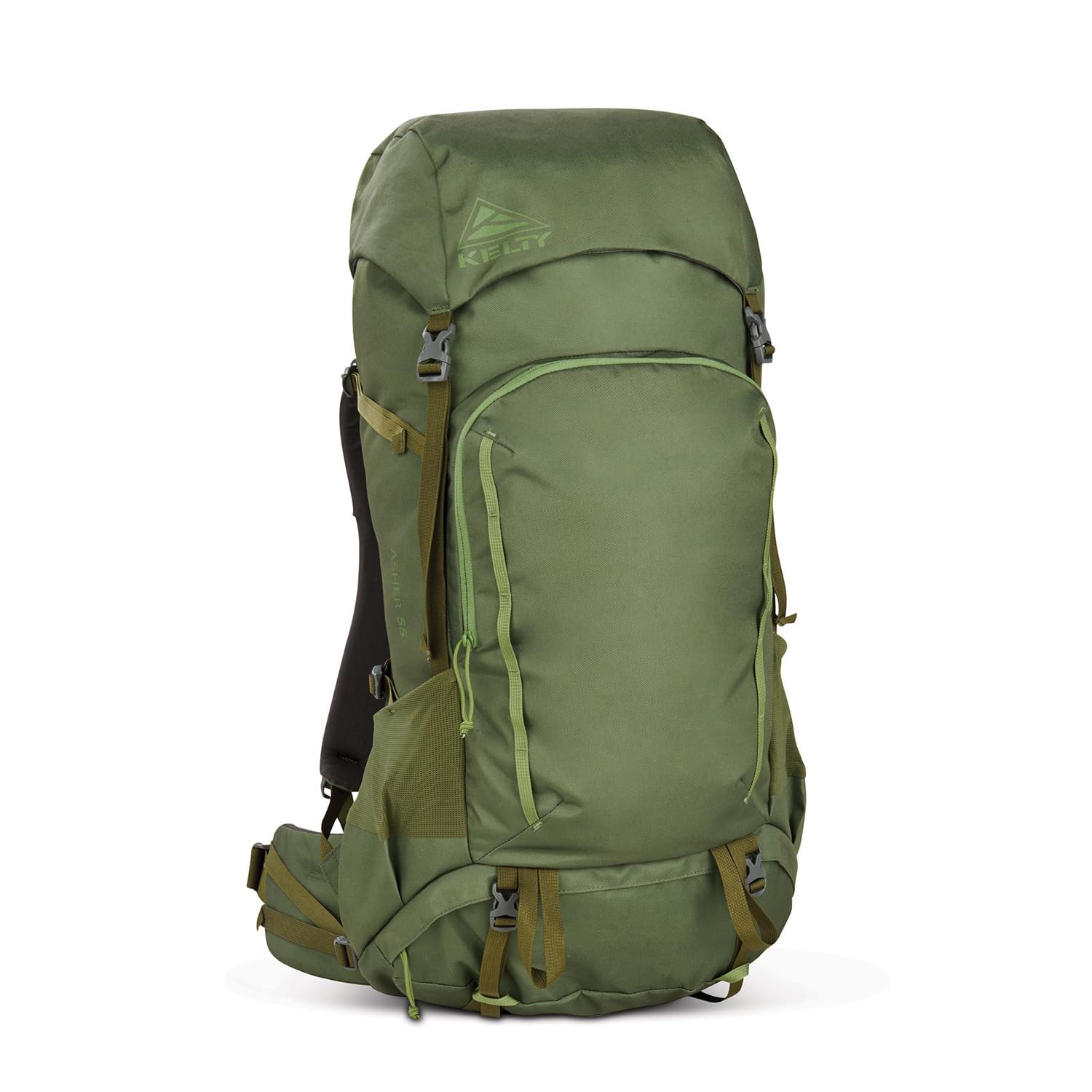
The Kelty Asher 55L is the smaller sibling of the 65L, sharing the same Fit Pro torso adjustment and Amp Flow back panel but with a lower overall volume and a slightly lighter frame at 3 pounds 2 ounces. This capacity is ideal for weekend trips (2–3 nights) where you can keep your base weight under 25 pounds. The 55-liter size also works as a transitional pack for day hikers who want to test overnight gear without committing to a massive 65L+ bag.
The advanced perimeter frame with an aluminum stay provides enough structure to transfer load to the hip belt effectively within the recommended 20–40 pound range. Users consistently note that the pack feels well-balanced and does not sway aggressively during side-hill traverses. The load-lifter straps are positioned high enough on the shoulder straps to create a proper pull-in angle — a common oversight on entry-level packs that can cause shoulder fatigue.
As with the 65L version, the hip belt foam is moderate; it handles a 30-pound load comfortably but loses some wrap stiffness when pushed toward the upper limit of its weight range. The main compartment opening is wide, which some users initially dislike but later appreciate for the easy visibility it provides when packing and unpacking gear.
Why it’s great
- Lighter frame at 3 lb 2 oz suits weekend trips and fastpacking
- Fit Pro torso adjustment allows quick fit changes for varying layers
- Wide main opening provides excellent gear visibility when packing
Good to know
- Hip belt lacks foam density for sustained carries above 40 lb
- 55L volume requires careful gear selection for 4+ day trips
6. Teton 65L Explorer Internal Frame Backpack
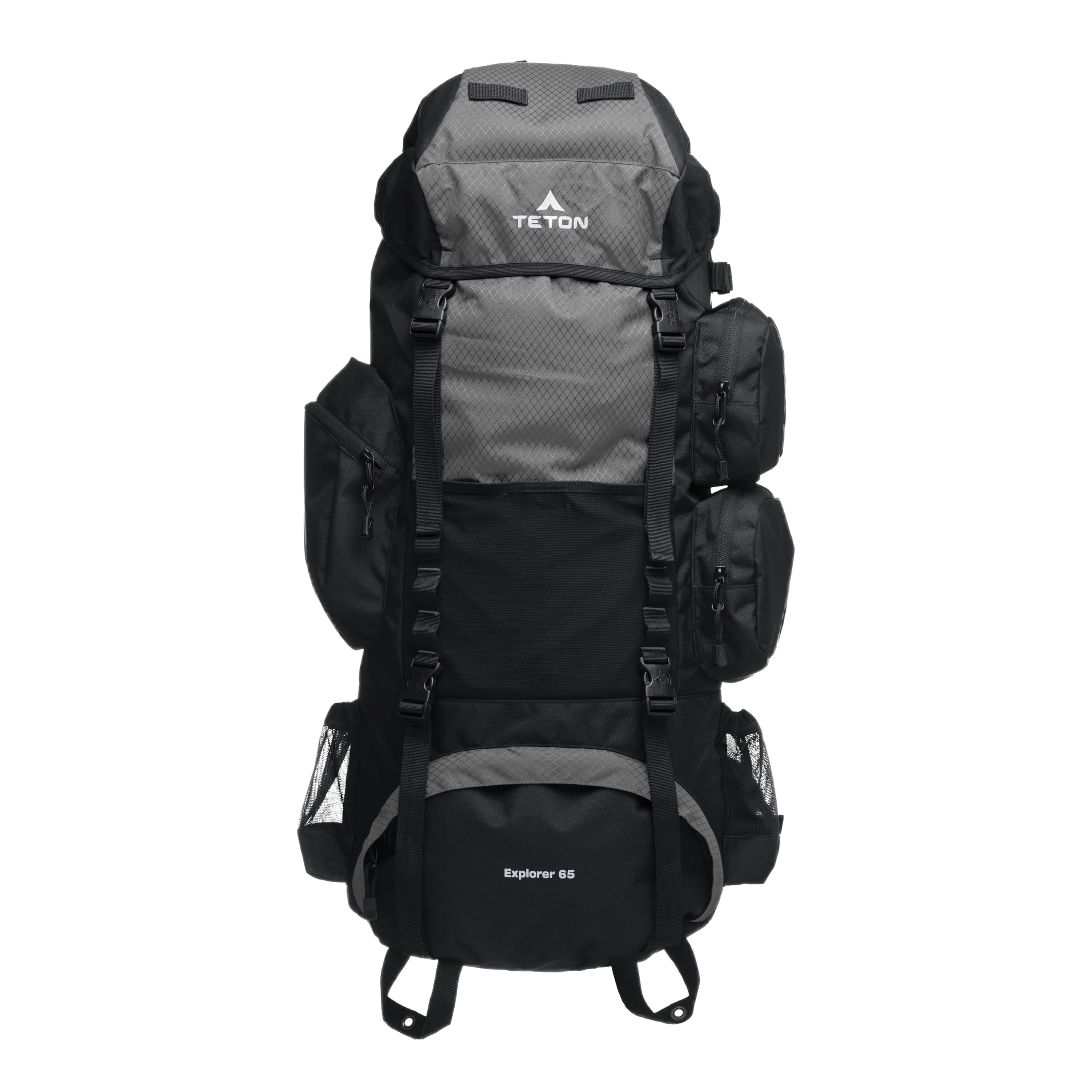
The TETON Sports Explorer 65L is a beginner-friendly pack that punches above its price point in load-carrying capacity. The multiposition torso adjustment accommodates medium to tall frames, and the open-cell foam lumbar pad with molded channels provides both cushioning and airflow. At 5 pounds, it is heavy, but the 600-denier polyurethane-lined fabric and robust frame handle loads up to 50 pounds without flexing or sagging.
Users praise the internal organization — the large sleeping bag compartment with a divider, the spacious main section, and the multi-directional compression straps that cinch down a partial load effectively. The rain cover stows in a hook-and-loop pocket at the bottom and deploys quickly when a storm rolls in. The waist belt compartments are large enough for a phone, snacks, or a compass, reducing the need to stop and access the main pack.
Customer support from TETON Sports is a standout feature — several users report that the company replaced defective packs immediately and even customized a chest strap extender for larger torsos. The main trade-offs are the pack’s weight and the side mesh pockets, which are too small to hold standard 32-ounce Gatorade bottles securely. The waist belt buckle also lacks a backup, so if it breaks, the belt cannot be cinched.
Why it’s great
- 600-denier fabric and robust frame handle 50 lb loads comfortably
- Excellent customer support with willingness to customize parts
- Lumbar pad with open-cell foam and molded channels reduces sweat buildup
Good to know
- At 5 lb it is one of the heaviest packs in this comparison
- Side mesh pockets are too small for standard 32 oz water bottles
7. Mardingtop 65L+10L Internal Frame Backpack
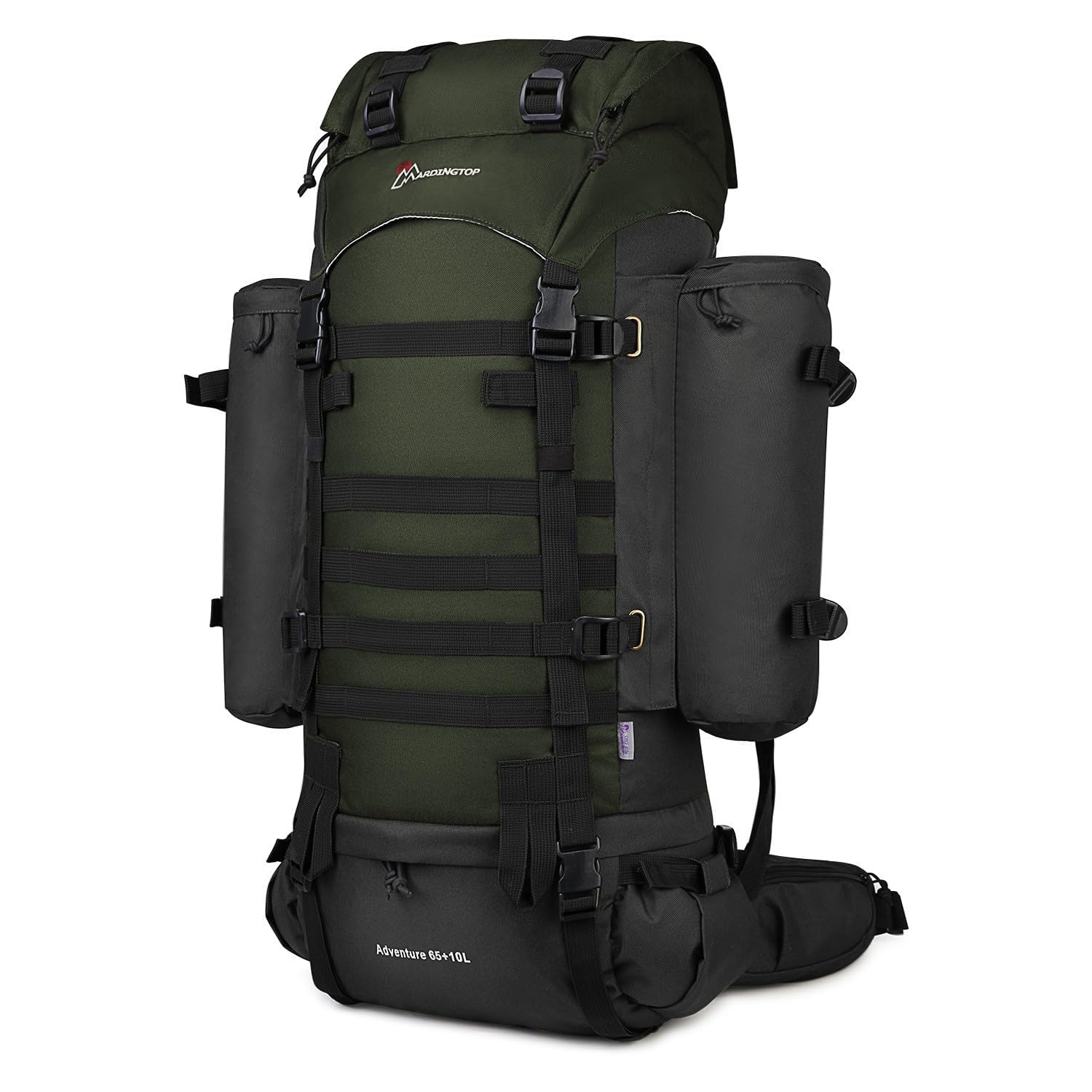
The Mardingtop 65L+10L offers the most modular expansion in this lineup, combining a 65-liter main body with MOLLE webbing that lets you attach pouches, a hydration carrier, or a sleeping pad externally. The expandable collar adds up to 10 additional liters, pushing total capacity to 75 liters for week-long expeditions. The internal frame uses a sturdy stay, and the heavy-duty material with reinforced stitching has survived hundreds of miles of use according to a five-year durability report from one reviewer.
The pack includes features typically found on budget-friendly military-style packs: bottom sleeping bag access, internal drawstring separators, detachable side pouches secured by hook-and-loop and zippers, and multiple lash points. The MOLLE platform is particularly useful for hikers who want to attach pouches for quick-access items like a GPS, multitool, or water filter without digging through the main compartment.
The hip belt padding is adequate for moderate loads (up to about 35 pounds) but thin compared to packs from Osprey or Kelty. Under heavy loads (40+ pounds), the belt tends to cause chafing, and the shoulder straps can slip if not cinched tightly. The side zippers on the smaller pouches have a tendency to unzip during aggressive brush navigation — a known issue referenced by multiple long-term users.
Why it’s great
- Expandable from 65L to 75L via collar extension
- Full MOLLE webbing for modular pouch attachment
- Bottom sleeping bag access with internal drawstring separators
Good to know
- Hip belt padding is thin and causes chafing under heavy loads
- Side pouch zippers tend to unzip during dense brush navigation
8. MOUNTAINTOP 70L Internal Frame Backpack

The MOUNTAINTOP 70L is an entry-level pack that provides massive volume at a budget-friendly price point. The internal frame uses a lightweight aluminum alloy plate to transfer load to the hip belt, and the YKK zippers offer reliable closure across the main compartment, the side access panel, and the bottom sleeping bag compartment. The 70-liter capacity is large enough for a full week of gear, including a bulky synthetic sleeping bag and a 3-person tent.
Users who have taken this pack on 2–3 night trips note that the adjustable torso — achieved via a multi-position ladder system — allows a reasonable fit for men and women of different heights. The mesh back panel and shoulder straps provide adequate ventilation, and the included rain cover keeps gear dry during sudden downpours. The side zipper entry to the main compartment is a practical feature for accessing items buried in the middle of the pack without unpacking the top.
The pack’s comfort ceiling is lower than premium options — users report that loads above 35 pounds start to feel top-heavy, and the hip belt lacks the dense foam needed for long-term weight distribution. The hydration port is small, and the water bladder compartment sits in a position that can cause the pack to bulge outward if the bladder is full. Some users also report stitching fraying at high-stress seam junctions after extended use.
Why it’s great
- 70L capacity fits a full week of gear including bulky sleeping bags
- Side zipper entry provides easy access to the middle of the pack
- YKK zippers and included rain cover add reliability for the price
Good to know
- Hip belt foam is thin, limiting comfort above 35 lb loads
- Hydration port is too small for some standard drinking tubes
9. Mardingtop 60L Military Internal Frame Backpack
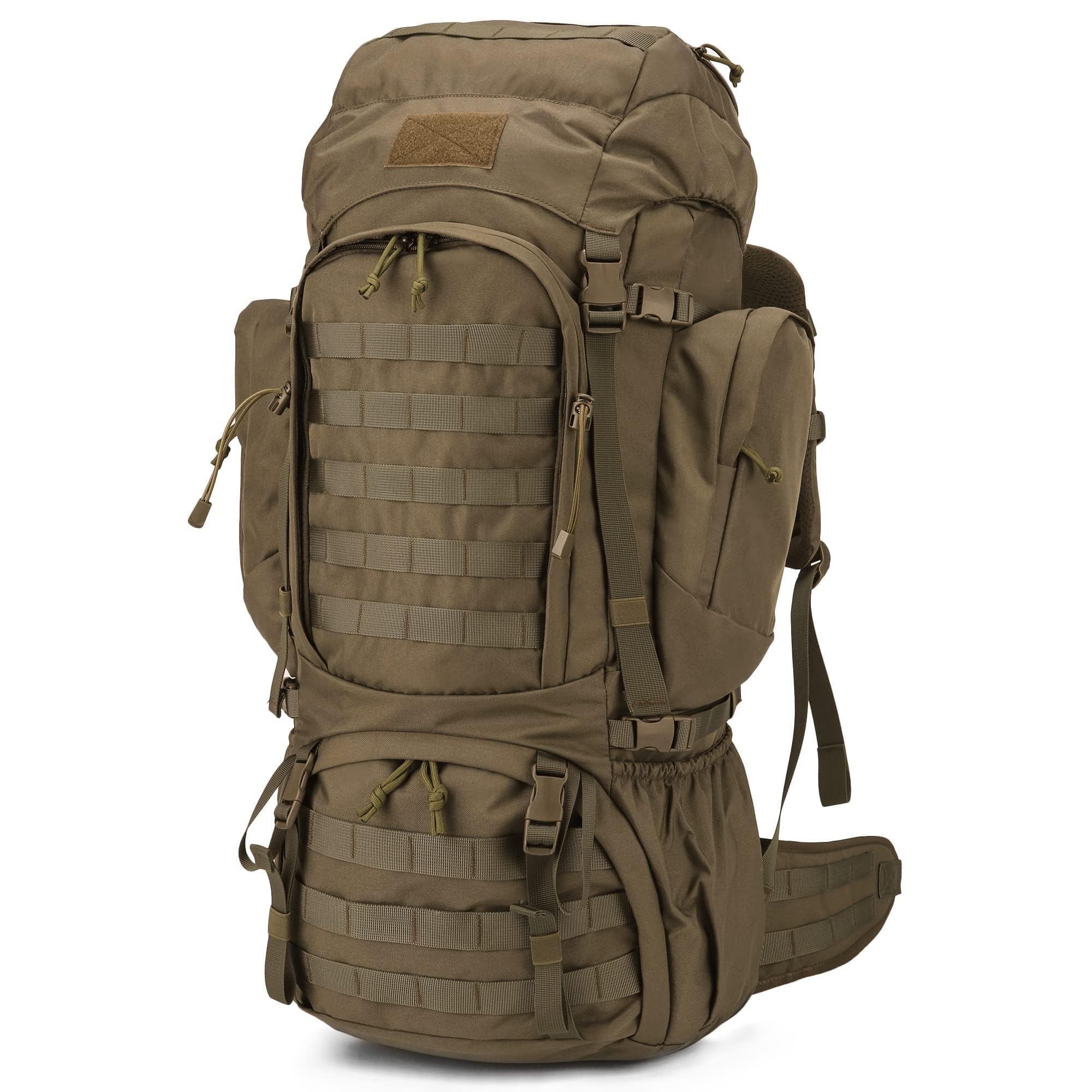
The Mardingtop 60L Military pack delivers a striking balance of price and features for hikers who want a durable load-hauler without spending premium money. The internal frame provides reasonable load transfer, and the YKK zippers — a spec usually reserved for packs costing twice as much — ensure reliable operation in dirty and wet conditions. The MOLLE webbing across the front and sides allows you to attach pouches for camera gear, a first-aid kit, or a water bottle holster.
Users consistently praise the pack’s value proposition: the 60-liter capacity is true to size, the modularity with MOLLE provides flexibility, and the material balance (nylon with reinforced stitching) has held up to repeated weekend trips and moderate bushwhacking. One reviewer who owns seven hiking backpacks reports that this pack became his dedicated survival bag due to its durability and organizational versatility for the price.
The hip belt is the pack’s weakest link — it lacks padding and will cause chafing and discomfort on carries over 30 pounds or on hikes longer than 5 miles with a heavy load. The included rain cover has cheap elastic that degrades quickly. The shoulder straps are also narrow, which can create pressure points on the trapezius muscles when the pack is fully loaded. This pack is best suited for moderate distances (1–3 days) with lightweight gear.
Why it’s great
- YKK zippers provide reliable operation at a budget price point
- MOLLE webbing allows extensive modular customization
- True 60L capacity with good organizational compartments
Good to know
- Hip belt lacks padding, causing chafing under loads over 30 lb
- Rain cover elastic degrades quickly with regular use
FAQ
What volume do I need for a 5-day hike?
How do I know if a pack fits my torso correctly?
What is the difference between an internal frame and an external frame pack for long-distance hiking?
Should I buy a pack with a built-in rain cover?
Final Thoughts: The Verdict
For most users, the best backpack for long-distance hiking winner is the Osprey Kestrel 58L because its Fit-on-the-Fly hipbelt, AirScape backpanel, and 58-liter volume hit the sweet spot of adjustability, durability, and capacity for trips ranging from overnighters to week-long treks. If you want a lighter pack with superior ventilation for warm-weather hikes, grab the Osprey Rook 65L. And for the best value with a tool-free torso adjustment that rivals packs costing twice as much, nothing beats the Kelty Asher 65L.