
When your route narrows to a chimney crack and every inch of pack profile determines whether you squeeze through or get pinned, the difference between a good backpack and a great one is measured in millimeters of body-hugging contour. A climbing pack that shifts weight during a dynamic move or snags on rock during a mantle can turn a cruiser pitch into a fight. The right pack disappears onto your back, keeping your center of gravity locked close so your focus stays on the sequence, not the gear bouncing behind you.
I’m Min — the co-founder and writer behind Gadgets Feed. I’ve spent countless hours analyzing suspension systems, fabric denier ratings, and volume-to-weight ratios across the climbing pack market to separate the true alpine performers from the generalist wannabes.
Whether you’re linking multi-pitch trad routes or hiking a long approach to a high-altitude face, the right backpack for rock climbing must balance load stability with a slim, snag-free silhouette that moves with your body through every hold and heel hook.
How To Choose The Best Backpack For Rock Climbing
The wrong pack on a climb feels like a passenger who won’t stop shifting. The right one hugs your lumbar, stays put during a high-step, and doesn’t create an obstacle between you and the rock. Here’s what to prioritize.
Suspension System & Fit
A climbing pack needs a frame or backpanel that transfers load directly to your hips without allowing the pack to sway laterally during a reach. Look for a Delrin U-frame in alpine packs like the Deuter Guide series — it provides a rigid structure that keeps weight centered against your spine while still allowing torsional flex for dynamic movement. Avoid packs with flimsy foam sheets that permit the bag to sag away from your body on overhanging terrain.
Fabric Durability & Weight
Rock contact is inevitable. A pack made from sub-200D nylon will abrade quickly against granite. The sweet spot for technical climbing packs is 420D to 630D nylon ripstop — durable enough to shrug off sharp edges yet light enough to stay under 2 pounds at 30 liters. Some premium options use PA 6.6 for higher tear resistance without a weight penalty. Check for reinforced base fabric if you frequently set the pack down on talus.
Rope & Gear Attachment Systems
Multi-pitch climbers need a dedicated rope carry strap on the top lid to prevent the rope from swinging into your peripheral vision during a lead. Look for dual ice axe loops with bungee tie-offs (like the Osprey Mutant’s ToolLock system) and reversible compression straps that can secure a helmet or sleeping pad. A removable tarp is a huge plus for rope management at the crag — it keeps your line clean without carrying a separate rope bag.
Volume Considerations
Day cragging at the gym or sport crag rarely needs more than 18–26 liters. A compact pack like the PETZL BUG (18L) fits close to the body and is ideal for chimneys. Multi-day alpine objectives or big wall approaches require 30–40 liters to accommodate a sleeping bag, puffy, and food. The Osprey Mutant 38L or Deuter Guide 32+8L offer expandability without sacrificing the slim profile needed for technical sections.
Quick Comparison
On smaller screens, swipe sideways to see the full table.
| Model | Category | Best For | Key Spec | Amazon |
|---|---|---|---|---|
| Deuter Guide 30L | Premium | Alpine & mountaineering | Delrin U-frame, 420D PA, 1.9 lb | Amazon |
| Deuter Women’s Guide 32+8L SL | Premium | Women’s alpine fit | 330D/630D PA, SL fit, 32+8L | Amazon |
| Osprey Mutant 38L | Premium | Big alpine days, ski carry | Dual ToolLocks, 38L, 2.69 lb | Amazon |
| Arc’teryx Mantis 26 | Mid-Range | Versatile daypack & travel | 600D rePET, 26L, 1.3 lb est. | Amazon |
| Mammut Lithium Climbing | Mid-Range | Lightweight day climbing | 210D nylon, U-frame, rain cover | Amazon |
| PETZL KLIFF 36L | Budget-Friendly | Cragging with rope tarp | 36L, removable tarp, 1.0 lb | Amazon |
| PETZL BUG 18L | Budget-Friendly | Single-day sport/gym | 18L, 18 oz, rope strap | Amazon |
In‑Depth Reviews
1. Deuter Guide 30L Backpack
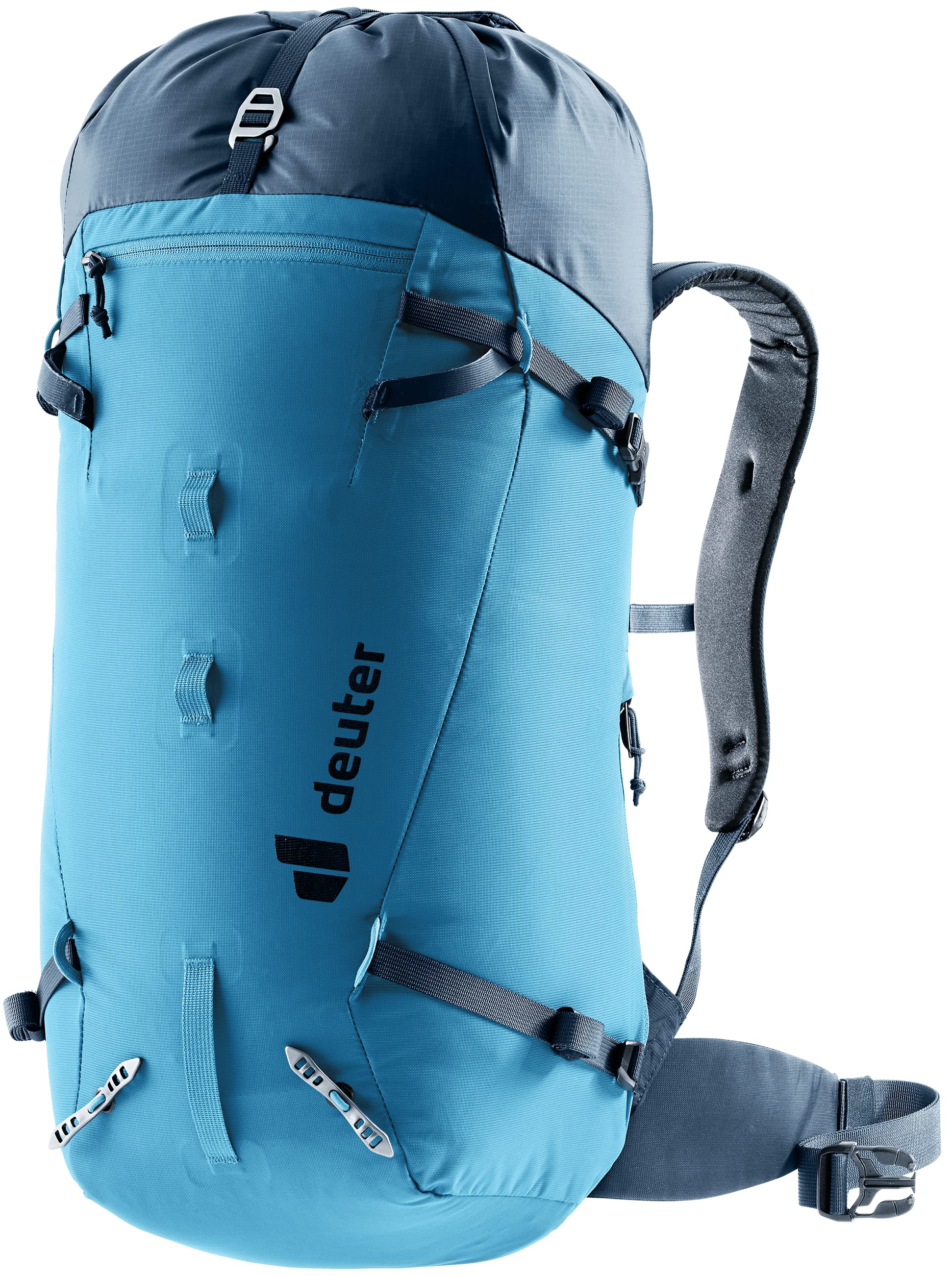
The Deuter Guide 30L is purpose-built for mountaineering with a tensioned Delrin U-frame that evenly distributes weight across your hips while maintaining a compact, body-hugging profile. At just 1.9 pounds, it manages to pack a full aluminum frame, integrated helmet holder, and glasses stow system without feeling overbuilt. The 420D PA FD RIPS fabric offers serious abrasion resistance against granite and limestone.
What sets this pack apart for technical terrain is the precision-adjustable sternum strap and stowable hip fins. You can cinch the load tight for a sketchy traverse or fully remove the waist belt to save weight on approaches. The dual ice axe attachment loops and detachable rope strap mean you can carry a full alpine rack without external lashing.
The main drawback is the drawstring closure — when the pack is fully loaded, accessing gear at the bottom requires digging through the top. The deep black interior also makes finding small items like a headlamp frustrating in low light. Still, for alpine routes where weight and stability are non-negotiable, this is the gold standard.
Why it’s great
- Delrin U-frame for excellent load transfer without extra weight
- Stowable hip fins and removable waist belt for route flexibility
- Integrated helmet holder and glasses stow system
Good to know
- Drawstring main closure makes deep-packing access slow
- Dark interior makes small item retrieval difficult without a light
- No exterior water bottle pocket
2. Deuter Women’s Guide 32+8L SL Backpack
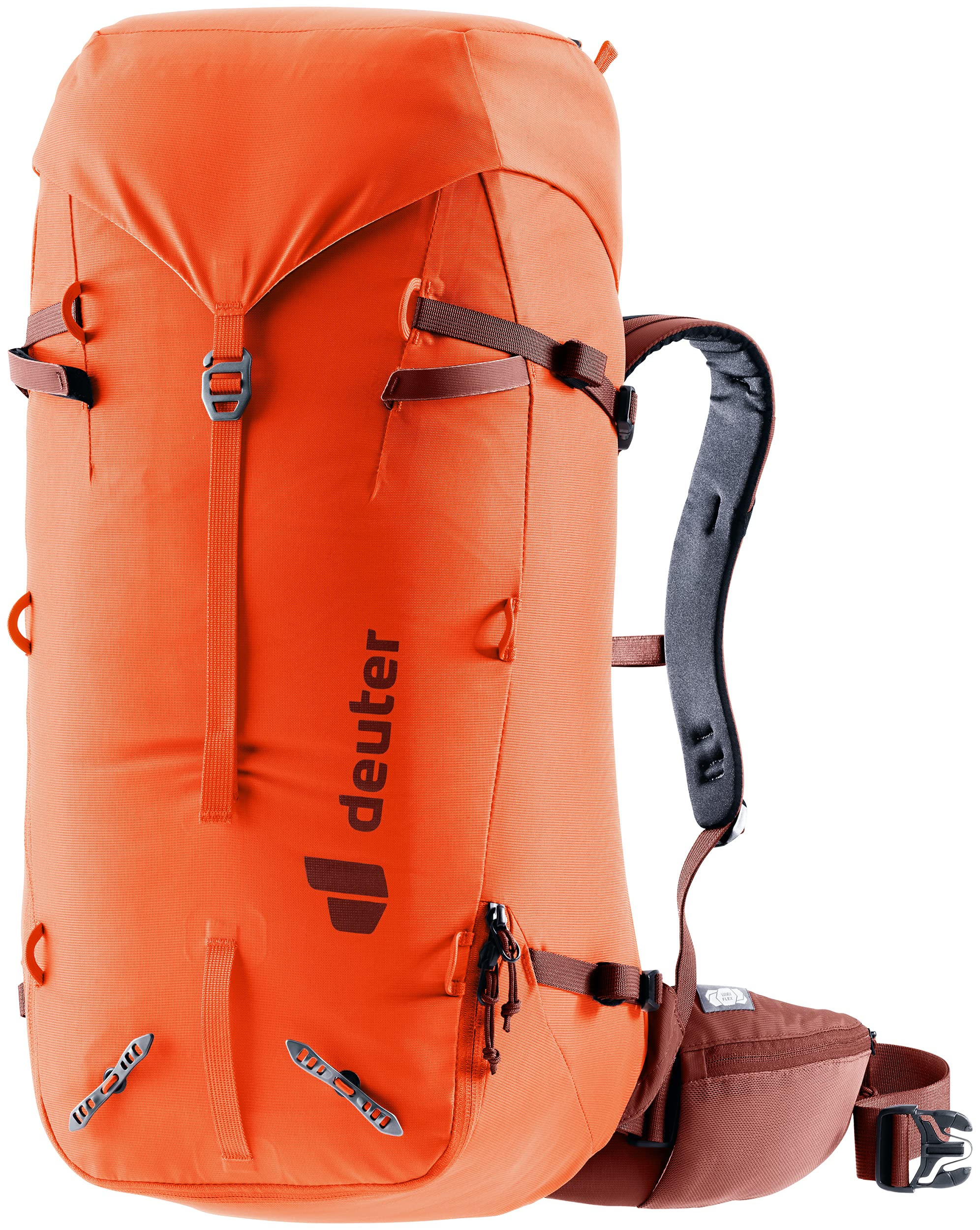
The women’s-specific SL version of the Guide series reworks the entire carrying system with a shorter torso, narrower shoulder straps, and conically shaped hip fins that contour naturally to female anatomy. The 32+8L volume (expandable via the floating lid) is perfect for multi-day alpine objectives where you need to pack a sleeping bag, puffy, and food alongside your rope and rack.
The material is the real standout here: a blend of 330D PA 6.6 and 630D PA makes this one of the most tear-resistant packs in its class. The front zipper opening (J-zip) provides full access to the main compartment without digging through the top — a massive advantage when you need to grab a belay jacket mid-pitch. The detachable VariFlex hip fins include a zippered pocket for quick-draw access to snacks or a phone.
On the descents, the weight distribution is remarkable; one reviewer noted carrying 20kg without feeling it in their back. The trade-off is that the pack is not waterproof — you’ll need a cover for truly wet approaches. The helmet holder also blocks the outside pocket when deployed, requiring you to partially unfasten it to access the compartment underneath.
Why it’s great
- 330D/630D PA fabric offers exceptional tear resistance
- J-zip front opening for full compartment access
- SL fit with narrow straps and contoured hip fins
Good to know
- Not seam-sealed for wet approaches
- Helmet holder blocks outside pocket when in use
- Limited external attachment points for bulky gear
3. Osprey Mutant 38L Climbing and Mountaineering Backpack
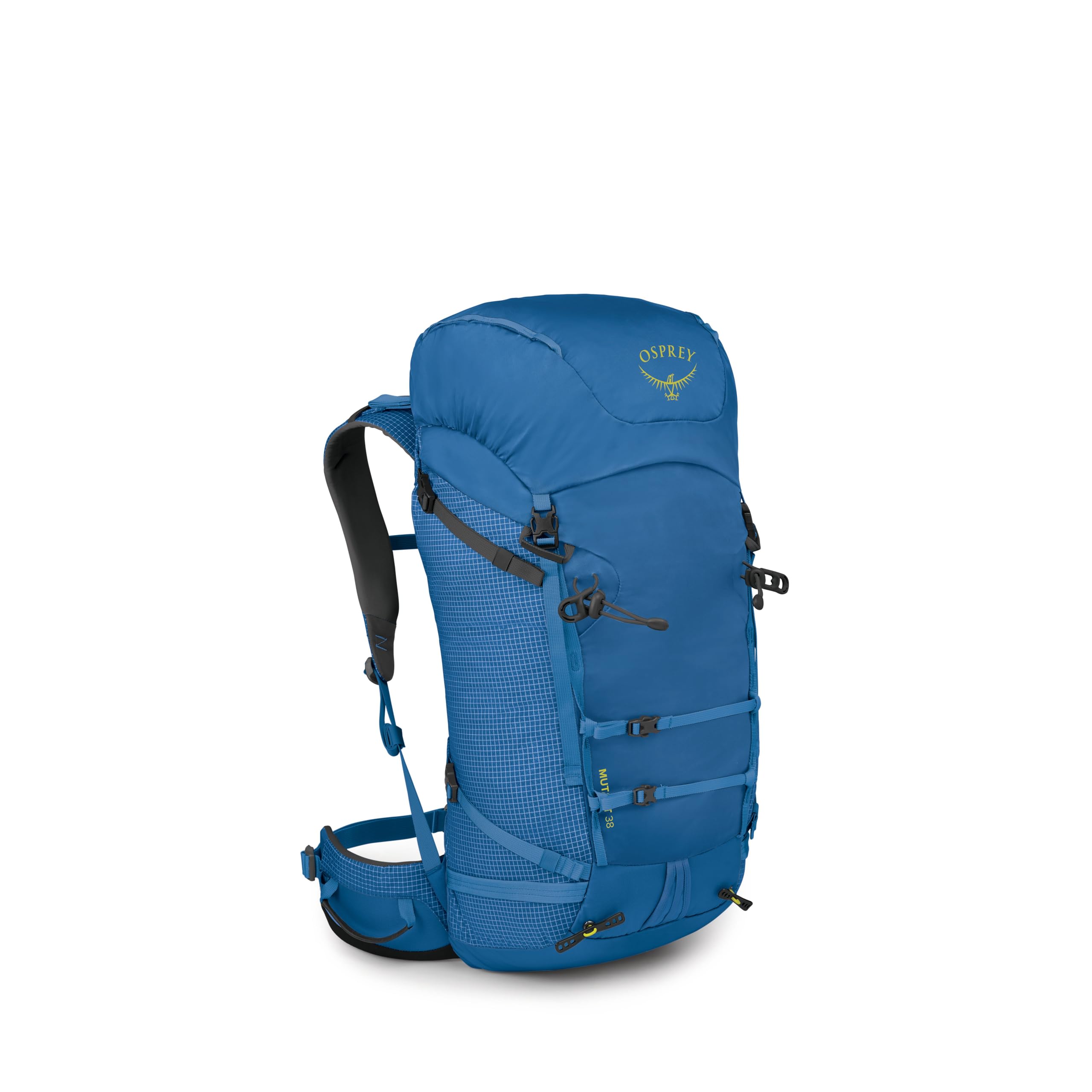
The Osprey Mutant 38L is the alpine all-rounder that prioritizes versatility without sacrificing climbing-specific features. The reverse-wrap hipbelt creates a bucket-seat feel that locks the load into your hips, while the dual ToolLocks with bungee tie-offs allow you to secure ice axes or trekking poles securely against the pack face. The snowshed backpanel reduces ice build-up in winter conditions.
At 2.69 pounds, it’s heavier than the Deuter alternatives, but the extra heft buys you a reinforced A-frame ski carry system, removable top lid with a zip pocket, and a FlapJacket cover for days when you strip the lid to save weight. The main compartment is accessed via a top drawstring, similar to the Deuter Guide, but the inclusion of two spacious top pockets (one on the lid, one stowaway) provides good organization for small gear.
The biggest complaint is the lack of an exterior water bottle pocket — a deliberate design choice for safety on multi-pitch routes, but frustrating on the approach. The hardware is also slightly unintuitive at first (the buckles require two hands to operate in gloves). For 1–2 day alpine missions, this pack delivers the most gear-carrying versatility in the class.
Why it’s great
- Reverse-wrap hipbelt for locked-in load stability
- Dual ToolLocks with bungee tie-offs for ice axes
- Reinforced A-frame ski carry for winter objectives
Good to know
- No exterior water bottle pocket
- Hardware can be fiddly with gloves at first
- Heavier than comparable 38L alpine packs
4. Arc’teryx Mantis 26 Backpack
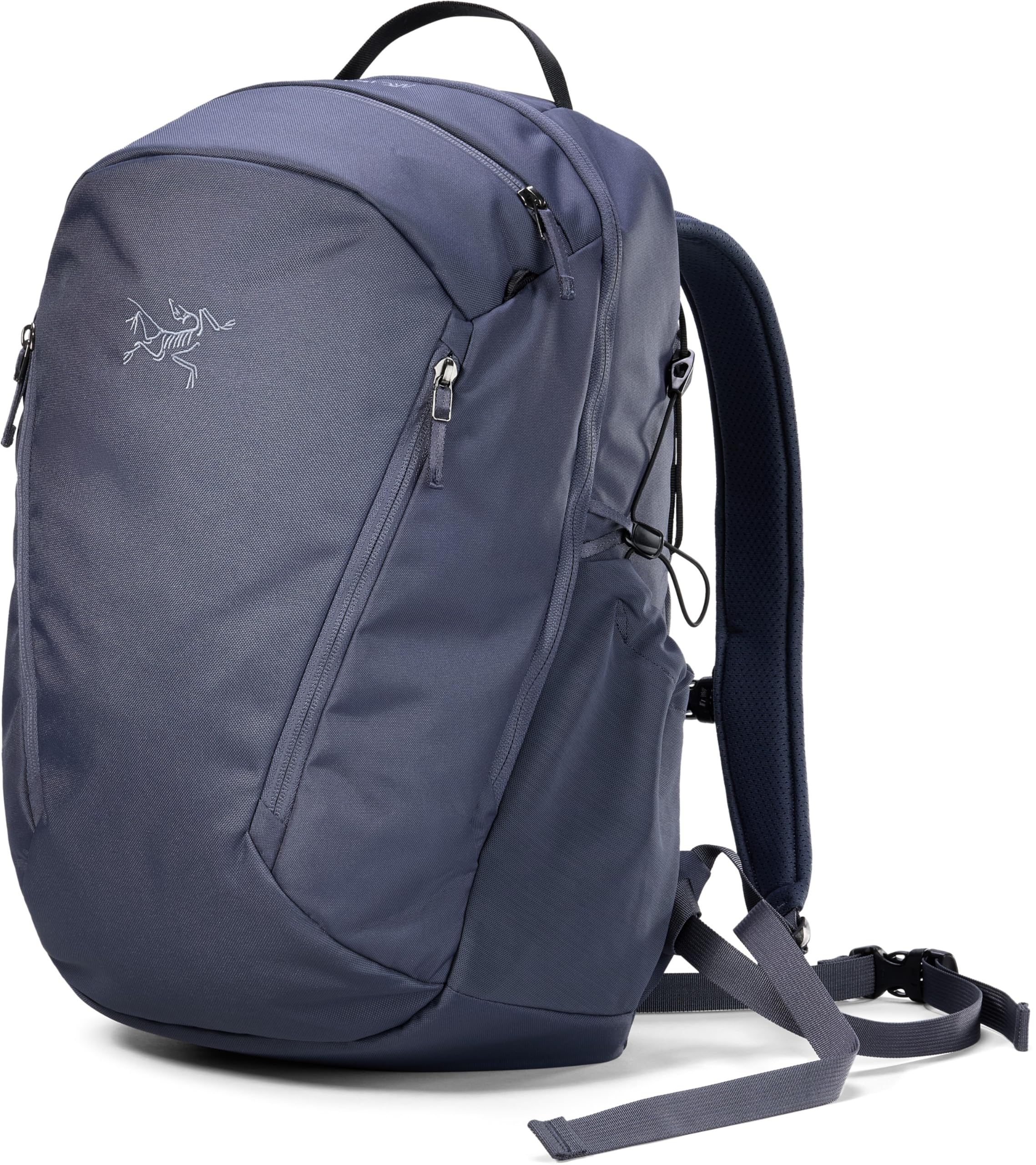
The Arc’teryx Mantis 26 is a crossover daypack that works well for gym climbing and short sport crag days, but lacks the alpine-specific suspension of the Deuter or Osprey options. The 600D rePET fabric is robust and eco-friendly, and the external pocket layout is genuinely useful — a large front stash pocket, two mesh side pockets, and a secure zip pocket on the hipbelt.
What makes this pack appealing for the climbing crowd is its simplicity: no extra webbing, no floppy ice axe loops, just a clean, streamlined shape that won’t catch on rock during a scramble. The main compartment accommodates a 20-inch laptop, making it a great crossover for climbers who commute to the gym. The backpanel is well-ventilated for sweaty approaches.
However, the lack of a dedicated rope strap or gear loops means you’ll be clipping draws to the outside or stuffing a rope inside, which eats into usable volume. The shoulder straps, while comfortable for light loads, become noticeable after a few hours with 20+ pounds. This is a fantastic lifestyle pack for climbers, but not a technical alpine weapon.
Why it’s great
- 600D rePET fabric is durable and sustainable
- Excellent pocket layout for organization
- Streamlined profile that won’t snag on rock
Good to know
- No dedicated rope strap or ice axe loops
- Shoulder straps less supportive for heavy loads
- Not designed for alpine or multi-pitch technical climbing
5. Mammut Lithium Climbing & Daypack
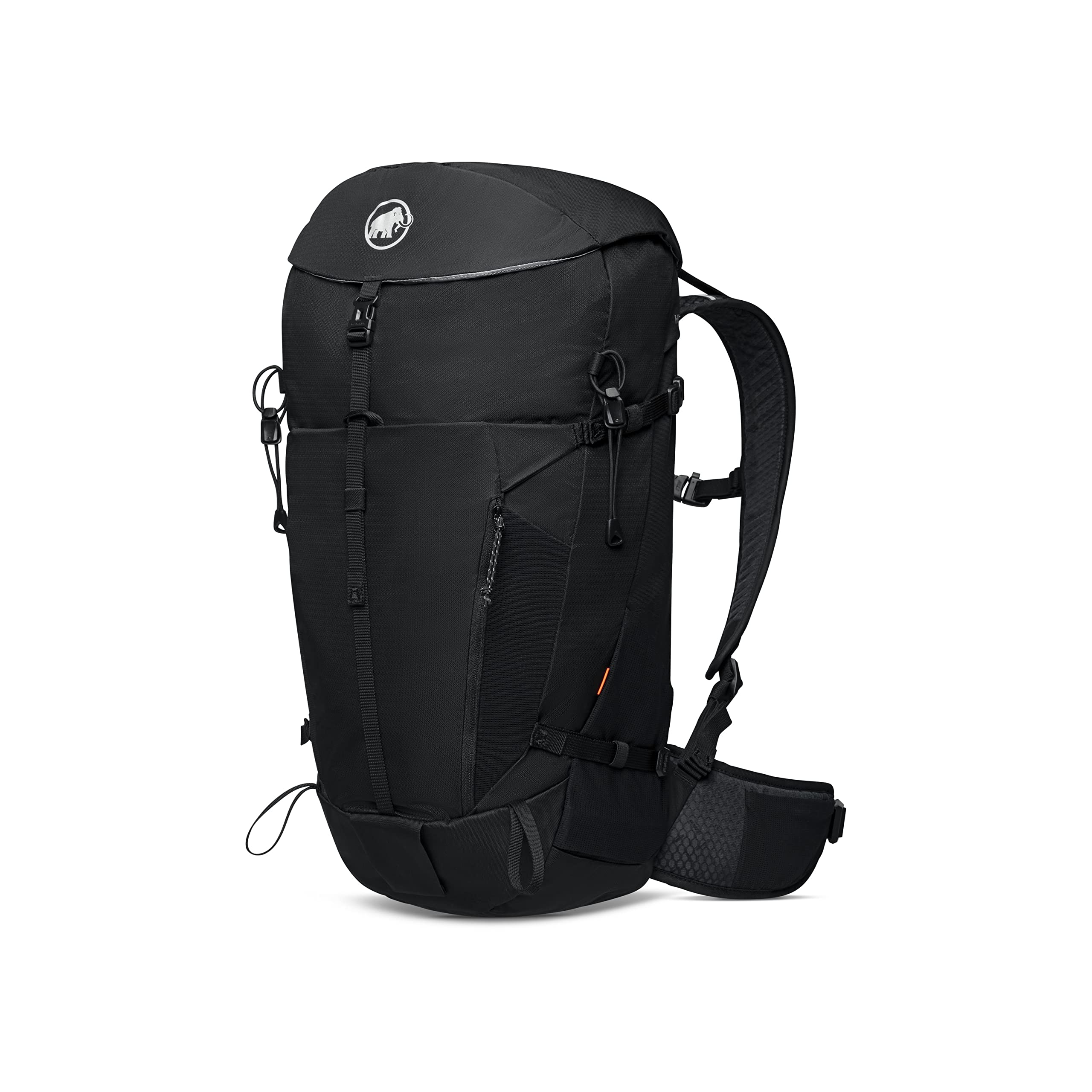
The Mammut Lithium packs a surprising amount of alpine tech into a sub- package. The U-frame provides solid load transfer for a 20+ pound carry, and the detachable rain cover means you don’t have to baby the pack in wet conditions. Made from over 89% recycled materials (100D nylon with colored ripstop and 210D nylon dragon main), it’s one of the most sustainable climbing packs on the market.
Key features include a fold-out cellphone pocket on the hip belt, trekking pole carrier, and a dedicated helmet holder that doesn’t block the main compartment zipper. The fit is comfortable on both men and women, though the standard torso length may feel slightly long for shorter climbers. The 210D fabric is lighter than the Deuter’s 420D, so long-term abrasion resistance on sharp granite is a minor concern.
Customer feedback highlights the pack’s excellent carry comfort-to-weight ratio — it feels lighter than its liter capacity suggests. The main downsides are the relatively simple shoulder strap adjusters (which require threading through buckles rather than one-pull cinch) and the lack of a dedicated rope carry strap on the lid.
Why it’s great
- U-frame for good load transfer at a mid-range price
- 89% recycled materials with a detachable rain cover
- Fold-out phone pocket on hip belt is a clever addition
Good to know
- 210D nylon is less abrasion-resistant than premium options
- Shoulder strap adjusters require threading, not one-pull
- No dedicated rope strap for multi-pitch climbing
6. PETZL KLIFF 36L Rope Bag

The PETZL KLIFF reimagines the classic rope bag as a carryable backpack. The built-in removable tarp (140 x 140 cm) is transformative for crag days — you simply arrive, unzip, and lay out the tarp with your rope already flaked on it. The 36-liter volume accommodates up to 100 meters of rope alongside a harness, quickdraws, shoes, and a jacket, making it a true one-pack solution for the crag.
The shoulder straps are foam-padded and adjustable, with a sternum strap for stabilization, but there is no hip belt. This means the pack is not designed for long approaches — the load sits entirely on your shoulders. For a short hike to the base of the crag (under 30 minutes), it’s fine, but for a steep 45-minute approach, you’ll miss the load transfer to your hips.
Durability is excellent after extensive use, with polyester fabric and an aluminum hook holding up well. The zippered pocket on the front provides quick access to keys, map, and phone. The biggest functional gripe is tying the tarp back into the pack — the zipper location makes it awkward to tuck the tarp away neatly.
Why it’s great
- Integrated removable tarp (140×140 cm) for instant rope management
- 36L fits up to 100m rope plus full sport rack
- Lightweight at 1.0 lb for a rope bag backpack
Good to know
- No hip belt — not for long or steep approaches
- Tarp re-packing is fiddly due to zipper location
- Limited external pockets for quick-access gear
7. PETZL BUG 18L Backpack

The PETZL BUG is the ultimate minimalist’s climbing backpack for single-day gym sessions or sport crag outings. At just 18 liters and 18 ounces, it’s barely noticeable on your back — ideal for squeezing through a tight chimney or threading behind a roof. The low-profile design hugs your back closely, preventing the pack from shifting during overhanging movement.
The features are stripped back but smart: an adjustable strap on the top for securing a rope (or jacket), side compression straps, and a wide exterior pocket that fits a guidebook and snacks. The main compartment fits a hydration system or a laptop, making it a decent gym-to-office crossover. The waistbelt folds away when not needed, though it’s minimal to begin with.
Customer reviews consistently praise its durability — one user reported four years of heavy use. The trade-off is limited capacity: you won’t fit a helmet, rope, and full rack in this pack simultaneously. It’s designed for the climber who carries only shoes, harness, draws, water, and a sandwich. For fair-weather sport days or indoor training, it’s a near-perfect pack.
Why it’s great
- Ultra-light 18 oz with a snag-free, body-hugging profile
- Durable enough for years of regular use
- Rope strap on top and side compression for load stability
Good to know
- 18L is too small for rope + full rack + helmet
- Minimal waistbelt — not for heavy loads
- No ice axe or trekking pole attachments
FAQ
Is a rope bag like the PETZL KLIFF better than a regular backpack for sport climbing?
Can I use a hiking daypack for rock climbing instead of a dedicated climbing pack?
What volume do I need for a day of multi-pitch trad climbing?
Final Thoughts: The Verdict
For most users, the backpack for rock climbing winner is the Deuter Guide 30L because it delivers a proper Delrin U-frame, lightweight build at 1.9 lb, and thoughtful alpine features at a mid-premium price that outperforms many options that cost more. If you want a women’s-specific fit with expandable volume, grab the Deuter Women’s Guide 32+8L SL. And for big alpine missions requiring ski-carry capability and multi-tool attachment, nothing beats the Osprey Mutant 38L.