
A snowboard backpack is not a regular daypack with a snowflake sticker on it. It must manage the unique tension of a day on the mountain: carrying a board or skis securely during boot packs, fitting under a parka on the chairlift, and surviving repeated impacts from falls without bursting a seam. The right pack integrates carry systems—vertical, diagonal, or A-frame—that keep your gear tight against your back, not flopping sideways as you carve.
I’m Min — the co-founder and writer behind Gadgets Feed. I’ve spent countless hours analyzing the technical specifications, real-world customer feedback, and material science behind dozens of snowboard backpacks to separate the ones that actually survive a season from those that come apart on the first icy run. This guide focuses on the sub-65L range where hydration, board carry, and durability converge.
Whether you are lapping the resort or touring the backcountry, selecting the right backpack for snowboarding determines how much you enjoy the day and how well your gear survives it.
How To Choose The Best Backpack For Snowboarding
Choosing a snowboard backpack is a balance of liter capacity against packed dimensions. Too large and the pack pushes against the back of your helmet on the chairlift. Too small and you cannot carry a hydration reservoir plus a mid-layer and avalanche tools. The right volume is 12L to 25L for resort days and 25L to 40L for backcountry tours. Beyond volume, three categories define performance.
Board and Ski Carry Systems
The carry system determines how your board or skis attach when not in use. Vertical carry is the simplest: straps secure the board down the center of the pack, which works well for resort walks. Diagonal and A-frame ski carries distribute weight closer to the body, reducing lateral sway during boot packs and traverses. Backcountry packs like the Osprey Soelden use both diagonal and A-frame options so you can switch based on terrain. If you frequent the resort exclusively, a vertical board carry with compression straps is sufficient. If you skin uphill, prioritize packs with A-frame capability that hold skis tight against the back panel.
Hydration System and Insulation
Frozen drinking tubes are the fastest way to ruin a powder day. Premium hydration packs like those from CamelBak and Osprey incorporate an insulated tube harness that runs through the shoulder strap, and some use a Therminator or Thermolite lining to maintain water flow down to 10°F. Reservoir capacity typically ranges from 2L to 2.5L, which is enough for 4 to 6 hours of active riding. Packs without insulation force you to blow water back into the reservoir after each sip, a minor habit but one that fails if you forget. If riding in temperatures below 20°F, an insulated hose harness is non-negotiable.
Fabric Durability and Weather Resistance
Snowboard packs hit the ground hard—literally. Look for packs made from at least 420D nylon or recycled polyester with a DWR (durable water repellent) finish. The CamelBak Powderhound uses snow-repelling fabric to prevent moisture absorption, while the Osprey Glade uses NanoTough fabric that resists both water and abrasion from gear edges. Packs with a lower denier, such as 210D, work for light resort days but risk tearing if you fall on a rocky patch or ski edge. The pack bottom deserves the highest denier because that is the surface that meets the chairlift seat and snow when you sit down to strap in.
Quick Comparison
On smaller screens, swipe sideways to see the full table.
| Model | Category | Best For | Key Spec | Amazon |
|---|---|---|---|---|
| Dakine Heli Pro 24L | Daypack | Resort / Sidecountry crossover | 24L / 2.0 lb / Vertical & A-frame carry | Amazon |
| Osprey Glade 20L | Hydration Pack | Backcountry hydration & avalanche tools | 20L / 2.5L reservoir / Thermolite insulation | Amazon |
| Osprey Soelden 25L | Backcountry Pack | Light day tours with avalanche safety | 25L / 2.3 lb / 100% recycled nylon | Amazon |
| CamelBak Powderhound 12L | Hydration Pack | Minimalist resort / lift-accessed riding | 12L / 70oz reservoir / Snow-repelling shell | Amazon |
| CamelBak Zoid Snow 2L | Ultra-Slim Hydration | Lift laps / Under-parka carry | 2L / 70oz reservoir / Therminator harness | Amazon |
| Wildhorn Brimhall 56L | Boot + Gear Bag | Travel / Boot & helmet storage | 56L / 420D nylon / 3 carry options | Amazon |
| Thule RoundTrip 45L | Boot Backpack | Travel / Boot + helmet + goggles | 45L / Fits US 13 boots / Bluesign certified | Amazon |
In‑Depth Reviews
1. Dakine Heli Pro Backpack 24L
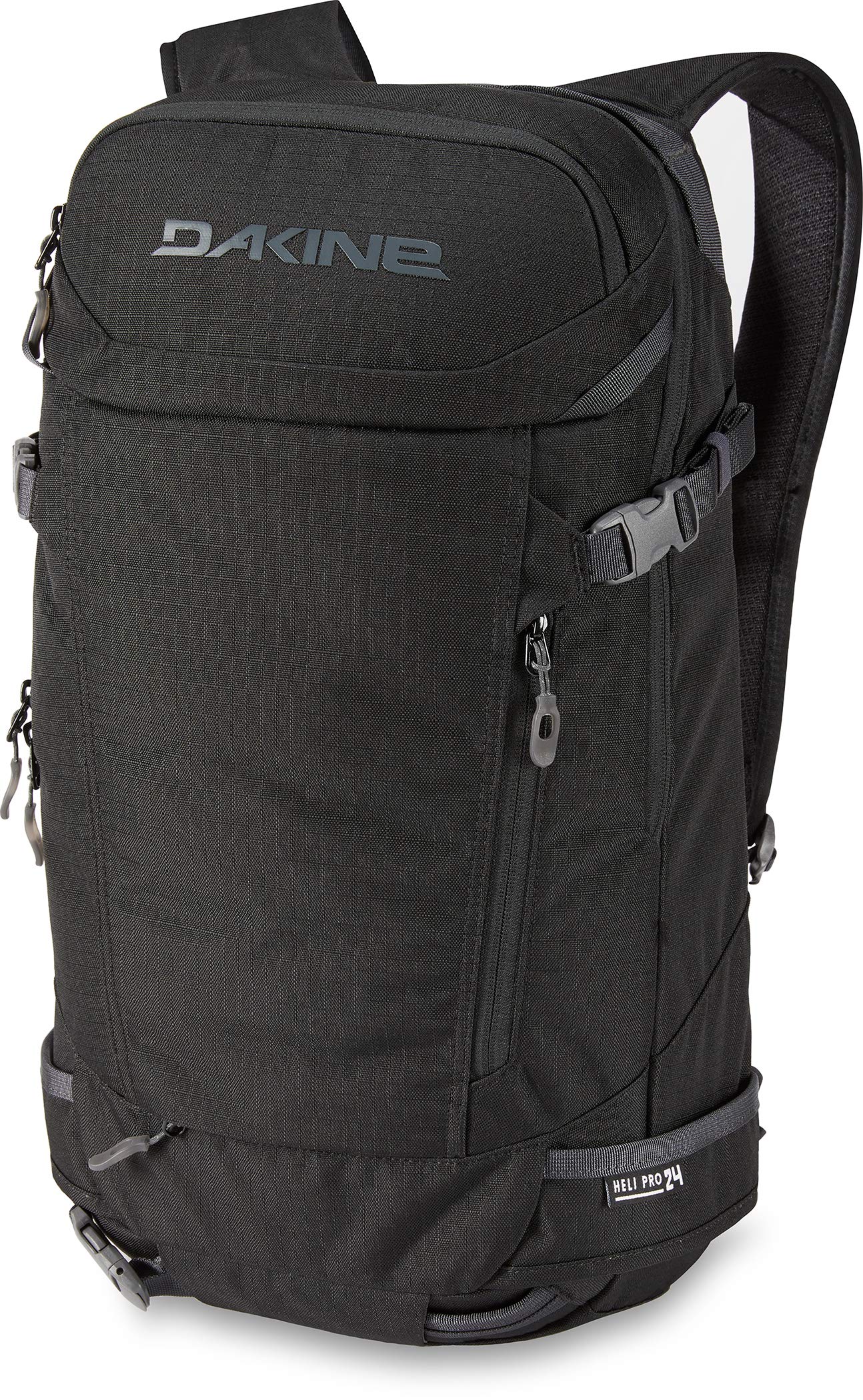
The Heli Pro 24L is the benchmark resort-to-sidecountry pack because it balances three carry methods—vertical snowboard carry, diagonal ski carry, and A-frame ski carry—all within a 24-liter frame that squeezes onto a chairlift without riding up. The rear zippered main compartment gives direct access to the interior without unloading side pockets, and the fleece-lined goggle pocket fits oversized frames plus two spare lenses without scratching. Dakine also included a shovel and snow tool sleeve for anyone who occasionally steps outside the rope line.
At just 2.0 pounds, the pack feels empty even when fully loaded with a 3-liter hydration reservoir, extra layers, lunch, and avalanche tools. The quick-dry mesh back panel sheds snow well and keeps sweat from building up during transitions. The front helmet attachment loops deploy when needed and tuck flat when not in use, so you are not snagging lift chairs. The rescue whistle integrated into the sternum strap adds a low-weight safety touch for sidecountry excursions.
Where the Heli Pro loses points is strap management—the webbing tails are long and require deliberate wrapping to prevent flapping. The hip belt is padded but minimal, so heavy loads over 15 pounds shift more than on dedicated mountaineering packs. For resort riders who want one pack that handles board carry, hydration, and tool storage without feeling like a backpacking rig, the Heli Pro is the sweet spot.
Why it’s great
- Full board and ski carry suite (vertical, diagonal, A-frame) in a compact 24L frame
- Fleece-lined goggle pocket prevents lens scratching
- Hydration compatible with internal sleeve for up to 3L reservoir
Good to know
- Strap webbing is long and unmanaged — requires manual wrapping
- Hip belt is light-duty for loads exceeding 15 pounds
2. Osprey Glade 20L Hydration Pack
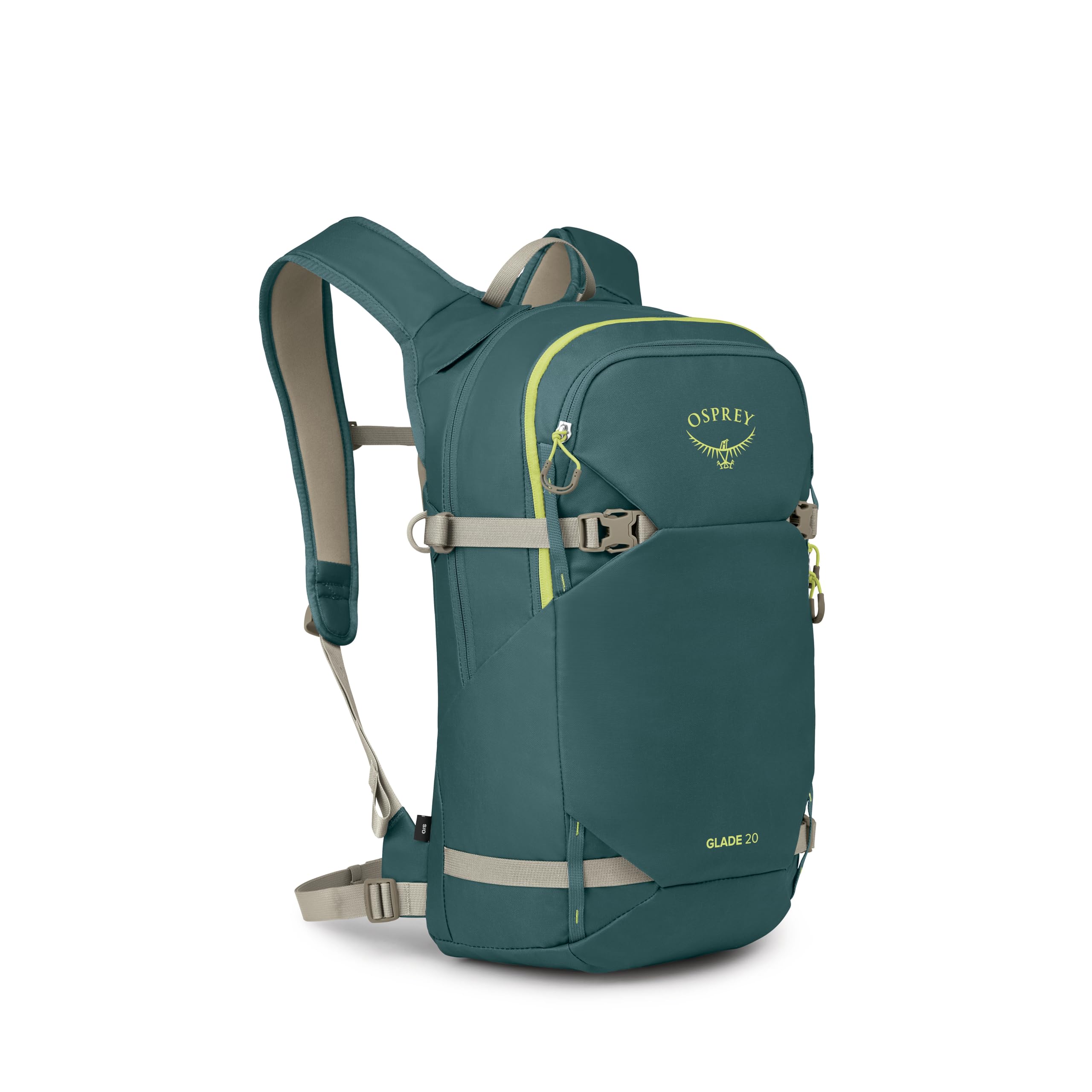
The Osprey Glade is engineered for the cold—it ships with a 2.5L Hydraulics reservoir and an insulated harness lined with Thermolite that keeps the drinking tube from freezing on sub-20°F days. The dedicated avalanche safety compartment opens with a wide J-zip so you can access a shovel and probe without pulling out the entire pack contents, a critical feature for backcountry skiers and snowboarders. A-frame ski carry, diagonal ski carry, and vertical snowboard carry are all integrated, and the compression system locks gear in place during descents.
The NanoTouch fabric (nylon with a water-resistant coating) resisted abrasion from ski edges during testing and shed powder quickly when wiping snow off the back panel. The pack weights 2.31 pounds, which is reasonable for a 20L hydration pack with an internal frame, and the adjustable sternum strap routes the hydration hose cleanly through a webbing loop on the left shoulder strap. The front stash pocket is useful for storing a shell between runs, and the zippered hip belt pockets hold a phone or lip balm without unclipping.
Some users note that the 20L capacity fills quickly once you carry a shovel, probe, 2.5L water, and a puffy jacket. This is a pack for targeted day missions, not extended gear hauling. The hose routing is designed for the left shoulder only, so left-handed riders who prefer their tube on the right will need to adapt. For anyone venturing beyond the resort who refuses to compromise on freeze-proof hydration and organized avalanche tool access, the Glade delivers.
Why it’s great
- Thermolite-lined insulated hose harness prevents freezing in extreme cold
- Dedicated J-zip avalanche tools compartment with organized sleeves
- Tough NanoTough fabric resists water and edge abrasion
Good to know
- 20L fills quickly with avalanche gear plus hydration
- Hydration hose is left-shoulder only — no right-side routing option
3. CamelBak Powderhound 12L Snow Hydration Pack
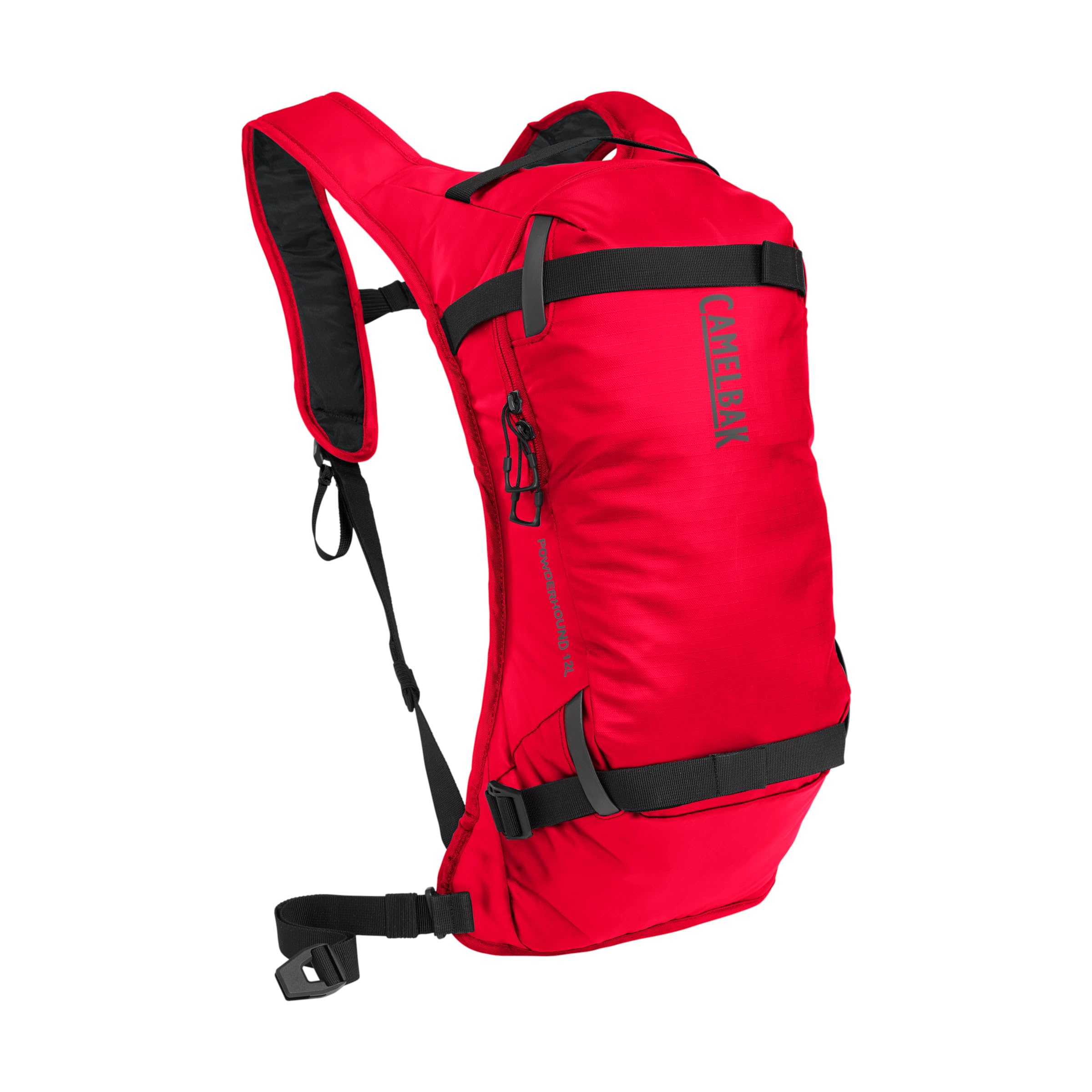
The Powderhound 12L is a tight, purpose-built hydration pack for lift-accessed riding where every cubic inch counts. The 70oz Crux reservoir delivers 25% more water per sip than standard CamelBak bladders, and the insulated tube harness wraps the drinking line inside the shoulder strap to prevent ice formation. Snow-repelling fabric on the shell prevents the nylon from absorbing moisture when you sit in the snow, and the lift-access harness lets you swing the pack forward without unbuckling the waist belt so you can grab goggles or a snack.
Two zippered pockets organize a phone, keys, lip balm, and a small tool kit, and the main compartment fits a lightweight mid-layer plus a 500ml thermos. The removable waist belt keeps the pack stable on high-speed runs, though some riders prefer to remove it for chairlift comfort. At 31.4 ounces, the Powderhound is heavier than its 12L rating suggests because of the reservoir and insulation, but the weight sits close to the body and does not bounce.
The trade-off is space: 12L is truly minimalist. A shovel and probe will not fit unless strapped externally. For resort riders who want hands-free hydration plus room for a few essentials and do not need avalanche tool carry, the Powderhound is the most efficient option on this list. The external carry system handles A-frame and diagonal ski carry, though the snowboard attachment is functional rather than refined—straps cross over the board rather than through dedicated loops.
Why it’s great
- Insulated drinking tube harness keeps water flowing in sub-freezing temps
- Snow-repelling shell fabric prevents moisture absorption on wet days
- Lift-access harness allows front swing without removing pack
Good to know
- 12L capacity is too small for avalanche gear plus spare layers
- Snowboard carry system uses cross-straps instead of dedicated loops
4. Osprey Soelden 25L Ski and Snowboard Backpack
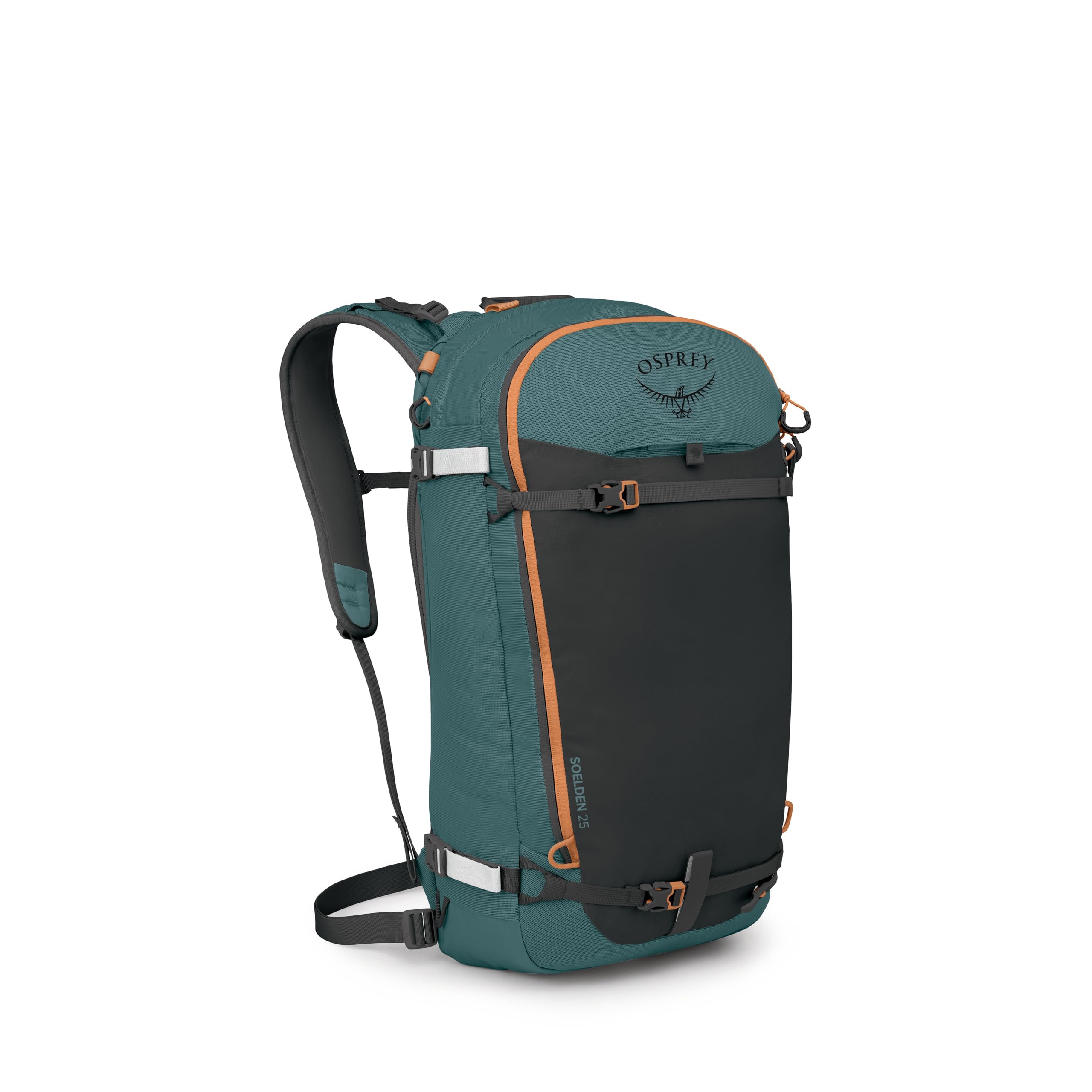
The Soelden 25L is Osprey’s lightweight backcountry pack designed for day tours where every gram matters but avalanche safety gear is non-negotiable. It features a snow-shed back panel that prevents snow from packing between the pack and your spine during boot packs, and the J-zip avalanche compartment gives immediate access to a shovel and probe without unloading the main body. Diagonal and A-frame ski carry are both built in, and the vertical snowboard carry uses compression straps that hold the board tight even during steep traverses.
At 2.3 pounds for a 25-liter pack, the Soelden is impressively light for its feature set. The back panel stiffens with a foam frame that transfers load to the hip belt, which is adjustable and removable. Ice tool attachment points with toggle and bungee let you carry an axe for alpine traverses, and the internal GPS/radio carry sleeve with mic harness webbing attachment works for guide radios or personal locator beacons. The 100% recycled nylon fabric meets bluesign standards without sacrificing abrasion resistance.
The Soelden sacrifices some resort convenience for backcountry specialization. There is no fleece goggle pocket—goggles go into the main compartment or the helmet carry. The hydration sleeve accepts a 2.5L reservoir, but the tube must exit through a port on the left shoulder, which limits adjustability. For backcountry snowboarders who need a pack that ascends well, carries avalanche safety tools properly, and holds a board without swaying during tight tree runs, the Soelden is the top choice.
Why it’s great
- Snow-shed backpanel prevents snow buildup during skin tracks
- J-zip avalanche compartment with organized shovel and probe sleeves
- Lightweight 2.3 lb construction with 100% recycled nylon
Good to know
- No fleece-lined goggle pocket — goggles go in main compartment
- Hydration hose route is fixed to left shoulder
5. CamelBak Zoid Snow Hydration Pack (2L)
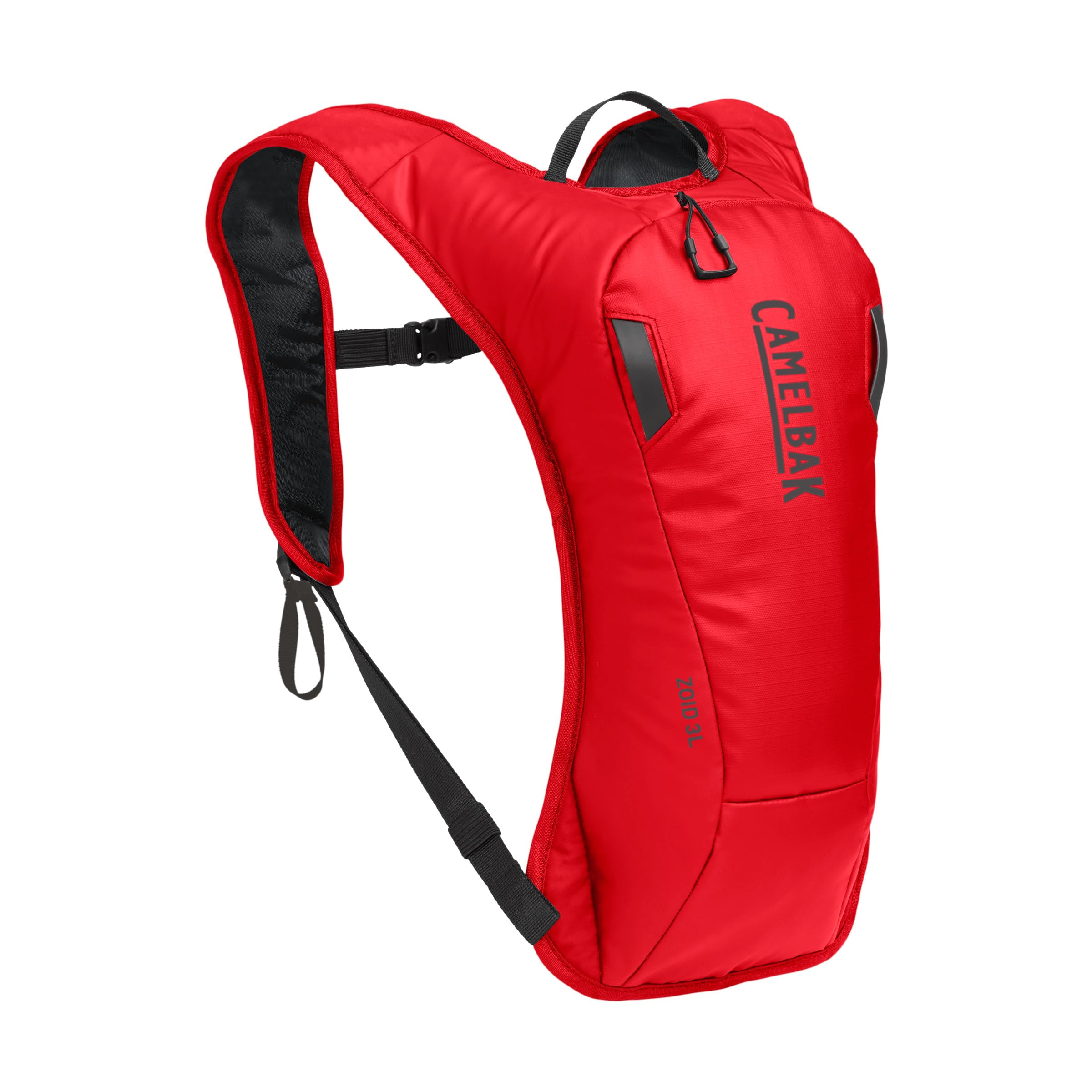
The Zoid Snow is the most minimal hydration pack on this list—it holds just 2 liters of cargo space plus the 70oz reservoir, making it a dedicated hydration system rather than a general-purpose backpack. The Therminator harness insulates the drinking tube within the shoulder strap to maintain flow in freezing conditions, and the SnowShield fabric repels snow and moisture so the pack does not become a frozen brick after a day of chairlift riding. The lift-access quick-release harness lets you swing the pack forward for on-chair access to the single zippered pocket.
At 19 ounces including the reservoir, the Zoid is light enough to wear under a parka without creating a noticeable bulge. The single pocket fits a multitool, a granola bar, and a lip balm—nothing more. The streamlined profile means the pack stays out of the way during hard carving and never catches on chairlift armrests. For riders who want hydration without bulk, this is the purest expression of that philosophy.
The limitation is obvious: you are not fitting a shovel, probe, extra layers, or lunch inside. The Zoid is a resort-only pack for riders who carry a water bottle in their pocket and want hands-free hydration plus a tiny stash pocket. The lack of board carry straps means you need a separate method to carry your board during boot packs. If your definition of a snowboard backpack includes hauling gear beyond water, the Zoid is too specialized.
Why it’s great
- Extremely slim profile fits comfortably under a jacket
- Insulated Therminator harness prevents tube freezing
- SnowShield fabric sheds moisture effectively
Good to know
- 2L cargo capacity fits only a few small essentials
- No board or ski carry straps included
6. Wildhorn Brimhall 56L Ski Boot Bag & Snowboard Backpack

The Brimhall is not a daypack—it is a 56-liter gear transport system designed to carry boots, helmet, goggles, gloves, and outerwear to and from the mountain. The isolated boot compartment features vented drain ports that drip water away from dry gear and includes a removable separator to hold boots up to size 32 snugly. The second compartment holds a lined goggle pocket, plus four padded mesh dividers for organizing helmet, gloves, and base layers. The 420D nylon shell resists abrasion from gear and airport conveyor belts.
Three carry options make the Brimhall versatile for travel: stow-away backpack straps with a sternum strap for walking through parking lots, a removable shoulder strap for duffel-style carry, and two heavy-duty luggage handles for lifting in and out of the car. When the backpack straps are not in use, they tuck into a zippered compartment so they do not catch on baggage handling. The clamshell opening gives you full visibility of the interior, which beats the frustrating dark-tunnel packing of top-loading boot bags.
At 56 liters, the Brimhall is too large for on-mountain use—it will not fit in a locker and is cumbersome on a chairlift. This is a travel piece, not a riding partner. The backpack straps are adequate for short hikes from the car to the lodge but not designed for all-day carry. For riders who fly or drive to ski resorts and need one bag that consolidates boots and gear, the Brimhall is a well-priced alternative to premium airline-specific options.
Why it’s great
- Vented boot compartment with drain ports prevents moisture pooling
- Three carry modes (backpack, shoulder, handles) for flexible transport
- Durable 420D nylon shell survives airport and road-trip handling
Good to know
- Too large and bulky for on-mountain riding use
- Backpack straps are adequate for short distances only
7. Thule RoundTrip 45L Boot Backpack
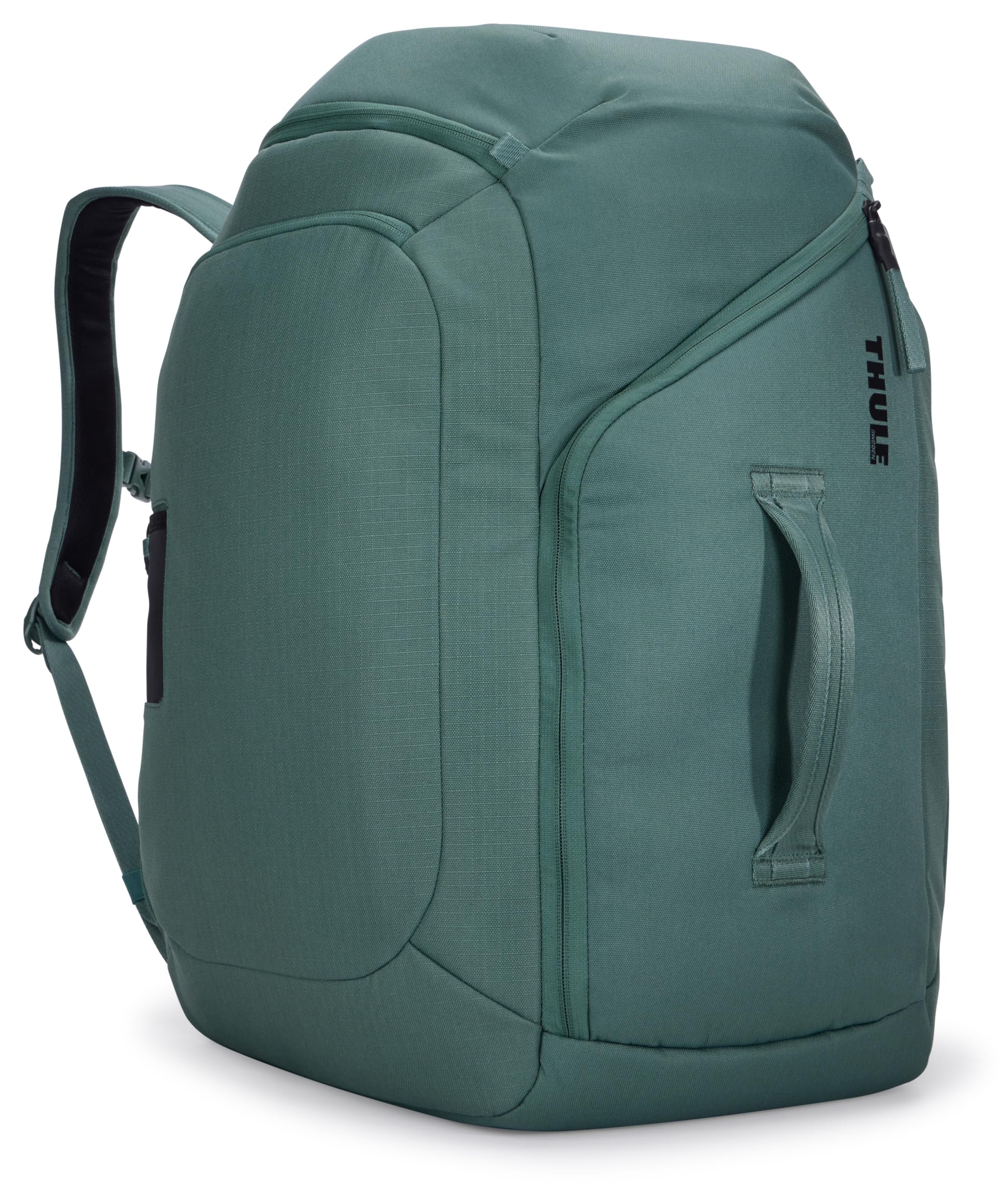
The Thule RoundTrip 45L is a premium travel boot backpack that prioritizes organization over raw volume. The dedicated boot compartment fits sizes up to a US 13 (Mondopoint 30.5) and includes a standing mat that lets you change into and out of your ski boots without getting your feet wet on a parking lot floor. The protective top compartment opens wide enough to drop in a full-size helmet and goggle case, and the side pockets hold multiple pairs of gloves and base layers. Thule used bluesign-certified fabrics and YKK zippers throughout.
The pack dimensions (14.9 x 14.9 x 12.9 inches) are designed to meet most domestic airline carry-on restrictions, though it is a tight fit with boots inside. The backpack straps are well-padded and adjustable, with a removable sternum strap for stability during longer airport walks. There is no waist belt, which is fine for this use case—the RoundTrip is for transit, not hiking. The lack of an internal hook or pocket for an AirTag is a notable omission given the premium price point.
For a family outing, the RoundTrip can hold two sets of children’s boots and helmets with limited room for outerwear, as noted by some buyers using it as a rink bag. The main limitation is that the 45L volume requires careful packing to fit a helmet, boots, goggles, and outerwear for a single adult. If your gear is large or you travel with two pairs of boots, the Wildhorn Brimhall offers more raw space. For riders who value compartmentalization, weather resistance, and Thule’s lifetime warranty, the RoundTrip is the most refined boot backpack on the market.
Why it’s great
- Separate boot compartment with integrated standing mat for dry boot changes
- Protective top compartment easy for helmet and goggle storage
- Bluesign-certified fabrics with durable YKK zippers
Good to know
- No internal AirTag pocket or key clip
- 45L requires careful packing to fit full gear set for one adult
FAQ
Can a snowboard backpack double as a hydration pack for hiking in summer?
How do I clean the hydration reservoir and tube after a season of use?
What is the difference between vertical, diagonal, and A-frame snowboard carry?
Final Thoughts: The Verdict
For most users, the backpack for snowboarding winner is the Dakine Heli Pro 24L because it delivers the broadest range of board and ski carry options in a compact, chairlift-friendly package that also handles hydration and avalanche tools. If you want freeze-proof hydration and dedicated avalanche gear organization for backcountry missions, grab the Osprey Glade 20L. And for minimalist resort riding where hydration is the priority and extra cargo is a nuisance, nothing beats the CamelBak Powderhound 12L.