
Carrying gear through deep powder while maintaining balance on snowshoes demands a pack that doesn’t shift, sag, or let your hydration system freeze. A standard hiking backpack lacks the insulation, attachment points, and snow-shedding fabrics needed for winter conditions, turning an enjoyable trek into a frustrating battle with frozen tubes and inaccessible layers.
I’m Min — the co-founder and writer behind Gadgets Feed. I spent countless hours cross-referencing reservoir insulation ratings, frame architecture, and snow-specific feature sets across seven backcountry-ready packs to identify which designs genuinely solve the cold-weather equation.
This guide evaluates each model for hydration freeze protection, load stability on uneven terrain, and accessibility while wearing mittens. Whether you need a minimalist hydration shell or a full day-pack for multi-hour excursions, the best backpack for snowshoeing depends on matching capacity and insulation to your specific outing length and intensity.
How To Choose The Best Backpack For Snowshoeing
Snowshoeing adds the challenge of balancing a load while lifting your feet higher than normal with rigid footwear attached. The wrong pack will shift your center of gravity, rub against your hips during the wide snowshoe gait, and leave your water supply frozen two miles in. Focus on these three areas to avoid those outcomes.
Hydration System Insulation and Freeze Resistance
At or below freezing, a standard hydration tube freezes solid within 30 minutes of inactivity. Look for packs with an insulated tube sleeve routed through the shoulder strap — the CamelBak Therminator design is the benchmark here. Also check whether the reservoir compartment is lined with insulating material and if the bite valve cover is included. Without these, you are carrying dead weight after the first rest stop.
Load Stability and Frame Design
Snowshoeing forces a wider stride, so your pack must stay planted and not sway laterally. A rigid frame or U-frame system — like the Delrin U-frame in the Deuter Trail 30L — prevents load shift during lateral movement. Ventilated back panels are less critical in winter but still matter for managing sweat buildup when working hard uphill. Adjustable torso length is essential for dialing in the fit over bulky insulating layers.
External Attachment Systems for Snowshoes and Gear
When snowshoes come off during a break or a steep climb, you need dedicated lash points. Daisy chains, ice axe loops, and compression straps that can hold A-frame snowshoe carry are non-negotiable. The pack should also have a stretch front pocket or shove-it pocket for stowing a shell layer quickly without stopping. Check that attachments do not block the hip belt pockets, which are your best spot for snacks and phone access on the move.
Quick Comparison
On smaller screens, swipe sideways to see the full table.
| Model | Category | Best For | Key Spec | Amazon |
|---|---|---|---|---|
| Deuter Trail 30L | Premium Daypack | Steep terrain with heavy loads | Delrin U-frame, 30L, 2.47 lbs | Amazon |
| Cotopaxi Allpa 28L | Premium Travel Hybrid | Ski-to-town versatility | 28L, clamshell opening, 15″ laptop sleeve | Amazon |
| Gregory Miko 30L | Premium Daypack | Extended day hikes with hydration | BioSync hip belt, SpeedClip hydration, 30L | Amazon |
| Thule Enroute 30L | Mid-Range Commuter | Low-profile carry with electronics | 30L, SafeZone pocket, padded laptop sleeve | Amazon |
| Burton Day Hiker 30L | Mid-Range Daypack | Layered organization with board carry | 30L, hydration sleeve, fleece-lined pocket | Amazon |
| Thule Alltrail X 35L | Mid-Range Hiker | Long treks with storage flexibility | 35L, hydration-laptop dual sleeve, hip belt | Amazon |
| CamelBak Zoid Snow 2L | Budget Hydration Shell | Minimalist in-bounds snowshoeing | 2L, 70 oz Crux reservoir, Therminator tube | Amazon |
In‑Depth Reviews
1. Deuter Trail 30L Backpack

The Deuter Trail 30L combines a rigid Delrin U-frame with the Airstripes back system, creating a pack that stays locked to your torso even when you are post-holing through crusty snow. The frame prevents lateral sway during the wide snowshoe stride, and the perforated shoulder straps and hip fins distribute loads up to 18 pounds evenly across your hips. At 2.47 pounds, it is light enough for day trips but structured enough to handle technical ascents where stability matters.
This pack includes an ice axe attachment, trekking pole holder, and front zip access that lets you grab gear from the bottom without unearthing everything. The hydration compartment fits a 3-liter reservoir, and while the tube is not insulated by default, the hose routing keeps it close to your body heat. The recycled polyamide fabric sheds light snow and resists abrasion from branches and ice crust.
Reviewers consistently note that the strap system does not loosen over time, and the included rain cover adds utility for wet snow conditions. The waist belt pocket is too small for modern phones, but the hip fins themselves offer excellent load transfer that justifies the premium price for anyone logging serious backcountry miles on snowshoes.
Why it’s great
- U-frame eliminates pack sway during lateral snowshoe movements
- Ice axe loop and trekking pole holder are standard, not afterthoughts
- Front zip access means no digging in deep snow for a mid-layer
Good to know
- Hydration tube is not insulated; plan to add a neoprene sleeve for sustained below-freezing use
- Waist belt pocket won’t fit most large smartphones
2. Cotopaxi Allpa 28L Travel Pack

The Cotopaxi Allpa 28L takes a different approach from traditional hiking packs by offering a suitcase-style clamshell opening with internal compression pockets. This design is ideal for snowshoe loops that involve base-camp organization — you can lay the pack flat in the snow and inventory every layer and tool without spilling contents. The 28-liter volume fits under airplane seats for travel days, and the padded 15-inch laptop sleeve doubles as a hydration reservoir compartment.
Four exterior webbing loops provide lash points for snowshoes or a damp shell, and the tuckable waist belt keeps the profile clean when you are not on the trail. The stretch mesh water bottle pocket holds up to 1 liter, but it is exposed to the elements, so the lockable zippers on the main opening give you some weather resistance. The fabric sheds light snow effectively, though it is not fully waterproof.
Reviewers praise the internal organization for weekend ski trips and the comfortable hip strap for moderate loads. The main zipper can feel stiff when new, and the pack lacks a dedicated insulated hydration tube sleeve. This is a strong option for snowshoers who also need a travel pack and prioritize organization over ultralight minimalism.
Why it’s great
- Clamshell opening allows full gear visibility without unpacking in the snow
- Four external webbing loops offer flexible snowshoe lash points
- Roller-bag pass-through helps when driving to trailheads
Good to know
- No hydration tube insulation limits below-freezing use without modification
- Zipper resistance can be high when wearing thick gloves
3. Gregory Miko 30L Unisex Day Hiking Backpack
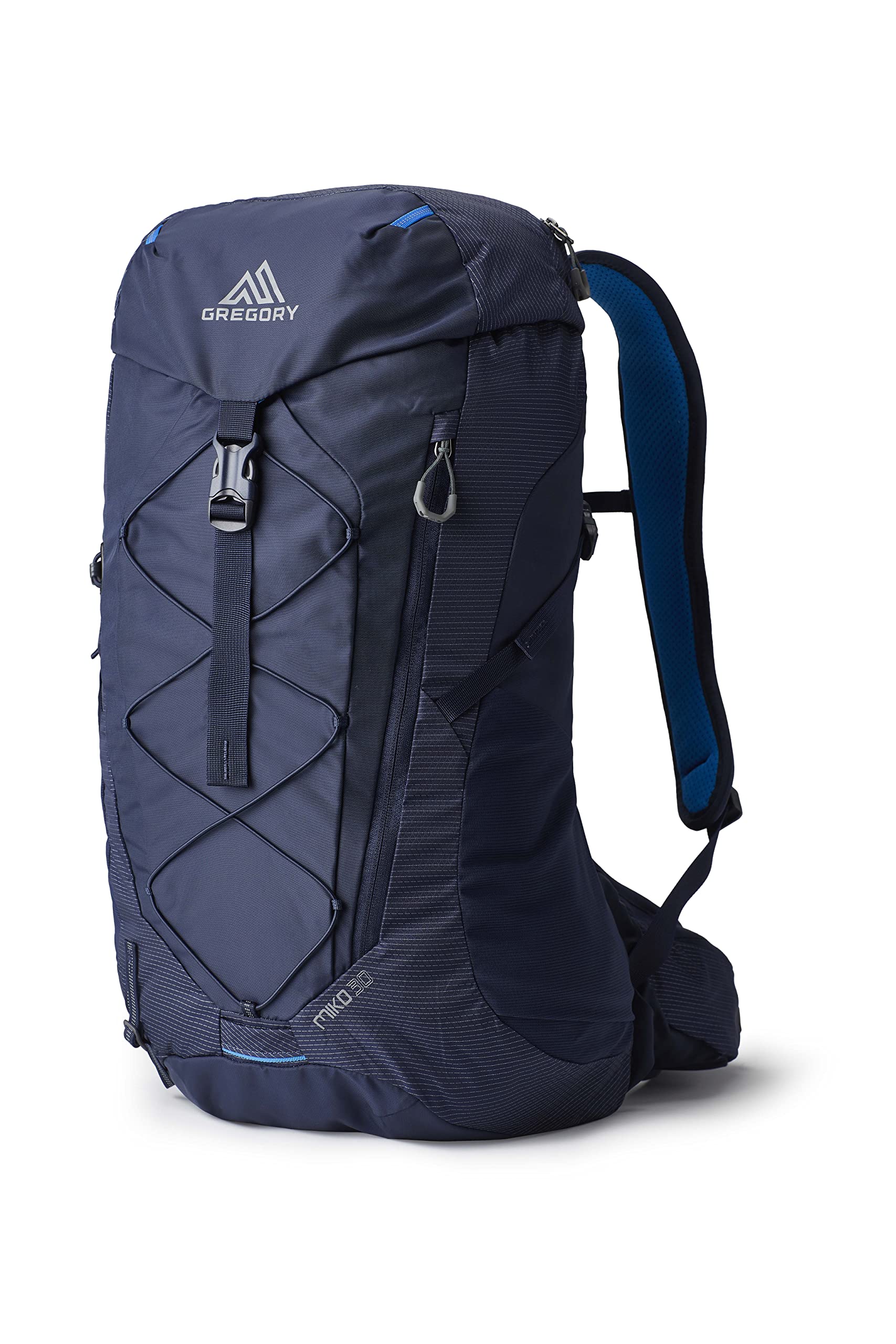
The Gregory Miko 30L uses a BioSync flexible hip belt and shoulder harness that move with your body’s natural lateral motion — a genuine advantage when snowshoeing forces that wide-legged gait. The channeled foam backpanel promotes airflow that reduces sweat buildup even with a heavy insulating layer underneath. The adjustable torso length provides 3.5 inches of range, allowing you to dial in the fit over bulky winter gear.
Large zippered hip belt pockets are wide enough for a modern phone and trail snacks, which matters when you need access without removing the pack. The independent zippered pocket with SpeedClip hydration hanger is compatible with Gregory reservoirs, and the tube routing can be oriented to minimize freezing risk. The 30-liter capacity swallows a 3-liter bladder, first aid kit, bear spray, and extra layers without feeling overstuffed.
Reviewers at 5’7″ and 125 pounds note the pack is perfectly scaled for snowshoe day tours, and taller users appreciate the adjustable torso. The backpanel lacks a rigid frame, so loads above 25 pounds may cause the pack to sag. This is a top choice for those who run warm and need maximum breathable comfort during exertion.
Why it’s great
- BioSync hip belt tracks lateral snowshoe movement without shifting
- Large hip belt pockets fit phones and gloves for trail access
- Ventilated backpanel reduces sweat in high-output conditions
Good to know
- Unstructured backpanel limits heavy loads compared to framed packs
- Not waterproof; use a rain cover in wet snow
4. Thule Enroute Backpack 30L

The Thule Enroute 30L prioritizes organized carry for the snowshoer who transitions from trail to cafe or office. A rigid SafeZone pocket protects sunglasses or a phone from crushing, while the dual interior TPU pockets are opaque and water-resistant for storing damp gloves or a headlamp without soaking other gear. The main compartment separates electronics and work items from the gear side, which helps when you stash a wet shell or snowshoes inside.
At 30 liters, this pack handles a full day load plus a 15.6-inch laptop, but the backpanel is not as ventilated as the Gregory or Deuter. The mesh pocket accessible from the outside is perfect for stashing a damp beanie or liners without opening the main compartment. The pack is lightweight at roughly 1.6 pounds, but the shoulder straps are narrower than typical hiking packs, which can dig in under heavy loads.
Reviewers note the build quality is excellent with durable zippers and seam construction, though one report of an initial zipper failure was resolved with a replacement. For snowshoers who ski patrol or teach and need to carry both trail gear and a laptop, this pack offers the most refined internal organization in this list.
Why it’s great
- SafeZone pocket offers shatterproof storage for glasses or GPS units
- Water-resistant TPU pockets protect electronics from snow melt
- Separate compartments keep damp gear isolated
Good to know
- Narrow shoulder straps are less comfortable under heavy trail loads
- No hydration tube insulation; tube is exposed on the strap
5. Burton Day Hiker 30L Backpack

The Burton Day Hiker 30L packs more pockets and attachment points than most in this class, including a fleece-lined accessory pocket for goggles or sunglasses, a front stretch cram pocket, and side-zip water bottle pockets that work with thermoses or Nalgene bottles. The removable webbing board carry with molded wings is a holdover from snowboarding culture but doubles as a secure way to lash snowshoes in an A-frame configuration. The durable outer fabric repels water in snow and wintry-mix conditions.
Internal organization includes a padded 15-inch laptop sleeve, a tablet sleeve, and an internal zippered mesh pocket with a key clip. The air mesh back panel and ventilated shoulder straps provide reasonable breathability, though the fixed torso length limits fit customization for very tall or short users. Glove-friendly buckles are a subtle but appreciated touch for winter use.
Reviewers highlight the sufficient storage and the useful external straps for securing a coat or snowshoes outside the pack. At 1.6 pounds, it is light for a 30-liter pack with this much structure. The lack of an insulated hydration tube is its main weakness for dedicated snowshoeing, but the combination of organization and board-carry capability makes it a strong hybrid for lift-assisted or approach-ski days.
Why it’s great
- Fleece-lined pocket protects goggles from fogging and scratching
- Removable board carry doubles as snowshoe attachment system
- Multiple side-accessed pockets allow quick water bottle retrieval without removing pack
Good to know
- No hydration tube insulation for sustained sub-freezing use
- Torso length is fixed, reducing fit options for body sizes outside the middle range
6. Thule Alltrail X 35L Pack
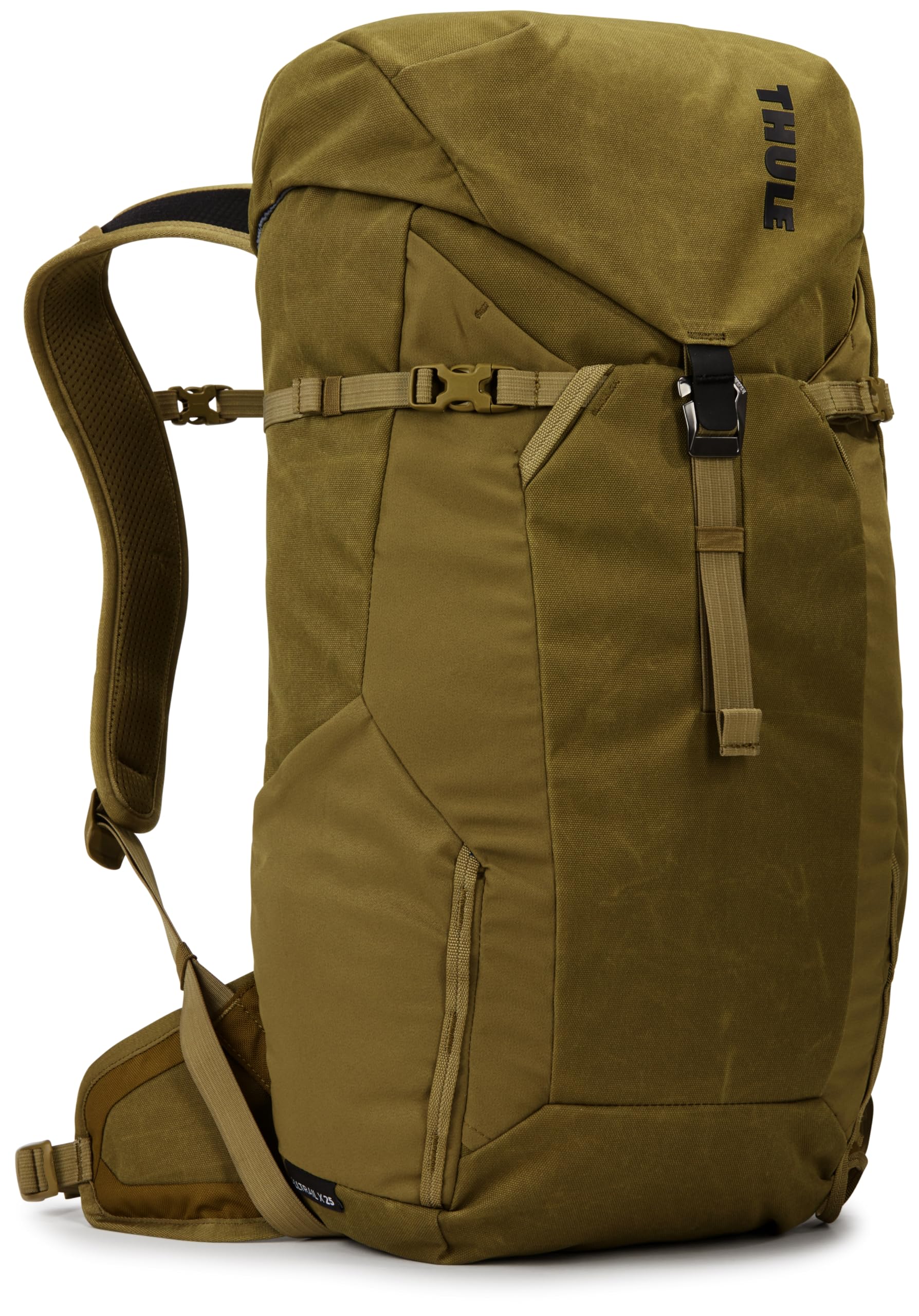
The Thule Alltrail X 35L offers the largest volume in this selection, making it suitable for longer snowshoe treks that require a full change of clothes, food, and emergency shelter. The versatile air-mesh hydration sleeve doubles as a laptop sleeve for up to a 15-inch MacBook, and the main compartment side zipper provides quick access to gear at the bottom of the pack without unpacking. The front shove-it pocket is ideal for stowing a wet shell or snowshoe binders.
The tuck-away hip belt offers extra stability when the trail demands it, then disappears for storage or travel. The waxed canvas-style fabric finish is more durable than standard nylon and sheds snow well, though the material weight tilts toward the heavier side compared to ultralight options. The included compression straps can lash snowshoes on the outside, but the pack lacks dedicated ice axe loops.
Reviewers praise the load distribution system, calling it one of the best among hiking packs for weighted carry. The breathable backpanel fails for some users under very heavy loads or in high-sweat conditions, but for standard day-long snowshoe trips of 25 to 35 liters, the capacity-to-weight ratio is excellent. This is the pick for the snowshoer who wants one pack that scales from daily hikes to winter overnights.
Why it’s great
- 35-liter capacity handles full day-plus loads and extra layers
- Side zipper access eliminates bottom-of-pack digging in deep snow
- Hydration sleeve doubles as laptop protection for hybrid use
Good to know
- No ice axe loop; must use side compression for tool attachment
- Fabric weight is on the heavier side for long distance
7. CamelBak Zoid Snow Hydration Pack
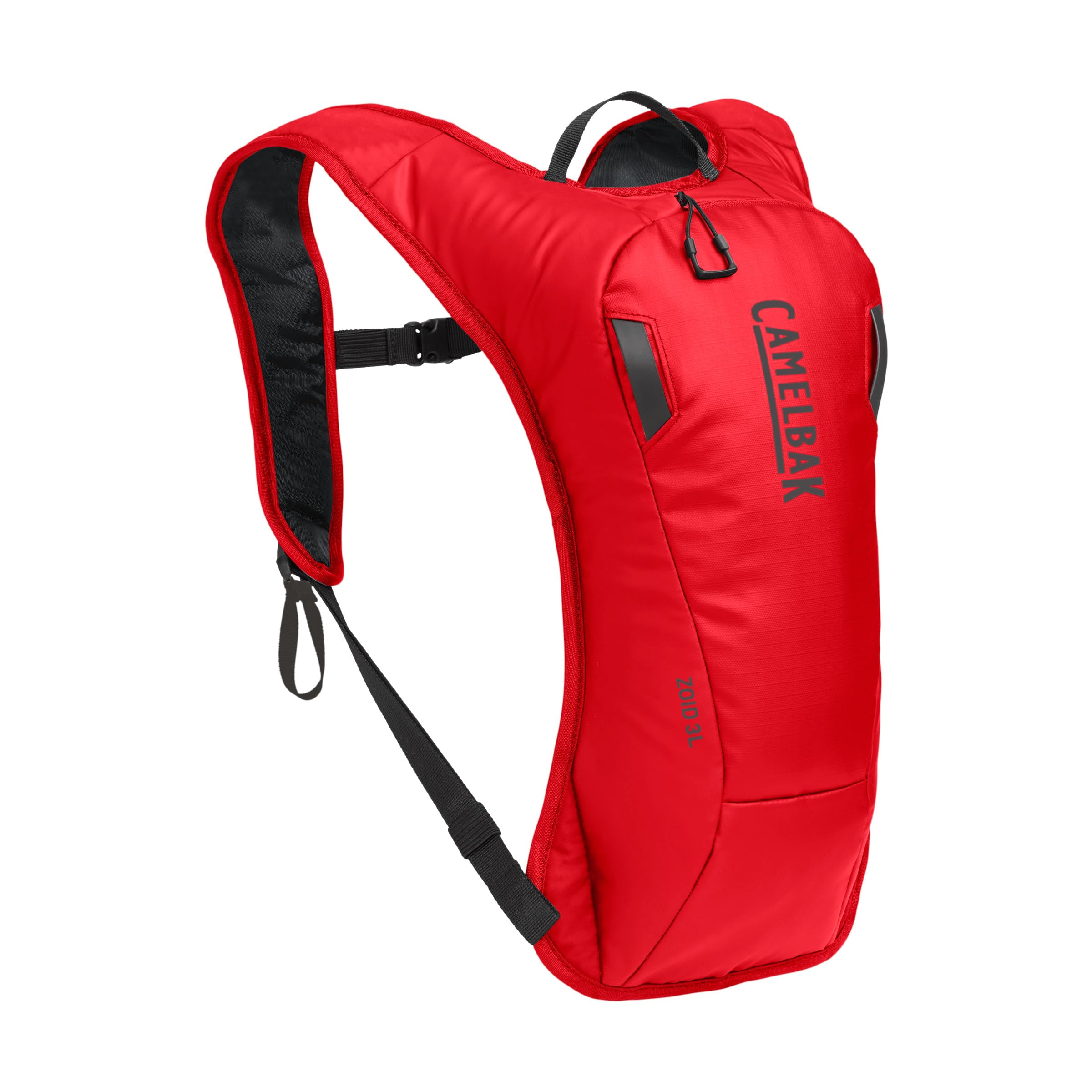
The CamelBak Zoid Snow is the only pack in this lineup with factory-installed hydration tube insulation — the Therminator harness keeps the drinking tube inside the shoulder strap, preventing ice formation during frigid snowshoe outings. The 70-ounce Crux reservoir delivers 40 percent more water per sip than standard bladders, reducing the number of stops needed to drink. At only 2 liters of cargo capacity, this is a minimalist shell designed for short loops, lift-accessed snowshoeing, or as a secondary hydration system under a larger pack.
SnowShield fabric repels snow and moisture, and the Lift Access QR Harness makes it easy to slip the pack off without removing all layers. The streamlined profile fits comfortably under a parka, and the single zippered pocket holds protein bars, a small first aid kit, or a Leatherman. This pack is not designed for carrying snowshoes — there are no external lash points — so it works best for in-bounds or short approach trips.
Reviewers consistently praise the freezing-prevention design, noting zero ice chips even on full cold-weather days. The 2-liter cargo capacity limits multi-hour treks, and the lack of external attachment points makes snowshoe carry impossible. For the budget-conscious snowshoer who prioritizes hydration over gear hauling, this pack delivers on its core promise effectively.
Why it’s great
- Therminator harness prevents drinking tube freezing in sub-20°F conditions
- 70 oz Crux reservoir offers high-flow sip without ice formation
- SnowShield fabric repels moisture and fits under a parka
Good to know
- Minimal 2L cargo capacity limits gear volume for extended treks
- No external lash points for snowshoe or trekking pole attachment
FAQ
Can I use a standard hiking backpack for snowshoeing or do I need a snow-specific pack?
What is the ideal backpack capacity for a full day of snowshoeing?
How do I attach snowshoes to a backpack that does not have dedicated straps?
Final Thoughts: The Verdict
For most users, the backpack for snowshoeing winner is the Deuter Trail 30L because its Delrin U-frame eliminates lateral pack sway during the wide snowshoe stride, and the front zip access keeps gear accessible without digging in the snow. If you want integrated hydration tube insulation and a minimalist shell for short, punchy outings, grab the CamelBak Zoid Snow. And for extended day tours where maximum ventilation and hip-belt phone access matter, nothing beats the Gregory Miko 30L.