
Nothing ruins a backcountry meal faster than a stove that sputters, dies in the wind, or takes twenty minutes to boil a single cup of water. A truly reliable backpack stove needs to handle gusty ridgelines, cold mornings, and less-than-full fuel canisters without losing its temper. The difference between a good night’s sleep with a hot meal and a frustrating, cold dinner comes down to a handful of specific design choices — a pressure regulator, wind-resistant burner geometry, and a total system weight that you’re willing to carry all day.
I’m Min — the co-founder and writer behind Gadgets Feed. After analyzing countless hours of real-world field reports and side-by-side spec comparisons, I’ve narrowed down which burners actually deliver on their boil-time promises and which ones fold under pressure.
Whether you are a weekend warrior or a long-trail thru-hiker, finding the best backpack stove means matching your cooking style and weight budget to a burner that performs when conditions turn nasty.
How To Choose The Best Backpack Stove
Selecting the right stove is a tight balance of weight, fuel efficiency, wind performance, and how much cooking you actually plan to do. A single 100g isobutane canister can last a solo hiker three to four days, but a stove with poor wind handling will burn through that fuel twice as fast. Focus on the traits that matter most for your specific terrain and trip length.
Regulated vs. Unregulated
A pressure-regulated stove maintains consistent fuel flow as the canister empties and the temperature drops. Unregulated stoves lose power when the canister pressure falls below a certain threshold, which happens quickly in sub-freezing conditions. If you hike in cold weather or at high altitude, a regulator is non-negotiable for predictable boil times.
Integrated Systems vs. Standalone Burners
Integrated systems like the Jetboil Micromo and Flash couple the burner directly to a specialized pot with a heat-exchange FluxRing. They are faster and more fuel-efficient, but heavier and less flexible. Standalone burners like the MSR PocketRocket Deluxe and SOTO WindMaster let you use any cookware, weigh much less, and pack smaller — but they lose heat faster in wind without a dedicated windscreen.
Boil Time and Wind Resistance
Boil time is the headline spec, but it is measured in a lab with zero wind. Real-world performance changes dramatically with just a 10 mph breeze. Look for stoves with a concave burner head or an integrated heat exchanger to maintain flame contact. The SOTO WindMaster’s concave design and the Fire-Maple’s heat exchange technology are explicit engineering responses to this problem.
Quick Comparison
On smaller screens, swipe sideways to see the full table.
| Model | Category | Best For | Key Spec | Amazon |
|---|---|---|---|---|
| Fire-Maple Star X2 Pro | Integrated System | Best Overall Value | 19.8 oz packed weight | Amazon |
| SOTO WindMaster | Standalone Burner | Wind Performance | 2.3 oz burner weight | Amazon |
| MSR PocketRocket Deluxe | Standalone Burner | Ultralight & Cold Weather | 2.9 oz weight, regulated | Amazon |
| Jetboil MicroMo | Integrated System | Precision Simmer Control | 0.8L FluxRing cup | Amazon |
| Jetboil Flash | Integrated System | Fastest Boil Speed | ~2 min for 16 oz water | Amazon |
| Coleman Cascade 3-in-1 | Car Camping Stove | Group Cooking Versatility | 24,000 BTUs total | Amazon |
In‑Depth Reviews
1. Fire-Maple Star X2 Pro
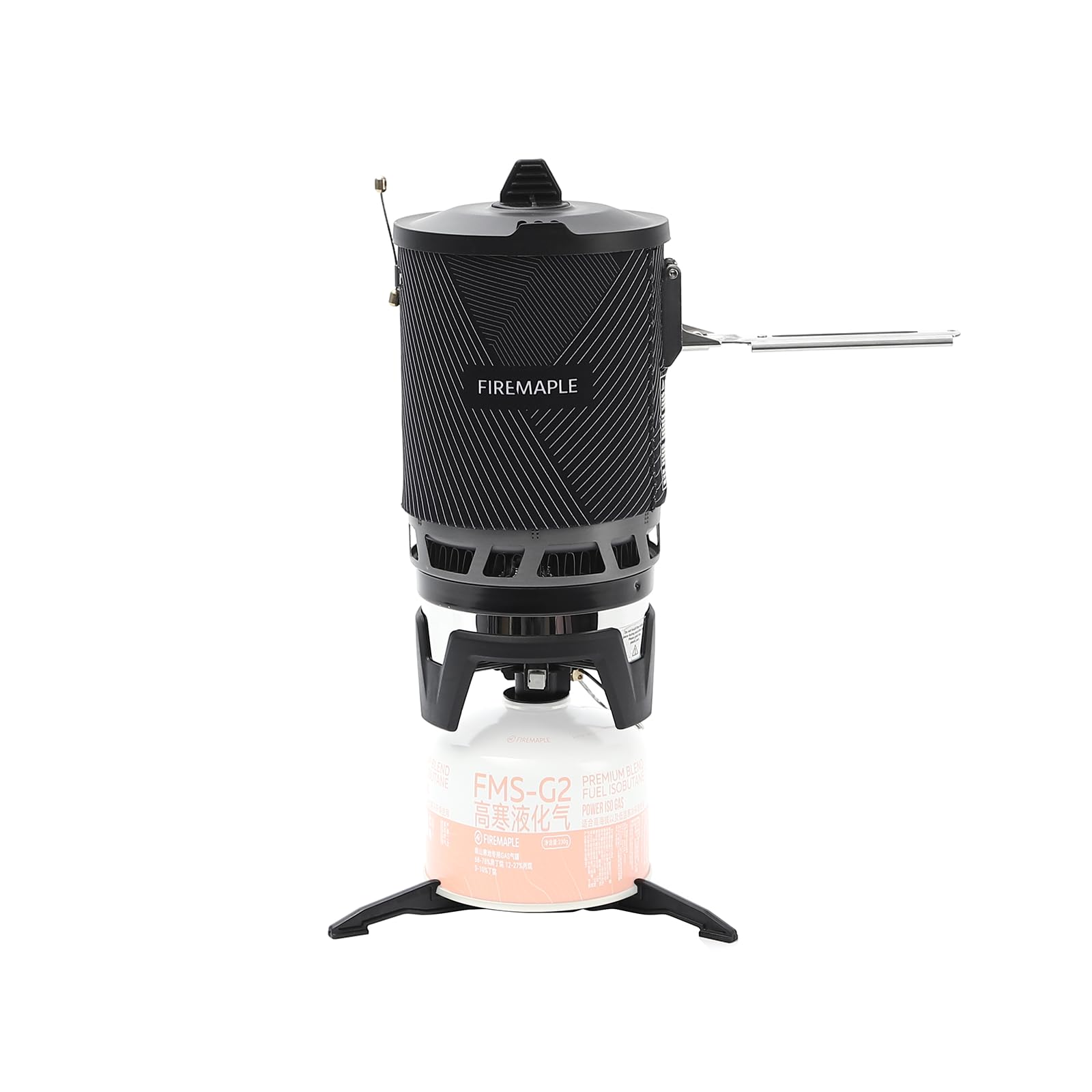
The Fire-Maple Star X2 Pro is an integrated canister system that undercuts premium competitors by nearly half the cost while delivering a measured boil time of around 2 minutes 20 seconds for a liter. The hard-anodized aluminum pot holds a 1.2-liter capacity, and the neoprene insulating cozy lets you handle the pot without a separate potholder. The built-in piezoelectric igniter fires reliably even in damp conditions, and the locking stainless steel handle reduces the wobble that plagues cheaper pot systems.
Wind performance is a genuine strong point here — the included heat exchange fins on the pot base channel the flame directly into the pot bottom, cutting boil-time loss in gusty conditions by a measurable margin compared to an exposed standalone burner. The stove and pot nest neatly together, though the total 19.8-ounce package is not aimed at ultralight gram-counters. Fuel efficiency is excellent, with users reporting 15 to 20 boils per 100g isobutane canister in moderate conditions.
The main trade-off is system weight and volume. At over a pound, this is a heavier kit than a standalone burner paired with a titanium pot, and it does not pack as small. Some users note the stove can feel a bit loud and shaky during a full-power boil, and the advertised nesting capability for the heating element and canister is slightly optimistic. For the price, however, this delivers integrated-system performance at a fraction of the cost.
Why it’s great
- Fast boil time for the price point
- Excellent fuel efficiency per canister
- Reliable built-in piezoelectric ignition
Good to know
- Heavier than standalone burner setups
- Nesting of all components is not perfect
- Can be loud during sustained boil
2. SOTO WindMaster
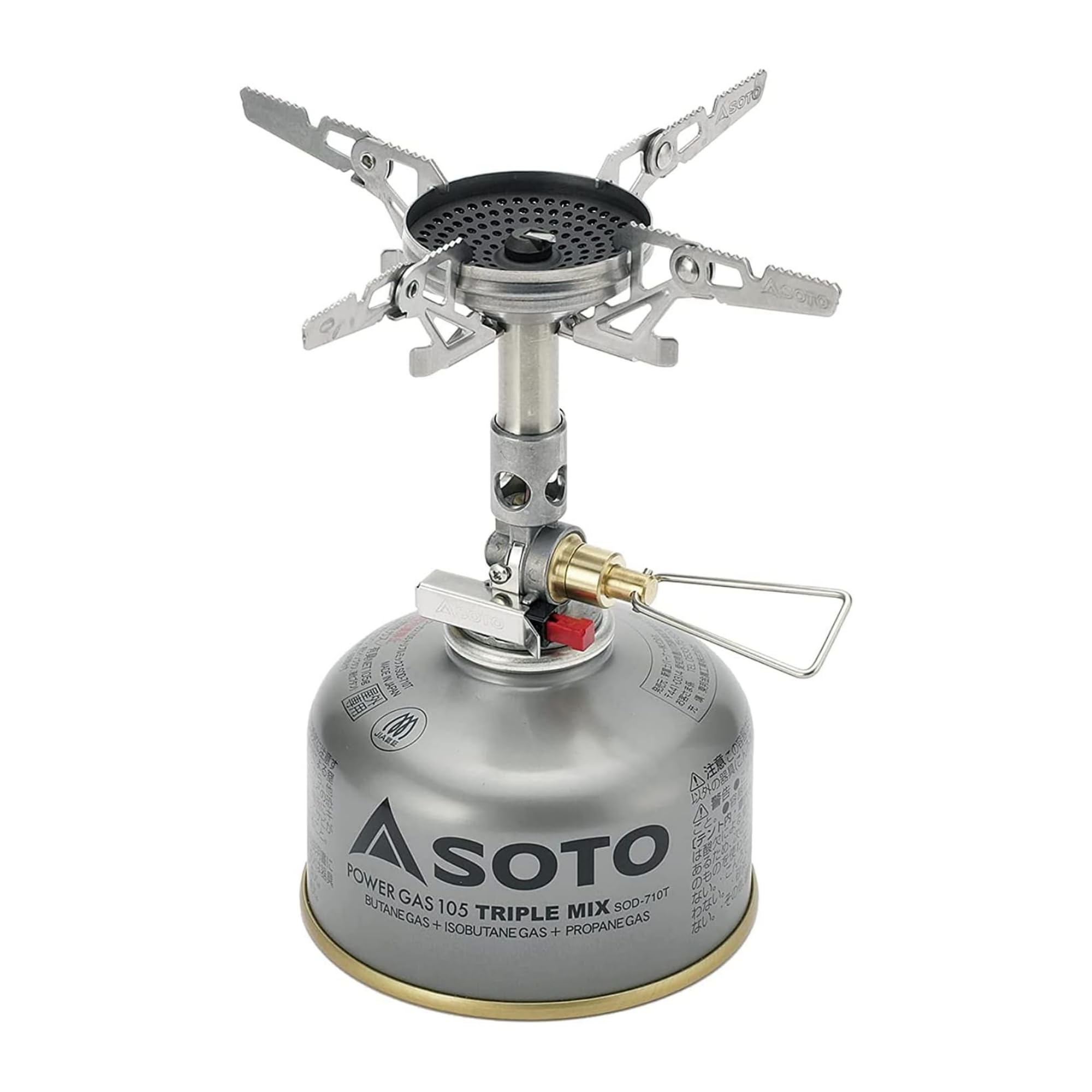
The SOTO WindMaster has earned a reputation as the standalone burner that handles wind better than almost anything in its weight class. The concave “Micro Regulator” burner head creates a physical barrier against crosswinds while maintaining a steady fuel flow regardless of canister pressure. At just 2.3 ounces (67 grams) for the burner head and 4Flex pot support, this is a true ultralight contender that packs small enough to disappear into a mug.
Boil time sits around 2 minutes 30 seconds for a liter in still air, but the real story is how consistent that time stays in a 10 mph breeze. The stealth igniter is protected inside the burner post, reducing the chance of breakage during packing. The pressure regulator delivers consistent flame output even as the canister runs low, which is a significant advantage over unregulated ultralight burners. The 4Flex pot support accommodates larger cookware without tipping, and the optional TriFlex support saves another few grams for solo use.
The WindMaster feels more delicate than a bulkier stainless steel stove. The thin metal components require careful handling, and the plastic cap on the gas canister must stay on during transport to prevent debris from entering the valve. It is also a standalone burner, so you need a separate pot and windscreen to match the fuel efficiency of an integrated system. For gram-watching backpackers who cook in exposed alpine terrain, this is the burner to beat.
Why it’s great
- Exceptional wind resistance for an ultralight burner
- Replaceable igniter with robust design
- Consistent flame output with pressure regulation
Good to know
- Feels delicate compared to heavier stoves
- Requires separate pot and windscreen for best efficiency
- Must keep the valve cap clean during storage
3. MSR PocketRocket Deluxe

The MSR PocketRocket Deluxe is the ultralight burner that checks every cold-weather box. It boils a liter of water in 3 minutes 30 seconds under standard conditions, but the pressure regulator is what sets it apart — it maintains consistent heat output even when the canister pressure drops at temperatures below 40°F. This is a stove you can trust on a windy ridgeline at altitude, and its foldable design fits inside a 700 ml cook cup alongside a 100g fuel canister and a mini lighter.
The broad burner head improves flame distribution for more efficient cooking, and it offers genuine simmer control — a rarity in ultralight backpacking stoves. The piezo push-start igniter is protected inside the burner housing, which prevents the breakage common with externally-mounted sparkers. At 2.9 ounces, it is only slightly heavier than the WindMaster but feels notably more robust, with a wider base that reduces the need for a separate stabilizer on the fuel canister.
The PocketRocket Deluxe is not a full cooking system, so you need to bring your own pot and lid. It also lacks the integrated windscreen of a Jetboil system, so pairing it with a separate foil windscreen is recommended for maximum fuel efficiency. Some users report the plastic storage bag is minimal, but the stove itself carries MSR’s reputation for durability and reliable field serviceability.
Why it’s great
- Pressure regulation works well in sub-40°F conditions
- Excellent simmer capability for an ultralight burner
- Durable, protected igniter and stable base
Good to know
- No integrated pot or windscreen included
- Boil time is slightly slower than integrated systems
- Plastic components could be more durable over long-term use
4. Jetboil MicroMo

The Jetboil MicroMo is the lightest integrated cooking system in Jetboil’s lineup, weighing just 12 ounces for the complete 0.8-liter kit. It uses the same FluxRing heat exchanger as the larger Flash and Zip models, which channels heat directly into the pot walls for boil times around 2 minutes 30 seconds per liter. The precision valve is the headline feature here — unlike older Jetboil models that only had an on-off dial, the MicroMo offers genuine simmer control for cooking rice, eggs, or dehydrated meals that need a gentle hand.
The drink-through lid with a pour spout and strainer is practical for both coffee drinking and draining pasta, and the insulating cozy wraps the pot to keep contents hot while you eat. The 4-ounce fuel canister fits inside the pot with the burner and stabilizer, making this a self-contained kit that slides neatly into a side pocket of a backpack. The mechanical connection between the pot and burner is secure enough to prevent spills, and the built-in igniter starts the flame on the first or second click.
The 0.8-liter capacity is best suited for solo or maybe two-person use — boiling enough water for two freeze-dried meals at once is a tight squeeze. Fuel canister compatibility is limited to threaded isobutane canisters, and performance drops off noticeably below 20°F despite the cold-weather claims.
Why it’s great
- Lightest integrated Jetboil system
- Genuine simmer control with precision valve
- Stable, spill-resistant pot-to-burner connection
Good to know
- Only 0.8L capacity — tight for two people
- Cannot use standard pots with the FluxRing
- Cold-weather performance drops below 20°F
5. Jetboil Flash
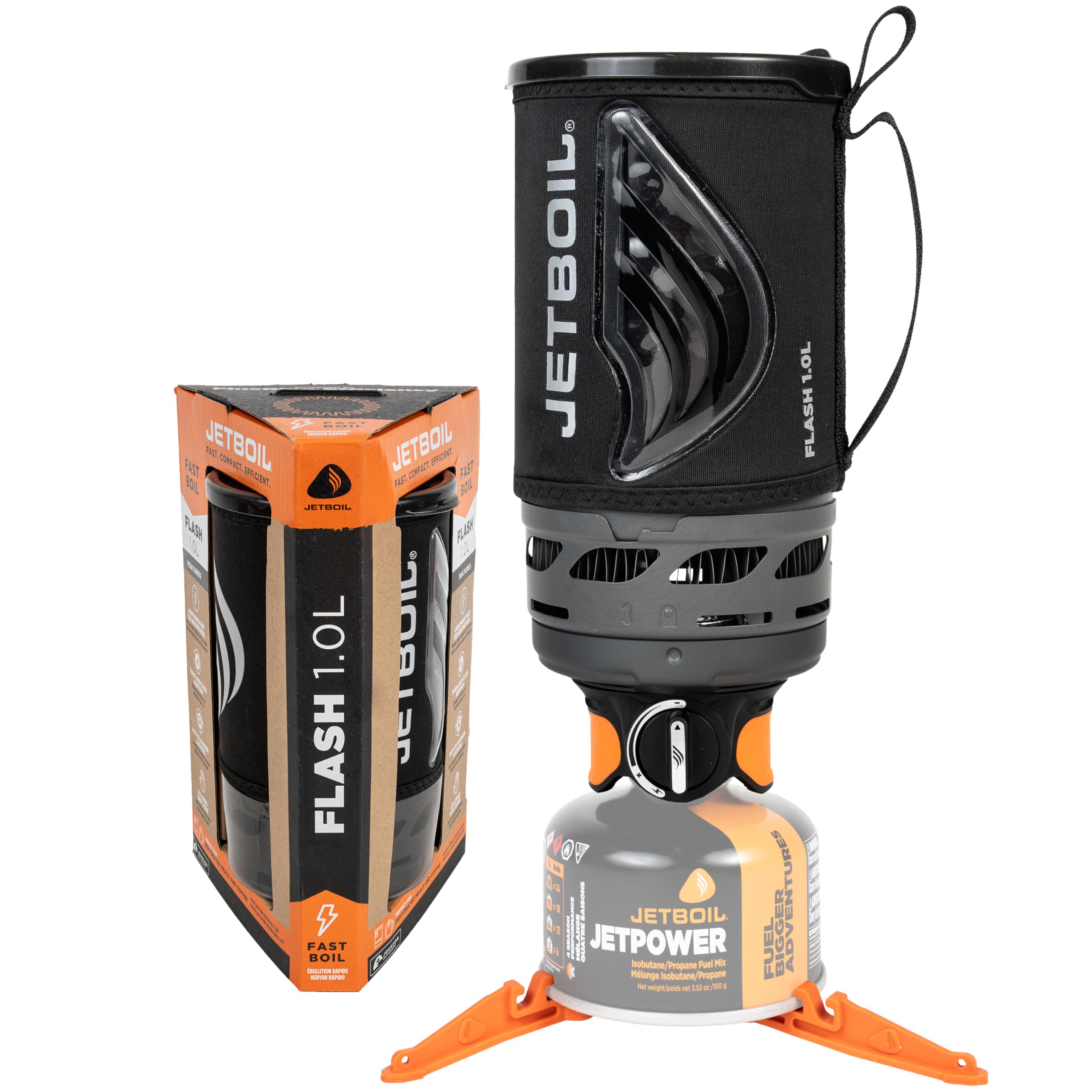
The Jetboil Flash is the quick-draw champion of backpacking stoves, boiling 16 ounces of water in around 2 minutes flat. The one-step auto ignition works like a home stove burner — turn the knob, click, and the flame lights without a separate igniter button. The Safe-Touch rubberized zone around the cup stays cool during cooking, so you can handle the system without a potholder, and the three-point locking mechanism gives a confident, click-in connection between pot and burner.
The 1.0-liter FluxRing pot is large enough for two-person meal prep, and the bottom cup doubles as a measuring cup or an extra bowl. The entire system, including the burner, a 100g fuel canister, and the canister stabilizer, packs inside the pot for a clean, compact rectangle that fits well inside a backpack. The thermochromatic heat indicator on the cozy changes color to show when the water is near boiling, removing the guesswork of lifting the lid and losing heat.
The Flash does not have the traditional simmer valve of the MicroMo, so control is more of a narrow adjustment range rather than a true simmer. The auto-ignition dial requires a specific turning technique that takes a few tries to master, and the plastic cozy can compress over time. For hikers who prioritize speed above all else — boiling water for coffee, oatmeal, or a hot soak after a cold day — the Flash delivers the fastest consistent results in this segment.
Why it’s great
- Fastest measured boil time in the lineup
- Easy, reliable auto-ignition
- Fully self-contained nesting system
Good to know
- Simmer control is limited compared to MicroMo
- Auto-ignition dial takes practice to use consistently
- Insulating cozy can compress over extended use
6. Coleman Cascade 3-in-1
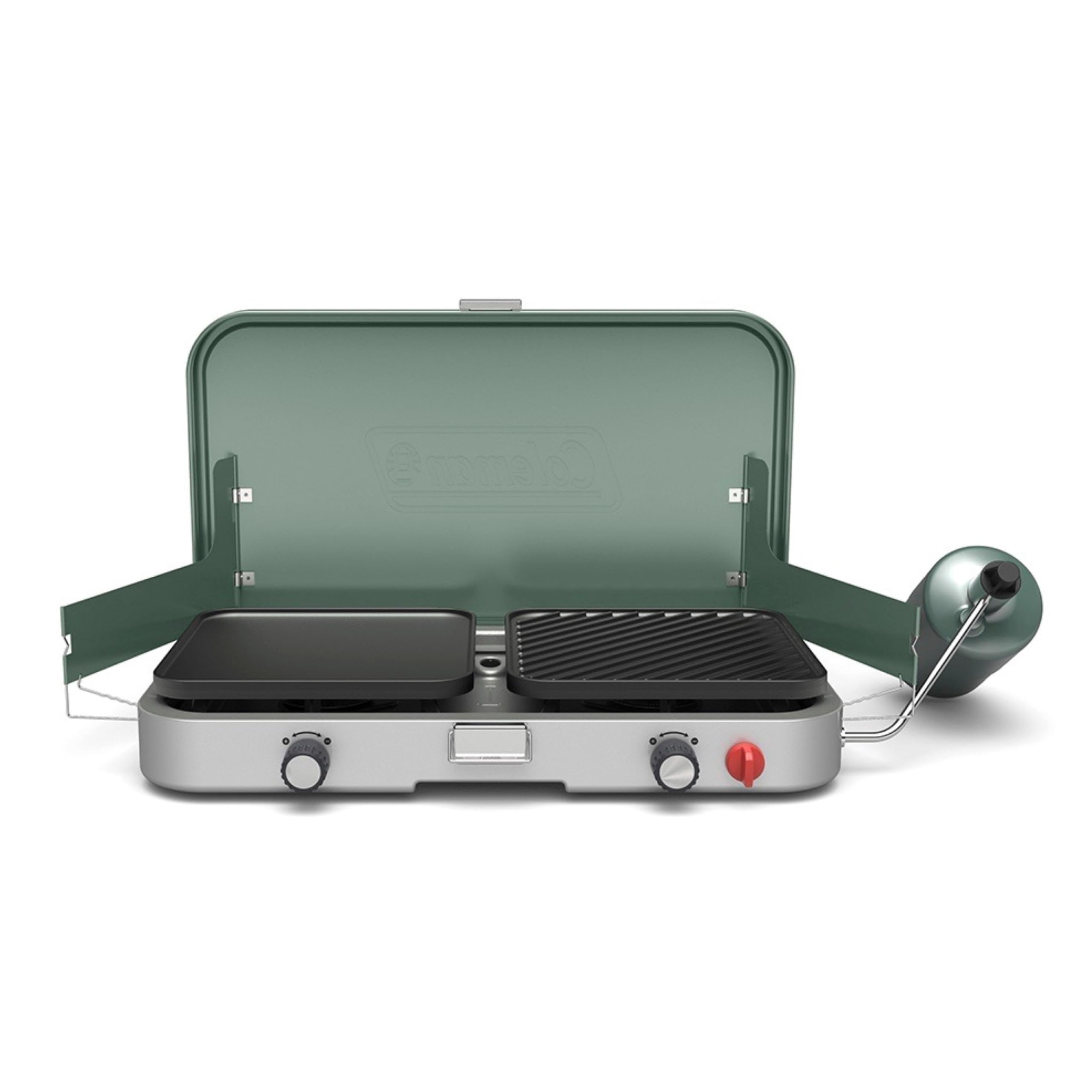
The Coleman Cascade 3-in-1 is a car-camping powerhouse that ditches backpacking weight targets in favor of serious cooking versatility. The two adjustable burners deliver 24,000 total BTUs, and the included cast-iron grill and griddle accessories let you switch between pancakes, burgers, and scrambled eggs without carrying separate cookware. The 22-inch wide cooking surface fits two standard pans side-by-side, and the built-in wind guards keep the burners lit when the breeze picks up.
Rotary ignition lights both burners without matches, and the improved knob rotation offers real precision for simmering sauces on one burner while boiling pasta on the other. The aluminized steel cooktop and removable pot supports make cleanup far easier than a traditional camp stove, and the recessed carry handle combined with a nylon carry case makes transport manageable despite the 15.8-pound weight. The propane tank connection uses Coleman’s standard instant-start system for quick setup at the campsite.
This stove is not for backpacking — at 15.8 pounds, it stays in the trunk of the car or the back of the truck. Burn time is limited to about one hour on high with a single 16-ounce propane cylinder, so bringing a larger tank or spare cylinders is necessary for longer trips. The cast-iron accessories are heavy and require seasoning and careful handling to prevent rust. For base camp cooking, large group meals, or tailgating, this is the most capable stove in the lineup.
Why it’s great
- Versatile 3-in-1 cooking with included grill and griddle
- Excellent wind protection for both burners
- Precise simmer control for two separate burners
Good to know
- Too heavy for backpacking — car camping only
- Short burn time on a single disposable canister
- Cast-iron accessories need seasoning and rust care
FAQ
Can I use a regular pot on an integrated stove like the Jetboil Flash?
How do I maintain consistent performance in below-freezing temperatures with a backpack stove?
Why does my backpack stove boil slower at high altitude?
Final Thoughts: The Verdict
For most users, the best backpack stove winner is the Fire-Maple Star X2 Pro because it delivers integrated-system speed and fuel efficiency at a price that undercuts the premium competition by a wide margin. If you want ultralight performance with genuine wind resistance for alpine environments, grab the SOTO WindMaster. And for car camping groups that need to cook full meals for multiple people, nothing beats the Coleman Cascade 3-in-1.