
Our readers keep the lights on and my morning glass full of iced black tea. As an Amazon Associate, I earn from qualifying purchases.
Specs are compiled from manufacturer listings and verified buyer reviews and can change over time — please confirm the key details on the product page before buying.
A backpacking axe needs to earn its place on your pack. Too heavy and it is dead weight. Too dull and you are fighting every log. The right one splits campfire-ready kindling in a few swings, slips into your bag, and stays sharp through a whole season. This guide lines up the seven best options — from lightweight budget-savers to premium heirlooms — so you know exactly which head weight (the steel part that does the chopping) and handle length fit your trail style.
I’m Min — the founder and writer behind Gadgets Feed. This guide is built by comparing the manufacturers’ published specifications and the patterns across verified customer reviews, so you get each pick’s real strengths and trade-offs instead of marketing spin.
Finding the right backpacking axe means balancing swing force against pack weight — a test every one of these seven models passes in its own way.
Our Picks at a Glance
How To Choose The Best Backpacking Axe
Buying a backpacking axe is different from buying a full-sized splitting maul (a heavy, long-handled tool for logs). You are trading raw chopping power for portability. The three specs that matter most are head weight (the steel mass), handle length, and blade material (the steel type). Here is what to look for.
Head Weight and Handle Length
A heavier head delivers more force per swing, but it also adds ounces to your pack. Most backpacking axes have heads between 1.25 and 1.5 pounds and handles from 14 to 17 inches (for leverage). the balance for a weekend trip is 1.32 pounds on a 15-inch handle — enough to split dry pine but light enough to lash to the outside of your pack without throwing off your balance.
Blade Material and Grind
High-carbon steel (a harder alloy) takes and holds a sharper edge than softer steel, but it needs more care to prevent rust. A convex grind (a rounded edge shape) rolls the blade into a smooth curve that bites deep without wedging — ideal for splitting. Hatchets with a PTFE (a low-friction plastic coating) or similar coating resist sticking in wet wood, but the coating can wear off over time.
Handle Material and Feel
Hickory (a shock-absorbing wood) handles absorb shock better than any synthetic material, but they can swell in rain and require periodic oiling. Composite or nylon (plastic-based) handles are nearly indestructible and stay dry in wet weather, but they transmit more vibration to your hands. Your choice depends on whether you prioritize traditional feel or all-weather durability.
Quick Comparison
| Model | Best For | Head Weight | Handle Length | Total Weight | Amazon |
|---|---|---|---|---|---|
| Husqvarna Hatchet★ Best Overall | Traditional Swedish craftsmanship | 1.32 lb | 15 in | 1.32 lb | $89.22Amazon |
| 1844 Helko Werk PathfinderPremium Craftsmanship | Premium heirloom quality | 1.25 lb | 15 in | 1.75 lb | $145.00Amazon |
| Gerber Freescape Hatchet | Lightweight modern performance | — | 17.5 in | 32.6 oz (2.03 lb) | $71.99Amazon |
| Tivoli Camping Hatchet | Heavy-duty splitting on a budget | 1193 g (2.63 lb) | 16.5 in | 2.63 lb | $45.99Amazon |
| Fiskars 375501-1001 Hatchet | Ultra-light budget beater | 0.68 kg (1.5 lb) | 15.5 in | 1.5 lb | $37.68Amazon |
| Purple Dragon Camping Hatchet | Classic look, modern price | 1.1 kg (2.42 lb) | 14.7 in | 2.42 lb | $37.77$44.44Ends inAmazon |
| DWFKHT 15.7″ Hatchet | Budget big-swing option | 2.5 lb | 15.7 in | 2.5 lb | $39.99$44.99PrimeAmazon |
In-Depth Reviews
1. Husqvarna Hatchet, Small Axe with Leather Sheath and Hickory Handle
Our pick — over 4.5★ from 850+ verified ratings; the strongest balance of quality and price.
A Swedish steel head on a hickory handle that cuts like a tool twice its price.
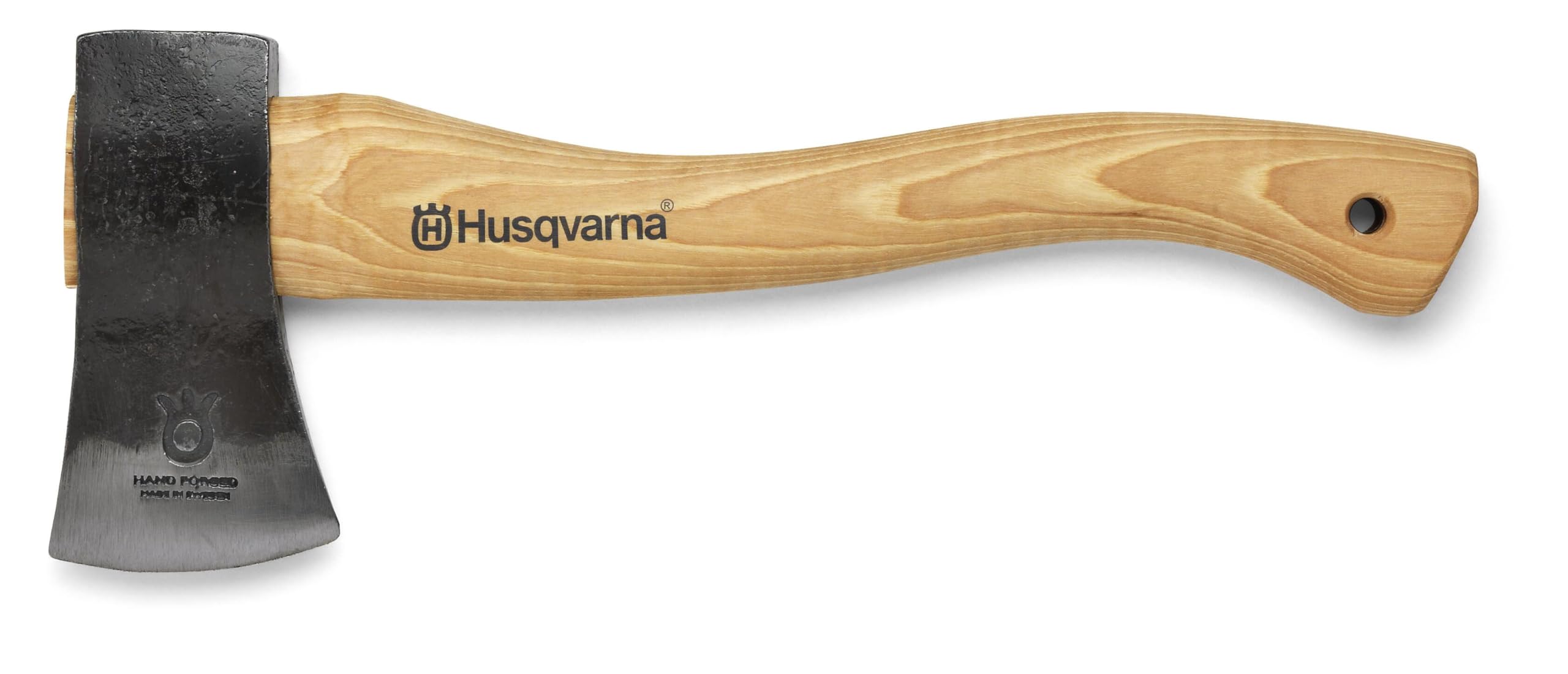
This is the balance where classic craftsmanship meets a reasonable price. The hand-forged 1.32-pound head is made from Swedish steel at the Hultafors forges, and buyers consistently praise how sharp it arrives. The 15-inch hickory handle has a natural grain that fits your palm and absorbs shock — one reviewer noted, “I bought mine in 2019 for.” The leather sheath is stitched with brass rivets, thick enough to protect the edge without adding bulk. At 1.32 pounds total, it is the same weight as the head alone on many competitors, making it one of the lightest full-steel hatchets you can carry. It weighs 1.32 lb, while the Fiskars weighs 1.5 lb.
Unlike the Fiskars, the Husqvarna uses a traditional wooden wedge to secure the head — easy to rehandle if you ever need to. Reviewers mention the handle may arrive with a lacquered finish (a hard varnish) that benefits from sanding and a coat of linseed oil. One buyer described the hammer marks on the forged head as “character,” not a flaw. If you want a tool that feels like it was made by a blacksmith rather than a machine, this is your pick.
Why it wins
- Swedish hand-forged steel at a price far below other Scandinavian imports
- Total weight of 1.32 lb versus the Fiskars model at 1.5 lb
- Thick leather sheath with brass rivets protects the edge in transit
What you need to know
- Lacquered handle often needs sanding and oiling for optimal feel
- Blade may need a touch-up on a stone to reach the sharpness some expect
Grab this if: you want a traditionally forged hatchet that feels premium in your hand and on the trail — without spending Helko Werk money.
Pass on it if: you prefer a synthetic handle that needs zero maintenance or a coated blade for wet-wood splitting.
2. 1844 Helko Werk Germany Classic Pathfinder Hatchet
German blacksmithing tradition you can feel in every swing — at a weight that disappears in your pack.
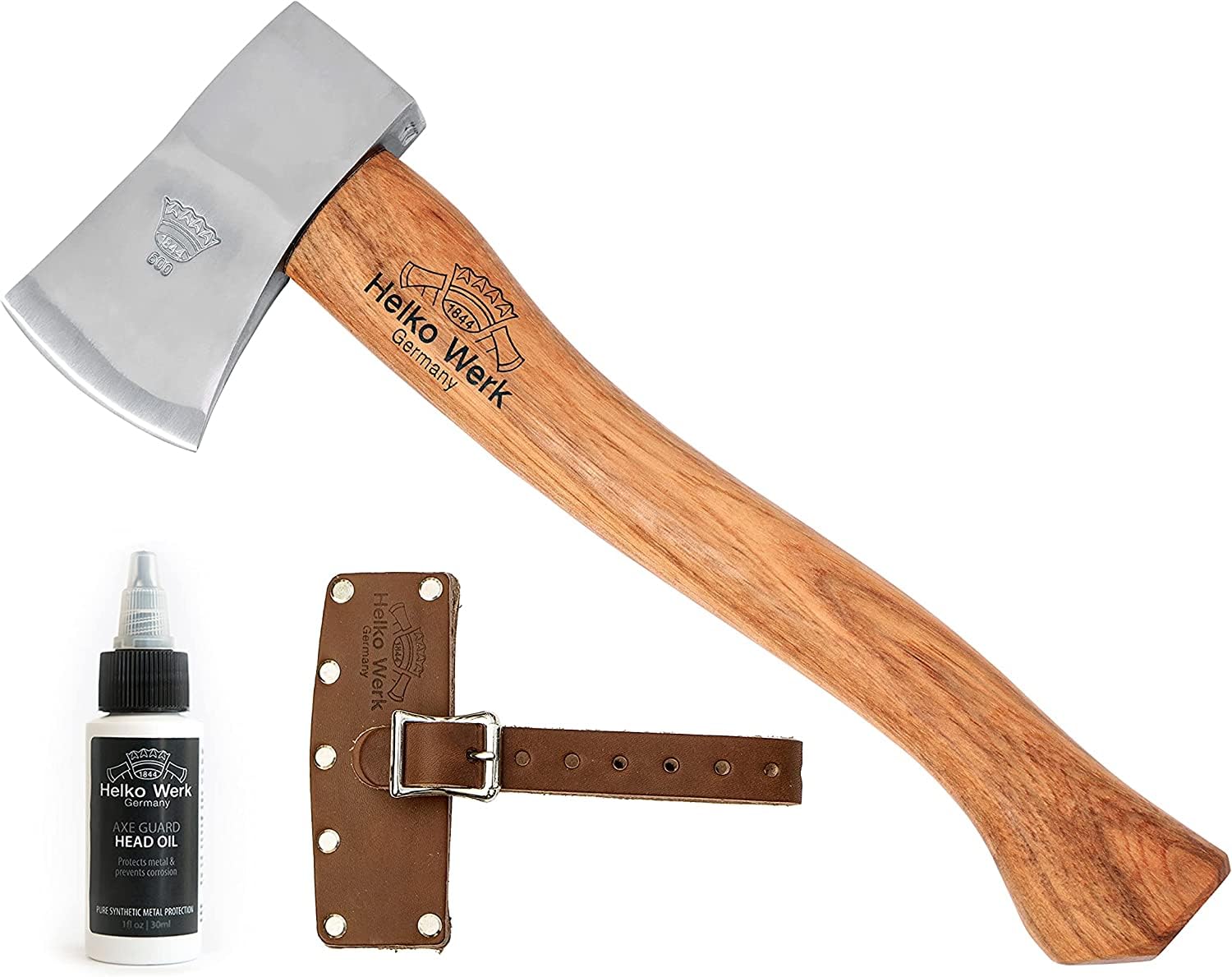
The Pathfinder is the pick for anyone who wants a single tool that lasts generations. Its head is drop-forged from German C50 high-carbon steel (a spring steel with a hardness rating of 53-56 HRC — the Rockwell scale for blade toughness), then hand-finished and polished to a reflective shine. That polish reduces cutting friction so the blade glides through wood instead of sticking. At a 1.25-pound head on a 15-inch Grade A hickory handle, the total weight is just 1.75 pounds. You get the heft of a real axe without the bulk of a full-size model.
Reviewers mention the edge came razor sharp from the factory, and the grain orientation on the handle is perfectly aligned for strength. One owner noted the handle is thick enough for users with larger hands to maintain a secure grip. The included full-grain leather sheath and Axe Guard oil (a protective coating) mean you can store it properly without worrying about rust. This is not a buy-it-for-a-season tool — it is buy it, then pass it down. But it costs more than any other model here, and some buyers report needing to profile (reshape) the edge for their preference.
What you are paying for
- Hand-forged German C50 carbon steel (53-56 HRC) holds a superior edge
- 1.75 lb total weight is light enough for backpacking yet feels substantial
- Full-grain leather sheath and protective oil included for long-term care
Honest trade-offs
- Price is significantly higher than any other model here
- May need edge profiling (reshaping the blade) right from the start for some users
Reach for it if: you want a heirloom-quality hatchet that combines backpacking portability with German forging heritage — and you are willing to invest in a tool that will outlast every other piece of gear you own.
Look elsewhere if: your budget is tight or you prefer a no-maintenance composite handle for wet-weather camping.
3. Gerber Gear Freescape Hatchet, 17.5″

A forged-steel hatchet with a composite handle that chops clean without the weight penalty.
The Gerber Freescape is the modern answer to the traditional wooden hatchet. Its forged steel head is coated in PTFE (a non-stick, low-friction plastic) to reduce friction so the blade slices through wood rather than getting stuck. The composite handle is shock absorbent — it reduces the sting in your palm after repeated swings — and the soft-touch overmold gives you a secure grip in wet conditions. At 32.6 ounces (about 2.03 pounds) and a 17.5-inch length, it generates more leverage than the shorter models while still fitting inside a backpack side pocket.
Owners mention that the extra head weight makes it “far more effective than a hand hatchet” for branches up to four inches in diameter. One buyer mentioned that after using it to clear motorcycle trails, chopping time was cut roughly in half compared to smaller hatchets. The slim sheath is fine for storage, though some users plan to replace it with a leather cover for a more secure carry. Made in Finland, it combines Scandinavian forging with modern materials. The blade cover is bulky and may not be ideal for carrying in a pack.
Standout strengths
- PTFE coating reduces friction so the blade does not get stuck in wet or green wood
- Composite handle with soft-touch overmold absorbs shock and stays grippy when wet
- 17.5-inch length provides better leverage than shorter 15-inch hatchets
Things to consider
- Blade cover is bulky and may not be ideal for backpack carry
- Requires more effort to split dry wood compared to a heavier maul-style axe
Best for: the backpacker who camps in wet or humid climates and wants a maintenance-free handle that will not crack or swell.
Not for: purists who want a natural wood feel and the ability to rehandle the tool down the line.
4. Tivoli Camping Hatchet Axe with Sheath – 16.5″
A heavier 16.5-inch hatchet that brings the force for serious log splitting on a budget.
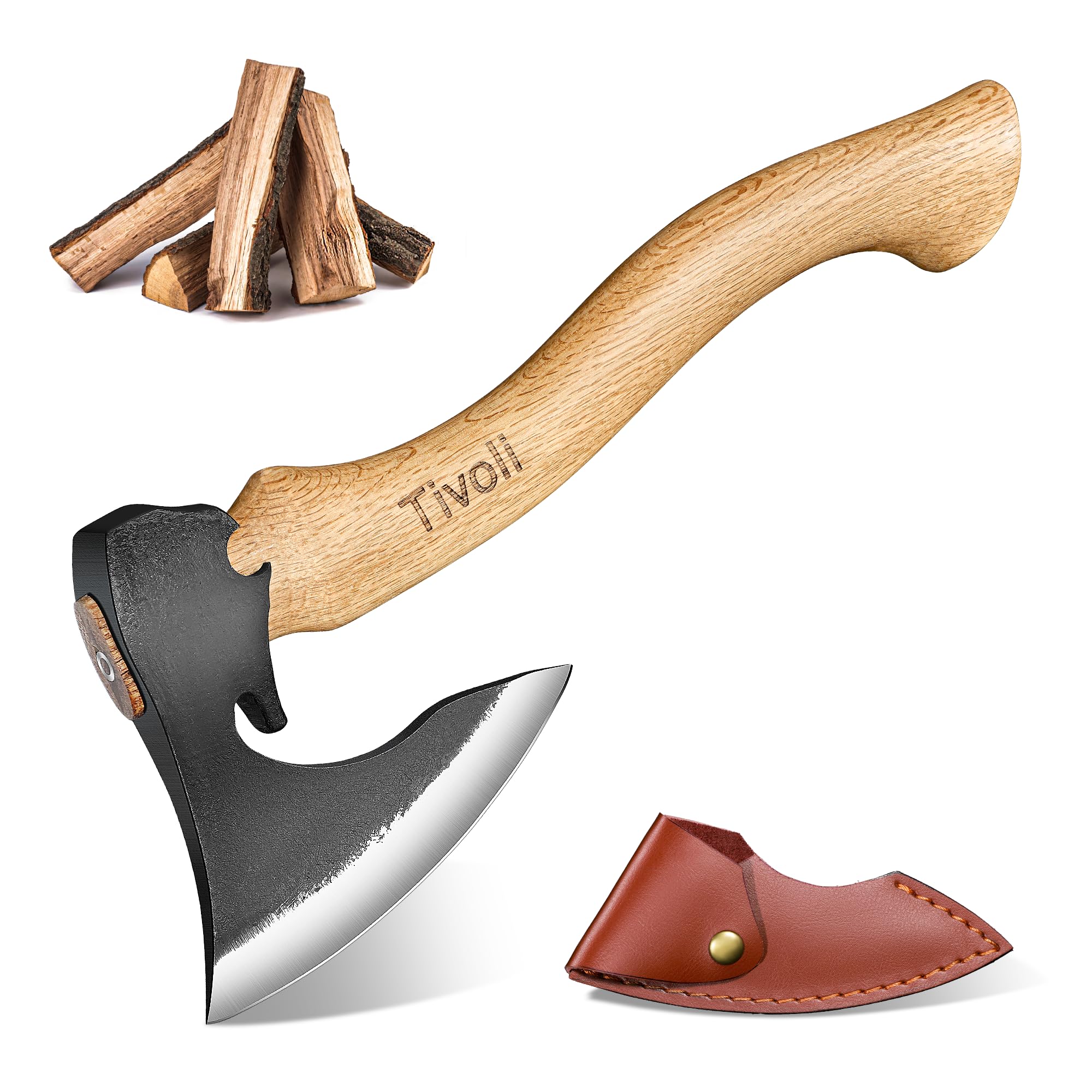
The Tivoli is noticeably heavier than the two models above — its head weighs 1193 grams (about 2.63 pounds) — which makes it a better choice for splitting thicker logs rather than just making kindling (small sticks for starting a fire). The hand-forged high-carbon steel head is secured to a solid beech wood handle using both a wood wedge and a steel wedge, so the head will not loosen even after repeated impact. The 16.5-inch handle gives you more swing arc, generating more force than a 14-inch hatchet can muster.
Reviewers are split on the factory edge. One buyer called it “razor sharp” right from the start, while another reported spending over an hour with a file and stone to fix the grind angle (the slope of the blade) before the blade would cut properly. The bearded blade profile (a curved notch near the handle) makes it useful for carving and shaping stakes, not just splitting. The included leather sheath protects the edge during storage, but it is more of a blade bonnet than a full belt sheath. At 2.63 pounds, it is the heaviest model here — not ideal for ultralight packs.
The upsides
- Dual wedge system (wood + steel) keeps the head firmly attached during hard swings
- Bearded blade profile is versatile for both splitting and carving tasks
- 16.5-inch handle provides more leverage than typical backpacking hatchets
The downsides
- Factory edge often arrives dull and may require extensive sharpening
- At 2.63 pounds, it is the heaviest model here — not ideal for ultralight packs
Pick this if: you expect to split medium-sized logs at a base camp and want the extra swing force of a longer, heavier hatchet without paying premium prices.
skip it if: you need a lightweight tool for long-distance backpacking or you want a razor edge straight from the start.
5. Fiskars 375501-1001 Hatchet with Sheath, 14″

The lightweight composite-handled hatchet that has been a reliable budget pick for two decades.
Fiskars has been making this same basic design for years, and it works. The proprietary blade-grinding technique (a machine-made edge) creates a sharper edge than you expect from a sub-mid-range hatchet, and the low-friction coating (a PTFE-like layer) prevents the head from sticking in the wood. The molded head is fused to the DuraFrame handle (a reinforced nylon) — it will never loosen, and the handle design prevents overstrike breakage (damage from missed swings). At 1.5 pounds with a 15.5-inch length, it is heavier than the Husqvarna model (1.5 lb vs 1.32 lb) but significantly lighter than the Tivoli.
One reviewer wrote, “I purchased this to replace my 20 year old X7 hatchet,” which says a lot about how long these tools last. The big caveat is the sheath — buyers describe it as a “huge plastic one” that is fine for a workshop but not practical for a backpack. You will need to fashion your own edge cover for trail carry. The blade is sharp from the start, and the ergonomics make it comfortable for extended chopping sessions. Think of it like a Mora knife — sharp, effective, affordable, and easy to replace if you lose it.
What works
- Composite handle is virtually indestructible and will not rot, swell, or crack
- Low-friction coating prevents the blade from getting stuck in wood
- Molded head design eliminates any risk of loosening over time
What does not
- Bulky plastic sheath is not practical for backpacking — you will need an aftermarket cover
- Heavier at 1.5 lb than the Husqvarna at 1.32 lb despite a shorter heritage
Reach for this if: you want a no-fuss, low-maintenance hatchet that you can abuse, lose, or replace while staying affordable — ideal for car camping and casual backpacking.
Look elsewhere if: you prefer a traditional wood handle with replaceable heads, or you need a trail-ready sheath included in the box.
6. Purple Dragon Camping Hatchet 14.7 Inch Hand Forged Splitting Axe
A hand-forged hatchet with an S-curve hickory handle that looks as good as it chops.
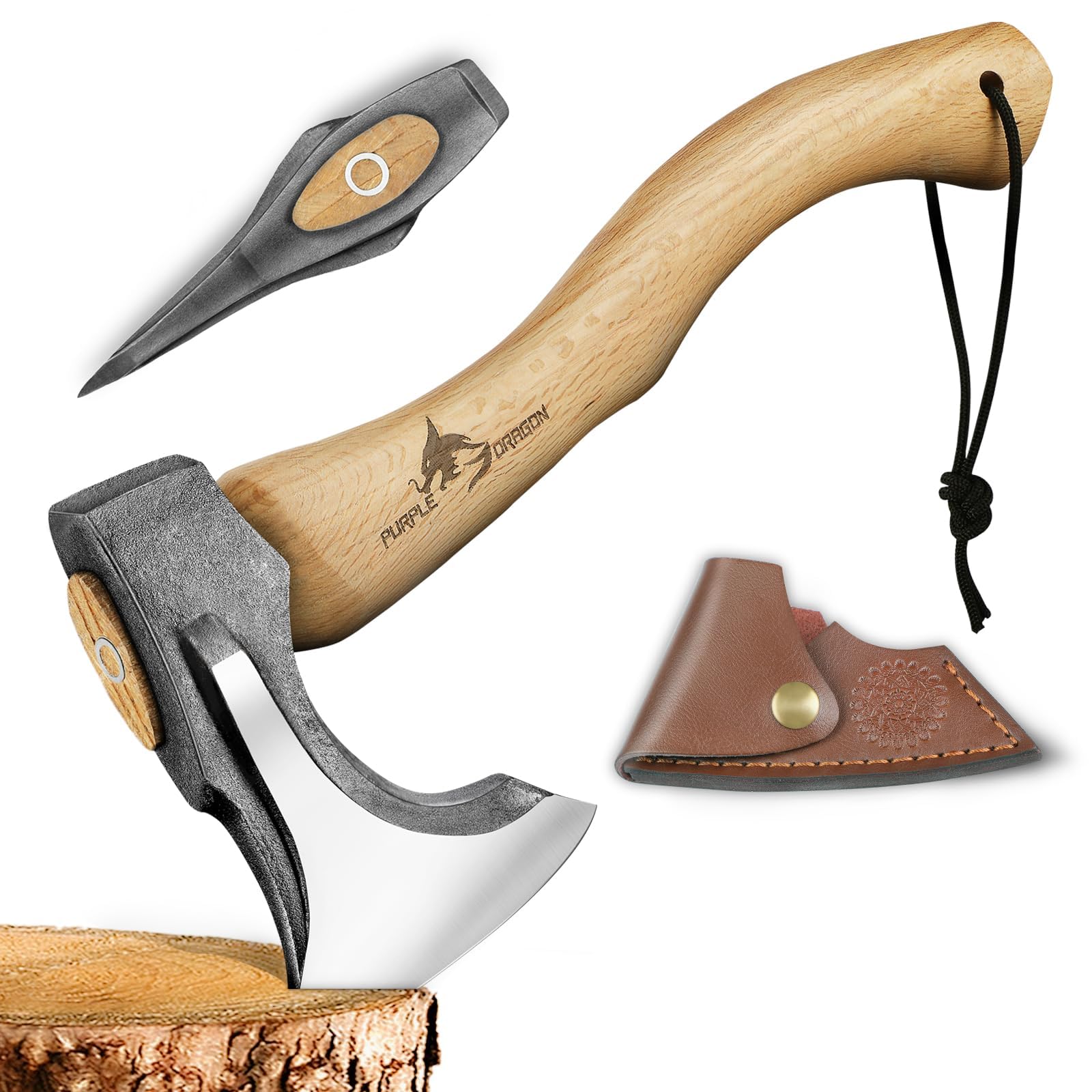
The Purple Dragon leans into the classic bushcraft aesthetic (a traditional outdoor-craft look) with a 14.7-inch S-curve hickory handle and a carbon-manganese high-strength steel head that has been hardened to 56-60 HRC (the Rockwell scale for blade toughness). The cow-foot design (a notch in the blade) is built for splitting and delimbing — it lets you catch branches and pull them down without bending the handle. Two ring wedges secure the head to the handle, so it will not fly off during a hard swing. At 1.1 kilograms (about 2.42 pounds), it sits in the middle weight range.
Customers note that the “14.7-inch hand-forged head is very sharp and balanced.” The polished and lacquered finish looks attractive, but the manufacturer recommends soaking the head in water for 30 minutes to an hour before first use — an unusual step that may catch some buyers off guard. The leather sheath is hand-stitched with a snap closure, though some users mention the sheath could be tighter for a more secure fit. If you want a hatchet that looks like it belongs in a bushcraft photo shoot and can handle real work, this delivers. It is heavier than the Husqvarna (2.42 lb vs 1.32 lb), so it is better for base-camp duty than long-distance carries.
What stands out
- S-Curve hickory handle absorbs shock and fits the palm comfortably for extended use
- Cow-foot blade design is effective for delimbing and splitting tasks
- Rubber protective lips on the splitting face add safety during transport
What to watch
- Requires soaking before first use — an extra step not needed on other models
- Leather sheath looks good but some users find it too loose for secure carry
Grab this if: you want a visually striking hatchet with a traditional S-curve handle and a cow-foot blade for serious splitting work — and you do not mind the extra prep step before your first trip.
Pass on it if: you need an ultralight pack axe or prefer a simple straight handle with no break-in required.
7. DWFKHT 15.7″ Hatchet, Camping Hatchet, Hand-Forged Axe with Sheath

A 2.5-pound hatchet that delivers heavy swings for a price that undercuts most competitors.
For the cost, you get a surprising amount of tool. The head is forged from 1065 high carbon steel (a tough alloy also used in bushcraft knives) with a hammered finish and a mirror-polished edge. The handle is solid beech wood with an ergonomic curve that reduces fatigue during extended use. At 15.7 inches long and 2.5 pounds total, it is one of the heavier picks in this group, which translates to more chopping force per swing for splitting larger pieces of wood.
Reviewers point out that the blade arrives sharp enough for most tasks, but the mirror-polished edge may need refinement for serious carving. One owner reported spending an hour with a bench grinder and hand stone to get it shaving sharp — a common theme among budget hand-forged axes. The included leather sheath is functional but basic. It will keep the edge safe in your pack, but do not expect the same quality as the Helko Werk sheath. This is a value play: you get a heavy, solidly constructed hatchet for less than you would pay for a similar weight class from a premium brand.
The strengths
- 1065 high carbon steel takes and holds a good edge after proper sharpening
- Ergonomic beech handle reduces hand fatigue during extended splitting sessions
- At 2.5 pounds, it delivers high chopping force for splitting medium logs
The weaknesses
- Blade often needs significant sharpening before it performs at its peak
- Basic sheath is functional but not comparable to premium leather options
Best for: the budget-conscious camper who wants the chopping power of a heavier hatchet and is willing to invest time in sharpening to open up its full potential.
Not for: anyone who expects a razor edge right from the start or a premium-fit leather sheath for trail carry.
Understanding the Specs
Head Weight
The head weight is the amount of steel in the chopping end of the axe, measured in pounds or kilograms. More weight means more force per swing, but it also makes the tool heavier to carry. For backpacking, a head weight between 1.25 and 1.5 pounds is the standard balance — enough to split campfire-sized logs without leaving you hunched over from the extra pack weight.
Handle Length and Material
The handle length dictates how much leverage you get and how easily the axe fits in your pack. Shorter handles (14-15 inches) are more portable and easier to control for carving, while longer handles (16-17.5 inches) generate more swing force for splitting. Handle material — hickory (shock-absorbing wood), beech (smooth and strong), or composite (plastic-based) — determines how much shock reaches your hand and how well the tool holds up in wet weather. Hickory absorbs vibration best but requires oiling; composite handles are nearly indestructible but transmit more shock.
FAQ
What head weight is best for backpacking?
Does handle length affect how the axe fits in my pack?
Is a hand-forged axe better than a composite-handled hatchet?
How sharp should a new backpacking axe be?
Can I use a backpacking axe for carving and bushcraft?
How do I protect the blade from rust while backpacking?
What is the difference between a hatchet and a camp axe?
Can I take a backpacking axe on a plane?
Final Thoughts: The Verdict
For most buyers, the backpacking axe winner is the Husqvarna Hatchet because it combines Swedish hand-forged steel, a light 1.32-pound weight, and an included leather sheath at a price that undercuts most competitors with similar heritage. If you want a modern composite-handled hatchet that handles wet wood without sticking, grab the Gerber Freescape. And for the backpacker who wants one heirloom-quality tool that will last generations, the standout is the 1844 Helko Werk Pathfinder.
How We Picked
We do not accept paid placement. Every pick is matched to a real buyer and a real use-case; we do not hands-on test units.
Sources & Methodology
Specifications: manufacturer listings and product documentation. Review insights: verified customer reviews, as of July 2026. Pricing: not shown on this page (it changes often); check the current price via the retailer link.
As an Amazon Associate, Gadgets Feed earns from qualifying purchases. This does not affect which products we feature.
Related Guides
Product prices and availability are accurate as of the date/time indicated and are subject to change. Any price and availability information displayed on Amazon at the time of purchase will apply to the purchase of this product. As an Amazon Associate I earn from qualifying purchases.
CERTAIN CONTENT THAT APPEARS ON THIS SITE COMES FROM AMAZON. THIS CONTENT IS PROVIDED "AS IS" AND IS SUBJECT TO CHANGE OR REMOVAL AT ANY TIME.
Amazon and the Amazon logo are trademarks of Amazon.com, Inc. or its affiliates.