
Our readers keep the lights on and my morning glass full of iced black tea. As an Amazon Associate, I earn from qualifying purchases.
Specs are compiled from manufacturer listings and verified buyer reviews and can change over time — please confirm the key details on the product page before buying.
If you have wide feet, you know the drill: you buy a “wide” boot, and it still squeezes your toes like a vise. That pinch turns a beautiful mountain trail into a misery of blisters and numb toes. This guide cuts through the hype to find the backpacking boots that genuinely give your feet the room they need — without sacrificing the support that keeps you stable under a heavy pack.
I’m Min — the founder and writer behind Gadgets Feed. This guide is built by comparing the manufacturers’ published specifications and the patterns across verified customer reviews, so you get each pick’s real strengths and trade-offs instead of marketing spin.
Finding the right backpacking boots for wide feet means balancing a roomy toe box with secure heel hold, so your foot doesn’t slide and cause hot spots on long descents.
Our Picks at a Glance

How To Choose The Best Backpacking Boots For Wide Feet
The first mistake most wide-footed buyers make is assuming any boot labeled “wide” will fit. The truth is that “wide” is not a universal standard—one brand’s wide is another’s regular. Your focus should be on the boot’s last (the foot-shaped mold it’s built around) and how much vertical and horizontal space it gives your toes.
Look for the Last, Not Just the Label
Boots built on a “Comfort Fit” last or those that explicitly mention a wide toe box are your safest bets. A good wide boot gives your toes room to splay naturally when you’re going downhill, while still holding your heel firmly in place. If a boot is wide everywhere, your foot will slide forward on descents, causing black toenails—so a secure heel is non-negotiable.
Ankle Support vs. Weight
Heavier boots with high cuffs provide more stability when you’re carrying a 40-pound pack over rocky terrain, but they tire your legs faster on flat trails. Lighter boots are more comfortable for day hikes but offer less protection. Decide where your priorities lie before you start shopping—a stiff, supportive boot is overkill for a weekend on groomed trails, and a light hiker is dangerous for off-trail scrambling.
Quick Comparison
| Model | Best For | Upper Material | Waterproofing | Weight | Amazon |
|---|---|---|---|---|---|
| Asolo TPS 520 GV Evo Wide★ Best Overall | Technical backpacking | 2.6-2.8mm full-grain leather | GORE-TEX | Heavy-duty | Amazon |
| Danner Mountain 600 (Women’s)No-Break-In Pick | All-day comfort, minimal break-in | Durable suede | Gore-Tex | Lightweight | Amazon |
| OrthoComfoot Men’s OrthopedicFoot-Pain Fixer | Foot pain relief, plantar fasciitis | Fabric/Textile | Waterproof | Lightweight | Amazon |
| OrthoComfoot Women’s Orthopedic | Foot pain relief, wide toe box | Fabric/Textile | Waterproof | Lightweight | Amazon |
| KEEN Durand Mid WP Wide | Wide toe box, all-day wear | PU and dual compound rubber | Waterproof | 1.19 lbs | Amazon |
| Orthofeet Dakota (Women’s) | Orthopedic support, bunions | Textile | Water-resistant | Lightweight | Amazon |
| Danner Vital 8″ (Men’s) | Hunting, rugged trail wear | Leather & textile | Waterproof leather | 2.9 lbs | Amazon |
| Vasque St. Elias (Men’s) | Classic leather durability | 1.8-2.0mm full-grain leather | GORE-TEX | 2 lb, 14 oz | Amazon |
| Meindl Comfort-Fit Light Hiker | Immediate comfort, wide toe box | Full-grain waxed nubuck leather | Gore-Tex | 4.56 lbs (pair) | Amazon |
| Asolo TPS 535 LTH V Evo | Heavy loads, technical terrain | 2.2-2.4mm full-grain leather | Water-resistant (no GORE-TEX) | Heavy-duty | Amazon |
| Zamberlan 1996 VIOZ LUX GTX | Classic craftsmanship, resoleable | Leather | GORE-TEX | Slightly heavy | Amazon |
In‑Depth Reviews
1. Asolo Men’s TPS 520 GV Evo Wide Boots
Our pick — over 4.5★ from 650+ verified ratings; the strongest balance of quality and price.
The leather fortress that swallows rocky trails whole, with a toe box wide enough to breathe in.
If you plan to keep the same boots for decades of heavy trips, the Asolo TPS 520 GV Evo Wide is built to last that long. Its one-piece upper uses 2.6-2.8 mm full grain leather, so it shrugs off granite scrapes and brush without tearing. A GORE-TEX lining (a waterproof membrane) keeps your feet dry when you cross streams or get caught in a downpour. The Triple Power Structure outsole, co-designed with Vibram, places three shock absorbers exactly where your foot hits hardest, which means less joint fatigue after a 15-mile day.
Buyers report it’s the kind of boot you replace rather than retire: “Wore out my first pair after years of heavy use,” and one long-term owner logged 14 years before the sole finally gave way. The ankle support is repeatedly singled out as the best part of the fit, especially on technical, rocky terrain where a rolled ankle is a real risk. The trade-off is weight and break-in — the stiff sole is ideal for scree fields but feels clunky on flat pavement, and the leather demands a week or two of shorter hikes to mold to your foot.
The fit runs small, so most wide-footed owners size up a half to a full size. If you’re carrying a heavy pack over rocky passes for days at a time, this is the boot that will outlast your gear.
Built Like a Tank
- Thick 2.6-2.8mm full-grain leather upper shrugs off rocks and brush
- GORE-TEX lining keeps feet dry without overheating
- Triple-density sole with 3 shock absorbers reduces joint fatigue
The Stiffness Tax
- Requires a real break-in period before they feel broken-in
- Sizing runs small — order up for thick socks
- Heavier than trail runners, so your legs work harder on flat ground
The long-haul champion: pick these if you want a boot that survives years of heavy technical use and can be resoled when the lugs wear.
Know before you buy: budget for a break-in period and order a half-size up, because the leather won’t stretch much.
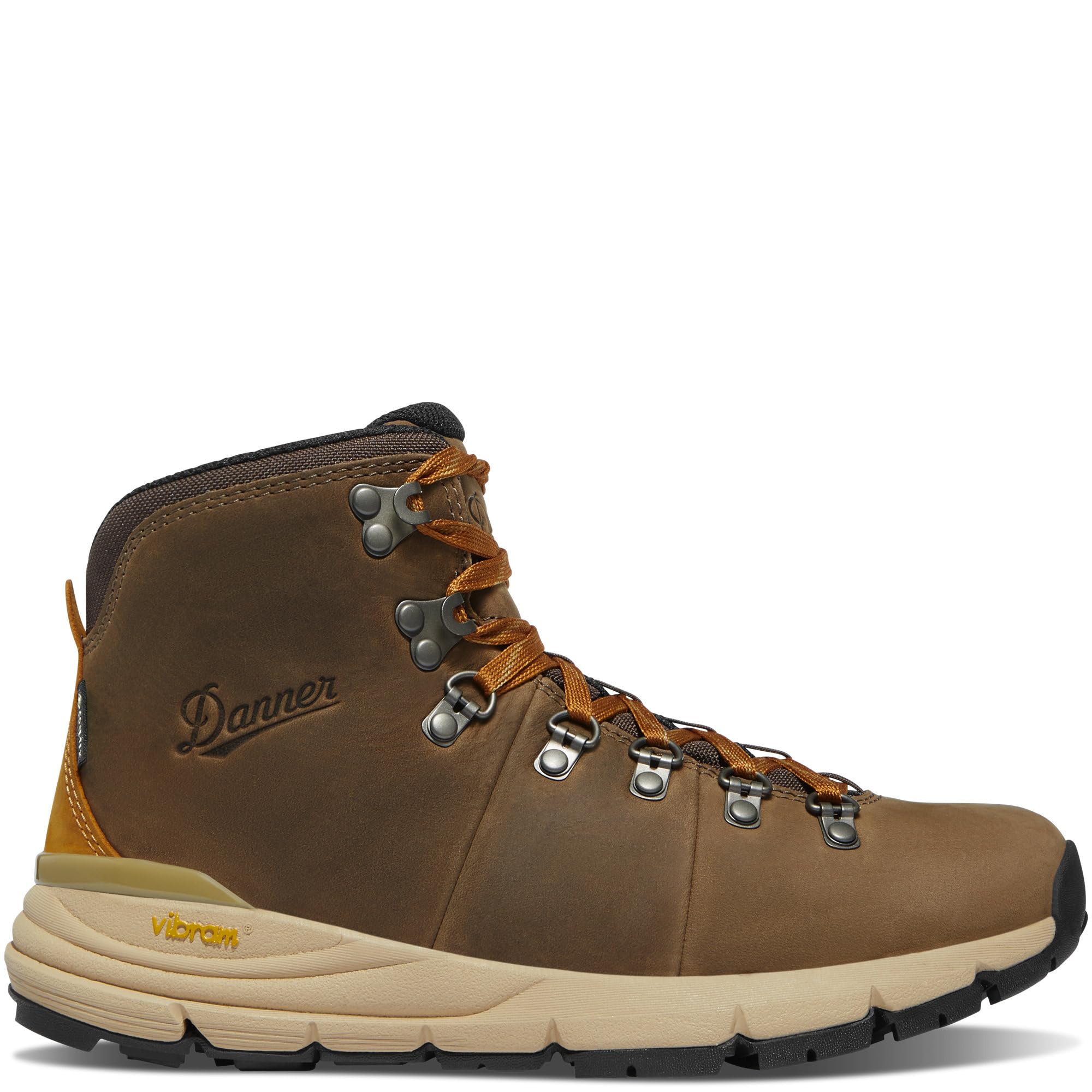
2. Danner Mountain 600 Hiking Boots for Women
The rare boot that feels like a slipper from the first step, no blister-forming break-in required.
Wide-footed hikers with problem feet—high arches, narrow heels, or past injuries—find their match here. This Danner is built on a roomy last with a wide toe box that accommodates thick socks, while the triple-density footbed cradles the arch and the higher cuff stabilizes the ankle. The 100% waterproof Gore-Tex liner is made from recycled materials, and the Vibram outsole uses Megagrip technology with self-adapting lugs that bite into wet rock and slippery caves.
“Excellent for demanding hikes: 20mi Yosemite Mist Trail/Half Dome, 5000ft elevation, wet/rocky terrain” is how one buyer summed up a serious test. The recurring theme across owners is that these boots are comfortable immediately—no “breaking in” period, no hot spots on the first outing. The roominess is the defining feature, with several buyers noting they could wear thick wool socks in December without any squeeze.
The catch is size: they run small, so a true size 8 often needs an 8.5 to leave room for toe movement. If you want a boot that treats your wide feet kindly from minute one, this is the one.
Zero-tolerance for blisters: the roomy toe box and plush footbed mean no break-in agony, just instant comfort on day one.
The sizing snag: order at least a half-size up, especially if you plan on thicker socks for colder trips.
Reach for this if: your feet are finicky and you want a supportive boot that works right from the start.
Look elsewhere if: you need a boot for extremely technical, heavy-load mountaineering—this is a light hiker at heart.
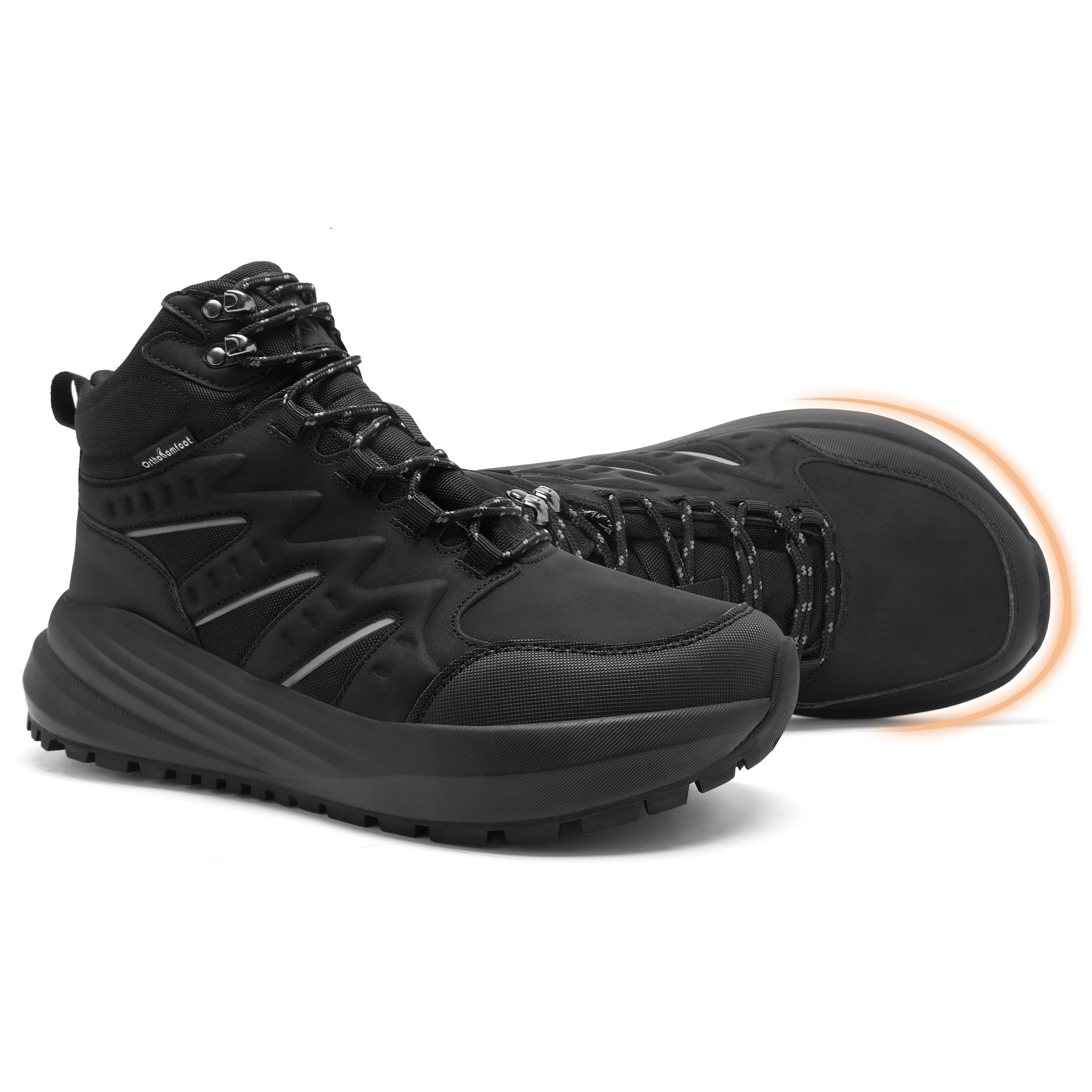
3. OrthoComfoot Men’s Orthopedic Wide Waterproof Hiking Boots
This boot’s wide toe box and cushioned arch support directly address plantar fasciitis and bunion pain.
This boot is for the hiker whose feet hurt so much they stopped going out, not for the trail purist. The wide toe box gives your toes room to splay naturally, and the cushioned arch and heel support directly target plantar fasciitis pain. what separates it is the included kit: spacers and arch supports let you adjust the fit to your exact needs, whether you have high arches or flat feet.
The sole is grippy and pliable, holding firm on wet grass without slipping, and the waterproofing holds up to ankle-deep puddles. Owners with “finicky feet” praise the thick cushioned midsole and the fact that it’s true to size—an 11.5 fits as expected. The boot is also stable on uneven ground, thanks to a secure heel cup that keeps your foot from sliding forward on descents.
The honest downside is bulk. These add roughly 1.5″ of height and look more like work boots than sleek hikers, so they’re not winning any fashion awards. If your priority is pain-free miles rather than style points, this delivers.
The Relief Kit
- Wide ergonomic toe box lets toes spread naturally
- Includes spacers and arch supports to customize your fit
- Non-slip sole grips well on wet grass and uneven ground
The Style Trade-Off
- Bulky build adds about 1.5″ of height
- Looks more functional than fashionable
- Waterproofing is solid but untested in deep stream crossings
The comfort-first choice: ideal if plantar fasciitis or bunions have sidelined you, because the support is adjustable and immediate.
A fair caution: if you care about a sleek trail aesthetic, the clunky silhouette will bother you more than it should.
4. OrthoComfoot Women’s Orthopedic Waterproof Hiking Boots
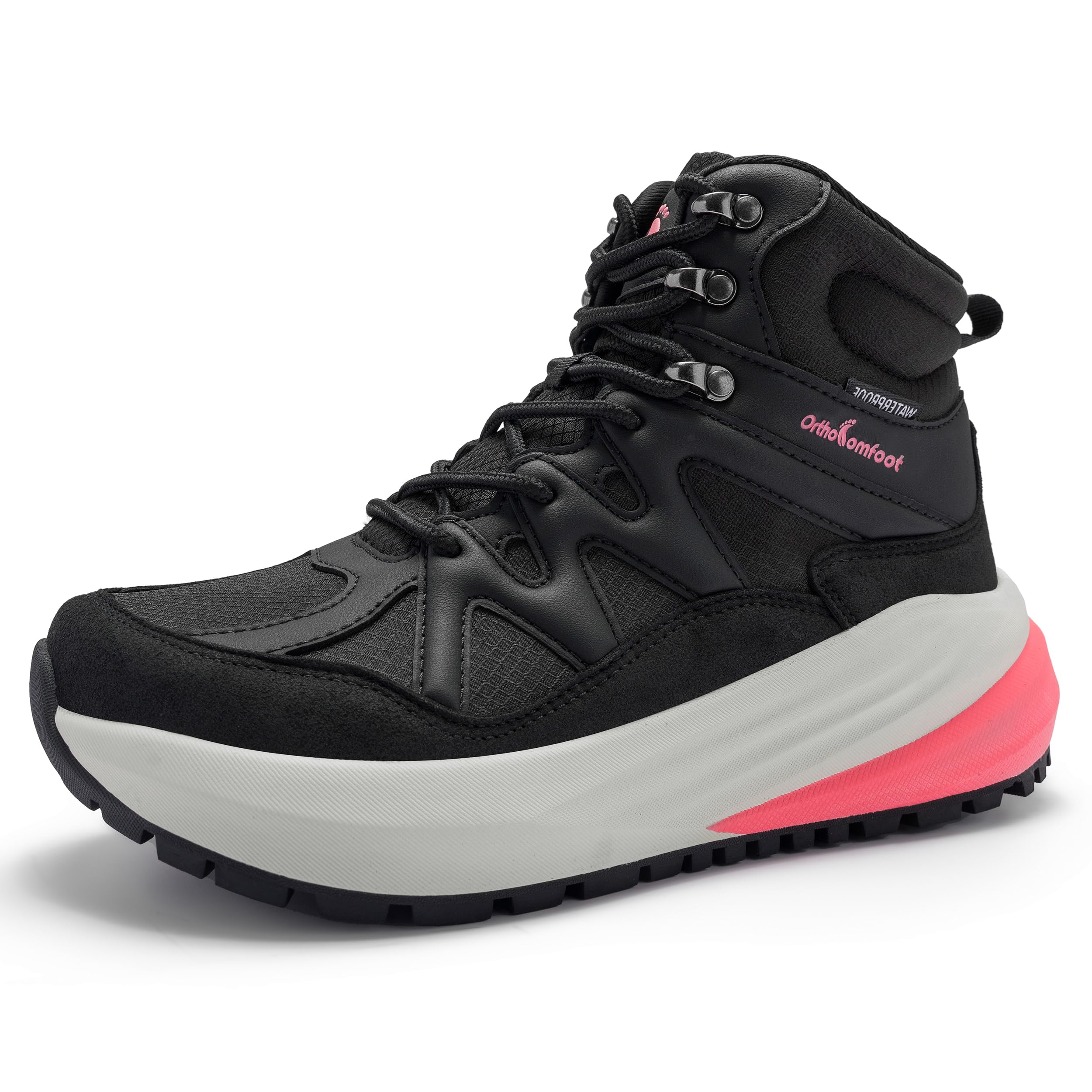
The pillowy boot that lets toes spread wide as a fan, with an orthotic system that adapts to you.
This is the women’s answer to serious foot pain, and the standout feature is the space. Owners describe the toe box as “ultra-wide”—roomy enough for three pairs of socks without any rubbing. The orthopedic design pairs that space with arch support and a cushioned, almost “squishy” sole that soaks up impact on rocky, wet trails like the Adirondacks. A daughter with plantar fasciitis reported six pain-free hours of standing and walking, versus disabling heel pain in other shoes.
The boot includes a full customizing kit: two insert sets, plus spacers in 2.5mm and 3mm thicknesses, so you can tune the arch support and volume to your foot. The deep tread grips well on gravel and wet ground, and the high-top design gives solid ankle stability on uneven terrain. It’s also comfortable from day one—no break-in required.
Note that the fit runs short, so most buyers order a half to full size up, especially if you plan to wear thick socks. The improve heel means it’s not a zero-drop shoe (a flat sole with no height difference between heel and toe), which some hikers prefer for a more natural stride. If you have wide feet and heel pain, the adjustability here is class-leading at this price level.
Roomy beyond belief: the ultra-wide toe box is the reason to buy—no more cramping, even on long descents.
Plan to size up: this boot runs short, so order a half-size up for your regular socks, or a full size for winter wool.
Choose this if: your wide feet demand adjustability, because the spacers and inserts let you fine-tune the fit like no other boot here.
skip it if: you want a low-profile, zero-drop shoe—the improve heel and thick sole change your stride.
5. KEEN Men’s Durand Mid WP Wide Backpacking Boot
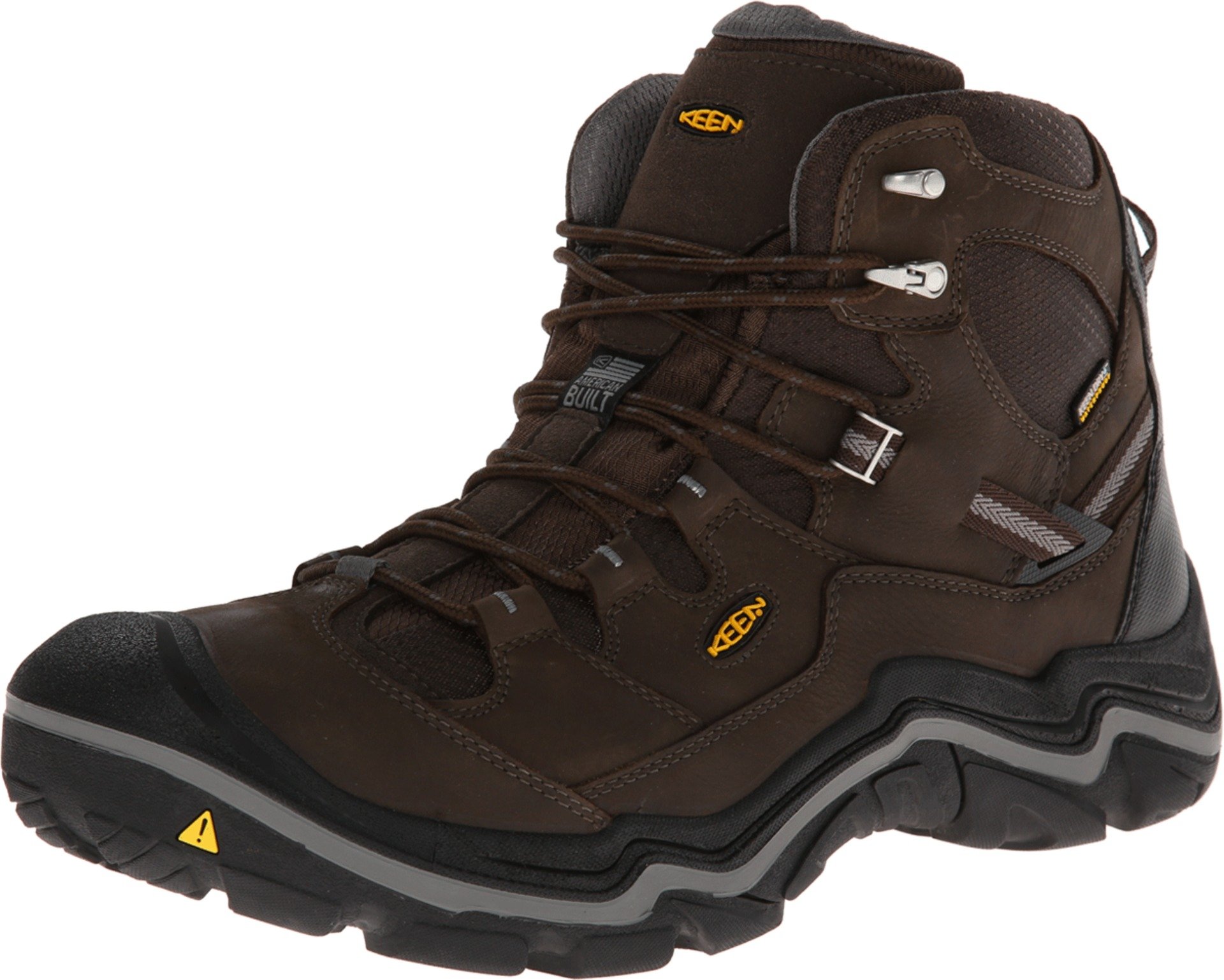
The 3,000-mile veteran with a duck-foot wide fit that just won’t quit.
KEEN is famous for its wide toe box, and the Durand Mid delivers exactly that—a fit that owners with “duck feet” describe as the Holy Grail. The boot is built for the long haul: one owner logged 3,000+ miles over two years across all terrain types with no failure, and another put 1,500 miles on a single pair. The PU and dual compound rubber outsole resists wear, and the waterproofing holds up across mud, rain, sun, and snow.
The fit is the story here. The wide last gives your toes room to splay, which means no toe jamming on steep descents—a huge deal for wide-footed hikers. It’s also light enough for all-day wear straight from the start, with minimal break-in needed. The ankle and arch support are solid, though some owners swap in aftermarket insoles for extra arch support on longer hauls.
The honest notes: the waterproofing has its limits—a few owners found water soaking through at the sole junction after heavy submersion, so it’s not a full-wade boot. And the lacing system, with its single hook, is a bit limited for dialing in a perfect lockdown. But for a wide-footed hiker who wants a durable, comfortable boot for daily trail use, this is a proven winner.
What Wins People Over
- Genuine wide toe box prevents toe jamming on descents
- Proven durability—owners mention 1,500-3,000+ miles per pair
- Lightweight with minimal break-in needed
The Limits
- Waterproofing can fail at the sole junction in deep water
- Single-hook lacing limits how tight you can lock the ankle
- Sizing runs small, so order up a half-size
The daily driver: perfect if you want a comfortable, wide toe box boot for regular trail use and don’t need heavy-load mountaineering support.
Keep in mind: if your hikes involve regular stream crossings, treat this as water-resistant rather than fully waterproof.
6. Orthofeet Dakota Orthopedic Women’s Hiking Boots
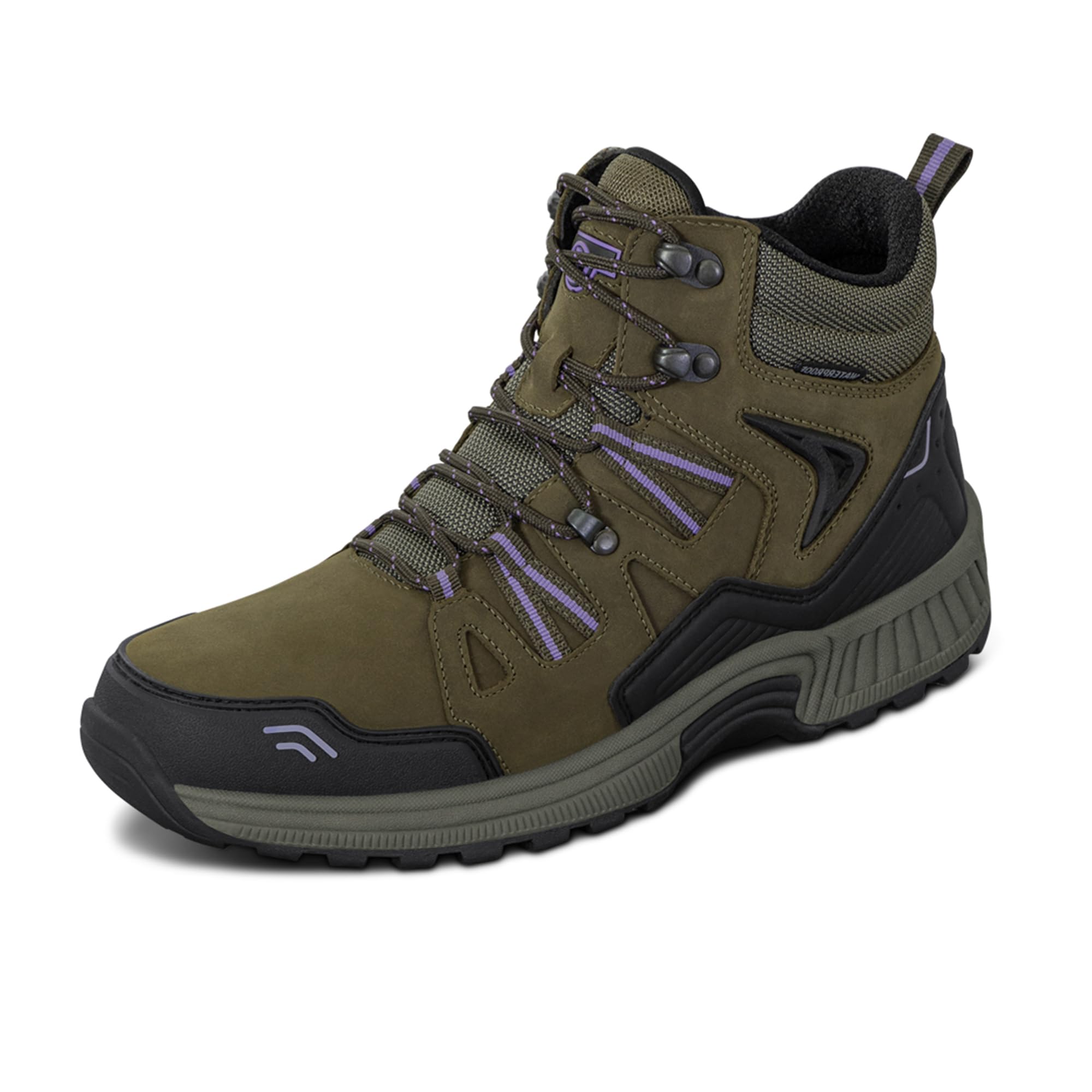
The orthopedic boot with a wide toe box that treats bunions and high arches like a non-issue.
Orthofeet built its name on foot-pain relief, and the Dakota shows why. The Ortho-Cushion system layers a built-in orthotic insole over a shock-absorbing sole in a pressure-free, roomy fit. The wide toe box prevents cramping, and the arch support handles high arches without ache. Owners with bunions report no discomfort, even on 5-mile hikes in Isle Royale.—and the boots prevent plantar fasciitis pain during long walks.
The Dakota is light on the feet, water-resistant enough for light snow and wet conditions, and the cushioning is plush without feeling unstable. The fit is wide at the ball of the foot to allow layered socks, and the removable insole offers extra depth for custom orthotics. For a hiker with knee or back issues, the shock absorption is a real asset.
The trade-off is on rougher ground—the soles are a bit thin for truly rocky paths, so these are better for maintained trails and walks than technical scrambles. A few owners also found the laces come loose easily, requiring a tight knot. If your priority is pain-free walking rather than peak performance, this is a solid value.
Built for sore feet: the cushioned sole and orthotic support make long walks and easy trails genuinely comfortable.
Not for the rough stuff: the thin soles lack the protection you want for sharp rocks and talus fields.
The everyday reliever: ideal for walkers and easy-trail hikers with bunions, high arches, or knee pain.
Think twice if: your routes are rocky and technical, because the sole won’t shield you from sharp edges.
7. Danner Vital 8″ Waterproof Hunting Boots for Men
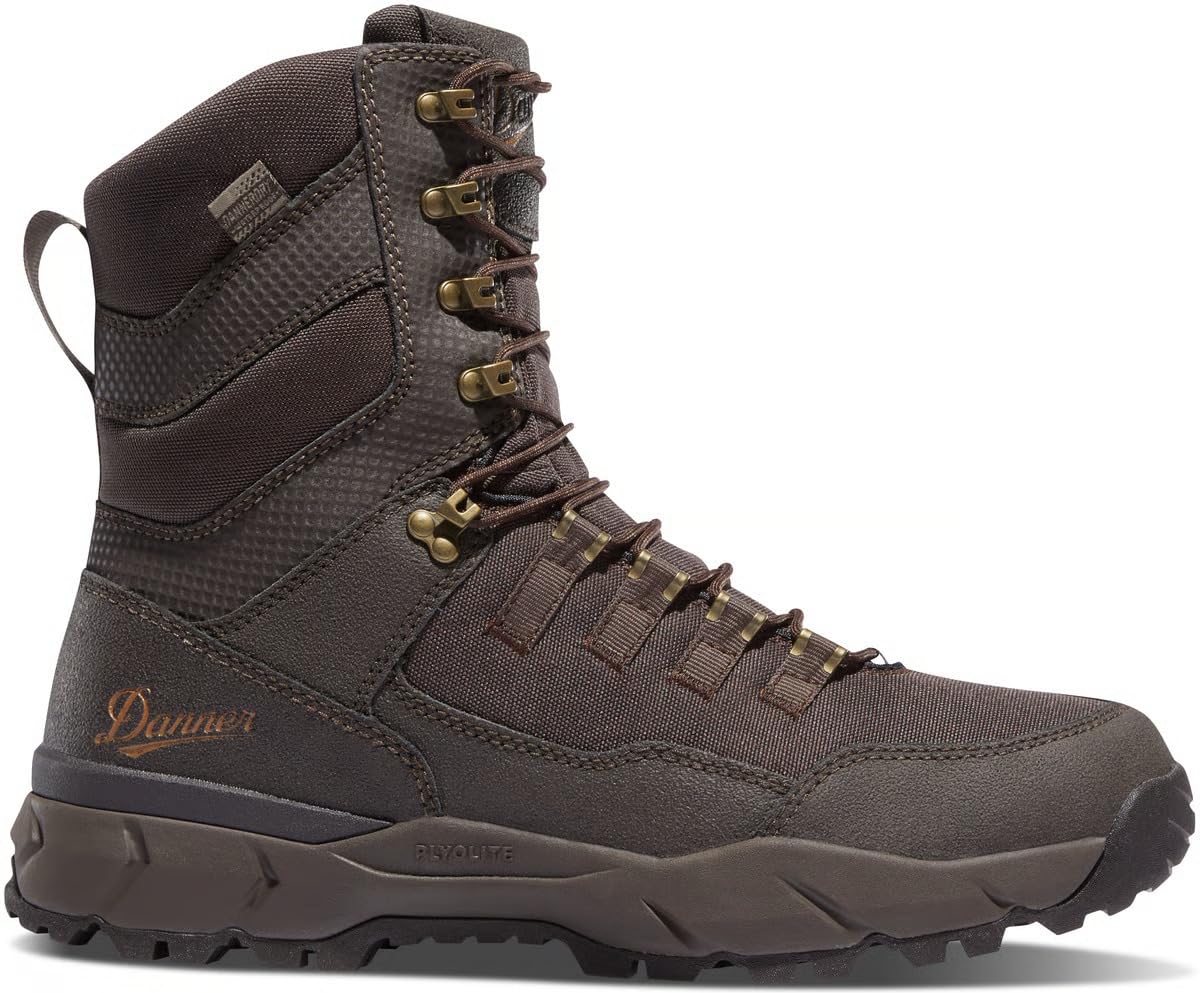
The lightweight hunting boot that’s comfortable as tennis shoes, straight from the start.
If you want a boot for long days on your feet—hunting, hiking, or just about anything outdoors—the Vital 8″ delivers. The waterproof leather upper keeps feet dry in warm to cool weather, while the cushioned insole provides plush support that owners say feels like it was custom-molded to their feet. The real headline is the break-in: or lack of it. Buyers consistently report zero break-in period and all-day comfort from the very first wear, with one noting 15-20 mile days without issue.
The stitched construction with reinforced seams holds up to months of abuse, and the grippy tread gives confident footing on uneven ground. It’s lightweight for an 8″ boot, which makes a difference on long walks to a deer stand or a full day of hiking. Owners also appreciate that it works well with synthetic socks without causing sweating, even on warmer days.
The fit is the honest complication. The wide size fits more like a normal width for some buyers, so if you have truly wide feet, this may still feel snug. Water resistance also gets mixed reviews—some owners find the leather fully waterproof, while others report water soaking through in heavy conditions. If you have moderately wide feet and want a zero-hassle, go-anywhere boot, this is a strong pick.
The Easy-Going Strengths
- No break-in period—comfortable from the first step
- Lightweight for an 8″ boot, great for all-day wear
- Durable stitched construction survives heavy use
The Fit Question
- Wide size fits more like a normal width for some buyers
- Water resistance is inconsistent—some report soaking through
- Sizing can vary, so consider trying on in-store first
The grab-and-go option: perfect if you want a comfortable, light boot for mixed outdoor use without a break-in chore.
A real caution: if your feet are very wide, the “wide” sizing may let you down—buy from a place with easy returns.
8. Vasque Men’s St. Elias Waterproof Hiking Boot
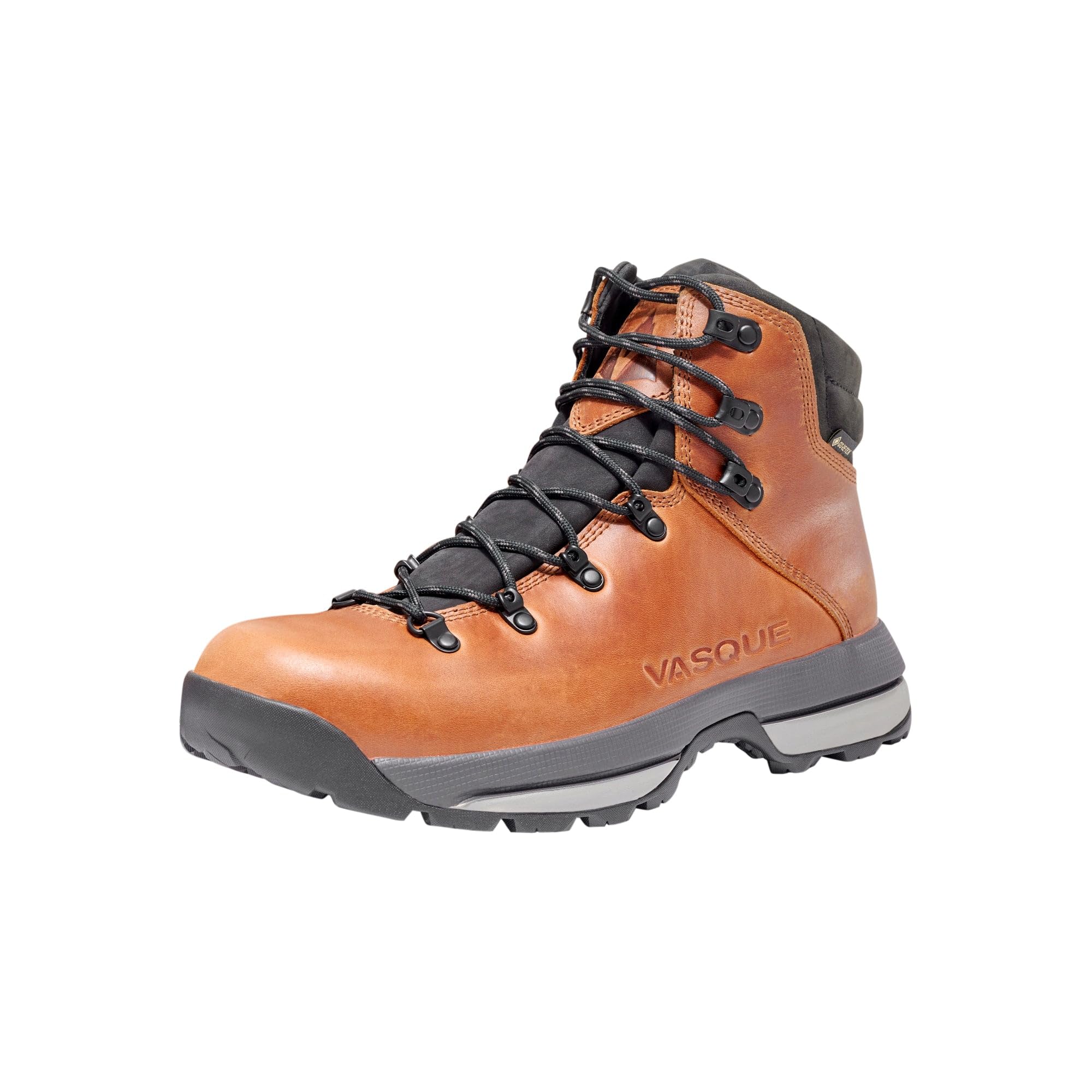
The classic leather boot that’s bought two-at-a-time by owners who’ve trusted it for 23 years.
The St. Elias is a legacy boot that earns its reputation through sheer durability. One owner has bought two pairs a year of various versions for 23 years—both brown and black—and swears by the consistent quality and fit. The 1.8-2.0mm full-grain leather upper is tough, and the Vasque-exclusive Vibram Megagrip outsole provides the grippy traction owners praise on slippery rocks and loose gravel. The GORE-TEX waterproof membrane keeps feet dry from day one, with minimal break-in required.
Comfort is glove-like, thanks to a smooth interior and strong ankle support. Customers note wearing these on rugged Arizona hikes for 5 months with no issues, including two 10-mile days back-to-back. The dual-density EVA midsole (a foam layer that cushions each step), made with 20% sugarcane, absorbs shock well without feeling dead underfoot.
The fit runs narrow, which is the catch for wide-footed buyers—one owner notes a 12 wide fits more like a 12.5-13, and others find it less narrow than past models but still not truly wide. If you have moderately wide feet, it might work; if you need serious room, look elsewhere. The build quality is solid, but a few owners had sole issues down the line.
Glove-like fit: the smooth interior and strong ankle support keep your feet comfortable on long, rugged days.
The width warning: this runs narrow, so it’s best for low-to-moderate width feet—not true wide.
The loyalist’s boot: choose this if you value classic leather durability and a proven design that owners rebuy for decades.
Pass if: your feet are genuinely wide, because the narrow last will leave your toes cramped.
9. Meindl Men’s Comfort-Fit Light Hiker

The Italian-made hiker with a cork insole that molds to your foot like a custom glove.
Meindl solves the wide-foot problem with its exclusive Comfort Fit last, which creates generous room in the toe box while still snugging up the heel for a stable, no-slip fit. The soft full-grain waxed nubuck leather resists scuffs, and the 100% waterproof, breathable Gore-Tex keeps rain out for long-wearing performance. The clever part is the fleece-covered cork insole—over time, cork conforms to the individual contours of your foot, giving you a truly custom feel.
Owners rave about the comfort from day one, calling them the most comfortable work boots in 30 years and noting an easy break-in with all-day wear. That custom molding is what sets these apart—the more you wear them, the better they fit. They’re also warm yet lightweight, making them suitable for both hiking and long days on your feet at work.
The caveats are real: some owners say sizing runs large (one buyer’s boots were too big), so your normal size is only a starting point. One reviewer also noted a quality-control issue with soles separating on a single pair, though that appears to be an exception. If you want a boot that fits like it was made for your wide feet, the cork insole (a natural material that molds to your foot shape) is tough to top.
The Custom Fit Magic
- Cork insole molds to your foot shape over time
- Wide toe box with snug heel for a stable fit
- Lightweight yet warm, with all-day comfort
The Sizing Gamble
- Sizing runs large—some owners found them too big
- Occasional quality control issues with sole separation
- Premium price tag that needs to be justified
Reach for this if: you want a boot that literally molds to your wide feet over time, delivering a fit no off-the-shelf shoe can match.
A word of advice: order from a seller with a good return policy, because sizing can be hit-or-miss.
10. Asolo Men’s TPS 535 LTH V Evo Boots
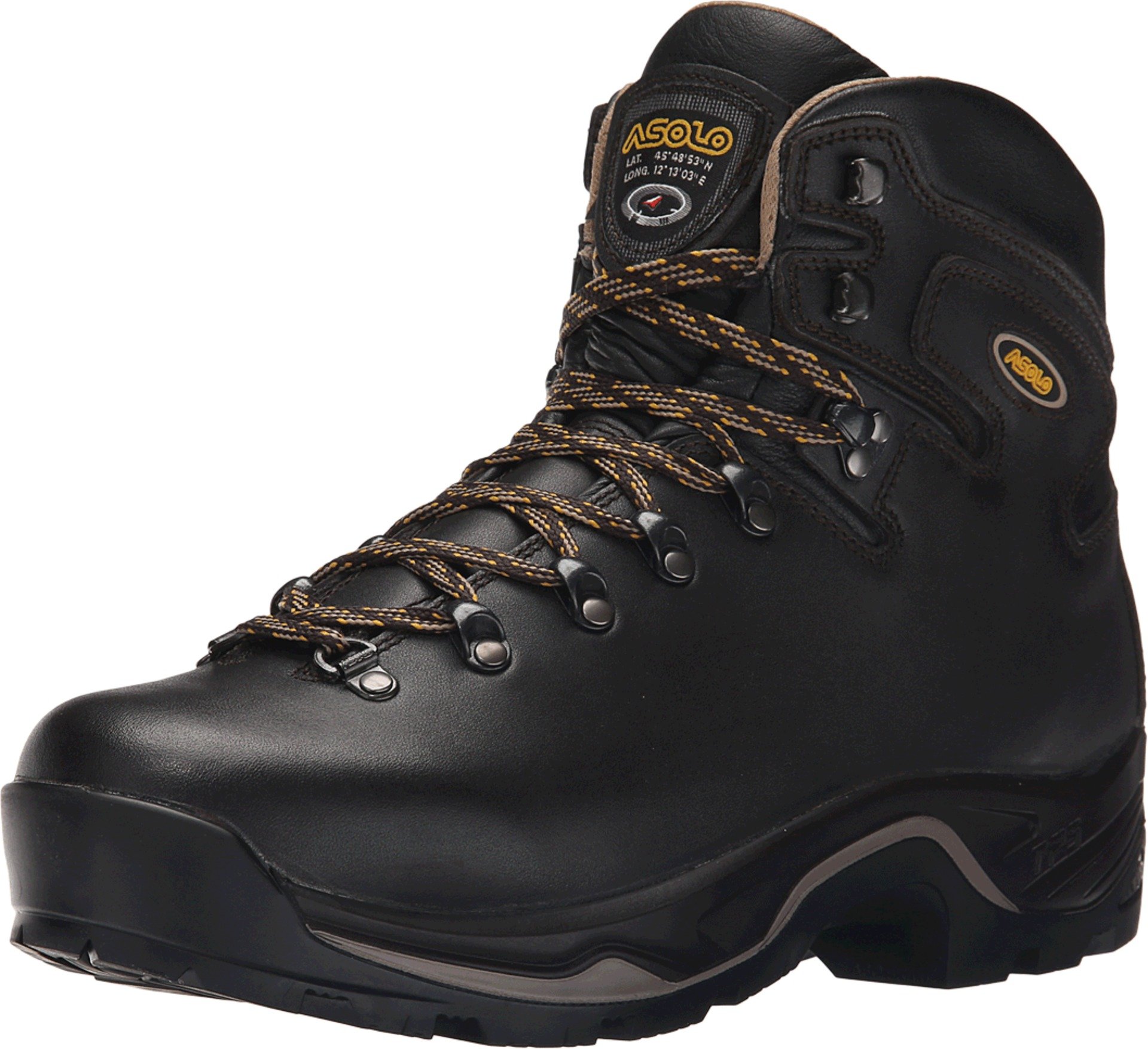
The stiff-soled workhorse that makes a heavy pack feel lighter, for the technical terrain crowd.
If your backpacking involves serious loads and rough terrain, the TPS 535 is built for exactly that. The 2.2-2.4 mm full-grain leather upper is tough, and the Triple Power Structure outsole—co-designed with Vibram—uses three shock absorbers placed at the highest-impact zones of your foot. The Cambrelle lining creates a comfortable environment for the foot, and notably, it skips the GORE-TEX layer in favor of better breathability, which owners appreciate for reducing sweaty feet on long days.
The stiffness is the defining feature. Reviewers point out these are technical mountaineering boots at heart—excellent for heavy loads and rough terrain, and even compatible with crampons. One buyer with plantar fasciitis reported the condition resolved, crediting the boot’s firm arch support. The durability is proven: 5 years of daily use with no sole separation, and roughly 1000-1500 miles before the sole needs a resole.
The honest problem is the fit. Despite being the “wide” version, owners find these run short and narrow—a 10.5W and 11W were both too tight for one buyer, with no EE width available. For truly wide feet, this may not be the answer, which is a real shame given the quality. The round laces also have a tendency to be hard to untie when double-knotted.
The load-master: the stiff sole and triple-shock absorption make heavy packs and rocky terrain feel manageable.
The fit catch: this “wide” boot runs narrow, so it’s only suitable for moderately wide feet at best.
Choose this if: you’re a heavy-load backpacker who prioritizes support and durability over weight, and your feet are only moderately wide.
Avoid if: you have genuinely wide feet—the narrow last is the recurring complaint across owners.
11. Zamberlan Men’s 1996 VIOZ LUX GTX RR Leather Backpacking Boots

The heirloom-quality boot that’s comfortable for wide feet from the start, and built to be resoled for decades.
Zamberlan’s 1996 Vioz Lux is the upgrade to their best-selling boot, designed for backcountry backpacking, hunting, and any adventure requiring a supportive midsole and enduring comfort. The fit is the standout for wide-footed buyers—owners with wide feet report an impeccable fit with a roomy toe box and a secure heel. The boot also allows for added insoles or heavier socks without needing to size up, which is a huge bonus for winter hiking.
The quality is the headline. Owners call these “the best boot made without question,” praising the reinforced toe, the excellent calfskin lining on the tongue and collar, and the completely waterproof GORE-TEX construction. One buyer is on their second pair because the first lasted 10 years of very heavy use and was still going strong. They’re resoleable, so you can replace the sole and keep the leather upper for years to come.
The trade-off is stiffness and weight. The stiff sole and high heel can cause initial arch cramping for some, and they’re slightly heavy—better for long trips than quick weekenders. One owner battled constant heel blisters for two months of break-in, though others found them comfortable immediately with only a week to settle in. If you want a boot that becomes a long-term companion, this is the investment.
The Investment Payoff
- Genuinely wide fit with roomy toe box and secure heel
- Built to be resoled, with owners reporting 10-year lifespans
- Room for added insoles or heavy socks without sizing up
The Initial Hurdles
- Stiff sole can cause arch cramping during the first wears
- Slightly heavy, best for long trips over quick outings
- Some feet need a multi-week break-in period
The lifetime companion: ideal if you want a resoleable, high-quality boot that fits wide feet and will last a decade with proper care.
Be patient: the break-in can take a few weeks for some feet, so don’t plan a marathon the first day out.
Understanding the Specs
Leather vs. Synthetic Uppers
Full-grain leather is the classic choice for durability—it’s thick, abrasion-resistant, and molds to your foot over time. The thickness (measured in millimeters) matters: a 2.6-2.8mm upper is built for heavy technical use, while a 1.8-2.0mm upper is lighter and more flexible. Synthetic and textile uppers are lighter and need less break-in, but they don’t offer the same long-term protection against rocks and brush. For wide feet, the upper material matters less than the last—how much room the boot actually gives your toes.
Waterproofing: GORE-TEX vs. Water-Resistant
GORE-TEX is a breathable membrane that keeps water out while letting sweat escape—it’s the gold standard for all-weather hiking. Water-resistant leather can handle light rain and morning dew but will soak through in a stream crossing or heavy downpour. Some boots skip the membrane entirely for better breathability, which is great for hot-weather hiking but a liability in wet conditions. If you hike in the rain or cross streams, prioritize GORE-TEX. If you’re a fair-weather hiker, a water-resistant boot is lighter and more breathable.
FAQ
How do I know if a boot is actually wide enough for my feet?
Can I wear custom orthotics in these wide boots?
What is the difference between a wide last and a wide toe box?
Will a wide boot ever need a break-in period?
How much does boot weight matter for wide feet?
Is a waterproof boot always better for hiking?
How much toe room should I have in a hiking boot?
What should I do if the wide size still feels narrow?
Are expensive wide boots worth the cost?
Should I buy a half size up for thick socks in wide boots?
Final Thoughts: The Verdict
For most buyers, the backpacking boots for wide feet winner is the Asolo TPS 520 GV Evo Wide because it combines class-leading durability, genuine GORE-TEX waterproofing, and a wide fit that’s proven to last for years of heavy technical use. If you want a boot that’s comfortable right from the start with zero break-in, grab the Danner Mountain 600. And for the budget-conscious hiker with foot pain who needs adjustable support, the OrthoComfoot Men’s Orthopedic is the one to reach for, thanks to its included arch supports and roomy toe box that treat plantar fasciitis like a non-issue.
How We Picked
We do not accept paid placement. Every pick is matched to a real buyer and a real use-case; we do not hands-on test units.
Sources & Methodology
Specifications: manufacturer listings and product documentation. Review insights: verified customer reviews, as of August 2026. Pricing: not shown on this page (it changes often); check the current price via the retailer link.
As an Amazon Associate, Gadgets Feed earns from qualifying purchases. This does not affect which products we feature.