
A backpacking camera faces a ruthless trade-off: every extra ounce on your back is a burden on the trail, but a weak sensor means your summit shots end up soft and muddy. The best option balances a compact, weather-sealed body with solid image quality and battery life that lasts through multi-day trips.
I’m Min — the co-founder and writer behind Gadgets Feed. I’ve spent hundreds of hours combing through technical specifications, real-world customer feedback, and side-by-side comparisons to find the cameras that truly hold up under a pack strap and a rain cloud.
Whether you need a rugged Micro Four Thirds body with class-leading stabilization or a lightweight full-frame rig for sharp landscapes, this guide helps you pick the perfect best backpacking camera for your next adventure.
How To Choose The Best Backpacking Camera
Selecting a backpacking camera requires prioritizing durability, size, and battery endurance over raw resolution. You want a camera that survives dust and drizzle without adding noticeable weight to your pack.
Weather Sealing Is Non-Negotiable
Trail conditions change fast. A dust storm or sudden downpour can kill an unsealed camera. Look for bodies with magnesium-alloy frames and internal gaskets. Models like the OM SYSTEM OM-5 Mark II and the Panasonic LUMIX G85 offer robust environmental protection that lets you shoot through light rain without panic.
Image Stabilization Replaces a Tripod
When you’re trying to keep pack weight under 25 pounds, a tripod is the first thing to cut. In-body image stabilization (IBIS) rated at 4.5 stops or higher lets you shoot sharp handheld shots at shutter speeds around 1/10th of a second. This is critical for dawn and dusk landscapes when the light is best but the trail is still.
Sensor Size vs. System Weight
Full-frame sensors like the one in the Canon EOS RP deliver superior dynamic range for shadow-heavy forest scenes, but the lenses are larger. Micro Four Thirds bodies such as the OM-5 or Olympus E-M10 Mark IV give you a lighter total pack weight while still producing excellent images for web and print up to 13×19 inches. Calculate the combined weight of the body plus a standard zoom before committing to a system.
Quick Comparison
On smaller screens, swipe sideways to see the full table.
| Model | Category | Best For | Key Spec | Amazon |
|---|---|---|---|---|
| OM SYSTEM OM-5 Mark II | Premium Micro 4/3 | Trail tough & lightweight | Weather sealed, 6.5-stop IBIS | Amazon |
| Canon EOS R8 | Full-Frame Hybrid | Pro-grade stills in a light body | 24.2MP, 4K60 uncropped | Amazon |
| Nikon Z 6II | Full-Frame All-Rounder | Versatile hybrid with dual slots | 24.5MP BSI, 14 fps | Amazon |
| Sony a7 III | Full-Frame Classic | Excellent battery life | 24.2MP BSI, 693 AF points | Amazon |
| Fujifilm X100VI | Fixed Lens Premium | Street & travel artistry | 40.2MP, 6-stop IBIS | Amazon |
| Sony Alpha a6400 | APS-C Speedster | Fast AF for action | 0.02 sec AF, 11 fps | Amazon |
| Canon EOS RP | Entry Full-Frame | Affordable full-frame start | 26.2MP, 5-stop IS | Amazon |
| Nikon Z 30 | Compact Creator | Vlog & entry-level hiking | 4K30, flip-out screen | Amazon |
| Panasonic LUMIX G85 | Value Mirrorless | Weather sealed & budget | 16MP MFT, Dual IS | Amazon |
| Olympus E-M10 Mark IV | Stylish Entry | Compact & beginner friendly | 20MP, 4.5-stop IBIS | Amazon |
| Panasonic LUMIX ZS99 | Superzoom Compact | Pocketable reach | 30x zoom, 4K video | Amazon |
In‑Depth Reviews
1. OM SYSTEM OM-5 Mark II
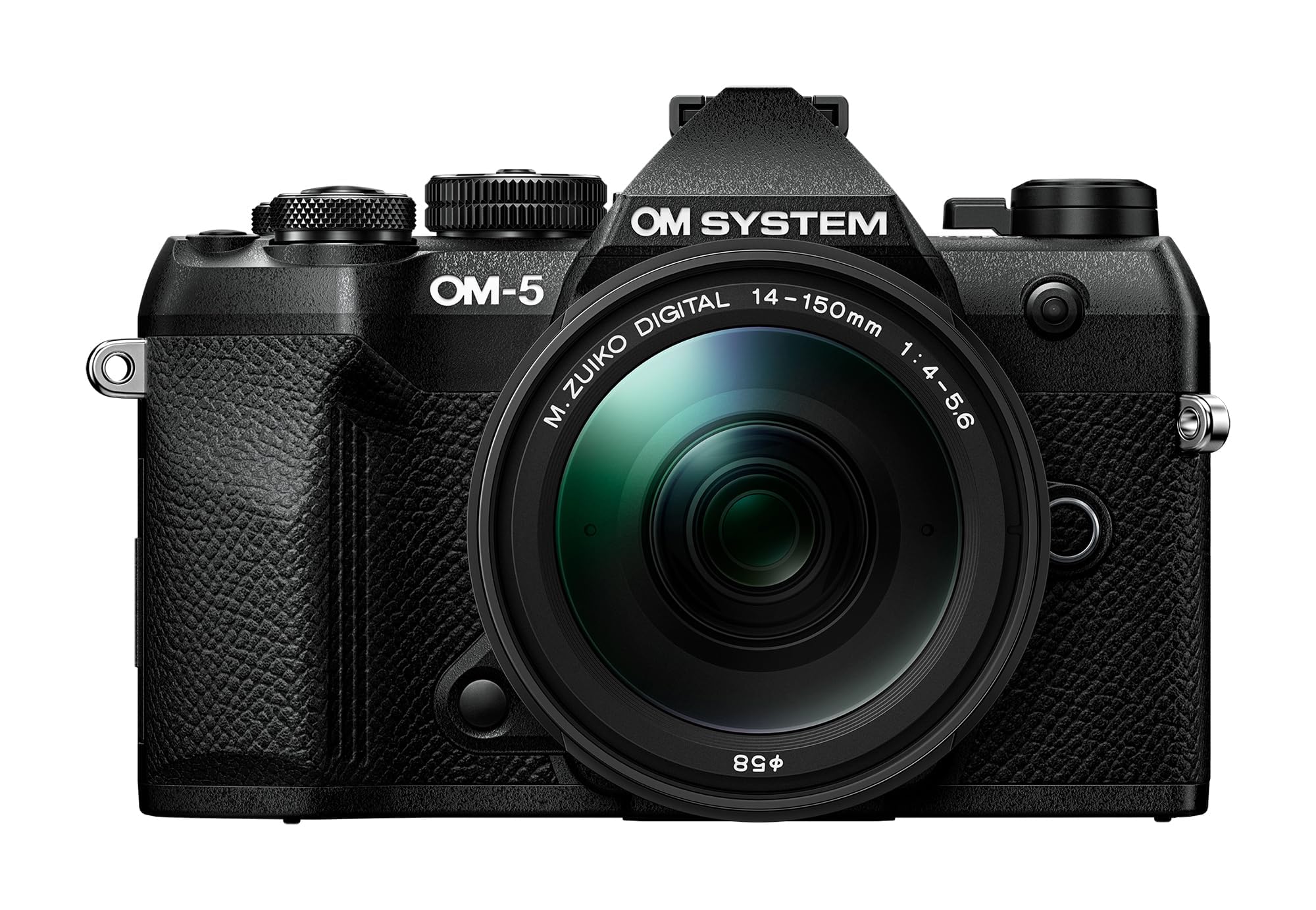
The OM SYSTEM OM-5 Mark II is built for the trail. Its Micro Four Thirds body is one of the lightest weather-sealed options available, and the 6.5-stop in-body stabilization lets you ditch the tripod for dawn shots over a lake. The 20-megapixel sensor paired with the M.Zuiko 14-150mm kit lens gives you an equivalent 28-300mm zoom range in a package that fits in a hip pocket.
Real-world testing shows the computational photography button is useful on the trail — focus bracketing and Pro Capture help you nail sharp shots of fast-moving wildlife without digging through menus. The USB-C charging is a welcome upgrade from earlier models, and the IP-rated sealing handles dust and rain without issue.
The biggest drawback is the small battery. A full day of hiking with heavy shooting drains it before sunset, so carrying a spare is mandatory. The grip is also small for larger hands. But for pure packability and durability, it is the most capable backpacking camera money can buy.
Why it’s great
- Excellent weather sealing for rain and dust
- 6.5-stop IBIS eliminates tripod need in most scenarios
- Lightweight body with versatile 14-150mm zoom
Good to know
- Small battery; requires a spare for full-day trips
- Grip is small for users with larger hands
- Kit lens is a bit slow at f/4.0-5.6
2. Canon EOS R8

The Canon EOS R8 packs the same 24.2-megapixel full-frame sensor and DIGIC X processor as the R6 Mark II into a body that weighs only 461 grams with battery. That makes it the lightest full-frame backpacking camera that still delivers professional-grade image quality. The Dual Pixel CMOS AF II covers 100% of the frame and tracks subjects instantly, even in dim forest light.
Video shooters will appreciate the uncropped 4K60 oversampled from 6K, plus Canon Log 3 for grading afterward. The vari-angle touchscreen helps frame low-angle wildflower shots without lying in the mud. Electronic shutter at 40 fps catches bird takeoffs without breaking a sweat.
The trade-offs are real for extended trips: battery life is poor (around 360 shots per charge), and there is no in-body stabilization, so you rely on lens IS. It also lacks a second card slot. But for backpackers who want full-frame quality without the heavy body of a traditional DSLR, the R8 is the best compromise.
Why it’s great
- Lightest full-frame body at 461g
- Uncropped 4K60 with C-Log3
- Fast and reliable subject tracking AF
Good to know
- Short battery life; carry two spare packs
- No IBIS, only lens stabilization
- Single card slot
3. Nikon Z 6II

The Nikon Z 6II is a versatile full-frame hybrid that handles everything from alpine landscapes to campfire portraits. The 24.5-megapixel backside-illuminated sensor delivers excellent dynamic range at base ISO, and the 273-point phase-detection AF system is reliable in low contrast when hiking at twilight. Dual card slots (CFexpress/XQD + UHS-II SD) give peace of mind for multi-day trips where offloading cards isn’t possible.
The built-in 5-axis IBIS provides up to 5 stops of stabilization, which is enough for handheld 1/8th-second shutter speeds. The body is weather-sealed and comfortable to hold even in cold-weather gloves. USB-C charging keeps power top-ups simple from a battery bank at camp.
Downsides include a screen that doesn’t flip forward for self-filming, and the AF tracking can occasionally lose fast subjects when panning. The body alone weighs 705 grams with battery, which is heavier than the R8 but lighter than most DSLR equivalents. Overall, it is a rugged, capable choice for the serious backpacking photographer.
Why it’s great
- Excellent dynamic range and low-light performance
- Dual card slots for backup security
- Comfortable ergonomics and build quality
Good to know
- Screen does not flip forward for selfie framing
- AF tracking can lose subjects in fast panning
- Heavier than some peer full-frame bodies
4. Sony a7 III

The Sony a7 III set the standard for full-frame mirrorless, and it remains a top backpacking choice because of its phenomenal battery life. The NP-FZ100 battery is rated for approximately 710 shots per charge, which means one battery can easily last two days of moderate shooting on the trail. The 24.2-megapixel Exmor R sensor with 15 stops of dynamic range handles high-contrast scenes like sun rising over a ridgeline.
The 693-point phase-detection AF covers 93% of the frame, and Real-time Eye AF sticks to animal and human subjects reliably. The body is weather-sealed, though reviews note it is not as robust as higher-end Sony or Canon bodies in heavy rain. The 5-axis IBIS is good for about 5 stops of correction, enough for most handheld situations.
On the downside, the menu system is deep and can be confusing to navigate quickly on the trail. The kit lens is adequate but soft at the edges, and you will want to upgrade to a sharper zoom for serious landscape work. Still, the a7 III offers an unmatched stamina-to-weight ratio for multi-day backpacking trips.
Why it’s great
- Best-in-class battery life for full-frame
- Proven 24.2MP sensor with great dynamic range
- Fast and reliable AF coverage
Good to know
- Complex menu system
- Kit lens is soft at the corners
- Weather sealing is not industrial-grade
5. Fujifilm X100VI

The Fujifilm X100VI is a fixed-lens camera that forces you to think differently about backpacking photography. The 23mm f/2 lens (equivalent to 35mm full-frame) is a classic street and travel focal length, and the 40.2-megapixel X-Trans sensor resolves incredible detail for a camera this compact. The newly added 6-stop IBIS is a game-changer, allowing handheld shots at 1/4 second without blur.
Film simulation modes like Velvia and Classic Chrome produce JPEGs that need zero editing, which is a massive time-saver when you are hiking and want to post quickly. The hybrid viewfinder lets you switch between optical and electronic framing. The built-in 4-stop ND filter is great for slowing down waterfalls in bright light without carrying screw-in filters.
Limitations include the fixed 23mm lens — you can’t zoom, so composition requires footwork. Battery life is shorter than the a7 III’s, and the autofocus can hunt in very low light. It is also the most expensive option. But for the solo hiker who values image quality and portability over zoom flexibility, it is an artistic powerhouse.
Why it’s great
- Incredible image quality in a pocketable body
- Great film simulations reduce editing time
- Built-in ND filter is a trail-friendly feature
Good to know
- Fixed lens limits zoom flexibility
- Autofocus can be slow in dim conditions
- Higher price tag compared to many options
6. Sony Alpha a6400

The Sony a6400 is an APS-C mirrorless body built for speed. Its 0.02-second autofocus is among the fastest on the market, and the 425 phase-detection points cover almost the entire frame — ideal for capturing fast-moving wildlife on the trail. The 24.2-megapixel Exmor sensor provides plenty of resolution for cropping into distant peaks, and the 11 fps burst rate ensures you catch the perfect moment.
The body is compact and lightweight at 403 grams with battery, making it easy to carry on long hikes. The 180-degree tiltable touchscreen is excellent for self-recording or vlogging at a lookout point. 4K video is oversampled from a full pixel readout, delivering sharp footage. The battery is decent but not as long-lasting as the a7 III’s.
The main compromise is the lack of IBIS, so you need stabilized lenses or a steady hand. The kit lens works but benefits from upgrading to the Sigma 16mm f/1.4 for low-light trail shots. It lacks a headphone jack for serious video monitoring. Still, for action-oriented hikers, the a6400’s speed is hard to beat.
Why it’s great
- Lightning-fast 0.02s autofocus
- Compact and lightweight at 403g
- Oversampled 4K video from full pixel readout
Good to know
- No in-body stabilization
- No headphone jack for audio monitoring
- Kit lens is basic; budget for a better one
7. Canon EOS RP

The Canon EOS RP offers the most affordable entry point into full-frame mirrorless for backpackers. The 26.2-megapixel sensor paired with the DIGIC 8 processor delivers pleasing colors and good detail for landscapes. The body is remarkably light at 485 grams with battery and card. The RF 24-105mm f/4-7.1 kit lens covers a versatile zoom range for a single-lens hiking setup.
The vari-angle touchscreen is helpful for low-angle forest shots, and the electronic viewfinder is crisp. Dual Pixel CMOS AF provides smooth and reliable focusing for stills and video. 4K video is available but comes with a crop factor and a 30-minute limit, which is restrictive for time-lapse work.
Battery life is mediocre — expect around 250–300 shots per charge — and the burst rate of only 5 fps is slow for action. The kit lens is sharp in the center but soft at the edges at wide apertures. But for backpackers on a budget who want full-frame depth and the expanding RF lens ecosystem, the RP is a solid start.
Why it’s great
- Light and affordable full-frame body
- Good image quality and color reproduction
- Vari-angle touchscreen for flexible framing
Good to know
- Mediocre battery life for day hikes
- 4K video has a crop and 30-minute limit
- Kit lens is soft at the edges
8. Nikon Z 30

The Nikon Z 30 is the lightest and most vlogger-friendly camera in this guide at just 405 grams with battery. Designed for creators, it features a flip-out touchscreen that faces forward, a built-in stereo mic with adjustable sensitivity, and plug-and-play USB-C streaming capability. The 20.9MP APS-C sensor paired with the 16-50mm kit lens is sharp and produces vibrant images.
The autofocus system uses 209 phase-detection points with eye tracking for people and pets, which works well for portrait shots on the trail. The Z 30 runs unlimited 4K video with no overheating — a common issue with competing Z50. The body is solid and comfortable to hold with one hand for selfie-style shooting.
It has no viewfinder, which is a deal-breaker for serious composition in bright sunlight. The lack of IBIS means you must rely on the kit lens’s VR or use a tripod for low-light stills. Battery life is average, around 330 shots. For casual hikers who want a lightweight option for photos and vlogs, the Z 30 is a capable and affordable companion.
Why it’s great
- Ultra-light at 405g with great ergonomics
- Flip-out screen and good audio for vlogging
- Unlimited 4K video without overheating
Good to know
- No viewfinder; screen can be hard to see in bright sun
- No IBIS, relies on lens stabilization
- Average battery life for full-day trips
9. Panasonic LUMIX G85

The Panasonic LUMIX G85 offers the best price-to-performance ratio for budget-conscious backpackers. The 16-megapixel Micro Four Thirds sensor with no low-pass filter produces sharp images, and the class-leading Dual Image Stabilization (5-axis IBIS + lens OIS) delivers sharp handheld shots even in the dim light of a forest understory. The body is weather-sealed with a magnesium-alloy front plate, making it ready for trail dust and drizzle.
The kit includes the 12-60mm Power O.I.S. lens (24-120mm equivalent), which gives you a wide enough range for sweeping vistas and the reach for mountain goats on a ridge. The 4K video is sharp, and the 4K Photo mode lets you extract 8MP stills from video at 30 fps — useful for capturing precise moments. The 3-inch tilt-and-touch LCD and OLED viewfinder are clear and responsive.
Autofocus can be sluggish in low light, especially compared to newer phase-detect systems. The battery is mediocre, lasting around 330 shots per charge. The 16MP sensor is lower resolution than many competitors, but for web sharing and small prints, the G85 delivers surprising quality. It’s a rugged, well-priced workhorse for the trail.
Why it’s great
- Weather-sealed and affordable
- Excellent Dual IS for handheld low-light shooting
- Good kit lens range (24-120mm equivalent)
Good to know
- Autofocus can be slow in low light
- 16MP sensor is lower resolution than newer options
- Average battery life for long days
10. Olympus E-M10 Mark IV

The Olympus E-M10 Mark IV is an attractive and lightweight Micro Four Thirds camera that delivers impressive image quality. The 20-megapixel Live MOS sensor produces clean files up to ISO 3200, and the 5-axis in-body stabilization rated at 4.5 stops compensates for shaky hands during evening camp shots. The body is remarkably pocketable, especially with the 14-42mm EZ pancake lens.
A standout feature for solo hikers is the flip-down monitor with a dedicated selfie mode that activates automatically when the screen tilts down. This makes self-portraits at scenic overlooks easy. The camera includes 16 art filters and in-camera panorama stitching, which reduces post-processing work. Bluetooth and OI Share app provide quick image transfer.
Downsides include the lack of a USB-C port (it uses Micro-USB), which means slower charging. The autofocus system is contrast-detection only, which is fine for static landscapes but can struggle with moving subjects. The built-in Wi-Fi app is slow for transferring large files. Still, for its size and price, the E-M10 Mark IV is an excellent entry-level backpacking camera.
Why it’s great
- Very compact and lightweight for a mirrorless
- Good 4.5-stop IBIS for handheld shots
- Selfie mode makes solo portraits easy
Good to know
- Micro-USB port instead of USB-C
- Contrast-detect AF can be slow on moving subjects
- Wi-Fi transfer is sluggish
11. Panasonic LUMIX ZS99

The Panasonic LUMIX ZS99 is a fixed-lens compact camera that prioritizes reach above all else. Its 24-720mm equivalent Leica lens delivers 30x optical zoom, making it the only camera on this list capable of pulling in a distant peak or a far-off bird. The 20.3MP 1/2.3-inch sensor is small, but when you need maximum reach in a pocket-sized body, there is no substitute.
The tiltable 1,840k-dot touchscreen helps frame shots from awkward angles. 4K video at 30p is useful for quick clips, and the built-in Bluetooth 5.0 simplifies sharing images to your phone via the Panasonic Image App. The ZS99 weighs only about 300 grams, so it disappears into a hip belt pocket.
The compromises are significant: the small sensor produces noisy images above ISO 800, so low-light performance is poor. Autofocus can be slow and the menu is deep. It is not weather sealed, so a rain cover is essential. The ZS99 is best for day hikers who value extreme zoom over image quality, or as a backup camera for trips where every gram counts.
Why it’s great
- Massive 30x optical zoom in a pocketable body
- Very lightweight at ~300g
- Bluetooth for easy image sharing
Good to know
- Small sensor struggles in low light
- Autofocus is slow and menu is complex
- No weather sealing for rainy trails
FAQ
Is full-frame worth the extra weight for backpacking?
Do I need a tripod for a backpacking camera with IBIS?
What is the most important lens focal length for hiking?
How do I charge a camera during multi-day backpacking trips?
Can I use my phone instead of a backpacking camera?
Final Thoughts: The Verdict
For most users, the best backpacking camera winner is the OM SYSTEM OM-5 Mark II because it combines weather sealing, class-leading 6.5-stop IBIS, and a lightweight build into a system that never feels like a burden on the trail. If you want full-frame depth in a light body, grab the Canon EOS R8. And for maximum zoom in a pocket-sized package, nothing beats the Panasonic LUMIX ZS99.