
Our readers keep the lights on and my morning glass full of iced black tea. As an Amazon Associate, I earn from qualifying purchases.
Specs are compiled from manufacturer listings and verified buyer reviews and can change over time — please confirm the key details on the product page before buying.
A backpacking fry pan lives in the gap between the meal you want and the weight you can carry. Too heavy and it stays home. Too flimsy and you burn everything. The right one cooks a real breakfast without adding a brick to your pack.
I’m Min — the founder and writer behind Gadgets Feed. This guide is built by comparing the manufacturers’ published specifications and the patterns across verified customer reviews, so you get each pick’s real strengths and trade-offs instead of marketing spin.
Whether you are flipping an egg on a whisperlite or warming a tortilla over a campfire, the right backpacking fry pan changes your trail kitchen from a chore into a pleasure — we sorted six of the most talked-about options to save you the guesswork.
Our Picks at a Glance


How To Choose The Best Backpacking Fry Pan
Picking a fry pan for the trail means balancing weight, non-stick performance, and heat distribution. The lightest pan may scorch your rice. The heaviest pan may stay home.
Material Matters: Titanium vs Aluminum
Titanium is the ultralight champion — a 3-ounce pan is real. The catch is that titanium distributes heat poorly; you get hot spots unless you constantly move the pan over the flame. Aluminum (especially hard-anodized) spreads heat evenly, making cooking easier, but it is heavier. A mid-range pick often uses hard-anodized aluminum with a ceramic coating for even heat without the cast-iron heft.
Non-Stick Coatings: What Actually Stays On
A good non-stick coating prevents stuck-on food and makes cleanup easy. Traditional PTFE (like Teflon) works well but scratches easily with metal utensils. Ceramic coatings are PTFE- and PFOA-free, handle higher temperatures, and resist scratches better — but they cost more. Uncoated titanium avoids the coating-wear issue entirely, but you will need oil and patience to prevent sticking.
Size and Packability
An 8-inch pan serves one to two people comfortably. A 6.5-inch pan fits a single hungry hiker. The handle design matters just as much: folding handles reduce pack volume drastically. Check the folded dimensions — a pan that claims to be compact but has a long fixed handle will poke everything in your bag. Also look for pans that nest with a matching pot to save space.
Quick Comparison
| Model | Best For | Weight | Diameter | Non-Stick | Amazon |
|---|---|---|---|---|---|
| Fire-Maple 7.6 Inch Camping Frying Pan★ Best Overall | Best value non-stick | 262 g (9.2 oz) | 7.6 inches | Yes | Amazon |
| Sea to Summit Frontier Ultralight 8 InchPremium Pick | Premium all-round performance | 0.57 kg (20.1 oz) | 8 inches | Ceramic non-stick | Amazon |
| MSR Nonstick Ceramic Coated Camping Skillet | Scratch-resistant ceramic | 6.7 oz | 8 inches | Fusion ceramic non-stick | Amazon |
| GSI Outdoors Bugaboo Fry Pan | Rugged aluminum for big meals | 12.8 oz | 8 inches | Teflon non-stick | Amazon |
| TOAKS Titanium D6.5 Frying Pan | Ultralight solo missions | 3 oz | 6.5 inches | None (natural titanium) | Amazon |
| Boundless Voyage Titanium Non-Stick Frying Pan | Ultralight with non-stick | 124 g (4.3 oz) | 7 inches | Ceramic non-stick | Amazon |
In‑Depth Reviews
1. Fire-Maple 7.6 Inch Camping Frying Pan
Our pick — 4.5★ from 700+ verified ratings; the strongest balance of quality and price.
A budget-friendly non-stick pan that cooks evenly and weighs less than 10 ounces.
The Fire-Maple uses hard-anodized aluminum with a thicker bottom for even heating — a spec that addresses the main complaint about cheap camp pans. At 262 grams (9.2 ounces), at 262 grams versus the 124-gram Boundless Voyage, but the weight penalty buys you uniform heat and a solid non-stick coating. The self-locking Feast handle stays secure during cooking and folds for storage.
Buyers consistently comment that the non-stick coating holds up well for the price point. A 900 ml capacity (about 30 ounces) gives you room to cook for one or two people. The folded size of 7.8 x 7.6 x 2.2 inches slips into most backpack side pockets. Dishwasher safe is a nice bonus for base-camp trips, though hand-washing on trail is still the norm.
Value-Driven Cooking
- Thicker bottom design heats evenly without scorching
- Self-locking handle stays stable over stove or campfire
- Dishwasher safe for easy post-trip cleanup
- Folds to a compact 7.8 x 7.6 x 2.2 inches
What You Give Up
- At 262 g it is heavier than titanium alternatives
- Teflon-style coating may wear faster than ceramic
- Not oven safe
Grab it when: you want a solid non-stick pan for weekend trips without spending premium money.
Pass it by if: weight is your absolute priority and you are willing to cook on uncoated titanium.
2. Sea to Summit Frontier Ultralight 8 Inch Camping Cooking Pan
The hard-anodized aluminum performer that flips like a kitchen pan and packs like a trail pot.
You get even heat and excellent non-stick performance from the ceramic coating — a coating that is free of PTFE and PFOA, which matters if you care about what goes into your food. The 8-inch diameter (8 inches versus the TOAKS’ 6.5 inches), giving you real room for two servings at once. Buyers report the removable Click-Safe handle secures solidly and reverses for storage, making the whole package fit neatly inside a 3-liter Frontier pot.
At 0.57 kg (around 20 ounces) this is the heaviest pan on our list, but it earns that weight with thick hard-anodized aluminum that spreads heat without hot spots. The ceramic non-stick coating resists scratches better than standard Teflon, so you can use a metal spatula without flinching. Large-radius sidewalls make flipping food easy — a detail that matters when you are cooking over an uneven camp stove.
Best For Serious Camp Cooking
- 8-inch ceramic non-stick surface is easy to clean
- Hard-anodized aluminum distributes heat evenly
- Click-Safe handle removes and reverses for packing
- Nests with Frontier 3L pot for a compact kitchen
Weight Is The Trade-Off
- At 0.57 kg it is the heaviest pick here
- Not oven safe
- Price is premium for a single pan
Reach for this if: you prioritize cooking quality over every last gram and want a pan that flips eggs like your home kitchen.
Look elsewhere if: you are counting ounces on a multi-day thru-hike and need something below 7 ounces.
3. MSR Nonstick Ceramic Coated Camping Skillet

A hard-anodized 8-inch skillet with a ceramic coating that survives metal utensils.
MSR calls its Fusion ceramic nonstick coating “scratch resistant with metal utensils” — and that claim carries extra weight given the brand’s reputation for rugged backcountry gear. The pan is hard-anodized aluminum, which gives you even heat distribution that uncoated titanium lacks. Owners mention the non-stick performance holds up well over multiple seasons, unlike some budget coatings that peel after a few trips.
At 6.7 ounces, the MSR skillet weighs 6.7 ounces versus the TOAKS’ 3 ounces, yet nearly half the weight of the larger Sea to Summit pan. The difference comes from the thick aluminum body that prevents hot spots. The removable MSR Talon Pot Handle locks on securely and lets you pack the pan flat. The 8-inch diameter is 8 inches versus the Boundless Voyage’s 7 inches, giving you extra room for a full meal.
Ceramic Edge: The PTFE- and PFOA-free coating handles high heat without off-gassing, and it passes the metal-spatula test better than standard Teflon.
Weight Reality: At 6.7 ounces it sits in the middle of the pack — lighter than a heavy aluminum pan, heavier than pure titanium.
Best for: hikers who want reliable non-stick performance and even heat without the full Sea to Summit weight penalty.
skip it if: you are building a sub-10-ounce cook kit and every gram matters more than cooking convenience.
4. GSI Outdoors Bugaboo Fry Pan

An 8-inch aluminum workhorse that has earned a 4.7 rating across nearly 500 reviews.
The GSI Bugaboo is the heaviest non-premium pan here at 12.8 ounces — but it also holds 8 ounces of food, . Buyers love the Teflon non-stick coating for how easily food releases and cleans up. The SureLock folding handle locks into position for a stable grip and folds into the pan for storage, packing down to 9.2 x 8.6 x 2.6 inches.
This pan is built for people who cook real meals on trail — bacon and eggs, quesadillas, even small stir-fries. The aluminum construction gives even heat without the hot spots that plague thin titanium pans. GSI backs it with a lifetime promise, reflecting confidence in the build quality. The trade-off is clear: more durability and cooking space means more pack weight.
Meal-Sized Capacity
- 8 oz capacity is generous for cooking two servings
- SureLock folding handle is stable and secure
- 4.7-star rating from 494 reviews is best in class
- Lifetime promise from GSI Outdoors
Carries A Weight Tax
- At 12.8 oz it is over 4x heavier than the TOAKS titanium pan
- Not dishwasher safe
- Not oven safe
Take it when: you want to cook hearty camp meals from a trusted brand with a proven track record.
Leave it when: you are trying to keep your base weight under 20 pounds and every ounce counts.
5. TOAKS Titanium D6.5 (165mm) Frying Pan
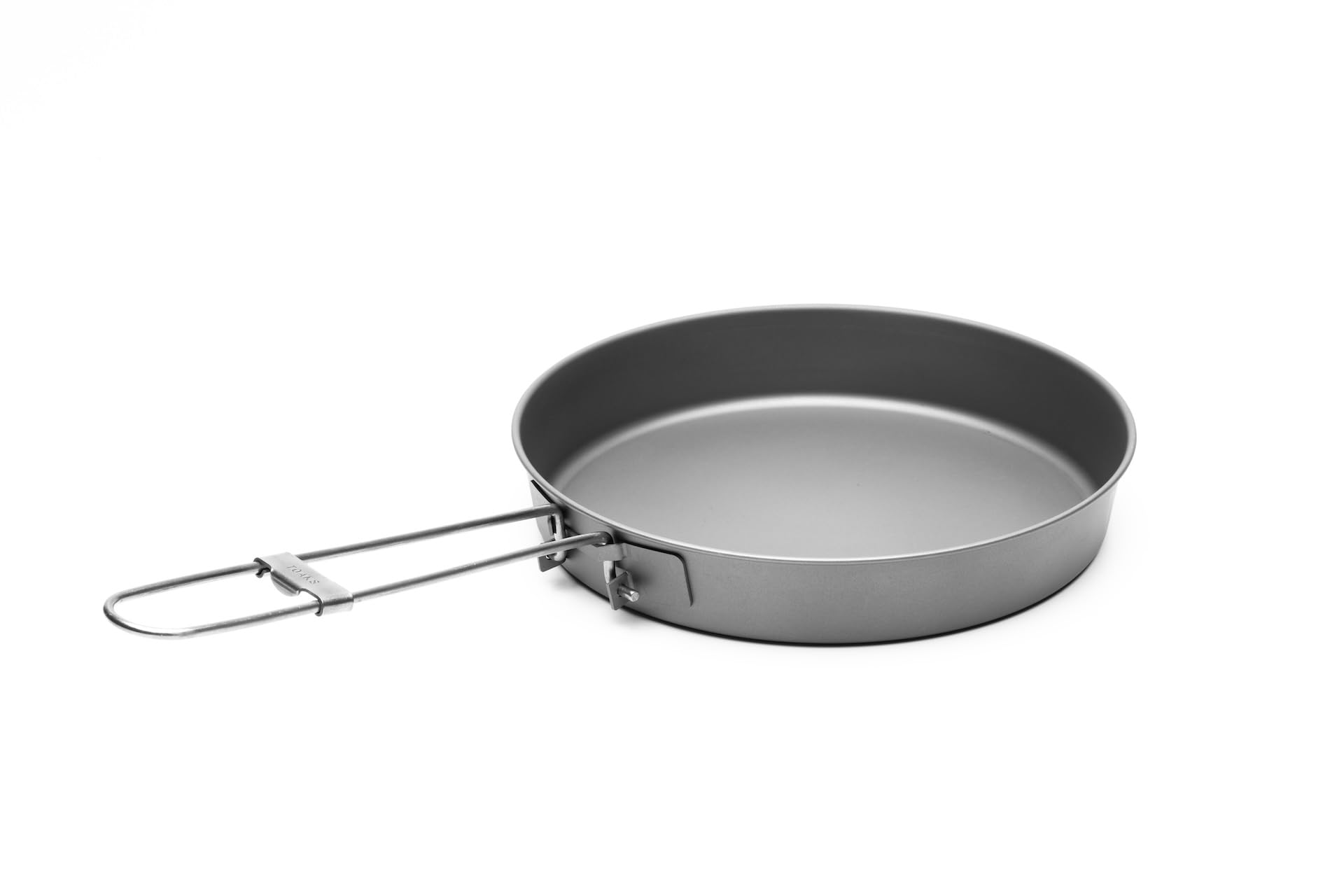
A 3-ounce titanium pan that proves weight savings come with a cooking compromise.
At just 3 ounces, the TOAKS is weighing 3 ounces versus the GSI’s 12.8 ounces. The 6.5-inch diameter serves one hiker well, though it is 6.5 inches versus the Sea to Summit’s 8 inches. Pure titanium is rust-resistant and nearly indestructible, but it has no non-stick coating, so you will need oil and careful heat management to avoid sticking.
The foldable handle compresses the pan for easy packing, and the 710 ml capacity (24 ounces) is enough for a single-person meal. Buyers highlight the limited lifetime warranty as a confidence booster. This pan also doubles as a serving plate — one less item to carry. The key trade-off is that titanium distributes heat unevenly, so you need to rotate the pan over your stove to avoid burning the center while the edges stay cool.
Weight Champion
- 3 ounces is the lightest fry pan you can buy
- Pure titanium is rust-proof and durable
- Foldable handle makes packing easy
- Limited lifetime warranty included
Cooking Requires Finesse
- No non-stick coating means food sticks easily
- 6.5-inch diameter is small for two people
- Uneven heat distribution needs constant attention
Pick this when: you are an ultralight hiker who values ounces above all else and has the skill to cook on titanium.
Skip it when: you want a fuss-free cooking experience or you typically cook for more than one person.
6. Boundless Voyage Titanium Non-Stick Frying Pan
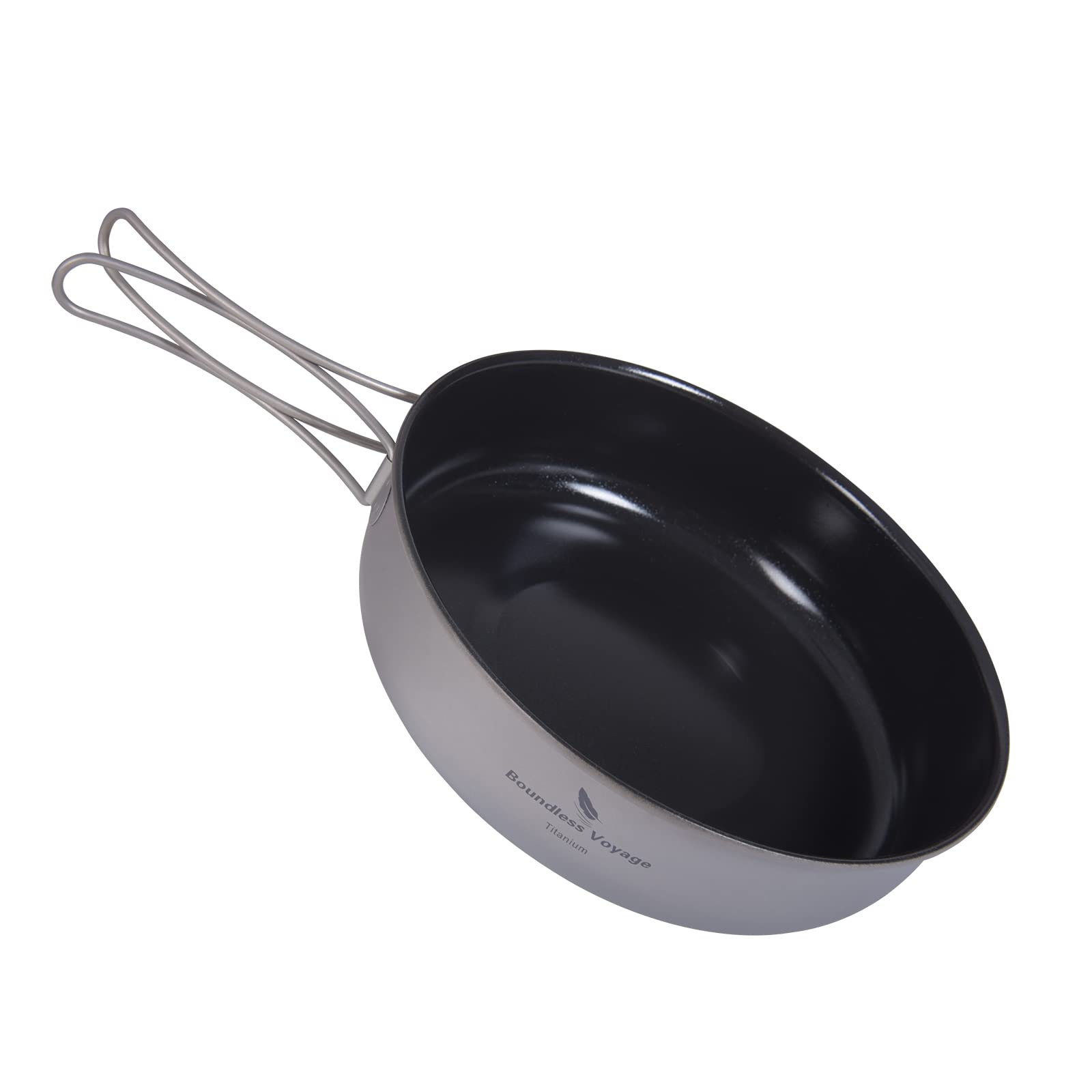
Titanium light weight meets a ceramic non-stick coating — the hybrid that ultralight cooks have been hoping for.
At 124 grams (4.3 ounces), this pan weighs 124 grams versus the Fire-Maple’s 262 grams — but adds a ceramic non-stick coating that the raw titanium TOAKS lacks. That coating is the real story here: it significantly reduces sticking without the heavy weight of aluminum. The 7-inch diameter is 7 inches versus the MSR’s 8 inches, but customers note it is still roomy enough for a single hot meal.
The foldable handle (4 inches long) tucks away for storage, and the included storage bag prevents the coating from getting scratched inside your pack. Unlike some ceramic coatings that peel after a few trips, Boundless Voyage uses a process designed to keep the surface intact. The pan is compatible with gas, electric coil, and smooth-surface induction stoves. Reviewers point out it cleans up quickly with just a wipe. Note that it is not dishwasher safe and not oven safe.
Best of Both Worlds
- At 124 g it is ultralight with a non-stick coating
- Ceramic coating prevents sticking better than raw titanium
- Foldable handle and storage bag keep it pack-friendly
- Works on multiple stove types including induction
Trade-Offs to Know
- Not dishwasher safe — hand wash only
- Not oven safe
Best for: hikers who want the weight savings of titanium but refuse to give up non-stick convenience for easy meals.
Think twice if: you cook large portions or need a pan that can handle high-heat searing without coating wear.
Understanding the Specs
Weight and Material
The material of your fry pan determines its weight, heat distribution, and durability. Titanium fry pans weigh as little as 3 ounces but conduct heat poorly, creating hot spots that burn food in the center while the edges stay cool. Aluminum (especially hard-anodized aluminum) distributes heat evenly and cooks more predictably, but it is heavier. A 7-inch titanium pan can be under 5 ounces, while an 8-inch aluminum pan often weighs 9–13 ounces. Choose by whether you prioritize pack weight or cooking ease.
Non-Stick Coatings
Non-stick coatings separate easy-clean pans from sticky disasters. Traditional PTFE-based non-stick (like Teflon) works well but scratches with metal utensils and may degrade at high heat. Ceramic non-stick coatings are PTFE- and PFOA-free, resist scratches better, and handle higher temperatures, but they cost more. Uncoated titanium and raw aluminum pans require oil and careful heat to prevent sticking. The coating type directly affects how easy your meal is to cook and how long the pan lasts.
Diameter and Capacity
The pan diameter determines how much food you can cook at once. An 8-inch pan serves one to two people comfortably. A 6.5-inch pan is best for a single hiker. Capacity is usually measured in ounces or milliliters — the higher the number, the more ingredients fit before the pan overflows. Consider both the diameter and the sidewall height: shallow pans flip food easily, while deeper pans hold more volume. Match the diameter to your typical party size.
Handle Design and Packability
A folding handle is essential for backpacking because it reduces the pan’s packed length from 10+ inches down to roughly the same as the pan diameter. Look for locking mechanisms that keep the handle stable during cooking — a wobbly handle over a campfire is a burn risk. Some pans use detachable handles that clip on and off. Also check if the pan nests with a matching pot (like the Sea to Summit Frontier pot) to create a compact camp kitchen stack.
FAQ
Can I use a backpacking fry pan over an open campfire?
Is a titanium frying pan better than an aluminum one for backpacking?
How do I prevent food from sticking to an uncoated titanium pan?
What size backpacking fry pan do I need for one person?
How long does a ceramic non-stick coating last on a camping pan?
Can I use a backpacking fry pan with an induction stove?
What is the difference between PTFE non-stick and ceramic non-stick coatings?
Are backpacking fry pans dishwasher safe?
Will a backpacking fry pan work with my Jetboil or other integrated stove system?
How do I clean a non-stick camping pan on the trail?
Final Thoughts: The Verdict
Across the board, the backpacking fry pan winner is the Sea to Summit Frontier Ultralight 8 Inch because it combines an 8-inch ceramic non-stick surface with hard-anodized aluminum for even heat and a detachable handle that packs small. If you want a lighter option with scratch-resistant ceramic, grab the MSR Nonstick Ceramic Coated Camping Skillet. And for ultralight soloists who count every gram, the TOAKS Titanium D6.5 Frying Pan delivers at only 3 ounces.
How We Picked
We do not accept paid placement. Every pick is matched to a real buyer and a real use-case; we do not hands-on test units.
Sources & Methodology
Specifications: manufacturer listings and product documentation. Review insights: verified customer reviews, as of July 2026. Pricing: not shown on this page (it changes often); check the current price via the retailer link.
As an Amazon Associate, Gadgets Feed earns from qualifying purchases. This does not affect which products we feature.