
Our readers keep the lights on and my morning glass full of iced black tea. As an Amazon Associate, I earn from qualifying purchases.
Specs are compiled from manufacturer listings and verified buyer reviews and can change over time — please confirm the key details on the product page before buying.
A cold ground steals your body heat all night, leaving you sore and tired. A good inflatable mattress stops that, packs small enough to fit inside your backpack, and gives you a flat, comfortable surface even on rocky terrain. The right pad helps you recover so you can hike again tomorrow.
I’m Min — the founder and writer behind Gadgets Feed. This guide is built by comparing the manufacturers’ published specifications and the patterns across verified customer reviews, so you get each pick’s real strengths and trade-offs instead of marketing spin.
The best backpacking inflatable mattress for you balances warmth (measured by R-value, which is a number showing how well it blocks ground cold), weight, and durability so you actually sleep well enough to hike again tomorrow.
Quick Picks
- improve X Inflatable Sleeping Pad — Extreme Cold Specialist
- Naturehike Ultralight Insulated Sleeping Pad — Best Value Insulation
- FLEXTAILGEAR Ultralight Backpacking Sleeping Pad — Tall & Wide Fit
- Naturehike 20oz Ultralight Sleeping Pad — Budget Extreme Layer
- Big Agnes Divide Insulated Sleeping Pad — Trusted 3-Season Performer
How To Choose The Best Backpacking Inflatable Mattress
Three numbers decide whether a pad works for you on the trail: its R-value (how well it blocks cold ground from stealing your heat), its packed weight (what it adds to your carry), and its inflation speed. Getting these right eliminates the two biggest complaints: waking up cold and spending ten minutes inflating.
R-Value: The Real Warmth Number
R-value measures how well the pad stops heat from leaving your body into the ground. A 3-season pad (for spring through fall) usually sits around 4.0 to 5.0. A true 4-season pad (for winter) hits 5.5 and up. If you sleep cold or camp below freezing, do not guess — look for an ASTM-tested rating (a standard measuring method, not just a marketing claim).
Weight and Packed Size
Every ounce matters when you carry everything on your back. A backpacking pad should weigh under two pounds (roughly 32 oz) and pack down to about the size of a Nalgene bottle (a standard 32-ounce water bottle) or smaller. Pads that roll into a 10-inch cylinder or less are ideal for small packs.
Valve Design and Inflation
Dual-valve systems let you inflate quickly by sealing the intake while you blow, then open a separate port to deflate in seconds. Look for a system that works with an included pump sack — saving your breath also saves you from moisture building up inside the pad, which can damage insulation layers over time.
Quick Comparison
| Model | Best For | Weight | R-Value | Thickness | Amazon |
|---|---|---|---|---|---|
| improve X | Winter & extreme cold | 1.39 lb | 7.5 | 3.5 in | $99.99$109.00PrimeAmazon |
| Naturehike R5.8 | Weight-to-warmth balance | 19.8 oz | 5.8 | 3.2 in | $79.99$109.99Ends inAmazon |
| FLEXTAILGEAR R05 | Tall & wide sleepers | 19.6 oz | 5.6 | 2.8 in | $129.99$139.99Amazon |
| Naturehike 20oz | Extreme cold on a budget | 20 oz | 6.5 | 3.94 in | $109.99Amazon |
| Big Agnes Divide | Reliable 3-season comfort | 23 oz | 4.0 | 3.5 in | $129.95Amazon |
In‑Depth Reviews
1. improve X Inflatable Sleeping Pad
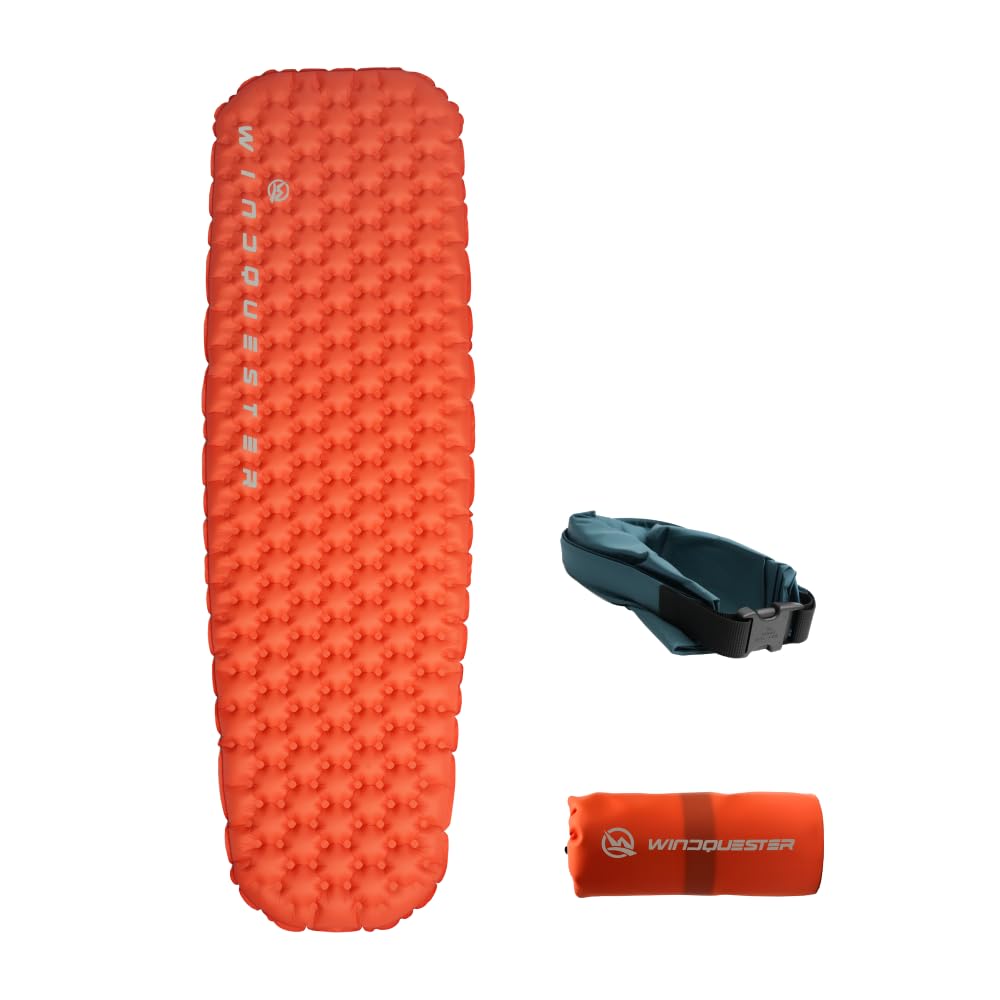
You stay warm in serious winter conditions with an ASTM R-value of 7.5 — buyers report it worked at 8°F with no cold spots.
If you camp in serious winter conditions, this is the pad that stops the ground from draining your heat. The improve X carries an ASTM R-value of 7.5, while the Big Agnes Divide has a rating of 4.0. Owners mention it “performed well at 8°F with no cold spots,” which is the kind of specific performance you want when the mercury is below zero.
Weighing 1.39 lb (630 g) and packing down to a 3.94 × 10.63 inch cylinder, it slides into a small pack without protest. The 20D–40D nylon (a fabric-thickness measure: 20 denier to 40 denier) with TPU coating (a durable plastic layer) feels durable for rocky campsites, and the integrated valve inflates and deflates fast. The trade-off: the width is 23 inches, and some users wish it was 25 inches for more room. The included pump sack is heavier than a rechargeable pump, according to reviewers, but it works.
What makes it stand out
- Highest R-value in this lineup at 7.5, tested by ASTM standard
- Lightweight at 1.39 lb despite extreme-cold insulation
- Compact pack size fits small backpacking packs
Where it falls short
- 23-inch width feels narrow for side sleepers who toss
- Pump sack is heavier than some standalone pumps
Reach for this if: you need a true 4-season pad that handles below-freezing nights and you prioritize warmth over width.
Look elsewhere if: you sleep on your side and need more than 23 inches of room to roll comfortably.
2. Naturehike Ultralight Insulated Sleeping Pad (R5.8)

You get the best warmth-per-pound here — a professionally tested R-value of 5.8 at just 19.8 ounces, backed by real-world proof at 28°F.
This pad hits the balance for three-season backpackers who want insulation without carrying a heavy load. Naturehike backs the R-value of 5.8 with professional testing certification, which matters because many pads overstate their warmth. One reviewer confirmed the “R-value confirmed effective at 28°F with base layers.” That is real-world proof it works for shoulder-season nights.
At 19.8 oz (560 g), it is lighter than the improve X while still offering solid insulation. The 3.2-inch thickness keeps your hips off the ground, and the 3D aluminum-reflective structure reduces heat loss by separating air chambers. The dual-vent valve lets you inflate without backflow and deflate in seconds. The trade-off: at 22.6 inches wide and 71.4 inches long, it is a standard-size pad that may feel short for sleepers over 6 feet. One reviewer noted it is “less comfortable than REI Helix but cheaper and insulated” — a fair trade-off for the savings.
Why it earns its spot
- Verified R-value of 5.8 with professional testing certification
- Ultralight at 19.8 oz — easy for long hauls
- Works well in temperatures down to -4°F, according to the manufacturer
What to consider
- 22.6-inch width may feel narrow for broad-shouldered sleepers
- Some reviewers found it less plush than premium options
Best suited for: hikers who want an honest R-value at a mid-range price and are willing to trade a little width for weight savings.
skip it if: you need a wide pad (25+ inches) or camp in extreme cold below -20°F regularly.
3. FLEXTAILGEAR Ultralight Backpacking Sleeping Pad (R05)
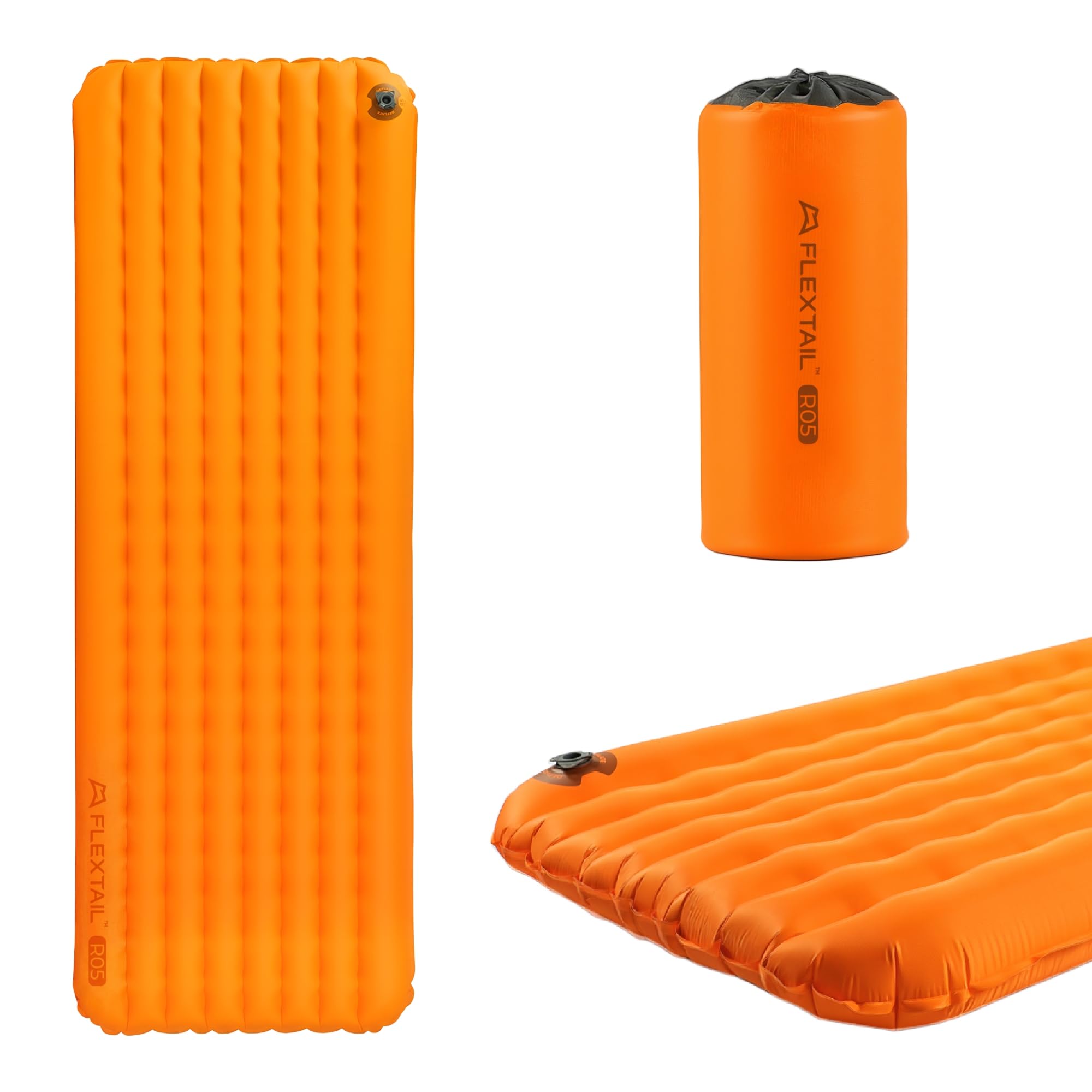
You get the rooomiest pad here at 77.2 by 25.6 inches — noticeably wider than the Naturehike R5.8’s 22.6 inches — while still being ultralight.
Tall sleepers and side sleepers who roll around at night will appreciate the generous dimensions. The FLEXTAILGEAR R05 measures 77.2 by 25.6 inches — noticeably wider than the Naturehike R5.8’s 22.6 inches. At 19.6 oz (555 g), it is actually the lightest pad on this list despite being the largest. The ASTM-tested R-value of 5.6 means it handles below-freezing conditions reliably.
The internal chamber structure distributes weight evenly, and an integrated reflective layer improves thermal efficiency. One buyer mentioned the pad kept them “toasty below freezing in 25 mph wind” when paired with a down quilt. The durable nylon fabric resists punctures on rocky ground. The catch: the thickness is only 2.8 inches, which is thinner than the 3.5-inch improve X. Some buyers reported a valve defect on one unit, and the seller did not respond, so check the valve immediately on arrival.
What works well
- 77.2-inch length fits sleepers up to 6’3″, per reviewer feedback
- 25.6-inch width gives side sleepers room to roll
- Lightest weight on the list at 19.6 oz
What to watch out for
- 2.8-inch thickness may feel thin for stomach sleepers
- Some units reported valve defects, so test before a trip
Grab this for: tall backpackers (up to 6’3″) and anyone who wants a wide sleeping surface without the weight penalty.
Pass if: you need maximum ground clearance (over 3 inches) or cannot risk dealing with a potential valve issue on a remote trip.
4. Naturehike 20oz Ultralight Sleeping Pad with Sidewalls
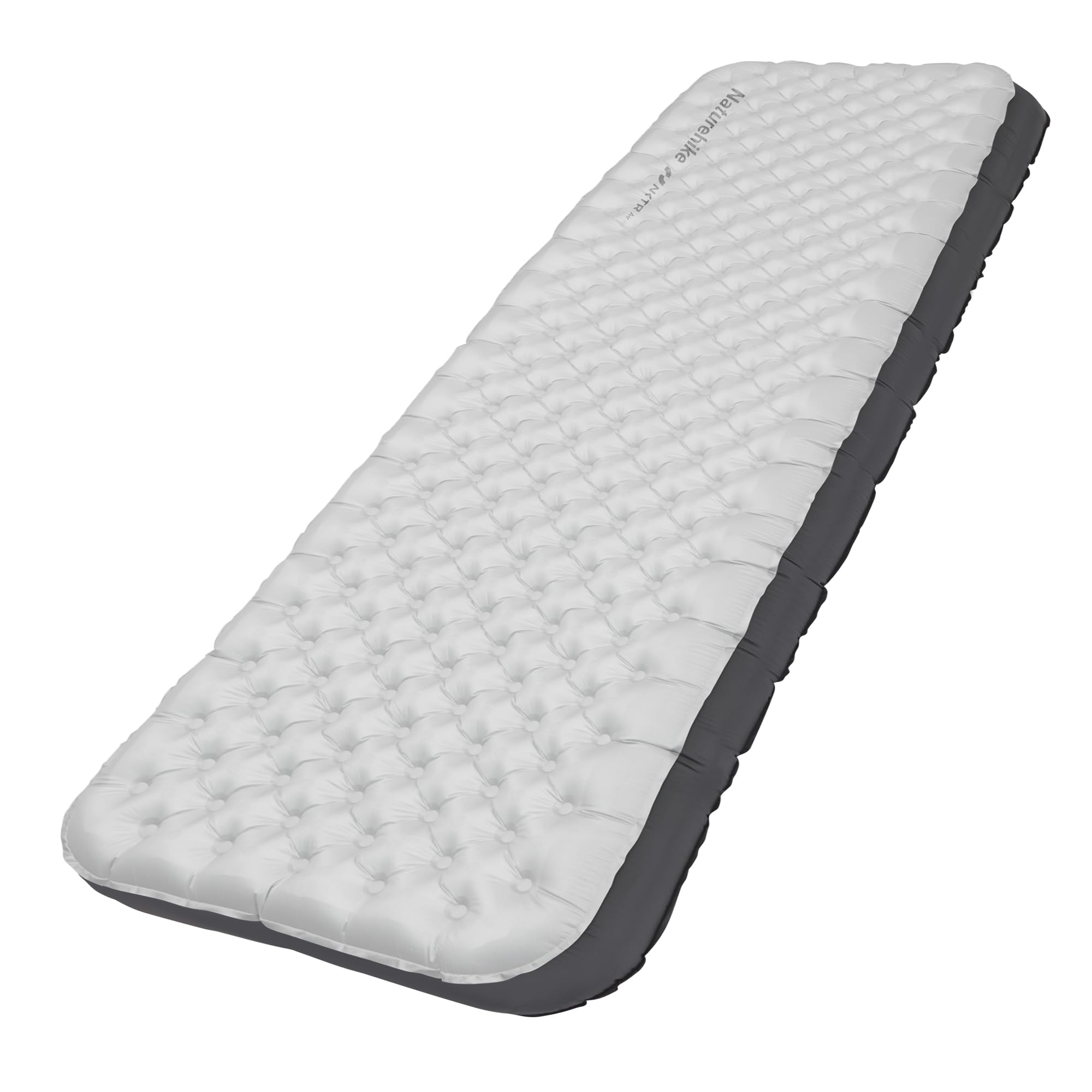
You get the thickest pad in the group at 3.94 inches with an R-value of 6.5 for extreme-cold camping, but buyers warn it is noisy.
If you want serious warmth without the premium price tag, this Naturehike offers an R-value of 6.5 and a 10 cm (3.94 inch) thickness that keeps your body well off the cold ground. The eight-layer aluminum-molded insulation inside is designed to lock in warmth by separating each air chamber. It is rated for temperatures above -13°F (-25°C).
The extra side walls help prevent you from rolling off the pad during the night — a thoughtful detail for restless sleepers. The dual-vent valve works like the other Naturehike models: one-way inflation with a quick-deflate option. The catch: one 2-star review said the pad is “very noisy” and raised concerns about the thickness being overstated at 4 inches. Another buyer called it “decent quality” but confirmed the noise issue. The material (TPU) feels durable for the price, but you may need to test thickness yourself before relying on it.
What stands out
- R-value of 6.5 at a budget-friendly price point
- 3.94-inch thickness provides good ground clearance
- Side walls reduce the chance of rolling off
What to know
- Some customers note the pad is noisy when shifting position
- Thickness may not match the stated 4 inches, per one review
Ideal for: budget-conscious backpackers who need strong cold-weather insulation and do not mind a little crinkle noise.
Not for: light sleepers who are sensitive to pad noise or anyone who needs guaranteed 4-inch thickness for side sleeping.
5. Big Agnes Divide Insulated Sleeping Pad

You get quiet comfort and a lifetime warranty from a trusted brand — the 3.5-inch thickness suits side sleepers, but the 20-inch width is narrow.
The Divide is a dependable 3-season pad built for comfort and durability rather than extreme low weight. It uses THERMOLITE insulation (a heat-trapping fabric) with a heat-reflective film to trap body heat. The I-Beam construction (a grid of vertical support beams) keeps the pad stable while reducing overall weight. At 23 oz (about 1.4 lb), it is heavier than the ultralight options above, but it is also quieter — one reviewer called it “quiet,” which matters if the crinkle of budget pads keeps you awake.
The pad is 72 inches long and 20 inches wide, which is narrow. Some buyers ordered a wider 25-inch version for more room. The 3.5-inch thickness is generous and comfortable for side sleepers. The included inflation sack makes setup easy, and Big Agnes backs it with a lifetime warranty against manufacturing defects. The R-value of 4.0 is lower than the insulation-focused pads here — it is best suited for spring through fall, not deep winter. One owner reported the “20” width [is] narrow” and the “insulated version [is] heavier/bulkier.”
Why it earns its place
- Lifetime warranty from a trusted brand
- Quiet material does not crinkle when you shift
- 3.5-inch thickness suits side sleepers
Where it trails
- R-value of 4.0 is not enough for winter camping below freezing
- 20-inch width is narrow; 25-inch upgrade adds weight
- Heavier than the ultralight competition at 23 oz
Best for: warm-weather backpackers who want a quiet, comfortable pad from a brand with a strong reputation and lifetime support.
Not ideal if: you regularly camp below freezing or you need the lightest possible carry weight.
Understanding the Specs
R-Value — The Warmth Number
R-value tells you how well the pad blocks heat from escaping into the ground. A higher number means more insulation. For 3-season camping (spring through fall), look for an R-value of 4.0 to 5.0. For winter camping below freezing, aim for 5.5 or higher. An ASTM-tested rating means the number was measured by a standard method, not just claimed by the brand.
Weight and Packed Size
Every ounce you carry adds fatigue. A backpacking pad should weigh under 2 lb (32 oz). The lightest options here drop to 19.6 oz. Packed size matters too — pads that roll into a 4 x 10-inch cylinder or smaller fit easily inside a 40-liter pack. Compare the packed dimensions, not just the weight.
FAQ
What R-value do I need for winter camping?
How do I inflate a backpacking sleeping pad without a pump?
Will a 20-inch wide pad work for side sleepers?
Can I use an inflatable mattress in cold weather?
How do I repair a leak in my sleeping pad?
Is a thicker pad always better?
What is the difference between R-value 4.0 and R-value 7.5?
How long does a backpacking inflatable mattress last?
Final Thoughts: The Verdict
For most people, the backpacking inflatable mattress winner is the improve X because its ASTM R-value of 7.5 delivers class-leading cold-weather insulation at a reasonable weight. If you want the best warmth-to-weight ratio at a lower price, grab the Naturehike R5.8. And for tall or wide sleepers who need room to roll without extra weight, the FLEXTAILGEAR R05 is the clear pick — it is lighter than the Naturehike R5.8 while being 3 inches wider.
How We Picked
We do not accept paid placement. Every pick is matched to a real buyer and a real use-case; we do not hands-on test units.
Sources & Methodology
Specifications: manufacturer listings and product documentation. Review insights: verified customer reviews, as of July 2026. Pricing: not shown on this page (it changes often); check the current price via the retailer link.
As an Amazon Associate, Gadgets Feed earns from qualifying purchases. This does not affect which products we feature.
Related Guides
Product prices and availability are accurate as of the date/time indicated and are subject to change. Any price and availability information displayed on Amazon at the time of purchase will apply to the purchase of this product. As an Amazon Associate I earn from qualifying purchases.
CERTAIN CONTENT THAT APPEARS ON THIS SITE COMES FROM AMAZON. THIS CONTENT IS PROVIDED "AS IS" AND IS SUBJECT TO CHANGE OR REMOVAL AT ANY TIME.
Amazon and the Amazon logo are trademarks of Amazon.com, Inc. or its affiliates.