
A board you can shove into a backpack and hike to a remote alpine lake changes the game. Backpacking paddle boards cut the weight, shrink the pack size, and eliminate the roof rack entirely, giving you access to water that kayaks and hardboards simply cannot reach. The difference between a good trip and a miserable one hinges on how well your board balances packed weight with on-water rigidity.
I’m Min — the co-founder and writer behind Gadgets Feed. I’ve spent countless hours cross-referencing material specs, packed dimensions, and PSI ratings to separate the boards that truly perform on the trail from those that merely claim portability.
After analyzing dozens of models across budget, mid-range, and premium tiers, I’ve assembled the definitive guide to finding the best backpacking paddle board for your specific adventure style and body type.
How To Choose The Best Backpacking Paddle Board
A backpacking paddle board lives and dies by its portability metrics. You are trading on-water performance for a package that fits on your back. Understanding the three key trade-offs will keep you from buying a board that either sinks under its own packed weight or wobbles like a pool toy on open water.
Packed Weight and Rolled Dimensions
The total weight of the board plus all accessories determines whether you can comfortably hike a mile or three miles to launch. Most inflatable boards weigh between 17 and 24 pounds, but the included pump, paddle, fins, and backpack add another 5 to 10 pounds. A board that rolls down to under 36 inches in length fits inside standard hiking backpacks and airline check-in bags, while larger rolls force you into a dedicated SUP backpack that is bulkier on the trail.
Drop-Stitch Density and Rigidity at the Right PSI
The core of every inflatable board is a drop-stitch construction — thousands of polyester threads connecting the top and bottom PVC layers. Higher thread density (measured in denier) creates a stiffer platform at lower PSI. A board rated for 15 PSI that feels board-like at 12 PSI saves you pumping time at the trailhead. Boards with dual-layer PVC or military-grade fabric resist punctures better against sharp rocks and submerged branches common in backcountry launches.
Width, Length, and Rider Weight Capacity
Width is the dominant factor in stability. A 32-inch deck suits average adult paddlers, while 33 to 35 inches provides a more forgiving platform for heavier riders, photographers carrying gear, or paddlers who want to attempt yoga on remote water. Length between 10 and 11.5 feet balances tracking and maneuverability. Always check the maximum weight recommendation — budget boards often top out around 300 pounds, while premium models handle 425 pounds or more, which matters when you add a dry bag and camping gear.
Fin Systems and Tracking
Removable fins are essential for backpacking because fixed fins protrude from the rolled board and risk damage. Three-fin setups with a large center fin offer the best straight-line tracking, while single-fin designs are lighter but drift more in wind. Some boards use unique slide-in or click-in fin boxes that require no tools, which is a major convenience when you are setting up on a rocky shore after a hike.
Included Accessories and Pump Quality
The hand pump included with most boards is a workout at the high PSI needed for rigidity. A dual-action pump that moves air on both the push and pull strokes cuts inflation time roughly in half. Some mid-range and premium boards include pumps with pressure gauges, which prevent under-inflation that causes flex on the water. Also verify that the included backpack has padded shoulder straps and a hip belt — many budget bags are simply duffels with backpack straps stitched on, and they become uncomfortable on long carries.
Quick Comparison
On smaller screens, swipe sideways to see the full table.
| Model | Category | Best For | Key Spec | Amazon |
|---|---|---|---|---|
| FunWater 10’6″ | Premium | Best Overall Balance | 600 LBS with stabilizers | Amazon |
| ZLX 11’6″ | Premium | Widest Deck Stability | 35-inch width, 550 lbs | Amazon |
| BOTE Wulf Aero | Mid-Range | Magnetic Accessory System | 20–22 lbs packed weight | Amazon |
| Retrospec Weekender Plus | Mid-Range | SUP-to-Kayak Converter | 24 lbs, dual-layer PVC | Amazon |
| ISLE Switch 2in1 | Premium | Lightest Hybrid Design | 17 lb hull, 425 lbs cap | Amazon |
| Hydro-Force Panorama | Mid-Range | Built-In Viewing Window | 35-inch wide, 330 lbs | Amazon |
| Boardworks Kraken | Premium | Epoxy Hardboard Alternative | 28 lbs, 200 liters vol | Amazon |
| Retrospec Weekender | Budget | Lightest Entry-Level Board | 17.5 lbs, 32-inch wide | Amazon |
In‑Depth Reviews
1. FunWater 11’/10’6″ Inflatable Stand Up Paddle Board
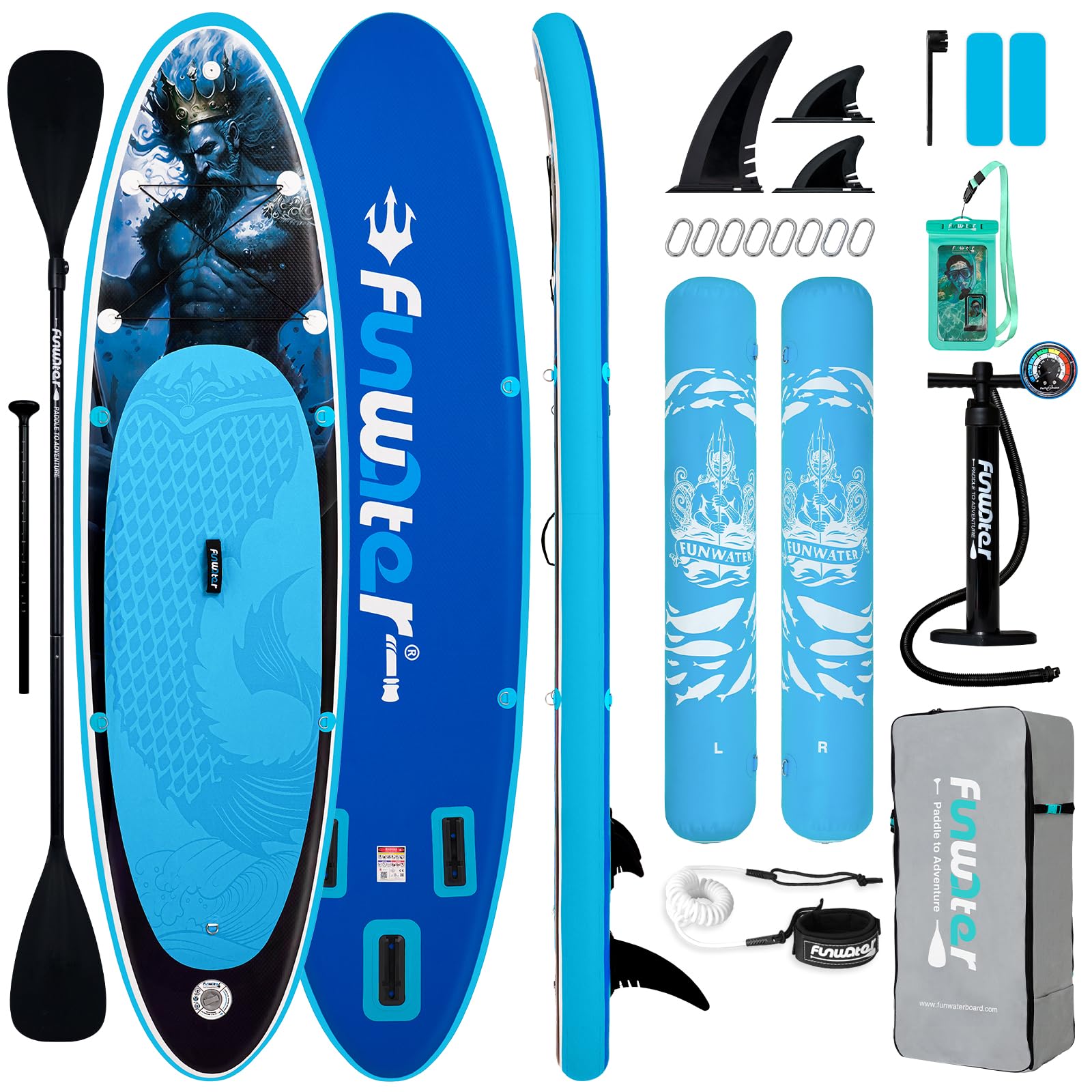
The FunWater board hits a rare sweet spot between portability and stability that makes it the top pick for backpacking. At 10.5 feet with a 33-inch width, it rolls into a compact backpack that weighs around 14.6 kilograms fully packed — manageable for a mile-long hike to a secluded lake. The included stabilizer connectors reduce tipping risk significantly, which is a genuine advantage when you are balancing a camera bag or fishing rod on a remote shoreline.
The 11-inch center fin with a double-layer reinforced groove cuts through the water smoothly, and the board maintains rigidity up to 15 PSI without the flex that plagues cheaper inflatables. Owners report it holds up well in choppy conditions and shallow water alike, and the triple-fin setup provides reliable tracking even when a breeze picks up. The hand pump is functional but demanding at high PSI, so an electric pump upgrade is a smart addition for multi-day trips.
What seals the deal is the accessory count — two stabilizers, three fins, a pump, a double paddle, a leash, a waterproof phone bag, and a repair kit all fit inside the carry bag. You would spend hours sourcing these separately. For a backpacker who wants one-and-done gear management, the FunWater delivers the most complete package at this price point.
Why it’s great
- 600-pound maximum capacity with stabilizers accommodates gear-heavy trips
- Complete accessory set eliminates separate purchases
- Triple-fin design tracks straight on wind-affected water
Good to know
- Manual pump requires significant effort to reach 15 PSI
- Color scheme may look busy to some paddlers
2. ZLX 11’6″ Ultra Wide Inflatable Stand Up Paddle Board
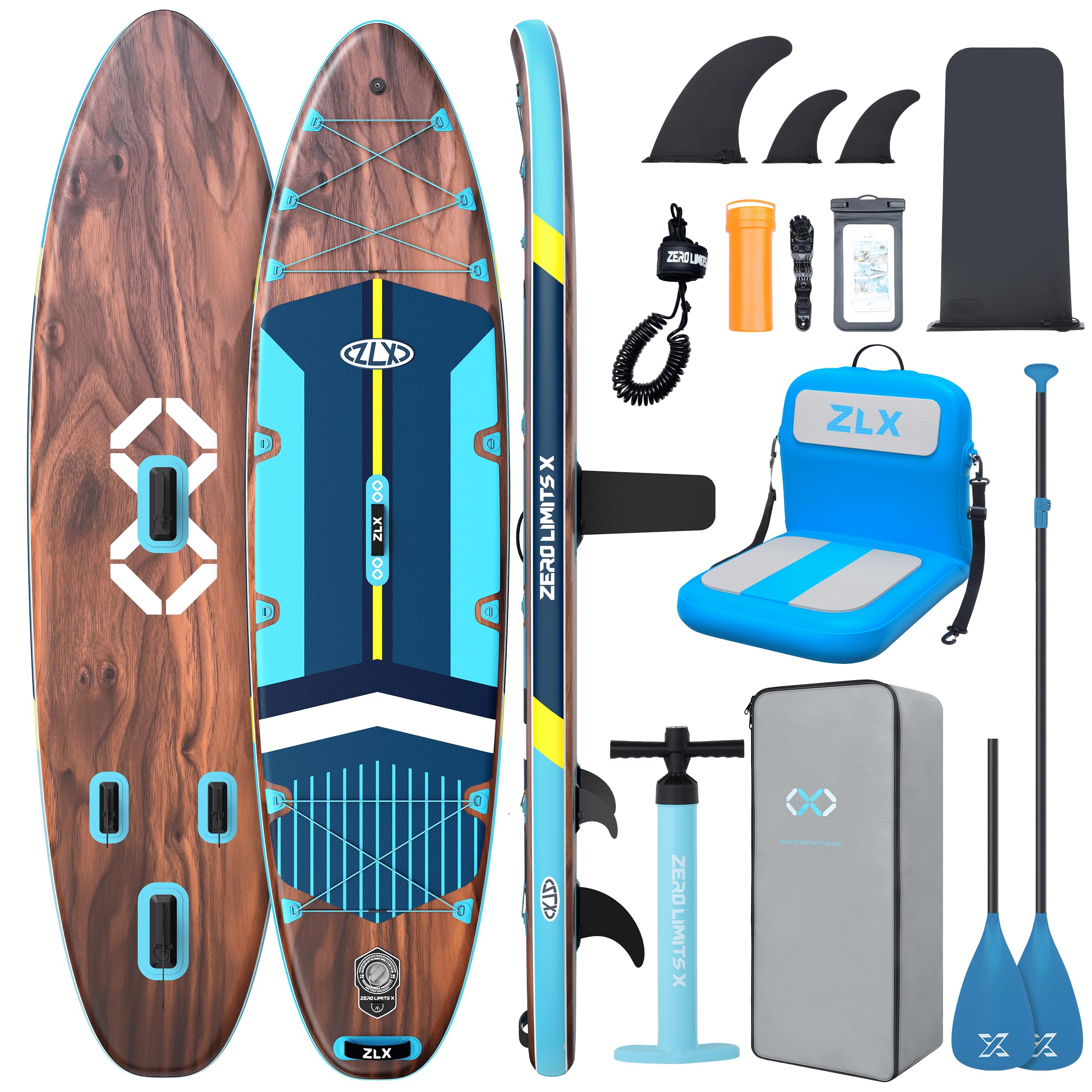
The ZLX board prioritizes stability above all else, and its 35-inch-wide deck makes it the most forgiving platform for backpackers who want to bring a dog, a cooler, or camera gear along. The extra width reduces the tipping risk by an estimated 30 percent according to the manufacturer, and real-world feedback from anglers and yoga practitioners confirms that the board feels planted even when you shift your weight to one side. The 11.5-foot length also improves glide efficiency compared to shorter boards.
The StabilTrac Balance Fin system actively counters lateral drift, which is a common complaint on wide inflatables that tend to weathervane in crosswinds. Military-grade PVC and drop-stitch technology provide puncture resistance against submerged branches and sharp rocks — exactly the conditions you encounter when launching from an undeveloped shoreline. The backpack is well-constructed with padded straps, and the upgraded pump inflates the board in under eight minutes.
Fourteen stainless steel D-rings give you plenty of attachment points for dry bags, fishing rod holders, or a camera mount. The board also accepts an inflatable seat for kayak-mode paddling, adding versatility for long days on the water where standing becomes tiring. The 3-year warranty is a confidence-builder for anyone who plans to put serious miles on their board.
Why it’s great
- 35-inch width provides exceptional stability for gear-heavy paddlers
- StabilTrac fin minimizes drift in windy conditions
- 14 D-rings allow extensive gear customization
Good to know
- Paddle sections may separate during vigorous use
- Hand inflation is a workout without an electric pump
3. BOTE Wulf Aero Inflatable Stand Up Paddle Board Kit
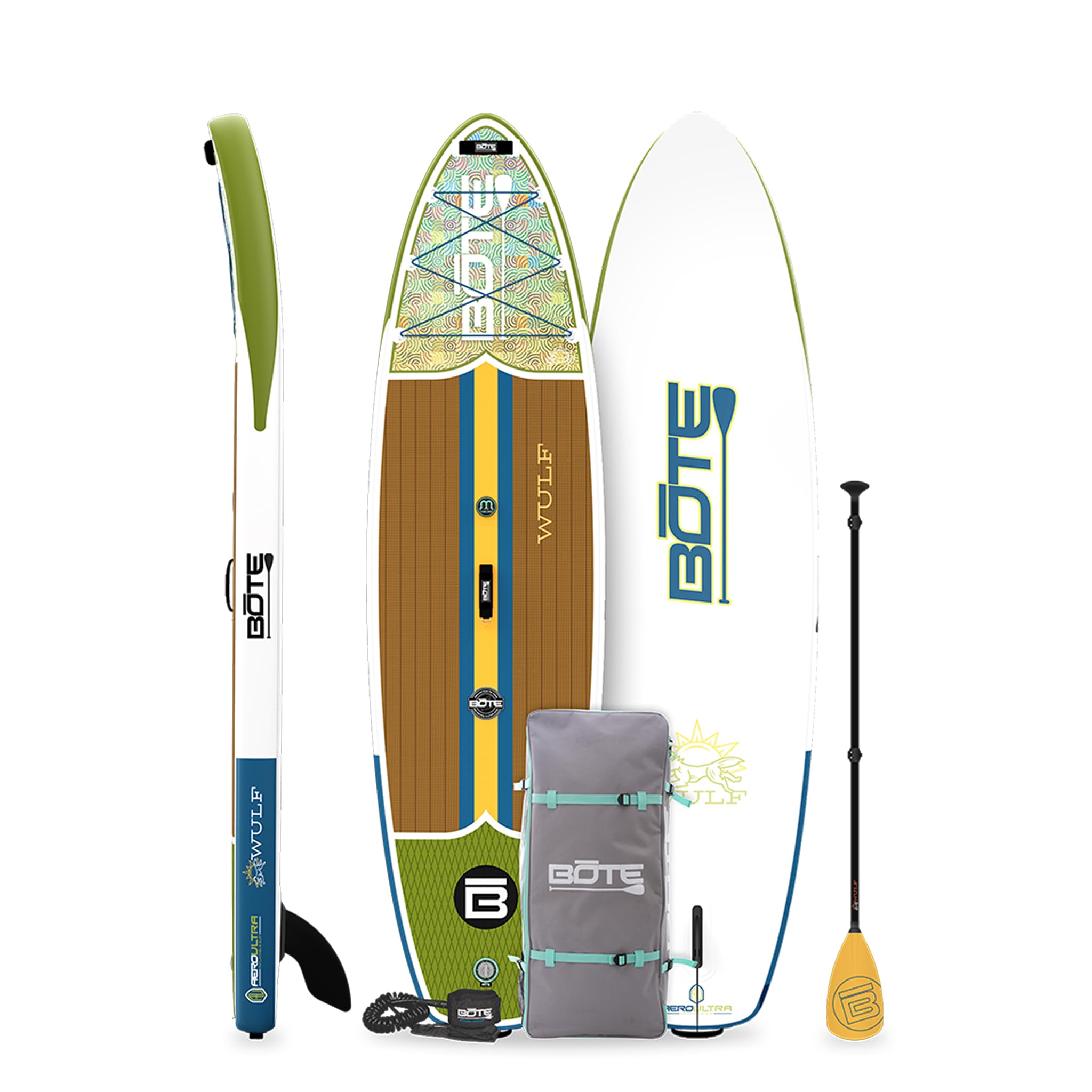
BOTE brings its premium design language to a more portable package with the Wulf Aero, which weighs between 20 and 22 pounds and packs down to a 38-by-18-by-12-inch bag. That compact footprint fits inside most car trunks and even some airline overhead compartments, making it the best choice for backpackers who fly to their launch destinations. The 34-inch-wide deck offers a stable platform for beginners while still being narrow enough to paddle efficiently.
The standout feature is the MagNEPOD magnetic accessory system, which normally appears on much more expensive BOTE boards. It allows you to attach a magnetic cup or gear holder without straps or bungees — a small convenience that becomes significant when you are juggling a paddle and a phone on a windy lake. The 10-inch removable center fin slides in tool-free, and the coiled leash keeps your board tethered without dragging in the water.
Construction uses AeroULTRA technology with military-grade PVC, and the board inflates to 10–15 PSI without visible bowing. Owners report the board survives three months of continuous saltwater exposure without delamination. The included fabric backpack is lighter than the padded bags from ZLX or Isle but still functional for short carries to the water.
Why it’s great
- MagNEPOD magnetic system keeps accessories secure without straps
- Lightest packed weight in the mid-range tier
- Tool-free fin installation simplifies setup
Good to know
- No front tie-downs for securing gear
- Missing some D-ring attachment points found on other BOTE models
4. Retrospec Weekender Plus 10′ Inflatable Stand Up Paddleboard
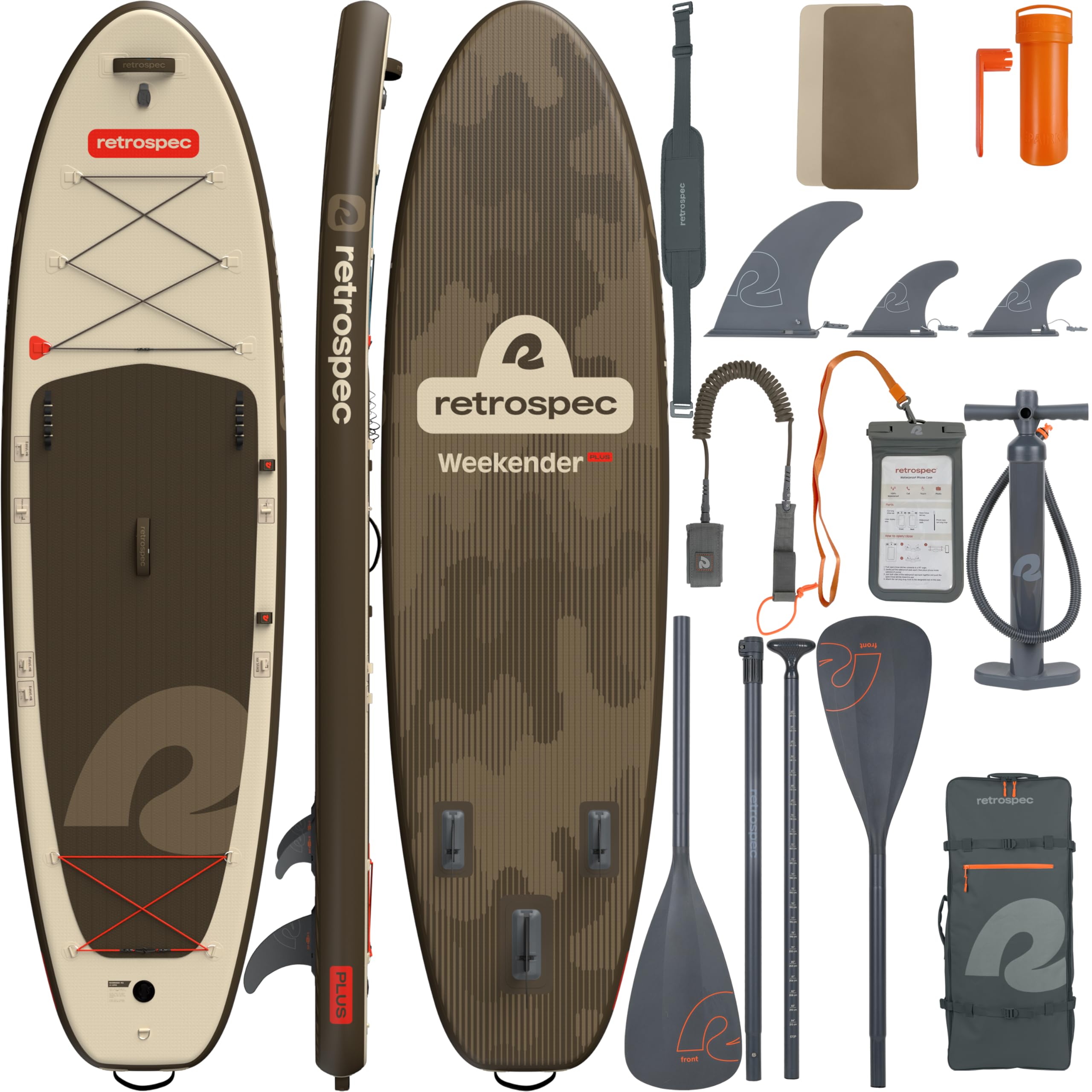
The Weekender Plus is a dual-layer PVC board that offers mid-range rigidity at a budget-friendly price point. The AerGlide-Fusion construction delivers stiffness comparable to boards costing twice as much, and the 33-inch width provides a stable platform for adults up to 300 pounds. The included kayak seat converts the board in seconds, which adds versatility for backpackers who want to alternate between standing and sitting on long crossings.
The 4-piece convertible paddle breaks down small enough to stow inside the carry bag alongside the pump and fins. The pump is a dual-action model that moves air on both strokes, cutting inflation time roughly in half compared to single-action pumps. Owners consistently note the board tracks well with all three fins installed, and the rounded nose and square tail design provides smooth gliding even in mild chop.
At 24 pounds the board sits on the heavier side for backpacking, but the included rucksack-style backpack distributes the weight reasonably well for hikes under a mile. The waterproof smartphone case and repair kit round out a complete package that requires no additional purchases. For paddlers who want SUP and kayak capability in one carry bag, this is the most cost-effective option available.
Why it’s great
- Dual-layer PVC provides stiffness comparable to premium boards
- Convertible paddle and kayak seat add versatility
- Dual-action pump speeds up inflation
Good to know
- 24-pound board weight is on the heavier side for long hikes
- No pressure gauge on the included pump
5. ISLE Switch 2in1 Kayak & Paddle Board Bundle
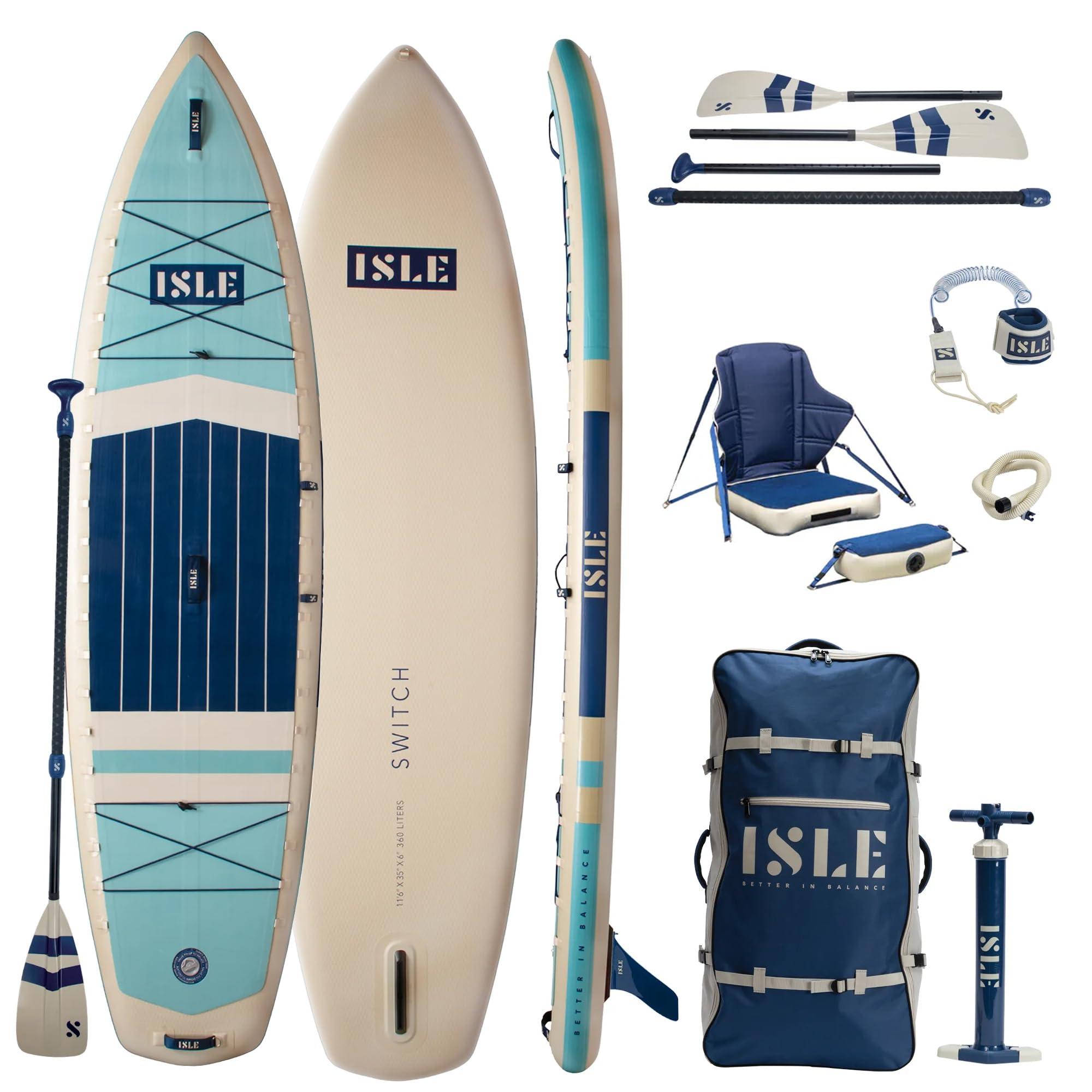
ISLE has engineered the lightest hybrid SUP-kayak on the market with the Switch, whose hull weighs just 17 pounds thanks to Air-Tech Fusion Lite construction. The tighter fabric weave adds durability while dropping significant weight compared to standard inflatable construction. At 11.6 feet long and 35.5 inches wide, it offers a generous 425-pound capacity that easily accommodates a paddler plus a weekend’s worth of camping gear.
The ISLE-LINK connect system uses rugged webbing loops and stainless steel G-hooks to convert the board between SUP and kayak modes in seconds. The included Cloud kayak seat with an elevated back and the padded foot brace make long paddling sessions comfortable without the lower back fatigue that flat boards cause. The 4-piece Remix Carbon adjustable paddle and extra carbon blade provide a stiff, lightweight stroke that reduces fatigue over distance.
Full-coverage traction pad runs from nose to tail, which is rare on inflatables and allows comfortable kneeling or yoga poses. The padded backpack includes a manual pump, touring fin, and straight leash. Owners consistently praise the board’s stability and build quality, though some note the Velcro paddle holder is weak and recommend securing the paddle separately during transit.
Why it’s great
- 17-pound hull is the lightest hybrid design tested
- 425-pound capacity handles paddler plus camping gear
- Full-coverage traction pad enhances comfort for kneeling and yoga
Good to know
- Velcro paddle holder may fail during transport
- Fin screws and custom parts are difficult to replace
6. Hydro-Force Panorama Inflatable Stand Up Paddle Board
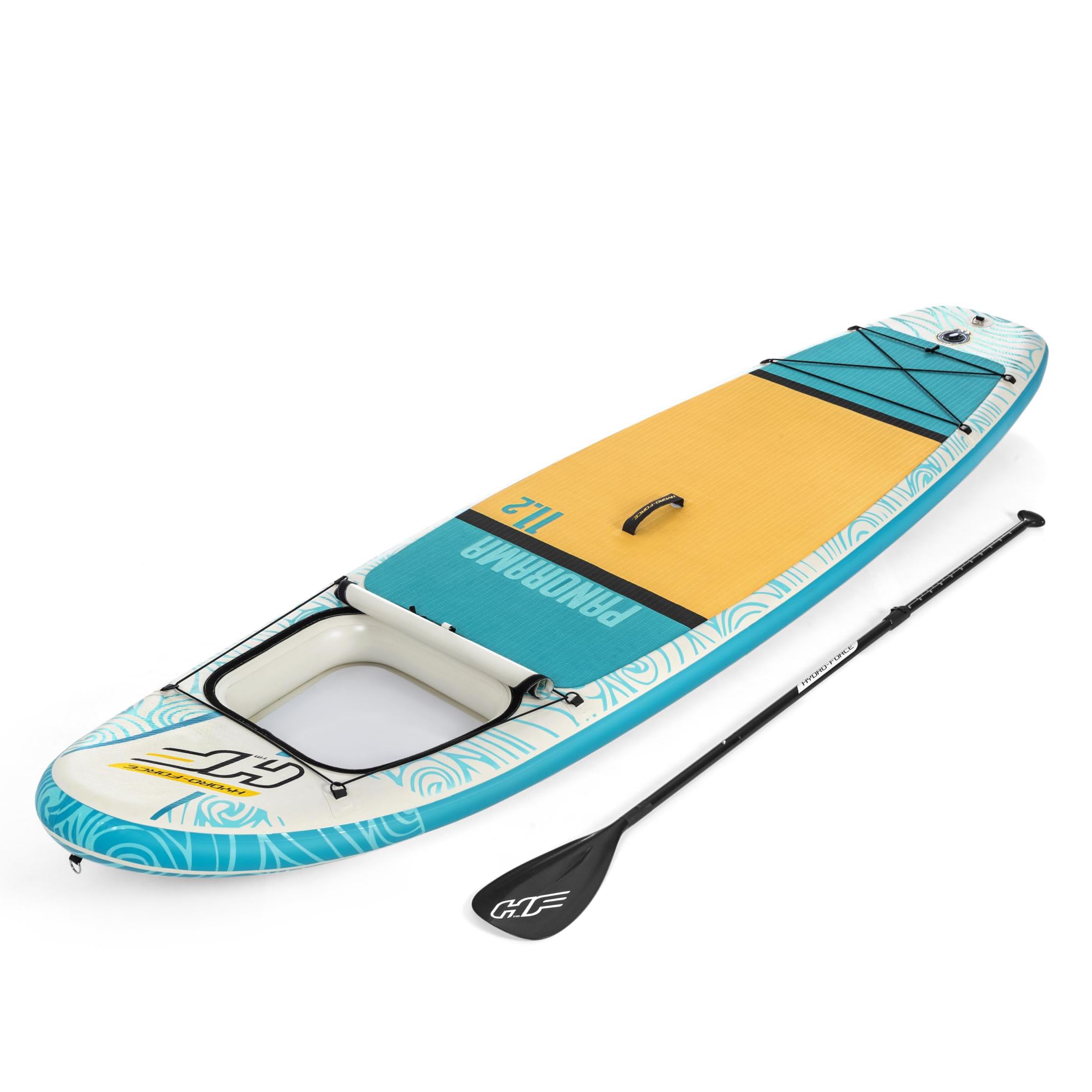
The Panorama stands out with its unique built-in viewing window — a transparent section in the deck that lets you see directly into the water below. For backpackers who paddle over coral reefs, kelp forests, or clear mountain lakes, this window replaces the need for a snorkel mask when scouting fish or underwater features. The board is 11 feet 2 inches long and 35 inches wide, providing a stable touring platform with a 330-pound capacity.
Drop-stitch construction with marine-grade Tritech surface material resists UV damage and punctures, which is critical for boards that get dragged up rocky shores. The double elastic cord system on the front deck secures a dry bag or paddle float. Three removable fins — one large center and two small side fins — provide good tracking for the board’s width, though the window cover can take on water in rough surf due to its gasket design.
The complete set includes a hand pump, adjustable paddle, coiled leash, backpack, and repair kit. The backpack is basic compared to ISLE or ZLX offerings but functional for short carries. The Panorama is best suited for calm-to-moderate conditions where the window adds genuine recreational value rather than just novelty.
Why it’s great
- Viewing window provides underwater visibility without snorkeling
- 35-inch width delivers excellent stability for touring
- UV-resistant Tritech material handles sun exposure well
Good to know
- Window gasket can let water in during choppy conditions
- Included pump quality is inconsistent across units
7. Boardworks Kraken All-Water Stand-Up Paddleboard

The Kraken is not an inflatable — it is an epoxy hardboard with a bamboo veneer and fiberglass laminate, weighing 28 pounds with a 200-liter volume. For backpackers who prioritize on-water performance over packability, the Kraken delivers a level of stiffness and responsiveness that no inflatable can match. The sharp nose cuts through rough water cleanly, and the 34-inch width provides stability while surfing waves or crossing wind-chopped bays.
The FCS2 Connect Dolphin Fin uses a tool-less install system and supports up to a 5-fin configuration for matching conditions ranging from flat lakes to open ocean swells. Integrated Lift UP handles make carrying the board manageable for a single person, though at 28 pounds it is noticeably heavier than a rolled inflatable in a backpack. The 4.75-inch thickness keeps the profile low for reduced wind resistance.
Capacity is skill-dependent: 220 pounds for novice paddlers, up to 260 pounds for advanced riders. The board is 10 feet 3 inches long, making it maneuverable in surf while still capable of covering distance on flat water. Owners consistently praise the weight-to-performance ratio, noting that most comparable hardboards weigh 10 to 20 pounds more. This board requires a roof rack or a very large vehicle — it does not pack down.
Why it’s great
- Epoxy/fiberglass construction provides maximum stiffness and response
- Sharp nose handles rough water better than inflatable boards
- 5-fin configuration adapts to varied water conditions
Good to know
- Requires roof rack or large vehicle for transport
- Some units have experienced rail cracks under heavy use
8. Retrospec Weekender Inflatable Stand Up Paddle Board
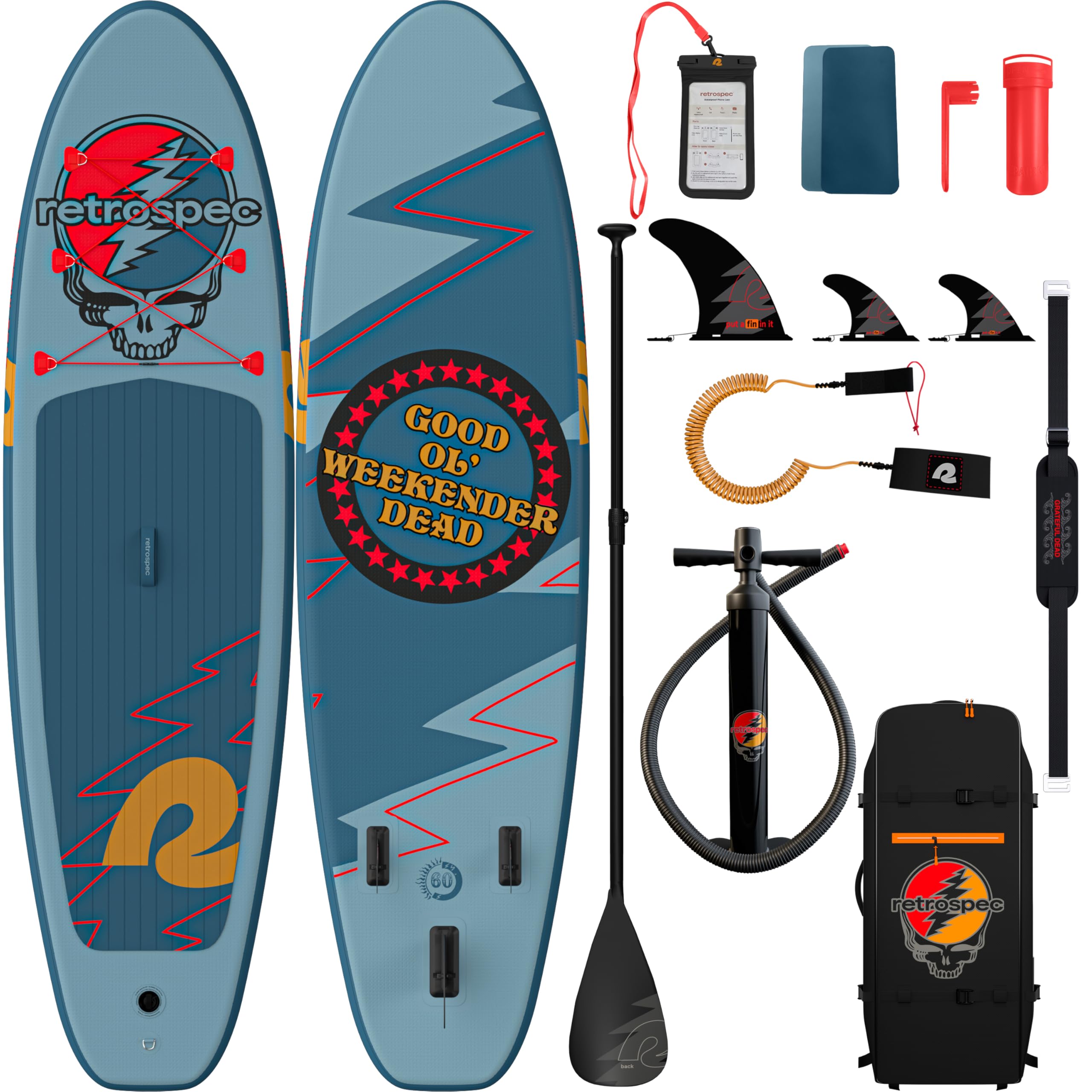
The standard Weekender is the lightest board in this lineup at 17.5 pounds, making it the most practical option for backpackers who need to minimize carry weight on longer hikes. The AerGlide-Lite PVC construction keeps the board rigid at 12 to 15 PSI, though some flex is noticeable in larger waves. The 32-inch width is adequate for average adult paddlers but less forgiving for heavier riders or those carrying significant gear.
The included dual-action pump inflates the board faster than single-action competitors, and the brushed EVA deck pad provides comfortable footing without being abrasive. Three removable fins — one large center and two small side fins — improve tracking compared to single-fin designs. The front bungee system secures a small dry bag or water bottle, and multiple D-rings offer attachment points for a leash or tow line.
The backpack is functional but basic, with thin shoulder straps that become uncomfortable on long carries. Owners consistently recommend upgrading to an electric pump for anything beyond occasional use, as the hand pump requires 150 to 180 strokes to reach full pressure. For the price, the Weekender delivers a complete package that gets you on the water without breaking the bank, but the trade-offs in stability and packed comfort are real.
Why it’s great
- 17.5-pound weight is ideal for hiking to remote launches
- Dual-action pump reduces inflation effort
- Three-fin setup improves tracking over single-fin boards
Good to know
- 32-inch width provides less stability for gear-heavy paddlers
- Backpack straps lack padding for long carries
FAQ
Can I inflate a backpacking paddle board with a portable electric pump?
How does board width affect stability for a backpacking paddle board?
What PSI should I inflate my backpacking paddle board to?
How do I repair a puncture on a backpacking paddle board in the field?
Is a backpacking paddle board stable enough for yoga or fishing?
Final Thoughts: The Verdict
For most users, the best backpacking paddle board winner is the FunWater 10’6″ because it delivers the most complete accessory kit, a 600-pound capacity with stabilizers, and reliable tracking in a package that fits inside a backpack without breaking the bank. If you want the widest deck for maximum stability with a dog or camping gear, grab the ZLX 11’6″. And for the lightest hybrid design that converts between SUP and kayak modes, nothing beats the ISLE Switch 2in1.