
Our readers keep the lights on and my morning glass full of iced black tea. As an Amazon Associate, I earn from qualifying purchases.
Specs are compiled from manufacturer listings and verified buyer reviews and can change over time — please confirm the key details on the product page before buying.
If you are reading this, you have probably already learned the hard way that regular jeans are a bad idea on the trail. They soak up sweat like a sponge, bind at the knees when you scramble over a fallen log, and chafe in all the wrong spots after the first few miles. The right pair of hiking trousers eliminates all those issues so you can focus on the trail. This guide covers nine top picks, from burly mountain pants to featherlight travel chinos, matched to your terrain, climate, and budget.
I’m Min — the founder and writer behind Gadgets Feed. This guide is built by comparing the manufacturers’ published specifications and the patterns across verified customer reviews, so you get each pick’s real strengths and trade-offs instead of marketing spin.
Whether you are planning a weekend in the Smokies or a season of alpine scrambles, the right backpacking pants for men need to disappear from your awareness completely — and these picks come closest to earning that praise from thousands of owners.
Our Picks at a Glance


How To Choose The Best Backpacking Pants For Men
The perfect trail trousers depend on your personal needs. Your choice hinges on your body temperature, trail type, and pack space. These four factors separate long-lasting pants from one-trip disappointments.
Fabric Weight and Stretch
The weight of the fabric determines how the pants feel on your legs for ten straight hours. Thin, lightweight nylon (often around 3 to 5 ounces) is the choice for hot, humid hiking — it breathes, dries fast, and packs down to almost nothing. The trade-off is that thin material can tear on sharp rocks or branch snags. Heavier softshell fabrics (closer to 10 to 13 ounces) are far more durable and shrug off wind and light rain, but they trap heat and take longer to dry. A built-in stretch — either 2-way or 4-way — makes a massive difference when you step up onto a boulder or squat to filter water. Pants without stretch feel stiff and restrictive on uneven terrain.
Fit and Articulation
A good hiking pant never binds at the crotch or knee when you lift your leg. Look for a gusseted crotch (a diamond-shaped panel of extra fabric sewn into the seam) and articulated knees (a pre-curved shape that matches a bent leg). These two features let you move naturally without the fabric pulling taut. The waist matters just as much — a partial elastic band or a built-in belt allows you to adjust for a full pack that cinches your waist or a meal that leaves you a bit bloated. A slim-straight or regular fit works for most body types, but if you have larger thighs from cycling or lifting, you need a relaxed or athletic cut to avoid a sausage-casing feeling.
Pocket Layout and Security
Losing your phone or wallet on day two of a week-long trip is frustrating. The best pocket setups have at least one zippered security pocket for your valuables, plus deep hand pockets that keep items from falling out when you sit down. Cargo pockets on the thigh are handy for a map or a snack bar, but they should sit high enough that they do not swing against your knee as you walk. Mesh pockets are breathable but they are also see-through — anything you put in them is visible, and small items can work their way out. Zippered side pockets on the thigh offer the best security without adding bulk.
Weather Protection and Venting
Sun protection is non-negotiable for any trail pant worn above tree line. A UPF (Ultraviolet Protection Factor) rating of 50+ blocks over 98 percent of UV rays and saves your legs from a painful burn on an exposed ridge. Water resistance is a sliding scale — some pants come with a durable water-repellent (DWR) finish that beads off light drizzle, while others are fully waterproof with a membrane. For most three-season backpacking, a water-repellent finish is enough; fully waterproof pants get clammy and hot on any day that is not freezing. Vents, usually zippered openings on the outer thigh, are a lifesaver when the afternoon sun bakes you. They dump heat instantly without forcing you to stop and roll up your pant legs.
Quick Comparison
| Model | Best For | Fabric Type | Key Features | Weight / Feel | Amazon |
|---|---|---|---|---|---|
| Columbia Silver Ridge Cargo★ Best Overall | All-around hot-weather performance | 100% Nylon | UPF 50, Omni-Wick, zip security pocket | Lightweight, thin | Amazon |
| CQR Lightweight VentBudget Champion | Budget value with breathability | Nylon ripstop | Elastic waist, gusset crotch, thigh vents | Ultra-lightweight | Amazon |
| prAna Stretch ZionBest All-Arounder | Trail-to-town versatility | Stretch woven blend | UPF 50+, water-repellent, 2-way stretch | Mid-weight, soft hand | Amazon |
| Columbia Silver Ridge Convertible | Zip-off versatility for variable temps | 100% Nylon | UPF 50, zip-off legs, partial elastic waist | Lightweight, thin | Amazon |
| Mammut Runbold IV | Alpine technical hiking | 4-way stretch recycled blend | 4-zippered pockets, adjustable waist | Light, thin, stretchy | Amazon |
| MARMOT Scree Pant | Year-round durability and wind resistance | Midweight softshell | Articulated knees, DWR finish, zip pockets | Midweight, softshell feel | Amazon |
| Fjallraven Vidda Pro Ventilated | Brutal bushcraft and off-trail abuse | G-1000 (poly/cotton) | Double knee/seat, axe pocket, knee pad pockets | Midweight, tough, no stretch | Amazon |
| Mountain Hardwear Stretch Ozonic | Wet-weather protection | 100% recycled shell, 2.5L | Waterproof, 4-way stretch, zip pockets | Light, packable shell | Amazon |
| Fjällräven Keb Trekking | Technical winter and alpine climbing | Stretch polyamide blend w/ G-1000 | Reinforced stretch, zippered vents, thigh pockets | Stretchy, stout cold-weather | Amazon |
In‑Depth Reviews
1. Columbia Men’s Silver Ridge Cargo Pant
Our pick — 4.5★ from 750+ verified ratings; the strongest balance of quality and price.
The lightweight nylon pant that disappears on your legs all day.
Your legs stay cool even when the sun is blazing thanks to the Omni-Wick fabric (a technology that pulls moisture from your skin to the fabric surface where it evaporates fast) and the UPF 50 sun protection that blocks both UVA and UVB rays. The material is a 100% nylon ripstop weave — thin enough to pack down to almost nothing, but one owner noted they held up fine on a 2-night backpacking trip. The straight-leg cut with articulated knees lets you move without binding, and the partial elastic at the waist gives a little give when you are loaded down with a pack. Buyers consistently praise the cooling feel and the thoughtful pocket layout: two front, two flap-back, two large cargo pockets, plus a zippered security pocket for your wallet or phone. The accompanying belt is functional but one owner described it as “wimpy” — plan to swap it for your own webbing belt if you want something more secure. What wins people over most is the overall quality, followed by the lightweight feel; the crowd favorite here holds over 4.5 stars with hundreds of ratings. The main trade-off is that the fit runs slim for some — the relaxed cut through the seat and thighs is fine for lean builds but one review noted it is “only for guys who skip leg day.”
The included belt does not fit standard belt loops well, which is a minor annoyance if you want to use your own. The fabric has a distinct nylon texture rather than a natural look, so if you want something that passes for a chino in a restaurant, this is not it. But for what it is — a dedicated trail pant for hot days — it is tough to top.
What Hikers Love
- Omni-Wick and UPF 50 keep you cool and sun-safe in exposed terrain
- Multiple pockets, including a zippered security pocket
- Lightweight ripstop nylon dries fast after a stream crossing
The Real Caveats
- Slim-to-relaxed fit can feel too tight for muscular thighs
- Included belt is thin; belt loops don’t fit standard belts well
- Thin fabric may not survive repeated brush-bashing
Grab them if: you spend most of your backpacking season in hot, humid weather and want a pant that breathes, dries fast, and keeps the sun off your legs.
Pass them by if: you have thick legs from cycling or lifting, or you regularly push through dense underbrush that snags thin nylon.
2. CQR Men’s Lightweight Vent Hiking Pants
An elastic-waist pant that breathes like joggers but hikes like a technical shell.
The drawstring elastic waist means these slip on and off in seconds — one owner wrote that the “drawstring makes it feel like joggers and the vents allow plenty of air.” The fabric is a stretchy, water-resistant ripstop nylon that weighs just 3.2 ounces, so it is practically featherlight in your pack. The micro-perforated laser-cut vents on the thigh dump heat fast on a steep climb, and the gusset in the groin (a diamond-shaped insert that adds range of motion) lets you high-step over logs without restriction. Owners single out comfort and fit as the top reasons to buy. The fabric is thin — one review noted it may not stand up to heavy bushwhacking, but for maintained trails, everyday hiking, and even water activities, it dries fast and feels great. At this price point, the trade-offs are clear: the pockets are shallow and the zippers on them are tiny and cheap-feeling. The rear and thigh area can look a bit baggy on some body types, and there is only one back pocket. “The pants are strong with this one,” wrote one veteran owner, praising the comfort for casual use. If your budget is tight and you want a pant that disappears on your legs, this is the entry-level winner.
The durability is a real concern for hard use — the material is simply too thin for scrambling over sharp rock or pushing through manzanita. One owner felt the seat and thighs were too roomy, creating a frumpy silhouette. But for warm-weather trail walks, travel, and light hiking, it is tough to argue with the value.
The Highlights
- Elastic drawstring waist provides a jogger-like fit you can adjust all day
- Laser-cut thigh vents release heat instantly on climbs
- Gusseted crotch gives full range of motion
The Trade-Offs
- Thin material lacks durability for off-trail or rocky terrain
- Shallow pockets with low-quality zippers; only one back pocket
- Baggy in the seat and thigh for some fits
Ideal for: budget-conscious hikers who stick to maintained trails and want maximum breathability for hot weather.
Not for: anyone who regularly hikes through thick brush, scrambles on rock, or needs deep, secure pockets for gear.
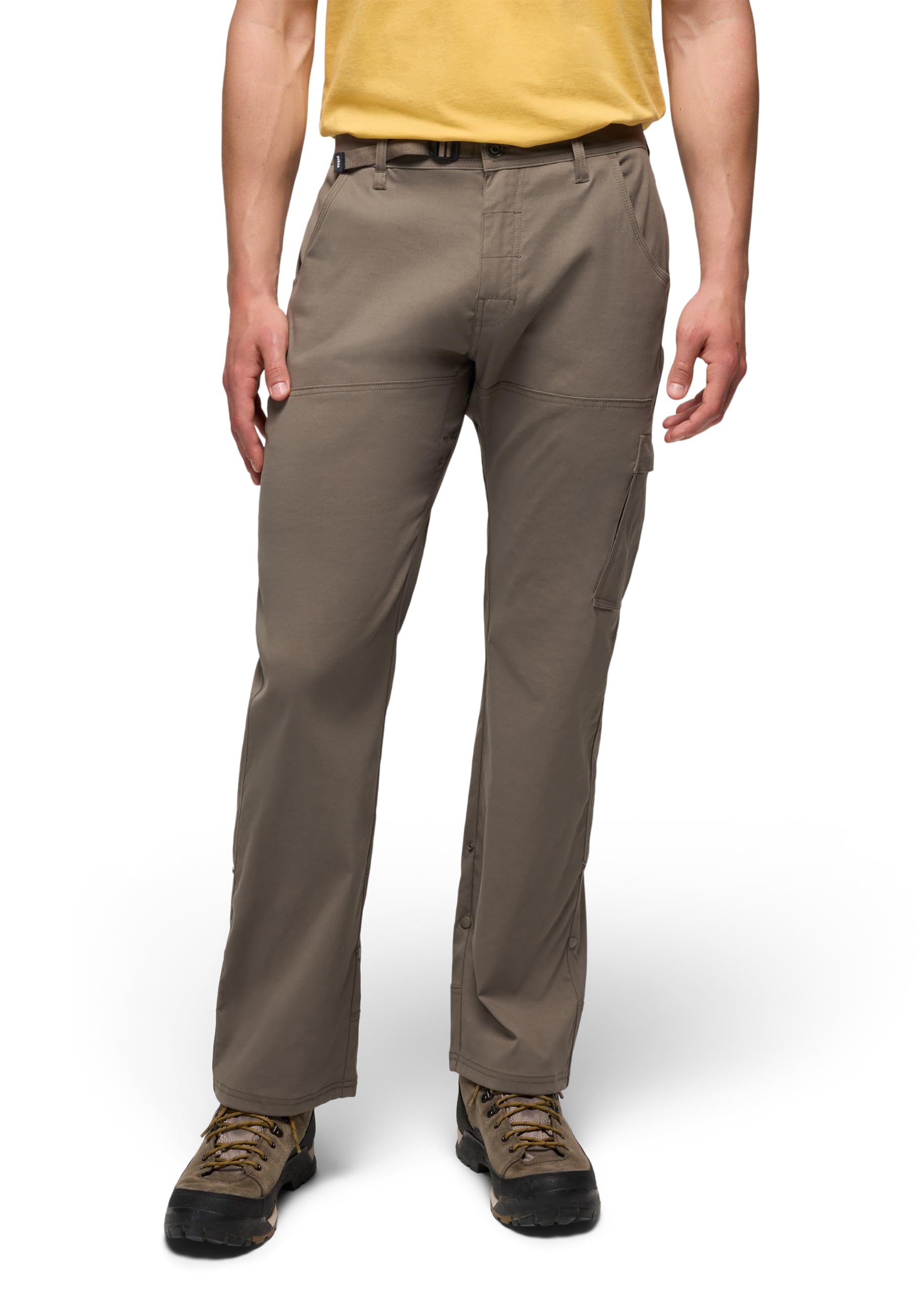
3. prAna Stretch Zion Pants
The trail pant that looks good enough for a post-hike dinner.
The Stretch Zion is the rare pair that bridges the gap between technical outdoor gear and everyday casual wear. The fabric is a stretch-woven blend that feels more like a soft, durable pair of chinos than a crinkly nylon shell. It comes with UPF 50+ sun protection, a water-repellent finish for light showers, and enough abrasion resistance that one owner reported it “survived scooter crash with only scuff on knee” while he ended up in the ER — the pants were undamaged. The fit is the most-praised aspect by owners, followed closely by comfort. The dual-access cargo pocket is clever: you can reach in from the top or the side. The main caveat is that the mesh pockets can let small items fall out when you sit, and the side zipper needs to be fully closed or you risk losing things. One owner went through a whole pair and found the fabric did not pill or lose its shape. At a mid-range price, it offers the best balance of trail performance and style — the pants dry quickly (one owner claimed he could towel-dry wet spots in 20 seconds) and pack easily.
The stretch is substantial but not compressive — it moves with you rather than snapping back tight. One review noted the pockets are “kind of weak” and that a phone can flop out of the designated pocket slot. And the Stretch Zion II version runs smaller, so if you are between sizes, stick with the standard Zion. A few owners have received used units, so check the condition when it arrives.
Why Owners Keep Buying Them
- Stretch woven fabric moves with you and resists abrasion
- Dual-access cargo pocket is convenient for maps and phones
- Quick-drying and wrinkle-resistant for travel or a trail-to-table night
The Honest Catch
- Mesh pockets can allow small items to slip out when you sit down
- Side zipper on cargo pocket must be closed fully to prevent loss
- Standard Zion II version runs small; check sizing carefully
Perfect if: you want one pair of pants that works for a hike, a flight, and a casual dinner without looking like an outdoor catalog.
Skip if: you need deep, bombproof pockets for heavy loads or you are on a bare-bones budget.
4. Columbia Men’s Silver Ridge Convertible Pants

A convertible pant built to handle the swing from a cold morning to a hot afternoon.
The zipper at the knee lets you transform these from full-length pants to 10-inch shorts in seconds — a feature that makes them ideal for multi-day trips where the temperature swings 30 degrees from dawn to noon. The main body is the same 100% nylon ripstop with Omni-Wick moisture management and UPF 50 sun protection as the Silver Ridge Cargo, so you get the same cooling, quick-drying performance. One owner called them the “perfect camping and hiking pants” and noted the pockets are “very well placed.” The fit is the most-praised aspect by owners, followed by overall quality. The waist has partial elastic and an adjustable outer belt to accommodate a full pack or a big meal. The convertible design does add a little bulk around the knee zipper, but it is negligible. The fabric is thin — expect it to feel a bit cool on the plane but perfect on arrival in a warm climate.
One frequent complaint is that the belt described in the listing is not always included. The fit runs slim through the seat and thighs — one owner called it a “modern classic = skinny fit” and said it is not for anyone with muscular legs. If you have thighs from squatting, the prAna Stretch Zion will fit you far better. The zipper at the knee can also be a little tricky to zip back up while standing, but it is a minor nuisance for the flexibility it provides.
The Big Win
- Zip-off legs convert from pants to 10-inch shorts in seconds
- Same cooling, UV-protective fabric as the Silver Ridge line
- Partial elastic waist and included adjustable belt for a custom fit on the trail
The Fine Print
- Slim cut is too tight through the thighs for athletic or muscular builds
- Belt not always included despite the product description
- Fabric is thin and can cling a bit in humid conditions
Best suited for: travelers and hikers who face big temperature swings and want on-the-fly adjustability from pants to shorts.
Not for: people with larger thighs who need a relaxed cut, or those who prefer a one-piece pant without a knee zipper.
5. Mammut Runbold IV Pant – Men’s

A Swiss-engineered technical pant built for alpine movement.
The 4-way stretch fabric on the Runbold IV moves with you in every direction, making it a strong choice for technical terrain where you are scrambling over boulders or climbing short rock sections. The material is made partially from recycled content and weighs just 10.4 ounces — light enough for multi-day carries but tougher than a pure summer nylon pant. The adjustable waist keeps the fit dialed in even when your pack strap is cinched tight. Four zippered pockets mean nothing falls out, even if you are scrambling on all fours. Owners note the fit is excellent, though the material is thin enough that you feel the wind through it on a cold day. One owner summed it up: “Fit well, but thinner than expected material.” This is a focused alpine piece — it prioritizes stretch and weight savings over pure abrasion resistance. If you are moving fast and light on a well-defined trail or an alpine ridge, it is a joy. If you are pushing through catclaw and juniper, the thin fabric may not survive. The 4-way stretch is the standout feature here; it never binds.
Mammut is a Swiss climbing brand with a reputation for precision. The Runbold IV reflects that — the cut is athletic and the details are clean. But that thin material means it is a seasonal pant for the warmer months, not a single-pair-does-all solution.
Who it fits: Fast-and-light alpine hikers and climbers who want unrestricted 4-way stretch and the security of four zippered pockets.
Who should pass: backpackers who push through dense, abrasive brush or need a pant that can handle extended cold-weather use.
6. MARMOT Men’s Scree Pant

A burlier softshell for three-season use that sheds wind and light rain.
The Scree Pant uses a midweight softshell fabric that is noticeably more substantial than a nylon hiking pant — it blocks wind, resists abrasion, and keeps you warm on a chilly ridge line without needing a base layer underneath. The material sheds water with a DWR (Durable Water Repellent) finish, though one owner noted the repellency fades after several washes; it is not a rain pant. Articulated knees and a gusseted crotch let you climb and scramble without restriction. Two zippered hand pockets and a zippered back pocket keep your valuables secure. One owner called them “the best pants I’ve worn for ease of cleaning,” and several people buy multiple pairs because they like them that much — one climber reported using them in 10°F temperatures and staying comfortable. The fabric is durable enough that tree climbers, golfers, and dog walkers all swear by them. “Solid construction” is the common refrain. At 4.4 stars from 170+ raters, it is a proven design.
The trade-off is warmth — these are too hot for summer hiking in the sun. They are a three-season pant at best, and they are best in shoulder seasons and cool-weather trips. One owner had the fabric fail completely after a month, though that appears to be the exception, not the rule. The water repellency is a bonus, not a guarantee — you will still want a dedicated waterproof shell for sustained rain.
Reach for these if: you hike in cooler conditions (fall, winter, high elevation) and want a single pant that handles wind, light rain, and rock abrasion without a shell.
Look elsewhere if: most of your backpacking is in 80°+ heat where you need maximum airflow and quick-drying capability.
7. Fjallraven Vidda Pro Ventilated Men’s Hiking Trousers
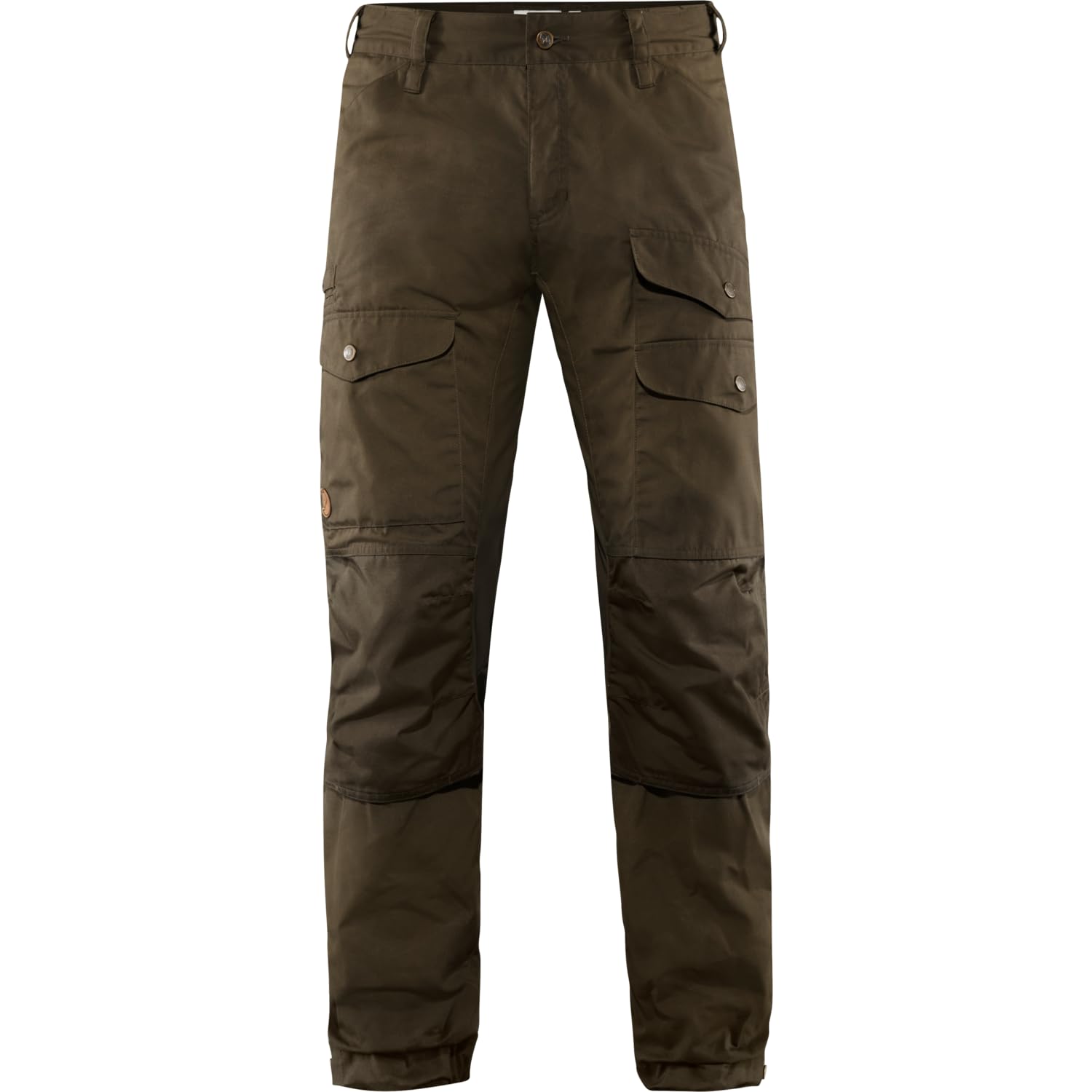
A waxable workhorse built for thorns, sparks, and off-trail abuse.
The G-1000 fabric (a dense poly/cotton blend) is legendary among bushcrafters and hunters for its ability to stop wind, resist sparks from a campfire, and shed thorns. This version has a double layer over the rear and the knees, so it can sit on granite or kneel in scree without wearing through. You can wax the G-1000 fabric with Fjallraven’s Greenland Wax to boost water resistance to the point where it sheds rain like a hardshell. The pockets are purpose-built for outdoor work: a map pocket, an axe pocket, and knee pad pockets (knee pads sold separately). The leg endings have elastic strap adjustment with press buttons to keep out debris. Owners consistently praise the build quality and durability. One review called them “nearly indestructible” and noted they have lasted for years in harsh conditions. The fabric has zero stretch — this is not a pant for climbing — and the waist runs small for many, so you will likely need to size up. Up to 60°F, these are comfortable, but above that they trap heat badly.
These are true field trousers, not versatile lifestyle pants. They are stiff when new and take some breaking in. If your idea of backpacking includes hours of post-holing through snow, pushing through head-high brush, or re-splitting your firewood, these are the pair. If you are covering 20 miles on a smooth trail in July, they will cook you.
Ideal for: bushcrafters, hunters, and off-trail backpackers who need a tough, waxable shell that stops wind, sparks, and abrasion.
Not for: hot-weather thru-hiking, technical climbing, or anyone who wants a stretchy, comfortable pant right out of the bag.
8. Mountain Hardwear Men’s Stretch Ozonic Pants
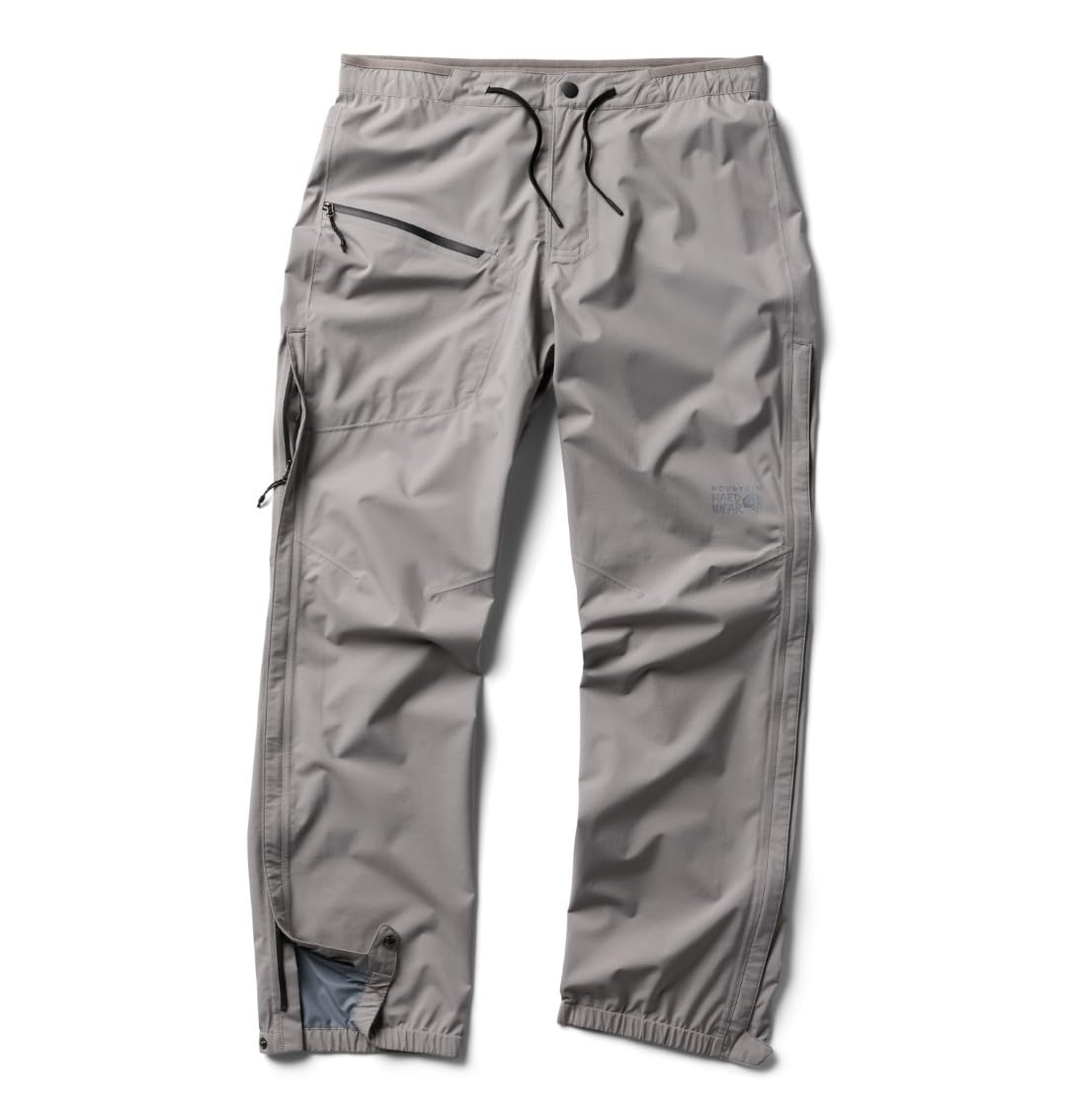
A waterproof shell that breathes well enough for active hiking in the rain.
Most waterproof pants are stiff, crunchy, and sweaty — the Stretch Ozonic is different. It uses a 2.5-layer construction (a waterproof membrane bonded to the shell fabric with a protective inner print layer that eliminates the need for a separate lining) that keeps the weight down to 9.6 ounces while offering legitimate waterproof protection. The fabric is 100% recycled and offers 4-way stretch, so you can hike and scramble without feeling trapped. One owner took them on a week-long trip through Iceland where they “survived ice climbing on a glacier, walking under waterfalls and a lot of hiking” and stayed dry the entire time. The side zippers are full-length, which means you can put them on over boots and vent them when the rain stops without pulling them off. Breathability is good for a waterproof shell — another owner hiked through a 50-to-30°F swing and stayed comfortable. The zip pockets keep your phone dry.
The full-length zippers add weight and bulk to your pack, and the pockets are simple — no cargo or thigh pockets. One owner noted it takes practice to get them on quickly in a sudden downpour. At the premium price, these are a specialized piece: a waterproof layer for when the forecast calls for sustained rain and you are moving hard enough to sweat. For light drizzle or cool conditions, a water-repellent softshell is more practical.
Best for: wet-weather backpacking in sustained rain where you need a packable, breathable, fully waterproof pant that moves with you.
Not for: dry-weather hikers who only need occasional drizzle protection, or minimalist packers who hate full-length side zips.
9. Fjällräven Keb Men’s Trekking Trousers
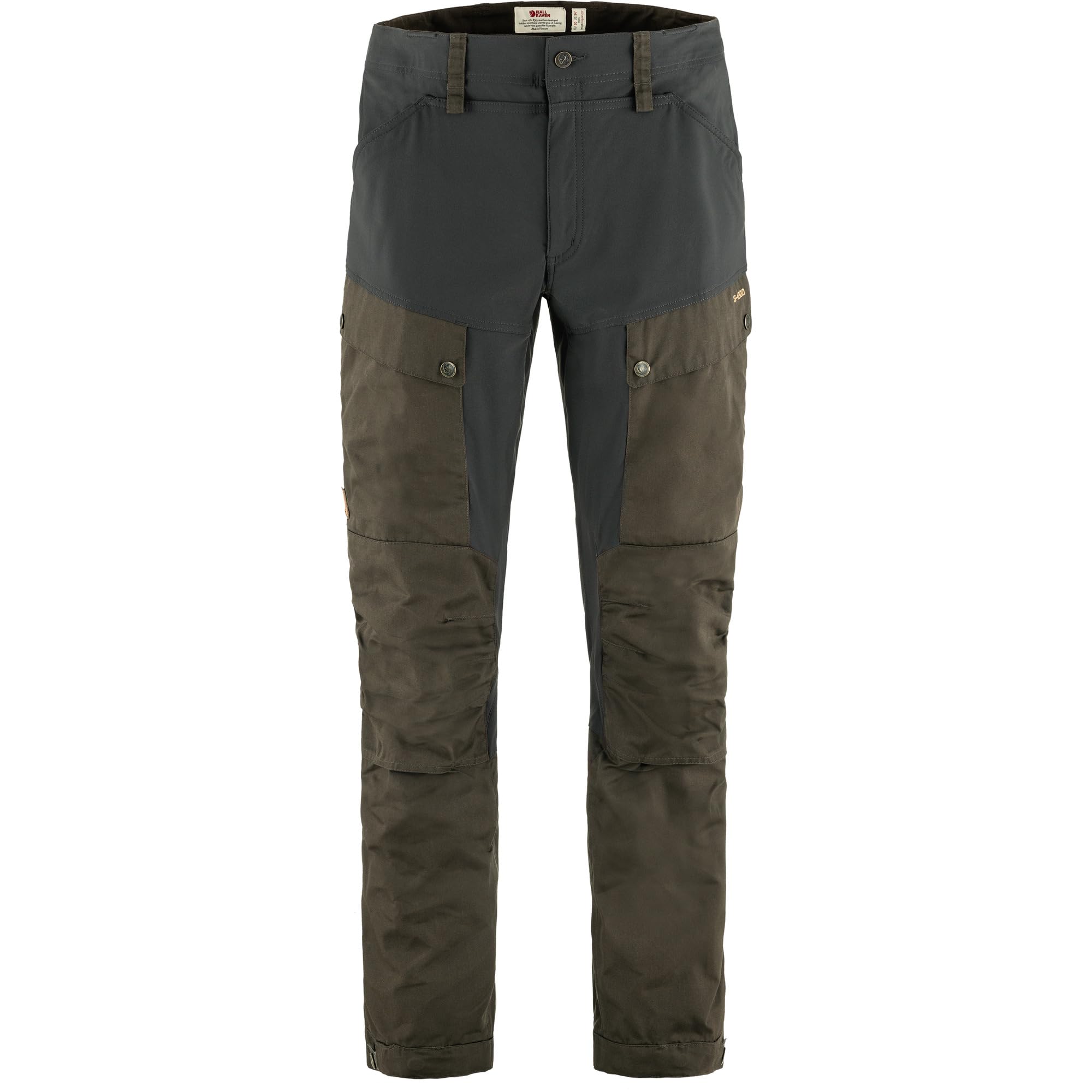
Where Fjallraven’s legendary durability meets four-way stretch for alpine climbing.
The Keb trouser is the brand’s most technical design — it pairs rugged G-1000 panels on the seat, knees, and lower legs with a stretch polyamide blend (65% recycled polyamide, 24% polyester, 11% elastane) everywhere else. That means you get abrasion resistance where you need it most and full mobility everywhere else. One owner called them “the best pants ever made” and another reported they handled “5-2 years of use” without failing. The fit is athletic and reinforced, with generous ankle openings that go over tall hiking boots easily. Two or more thigh pockets hold maps and snacks securely without flopping against your knee. The zippered side vents are critical for dumping heat when you are working hard on a climb. Owners rate the quality and durability higher than nearly any other pant in this category — the G-1000 sections can be waxed for additional waterproofing, and the stretch panels move like a second skin. One owner bluntly called them “quality pants meant to last a lifetime.”
The catch is that they run warm — even with the vents open, they are uncomfortable above 60°F. The G-1000 panels are tough but one owner noted they can be damaged by persistent thorn contact. There are no back pockets, which some hikers find annoying. And the price is the highest in this guide. These are a serious investment, and they are purpose-built for cold-weather, technical alpine hiking and climbing — not for a casual day hike in the valley.
Perfect for: alpine trekkers, mountaineers, and winter hikers who need a burly, stretchy pant that handles rock, ice, and wind without breaking a sweat.
Too much if: you hike mostly in warm weather, or you are not ready to commit to a premium-priced pant with a narrow temperature window.
Understanding the Specs
UPF Rating (Ultraviolet Protection Factor)
A UPF rating tells you how much of the sun’s UV radiation the fabric blocks. A rating of 50 means the fabric blocks 98% of UV rays — your legs will not burn even on a long exposed ridge. This matters a lot above treeline or on desert trails where there is zero shade. Pants without a rated UPF may still block some sun due to their weave, but a certified rating gives you certainty.
Gusseted Crotch vs Standard Crotch
A gusseted crotch is a diamond-shaped or rhomboid piece of fabric sewn into the crotch seam. It adds several inches of range of motion, so you can high-step over a rock or squat to filter water without the crotch seam pulling tight. A standard (non-gusseted) crotch will bind and restrict movement, and it is a primary source of trail chafing and seam blowouts on long trips. If you are doing anything beyond flat walking, gusseted is a must.
FAQ
Can I wear cotton backpacking pants on the trail?
What is the difference between 2-way stretch and 4-way stretch?
How do I waterproof Fjallraven G-1000 fabric?
Should I size up in backpacking pants?
How do convertible pants (zip-off legs) hold up over time?
Are nylon hiking pants noisy when you walk?
What is the best way to wash hiking pants?
Should I choose a softshell or a waterproof shell for backpacking?
Are expensive backpacking pants worth the extra cost?
Final Thoughts: The Verdict
For most people, the backpacking pants for men winner is the Columbia Men’s Silver Ridge Cargo Pant because it nails the essentials — lightweight feel, UPF 50 sun protection, Omni-Wick cooling, and a generous pocket layout — at a price that leaves room in the budget for other gear. If you want a single pair that transitions smoothly from the trail to a restaurant table without looking like a hiking catalog, grab the prAna Stretch Zion Pants. And for hardcore alpine treks or winter bushcraft where you need a tough, stretchy pant that handles rock and wind, the Fjällräven Keb Men’s Trekking Trousers are the ones to reach for — they are an investment, but owners consistently say they last for years.
How We Picked
We do not accept paid placement. Every pick is matched to a real buyer and a real use-case; we do not hands-on test units.
Sources & Methodology
Specifications: manufacturer listings and product documentation. Review insights: verified customer reviews, as of July 2026. Pricing: not shown on this page (it changes often); check the current price via the retailer link.
As an Amazon Associate, Gadgets Feed earns from qualifying purchases. This does not affect which products we feature.