
That moment when you wake up twisted inside a mummy bag, fabric pressed against your face, and you can’t roll over without wrestling the zipper is the exact reason the backpacking quilt exists. By ditching the hood, the full-length zipper, and the compressed insulation underneath your body, a quilt cuts nearly a pound of dead weight and turns your sleep system into something that actually breathes with you. The trade-off is a skill: you need to learn how to seal the edges against your pad or the warm air escapes and you spend the night chasing drafts.
I’m Min — the co-founder and writer behind Gadgets Feed. I’ve spent years analyzing fill-power ratings, baffle construction, pad-attachment systems, and temperature ratings to separate the quilts that deliver on their lofty promises from the ones that leave cold spots. (And Homer 🐱 supervised this whole guide from the biggest down pillow he could claim as his own.)
Whether you’re shaving ounces for a thru-hike or just want a more natural sleep position under the stars, this guide breaks down every detail you need to find the best backpacking quilt for your next trip.
How To Choose The Best Backpacking Quilt
Selecting a backpacking quilt isn’t about picking the lightest option — it’s about matching the fill power, temperature rating, and pad attachment system to your specific sleeping style and the conditions you’ll face. A quilt that drafts on a restless sleeper is a cold night wasted, while a quilt that’s overstuffed for summer trips is just unnecessary bulk.
Fill Power and Insulation Type
Fill power measures how many cubic inches one ounce of down occupies. An 850-fill down quilt will loft higher and trap more air per gram than a 650-fill quilt, making it warmer for the same weight. Down compresses smaller than synthetic insulation but loses loft when wet — so if you camp in consistently damp environments, look for water-repellent down treatments or consider a synthetic blend. The best quilts use RDS-certified down with a DWR coating for moisture resistance without sacrificing compressibility.
Temperature Rating and Draft Management
Quilts are rated differently than mummy bags. A 30°F quilt rating assumes you’re using a sleeping pad with an appropriate R-value and that you’ve sealed the sides with pad straps. The draft collar around the neck and a cinchable foot box are critical features — without them, warm air escapes and you’ll feel the cold at your shoulders and feet. If you’re a cold sleeper, plan for a quilt rated 10 to 15 degrees lower than the temperatures you expect to encounter.
Pad Attachment and Foot Box Design
The pad strap system is what converts a blanket into a backpacking quilt. Look for elastic straps that loop under your pad and cinch the quilt edges tight against the sides — this prevents drafts when you roll. The foot box can be sewn shut (warmest, least flexible) or cinchable with a drawcord (allows ventilation on warmer nights). Some quilts offer a zippered foot box that can fully open into a flat blanket, adding versatility for car camping or lounging.
Quick Comparison
On smaller screens, swipe sideways to see the full table.
| Model | Category | Best For | Key Spec | Amazon |
|---|---|---|---|---|
| Featherstone Moondance 25 | Premium Down | Thru-hikers needing sub-2lb warmth | 850 Fill Power Duck Down | Amazon |
| KAMMOK Firebelly 30°F | Premium Hybrid | Hammock and ground sleepers | Downtek Water-Repellent Down | Amazon |
| Sea to Summit Ember | Ultralight | Gram-counters for 3-season use | 850 Fill Power Down / 1.3 lb | Amazon |
| Big Agnes King Solomon 20°F | 2-Person | Coupled backpackers | 650 Fill Down / 3.94 lb | Amazon |
| Sea to Summit Traveller | Travel/Blanket | Warm-weather trips and hut stays | 650+ Fill Down / 1.45 lb | Amazon |
| Near Zero Quilt ONE | Ultralight 4-in-1 | Minimalists wanting multi-use gear | 1 lb Total Weight | Amazon |
| ENO Vesta TopQuilt | Synthetic Quilt | Damp/wet weather backpacking | Primaloft Insulation / 28 oz | Amazon |
| WIND HARD Tiny PRO | Budget Down | Entry-level quilt users | 800 Fill Down / 780g | Amazon |
| SENSORY4U Ultralight Quilt | Value Down | Budget-conscious backpackers | 850 Fill Down / 1.9 lb | Amazon |
In‑Depth Reviews
1. Featherstone Moondance 25 850 Fill Power Down Top Quilt
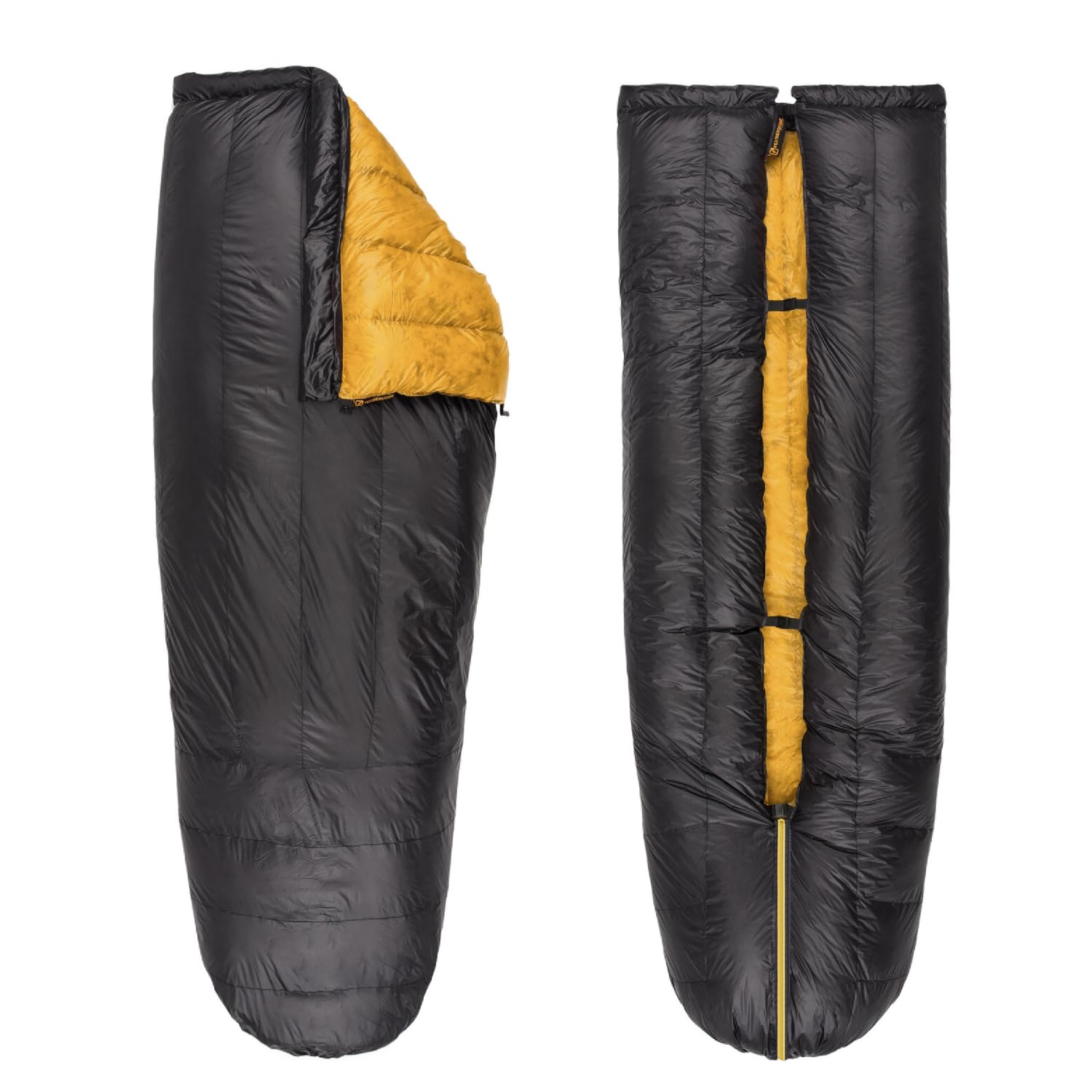
The Featherstone Moondance 25 is a premium down top quilt that strikes an excellent balance between weight, warmth, and room. With 850 fill power DOWNTEK PFC-free water-repellent duck down and a 20°F T-Limit ISO rating, this quilt delivers serious loft for three-season backpacking. The silky smooth nylon lining prevents that clammy feeling while still allowing the down to loft fully, and the 90.2 x 58-inch dimensions provide generous shoulder room without excess weight.
Pad straps are included and work with most sleeping pads to seal the edges, though some users note the elastic straps could be more robust for aggressive side-sleepers. The drawstring closure at the neck is effective at blocking drafts, and the quilt doubles as a blanket or hammock underquilt when you need versatility. At under 2 pounds, it packs smaller than most comparable mummy bags and is backed by a limited lifetime warranty from a U.S. company.
The real test is how it performs in damp conditions — the water-repellent down treatment helps maintain loft when humidity is high, but this is still a down quilt, so wet climates require care. Thru-hikers on the Appalachian Trail have reported being toasty in the 40s and comfortable with layers into the upper 20s. The regular size fits most users up to 6 feet, but the long/wide option adds valuable room for taller campers.
Why it’s great
- Excellent 850 fill down for superior warmth-to-weight ratio
- ISO-tested temperature rating gives real confidence in cold conditions
- Long/wide option available for taller sleepers
- Limited lifetime warranty from a responsive U.S. company
Good to know
- Pad straps could be more user-friendly for quick adjustments
- Down requires careful storage to maintain loft over time
2. KAMMOK Firebelly 30°F Down Trail Quilt

The KAMMOK Firebelly 30 is built around Downtek water-repellent down, which absorbs 30% less water and dries 60% faster than untreated down — a real advantage if you’re camping in dewy mornings or light rain. The Insotect Flow honeycomb baffle structure eliminates cold spots by keeping the down evenly distributed, and the Atmos X 15D nylon ripstop shell is both lighter and more abrasion-resistant than standard 10D fabrics. At 88 x 54 inches, it’s roomy enough for most users up to 6’2″, and it packs down into a water-resistant rolltop stuff sack that doubles as a carrying handle.
What sets the Firebelly apart is its dual-mode design: it works as a ground quilt with pad straps (included) and as a hammock underquilt without modification. The YKK button snaps and shock cord ends let you create a foot box for cold nights or fully open it as a camp blanket. Testers have reported comfort down to 42°F without extra layers and found it warm enough into the low 30s with proper base layers. The lifetime warranty from KAMMOK adds peace of mind for long-term use.
The trade-off is weight — at about 1.5 pounds, it’s not the lightest 30°F quilt on the market, but the combination of water-resistant down and durable fabric makes it a better choice for wetter environments than standard down quilts. Some users note the 30°F rating feels optimistic for cold sleepers; pairing it with a high-R-value pad below 35°F is wise.
Why it’s great
- Downtek water-repellent down performs well in humidity and light rain
- Dual-mode design works for both ground and hammock camping
- Durable 15D shell resists abrasion better than ultralight fabrics
- Lifetime warranty from a reputable outdoor brand
Good to know
- Heavier than some down-only quilts at this temperature rating
- 30°F rating may feel chilly for cold sleepers without extra layers
3. Sea to Summit Ember Ultralight Down Backpacking Quilt

The Sea to Summit Ember is the ultralight benchmark that many other quilts are measured against. Weighing just 1.3 pounds and compressing to 3.7 liters (about the size of a Nalgene bottle), it uses 850+ fill power RDS-certified goose down with ULTRA-Dry Down treatment for moisture resistance. The construction pairs a 10D nylon shell with a whisper-thin 7D nylon lining — the lightest face fabric in this guide — which saves grams but requires careful handling around sharp objects.
Box baffle construction prevents the down from shifting and creates consistent loft across the entire quilt. The included snap-on attachment straps secure it to your sleeping pad, though the thin straps can be fiddly to adjust while lying on the pad. The drawcord cinches the foot end into a pocket, and press-studs allow you to join two Embers together for a double quilt — a nice option for couples. Testers have stayed warm at 28°F with proper base layers, and the spacious cut accommodates side-sleepers who hate feeling constrained.
The premium price reflects the combination of ultralight materials and meticulous construction, but the Ember is not a budget option. The 35°F rating is optimistic for colder sleepers; plan on using it primarily for 2-season and warm three-season trips. The pad straps are the weakest link — some users replace them with aftermarket elastic straps for a more secure seal.
Why it’s great
- Exceptional 1.3-pound weight for a fully-featured down quilt
- Packs smaller than any mummy bag at comparable warmth
- Box baffle construction eliminates cold spots
- Can zip together with another Ember for a double quilt
Good to know
- Premium price puts it out of reach for budget-conscious buyers
- Pad straps are thin and can be tricky to adjust mid-sleep
- Fragile 7D lining requires careful site selection
4. Big Agnes King Solomon 20°F Doublewide Sleeping Bag
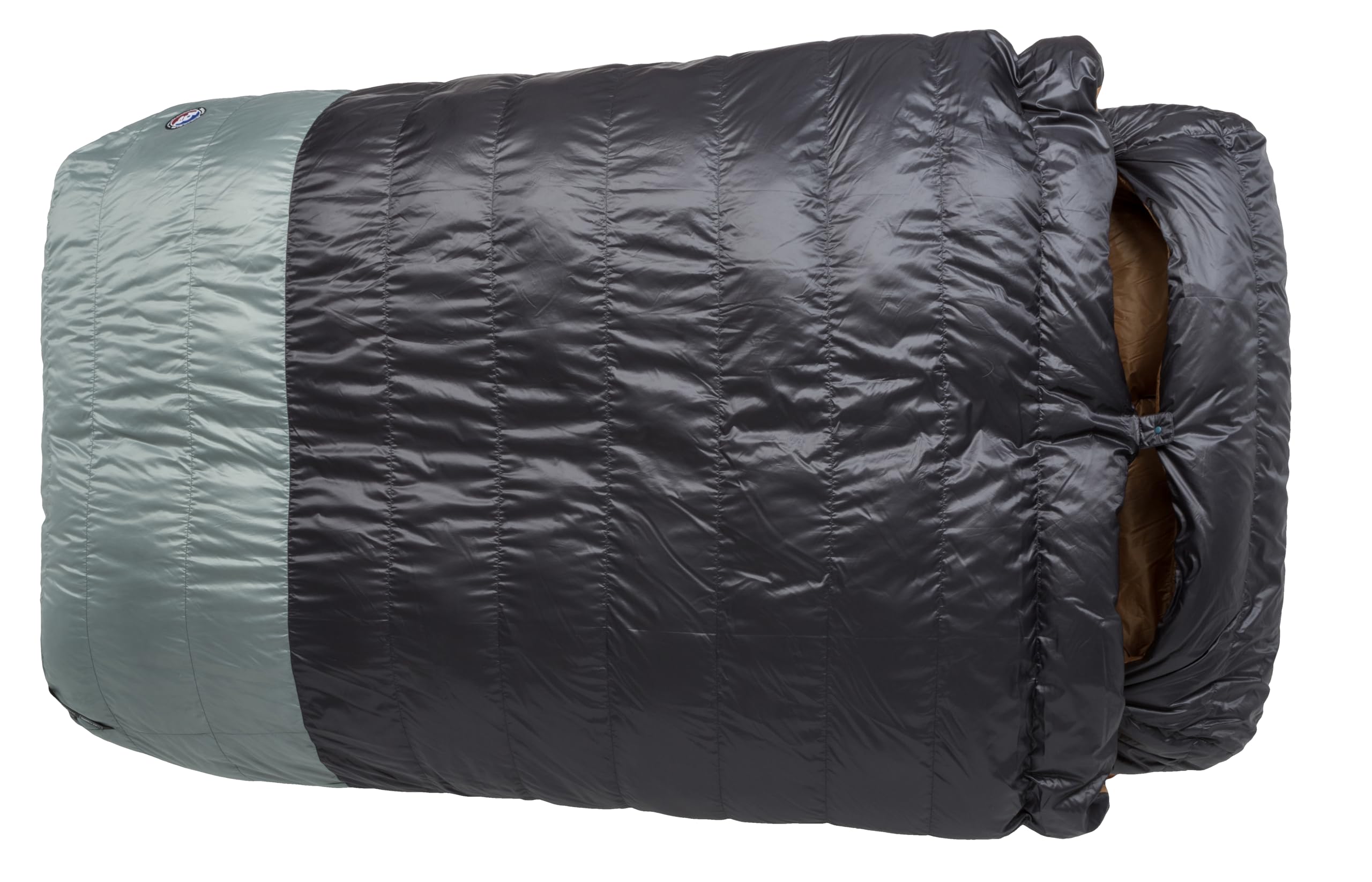
The Big Agnes King Solomon is a 2-person down sleeping bag that unzips into a massive quilt for couple camping. With 650 fill Downtek PFC-free down and a 20°F rating, it’s warm enough for shoulder-season trips, and the double anti-snap zippers allow entry from either side without waking your partner. When fully unzipped, the top layer becomes a standalone quilt that can be folded and zipped into a single bag — effectively giving you three sleep configurations in one system.
The Padlok system uses self-equalizing drawstrings that attach to a doublewide sleeping pad, allowing both sleepers to roll independently without sliding off. The oversized draft collar and zipper draft tube seal in heat, while individual drawcords around each sleeper’s neck let you manage your own temperature. At 3 pounds 15 ounces, it’s heavy for a single backpacker but impressively light for a 2-person system that includes a full quilt mode. The recycled polyester shell with PFC-free DWR finish is environmentally conscious without sacrificing water resistance.
The main limitation is the 650 fill down — it’s less lofty per gram than the 850 fill quilts above, so the King Solomon is bulkier when packed. Some users report down migration to one side due to horizontal baffles that lack vertical compartments. The ideal pad size is 40 x 72 inches, and the bag works best with two single pads or one doublewide pad up to 60 inches wide.
Why it’s great
- Unique zip-off quilt top transforms into a standalone single bag
- Independent temperature control for each sleeper
- Pad integration prevents rolling off in the night
- PFC-free construction is better for the environment
Good to know
- 650 fill down is less compressible than premium 850 fill options
- Some down migration issues reported in horizontal-only baffles
- Heavier than two separate ultralight quilts for the same warmth
5. Sea to Summit Traveller Down Sleeping Bag Blanket
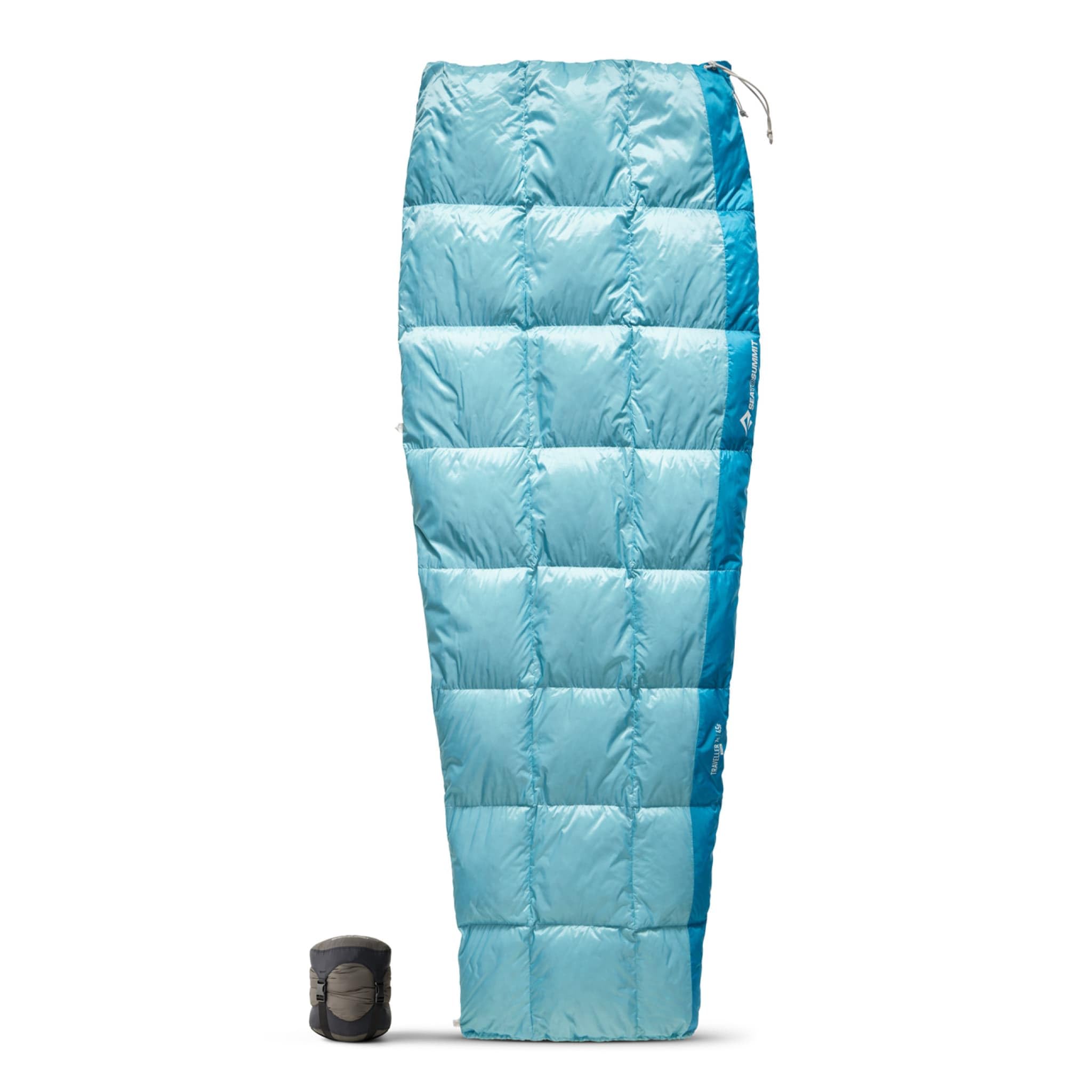
The Sea to Summit Traveller blurs the line between sleeping bag and quilt with its hybrid design. Rated for 45°F, it uses 650+ fill power RDS-certified duck down with ULTRA-Dry treatment, wrapped in a recycled 20D polyester shell with PFC-free DWR. The full-length zipper allows it to function as a rectangular sleeping bag or unzip fully into a 65.7-inch-wide blanket — making it ideal for hut trips, bike touring, and warm-weather camping where you want versatility over extreme cold performance.
Shoulder and foot drawcords let you cinch down for warmth or open up for ventilation, and two Travellers can be zipped together for a double blanket. The Long version fits users up to 6’4″ with generous room at the shoulders and feet. At 1.45 pounds, it’s light enough for backpacking but the 650 fill means it packs slightly larger than the 850 fill options above. Testers consistently praise it for warm-weather comfort, with many reporting it’s perfect above 50°F and usable down to the mid-40s with a liner.
The hybrid shape means it’s not as draft-proof as a dedicated quilt with pad straps — you’ll want the drawcords cinched tight on cooler nights. The rectangular cut also means more dead air space inside, which requires more energy to heat on cold nights. This is a specialist for warm conditions, not a three-season workhorse.
Why it’s great
- Converts between sleeping bag and blanket in seconds
- Roomy rectangular cut fits tall users and restless sleepers
- Two can zip together for a double system
- RDS-certified down with ULTRA-Dry moisture treatment
Good to know
- 45°F rating limits use to warm-weather trips only
- No pad attachment system — relies on drawcords for seal
- Less compressible than higher-fill-power quilts
6. Near Zero Quilt ONE – Ultralight Down Sleeping Bag

The Near Zero Quilt ONE weighs just 1 pound and packs to the size of a water bottle, making it one of the lightest fully-featured quilts on the market. It’s a 4-in-1 design that works as a sleeping bag, flat blanket, hammock underquilt, and can zip with a second Quilt ONE into a double bag. The 10D 470T taffeta nylon shell is water-resistant and soft to the touch, and the 10% increased RDS-certified duck down fill over previous versions adds meaningful warmth without weight gain.
Ten external loops allow attachment to hammocks or pad systems, and the internal down-filled tube at the neck blocks drafts effectively. The included compression sack and breathable mesh storage bag help maintain loft between trips. Testers have used it comfortably in 60°F conditions as a blanket and found it warm enough for 50°F nights with the foot box cinched. At 74.8 x 28.7 inches, it’s narrower than many quilts — better suited for side-sleepers or users under 6 feet.
The primary limitation is warmth: the thin fill and sewn-through construction mean it’s not reliable below 55°F for most sleepers. Taller users over 6 feet may find the 74.8-inch length restrictive, especially if they move a lot during sleep. As a summer-only quilt for ultralight gram-counters, it excels — but don’t expect it to handle cold mountain nights.
Why it’s great
- Incredible 1-pound weight for the feature set
- 4-in-1 versatility reduces gear redundancy
- 10 external attachment loops for customized setups
- Packs smaller than most 1-liter water bottles
Good to know
- Temperature-limited to warm summer nights only
- Narrow cut may feel restrictive for broad-shouldered users
- Thin fill won’t provide enough warmth below 55°F
7. ENO Vesta TopQuilt Water-Repellent Insulated Hammock Blanket
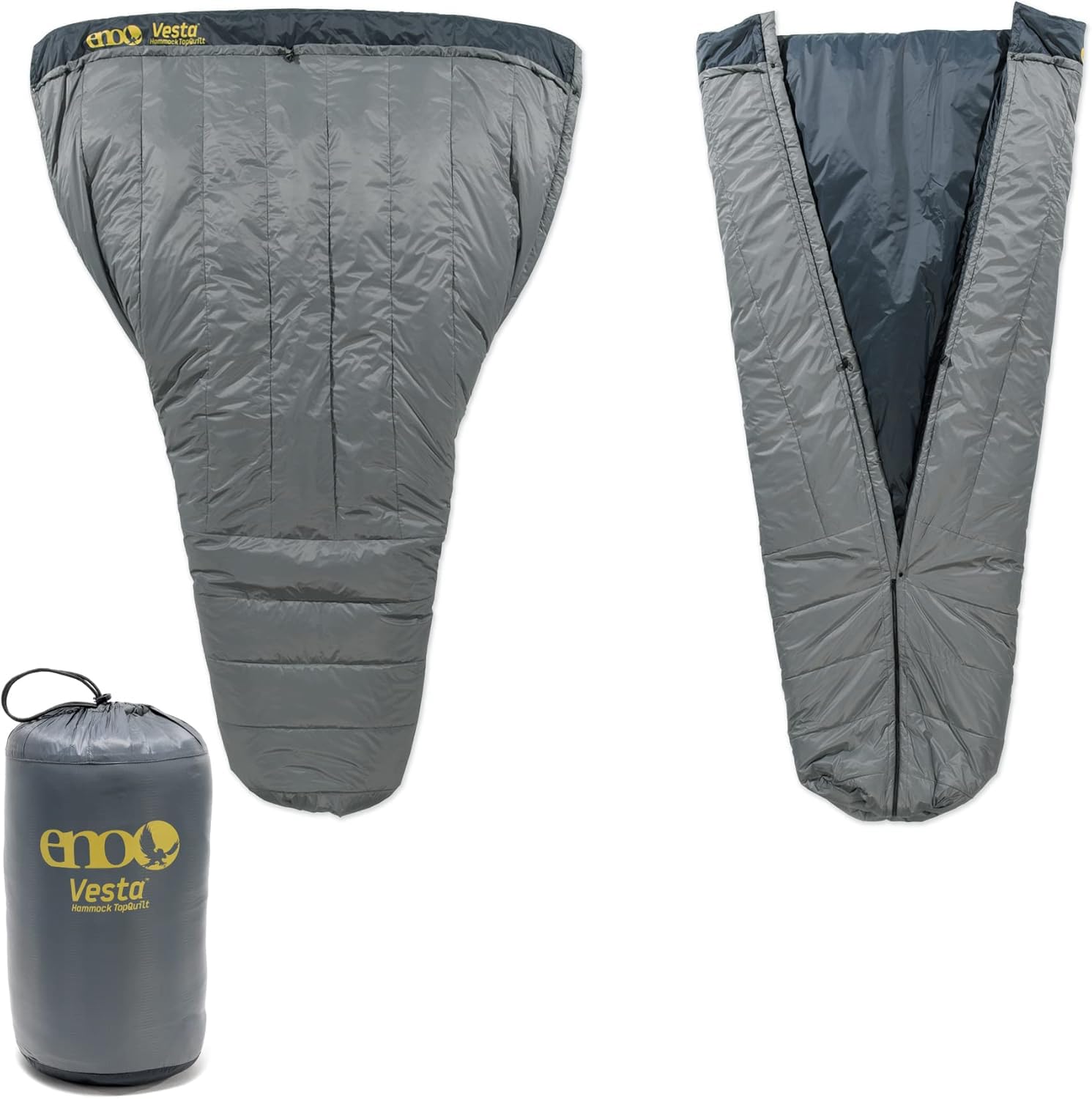
The ENO Vesta is a synthetic-insulated top quilt built specifically for hammock campers but equally capable on the ground. It uses two layers of Primaloft insulation — 100g Gold on top and 80g Black on the bottom — with an offset quilted design that eliminates cold spots. The 20D ripstop nylon shell has a durable water-repellent finish that handles light rain and condensation better than any down quilt, making it the best choice for consistently wet environments.
The convertible design features a zippered foot box and an adjustable draft collar that seals heat in, and the 28-ounce weight is competitive for a synthetic quilt rated to 30-50°F. When used as a hammock underquilt, the water-repellent shell prevents ground moisture from wicking into the insulation. AT hikers have reported using the Vesta with a Sea to Summit liner over a ThermoRest pad down to 35°F and staying warm without additional layers — a solid performance for synthetic insulation.
The synthetic fill is heavier and less compressible than down, so the Vesta packs larger than a comparable down quilt. The Primaloft insulation can lose loft over years of compression, so proper storage in the included mesh bag is essential. For campers who prioritize wet-weather reliability over absolute minimum weight, this is a strong contender.
Why it’s great
- Primaloft insulation retains warmth when wet — unlike down
- Convertible design works for hammock or ground camping
- DWR-coated shell resists rain and condensation effectively
- Offset quilted construction eliminates cold spots
Good to know
- Synthetic insulation is heavier and bulkier than down
- Loft degrades over years of compression cycles
- Temperature range is optimistic for cold sleepers below 40°F
8. WIND HARD Tiny PRO 10D Lightweight 800FP Wearable Down Sleeping Bag Quilt

The WIND HARD Tiny PRO is a budget-friendly 800-fill down quilt that punches above its price point in warmth and features. The 10D ultralight nylon shell has anti-drilling technology to prevent down loss, and the 550g of 800FP ultra-dry down provides a comfort rating of 28°F and a limit rating of 18°F. At just 780g for the sleeping bag alone, it’s competitive with quilts costing twice as much.
What makes the Tiny PRO interesting is the wearable design: a hidden zipper in the middle lets you wear it as a warm top, and straps on the back connect to your sleeping pad. The drawstring foot box allows ventilation on warmer nights, and the included compression sack and mesh storage bag are standard for the price. Testers report comfort down to 40°F without extra layers and down to 30°F with a mid-weight merino base layer. The 200 x 135cm size is generous for most users up to 6’6″.
The drawbacks are typical for budget down: the fabric has a slightly crinkly feel that some users find noisy, and the proprietary snap system for pad attachment isn’t as robust as elastic straps from premium brands. A mild chemical smell reported from some units airs out after a day or two. The 10D fabric is less durable than heavier denier fabrics, so site selection matters.
Why it’s great
- 800-fill down at a fraction of premium brand prices
- Wearable design adds versatility for around camp
- Generous size fits tall users comfortably
- True 28°F comfort rating for a budget down quilt
Good to know
- Fabric can be slightly crinkly and may feel less premium
- Pad attachment system is basic and may require aftermarket straps
- 10D shell is delicate and needs careful handling
9. SENSORY4U Ultralight Sleeping Bag Top Quilt 850 Down

The SENSORY4U Ultralight Quilt delivers 850-fill down at an entry-level price point that’s hard to ignore. Weighing 1.9 pounds with a 30°F comfort rating and 20°F survival rating, it offers a warmth-to-weight ratio that rivals many mid-range quilts. The foot box is sewn for coziness but includes straps to attach to your sleeping pad, and the drawstring neck closure allows for ventilation when you need it.
Testers have used this quilt on 40+ nights including motorcycle trips and canoe expeditions, reporting excellent warmth retention and rapid drying after accidental soakings — the down maintained loft even when damp. At 5’9″ and 225 pounds, one reviewer noted plenty of room and no claustrophobia. The included mesh bag and compression sack are functional, though the compression sack’s durability has been questioned after extended use. The green color and simple design don’t win style points, but the performance per dollar is exceptional.
The compromises show in the details: some down escape through the stitching over time, and the thin stuff sack may develop holes with heavy use. The 2-pound weight is heavier than premium 850-fill quilts by about half a pound, but given the price difference, it’s a trade-off many budget-conscious backpackers will happily accept. The quilt is best suited for milder three-season conditions where you can rely on the 30°F rating without pushing it to the limit.
Why it’s great
- Unbeatable value for 850-fill down at this price point
- Proven real-world performance across 40+ nights
- Good warmth retention even when damp
- Generous room for larger-bodied sleepers
Good to know
- Minor down loss through stitching over time
- Compression sack durability is below premium standards
- Heavier than high-end 850-fill options by ~0.5 lb
FAQ
How do I prevent drafts with a backpacking quilt?
Can I use a backpacking quilt in freezing temperatures?
What’s the difference between a quilt and a mummy bag for backpacking?
How do I care for a down backpacking quilt?
Final Thoughts: The Verdict
For most users, the best backpacking quilt winner is the Featherstone Moondance 25 because it combines 850 fill power down with an ISO-tested temperature rating and a competitive weight at a price that undercuts premium brands. If you want the ultimate in ultralight compressibility, grab the Sea to Summit Ember. And for wet-weather reliability where down fails, nothing beats the ENO Vesta TopQuilt with its synthetic Primaloft insulation.