
The difference between a great day on the trail and a miserable one often comes down to what you’re wearing below the waist. Heavy, non-breathable cotton shorts chafe when wet, trap heat during ascents, and turn a river crossing into a soggy ordeal that lasts the rest of the day. Purpose-built backpacking shorts solve this with quick-dry fabrics, articulated knees for scrambling, and pocket layouts that keep your phone and map accessible without a flimsy mesh liner sagging under the weight.
I’m Min — the co-founder and writer behind Gadgets Feed. My approach to this guide involved cross-referencing dozens of user reports and technical spec sheets to isolate which fabric blends, inseam lengths, and closure systems actually hold up under a loaded pack on multi-day trips.
Whether you prioritize abrasion resistance in granite terrain, a gusseted crotch for high-stepping over logs, or a low-bulk waistband that plays nice with a hipbelt, the following breakdown of the best backpacking shorts for men will help you match the right pair to your specific style of travel.
How To Choose The Best Backpacking Shorts For Men
Backpacking shorts are a compromise between durability, drying speed, and range of motion. The wrong pair can cause blister-level chafing under a hipbelt or turn into a sponge that stays wet for hours. Focus on these three criteria to narrow the field.
Fabric Weight and Drying Speed
Nylon and polyester blends between 120–170 GSM offer the best balance of tear strength and quick-dry performance. Heavier double-weave fabrics like G-1000 shed wind and brush better but hold more moisture and require waxing, while ultralight 40-denier face fabrics dry in minutes but sacrifice abrasion resistance against granite and scree. Check the denier rating on the main fabric—anything below 70D risks failure on rocky trails.
Inseam Length and Hipbelt Clearance
An inseam between 8 and 11 inches is the sweet spot for backpacking. Too short (under 7 inches) and the hem rides up under the hipbelt, causing direct skin contact that leads to chafing on long carries. Too long (over 11 inches) and the excess fabric bunches behind the knee when you lift your foot. Look for a clean hemline without bulky seam tape where the pack’s waist strap sits.
Pocket Securement and Zipper Quality
Standard slash pockets become a liability when a loaded pack pushes your phone or multitool against your thigh. Deep, angled pockets with a passport-style security slit or a dedicated zippered stash pocket prevent items from sliding out when you sit down on a log. YKK zippers with a drain hole at the bottom of the pocket ensure trapped water exits without corroding the metal pull—something budget shorts often overlook.
Quick Comparison
On smaller screens, swipe sideways to see the full table.
| Model | Category | Best For | Key Spec | Amazon |
|---|---|---|---|---|
| prAna Stretch Zion Shorts II | Mid-Range | All-day hiking with stretch | 10″ inseam, 97% nylon / 3% elastane | Amazon |
| Outdoor Research Ferrosi Shorts 10″ | Premium | Lightweight alpine movement | 10″ inseam, 86% nylon / 14% spandex | Amazon |
| Fjällräven Abisko Shorts | Premium | Scrub-brush durability with stretch | G-1000 fabric with stretch panels | Amazon |
| Fjällräven Ruaha Shorts | Premium | Bushwhacking and waxed fabric | Greenland Wax G-1000 fabric | Amazon |
| Mountain Hardwear AP Short V2 | Mid-Range | Versatile travel and trail | 11″ inseam, nylon stretch woven | Amazon |
| Eddie Bauer Rainier Short | Budget | Daily wear and light day hikes | 8″ inseam, 95% nylon / 5% spandex | Amazon |
| Mossy Oak XTR Fishing Shorts | Budget | Hot-weather water crossings | 6.5″ inseam, polyester quick-dry | Amazon |
In‑Depth Reviews
1. prAna Stretch Zion Shorts II
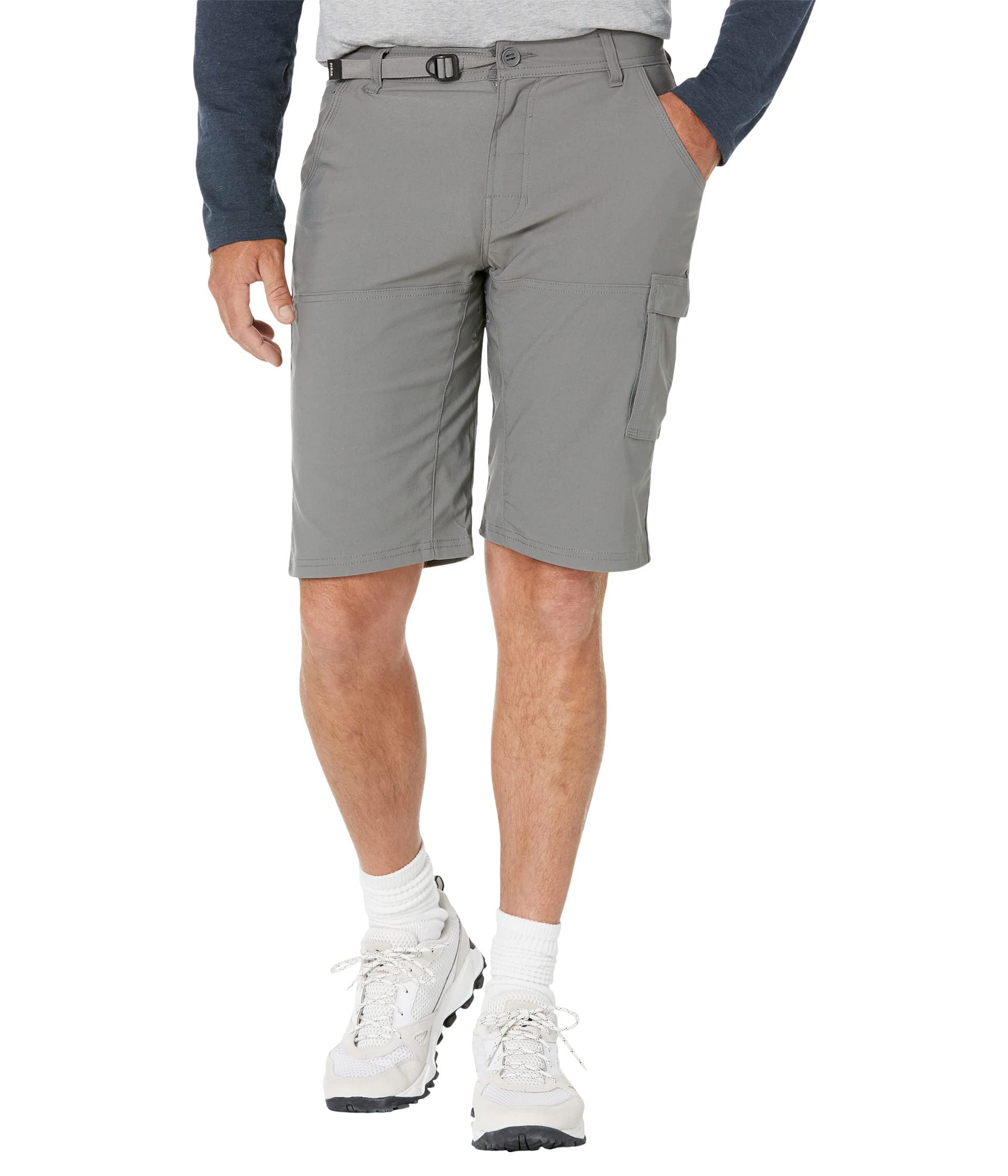
The Zion II uses a 97% nylon / 3% elastane woven that hits a rare balance: enough four-way stretch for a high step onto a boulder, yet enough abrasion resistance to survive a scramble through quartzite talus. The 10-inch inseam lands just above the knee for most frames, warding off chafe from a pack hipbelt while avoiding the baggy look of longer cuts. A full zipper fly with a button closure beats the drawstring-only setups that dig in under load.
Multiple reviews report the first pair lasting five years of consistent hiking and daily wear before showing any seam degradation. The odor-resistant treatment actually holds up through a week without washing, and the quick-dry performance means you can rinse them in a stream and wear them out damp without the fabric staying cold against your skin. The waistband doesn’t cut in when you’re leaning forward on an uphill traverse.
One weakness emerged in the version II redesign: some users experienced the rear seam blowing out after about eleven months, a shorter lifespan than the original version’s four-year run. The stretch fabric also feels slightly less structured than pure nylon weaves, so heavy trail tools in the side pockets will pull the fabric downward. For the majority of backpackers who want one short for both 12-mile days and camp lounging, this remains the most versatile pick.
Why it’s great
- Four-way stretch allows unrestricted scrambling and deep lunges without binding the crotch seam.
- Five-year lifespan from multiple verified owners indicates exceptional seam and fabric construction.
- Odor-resistant finish stays effective for multi-day trips without a wash cycle.
Good to know
- Some version II units experienced rear seam failure around the 11-month mark, suggesting a possible QC variance.
- Stretch weave lacks the rigid pocket support of heavier double-weave shorts when fully loaded.
2. Outdoor Research Ferrosi Shorts 10″
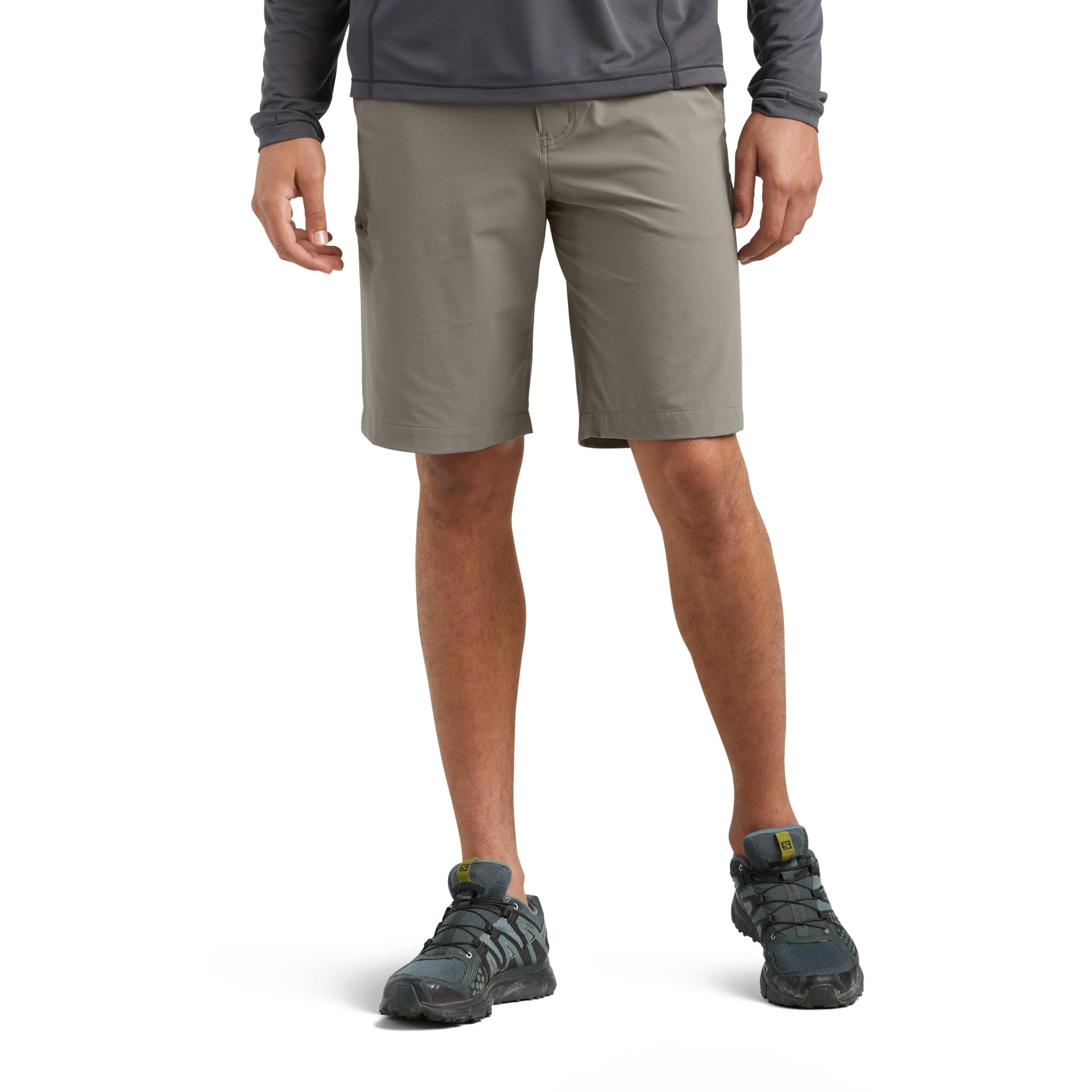
The Ferrosi fabric is a proprietary 86% nylon / 14% spandex blend that feels almost like a softshell—the stretch is immediate and the face fabric sheds light rain with a DWR coating that beads water on contact. At ten inches, the inseam provides coverage for knee-brush clearance without bunching behind the patella when you cycle through a high step. A fixed drawstring at the waist eliminates the flap of a spare buckle, but it also means no ratcheted adjustment after you drop pack weight over a few days.
Users consistently praise the lightweight feel and the surprisingly durable thin material; multiple hikers report wearing the same pair through granite choss and overgrown game trails without the fabric tearing on sharp corners. The thin weave does have a downside—several owners note that the material is translucent enough to show the outline of your legs, particularly in direct sun against a lighter colorway. The hand pockets are deep enough for a modern smartphone without the phone popping out during a sit-down rest on a log.
The price point sits noticeably above comparable options, and some veteran users argue the build quality doesn’t outperform shorts that cost half as much. The narrow waistband drawstring can feel less secure than a full belt loop system, especially when the shorts are loaded with a heavy multitool and a filter kit. For fast-and-light hikers who prioritize weight and packability over abrasion resistance against rough boulder fields, the Ferrosi remains a top-tier choice.
Why it’s great
- Ultra-flexible spandex blend moves with you during high-angle scrambling and glissading.
- DWR coating handles light rain and stream splash without the fabric wetting out for the first few hours.
- Surprisingly durable for its weight; tear resistance defies the gossamer-feeling weave.
Good to know
- Thin fabric is semi-sheer in bright conditions, which may be a social concern in high-traffic campgrounds.
- Fixed drawstring replaces a belt, limiting fine waist adjustment as your food bag thins out over a week-long trip.
3. Fjällräven Abisko Shorts
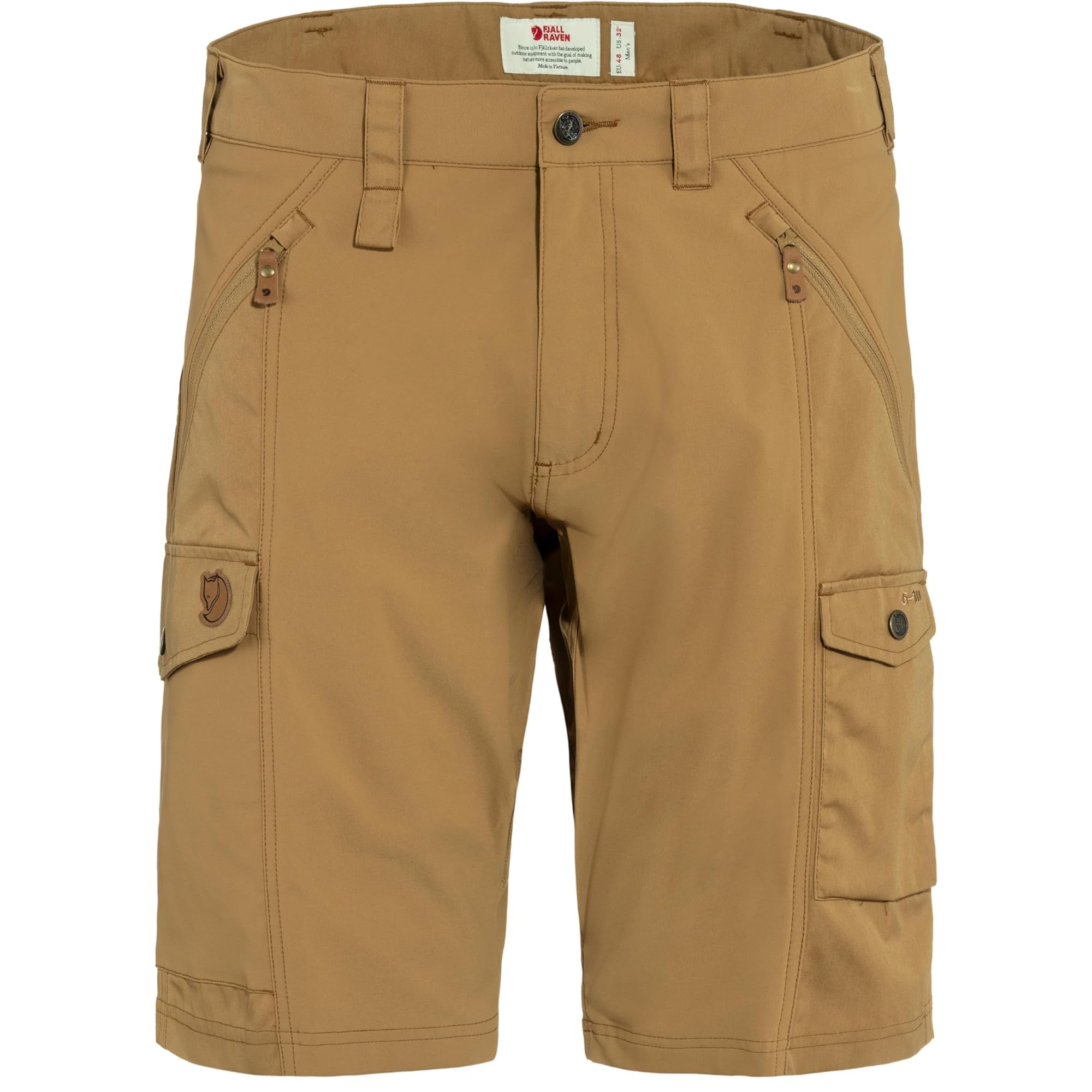
The Abisko uses Fjällräven’s G-1000 fabric as the primary panel, reinforced with stretch inserts at the crotch and back. G-1000 is a tightly woven 65% polyester / 35% cotton blend that sheds wind, resists puncture from thorny scrub, and can be waxed with Greenland Wax for additional water repellency. The reinforced seat panel is a genuine asset for anyone who sits on granite slabs or wet logs without a pad—wear reports consistently show that the butt area outlasts the rest of the short by a significant margin.
Users call these the most comfortable shorts they’ve owned for humid 90-degree weather, attributing the breathability to the cotton content in the G-1000 weave. The lack of rear pockets is a deliberate tradeoff: the reinforced seat eliminates the bulk that causes pressure points when you’re sitting with a full pack. Instead, you get two deep hand pockets and two leg cargo pockets with snap flaps, which stay secure even when the shorts are soaked from a river ford. The stretch panels prevent the G-1000 from feeling restrictive during lunges or when you reach for a high foot placement.
Sizing consistency is the primary friction point. Multiple buyers report the waist runs slightly smaller than the labeled measurement, requiring a size up for a comfortable fit. At over 15 ounces, the Abisko is heavier than the Ferrosi or the Zion II—not ideal for gram-counters but perfectly reasonable for basecamp-centric trips and off-trail bushwhacking where fabric durability matters more than pack weight.
Why it’s great
- G-1000 fabric withstands brush, granite, and wax treatment for customizable weather resistance.
- Reinforced seat panel eliminates pressure points when sitting on hard surfaces for extended periods.
- Stretch panels at the crotch and back prevent G-1000 from binding during dynamic leg movements.
Good to know
- No rear pockets—you lose two storage slots in exchange for the durable seat reinforcement.
- Sizing runs slightly small; plan to order one waist size larger than your usual measurement.
4. Fjällräven Ruaha Shorts
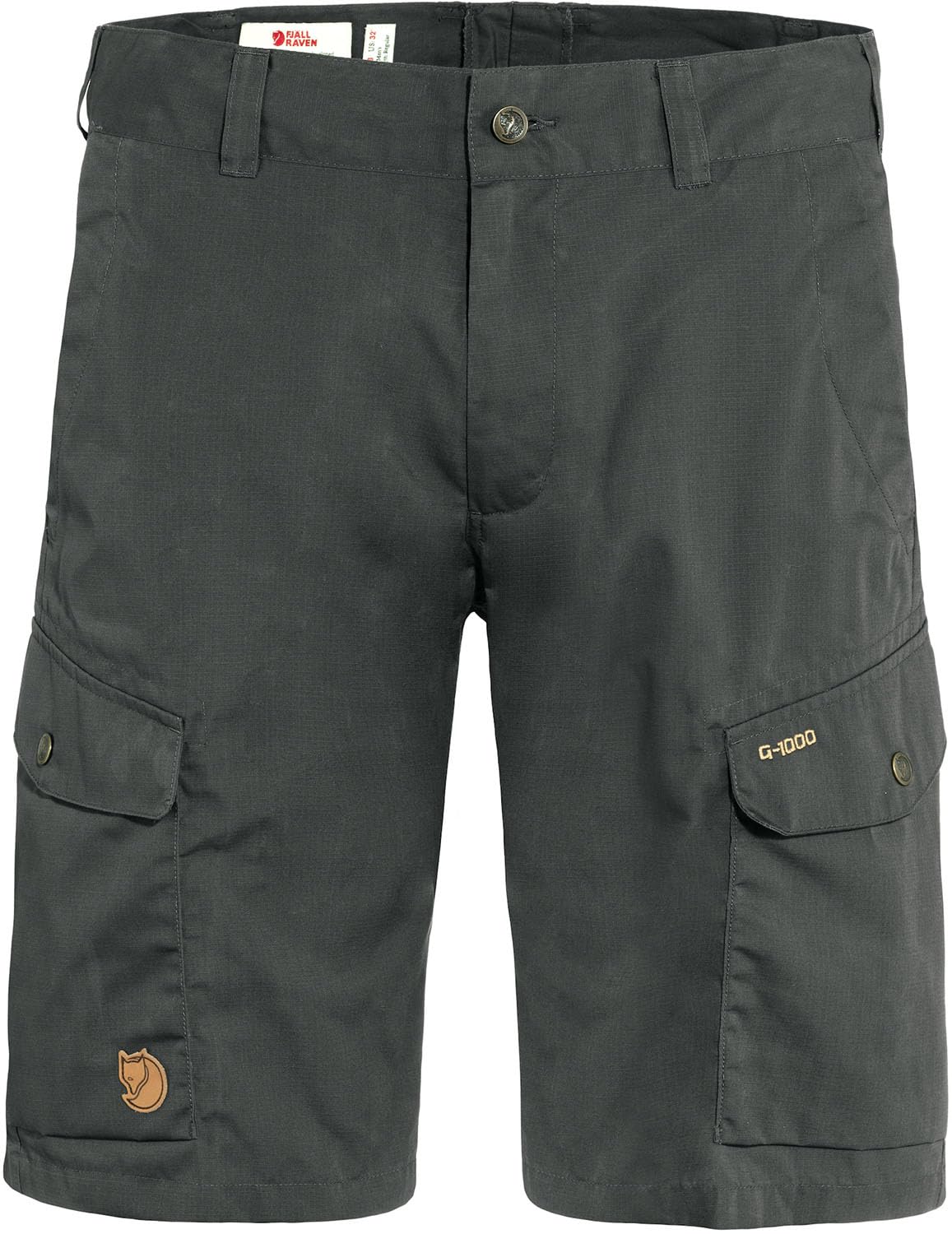
The Ruaha is built from the same Greenland Wax-treated G-1000 fabric as the Abisko but in a fuller, more cargo-focused cut. The rip-stop weave is noticeably heavier—best suited for off-trail travel through manzanita and catclaw where lighter nylon would shred. Two large cargo pockets with snap flaps, two zippered rear pockets, and a secret internal stash pocket provide enough organized storage for a GPS, map, filter, and snacks without needing a hipbelt pouch. Plenty of belt loops anchor the short securely under a pack.
Owners consistently describe the waxed fabric as dirt- and water-repellant, brushing off trail dust with a hand wipe. The fit is trim through the hip and thigh while offering an extra rise in the crotch that prevents the binding some guys feel in lower-rise cuts. Zippered back pockets mean nothing falls out when you slide down a steep slope in a seated brace, and the button closure on the front is robust enough to survive repeated snags on brush. Several 6-foot-4 hikers report the length is perfect for taller builds without looking like flood pants.
The hand pockets are a weak point: the rear half of each slash pocket is only about an inch deep, which means keys or a folded map can slip out the back when you sit down. The cargo pockets use snap flaps rather than zippers, so small items like a fire starter or earplugs can escape if the flap works open during bushwhacking. At the highest price tier, the pocket design tradeoffs are frustrating for anyone who expects every compartment to be bombproof.
Why it’s great
- Wax-treated G-1000 fabric shrugs off dirt, water, and brush far better than standard nylon shorts.
- Zippered rear pockets secure valuables during downhill slides and scrambling moves.
- Full cargo layout with an internal stash pocket reduces reliance on a hipbelt for small gear.
Good to know
- Shallow rear side pockets risk losing items like car keys or a sunglasses case when seated.
- Snap-flap cargo pockets are less secure than zippered pockets for small, high-value items.
5. Mountain Hardwear AP Short V2
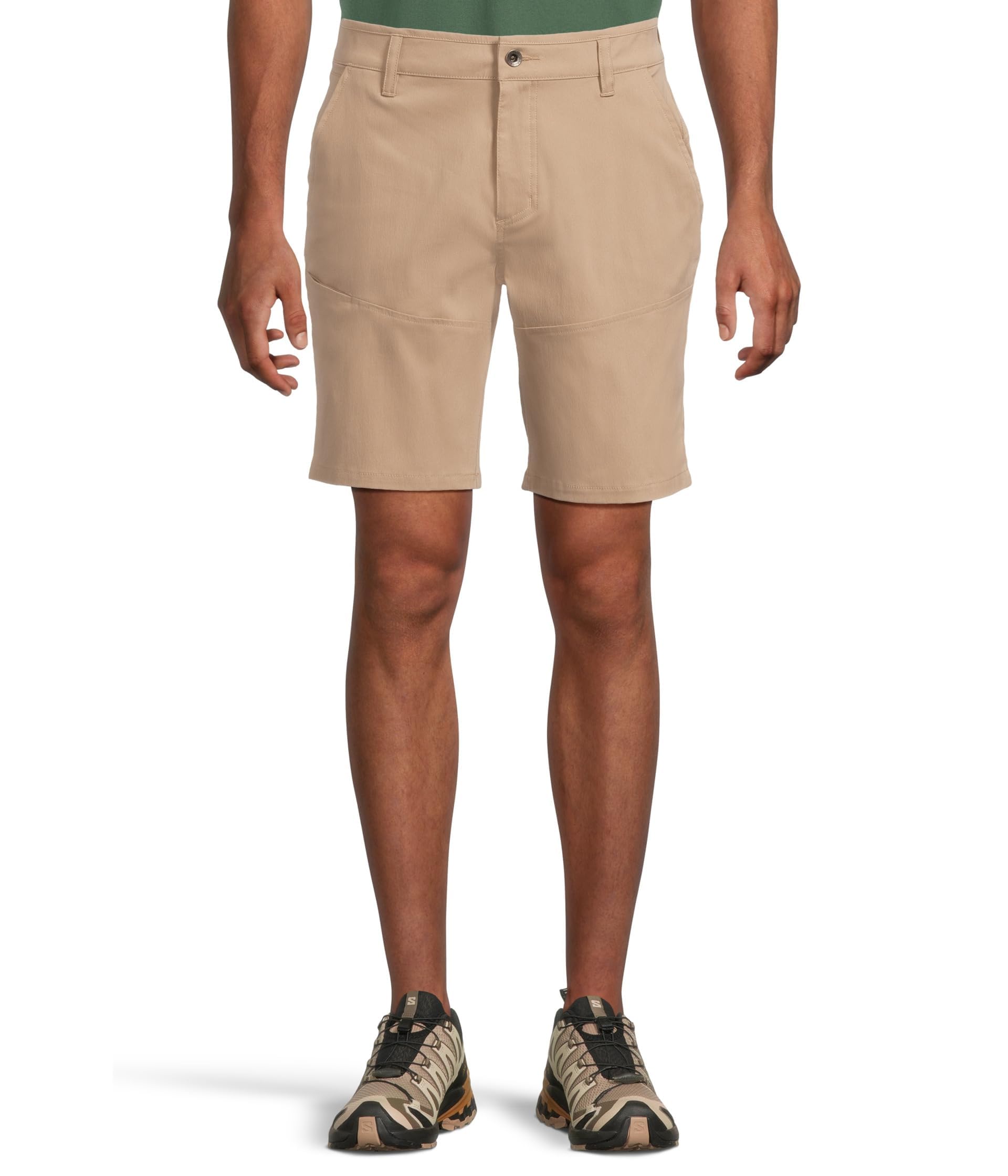
The AP Short V2 uses a nylon stretch woven that lands squarely in the sweet spot between the paper-thin Ferrosi and the bushy G-1000 shorts. The 11-inch inseam provides maximum coverage for hikers who prefer extra length to protect the back of the knee from sun exposure and brush contact. A dedicated cell phone pocket on the right thigh keeps your device accessible without digging through a cargo flap—a small feature that experienced backpackers appreciate when trying to grab a quick photo while on trail.
Verified users report these shorts handle hiking, biking, and everyday wear with equal competence. One 6-foot-1, 185-pound reviewer described the 33 x 11 fit as perfect for his build, with enough room through the quad for movement without excess fabric. The zippered back pocket features robust YKK pulls that don’t snag on pack straps, and the button front with zip fly feels secure even after a season of heavy use. The fabric has a slightly crisp hand feel that softens after a few washes without losing its shape.
The main complaint targets a small Velcro detail on the right leg that some users mistake for a pocket opening—it is not a pocket, and its purpose is unclear, which creates confusion. The nylon fabric is also on the stiffer side until broken in, meaning the shorts feel less forgiving out of the package compared to elastane-heavy competitors. For backpackers who prefer a more structured short with full coverage and a dedicated phone sleeve, the AP Short V2 delivers strong value at a mid-range price point.
Why it’s great
- 11-inch inseam offers full coverage for sun protection and brush clearance during bushwhacking.
- Dedicated cell phone pocket keeps your device accessible and secure during high-exertion sections.
- Robust YKK zippers on the back pocket resist snagging on pack waist straps and hipbelt webbing.
Good to know
- Small Velcro detail on the right leg is a confusing non-functional inclusion.
- Nylon fabric is stiff out of the package and requires several wears to reach its full flexibility.
6. Eddie Bauer Rainier Short

The Rainier Short packs a lot of backpacking-specific features into a price point that undercuts most competitors by a wide margin. The 95% nylon / 5% spandex blend provides a slight mechanical stretch that handles normal hiking motion without the four-way give of prAna’s Zion, but the fabric is noticeably more durable for the weight. The 8-inch inseam hits a modern above-the-knee length that feels breezy on hot trails while still providing enough coverage to avoid hipbelt chafe for most builds.
User reports consistently praise the pocket layout: flush cargo pockets that don’t sag when empty, horizontal side pockets deep enough for a large smartphone, and Velcro-secured back pockets that prevent wallet loss during high-exertion sections. The waistband runs true to size and features properly spaced belt loops for a standard 1.5-inch backpacking belt.
The stretch is modest compared to spandex-heavy competitors. Reviewers caution against deep squats or high knee lifts without risking seam strain, and the non-adjustable waistband means you cannot cinch the shorts tighter as you lose weight over a long thru-hike. Pockets are slightly shallower than ideal for carrying a bulky GPS unit or a full-sized filter kit. For budget-conscious backpackers who want a tough, breathable short for day outings and section hikes, the Rainier punches well above its price class.
Why it’s great
- Excellent pocket layout includes flush cargo pockets and Velcro-secured back pockets that hold items securely.
- 95% nylon fabric provides impressive abrasion resistance for the low weight and rapid dry time.
- True-to-size fit with well-spaced belt loops that accommodate a standard backpacking belt.
Good to know
- Limited stretch—deep squatting or high-knee scrambles may stress the seams.
- Pockets are slightly shallow for carrying larger trail items like a full GPS unit or a multi-tool pouch.
7. Mossy Oak XTR Fishing Shorts
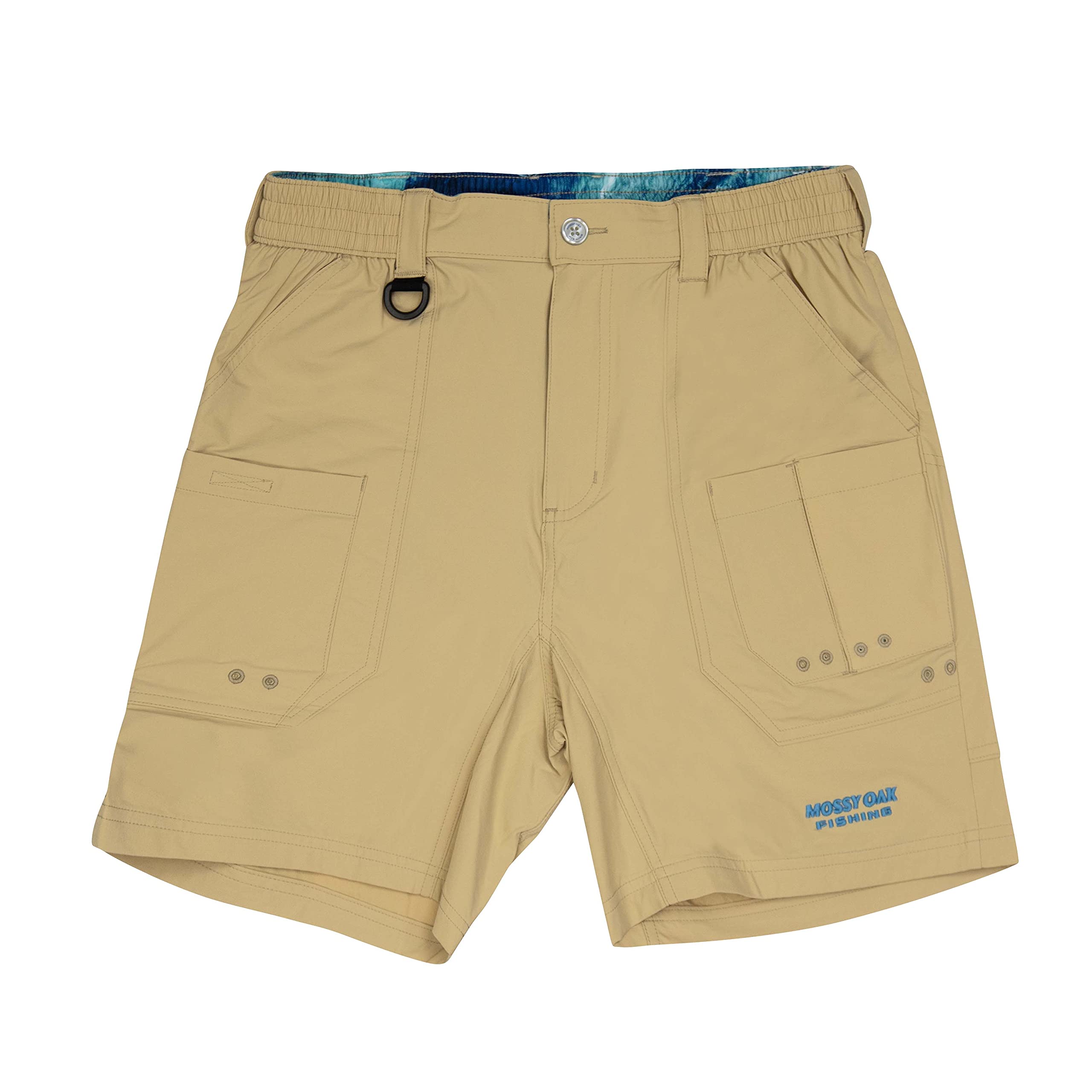
These shorts are built for the hottest days when you want the absolute minimum between you and the air. The 6.5-inch inseam sits well above the knee, maximizing ventilation for desert treks or humid jungle approaches where every degree of cooling matters. The polyester fabric—essentially a swim trunk weave—dries in sunlight faster than any nylon blend in this guide, making these the best choice for trips that involve frequent stream fording or unexpected rain exposure.
Owners highlight the lightweight feel and the tricot-lined elastic waistband that offers stretch without a belt, though the elastic does require a snug initial fit to stay in place when the pockets are full of trail essentials. The pocket count is generous for the price: six total, including mesh-lined hand pockets that drain water instantly after a crossing. Multiple hikers report these shorts hold up well to squatting and bending, and the quick-dry performance passes the overnight sink-wash test with flying colors—the shorts were nearly dry by morning.
The sizing runs small, particularly in the seat and thighs, and the short inseam means no protection for the back of the knee from sun exposure or brush. The elastic waistband needs a belt when the pockets are loaded with a phone, filter, and snacks, and you cannot adjust the fit without a separate belt. The back pocket button holes are cut horizontally, making the re-buttoning process fiddly. For hikers who prioritize speed, airflow, and instant drying over durability and coverage, the Mossy Oak XTR works well as a dedicated hot-weather short.
Why it’s great
- Polyester swim-trunk fabric dries faster than any nylon blend, ideal for wet environments and stream crossings.
- Six-pocket layout with mesh-lined hand pockets for instant water drainage after immersion.
- Elastic waistband with tricot lining provides stretch comfort without needing a belt for light loads.
Good to know
- 6.5-inch inseam leaves the back of the knee exposed to sunburn and brush contact on overgrown trails.
- Runs small through the seat and thighs; ordering one to two sizes up is common for a comfortable fit.
FAQ
Should I choose shorts with a belt or a drawstring for backpacking?
How does the G-1000 wax treatment affect drying speed?
Can I wear these shorts for swimming or stream crossings?
Final Thoughts: The Verdict
For most users, the best backpacking shorts for men winner is the prAna Stretch Zion Shorts II because it combines genuine four-way stretch, a five-year potential lifespan, and a balanced 10-inch inseam that clears most hipbelts and covers the knee. If you want absolute lightweight performance for fast alpine objectives, grab the Outdoor Research Ferrosi Shorts. And for off-trail bushwhacking in prickly terrain where fabric toughness matters most, nothing beats the Fjällräven Abisko Shorts.