
Our readers keep the lights on and my morning glass full of iced black tea. As an Amazon Associate, I earn from qualifying purchases.
Specs are compiled from manufacturer listings and verified buyer reviews and can change over time — please confirm the key details on the product page before buying.
If your feet are the thing that ends your hike early, the fix is usually simpler than you think: it is the sock. The right backpacking sock manages sweat, cushions the heel and ball of your foot, and keeps its fit mile after mile. This guide covers nine pairs that real long-distance walkers keep coming back to, from thin-and-light merino crews to fully cushioned boot socks, so you can match a sock to your terrain and your boots.
I’m Min — the founder and writer behind Gadgets Feed. This guide is built by comparing the manufacturers’ published specifications and the patterns across verified customer reviews, so you get each pick’s real strengths and trade-offs instead of marketing spin.
Fit, fibre blend, and cushioning decide whether a sock disappears on your foot or ruins your day. Below, the picks are grouped by how they actually perform on the trail — this is the practical shortlist of backpacking socks for long days and heavy packs.
Our Picks at a Glance

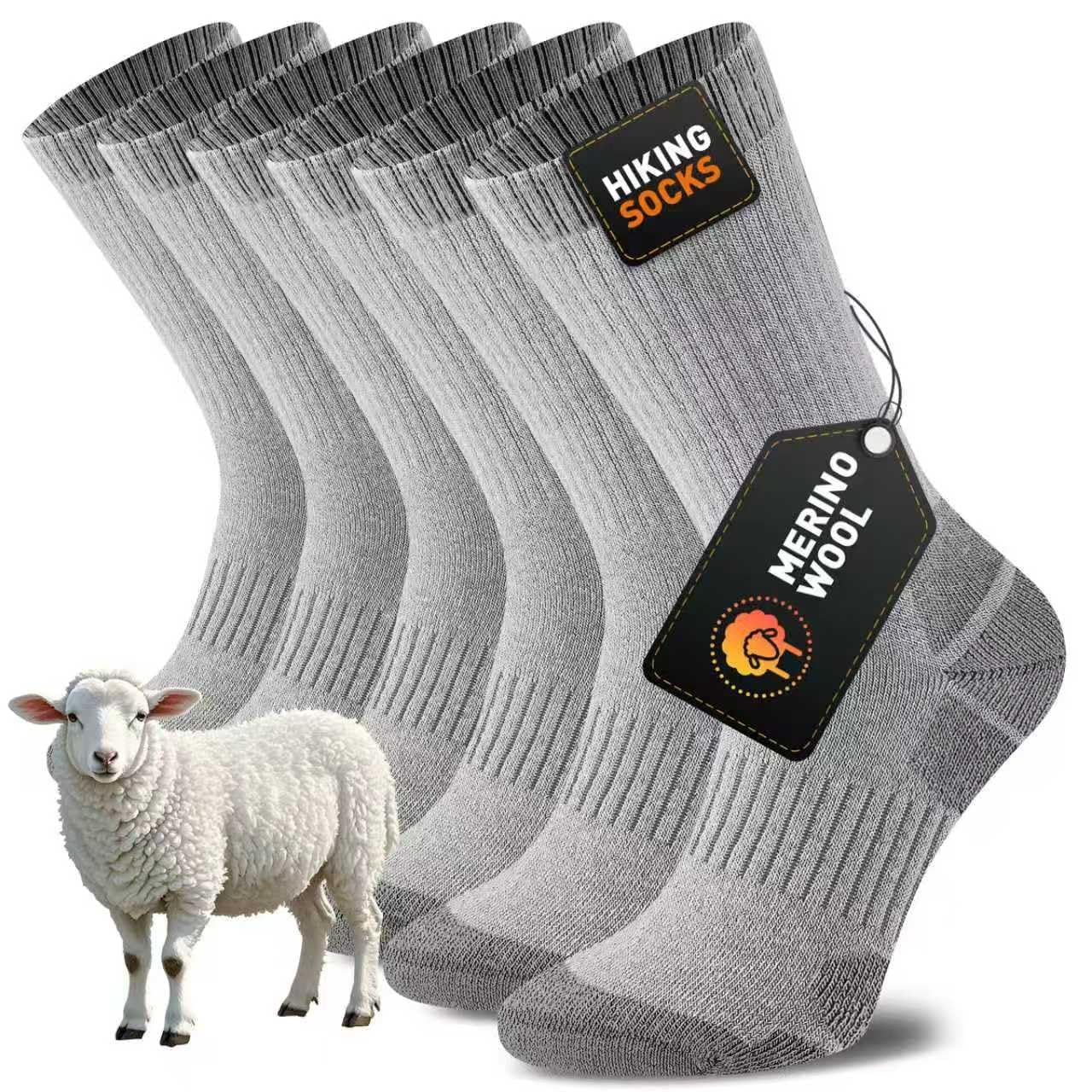

How To Choose The Best Backpacking Socks
A backpacking sock has one job: keep your feet dry and comfortable while you carry weight over distance. The wrong pair rubs, holds sweat, and turns a good hike into a foot-care session. Here is what actually matters when you stand in the aisle comparing labels.
Wool blend beats wool content
Pure wool socks are rare for a reason — they need nylon or spandex to hold shape under load. A sock that runs roughly 40–50% merino wool with nylon and a touch of Lycra for stretch balances warmth and durability. Many backpackers use the standard that a merino blend dries faster and resists odor longer than cotton, which is what keeps multi-day feet bearable.
Match height to your boot collar
A micro crew sock sits just above the top of a hiking boot, so it protects your heel without bunching at the calf. A full crew rises higher, giving more coverage for taller boots and colder weather. If your boots bite your ankle, go taller. If you run warm and want less fabric, micro crew is usually the smarter call.
Cushion where you need it
Light cushioning puts a thin layer underfoot for protection without bulk. Full cushioning adds padding through the heel, ball, and sometimes the whole foot for heavy packs on rocky terrain. Too much cushion in a snug boot crowds your toes, so weigh how much room your boots actually give you before you size up the padding.
Quick Comparison
| Model | Best For | Fabric Weight | Height | Cushioning | Amazon |
|---|---|---|---|---|---|
| Darn Tough Women’s Critter Club Micro Crew Lightweight★ Best Overall | Long-distance walkers who want a near-weightless sock | Lightweight | Micro crew | Light, underfoot layer | Amazon |
| Niorasen Merino Wool Hiking Crew SocksBest Value | Everyday boot wear and cold-weather hikes | Thick cushioned | Crew | Full cushioning | Amazon |
| Anlisim Merino Wool Hiking SocksBest for Cold | Cold-weather hikes and winter boots | Extra thick | Crew | Thick sole | Amazon |
| innotree Merino Wool Hiking Socks for Women | Multi-day hikers who want a budget wool sock | Medium thickness | Micro crew | Half thickness, arch support | Amazon |
| Thermal Warm Winter Cozy Cushioned Crew Socks (5 Pairs) | Cold-weather trips and layering under insulated boots | Medium thickness | Crew | Medium cushioning | Amazon |
| Darn Tough Vermont Men’s Willoughby Micro Crew Cushion | Hikers who log heavy miles in all seasons | Lightweight | Micro crew, 8.5 in rise | Terry-loop underfoot | Amazon |
| Smartwool Women’s Hike Light Cushion Crew | Three-season hiking with a broken-in feel | Light cushion | Crew | Light, cushioned sole | Amazon |
| Merino Wool Socks for Men & Women (3–6 Pack, Boot Style) | All-season wearers who wash hot and want them to last | Mid-weight | Boot style | Light cushioning | Amazon |
| Thorlos Hiking Crew 3-Pair Pack | Heavy-pack hikers prone to blisters and impact pain | Thick | Crew | Heavy cushioning | Amazon |
In‑Depth Reviews
1. Darn Tough Women’s Critter Club Micro Crew Lightweight with Cushion
Our pick — over 4.5★ from 950+ verified ratings; the strongest balance of quality and price.
A featherweight merino sock that hikers treat as permanent trail equipment, not a consumable.
Thin enough to vanish in a boot, this is Darn Tough’s lightest all-rounder: a 43% merino wool blend with 54% nylon and 3% Lycra Spandex for stretch. Merino wool is the natural fiber that pulls sweat off skin and dries fast. That blend is why you get warmth in the cold and breathability in the heat from the same thin fabric. The micro crew height — a shorter cut that sits just above the collar of a standard hiking boot — protects your heel without piling fabric at the calf.
The underfoot cushioning is what keeps blisters and sore spots away. The cushioning underfoot does the work, and the customers-say summary points to blisters and sore spots staying away. One hiker training for a 500-mile Camino switched from socks that had blistered her on a prior 190-mile walk, reported no blisters in these, and bought a second pair. The “True smooth” construction (a smooth, fused seam) means you don’t feel a ridge rubbing inside the boot.
The price is the real sticking point. This is a premium sock — the same pair shows up more than once in value-for-money discussions, and hikers split between those who think it earns its keep and those who find it steep. The Guaranteed for Life promise is the counterweight: if the socks wear, tear, or develop holes, Darn Tough replaces them. That is why many hikers stop buying sock multi-packs altogether.
Where this sock wins
- Lightweight with cushion — a thin underfoot layer that protects without crowding your toes
- True smooth construction fuses the seam for a smooth feel inside the boot
- Guaranteed for Life — replaced free if it wears, tears, or holes
- Knit in Vermont and made in the USA
Where it asks more of you
- Priced above most merino blends, so the outlay stings up front
- Micro crew is a shorter cut, which some prefer taller
- One pair per pack — no multi-pack value math to fall back on
Buy this if: you walk long distances and want a light, near-weightless sock with a life-time guarantee behind it.
Look elsewhere if: you want three pairs in one box or a taller crew for cold-weather boots.
2. Niorasen Merino Wool Hiking Crew Socks for Men & Women
Full cushioning that reaches the whole foot, not just the sole, for hikers who stand in boots all day.
Where a light sock pads only the base of the foot, this one is fully cushioned end to end — the toe, the heel, and the top of the foot all get padding. The blend layers merino wool for temperature control and odor resistance with acrylic for softness, polyamide for reinforcement, and elastane for stretch. That mix is why owners find it soft rather than scratchy, and the crew height rises to the mid-calf for extra protection inside a boot.
The thing everyone raves about is the fit and comfort on long days — the summary flags comfort, warmth, and cushioning as the recurring wins, with buyers reporting it as a straightforward step up from cotton. As one shopper put it, “These are absolutely great socks. The fit, comfort, and wicking ability of the material is outstanding.” The plain answer to daily maintenance is yes: they wash cold on a normal cycle, and they hold shape wash after wash.
Sizing is the one thing to slow down on — the sock runs large, so if you are between sizes, weigh the smaller one. A few owners who wanted a thin sock found it thicker than expected after the first wash: the knit relaxes and the fabric pads up a touch. For most people, that is a feature rather than a problem in a cushioned hiking sock.
The padding advantage: a fully cushioned foot, not a sole-only pad, so it absorbs pressure across the whole foot — a better fit for boots than a light hiker.
The honest catch: it thickens slightly after washing and runs a size large, so buy it with a little room, not a lot.
The sensible default: anyone who wants a cushioned merino crew that works for hikes, work boots, and everyday wear without the premium outlay.
Not the pick for: you if your boots run tight — this is a full-cushion sock and it needs space.
3. Anlisim Merino Wool Hiking Socks, Boot Crew Work Socks for Women & Men
The extra-thick wool crew that thrives when the temperature drops and the boots get roomy.
Start with the blend, because it drives everything here: 70% wool, 23% polyester, 5% spandex, and 2% nylon. That is a wool-forward sock, which is why it feels genuinely warm rather than merely padded. It comes in crew height at mid-calf with extra thickness, sized M (women’s 5.5-10 / men’s 6-8.5) and L (women’s 10-13 / men’s 8.5-12), so you get a true unisex range instead of a single fit.
Warmth is the defining trait, and it is the label owners lean on most. The listed warm-below-freezing use case comes straight from the trail: a buyer in the black 4-pack reported them durable, with the right stretch and thickness for cold weather. What wins people over besides warmth is the compress-ion support and the full coverage — these are the socks for snow, winter boots, and standing around in the cold. They wash without pilling, which keeps them looking presentable beyond the trail.
The honest caveat is on the calf and the sizing. Owners note the fit can be a touch large in the foot and that the sock stretches with wear — a few suggest sizing down. The thickness is also genuine: if your shoes are snug already, this is not the sock to force into them. It is a cold-weather pick, so on a warm summer day it may be more than you want.
Warmth that carries the snow: the extra-thick 70% wool build holds heat better than a light hiker, which is exactly what winter boots need.
What to size around: the sock stretches and can run large, so between sizes, take the smaller one.
Go this way for: cold-weather hiking, winter work boots, and anyone who wants maximum warmth from a single pair.
Look past it for: warm-weather hiking or tight-fitting shoes, where the extra thickness works against you.
4. innotree 3 Pairs Merino Wool Hiking Socks for Women
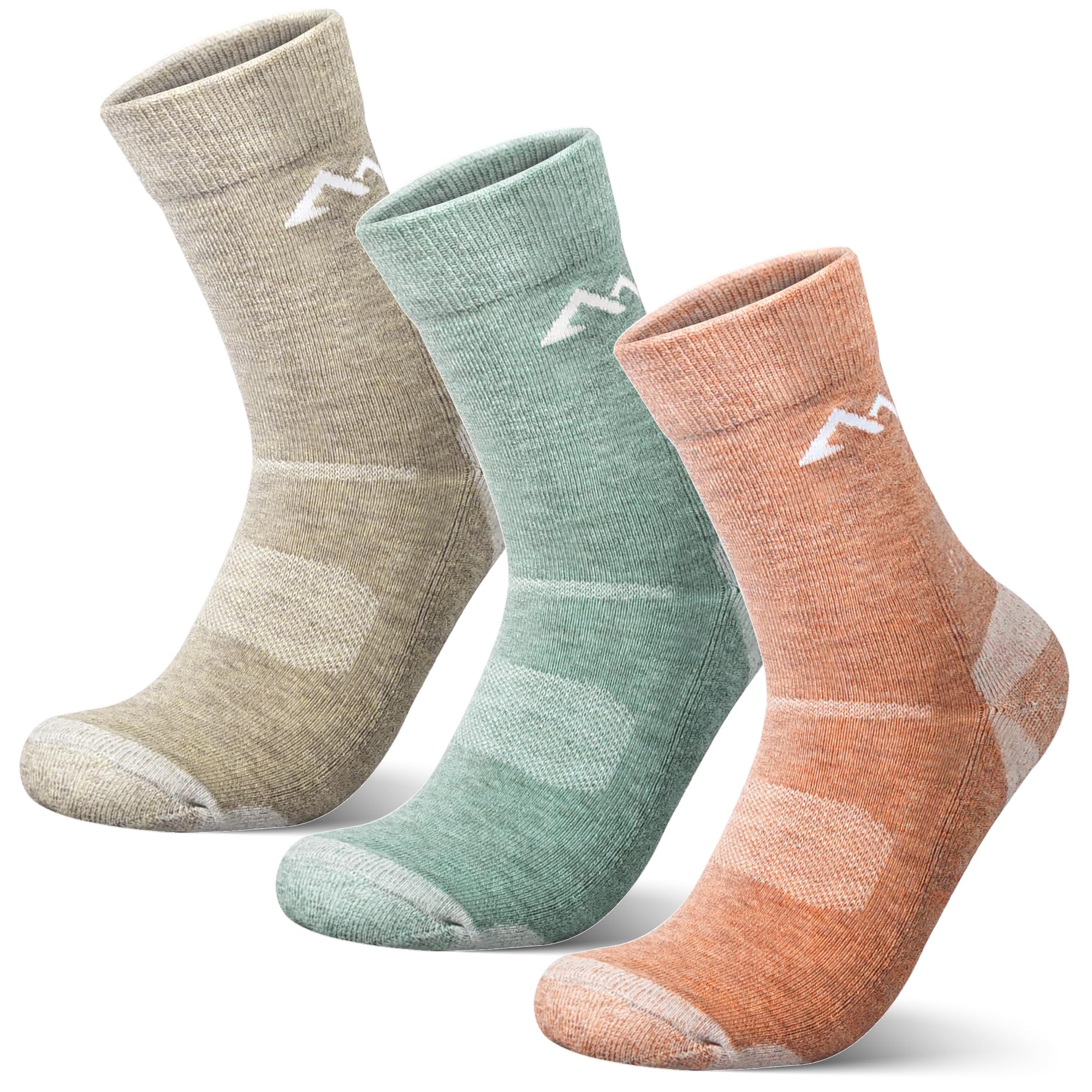
Three pairs of micro crew merino that hold their shape through the wash and stay put on the trail.
The sock that turns a boot into a comfortable place to be: a 70% merino wool, 15% spandex, 12% nylon, 3% elastane blend in micro crew length. Merino is doing the heavy lifting here — it regulates temperature so the sock stays warm in the cold and breathable in heat, wicks moisture to keep feet dry, and resists odor across days of wear. The cushioning is half thickness with arch compression, which adds support and reduces fatigue without adding bulk.
The fit is why buyers keep reordering. The summary flags that the socks stay put and don’t slide down the ankle, and buyers report them as a solid budget answer to higher-priced wool hiking socks — close enough in fit to make the price difference hard to justify. They run true to size with the sizing sewn into the cuffs, and they come in three pairs, so you always have a spare in the bag. The colors are part of the appeal too, which is not something every wool sock can claim.
Now the trade-off. Durability is the split — most owners find these lasting, but the occasional pair frays or wears through quicker than expected, and there is a one-year hole guarantee to lean on if it happens. A handful also find them warm for high-summer hiking, though others wore them in July heat and stayed blister-free. It is a fair point on a wool sock, not a defect.
What earns the praise
- 70% merino wool blend that breathes in heat and insulates in cold
- Arch compression adds support and cuts fatigue on long days
- Holds shape and doesn’t pill or unravel in the wash
- Three pairs per pack, so a spare always travels with you
Honest limitations
- Durability varies — a rare pair frays before others in the pack
- Some find the warmth more than they want in midsummer
- Micro crew sits low, so it is less coverage than a full crew
Pick this for: budget-conscious hikers who want real merino coverage in a multi-pack and don’t mind sizing to the chart.
Pass on it if: you need guaranteed all-out longevity or the extra coverage of a taller crew.
5. Merino Wool Hiking Socks Thermal Warm Winter Cozy Cushioned Crew Socks (5 Pairs)
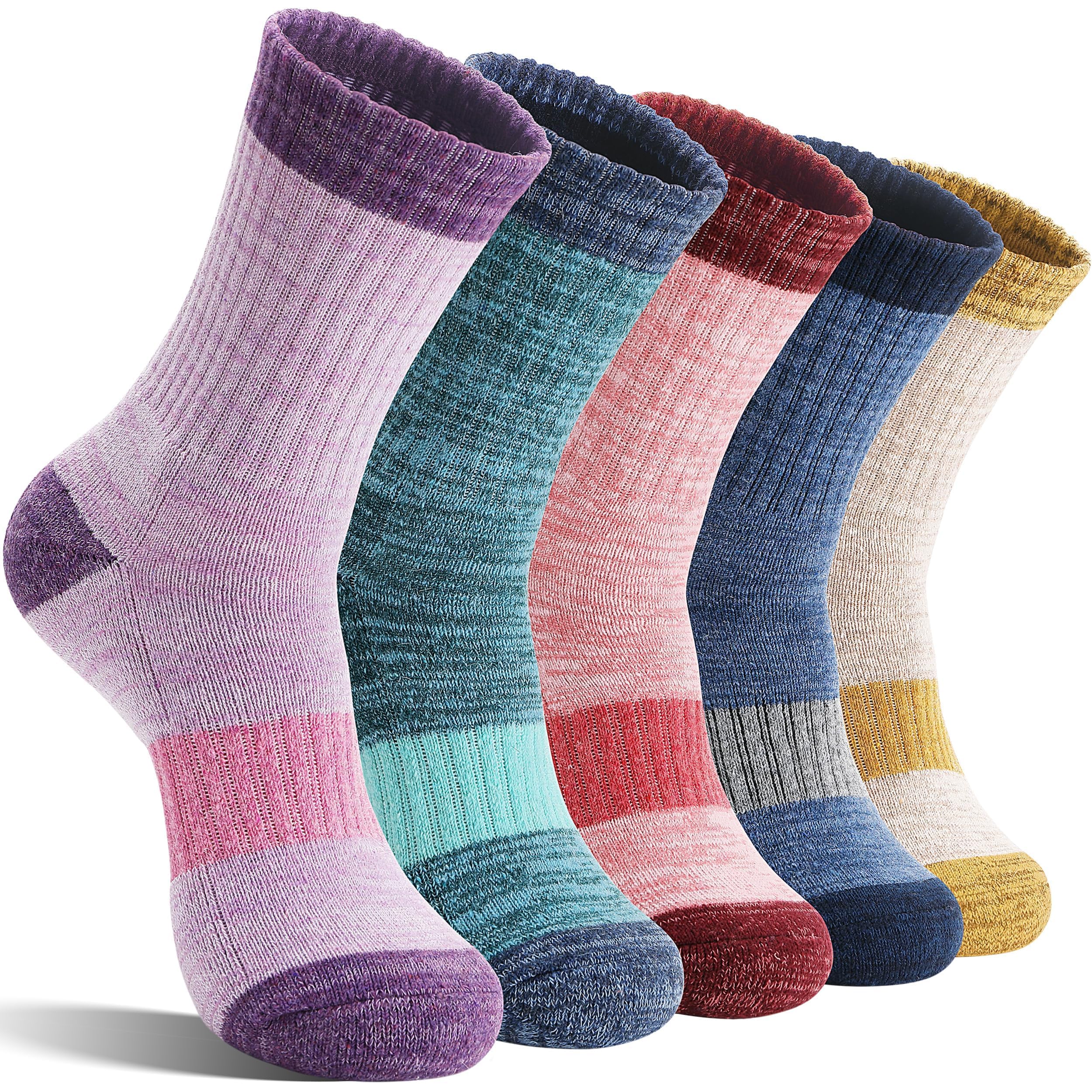
Five pairs of medium-thickness merino that go from Arctic base layer to desert day hike.
This is the pack-it-all option: five pairs of crew-length merino socks with a medium thickness that slips into insulated boots and regular shoes alike. The blend runs 70% Merino Wool, 23% Polyester, 5% Spandex, 2% Nylon, which is a wool-forward mix that keeps feet warm and holds the sock’s shape across a wash-and-wear routine. Crew length reaches up the lower calf, so there is coverage under the boot collar without bunching.
Warmth is the headline. The recurring owner experience is cold toes staying warm through winter, including seven-day field work in insulated boots where the socks held up to both hand and machine washing and air drying. What holds up best is the fit: owners mention the socks stay put without creeping or twisting, and an arch band adds snugness and support for people with thicker calves. The colors get called out too, which helps when you want socks that don’t all look like trail gear.
The one fair warning is pilling. A few customers note the surface pilling after wear, so if you like a sock that stays perfectly smooth, that is the trade-off. A couple also find the fit tight around thick legs, though most describe the sock as neither too tight nor too loose. The warmth also leans cold-weather — it is at its best from fall through spring.
The multi-weather case: owners wore these from Arctic-circle winter baselayer duty to warm-weather hikes in Utah, and the medium weight is what makes that range possible.
Worth knowing: the fabric can pill with wear, a small cosmetic quibble rather than a performance issue.
Good for: cold-season hikers who want five pairs of warm crew merino and value color variety over a single premium pair.
Less ideal if: you need a truly thin sock for hot weather, or you dislike any pilling on a sock’s surface.
6. Darn Tough Vermont Men’s Willoughby Micro Crew Cushion Hike Socks
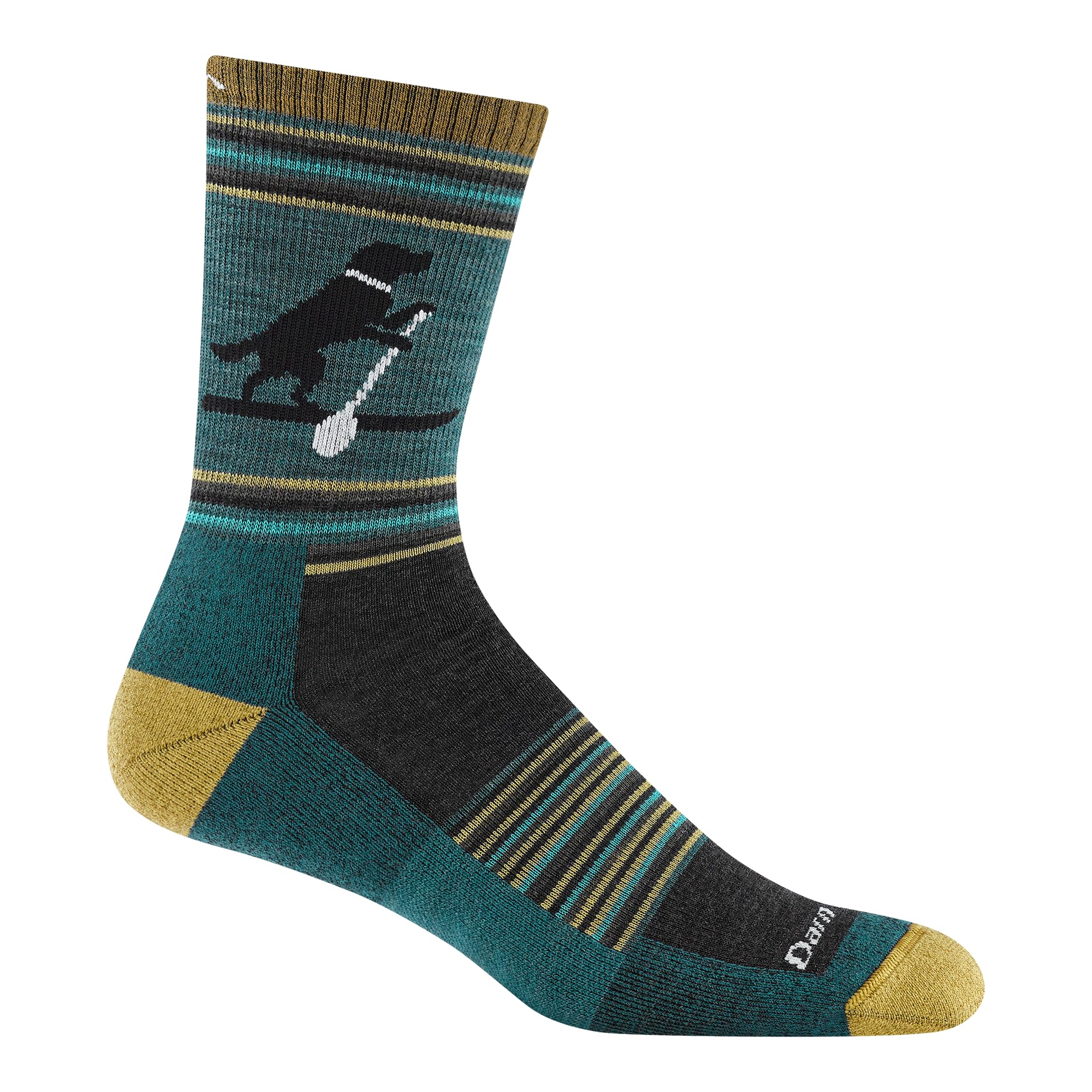
Soft terry loops underfoot and an 8.5-inch rise — built for the miles that grind your heel.
Here the numbers do the talking: a 52% nylon, 45% merino wool, 3% Lycra Spandex blend, lightweight yet cushioned with soft terry loops placed underfoot and targeted at the ankle and heel. The micro crew climbs 8.5 inches from heel to cuff, a rise that covers the spot where boots bite without reaching up the calf. It is made in the USA from yarns sourced in the US and around the globe, and like the women’s Critter Club above, it carries the same unconditional Guaranteed for Life replacement.
What earns the loyalty is the combination of comfort and longevity. Reviewers point out these landing in the wash only between wears, staying warm in winter and cool in summer, and one long-time owner reported no visible wear after 3+ years of Texas heat and sub-zero Colorado cold. The seam doesn’t rub, the design stays true through washes, and owners treat the cushion as gentle enough on blisters that they stop shopping for other socks entirely. If you want proof that a lighter sock can still last, this is the pair.
The catch is price, stated plainly. The sock is costly, and the value-for-money notes split between hikers who think it is worth it and those who balk. There is also a real sizing wrinkle: a few owners find the fit loose, and the advice is to size down if you are between sizes. Neither is a reason to skip it — it is a reason to know your size before you buy.
Comfort meets durability: the terry-loop underfoot cushion and the 8.5-inch rise are a genuinely useful pairing for heel-strike hikers, and the reported 3+ years of wear speaks to the build.
Watch the fit: a few owners find it loose, so size down if you’re between sizes.
Reach for it if: you put serious miles on your boots and want a light cushion with a substantial shelf life behind it.
Leave it if: the up-front cost is a dealbreaker or you need a thick winter sock.
7. Smartwool Women’s Hike Light Cushion Crew Socks
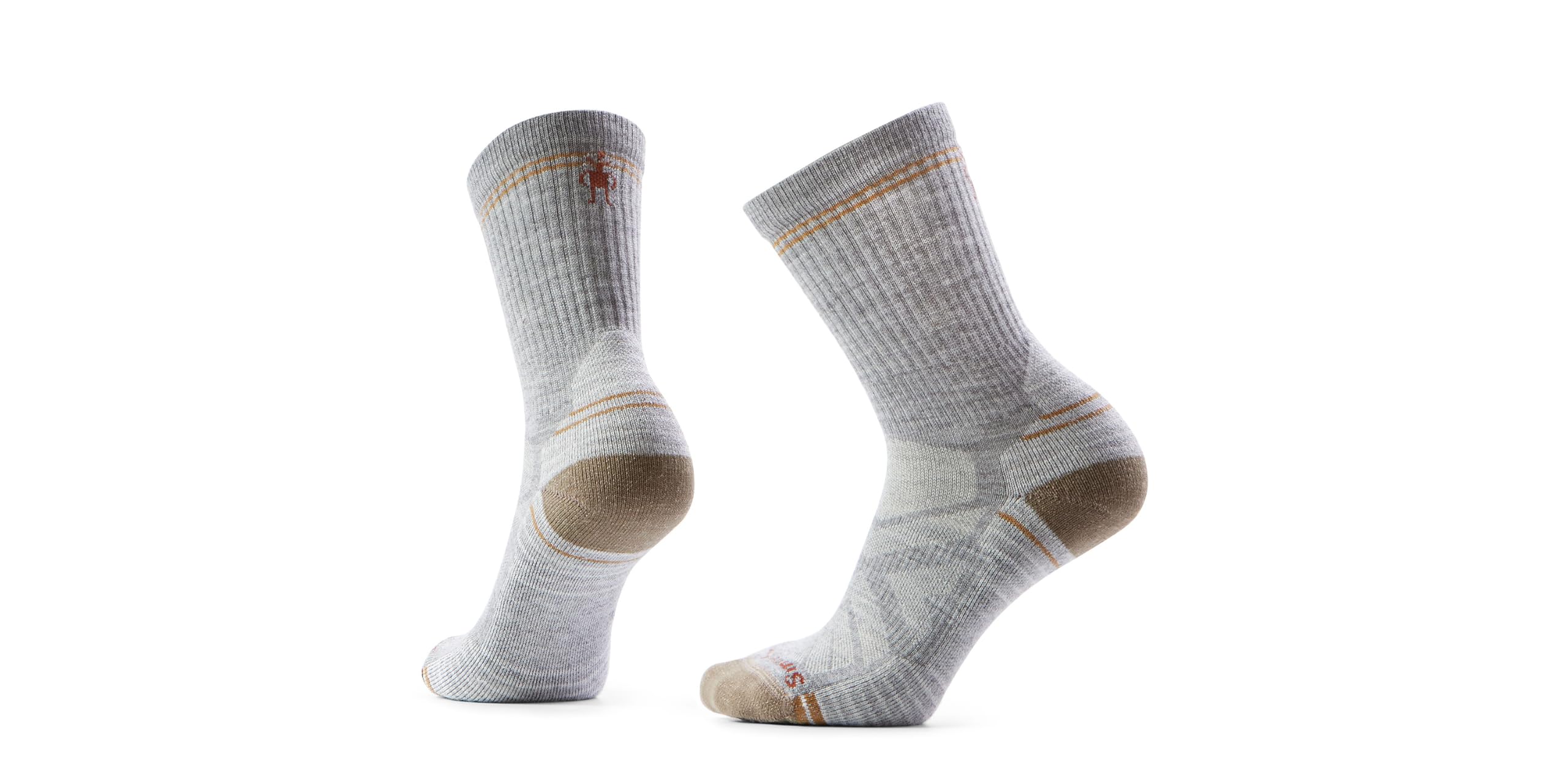
A merino crew with a cushioned sole that stays comfortable in spring and autumn, and holds up to repeated washing.
This one leans on wool’s natural strengths rather than extra material: a merino crew sock in light cushion with a cushioned sole for comfort and support. Merino wool resists odor and moves moisture away from your feet, which is why a wool hiking sock can feel fresh after a long day in boots. The light cushion underfoot gives protection without crowding your toes, and the crew height rises above the boot collar for coverage lower down the calf.
The experience owners describe is comfort that lets you forget the sock — no blisters or sore spots, feet that stay warm and dry without overheating, and a cushioning that lands right underfoot. The trail test came from a range of places: tromping across Scotland without hot or cold feet, washing them in hotel sinks and line-drying overnight, then machine-washing regularly with perfect results. That kind of real-world use is why the sock is treated as a reliable three-season pick.
The sizing note is worth flagging before you order: the sock can run a touch loose, so if you are between sizes, drop down. The band at the top is snug enough to hold the sock up, which a few owners find leaves a light indent at the calf — nothing uncomfortable, but noticeable if you spend all day in them. Several also mention the pricing as a real consideration for a light, non-knee-high sock.
Why hikers keep coming back
- Merino wool resists odor and moves moisture away from feet
- Light cushioning under the sole adds comfort without bulk
- Holds up to hotel-sink washing and regular machine washing
- Non-itchy enough for sensitive skin, year-round wear
Where it asks for patience
- Runs a little loose — some buyers go down a size
- The top band can leave a light calf indentation
- Light rise means less coverage than a full crew
Best for: three-season hikers who want a light, cushioned sole-support sock and don’t mind ordering one size down.
Skip if: you need deep-winter warmth or a secure, snug fit straight out of the bag.
8. Merino Wool Socks for Men & Women — 3–6 Pack Wool Hiking Socks, Boot Style
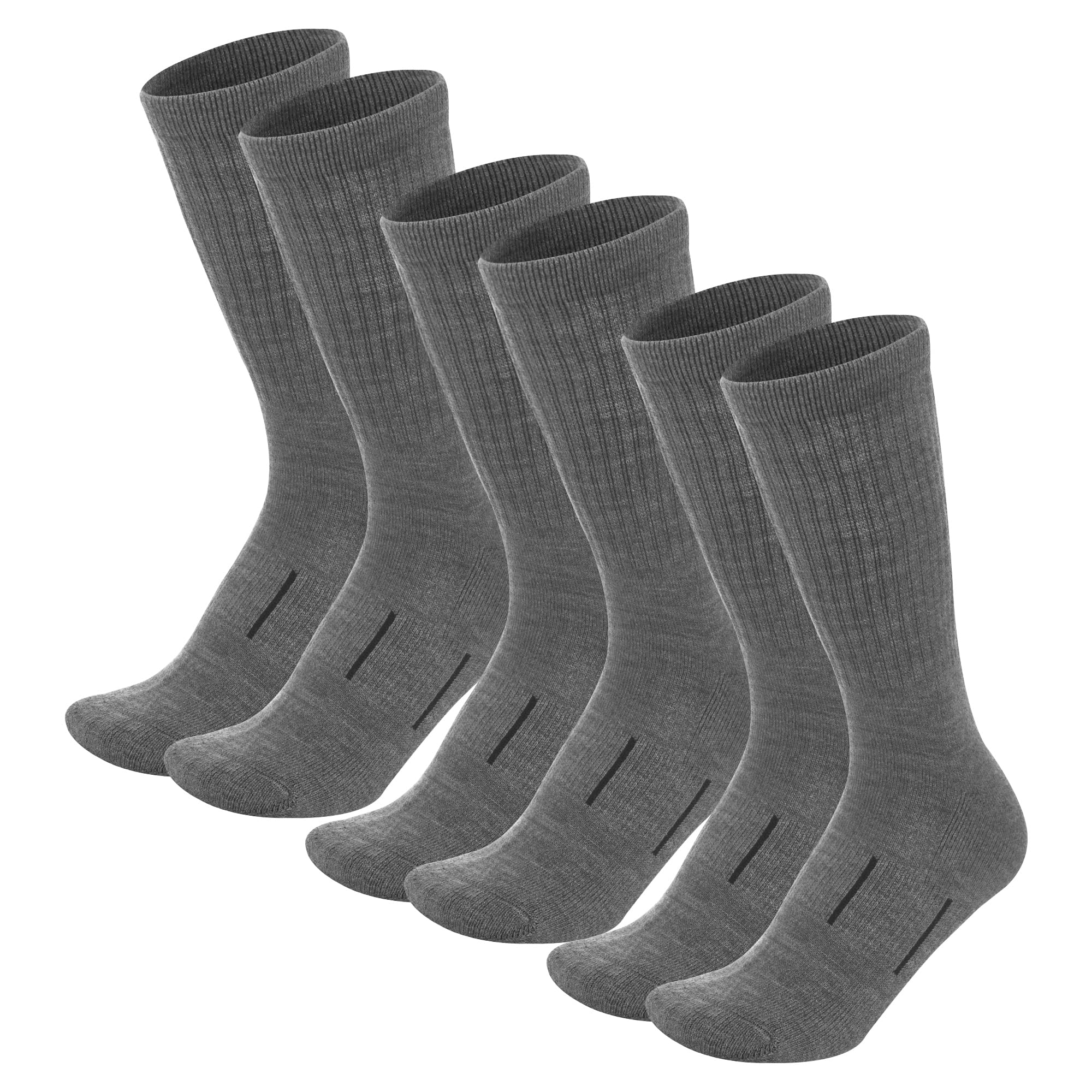
A mid-weight boot sock that fits sneakers and hikers alike, sold three to six pairs to a pack.
This is the practical, buy-it-in-bulk option: a mid-weight boot-style merino sock — thicker than a dress sock, lighter than a heavy boot sock — sized to fit sneakers, dress shoes, and hiking boots without bulk. It’s built from Australian merino wool that is RWS certified, an independent farm audit covering animal welfare and land management standards, and every component is tested against 100+ harmful substances under OEKO-TEX Standard 100. The insulation range of 20°F to 65°F (−6°C to 18°C) sets the ideal window, and the superfine fibers are finer than human hair, so it stays comfortable on sensitive skin.
The merino resists odor across up to five days of wear. The merino handles the long haul — no smell across up to five days of wear, warm in cold, cool in summer, and one owner reported four years of hot machine washing with no holes. Shoppers say the sock staying up all day and not constricting even on thick calves. If your laundry is hot and your time is short, merino that survives it is the whole point. Sit in an office or walk a trail, the sock behaves the same way.
The sizing is the one thing to get right. The sock runs large — a 10.5 shoe size lands between sizes, and the large came up too big for one buyer, who passed them on and reordered a medium. The fit also splits: some owners find only one size suits them, while another finds it too warm. Wash them cold and lay them flat to dry, and the merino keeps its shape far longer than a carefree tumble-dry routine allows.
Worth the wash-and-wear claim: a mid-weight merino that fits both sneakers and boots, and the RWS-certified wool plus OEKO-TEX testing are real marks in its favor.
The sizing honesty: this runs large, so check the chart by shoe size — getting it right is the whole game here.
For you if: you want a mid-weight merino that works across seasons and shoe types, and you don’t mind ordering by exact shoe size.
Not for you if: you want a thick deep-winter sock or a guaranteed lifetime replacement policy.
9. Thorlos Hiking Crew 3-Pair Pack

Maximum-padding crew socks for heavy packs, rocky trails, and feet that bruise easily.
Thorlos built this pair for a specific problem the brand states plainly: rugged day hikes and extended backpacking over varied to difficult terrain, with maximum protection and comfort for people prone to blisters, foot pain, or discomfort. The cushioning is the point — thick padding through the sole and up the Achilles to shield against shoe wear, in a crew height that sits above the boot collar. It is a synthetic-heavy construction, which is exactly why some hikers prefer it over wool when wool makes their feet itch.
You get serious cushioning where it counts. Buyers keep pointing to the heavy padding, and it holds up under real mileage: buyers report no blisters after week-long 8–10 mile rocky hikes worn with liner socks. The thick cushioned sole gives a soft, cloud-like landing that stays comfortable through a full day on concrete in work boots. The sock stays up without being too tight or too loose, and multiple owners mention pairs surviving years of washing while still wearable.
The honest gripe is cost and pilling. Buyers flag that the sock is expensive for a three-pair pack, and that the surface can pill after the second wash — washing them inside out helps reduce that. A couple of owners also note the sock is warm, which makes it a fall-to-spring choice rather than a summer one. For a heavy padded sock, though, the durability and blister protection are what you are buying.
Built for hard miles
- Heavy cushioning through the sole and Achilles for maximum protection
- Stays up all day, neither tight nor loose
- A synthetic build that suits hikers who find wool itchy
- Customers note no blisters after multi-day rocky hikes
Trade-offs to accept
- Pricey for a three-pair pack — the padding commands a premium
- Can pill after the second wash; washing inside out helps
- Too warm for hot summer hiking
Worth it for: heavy-pack backpackers and walkers on harsh terrain who want the most padding, even at a higher cost.
Overkill for: light summer day hikes and anyone who prefers a thin, breathable sock.
Understanding the Specs
Fabric weight and thickness
Fabric weight runs from lightweight to thick, and it decides how much room you need in your boot. A lightweight sock with a thin underfoot layer is a better fit for snug footwear, while a thick or extra-thick sock fills space in a roomy boot and holds more warmth. Match weight to shoe fit first — the cushioning follows the boot, not the other way round.
Height: micro crew vs crew
Micro crew peeks just above the top of a standard hiking boot, protecting the heel without fabric climbing your calf. Crew reaches higher at the mid-calf, adding coverage and warmth for taller boots and colder days. If your boots bite at the ankle, go taller; if you want less fabric and less heat, micro crew is the smarter finish.
Fibre blend percentages
The blend percentages tell you what a sock will feel and behave like on the trail. Merino wool manages temperature and resists odor, while nylon adds durability, spandex or elastane adds stretch and recovery, and acrylic or polyester adds softness and reinforcement. A blend that is high in wool runs warmer and breathes well; a blend weighted toward synthetics holds shape harder but offers less natural odor control.
Cushioning placement
Cushioning goes where the foot meets pressure, and where it sits matters more than how much there is. Light cushioning pads the base of the foot for a thin, crowd-free feel. Full cushioning adds padding through the heel, ball, and sometimes the entire foot for heavier loads. Terry-loop cushioning is the soft, raised knit you feel underfoot, and it is what absorbs the strike mile after mile.
FAQ
Are merino wool backpacking socks better than cotton for hiking?
What thickness of backpacking sock should I choose for my boots?
How long do merino wool hiking socks last?
What is the difference between micro crew and crew height socks?
Do backpacking socks need special washing?
Are these backpacking socks unisex or sized by gender?
Do wool hiking socks shrink in the wash?
Can I wear backpacking socks in regular shoes or daily?
Is wool the only option for blister-prone feet?
What is the right sock height for backpacking in cold weather?
Final Thoughts: The Verdict
For most backpackers, the winning pair is the Darn Tough Women’s Critter Club Micro Crew. It pairs a lightweightunderfoot layer with a 43% merino wool blend and the brand’s Guaranteed for Life replacement, so a long-distance walk becomes a low-risk purchase. If you want full-cushion comfort across the whole foot at a friendlier outlay, the Niorasen Merino Wool Hiking Crew Socks is the one to reach for. And for heavy packs on rocky ground where padding matters most, the Thorlos Hiking Crew 3-Pair Pack delivers the thickest cushioning here.
One last nudge: the Critter Club sits at 4.8 stars across 900+ ratings, and the pair that outlasts everything you own is usually the pair you stop thinking about.
How We Picked
We do not accept paid placement. Every pick is matched to a real buyer and a real use-case; we do not hands-on test units.
Sources & Methodology
Specifications: manufacturer listings and product documentation. Review insights: verified customer reviews, as of September 2026. Pricing: not shown on this page (it changes often); check the current price via the retailer link.
As an Amazon Associate, Gadgets Feed earns from qualifying purchases. This does not affect which products we feature.