
Our readers keep the lights on and my morning glass full of iced black tea. As an Amazon Associate, I earn from qualifying purchases.
A backpacking tent under is the most contested price point in the outdoor gear world. At this threshold, you are not sacrificing a dry night’s sleep for a lighter pack — you are choosing between ripstop nylon with sealed seams and cheaper polyesters that wet out after three days of drizzle. The difference between a tent that survives a Sierra thunderstorm and one that pools water at your feet often comes down to a single spec: the waterproof rating of the floor fabric and whether the rainfly extends low enough to block splash-back.
I’m Min — the co-founder and writer behind Gadgets Feed. After cross-referencing hundreds of verified buyer experiences with factory spec sheets for seven different sub- backpacking shelters, I can show you exactly where the industry cuts corners and which models genuinely deliver a dry, stable shelter without blowing your budget.
Whether you are a thru-hiker trimming base weight or a weekend warrior looking for reliable 3-season protection, this guide cuts through the marketing claims to identify the most dependable backpacking tent under 200 dollars for real-world conditions.
How To Choose The Best Backpacking Tent Under 200
Shopping for a budget-friendly backpacking shelter means balancing three variables: weight, packed size, and weather resistance. At this price ceiling, you cannot have all three at peak performance — you must prioritize based on your typical terrain and season. Here are the critical factors that separate a smart purchase from a wet, heavy regret.
Tent Weight: Packed vs. Trail Weight
Manufacturers often quote a “minimum trail weight” that excludes stakes, guy lines, and the stuff sack — sometimes shaving off nearly a pound. A tent that claims 3 lbs on the box may actually weigh 4.5 lbs fully packed. For a true backpacking shelter under , look for a packed weight of 4.5 lbs or less for a 1-person model and 5.5 lbs or less for a 2-person model. Every extra half-pound feels like a brick after mile 12.
Waterproofing: Where to Find the Weak Spot
On budget tents, the floor is the most critical waterproofing element. A floor rating of 2000mm or higher paired with a bathtub-style construction prevents ground moisture from seeping through. The rainfly should have a minimum 1200mm coating and extend at least 6 inches from the ground — otherwise, wind-driven rain will wet out the inner mesh walls through splash-back. Factory-sealed (taped) seams are non-negotiable.
Pole Material and Geometry
Aluminum alloy poles (typically 7001 or 6061 series) resist bending under wind load and last significantly longer than fiberglass. Dome-shaped freestanding designs shed wind better and allow you to pick up the tent to reposition it — a huge advantage when scouting a flat, rock-free site. Budget-friendly tents with fiberglass poles save money upfront but often crack under sustained gusts above 30 mph.
Floor Space and Peak Height
A 1-person tent should offer at least 20 square feet of floor area and a peak height above 36 inches to allow sitting up without brushing the mesh. For 2-person models, anything under 28 square feet means shoulder-to-shoulder sleeping. Check the floor width at the head and foot — many budget-friendly tents taper aggressively, making a standard 25-inch sleeping pad a tight squeeze.
Quick Comparison
On smaller screens, swipe sideways to see the full table.
| Model | Category | Best For | Key Spec | Amazon |
|---|---|---|---|---|
| Naturehike Star River UL 2P | Premium | Two-person thru-hiking with modular weight distribution | 4.07 lbs packed weight · 15D nylon floor | Amazon |
| Featherstone Backbone 1P | Premium | Ultralight soloists using trekking poles | 2.38 lbs trail weight · Sil-Nylon single-wall | Amazon |
| Kelty Grand Mesa 2P | Mid-Range | Reliable 3-season camping with quick setup | 4.4 lbs packed weight · 68D polyester floor | $116.96$149.95Amazon |
| Naturehike Mongar 2P | Mid-Range | Budget-conscious pairs needing two vestibules | 4.73 lbs packed weight · 4000mm floor rating | Amazon |
| Kelty Late Start 2P | Mid-Range | Campers who prioritize 3-minute setup | 4+ lbs packed weight · Quickcorner pole sleeves | Amazon |
| ALPS Mountaineering Lynx 1 | Budget | Entry-level solo backpackers wanting rugged durability | 4.1 lbs packed weight · 75D poly taffeta floor | $109.99Amazon |
| KAZOO Waterproof 1P | Budget | Value-focused hikers on a tight budget | 3.3 lbs packed weight · 3000mm floor rating | $89.90Amazon |
In‑Depth Reviews
1. Naturehike Star River UL 2 Person

The Naturehike Star River UL hits the sweet spot for two-person backpacking under . Its awning-style vestibules create covered gear storage on both sides — a rare feature at this price — while the 15D nylon fabric keeps the packed weight at a competitive 4.07 lbs. The included footprint eliminates the need for a separate ground sheet, and the modular packaging lets you split the poles, rainfly, and inner tent between two packs to distribute the load evenly.
Dual side doors with two-way, snag-free zippers improve ventilation and make entry easy without climbing over a partner. The peak height of 41.3 inches offers enough room to sit upright and change clothes without brushing the mesh. Color-coded poles and clip attachments simplify pitch time to roughly three minutes after the first practice run.
The main trade-off is the rainfly’s water repellency — a subset of users report water pooling at the top during sustained heavy rain. The design works best when pitched with taut guylines to prevent sagging. At this weight and feature set, the Star River UL justifies its position as the most versatile two-person shelter in this guide.
Why it’s great
- Modular pack system ideal for splitting weight with a partner
- Awning vestibules keep gear dry and shaded
- Color-coded poles and clips enable fast setup
Good to know
- Rainfly can pool water if not pitched taut
- Floor fabric is thin — use the included footprint every time
2. Featherstone Backbone Ultralight 1 Person

The Featherstone Backbone redefines what a sub- shelter can weigh. At a minimum trail weight of 2 lbs 6 oz, it competes with ultralight tents costing three times as much — but requires trekking poles for setup (not included). The single-wall Sil-Nylon construction eliminates the need for a separate rainfly, saving pack volume, while the tapered 85-by-20-inch floor fits a standard sleeping pad without wasted space.
Two doors with dual vestibules provide cross-ventilation that helps mitigate condensation — the single biggest challenge in any single-wall tent. The 40/60 pole placement creates extra headroom around the shoulders, allowing a 6-foot-4 user to sit upright. Reinforced pole pockets prevent the trekking pole tips from puncturing the fabric, a common failure point in this design style.
Condensation management is the persistent compromise here. In sustained rain or high humidity, moisture can accumulate on the interior walls and drip onto gear. Seam-sealing the ridge lines before your first trip significantly improves dry-weather performance. For solo thru-hikers who already carry trekking poles, the Backbone offers a dramatic weight savings without crossing the threshold.
Why it’s great
- Sub-2.5 lb trail weight at a fraction of cottage-brand pricing
- Dual doors and vestibules improve ventilation
- Spacious enough for tall backpackers
Good to know
- Requires trekking poles — not a freestanding option
- Condensation can be severe in wet conditions
3. Kelty Grand Mesa 2 Person

Kelty’s Grand Mesa has been a staple in the entry-to-mid-range backpacking category for years, and the latest iteration refines the formula without raising the price. The 68D polyester floor and rainfly resist abrasion better than thinner 20D or 15D nylon found elsewhere in this guide, making this tent a smarter choice for rocky campsites and high-use scenarios. The 30-square-foot interior and 44-inch peak height offer genuine two-person capacity for average-sized adults.
The Quick Corners system — reinforced sleeves at each pole corner — locks the aluminum poles in place during setup, preventing the poles from sliding out when you are pitching solo. Color-coded clip attachments and a single EZ-Zip vestibule streamline the process further. The fully taped seams and bathtub floor construction have earned consistent reports of staying bone-dry in sideways rain and overnight drizzle.
The packed size is the primary concession at 16 by 7 by 7 inches, which is bulky compared to the ultralight options in this list. The supplied stakes are functional but not robust — upgrading to MSR Groundhogs or similar Y-stakes adds stability in loose soil. For backpackers who prioritize durability and ease of use over marginal weight savings, the Grand Mesa delivers the best balance of value and reliability.
Why it’s great
- Thick 68D fabric resists punctures and abrasion
- Quick Corners make solo setup genuinely simple
- Proven dry performance in sustained rain
Good to know
- Packs larger than nylon alternatives
- Factory stakes are lightweight but weak
4. Naturehike Mongar 2 Person

The Naturehike Mongar is a direct competitor to more expensive freestanding dome tents, offering a full 4000mm waterproof rating on both the floor and fly — the highest hydrostatic head in this guide. The 20D nylon fabric keeps weight manageable at 4.73 lbs packed, and the two symmetrical vestibules provide dedicated gear storage on each side, making this the most practical option for pairs who each carry a full pack.
The B3 mesh inner tent provides excellent bug protection while maintaining airflow, and the top vents on the rainfly can be propped open to release warm, moist air — a crucial detail for reducing condensation buildup. The Y-frame pole structure with 7001 aluminum alloy strikes a good balance between strength and weight, surviving moderate wind without excessive flex. A free groundsheet is included, adding to the value.
At 53.2 inches wide, the floor comfortably fits two standard 25-inch sleeping pads, though the 20D nylon floor benefits from the included footprint to prevent wear. Some users report that the stakes bend easily in hard-packed or rocky soil. For budget-conscious pairs who want dual-vestibule convenience and serious waterproofing, the Mongar punches well above its price category.
Why it’s great
- Exceptional 4000mm waterproofing on floor and rainfly
- Two full-sized vestibules for gear storage
- Includes footprint and has top ventilation vents
Good to know
- Not the lightest option for its size
- Included stakes bend easily in hard ground
5. Kelty Late Start 2 Person
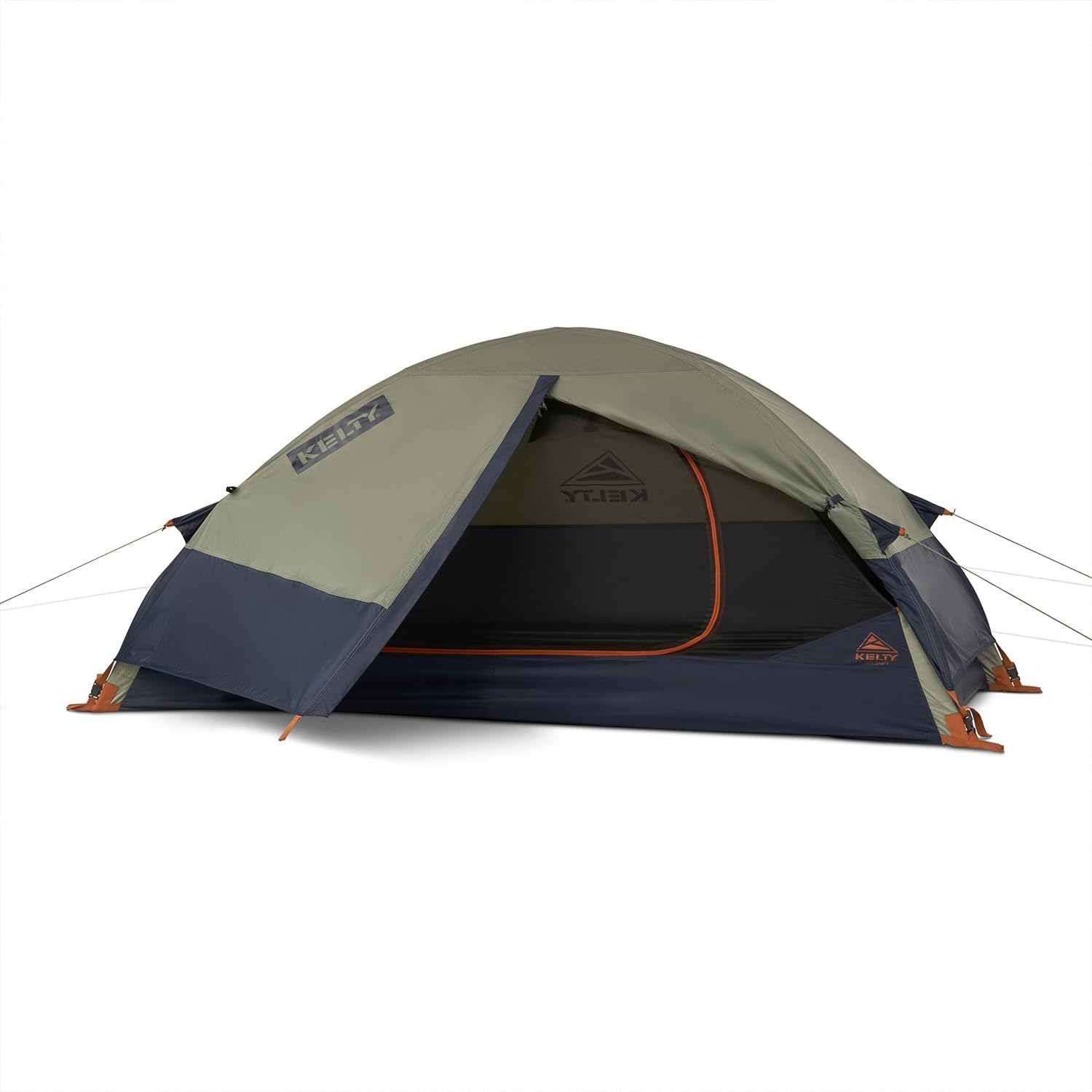
The Kelty Late Start is engineered for backpackers who want a shelter that goes from stuff sack to fully pitched in under three minutes. The Quickcorner pole sleeves capture each pole tip instantly, and the color-coded buckle attachments eliminate any guesswork about which clip goes where. With only two poles and a single door, the design minimizes complexity without sacrificing stability.
The 68D polyester floor and rainfly mirror the Grand Mesa’s fabric approach — thicker than ultralight competitors and more resistant to punctures from sharp rocks or pine needles. At roughly 4+ lbs packed weight, it is heavier than some solo tents, but the interior space accommodates two standard sleeping pads with room to spare. The single vestibule is generous enough for two backpacks stacked vertically.
The trade-off for the lightning-fast pitch is a slightly less refined rainfly attachment system that can feel less secure in gusty winds compared to full-wrap designs. The featherlight stakes supplied with the tent should be replaced for any trip expecting sustained wind. For car-camping-adjacent backpacking trips where setup speed matters more than trail weight, the Late Start is a practical, well-built choice.
Why it’s great
- Genuinely fast 3-minute pitch with no practice needed
- Durable 68D fabric resists wear
- Roomy interior for two people and gear
Good to know
- Rainfly can feel loose in strong wind
- Featherlight stakes are not durable
6. ALPS Mountaineering Lynx 1

The ALPS Mountaineering Lynx 1 prioritizes ruggedness over weight reduction, making it a smart pick for new backpackers or those who camp in areas with rough, rocky terrain. The 75D 185T poly taffeta floor is the thickest fabric in this guide, paired with a 2000mm coating that shrugs off ground moisture. The 2-pole freestanding design is almost idiot-proof to assemble — reviewers consistently report setup times under 90 seconds after the first use.
The half-mesh walls balance ventilation with privacy, reducing condensation compared to fully mesh inner tents. A single vestibule offers enough space for a backpack and boots, and the interior mesh pockets and gear loft keep small items organized. At 4 lbs 1 oz packed, it is not ultralight, but the trade-off is a shelter that feels genuinely sturdy when the wind picks up and the rain starts coming down horizontally.
The main downsides are the weight and the factory stakes, which many users describe as flimsy and recommend upgrading. The 36-inch floor width runs narrow for broader sleepers — check the dimensions against your sleeping pad before purchasing. For entry-level backpackers who want a tent that will survive scrapes, drops, and rough handling without breaking the bank, the Lynx 1 is the most sensible choice in the budget tier.
Why it’s great
- Extremely durable 75D floor resists punctures
- Quick, intuitive 2-pole setup
- Half-mesh walls reduce condensation
Good to know
- Heavier than the competition at over 4 lbs
- Narrow 32-inch floor width limits pad options
7. KAZOO Waterproof 1 Person

The KAZOO 1-person tent delivers an impressive packed weight of just 3.3 lbs for the lowest price in this guide, making it a strong entry point for anyone testing the backpacking waters. The double-layer construction uses a 3000mm-rated rainfly over B3 mesh inner walls, providing genuine waterproof protection that has held up in reviews against thunderstorms, frozen rain, and snow in alpine environments like Banff and the Wind River Range.
A single integrated aluminum pole with clip attachments simplifies setup to a few minutes, and the freestanding dome design allows you to relocate the tent before staking it down. The use of GRS-certified recycled polyester fabric sets it apart in an industry that rarely mentions sustainability at this price point. Reflective guy lines improve visibility in low light, and the included repair kit adds security for multi-night trips.
At 36 inches wide and 83 inches long, the floor is snug — taller users may find their toes brushing the mesh, and the peak height limits sitting upright. The vestibule is small, so gear storage options are limited. The groundsheet also extends beyond the rainfly’s drip line, which can channel water underneath if not pitched on perfectly flat ground. For solo hikers who prioritize low weight and a low price above all else, the KAZOO is a capable, proven performer.
Why it’s great
- Lightest packed weight in the budget tier at 3.3 lbs
- 3000mm waterproof rating is field-tested in heavy storms
- Made with certified recycled fabrics
Good to know
- Small vestibule and tight interior for taller users
- Groundsheet extends past rainfly — can channel water
FAQ
Will a tent keep me dry in a thunderstorm?
How many square feet do I need for comfortable two-person sleeping?
Can I use a trekking pole tent without trekking poles?
Why do cheap tents often leak at the seams?
How important is a footprint for a sub- tent?
Final Thoughts: The Verdict
For most backpackers, the best backpacking tent under 200 dollars is the Naturehike Star River UL 2 Person because it combines a modular, two-person-friendly weight of 4.07 lbs with awning vestibules and an included footprint — an unbeatable feature-to-dollar ratio. If you want a sub-2.5 lb solo shelter and already use trekking poles, grab the Featherstone Backbone 1 Person. And for rugged, entry-level reliability where durability matters more than ounces, nothing beats the ALPS Mountaineering Lynx 1.
Product prices and availability are accurate as of the date/time indicated and are subject to change. Any price and availability information displayed on Amazon at the time of purchase will apply to the purchase of this product. As an Amazon Associate I earn from qualifying purchases.
CERTAIN CONTENT THAT APPEARS ON THIS SITE COMES FROM AMAZON. THIS CONTENT IS PROVIDED "AS IS" AND IS SUBJECT TO CHANGE OR REMOVAL AT ANY TIME.
Amazon and the Amazon logo are trademarks of Amazon.com, Inc. or its affiliates.