
A CPAP machine is a lifeline for sleep apnea, but it becomes a paperweight the moment the grid goes down. A dedicated backup battery ensures your therapy continues through blackouts, camping trips, or any situation where a wall outlet isn’t available, preserving both the quality of your sleep and your long-term health. The right unit delivers clean, pure sine wave power that sensitive respiratory devices demand, and enough watt-hours to last a full night or more.
I’m Min — the co-founder and writer behind Gadgets Feed. I’ve spent countless hours cross-referencing battery chemistries, inverter types, DC barrel connector voltages, and real-world runtime claims to separate the true multi-night performers from the marketing fluff.
Whether you need a lightweight pack for travel or a high-capacity station for hurricane season, this guide analyzes the specs that matter most. Read on for my curated list of the very best options for any backup battery for cpap.
How To Choose The Best Backup Battery For CPAP
Selecting the right backup battery for your CPAP is about more than just the biggest number on the box. You need to match the battery’s chemistry, output topology, and runtime to your specific machine’s power consumption and your usage scenario.
Watt-Hour (Wh) Capacity and Runtime
This is the most critical spec. A typical CPAP without a heated humidifier or tube draws between 30W and 60W per hour. A 300Wh battery will therefore run a 50W CPAP for roughly six hours. If you use a humidifier and heated tube, the draw can spike to 100W+, cutting runtime in half. Always calculate your needs based on your specific machine’s draw with and without heated accessories.
Pure Sine Wave vs. Modified Sine Wave
CPAP machines use a sensitive blower motor that can hum, overheat, or even fail on modified sine wave power. A pure sine wave inverter delivers clean, stable AC power identical to what comes from your wall outlet. Every battery on this list uses pure sine wave for its AC output, ensuring your machine runs quietly and efficiently without risk of damage.
Direct DC Output vs. AC Inversion
Most CPAP machines can be powered directly via a 12V, 15V, or 24V DC barrel connector. Using DC output bypasses the inverter entirely, saving roughly 15% of the energy that would be lost converting from DC to AC and back to DC. Dedicated CPAP batteries like the EASYLONGER and BLUETTI X30 include specific DC cables for ResMed and Philips machines, maximizing runtime per watt-hour.
Battery Chemistry: LiFePO4 vs. Li-ion
Lithium Iron Phosphate (LiFePO4) batteries are the safer, longer-lasting choice. They handle 3000 to 4000+ charge cycles before degrading to 80% capacity, operate better in extreme temperatures, and have a much lower risk of thermal runaway. Standard lithium-ion batteries are lighter but typically last 500–1000 cycles. For a device you may leave plugged in or charge weekly, LiFePO4 is the preferred chemistry.
Quick Comparison
On smaller screens, swipe sideways to see the full table.
| Model | Category | Best For | Key Spec | Amazon |
|---|---|---|---|---|
| Jackery Explorer 1000 v2 | Premium | Whole-home backup & multi-night use | 1070Wh, 1500W AC output, 1-hour fast charge | Amazon |
| VTOMAN FlashSpeed 2400 | Premium | High-power devices & jump-starting | 1408Wh, 2400W output, 58-min full charge | Amazon |
| BLUETTI CPAP X30 | Premium | Dedicated CPAP with DC cables included | 297Wh, 3 DC ports, 3.9 lbs | Amazon |
| EASYLONGER ES960 | Premium | Multi-night CPAP with LiFePO4 safety | 297.6Wh, 4 dedicated cables, 6.6 lbs | Amazon |
| LIBRIDS C600 | Mid-Range | Big capacity & fast charging | 640Wh, 600W output, 1.5-hr charge | Amazon |
| BLUETTI Elite 30 V2 | Mid-Range | Compact UPS with Power Lifting | 288Wh, 600W output, 10ms UPS | Amazon |
| EASYLONGER ES720 PRO | Mid-Range | Travel-friendly with 4 CPAP cables | 276.48Wh, 3.3 lbs, wireless charging | Amazon |
| EBL Portable Power Station | Budget | Value with wireless charging pad | 288.6Wh, 330W AC, 7.9 lbs | Amazon |
| DaranEner Portable 192Wh | Budget | Ultra-compact & ultra-light | 192Wh, 300W output, 5.73 lbs | Amazon |
In‑Depth Reviews
1. Jackery Explorer 1000 v2

The Jackery Explorer 1000 v2 is the gold standard for CPAP users who want one power station for both home backup and outdoor adventures. Its 1070Wh LiFePO4 battery provides enough juice for 3 to 5 nights of CPAP therapy with humidifier off, or a full week without. The 1500W pure sine wave AC output can also handle a mini fridge, laptop, or even a microwave, making it a true multi-purpose investment rather than a single-device accessory.
What sets the 1000 v2 apart is its industry-leading 1-hour fast charge via the Jackery App, and a default 1.7-hour mode that protects battery health. The integrated ChargeShield 2.0 technology optimizes charging curves by temperature, extending the LiFePO4 cycle life to over 4000 cycles. At 23.8 lbs, it’s light enough for a quick car trunk transfer, and the foldable handle makes one-handed carries easy.
Real-world CPAP testing showed users powering a ResMed AirSense 11 for 7 hours using just 24% of the battery. The dual USB-C ports include a PD 100W output for ultra-fast laptop charging, and the Jackery App allows remote monitoring and emergency charging toggles. For CPAP users who also need a generator for their home, this is the complete package.
Why it’s great
- Massive 1070Wh capacity for multi-night CPAP runs.
- Ultra-fast 1-hour recharge in emergency mode.
- LiFePO4 chemistry with 4000-cycle lifespan.
Good to know
- Heavier than dedicated CPAP packs at 23.8 lbs.
- Requires the app for 1-hour fast charge activation.
2. VTOMAN FlashSpeed 2400
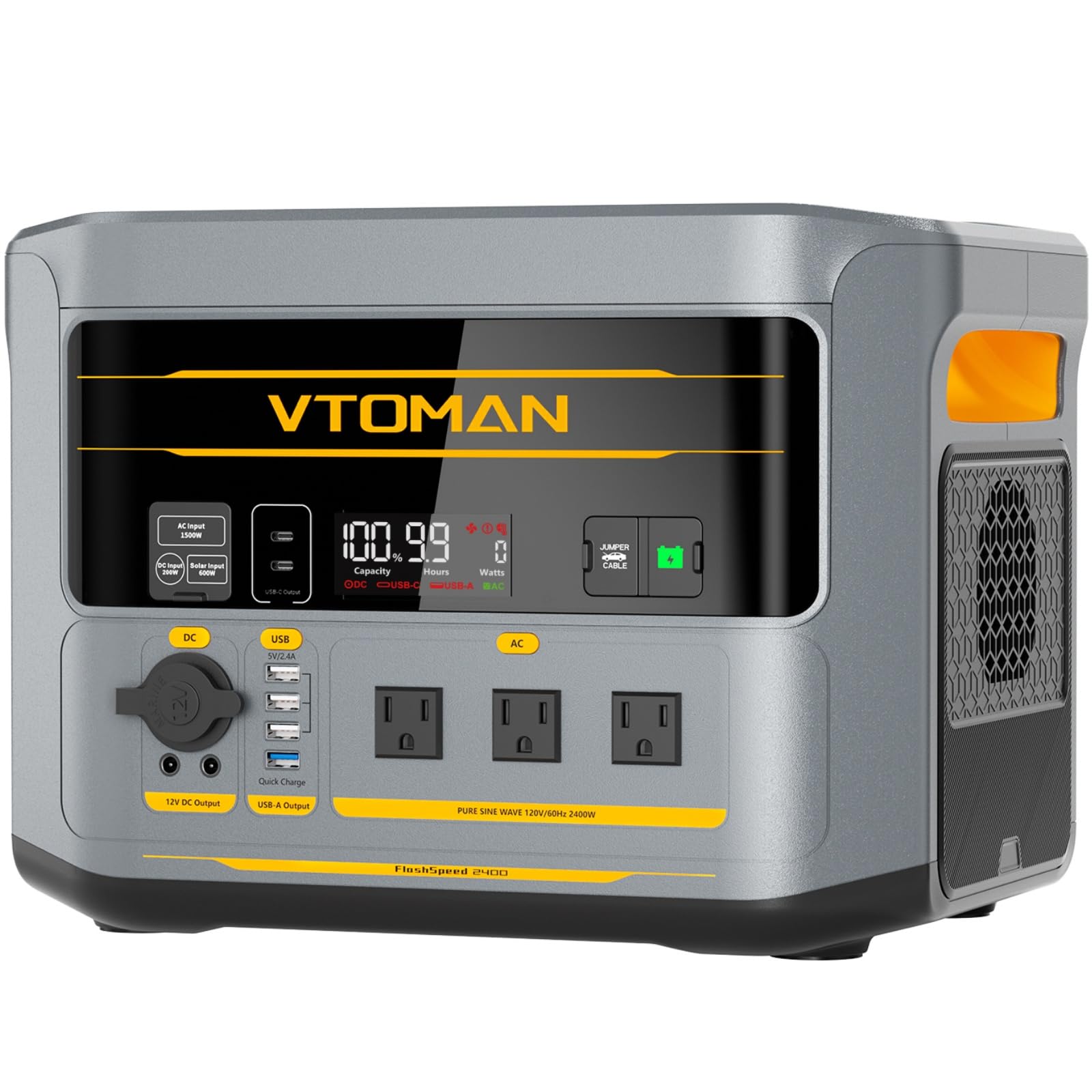
The VTOMAN FlashSpeed 2400 is the absolute beast of this lineup, designed for users who need the highest possible capacity and power output. Its 1408Wh LiFePO4 battery can run a CPAP for 5 to 7 nights straight without accessories, while its staggering 2400W AC output (3200W peak) can also jump-start a 12V vehicle. The 58-minute full recharge time is the fastest in this class, a direct result of the 1500W AC input capability.
This isn’t a compact travel battery—it weighs in at over 40 lbs depending on accessories. However, for home backup scenarios where you need to power a CPAP, refrigerator, and router simultaneously during a multi-day outage, the FlashSpeed 2400 is unmatched. The built-in 5-mode LED light (Low, Medium, High, Strobe, SOS) adds utility for emergency situations, and the 10ms UPS ensures your CPAP never blinks during a brownout.
User reports confirm it ran a full home office setup (ONT, router, laptop) through a storm without interruption. The 12 output ports—including two USB-C PD ports and three AC outlets—give you enormous flexibility. For camping, the 600W MPPT solar input (up to 600W) allows for off-grid recharging. This is the ultimate insurance policy for CPAP users who can’t afford any gap in therapy.
Why it’s great
- Massive 1408Wh and 2400W AC output.
- Sub-1-hour full recharge from wall power.
- Can jump-start a 12V car battery.
Good to know
- Heavy and not intended for air travel.
- Overkill if you only need CPAP power.
3. BLUETTI CPAP Battery Backup X30

The BLUETTI X30 is purpose-built for CPAP users who prioritize portability and simplicity. Weighing just 3.9 lbs and roughly the size of a thick paperback, it’s the lightest true CPAP battery on this list. The 297Wh capacity is paired with three dedicated DC output ports (12V/5A, 15V/4A, 24V/4A) that directly match the voltage requirements of ResMed S9, AirSense 10/11, AirMini, and AirCurve 10 machines. BLUETTI includes five color-coded DC cables in the box, so you’re ready to plug in without buying adapters.
The core advantage here is efficiency. By outputting DC power directly to the CPAP, you bypass the inverter loss that plagues general-purpose generators. Real-world testing shows users getting 5 to 7 nights from a single charge with a Philips System One at pressure 10 and humidifier off. With the heated humidifier active, expect 2 to 3 nights—still impressive for a sub-4-pound pack. The built-in BMS protects against overcharge and short circuits, and the subtle night light is a nice touch for dark hotel rooms.
Charging is handled by a standard AC adapter (included) that fills the battery in about 5 hours. It also supports 60W USB-C PD input and solar panel charging. The included accessory bag keeps all cables organized. The X30 is the ideal choice for frequent travelers who need a lightweight, reliable DC solution that vanishes into a carry-on bag.
Why it’s great
- Ultra-light 3.9 lbs—perfect for travel.
- Direct DC output with 5 included CPAP cables.
- 5 to 7 nights per charge without heated accessories.
Good to know
- Only one device at a time via DC ports.
- AC recharging takes ~5 hours.
4. EASYLONGER ES960 CPAP Battery Backup

The EASYLONGER ES960 is one of the most CPAP-centric power stations on the market, offering a 297.6Wh LiFePO4 battery with four dedicated DC cables for ResMed AirSense 10/11, AirCurve 10/11, AirMini, Philips DreamStation 1/2, and Luna G3. The unit’s 3000+ cycle LiFePO4 chemistry gives it a lifespan measured in decades under regular use, making it a true buy-it-for-life investment. The fold-out handle and 6.6 lb weight make it easy to slot into a camping kit or emergency go-bag.
Runtime data is impressive: users report 24.7 hours of CPAP use over three nights with humidity and heat off, still leaving 75% battery. With heated hose and humidifier active, expect about 8 to 10 hours per charge. The battery supports pass-through charging, so it can remain connected to wall power and act as a UPS for your CPAP. In a power outage, the unit automatically switches to battery, keeping your therapy uninterrupted.
The ES960 includes a 60W USB-C PD input and a 72W AC adapter for full recharge in 5–6 hours. It also has a bright white LED with steady and SOS flash modes. The 6 output ports include 2 USB-A, 1 USB-C, and 3 DC barrel jacks. Note that the battery exceeds the 160Wh TSA limit, so it’s not allowed in carry-on baggage. For car camping, RV trips, and home blackouts, it’s an exceptional value.
Why it’s great
- LiFePO4 battery rated for 3000+ cycles.
- 4 dedicated CPAP cables included in the box.
- Excellent runtime—3+ nights without humidifier.
Good to know
- Not TSA-approved for air travel.
- No direct 12V car charging cable included.
5. LIBRIDS Portable Power Station C600
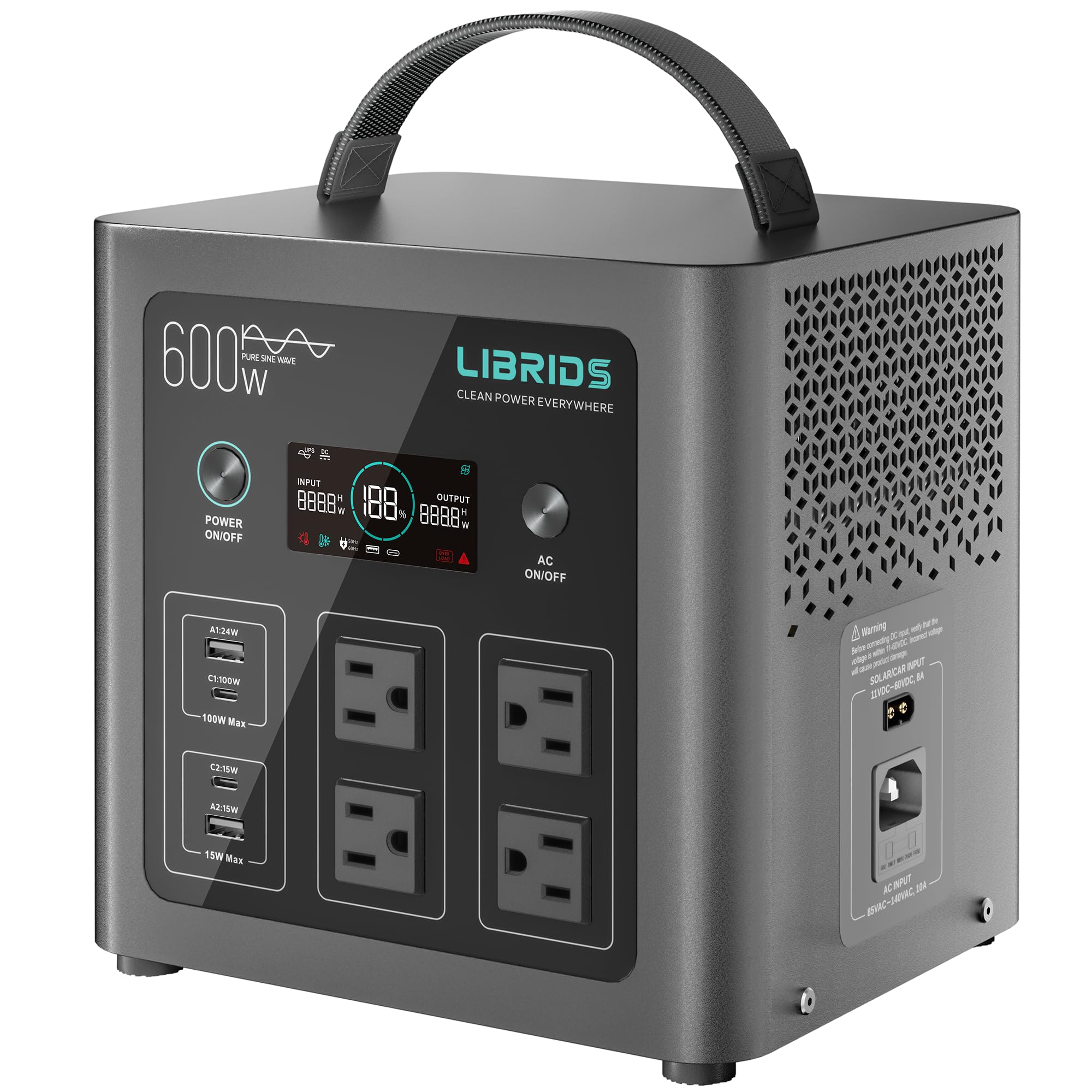
The LIBRIDS C600 is a mid-range powerhouse that punches well above its weight class with a 640Wh LiFePO4 battery and 600W pure sine wave AC output (1200W surge). For CPAP users, this translates to roughly 4 to 5 nights of therapy (without heated accessories) on a single charge. The unit’s 1.5-hour full recharge from a wall outlet is remarkably fast for this capacity tier, and the metal enclosure improves heat dissipation for safer indoor operation.
A standout feature is the 10ms UPS auto-switch, which instantly engages battery power during a grid glitch, ensuring your CPAP never pauses. The 8 output ports include 4 AC outlets, 2 USB-A, and 2 USB-C. A real-world test with a ResMed AirSense 11 showed only 24% battery drain over 7 hours of use, projecting a full 29-hour runtime on a single charge. The PowerRaise technology handles startup surges from small appliances, adding versatility.
The 5-year warranty is among the longest offered on any portable power station, reflecting confidence in the automotive-grade LiFePO4 cells. The smart LCD screen displays battery percentage and real-time input/output wattage. It is not waterproof, so it must be kept dry and well-ventilated. For CPAP users who want a high-capacity station that charges quickly and lasts for years, the C600 is a compelling choice.
Why it’s great
- Large 640Wh capacity for 4+ nights of CPAP.
- 1.5-hour fast AC charging.
- Metal enclosure and 5-year warranty.
Good to know
- Heavier than dedicated CPAP packs at 18 lbs.
- No dedicated CPAP DC cables included.
6. BLUETTI Elite 30 V2
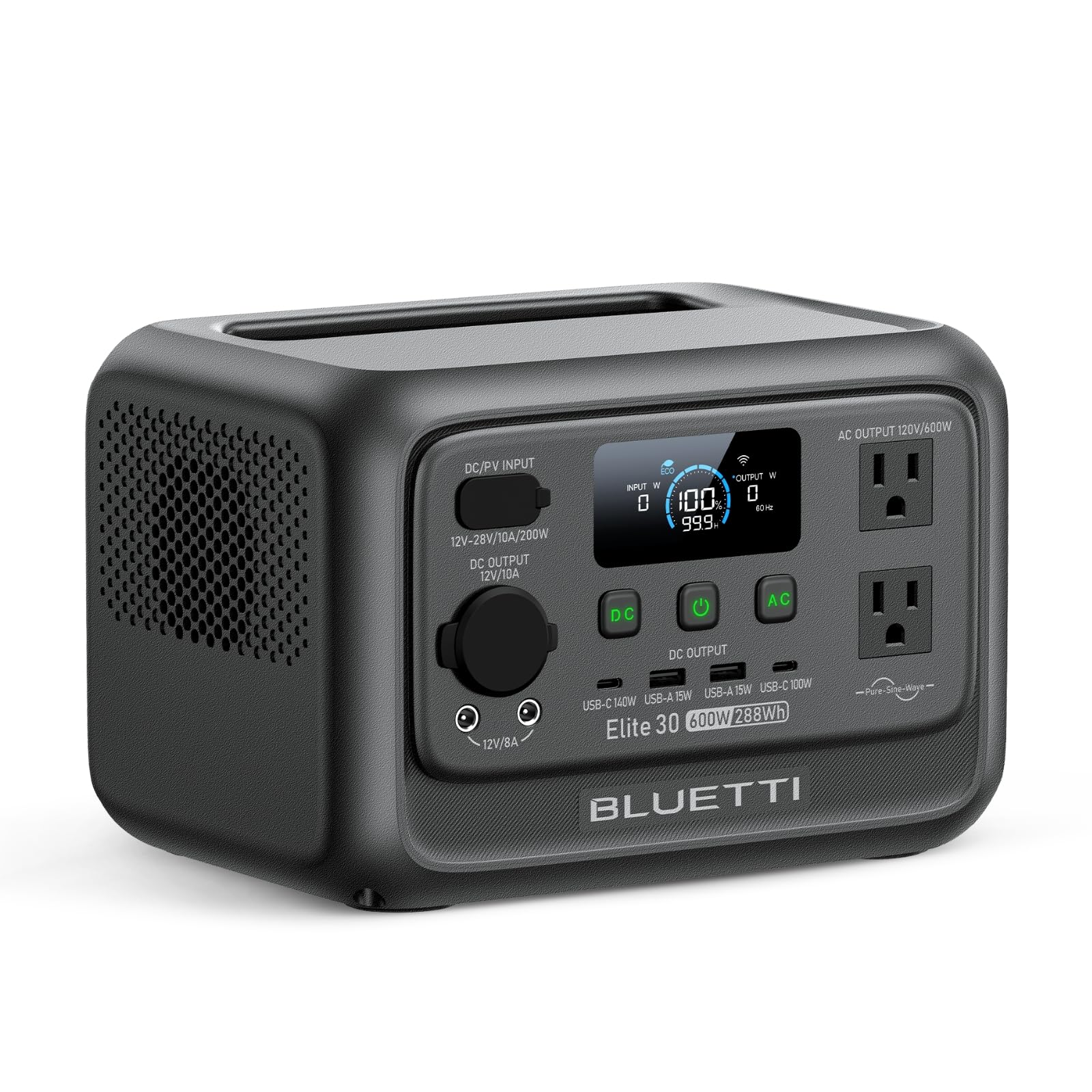
The BLUETTI Elite 30 V2 is a cleverly designed power station that prioritizes versatility and efficiency. Its 288Wh LiFePO4 battery is paired with a 600W AC inverter that can be boosted to 1500W via Power Lifting Mode, enabling it to briefly power small kettles or toasters. For CPAP users, the 10ms UPS mode is a killer feature: the unit continuously charges from the wall and switches to battery in under 10 milliseconds if the grid fails, meaning your therapy machine never loses power.
The Elite 30 V2 recharges from 0% to 80% in just 45 minutes, and to 100% in 70 minutes, thanks to a 380W AC input. It also supports solar, car, and USB-C PD charging. The integrated app provides real-time monitoring of battery state and allows you to toggle the UPS mode on or off. At 9.4 lbs, it’s light enough to move between rooms easily, making it ideal for users who want a semi-permanent bedside UPS that can also be grabbed for camping.
Users running a home server confirm the Elite 30 V2 works as a rock-solid UPS alternative to traditional backup units. CPAP-specific feedback notes that the AirSense 11 runs for about 6 to 8 hours on a full charge with the humidifier off. The upgraded UltraCell smart cooling system cuts standby power consumption by 50% to just 4.5W, prolonging battery lifespan when left plugged in. This is a top choice for users who need a compact, always-on UPS for their CPAP.
Why it’s great
- 10ms UPS keeps CPAP running through power glitches.
- Fast 70-minute full recharge.
- Low 4.5W standby power consumption.
Good to know
- No dedicated CPAP DC cables included.
- 288Wh capacity is a single night for most users.
7. EASYLONGER ES720 PRO CPAP Battery Backup
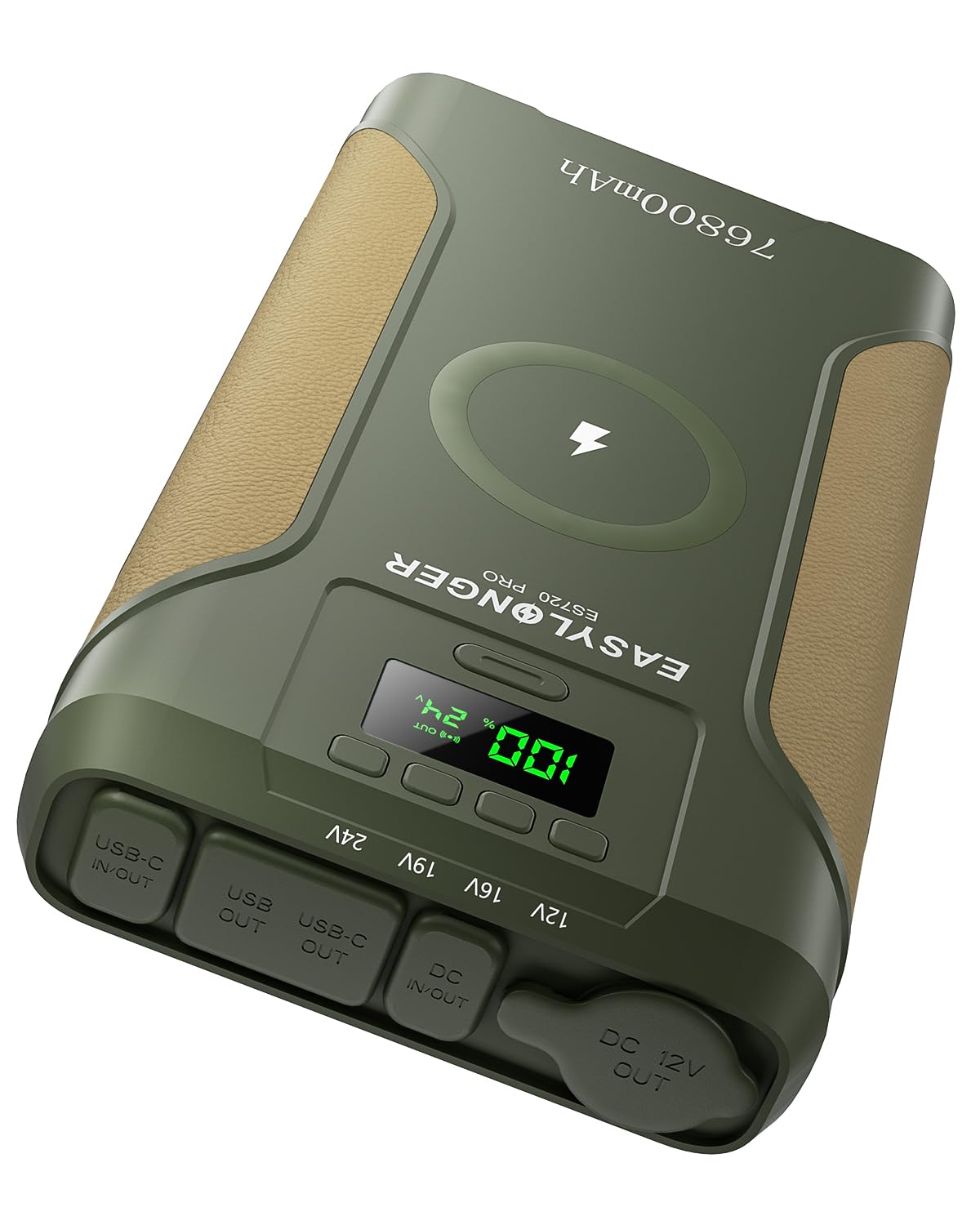
The EASYLONGER ES720 PRO is the lightest CPAC-specific battery on this list at just 3.3 lbs, making it the top pick for backpackers and air travelers (check TSA rules, as capacity varies by airline). The 276.48Wh battery is housed in a compact chassis with a comfortable carrying bag, and it includes four dedicated DC cables for ResMed AirSense 11/10, AirCurve 10/11, AirMini, Philips DreamStation, and Luna TravelPAP. The adjustable DC output (12V/16V/19V/24V) covers virtually every CPAP voltage requirement.
Runtime is solid for its weight: users report powering an AirSense 11 for two nights of dry camping with more than 50% charge remaining. Adding a heated hose or humidifier will cut runtime significantly, but the smart digital display shows real-time voltage and battery level so you can manage your usage. The unit also features a 5W wireless charging pad on top, which is handy for topping off a phone or earbuds during the night.
Charging is flexible with 72W AC adapter, 60W USB-C PD, car cigarette lighter, and up to 100W solar panel support via the built-in MPPT controller. The ES720 PRO also supports pass-through charging, allowing it to be used as a UPS. The built-in BMS protects against overcharge, over-discharge, and short circuits. It’s the lightest complete CPAP solution available, ideal for road trips where every pound counts.
Why it’s great
- Ultra-light 3.3 lbs with carrying bag.
- 4 dedicated CPAP DC cables included.
- Adjustable DC voltage for any machine.
Good to know
- Not TSA-approved due to capacity (check airline).
- Battery drains fast with heated accessories.
8. EBL Portable Power Station 288.6Wh
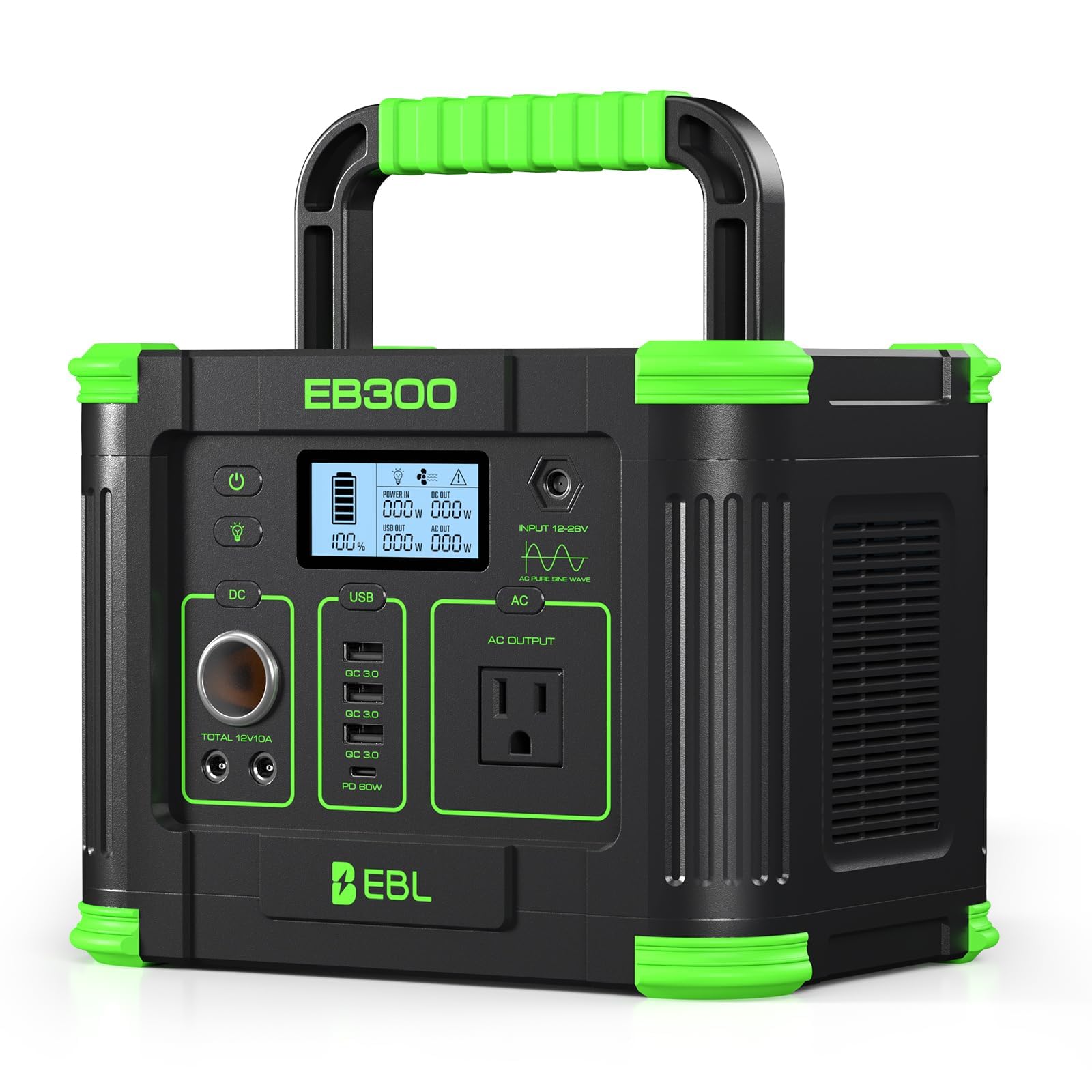
The EBL Portable Power Station offers the best value-to-capacity ratio for CPAP users on a budget. The 288.6Wh battery and 330W pure sine wave AC output (600W peak) can run a CPAP for a full night without humidifier, and its compact 7.9 lb design is easy to move from bedside to car trunk. The star feature is the built-in 5W wireless charging pad, letting you drop your phone on top for a trickle charge without fumbling with cables.
The multi-port configuration includes 2 DC 5521 ports, a 12V 10A cigarette lighter port, 2 USB-A (QC3.0), 1 USB-C (PD 60W), and a single AC outlet. Real-world CPAP testing showed the unit running an AirSense 11 for over 8 hours in a power outage with battery to spare. The smart cooling fan only activates under high load, keeping it silent during CPAP use. The SOS mode and 3W LED light operate independently of the main power, providing emergency illumination even if the battery is depleted.
Charging from a wall outlet takes 6 to 7 hours, and solar charging (60–120W panel) fills it in 5 to 9 hours. The build quality is solid ABS plastic with anti-collision strips. Some users noted the wireless charger doesn’t work through thick cases, and the actual usable capacity may be closer to 140Wh under sustained load. For the price, however, it’s a capable and feature-rich entry-level backup for CPAP users.
Why it’s great
- Excellent price-to-capacity ratio.
- Built-in wireless charging pad.
- Quiet fan and independent emergency LED.
Good to know
- Single AC outlet limits home backup use.
- Long 6–7 hour AC recharge time.
9. DaranEner Portable Power Station 192Wh
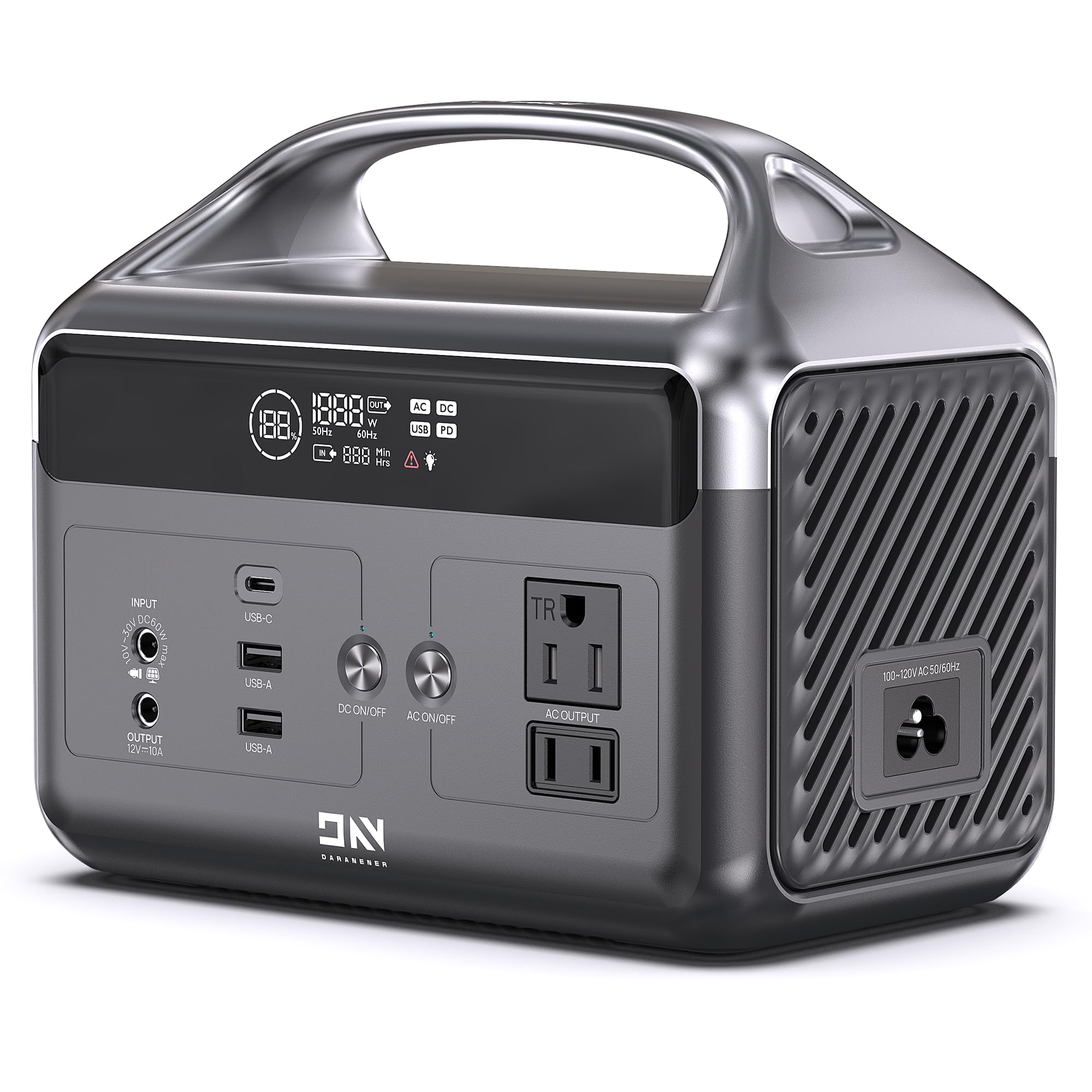
The DaranEner NEOZ is the most compact and lightweight power station on this list at just 5.73 lbs, roughly the size of a toaster. Its 192Wh LiFePO4 battery is rated for 3500+ cycles, making it one of the longest-lasting options from a chemistry perspective. The 300W pure sine wave AC output (600W peak) is sufficient to run a CPAP machine without heated accessories, and the unit’s low weight makes it the best option for tossing in a backpack for short trips.
Real-world CPAP feedback from users confirms it runs a CPAP machine most of the night during a power outage, and that it’s “perfect” for E-bike touring given its small footprint. The 6-device simultaneous charging capacity includes 2 AC outlets, a USB-C PD 60W port, and 2 USB-A QC3.0 ports. The integrated LED flashlight has 4 brightness modes including SOS, and a display provides remaining battery and hours-remaining estimates.
Charging is slower than newer competitors—AC wall charging is max 100W, and solar input is capped at 60W. A full charge from 0% takes about 2.5 hours. The unit also requires a manual calibration cycle (full charge and discharge) after receiving to reach peak performance. Some users reported the DC side failed after months of use, though customer service replaced the unit without hassle. At this price and weight, it’s an excellent emergency-only backup or travel companion.
Why it’s great
- Ultra-light 5.73 lbs—most portable option.
- LiFePO4 with 3500+ cycle life.
- Very affordable entry-level CPAP backup.
Good to know
- 192Wh capacity is only 4–6 hours for most CPAPs.
- Charges slowly via AC (100W max).
FAQ
Can I use any portable power station with my CPAP machine?
How many nights will a 300Wh battery last with a CPAP machine?
Can I use my CPAP battery as a UPS for home use?
Is it safe to leave a LiFePO4 CPAP battery plugged in all the time?
What does the TSA limit on lithium batteries mean for my CPAP backup?
Final Thoughts: The Verdict
For most users, the backup battery for cpap winner is the Jackery Explorer 1000 v2 because its 1070Wh capacity, LiFePO4 safety, and fast recharge create a single solution that handles both CPAP backup and full home emergency power. If you want a purpose-built, ultra-light travel companion, grab the BLUETTI X30, which delivers 5–7 nights in a 3.9 lb package with dedicated CPAC cables. And for the budget-conscious who still need a full night of protection, nothing beats the value of the EBL Portable Power Station.