
Reversing a large vehicle without a clear view of what is behind you is a gamble every time you shift into reverse. A dedicated backup camera and monitor system eliminates that blind spot, turning a stressful backing maneuver into a simple glance at a screen. Whether you drive a truck, van, SUV, or tow a trailer, the right setup provides critical rearward visibility that your factory mirrors simply cannot match.
I’m Min — the co-founder and writer behind Gadgets Feed. I have spent countless hours analyzing the technical specifications, user experiences, and real-world performance of dozens of backup camera systems to understand exactly what specs separate a usable setup from a frustrating one.
This guide breaks down the core differences between wired and wireless systems and explains the specific features that matter most for reliable backing visibility so you can confidently choose the best backup camera and monitor for your vehicle and your daily driving needs.
How To Choose The Best Backup Camera And Monitor
Not all backup camera systems are created equal. The one that works perfectly for a sedan may be useless for a long-bed pickup truck, and a wireless camera that works well in your driveway might drop its signal at a crowded campsite. Before you pick a system, understand these four critical factors that determine whether a backup camera will truly solve your visibility problem.
Wired vs. Wireless Video Transmission
Wired systems use a physical RCA or mini-DIN cable running from the camera to the monitor. This guarantees zero latency, no signal interference, and a consistently stable image, even when passing through high-EMI areas near power lines or other vehicles. The tradeoff is installation time — you must route the cable through your vehicle’s interior, which can take an hour or more. Wireless systems use 2.4GHz or dual-antenna technology to transmit video. They are significantly faster to install (often under 15 minutes), but they are susceptible to signal dropouts in areas with strong radio interference or at longer distances beyond 30-50 feet. If you need absolute reliability and do not mind the installation, choose wired. If you swap vehicles often or dislike running cables, wireless is the smarter pick.
Monitor Size, Resolution, and Display Type
Monitor sizes typically range from 4.3 inches to 7 inches. A 4.3-inch display is compact and clips onto your rearview mirror, preserving dashboard space. A 7-inch screen provides a much larger image, making it easier to spot pedestrians, curbs, or trailer hitch balls. Resolution matters just as much — standard definition (QVGA) looks grainy and washed out, while 1080p HD or 2K resolution delivers sharp detail that lets you read license plates and see small obstacles. LCD panels are common, but IPS (In-Plane Switching) screens offer superior off-axis viewing, which is critical when the monitor is mounted to the windshield or dashboard at an angle.
Camera Field of View and Night Vision
A standard rearview camera offers a 120-150 degree field of view. For a passenger car, 120 degrees is sufficient to see the area directly behind the bumper. For a long truck bed or a trailer, a 150-170 degree wide-angle lens is essential to cover the blind spots on both sides. Night vision capability is determined by the type of IR LEDs built into the camera. Standard IR illuminators provide black-and-white night vision, while higher-end cameras use white LEDs or advanced CCD sensors to deliver full-color night vision. If you frequently back into dark garages or unlit driveways, prioritize a system with IR or white-LED night vision.
Power Source and Mounting Flexibility
Wired cameras draw power from your reverse lights or from a constant 12V source, meaning they automatically activate when you shift into reverse. Wireless cameras are typically battery-powered, with some models offering solar panels to top off the charge during daylight. If you drive daily and do not want to worry about charging, a wired system is the most set-and-forget solution. If you need to move the camera between multiple vehicles (e.g., a truck and a trailer), a magnetic-mount wireless system with solar charging provides unmatched flexibility. For larger RVs and fifth wheels, a pre-wired Furrion-compatible system dramatically simplifies installation by leveraging existing wiring.
Quick Comparison
On smaller screens, swipe sideways to see the full table.
| Model | Category | Best For | Key Spec | Amazon |
|---|---|---|---|---|
| Rohent R4 | Dual Camera Wired | Trucks, RVs, Tractors | 7″ 1080p split-screen, 170° FOV | Amazon |
| Rohent R52 Solar | Solar Wireless | Pickups, Campers | 7″ 1080p, 170° FOV, 15000mAh | Amazon |
| ZEROXCLUB BW7M | Wireless RV Pre-Wired | Furrion-ready RVs | 7″ 1080p IPS, 120° FOV | Amazon |
| HaoKeo H7 | Budget Wired | Cars, SUVs, Sedans | 7″ 2K monitor, 150° FOV | Amazon |
| AUTO-VOX S1P6 Dual | Dual Wireless Solar | Cars, SUVs, Trailers | 6″ 16:9 HD, 1080p, dual camera | Amazon |
| VECLESUS VT1 | Clip-On Mirror | Cars, Pickups, Sedans | 4.3″ mirror monitor, 1080p CCD | Amazon |
| Wkzay V29 Wireless | Wireless 2.4G | Towing, Campers, Trailers | 7″ 1080p, 150° FOV, IP69 | Amazon |
In‑Depth Reviews
1. Rohent R4 Dual RV Backup Camera System
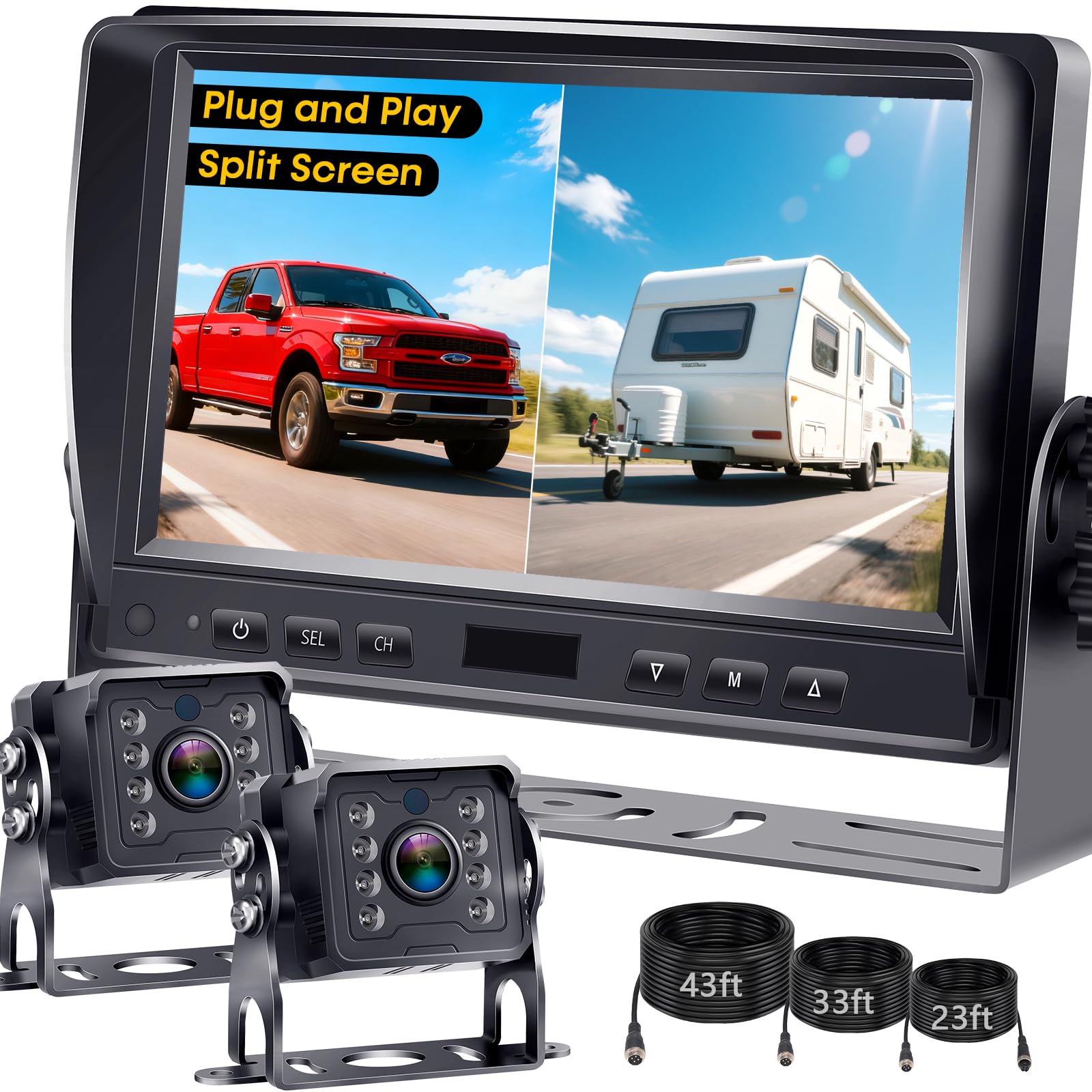
The Rohent R4 is the most versatile wired backup camera system for large vehicles. It includes two cameras with a 7-inch split-screen monitor, letting you view front and rear feeds simultaneously. The 170-degree wide-angle lenses cover a massive area around your vehicle, and the IR night vision extends up to 80 feet, so you can see clearly in unlit parking lots or dim garages. The wired RCA connection guarantees zero lag — a crucial factor when hitching a trailer or squeezing into a tight RV spot.
Installation is straightforward for anyone comfortable running cables. The kit comes with three video cables (23, 33, and 43 feet), giving you flexibility for long trucks, fifth wheels, or tractors. The monitor connects via a cigarette lighter adapter or hardwire to a 12-24V reverse circuit. Users report excellent image clarity, even from a 75-year-old installer who mounted the camera on the rear cap of a 37-foot fifth wheel. The IP69K weatherproof rating means the cameras hold up in rain, snow, and mud without image degradation.
The only notable weakness is the metal camera brackets, which some reviewers describe as thin and slightly flimsy. For most truck and RV applications, the included hardware is sufficient, but if you plan to mount the cameras on heavy-duty equipment subject to extreme vibration, you may want to reinforce the brackets. Otherwise, this system delivers premium dual-camera functionality at a mid-range price point, making it a standout choice for drivers who need complete rear and front awareness.
Why it’s great
- Dual-camera split-screen eliminates side blind spots completely
- No signal delay thanks to wired RCA connection
- IP69K waterproof rating handles heavy rain and snow
Good to know
- Camera brackets are made from thinner metal, not heavy-duty steel
- Wired installation takes longer than wireless systems
2. Rohent R52 Solar Wireless Backup Camera
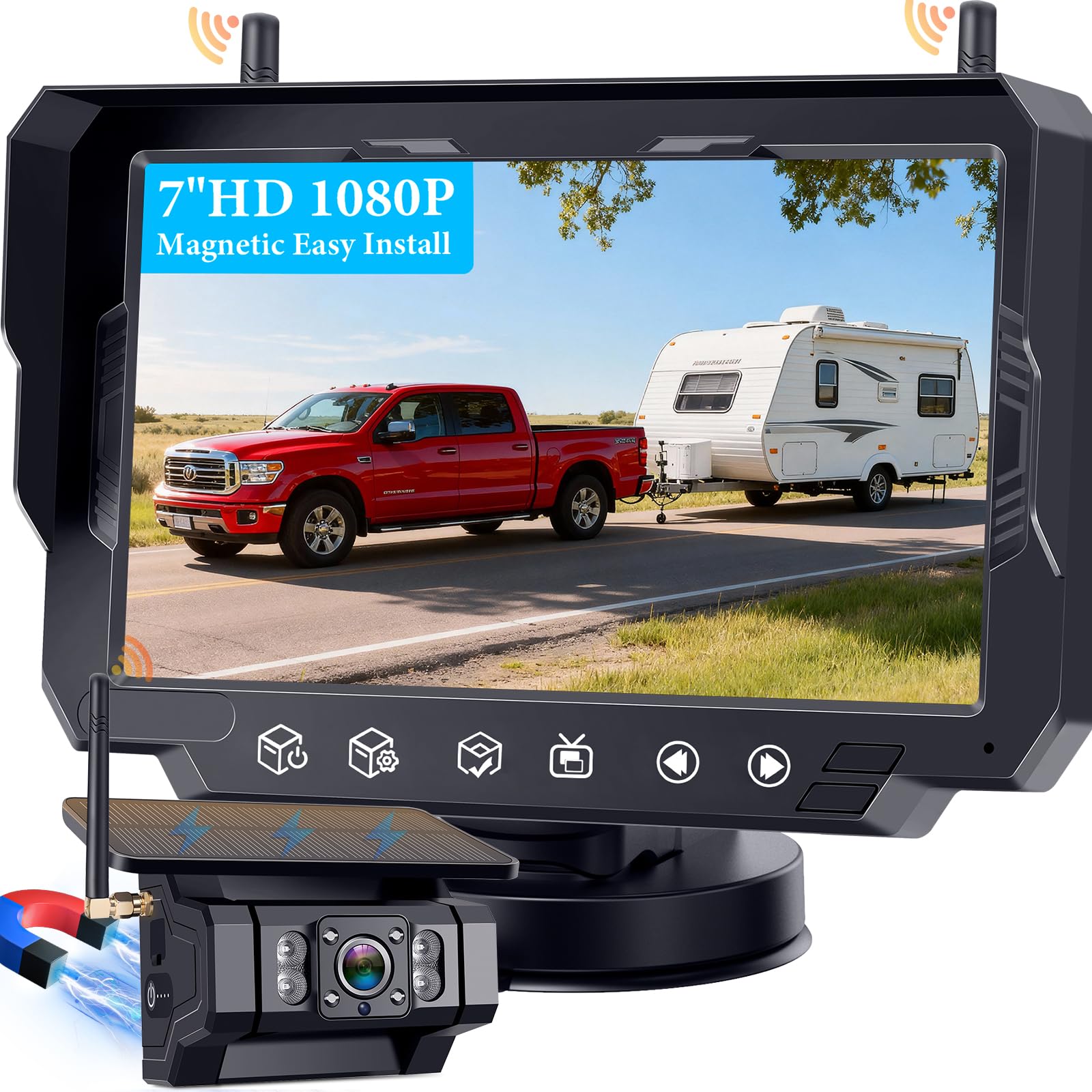
The Rohent R52 is a wireless solar-powered backup camera that prioritizes installation speed and flexibility above all else. The camera attaches to any metal surface via a rare-earth magnet mount and pairs instantly to the 7-inch HD monitor. The 15,000mAh rechargeable battery and 5W solar panel provide up to 24 hours of runtime on a full charge, and the solar panel keeps it topped off throughout the day. The dual-antenna 2.4GHz system delivers a stable video feed up to 33 feet with minimal lag.
For pickup truck owners who swap between towing a trailer and daily driving, this system is transformative. You can move the camera from the tailgate to a trailer in under a minute without any tools. The 170-degree wide-angle lens is noticeably wider than the factory camera on most trucks. Users report the image is clearer than their stock backup camera, and the magnetic mount holds securely at highway speeds of 75 mph and over rough terrain. The auto sleep mode preserves battery when not in use.
The monitor’s suction cup mount works well on windshields but may be slightly dim in direct sunlight due to glare. The occasional brief video jerkiness has been reported at longer distances, but this is rare and does not affect normal reversing use. If you want a completely wireless, no-drill solution that works across multiple vehicles, the R52 is unmatched. It is not ideal for permanent installations on heavy machinery, but for daily drivers and weekend campers, it is a top-tier choice.
Why it’s great
- Magnetic mount installs in under a minute with zero drilling
- Solar panel extends battery life to 24+ hours between charges
- Strong dual-antenna signal with minimal interference
Good to know
- Monitor can be hard to see in bright, direct sunlight
- Not suitable for non-metallic surfaces without an adapter plate
3. ZEROXCLUB BW7M Wireless RV Backup Camera
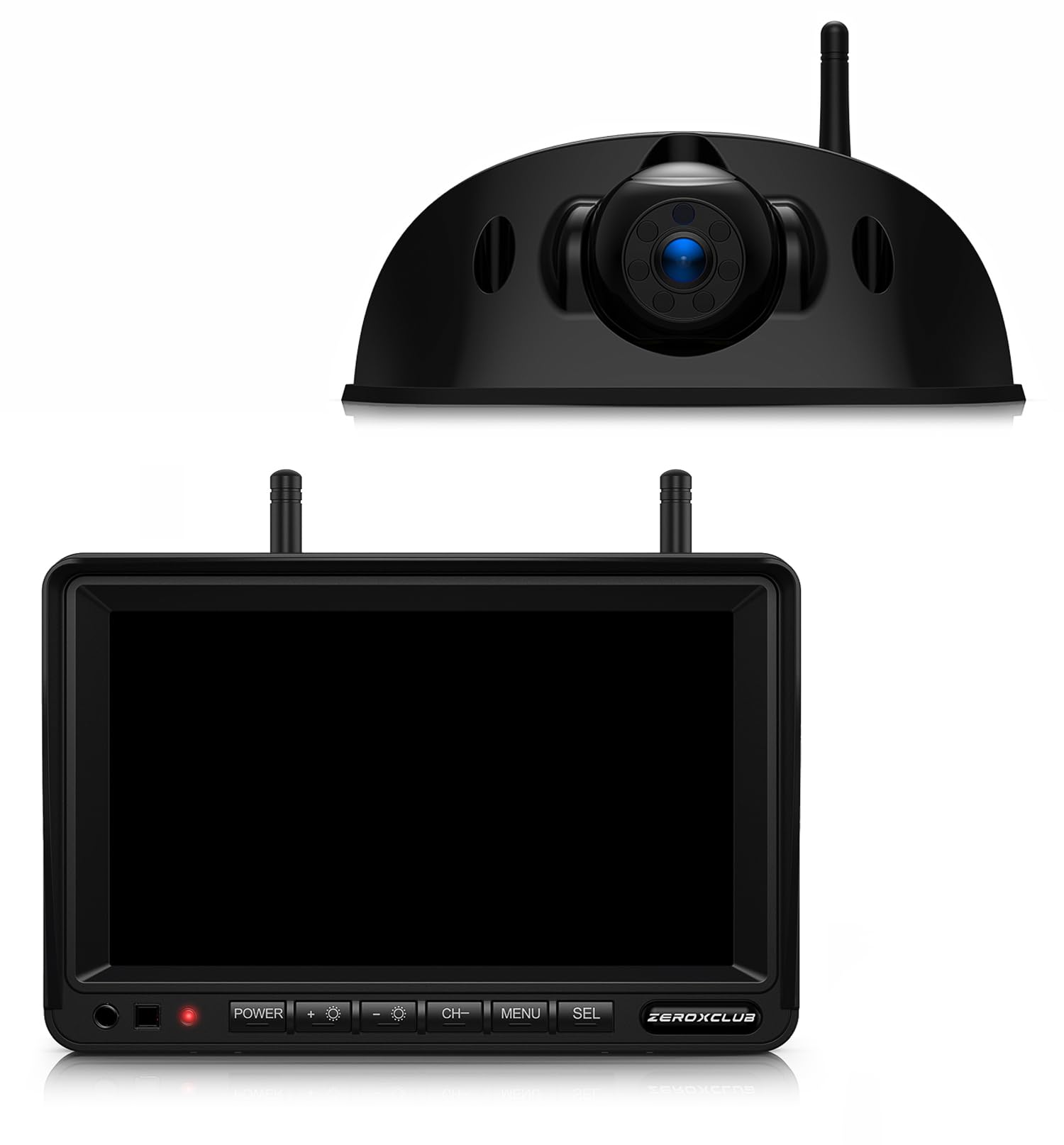
The ZEROXCLUB BW7M is purpose-built for modern RVs that come pre-wired with a Furrion-style 7-pin camera jack. Installation takes roughly 30 minutes because the camera clicks directly into the existing mount and draws power from the running lights without any additional wiring. The 7-inch IPS display produces vibrant, wide-viewing-angle images, and the wireless transmission range reaches up to 100 feet, making it one of the longest-range wireless systems in its class.
Image quality is crisp at 1080p resolution, and the six IR LEDs deliver strong night vision. The system supports up to four cameras and offers split-screen views, so you can add forward or side cameras later. It also includes a DVR function with loop recording (microSD card not included), which is useful for documenting road incidents or monitoring your campsite. The monitor includes both a windshield suction cup mount and a desktop stand.
One important caveat: newer GM vehicles (like Chevrolet and GMC) use PWM power, which can cause flickering or signal loss with the BW7M. The manufacturer recommends a Furrion 7-way adapter or a 12V PWM filter to resolve this. Also, the 120-degree field of view is narrower than many competitors. It is sufficient for monitoring what is directly behind an RV, but you will not see much into adjacent lanes. For pre-wired RV owners who want a simple, high-quality upgrade, this is a premium choice.
Why it’s great
- Directly compatible with Furrion pre-wired RV mounts
- Supports up to 4 cameras with DVR loop recording
- 100-foot wireless range is excellent for large motorhomes
Good to know
- 120° field of view is narrower than competitors
- May need a adapter for GM vehicles with PWM power
4. HaoKeo H7 Wired 2K Backup Camera Kit
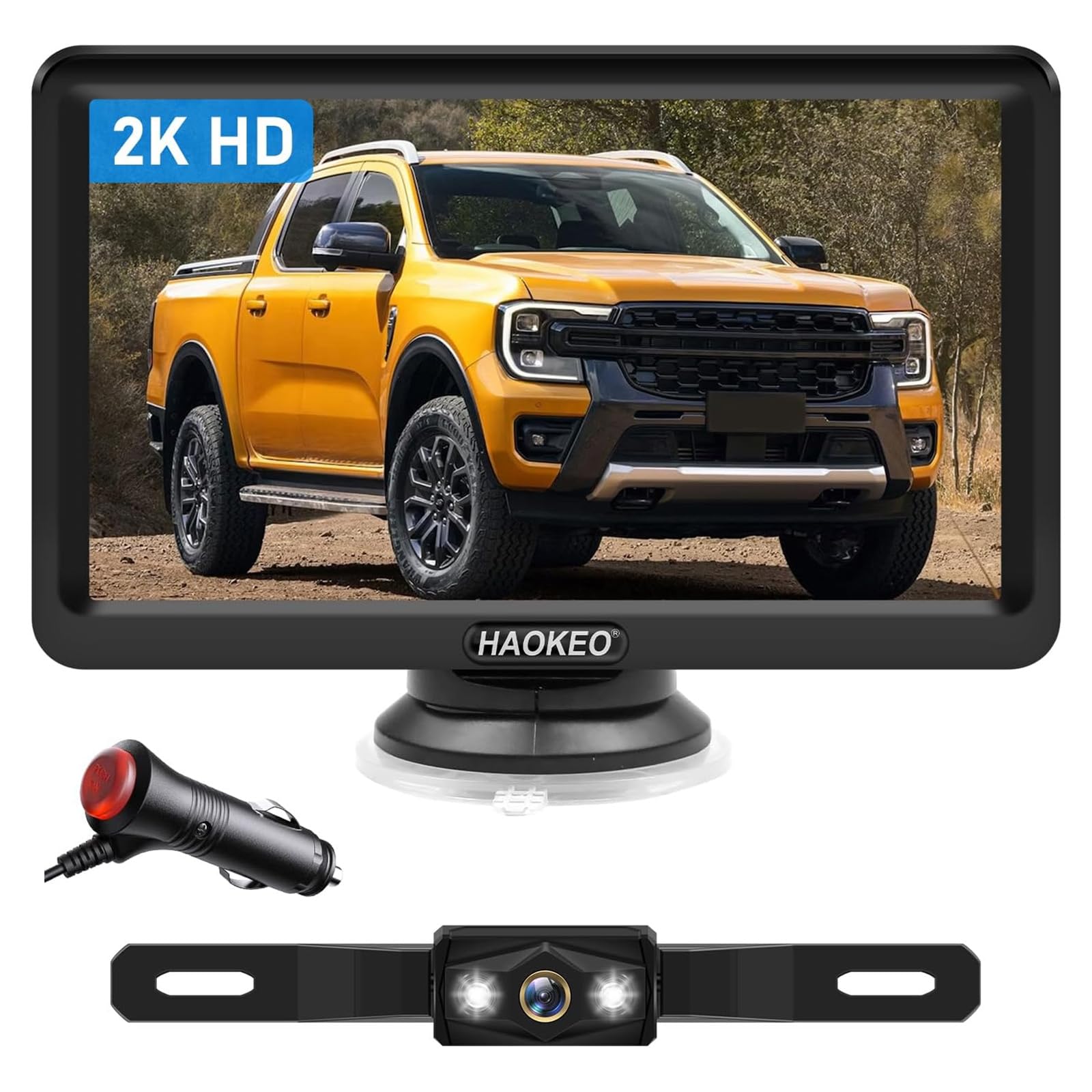
The HaoKeo H7 punches well above its price tier by offering a 7-inch monitor with 2K resolution — a higher pixel density than most systems in this category. The camera captures 1080P video with excellent color fidelity, and the 150-degree wide-angle lens covers roughly five lanes of traffic. The wired 4-pin Mini DIN connection ensures zero latency, and the included 26-foot cable is sufficient for most cars, SUVs, and short-bed trucks.
Installation is straightforward thanks to two power modes. You can connect the camera to the cigarette lighter for constant viewing, or wire it to the reverse lights for automatic activation. The IP69K waterproof rating means the camera survives heavy rain, snow, and pressure washing without fogging or water ingress. Users consistently praise the clear daytime image and the adjustable parking guidelines, which make backing into tight spaces predictable.
The primary downside is a slight 4-second lag when the monitor first receives the reverse signal. This delay is noticeable during multi-point turns but is common among entry-level wired systems. Some users also note that the camera mount is too shallow to see the trailer hitch ball when it is closer than 2 inches. If you need to see your hitch ball, you may need a separate camera or a different mount. For general passenger-vehicle reversing, however, the H7 delivers exceptional value and image quality.
Why it’s great
- 2K monitor resolution is sharper than 1080p competitors
- IP69K waterproof rating stands up to extreme weather
- 3-year warranty with responsive customer support
Good to know
- ~4-second activation lag when shifting into reverse
- Camera mount cannot show hitch ball at close range
5. AUTO-VOX S1P6 Dual Solar Backup Camera
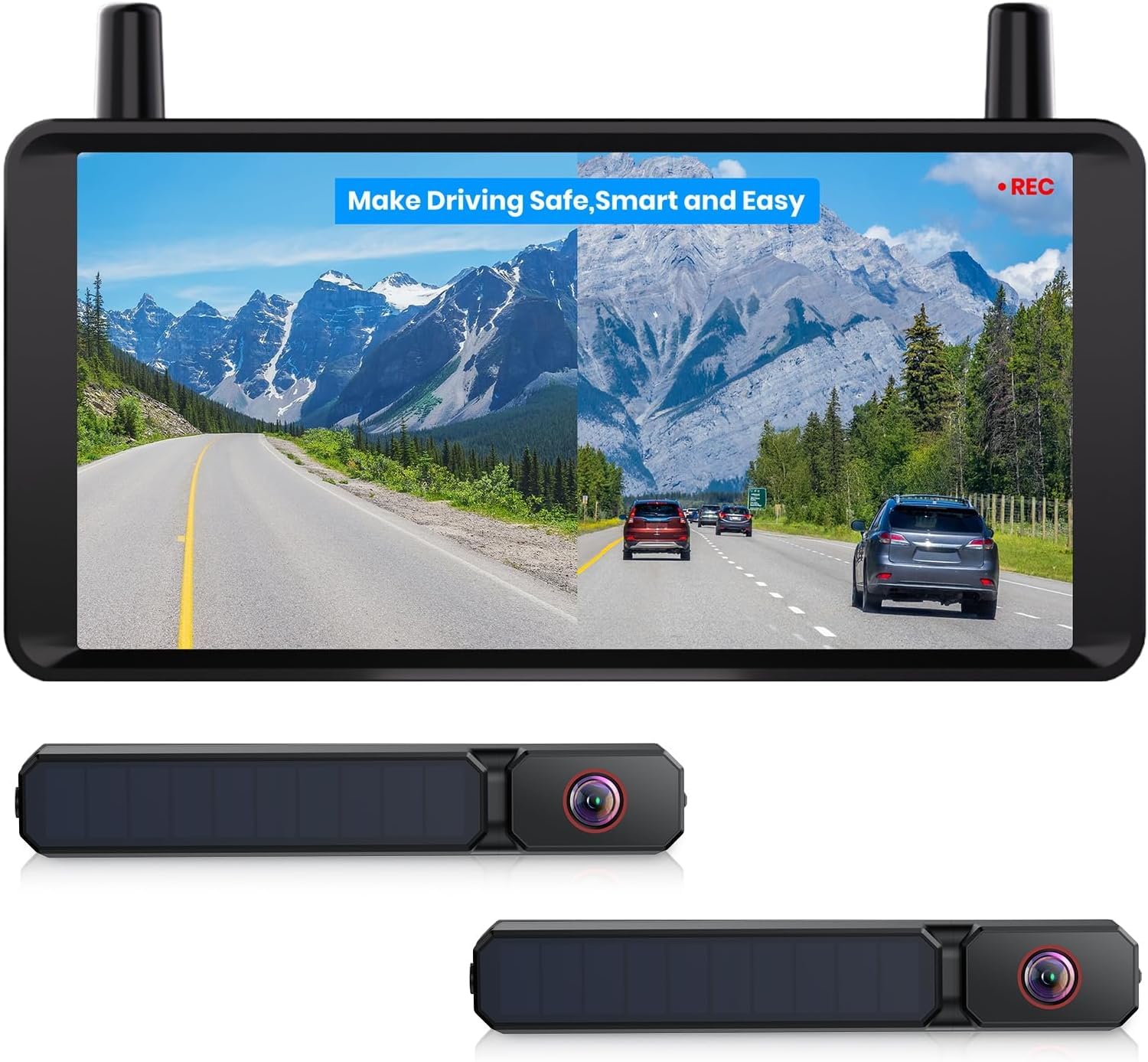
The AUTO-VOX S1P6 is a dual-camera wireless system that includes two solar-powered cameras and a 6-inch widescreen monitor with a 16:9 aspect ratio. The split-screen display lets you see both camera feeds simultaneously, so you can monitor your rear bumper and your trailer hitch at the same time. Each camera is powered by a battery that recharges via solar panels, and the built-in DVR records both feeds to a microSD card (not included) with loop recording.
Installation is the fastest in this roundup — both cameras mount magnetically or with the included bracket above or below the license plate. No wiring to reverse lights is required. The dual antenna design provides a noticeably smoother connection than single-antenna wireless cameras. Users report that the battery lasts 3-4 weeks even without direct sunlight, and the solar panel maintains a healthy charge during normal daytime driving. The color night vision activates automatically in low-light conditions, providing a realistic view of your surroundings.
The monitor’s soft screen can feel slightly less sharp than a dedicated glass panel, and you must press a button on the power cord to wake the display (it does not auto-activate with reverse gear unless you wire it). This is a minor inconvenience for a system that offers dual-camera coverage with zero permanent installation. The 130-degree field of view on each camera is adequate but not as wide as some competitors. For drivers of older vehicles who want two angles of coverage effortlessly, this is a premium solution.
Why it’s great
- Dual cameras with split-screen for front and rear views
- Solar charging keeps cameras running for weeks
- Dual-antenna wireless is stable with no dropouts
Good to know
- Must press a button to wake the screen while driving
- 130° FOV is narrower than 150-170° competitors
6. VECLESUS VT1 Clip-On Backup Camera Kit

The VECLESUS VT1 is a clip-on rearview mirror monitor system that preserves your dashboard space and gives your vehicle a near-factory appearance. The 4.3-inch LCD screen clips over your existing rearview mirror and displays a 1080P feed from the license-plate camera. The CCD (Charge-Coupled Device) sensor delivers superior low-light performance compared to standard CMOS sensors, producing full-color night vision with crisp detail. The 33-foot video cable connects via a mini 4-pin BM connector, ensuring a stable wired connection.
Installation is straightforward for a wired system. You can power the monitor via the cigarette lighter adapter or hardwire it to the fuse box for a concealed look. The camera connects to the reverse lights for automatic activation, or you can leave the reversing wire disconnected for continuous front-view observation. Users praise the clean, factory-like appearance and the excellent night image quality. The CCD sensor makes objects in the dark significantly more distinguishable than typical CMOS-based systems.
There are tradeoffs at this price point. The clip-on design does not fit oversized mirrors (maximum 80mm width), so it will not work on Jeep Wranglers or Nissan Titans without modification. The monitor is heavier than the original mirror, and some users report vibration on rough roads. The rearview reflection through the monitor is also slightly darker than the OEM mirror glass when the screen is off. For drivers who want a discreet, clip-on backup camera with superior low-light CCD performance, the VT1 is a compelling choice.
Why it’s great
- CCD sensor delivers excellent color night vision
- Clip-on design keeps a clean, factory look
- Hardwire option for completely concealed installation
Good to know
- Clip-on mount does not fit oversized rearview mirrors
- Mirror is heavier than OEM and may vibrate on bumpy roads
7. Wkzay V29 Wireless Backup Camera
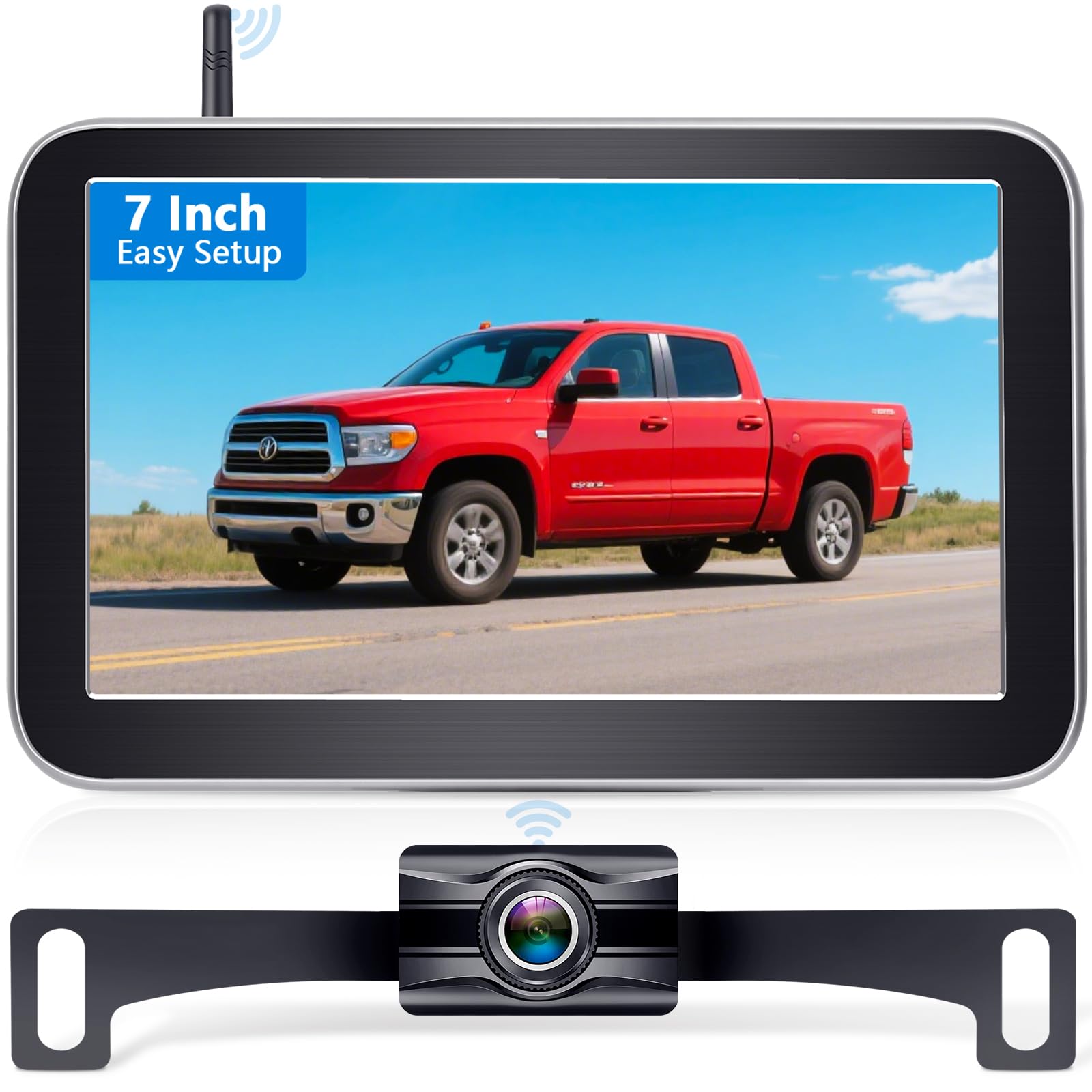
The Wkzay V29 is an entry-level wireless backup camera system designed for quick installation on trucks and tow vehicles. The 7-inch monitor connects to the camera via 2.4GHz frequency-hopping technology, providing a smooth feed with minimal lag for distances up to 28 feet. The camera offers 1080P HD video with auto color night vision using 940nm IR LEDs, and it is housed in an IP69-rated waterproof ABS+PC shell that resists rain, snow, and mud. The 150-degree wide-angle lens covers trailer edges and curb sides effectively.
Installation is deliberately tool-free. The monitor attaches to your windshield or dashboard with a suction cup mount, and the camera mounts with a 360-degree adjustable bracket or a strong magnet. Many users set it up in under 10 minutes. The system runs continuously when powered via the cigarette lighter, so you can use it as an observation camera while driving — not just when reversing. The magnetic mount holds securely on rough roads, and the solar panel option on the camera extends runtime significantly.
The main downside is that the camera’s power cord requires a working cigarette lighter fuse, and a few users had to replace a fuse during setup. The monitor is slightly bulky, and the included suction cup mount may struggle on textured dashboard surfaces. At this budget-friendly price point, you get a fully wireless 1080P system that works well for towing and trailer monitoring, but the build quality is not as refined as premium options. It is a reliable pick for budget-conscious drivers upgrading from no camera at all.
Why it’s great
- Fully wireless installation in under 10 minutes
- Strong magnetic mount stays secure on rough terrain
- Auto color night vision with 940nm IR LEDs
Good to know
- Monitor suction cup may not stick to textured dashboards
- Camera range is limited to 28 feet for best performance
FAQ
Can I use a backup camera without connecting it to my reverse lights?
How long do wireless backup camera batteries last on a full charge?
Will a wireless backup camera work through the metal body of a truck or RV?
Can I add extra cameras to a single-monitor system?
Final Thoughts: The Verdict
For most users, the best backup camera and monitor winner is the Rohent R4 Dual RV Backup Camera System because it combines dual-camera split-screen coverage with zero-lag wired reliability and a 7-inch 1080p display that works on everything from trucks to tractors. If you want a wireless, no-drill setup with solar charging for swapping between your truck and trailer, grab the Rohent R52 Solar Wireless Backup Camera. And for RV owners with a Furrion pre-wired mount who want DVR recording and a wide 100-foot wireless range, nothing beats the ZEROXCLUB BW7M.