
Darkness creeps in. The hum of the refrigerator stops. That moment you realize the food in the freezer has a ticking clock, and the CPAP machine in the bedroom is dead silent. A backup power station is no longer a luxury item for campers; it’s the difference between a minor inconvenience and a costly, stressful emergency. These aren’t the noisy, fume-spewing gas generators of the past—they are silent, clean, instant-on battery banks that keep your essentials running.
I’m Min — the co-founder and writer behind Gadgets Feed. I’ve spent hundreds of hours dissecting the technical specifications of portable power stations, cross-referencing real-world customer data from hundreds of units, and building detailed comparison matrices on battery chemistry, inverter efficiency, and recharge speeds so you don’t have to.
Whether you’re a weekend overlander or a homeowner prepping for hurricane season, choosing the right best backup power station hinges on understanding the critical difference between watt-hours, surge ratings, and battery cycles.
How To Choose The Best Backup Power Station
Buying a backup power station is a multi-year investment. You must look past the shiny marketing and focus on three hard specs: battery chemistry, capacity (Wh), and inverter output (W). Getting these wrong means buying a unit that either dies in two years or can’t even start your mini-fridge.
Battery Chemistry: LiFePO₄ vs. NCM vs. Lead-Acid
LiFePO₄ (Lithium Iron Phosphate) is the current gold standard. It offers 3,000 to 6,000+ charge cycles before dropping to 80% capacity, compared to roughly 500 cycles on older NCM (Nickel Cobalt Manganese) cells. LiFePO₄ is also thermally stable and inherently safer, with a much lower risk of thermal runaway. Avoid any unit that still uses lead-acid (AGM) batteries; they are heavier, less efficient, and die far sooner.
Capacity (Wh) vs. Output (W) — The Balanced Equation
Watt-hours (Wh) tell you how long the station runs. Wattage (W) tells you what it can run. A 2,000Wh station with only a 300W inverter cannot power a 1,200W microwave. Conversely, a 1,200W inverter with a 200Wh battery will run that microwave for only ten minutes. Look for a balanced ratio: for home backup, you generally want at least a 1,000W inverter paired with a 1,000Wh+ battery. For heavy appliances, aim for 2,000W+ output and 2,000Wh+ capacity.
UPS Function & Transfer Speed
If you plan to keep a computer, modem, or sump pump running during a flicker, you need a station with UPS (Uninterruptible Power Supply) mode and a sub-20ms transfer time. Most modern power stations offer this, but the implementation varies. A slow UPS can cause a computer to reboot even during a brief power blip, defeating the purpose of having backup power.
Quick Comparison
On smaller screens, swipe sideways to see the full table.
| Model | Category | Best For | Key Spec | Amazon |
|---|---|---|---|---|
| BLUETTI AC70 | Mid-Range | Fast charging power | 768Wh, 1000W Inverter | Amazon |
| EF ECOFLOW Delta 3 Classic | Premium | Expandable home backup | 1024Wh, 1800W Inverter | Amazon |
| DABBSSON 2000L | Premium | Semi-solid battery tech | 2048Wh, 2200W Inverter | Amazon |
| Jackery Explorer 2000 v2 | Premium | Lightweight 2kWh station | 2042Wh, 2200W Inverter | Amazon |
| BLUETTI Elite 200 V2 | Premium | Ultra-long lifespan | 2073.6Wh, 2600W Inverter | Amazon |
| Anker SOLIX C2000 Gen 2 | Premium | Expandable high-power hub | 2048Wh, 2400W Inverter | Amazon |
| Jackery HomePower 3000 | High-End | Full home backup | 3072Wh, 3600W Inverter | Amazon |
| DARAN 600W | Budget | Small device emergency kit | 288Wh, 600W Inverter | Amazon |
| GRECELL EB500 | Budget | High capacity budget pick | 519.48Wh, 500W Inverter | Amazon |
In‑Depth Reviews
1. BLUETTI Elite 200 V2

The BLUETTI Elite 200 V2 sets a new benchmark in the 2kWh class by packing 2073.6Wh of LFP power into a footprint that is 40% more compact than its predecessors. Its 2600W pure sine wave inverter, with a 3900W power lifting mode via HyperWatt tech, can confidently start the compressor on a full-sized refrigerator or run a hair dryer without tripping the internal breaker. The real story here is the battery: this unit claims a CNAS-certified 6,000 cycles to 80% capacity, translating to a theoretical 17-year lifespan with daily draining and recharging.
On the charging side, the unit supports multiple modes. Turbo mode hits 0-80% in 50 minutes via a wall outlet. For those wanting a whisper-quiet experience, the Silent mode reduces fan noise to 16-30 dB, which is a huge advantage for keeping it in a bedroom or RV during an overnight outage. The app control allows for precise charge scheduling and mode switching, and the ≤15ms UPS transfer time is fast enough to keep a gaming PC or a server running through a flicker without a hiccup.
The build quality feels industrial-grade, with a steel and aluminum frame and robust ports. While it is heavy at 53.4 lbs, the dual handles make it manageable for one person to lift into a car trunk. The only minor downside for RV users is the lack of a dedicated 30A RV port, but the pure sine wave output is clean enough for any sensitive electronics. For the combination of compact form, sheer cycle life, and high continuous output, this is the unit that serious preppers and full-time off-grid campers should target.
Why it’s great
- Industry-leading 6000+ cycle LiFePO₄ battery rated for 17 years of daily use.
- Fast dual charging (AC + solar) reaches 80% in under 50 minutes.
- Whisper-quiet Silent Mode at 16-30 dB is perfect for indoor nighttime use.
Good to know
- Heavy at 53.4 lbs, requiring two hands for comfortable carrying.
- No 30A RV output port; uses standard 5-20R outlets.
2. BLUETTI AC70

The BLUETTI AC70 punches well above its weight class with a 768Wh LiFePO₄ battery that recharges 0-100% in just 1.5 hours via a single cable. This is a massive advantage over units in its price tier that often take 7+ hours to charge. The 1000W inverter handles 2000W of power lifting, which means it can briefly surge to start a 1500W space heater or a small air conditioner, though you should not expect sustained runtime on those loads.
Connectivity is a standout feature rarely seen at this capacity level. The BLUETTI app allows you to monitor the station, set charge/discharge modes, and update firmware remotely. The unit includes a robust XT-60 connector for solar input, accepting up to 500W of solar panels for a 1.9-hour recharge in full sun. The UPS function activates in under 20ms, providing peace of mind for sensitive electronics like a Wi-Fi router or a security camera system.
At 22.5 lbs, the AC70 is very portable for its capacity. It has been tested to efficiently power a 100W guitar amp for 8 hours while only dropping to 59% charge, and it comfortably runs a 40W fan and lights during a camping trip. The build is durable plastic, but the cooling fan runs constantly when the inverter is active, which some users find noticeable in a quiet room. For anyone needing a fast-recharging, app-connected station that won’t break the bank, the AC70 is a fantastic entry point.
Why it’s great
- Blazing fast 1.5-hour AC recharge time from 0-100%.
- App control with remote monitoring and mode scheduling.
- 2000W power lifting handles short bursts for heavy appliances.
Good to know
- Fan runs continuously when inverter is active, creating moderate noise.
- Limited to 768Wh capacity; not suitable for powering a full house.
3. EF ECOFLOW Delta 3 Classic
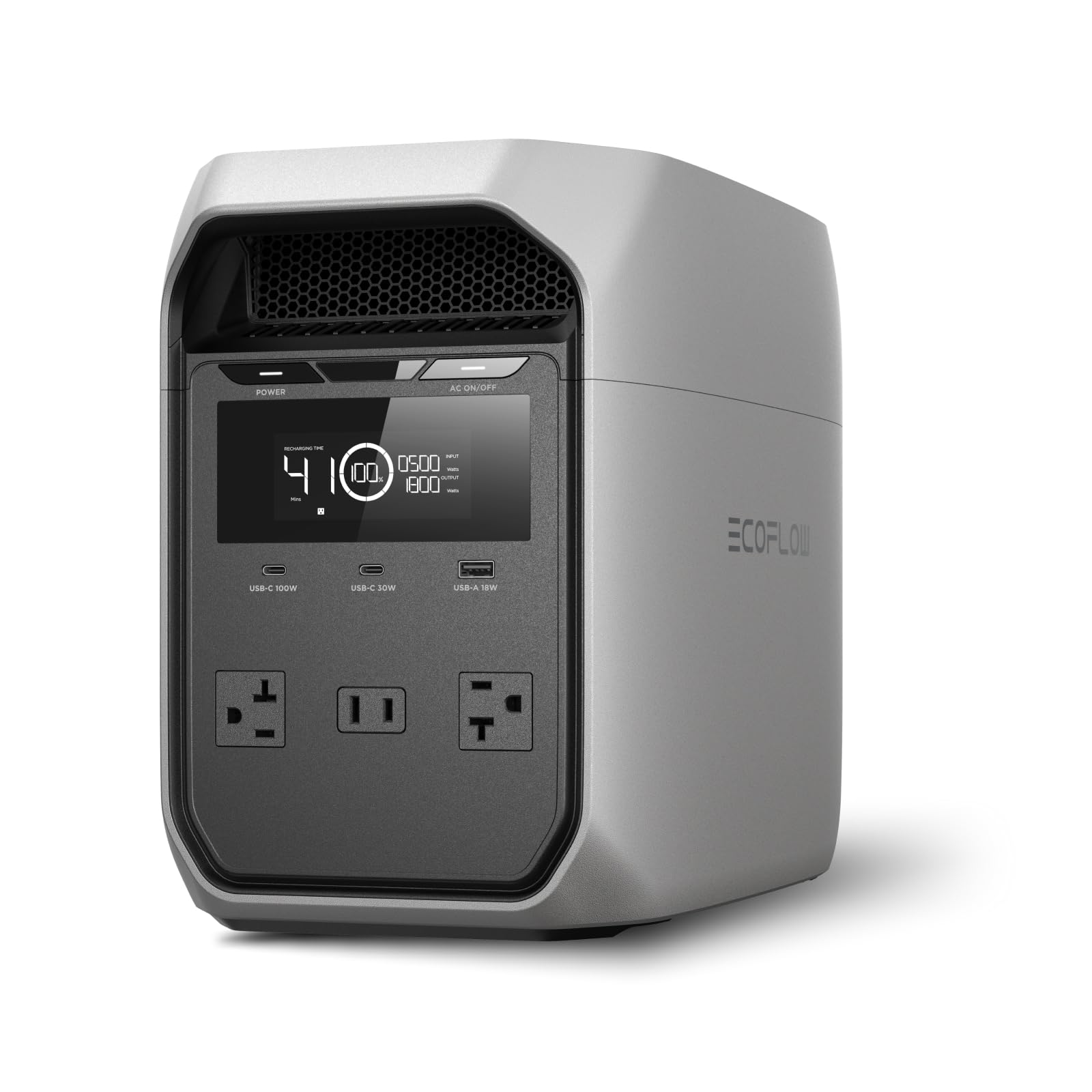
The EcoFlow Delta 3 Classic is the goldilocks unit for most homeowners. Its 1024Wh capacity and 1800W inverter with 3600W surge are perfectly balanced to run a refrigerator (estimated 20+ hours), a microwave, a TV, and lights simultaneously. The standout feature is the X-Stream ultra-fast charging, which takes the unit from 0-80% in just 45 minutes. That speed is critical when you need to top off the battery during a short window of generator power or before a predicted storm.
The UPS function here is exceptionally fast, with a claimed sub-10ms transfer time. This is fast enough to prevent a PC server or a sensitive sump pump controller from resetting. The build quality is noticeably premium, with dual retractable handles, non-skid pads, and a smart display that clearly shows input, output, and battery percentage. The EcoFlow app offers deep control, including scheduled charging, storm alert backup modes, and x-boost limiting to prevent over-draw.
At 15 lbs, it is exceptionally lightweight for a 1kWh station, making it easy to move from a closet to the living room during an outage. It uses LiFePO₄ cells rated for 10+ years of daily use. The main caveat is that it is not expandable with the Delta 2 Smart Extra Battery, so you are locked into the 1024Wh capacity. For a plug-and-play, fast-charging, lightweight powerhouse for essential home backup and RV trips, the Delta 3 Classic is a superb choice.
Why it’s great
- Ultra-fast 45-minute 0-80% AC recharge time for rapid turnaround.
- Very lightweight at 15 lbs for easy portability around the house.
- Sub-10ms UPS transfer protects sensitive electronics from flickers.
Good to know
- Not compatible with the older Delta 2 extra batteries for expansion.
- Plastic housing shows fingerprints and scuffs more easily than metal.
4. DABBSSON 2000L
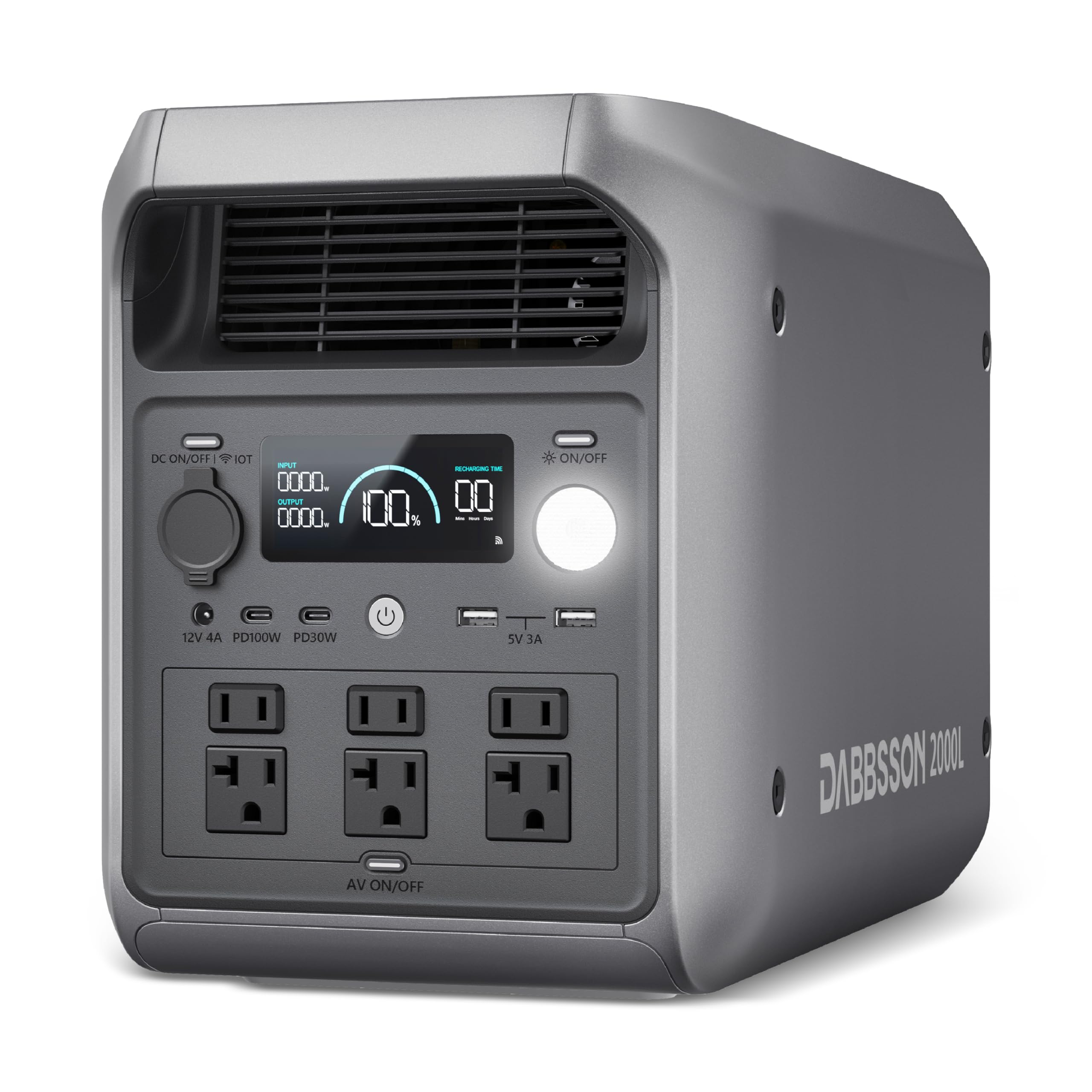
The DABBSSON 2000L represents a leap in battery safety with its semi-solid LiFePO₄ cells, which offer higher stability and a longer cycle life (4,000+ cycles to 80% capacity) than standard prismatic LFP cells. At 41 lbs, it is surprisingly compact for a 2048Wh station, making it much easier to store and move than many of its 2kWh rivals. The 2200W continuous output with 3300W Power Boost can handle a Keurig (1400W) and an air fryer (1670W) sequentially without breaking a sweat.
Charging speed is a major highlight: the unit recharges to full in just 1 hour via an AC wall outlet, which is among the fastest in its class. It supports dual charging (AC + solar) for off-grid flexibility, and the EPS switch transitions in under 10ms, providing seamless backup for computer equipment. The Dabbsson app offers full control over charging speed, schedules, and remote monitoring.
Customer feedback confirms the unit runs a fridge and two freezers for 7.5 hours, and the display provides clear real-time data. The build uses an ABS+PC flame-retardant housing (UL94 V-0 rated), prioritizing safety. The main risk reported by some early adopters is software glitches that prevented full charge capacity, though support was responsive. At this price point, the semi-solid battery and rapid charging are compelling reasons to choose the DABBSSON over more established brands.
Why it’s great
- Pioneering semi-solid LiFePO₄ battery for superior safety and 4000+ cycle life.
- 1-hour full AC recharge for a 2kWh station is class-leading.
- Compact 41 lb design is 25% lighter than many 2kWh competitors.
Good to know
- Early adopter units have reported software calibration issues requiring firmware updates.
- Customer support responsiveness has been inconsistent per some user reports.
5. Jackery Explorer 2000 v2

The Jackery Explorer 2000 v2 is the physical embodiment of portability in the 2kWh category. Weighing just 39.5 lbs, it is 41% lighter than the average 2kWh LFP station, achieved through the company’s exclusive CTB (Cell-to-Body) technology borrowed from the EV industry. This makes it the clear choice for anyone who needs to carry the station up stairs or load it into an SUV alone. The 2042Wh capacity paired with a 2200W pure sine wave inverter provides enough juice to run a full-sized refrigerator for over 21 hours.
Charging speed is respectable: AC fast charging hits 0-80% in 66 minutes, and an “Emergency Super Charging” mode via the app fills the battery to 100% in 102 minutes. The unit also features a Silent Charging mode that operates at under 30 dB, which is excellent for overnight use in a bedroom or camper. The UL1778-certified UPS switches in under 20ms, making it reliable for keeping electronics running.
The physical design is thoughtful, with a retractable handle and a relatively small footprint for its capacity. Real-world tests show it runs a 60W diesel heater for over 3 days. The main complaints revolve around the app connectivity, which sometimes requires re-pairing via Bluetooth, and the barrel-style solar input ports that can feel fragile when the cable is stressed at an angle. For those prioritizing weight and a trusted brand name for camping or RV trips, the Explorer 2000 v2 is a strong contender.
Why it’s great
- Lightest 2kWh unit at 39.5 lbs using EV-grade CTB technology.
- Whisper-quiet Silent Charging mode at under 30 dB for indoor use.
- Proven Jackery reliability and widespread customer support network.
Good to know
- Bluetooth and app connectivity can be inconsistent and may require re-pairing.
- Solar barrel input ports feel less robust than standard XT-60 connectors.
6. Anker SOLIX C2000 Gen 2

The Anker SOLIX C2000 Gen 2 is built for users who need serious power and forward-thinking expandability. Its 2400W rated inverter with a 4000W peak output is enough to start most window or RV air conditioners, a feat few 2kWh stations can claim. The unit recharges to 100% in just 58 minutes via standard AC, placing it among the fastest-recharging stations available. Its standby power draw is a miserly 9W, which means the battery retains more charge over weeks of storage.
Expandability is a major feature. An optional expansion battery boosts the total capacity to 4kWh, which the company claims can run a dual-door refrigerator for up to 64 hours. The unit also supports 800W alternator charging for topping up while driving, achieving a full charge in 3 hours from a vehicle—8x faster than a basic 12V socket. The build is very compact for its power: 25% lighter (41.7 lbs) and 29% smaller than comparable products.
Customer feedback is overwhelmingly positive, with users noting it runs a 30-quart car fridge for 5-7 days and powers a TV, fridge, and Wi-Fi for over 10 hours during a power outage. The app provides usage prediction and detailed monitoring. The main downside is that the expansion battery adds significant cost, and the included manual is digital-only, which some users found frustrating. For those who need to expand their system over time or who have an RV with a small A/C unit, the C2000 Gen 2 is an outstanding platform.
Why it’s great
- 4000W peak power can start most RV and window air conditioners.
- Expandable to 4kWh for long-duration home backup.
- Supports 800W alternator charging for rapid on-the-road top-ups.
Good to know
- Expansion battery is an expensive additional purchase.
- No printed user manual included; documentation is app-based only.
7. Jackery HomePower 3000
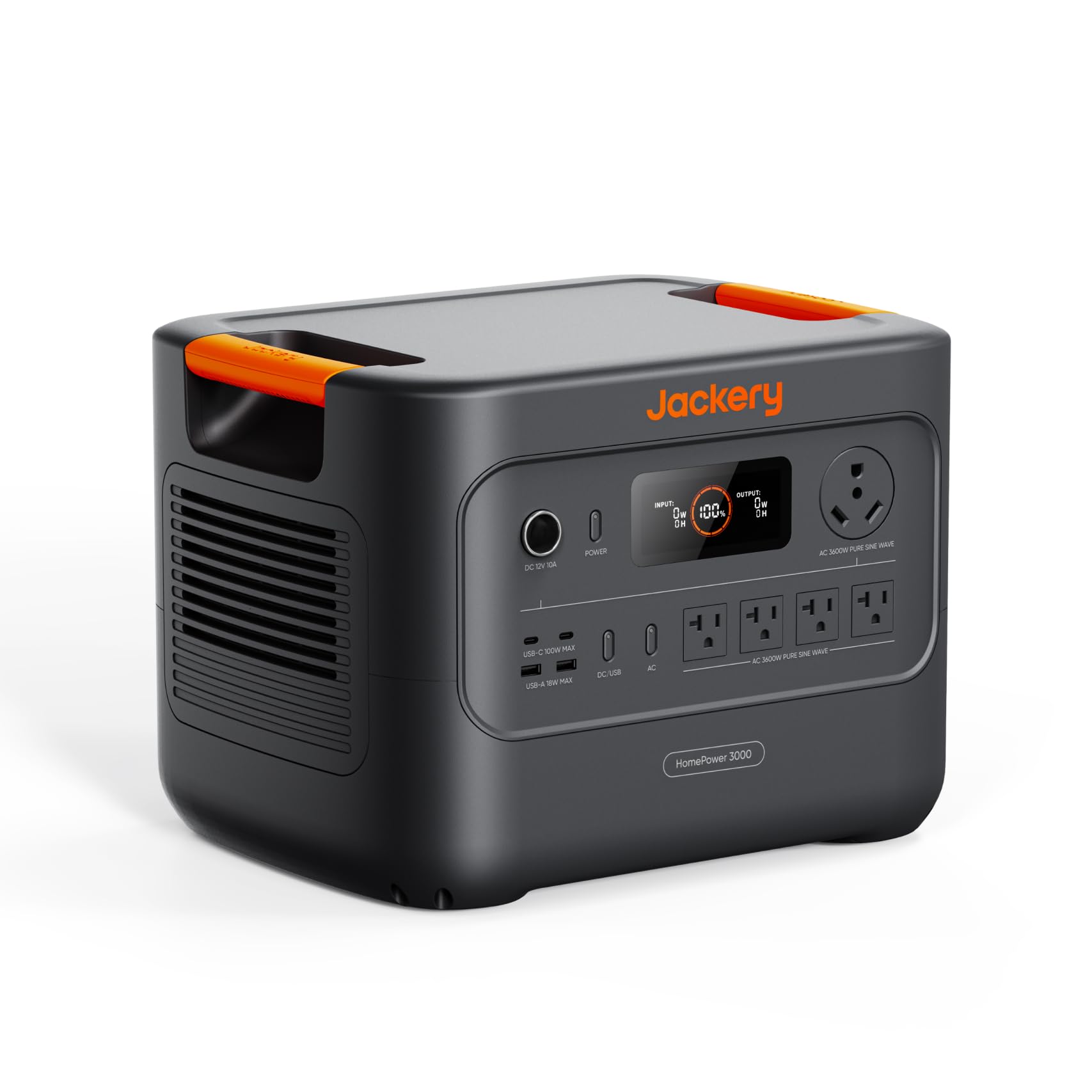
The Jackery HomePower 3000 is a true whole-home backup solution that sits at the top of the power chain. Its 3072Wh LiFePO₄ battery and 3600W inverter (7200W surge) can handle a full household circuit, including a well pump, a refrigerator, a microwave, lights, and a home office setup for 15+ hours. It features a built-in TT-30 RV port, meaning you can plug your entire RV directly into it for a full 30-amp hookup experience.
The unit recharges to full in just 1.7 hours via hybrid AC and DC input, which is impressive for a 3kWh station. It also features ChargeShield 2.0, an AI algorithm that optimizes charging speed while extending battery lifespan to 4,000 cycles. The UPS function is UL-certified, switching in under 20ms, making it reliable for medical devices and servers. Despite its massive capacity, the unit is claimed to be 47% smaller and 43% lighter than similar models, weighing 59.5 lbs.
Real-world users report dry camping a 30-foot travel trailer for 3+ days with sensible power usage. The dual 100W USB-C PD ports are a nice touch for fast-charging modern laptops and tablets. The main caveat is a known warranty issue: Jackery only honors the warranty if the unit is purchased directly from them, not through third-party sellers on Amazon. Additionally, the cooling fan runs at around 60 dB under load, which is noticeable in a quiet home office. For sheer capacity and the convenience of a 30A RV port, the HomePower 3000 is unmatched.
Why it’s great
- Massive 3072Wh capacity can power essential home circuits for over 15 hours.
- Built-in TT-30 RV port for direct plug-and-play camper hookup.
- 7200W surge handles high-startup appliances like well pumps.
Good to know
- Warranty is void if purchased from Amazon; must buy direct from Jackery.
- Fan noise is about 60 dB, which is noticeable in a quiet indoor setting.
8. DARAN 600W
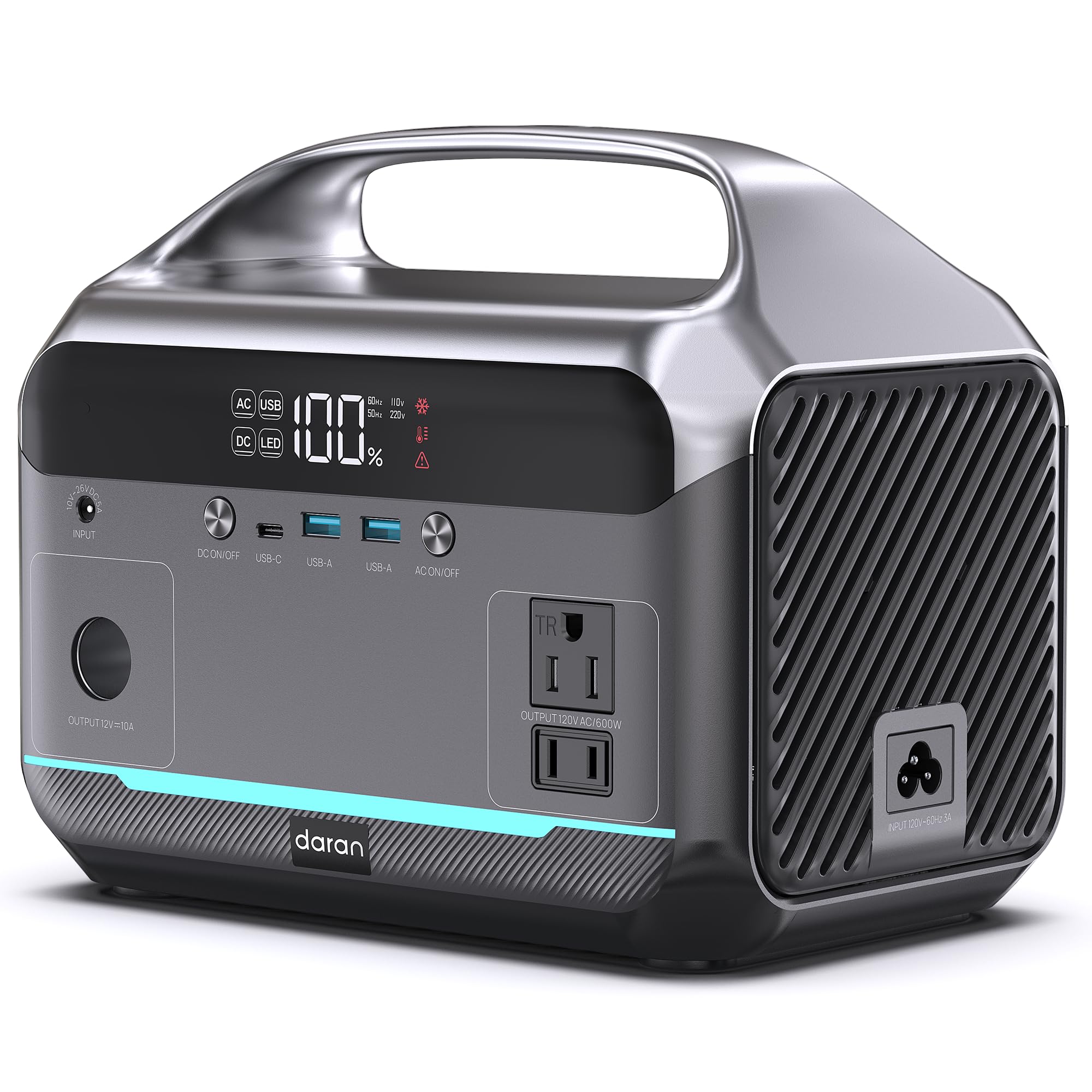
The DARAN 600W is the perfect entry-level unit for someone who needs a quiet, clean power source for a small CPAP machine, a laptop, and a few lights. Its 288Wh LiFePO₄ battery is small but perfectly formed for short-duration emergencies. At just 8.86 lbs, it fits easily into a backpack or a car trunk, making it the most portable option in this list. The 600W pure sine wave inverter can surge to 1200W, allowing it to briefly power a small microwave.
This unit really shines in its simplicity. It charges via an AC wall outlet in about 2 hours to 80%, which is quick for its size. The seven ports (2x AC, 1x USB-C, 2x USB-A, 1x car socket) are enough for a small camping setup. The built-in LED light with steady, strobe, and SOS modes is a simple but very welcome addition for emergencies. The build is shock-resistant with a reinforced handle, and operation is completely silent with no fumes.
Customer feedback is generally positive, with many using it as a dedicated CPAP backup. Test results show it can charge a MacBook Air about 2.88 times to full drain. However, some users have reported a frustrating quality control experience, receiving units with internal rattles or incorrect battery cells, requiring multiple returns. The user manual also recommends two initial full charge/discharge cycles to calibrate the BMS, which is an extra step. For a lightweight, low-cost backup that just needs to keep a CPAP or a laptop running through the night, it works well if you get a good unit.
Why it’s great
- Extremely lightweight at 8.86 lbs, easily portable in a backpack.
- Zero noise and no fumes, ideal for indoor use next to a bed.
- Integrated LED light with SOS mode adds emergency utility.
Good to know
- Reported quality control issues with internal rattling and incorrect battery cells.
- Requires two initial charge/discharge cycles for BMS calibration.
9. GRECELL EB500
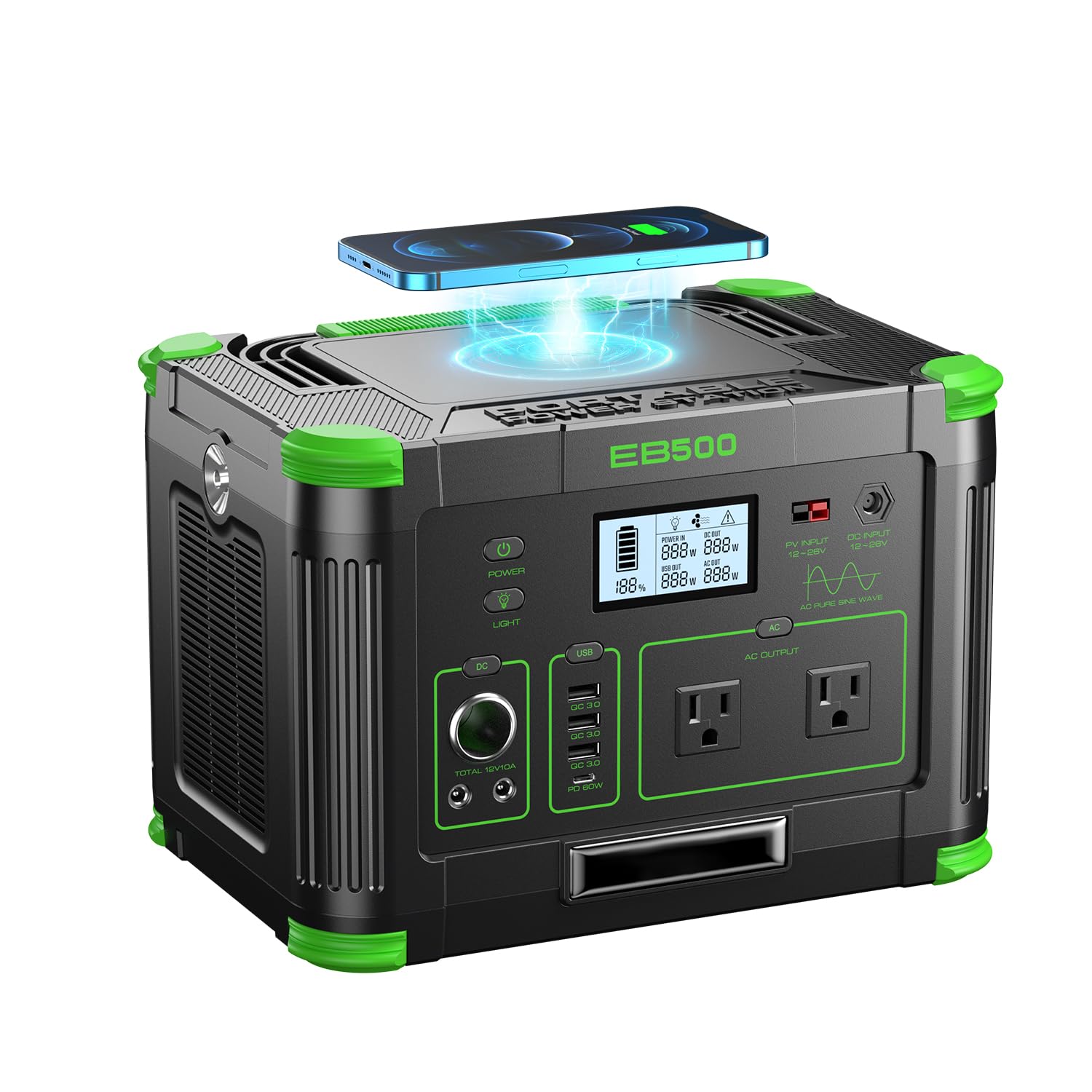
The GRECELL EB500 offers a huge capacity-to-price ratio with its 519.48Wh (140,400mAh) battery. It is a fantastic option for running a 12V car fridge for 5+ hours, charging a drone multiple times, or powering a laptop and phone setup for a weekend. The 500W pure sine wave inverter with a 1000W peak is enough for small appliances like a 40W fan or a 60W laptop charger. It supports 10 outputs including a 10W wireless charging pad on top.
The inclusion of NCM (Nickel Cobalt Manganese) lithium cells is the main trade-off here. NCM batteries have a shorter lifespan (roughly 500-1000 cycles) compared to LiFePO₄, and they are slightly less thermally stable. That said, for the price, you are getting more than double the capacity of a comparably priced LiFePO₄ unit. The smart BMS monitors temperature, voltage, and current in real time, and the LED flashlight with strobe and SOS modes is a nice bonus.
Customer feedback is mixed but leaning positive. One user reported excellent performance with 100W solar panels after a year, while another noted the unit fails to power a 12V car heater (a high-current device). The main complaint is the slow recharge time; the unit takes longer than many to top up from a wall outlet. It is also noted that the open ports are not water-resistant, so it requires a dry enclosure for outdoor use. For the budget-conscious buyer who needs maximum capacity for the lowest cost and doesn’t plan on daily cycling, the EB500 is a strong contender.
Why it’s great
- Exceptional 519.48Wh capacity for its affordable price point.
- Includes a convenient 10W wireless charging pad on the top of the unit.
- Lightweight at 14.1 lbs for easy transport to camping sites.
Good to know
- Uses NCM battery chemistry which has a shorter cycle life than LiFePO₄.
- Takes a long time to recharge from an AC wall outlet compared to newer units.
FAQ
Can I run my refrigerator on a backup power station?
How long will a 2000Wh power station run my CPAP machine?
Can I leave a backup power station plugged in 24/7 to use as a UPS?
Why is LiFePO₄ better than NCM for a backup power station?
Final Thoughts: The Verdict
For most users, the best backup power station winner is the EF ECOFLOW Delta 3 Classic because it balances a 1024Wh capacity with an 1800W inverter and ultra-fast 45-minute charging in a remarkably lightweight 15 lb package. If you want the longest cycle life and compact power in a 2kWh station, grab the BLUETTI Elite 200 V2. And for whole-home backup that powers a full 30A RV or essential house circuits, nothing beats the Jackery HomePower 3000.