
Losing a hard drive isn’t a crash — it’s a memory wipe. One bad sector can erase years of family photos, critical work projects, and your entire media library in an instant. A dedicated backup drive is the only physical barrier between your digital life and total data loss, and the market is flooded with options that prioritize price over reliability and transfer consistency.
I’m Min — the co-founder and writer behind Gadgets Feed. I’ve spent hundreds of hours analyzing controller firmware, spindle speeds, cache buffers, and real-world sustained write performance to separate the drives you can trust from the ticking time bombs.
This guide breaks down the essential specs, real-world transfer speeds, and build quality you need to make a confident choice, helping you identify the very best backup storage devices for protecting your irreplaceable data without breaking your workflow or your peace of mind.
How To Choose The Best Backup Storage Devices
Not every external drive is built for backups. A drive that excels at quick file transfers can stall or overheat during hours-long backup sessions. You need to match the drive’s architecture to your specific backup habits — nightly full-system clones versus occasional media dumps require very different hardware.
Cache Buffer Size and Sustained Write Performance
The cache buffer (measured in MB) smoothes out write bursts during small file operations. For backup drives, sustained write speed after the cache fills is the real metric to watch. Drives with larger caches handle mixed-size backups better, but the native transfer rate of the platter dictates how fast a full 2TB restore finishes.
Form Factor and Power Delivery
2.5-inch portable drives draw power entirely from the USB bus, making them truly portable but limiting spin speed to 5400 RPM in most models. 3.5-inch desktop drives require an AC adapter but deliver faster 7200 RPM platters for quicker backup windows. If you travel with your backup, stick to 2.5-inch bus-powered models.
Encryption and NAS Readiness
Hardware-encrypted drives (like the WD My Passport) protect data if the drive is lost, but the encryption chip can bottleneck transfers. For network backups, look for drives compatible with NAS enclosures supporting RAID 1 mirroring, which duplicates your data across two drives for hardware-level redundancy.
Quick Comparison
On smaller screens, swipe sideways to see the full table.
| Model | Category | Best For | Key Spec | Amazon |
|---|---|---|---|---|
| Synology DS223j | NAS | Automated network backups & RAID | 2-Bay, Diskless | Amazon |
| WD My Passport 5TB | Portable HDD | Password-protected personal backups | Hardware Encryption | Amazon |
| Seagate Portable 4TB | Portable HDD | Large media libraries & consoles | 4TB Capacity | Amazon |
| WD Elements 2TB | Portable HDD | Reliable daily plug-and-play | USB 3.2 Gen 1 | Amazon |
| Seagate Portable 2TB | Portable HDD | College students & casual backups | 1-Year Rescue | Amazon |
| WD Elements 5TB | Portable HDD | High-capacity file archives | 5TB Capacity | Amazon |
| Toshiba Canvio Basics 1TB | Portable HDD | Budget travel & photo backups | 1TB, USB 3.0 | Amazon |
In‑Depth Reviews
1. Synology 2-Bay DiskStation DS223j
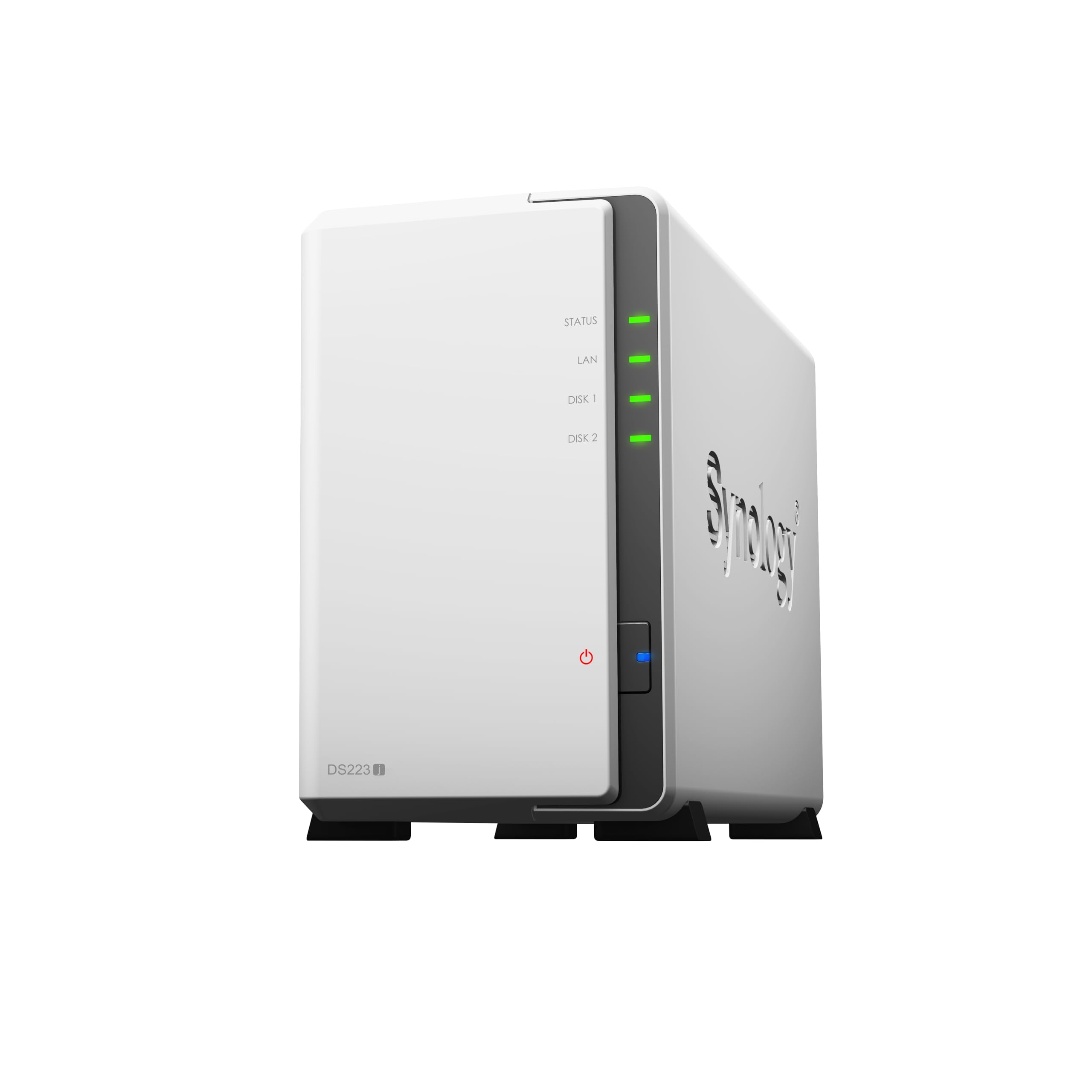
This 2-bay DiskStation converts two standard hard drives into a private cloud with automated backup protection for Macs, PCs, and mobile devices. The DS223j supports scheduled power-on and off, meaning it only spins when your backup window opens, reducing wear and power consumption over years of service. Users report seamless file access across Windows and Linux networks after setup.
The enclosure supports Synology’s Hyper Backup utility, which can push backups to multiple destinations including cloud services and external USB drives simultaneously. The built-in Surveillance Station also lets you repurpose the unit for 24/7 IP camera recording, adding home security to its portfolio. The 2-year warranty and ongoing DSM software updates justify the investment over simple external drives.
Setup requires installation of two NAS-rated drives (sold separately) and an ethernet connection to your router. The initial configuration wizard guides you through RAID 1 creation, which writes identical data to both drives for full redundancy. If one drive fails, the other continues serving your data without interruption — a level of security no single external HDD can match.
Why it’s great
- RAID 1 provides real hardware-level data redundancy
- Automated phone photo backup over WiFi with minimal power draw
- Runs Hyper Backup for multi-destination scheduled backups
Good to know
- Requires purchasing two NAS drives separately — no built-in storage
- Software interface can feel complex for first-time NAS users
- USB port cannot rename external drives attached to the NAS
2. WD 5TB My Passport

The My Passport line sets itself apart with built-in hardware encryption and password protection, meaning your data remains unreadable even if the drive is physically removed from its enclosure. The slim 2.5-inch form factor houses up to 5TB of storage while drawing power entirely from the USB bus, making it a true travel companion for professionals handling sensitive client data.
WD includes device management software with ransomware defense and automatic backup scheduling, though multiple users report the installer hanging on Windows 10 and the security utility failing to install on certain builds. The underlying hardware is rock-solid — WD uses reliable platters and a robust controller that maintains consistent read speeds across sustained transfers of several hundred gigabytes.
Transfer speeds are typical for a 5400 RPM portable drive, averaging around 120 MB/s for large sequential files and slower for mixed-size folder structures. The aluminum and glass enclosure dissipates heat well, keeping internal temperatures stable during long backup sessions. The 3-year limited warranty provides above-average protection for a consumer-grade portable drive.
Why it’s great
- Hardware AES encryption keeps data secure even if the drive is lost
- 5TB capacity in a truly portable 2.5-inch form factor
- 3-year warranty offers industry-leading coverage
Good to know
- Bundled software can be buggy on newer Windows builds
- Slower sustained writes compared to 7200 RPM desktop drives
- Password protection requires admin privileges on the host computer
3. Seagate Portable 4TB External Hard Drive
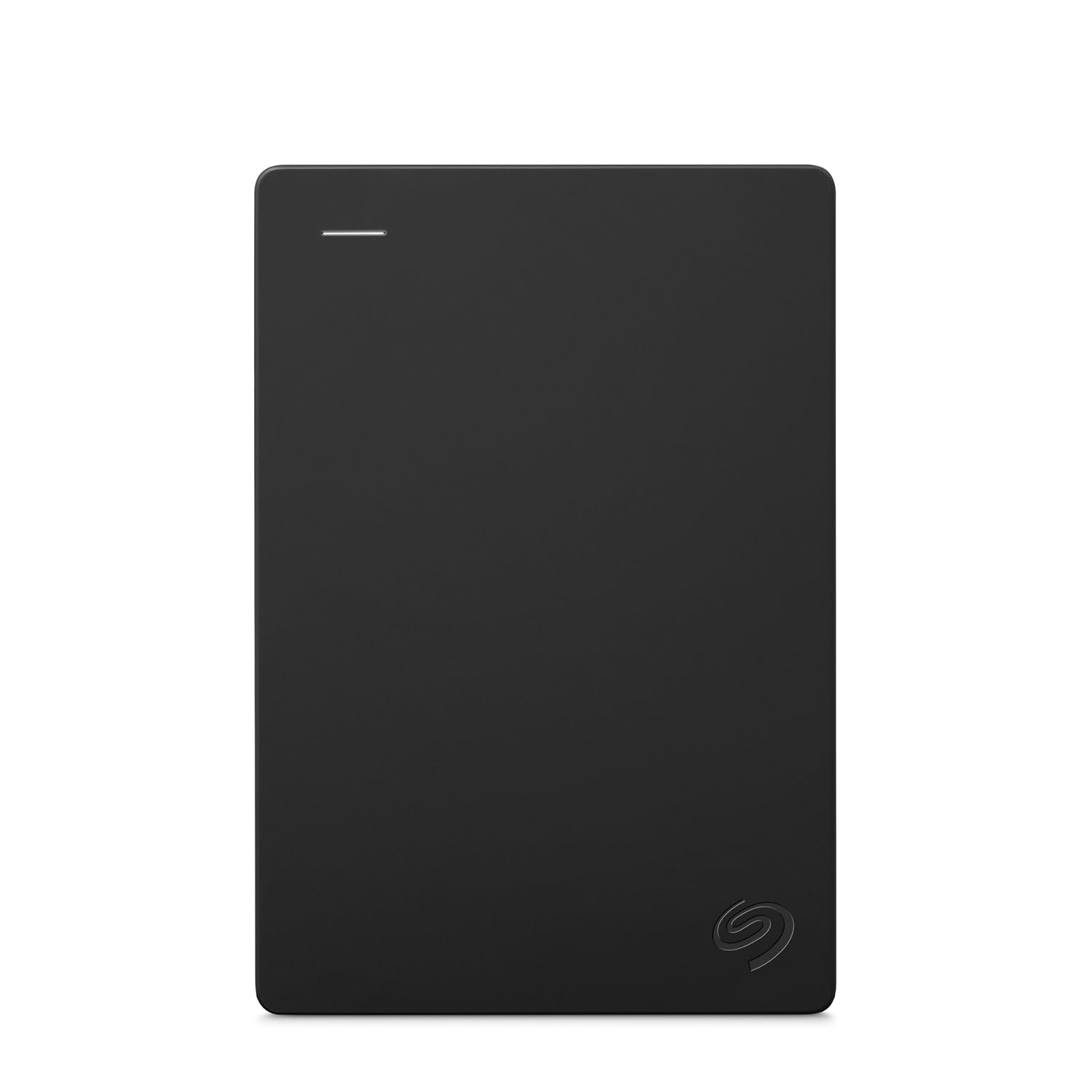
Seagate’s 4TB Portable Drive offers the best price-per-terabyte ratio among the mainstream options, and the inclusion of a 1-year Rescue Service plan adds data recovery insurance that competitors typically charge extra for. The drive works out of the box with Windows, Mac (after a quick Disk Utility reformat to APFS or ExFAT), PlayStation 5, and Xbox Series S, making it a versatile cross-platform backup solution.
Music producers and creative professionals report that the drive can store plugin libraries and sample packs without introducing playback delay, even when connected to high-bandwidth systems like an M4 MacBook Pro with 48GB of RAM. The drive runs whisper-quiet during operation and stays cool enough to handle several hours of continuous file dumps without thermal throttling.
The main trade-off is the lack of S.M.A.R.T. monitoring and slightly erratic throughput compared to the WD Elements line. Some users report power delivery issues on USB ports that don’t supply enough current, causing the drive to disconnect mid-transfer. Pairing it with a powered USB hub or a high-quality USB-C to USB-A adapter resolves this instability for most users.
Why it’s great
- Includes 1-year Rescue Service for professional data recovery
- Works natively with PlayStation, Xbox, and Mac after reformat
- 4TB capacity at a competitive per-gigabyte cost
Good to know
- No S.M.A.R.T. status reporting for health monitoring
- Can disconnect on underpowered USB ports without external power
- Throughput varies more than WD Elements during sustained writes
4. WD 2TB Elements Portable External Hard Drive

The WD Elements line has earned a reputation for consistent sustained transfer speeds and reliable S.M.A.R.T. reporting, making it the portable drive most recommended by IT professionals for budget-conscious backups. The 2TB model connects via USB 3.2 Gen 1 and delivers exactly the 5Gbps throughput the interface promises, with real-world large-file transfers averaging 120-130 MB/s.
Users have successfully used this drive as a Time Machine destination on M1 and M2 MacBooks, though macOS Monterey tends to reformat the drive to APFS automatically, locking it for backups only. Creating a secondary APFS volume on the same drive allows for both Time Machine backups and manual file storage. The drive runs slightly warm during heavy use but stays well within safe operating temperatures.
The included USB cable has been reported as a weak point by multiple buyers — replacing it with a premium braided USB 3.0 cable eliminates connectivity hiccups and improves transfer stability. The drive itself uses WD’s reliable platter technology and passes S.M.A.R.T. health checks even after months of daily use. For pure plug-and-play reliability at 2TB, this is the benchmark.
Why it’s great
- Very consistent sustained write speeds for a 5400 RPM portable drive
- Full S.M.A.R.T. status reporting for proactive health monitoring
- Compact and lightweight for daily carry in a laptop bag
Good to know
- Included stock cable is prone to failure over time
- Requires reformat for macOS Time Machine compatibility
- Half the capacity of SSD alternatives at the same price point
5. Seagate Portable 2TB External Hard Drive
The 2TB Seagate Portable Drive hits the sweet spot for college students and young professionals who need a lightweight backup solution for class projects, research papers, and media libraries. The 18-inch USB 3.0 cable is short enough to avoid clutter on a desk but long enough to reach rear ports on most laptops. Windows users can drag and drop files immediately with no driver installation.
Reviewers consistently highlight the drive’s quiet operation — it is nearly inaudible during transfers, making it suitable for shared dorm rooms or quiet office environments. The drive is fast enough for offloading large batches of iPhone photos and videos, with full dumps completing in 30-45 minutes over USB 3.0. The compact black enclosure slides easily into a backpack’s padded laptop sleeve.
The primary caveat is the same power draw issue seen in the 4TB Seagate model — some PC USB ports cannot supply enough current, causing the drive to behave erratically. A powered USB hub solves this entirely. The included 1-year Rescue Service provides peace of mind for students storing thesis work and irreplaceable academic files.
Why it’s great
- Nearly silent operation ideal for shared study environments
- 1-year Rescue Service covers accidental data recovery
- Drag-and-drop simplicity with no software installation required
Good to know
- Power draw can exceed what some laptop USB ports can deliver
- No S.M.A.R.T. monitoring for detecting early drive failure
- Mac users must reformat before using as Time Machine destination
6. WD 5TB Elements Portable External Hard Drive

For users who need maximum storage per dollar without the software bloat, the WD Elements 5TB delivers exactly that — pure, unadulterated plug-and-play storage in a compact 2.5-inch package. The drive supports USB 3.2 Gen 1 and is backwards compatible with USB 2.0, making it viable even on older laptops. The 3.5-inch form factor (slightly thicker than 2TB models) allows space for the extra platter required to hit 5TB.
Users report excellent archival performance for media libraries and cloud buffer storage, with the drive running whisper-quiet and staying cool enough for continuous operation. The included USB cable is again a weak link — several buyers experienced the “click of death” from underpowered connections, which was immediately resolved by switching to a higher-quality replacement cable or a powered hub.
The WD Elements line lacks hardware encryption and backup software, which many power users actually prefer because it eliminates driver conflicts and forced cloud integration. The drive is slightly thicker than standard 2TB portable models, so it may not fit in slim laptop sleeves designed for ultra-thin SSDs. For pure archival storage where speed is secondary to capacity, this is the most cost-effective choice.
Why it’s great
- 5TB capacity offers the best storage-per-dollar ratio in this lineup
- No proprietary software — true plug-and-play across Windows and Mac
- Whisper-quiet operation even during extended backup sessions
Good to know
- Thicker enclosure may not fit in slim laptop sleeves
- Stock cable is prone to failure under daily use
- No hardware encryption or password protection
7. Toshiba Canvio Basics 1TB Portable External Hard Drive

The Toshiba Canvio Basics is the smallest and lightest entry in this roundup, designed specifically for travelers and commuters who need a pocket-sized backup for essential documents and photo libraries. The matte, smudge-resistant finish keeps the drive looking clean after months of handling, and the USB 3.0 bus-powered design means no wall wart is ever needed — it runs entirely off your laptop.
Users report fast read/write speeds for a 1TB portable drive, with no heat buildup even after three hours of continuous file transfers. The drive ships pre-formatted NTFS for Windows PCs but can be reformatted for Mac within 30 seconds via Disk Utility. The 1-year standard limited warranty is shorter than WD’s 3-year offer, but the build quality and consistent firmware make premature failure rare.
The 1TB capacity is sufficient for backing up a laptop’s internal drive, a few years of smartphone photos, and essential work documents — but users with large media libraries will find themselves upgrading quickly. The drive lacks any software ecosystem or encryption, which keeps the experience simple but leaves your data unprotected if the drive is lost. It pairs best with a software-based backup solution like Windows File History or Mac Time Machine.
Why it’s great
- Smallest and lightest portable drive — ideal for daily carry
- Matte finish resists fingerprints and smudges
- Runs cool even during extended backup sessions
Good to know
- 1TB fills quickly for users with large media libraries
- 1-year warranty is shorter than WD and Seagate alternatives
- No hardware encryption or backup software included
FAQ
Why does my backup drive disconnect mid-transfer on some USB ports?
Should I reformat a portable HDD for Mac compatibility?
Can I use a 5400 RPM portable drive for gaming?
Final Thoughts: The Verdict
For most users, the best backup storage devices winner is the Synology DS223j because it transforms two standard hard drives into a redundant, automated backup system that protects data from a single drive failure. If you want hardware-encrypted portable storage, grab the WD My Passport 5TB. And for maximum capacity on a budget, nothing beats the WD Elements 5TB.