
Our readers keep the lights on and my morning glass full of iced black tea. As an Amazon Associate, I earn from qualifying purchases.
Specs are compiled from manufacturer listings and verified buyer reviews and can change over time — please confirm the key details on the product page before buying.
Choosing a backyard greenhouse is a big commitment, and the single most important decision is material: wood, aluminum, or steel frame with a polycarbonate or PE cover. The structure dictates everything from annual maintenance to how many plants you can overwinter, and the wrong pick can mean a collapsed frame after the first snow. This guide breaks down the top options for different spaces and climates, so you get a structure that lasts instead of a seasonal tent.
I’m Min — the founder and writer behind Gadgets Feed. This guide is built by comparing the manufacturers’ published specifications and the patterns across verified customer reviews, so you get each pick’s real strengths and trade-offs instead of marketing spin.
Here is the short version: for serious year-round growing, nothing here beats the strength and insulated panels of a cedar wood frame, so start your search for the backyard greenhouse that matches your gardening ambition and budget.
Our Picks at a Glance

How To Choose The Best Backyard Greenhouse
Before you buy, decide if you need a permanent structure or a seasonal one. A permanent, rigid greenhouse protects plants year-round and adds value, but requires a real foundation and days of assembly. Temporary pop-ups are cheap and fast but won’t survive a winter.
Frame Material: The Backbone of Your Greenhouse
The frame is what stands between your plants and a storm. Cedar wood offers the best insulation and a classic look, but it’s heavy and needs periodic sealing. Aluminum resists rust and is lighter, making it easier to assemble, though it conducts heat more readily. Galvanized steel is the budget workhorse, common on tunnel-style hoop houses, but it’s only as strong as the anchor system you use.
Cover Material: Polycarbonate vs. Polyethylene
Your cover controls light, heat retention, and durability—it’s the part that takes the most sun damage. Polycarbonate (PC) panels are rigid, shatter-resistant, and offer excellent insulation, but they cost more than other options. Polyethylene (PE) is the plastic sheeting used on greenhouses; it’s inexpensive and easy to replace, but it degrades over time and offers little insulation against cold snaps. Your climate and how long you plan to keep the structure will determine which makes sense.
Quick Comparison
| Model | Best For | Frame | Cover | Footprint | Amazon |
|---|---|---|---|---|---|
| Backyard Discovery Willow★ Best Overall | Year-round serious growing | Cedar Wood | Polycarbonate | 9′ x 6′ | Amazon |
| VEVOR Hoop HouseBiggest Footprint | Large-scale seasonal growing | Galvanized Steel | PE Cover | 19.4′ x 9.7′ | Amazon |
| Outsunny 20×10Max Ground Space | Maximizing ground space on a budget | Alloy Steel | PE Cover | 20′ x 10′ | Amazon |
| WUKHG 8×10 | Smart monitoring for the tech-savvy | Aluminum | Polycarbonate | 8′ x 10′ | Amazon |
| Palram Canopia | Massive walk-in space | Aluminum | Polycarbonate | 8′ x 20′ | Amazon |
| Sylviera 6×8 | Light-filled compact growing | Aluminum | Polycarbonate | 6′ x 8′ | Amazon |
| CROWN SHADES | Instant set-up for beginners | Steel | PE Cover | 8′ x 6′ | Amazon |
| Outsunny 8×6 PC | Mid-size polycarbonate value | Aluminum | Polycarbonate | 8′ x 6′ | Amazon |
In-Depth Reviews
1. Backyard Discovery Willow 9′ x 6′
Our pick — over 4.5★ from 100+ verified ratings; the strongest balance of quality and price.
The permanent, insulated powerhouse that turns your backyard into a true year-round growing space.
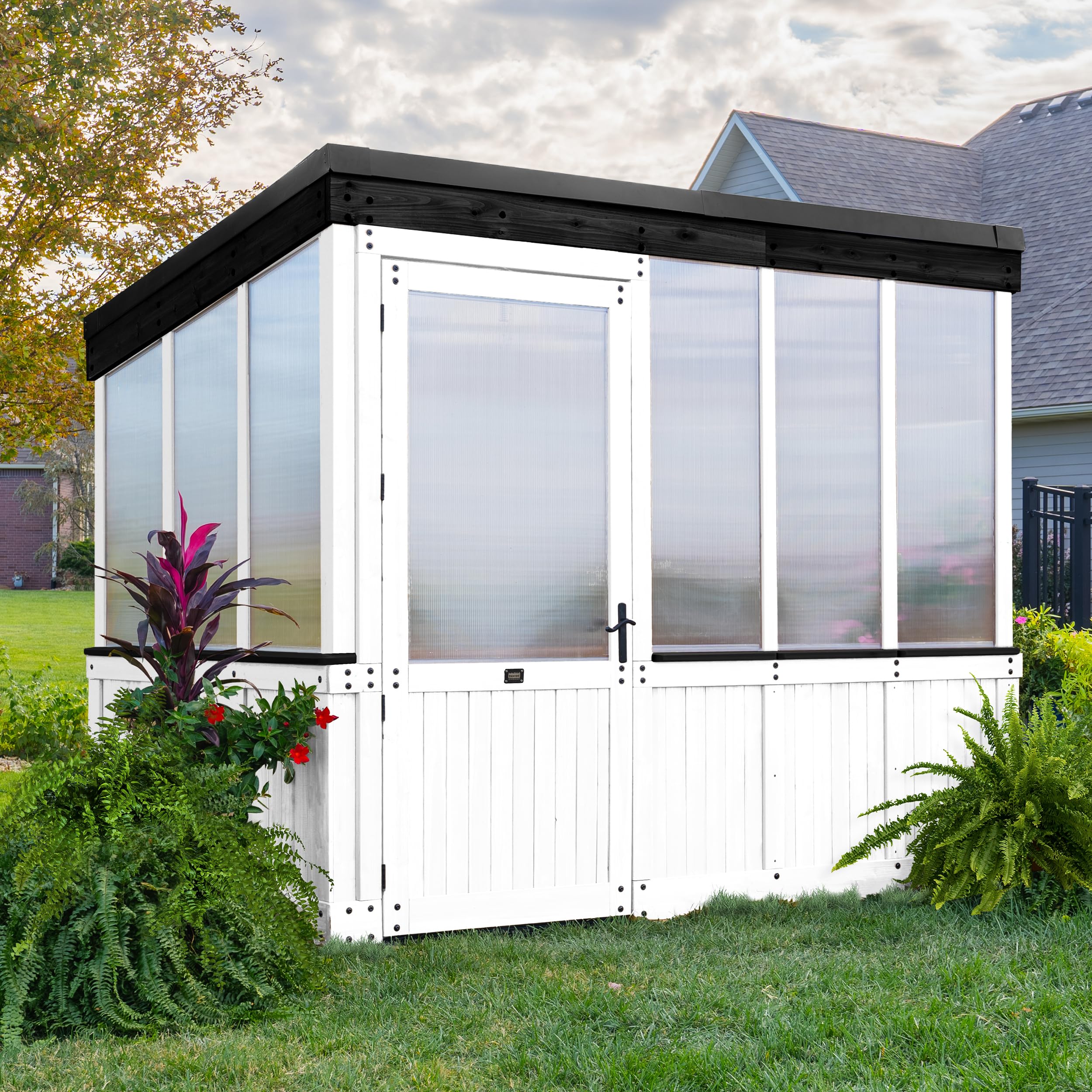
Buy this one if you want a greenhouse that feels like an extension of your house: real solid wood, meant to be anchored on a permanent foundation, with 54 square feet of interior space. It includes a built-in workstation and 13 linear feet of fixed staging shelves, so you can re-pot plants and organize trays without using floor space.
Its climate and weather performance separates it. The 4-wall polycarbonate panels retain 30% more heat than standard double-wall glazing., so your plants stay warmer in cold snaps. Pro-Tect tested to handle 2,800 lbs or 30 inches of snow and 100 mph winds when anchored.. Buyers report it “withstood 40+ mph winds during assembly”—a sign of its rigidity, even before it was fully secured.
You also get a temperature-activated exhaust fan, an easy-open window, plus both interior and exterior hose hook-ups so you can water without dragging a hose through the door. The patented PowerPort adds 3 electrical outlets and 3 USB ports, meaning you can run a heater, grow lights, or a fan without running extension cords across the yard. The 5-year warranty makes the premium price easier to swallow.
Why It’s the Foundation Pick
- 100% cedar wood resists decay naturally
- Holds heat with 4-wall polycarbonate panels
- Feels like a permanent backyard structure
Who Should Pause
- Assembly is a multi-weekend project
- Heaviest frame on this list at 571 pounds
Best for serious gardeners: If you want a permanent structure with power and water, this is the ultimate upgrade.
Think twice if: you can’t commit to a full weekend build and a solid, level foundation.
2. VEVOR Walk-in Tunnel Greenhouse 19.4×9.7×6.5 ft
A massive hoop house that gives you commercial-style growing space at a budget price.
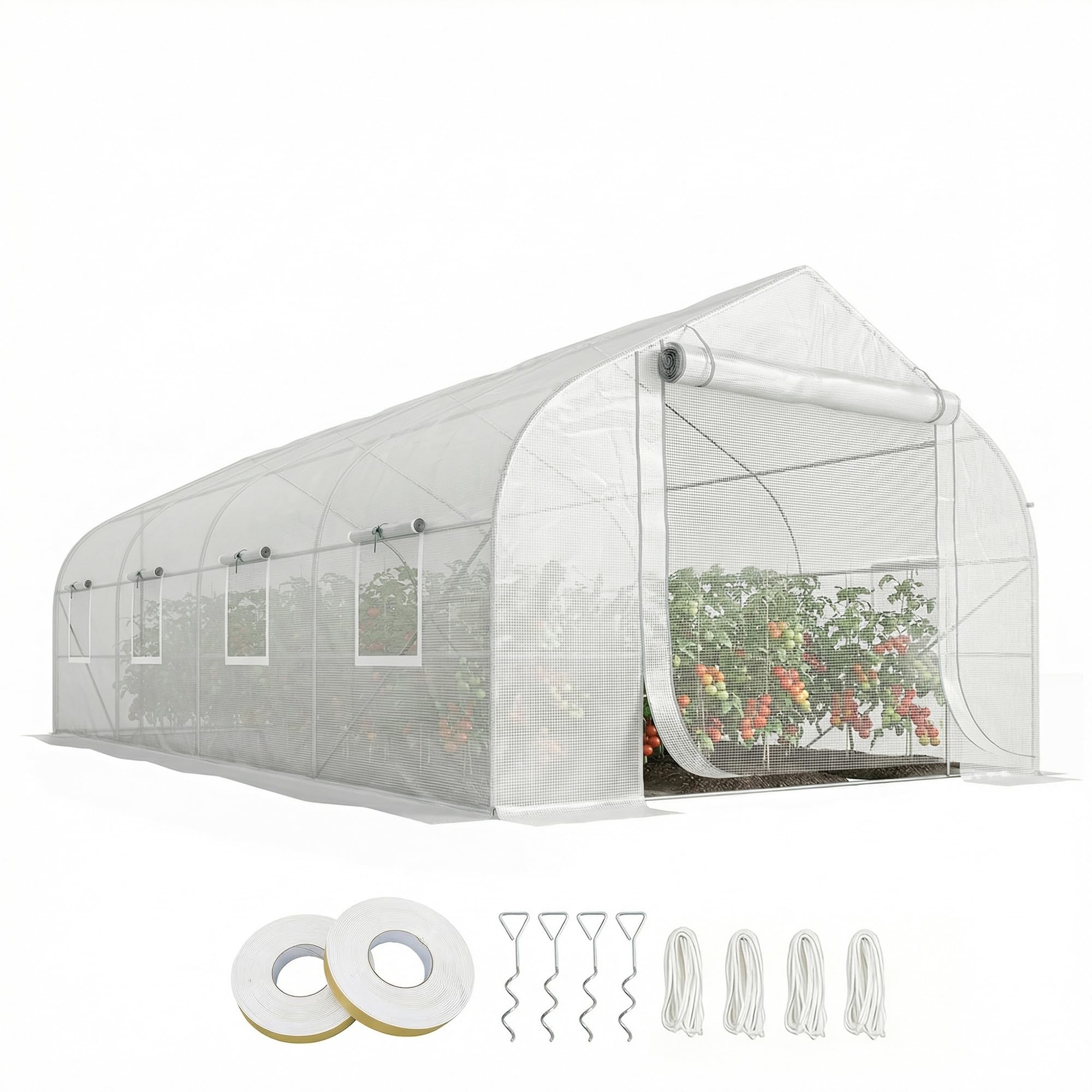
The sheer scale is the story here: you get a 19.4 x 9.7 x 6.5 ft growing area, which comfortably fits multiple plant shelves and lets you walk in and around everything. The galvanized steel frame uses 1-inch diameter pipes with a 0.02-inch wall thickness, reinforced by diagonal bars, U-shaped stakes, and tie-downs, so it’s surprisingly sturdy for its price tier.
Ventilation is a real priority, with 12 windows and a large roll-up zipper door, all covered by mesh netting to keep small creatures out. The 140g/m² high-density PE cover is thick for a plastic cover, with double-stitched seams and reinforced window seams to resist tearing. But the reviews are clear that this is a seasonal shelter, not a permanent structure—owners mention covers tearing in moderate winds, so plan to anchor it seriously and consider it a multi-season, not multi-year, investment.
Builders note it’s a two-person job and that the instructions are vague, but the reward is an enormous, functional growing space for a fraction of what a rigid greenhouse costs. It’s the smart pick for anyone who wants to grow a lot without a huge upfront investment.
Best for bulk growing: This gives you a huge protected area for starting seeds and overwintering pots.
A fair trade-off: The PE cover won’t handle heavy snow or severe storms without reinforcement.
3. Outsunny 20 x 10 x 7 ft Walk-in Greenhouse
A huge tunnel that protects a real harvest, as long as you accept its weather limits.
At 20 feet long and 10 feet wide, this Outsunny tunnel gives you a genuinely massive planting canvas. The heavy-duty steel frame has a galvanized finish to resist chipping and peeling, reinforced with four slant bracing tubes, a front crossbar, and middle-reinforced tubes. You can fit raised beds, shelves, and a worktable inside with room to move.
The 140 GSM PE cover transmits 85% of sunlight while blocking UV rays., and it features a tear-resistant reinforcement grid. A net-protected door and 8 net-protected windows let you ventilate at two speeds without letting in winged pests. It assembles in a few hours, and buyers often do it solo, which is rare for a structure this size.
The honest limit is weather: the manufacturer explicitly notes you should take it down before inclement weather, and the reviews echo that. Customers note the frame can falter in gusts around 30 mph, so this is best in a sheltered yard or for extending the season in calm months. It’s an outstanding value for ground coverage if you treat it as a seasonal tool.
Best for ground coverage: You get a huge protected space with solid airflow for a very low entry point.
Not for harsh winters: Plan to dismantle or heavily reinforce it when severe weather hits.
4. WUKHG 8X10FT Greenhouse
The smart grow space that gives you a remote eye on the climate, so you worry less.
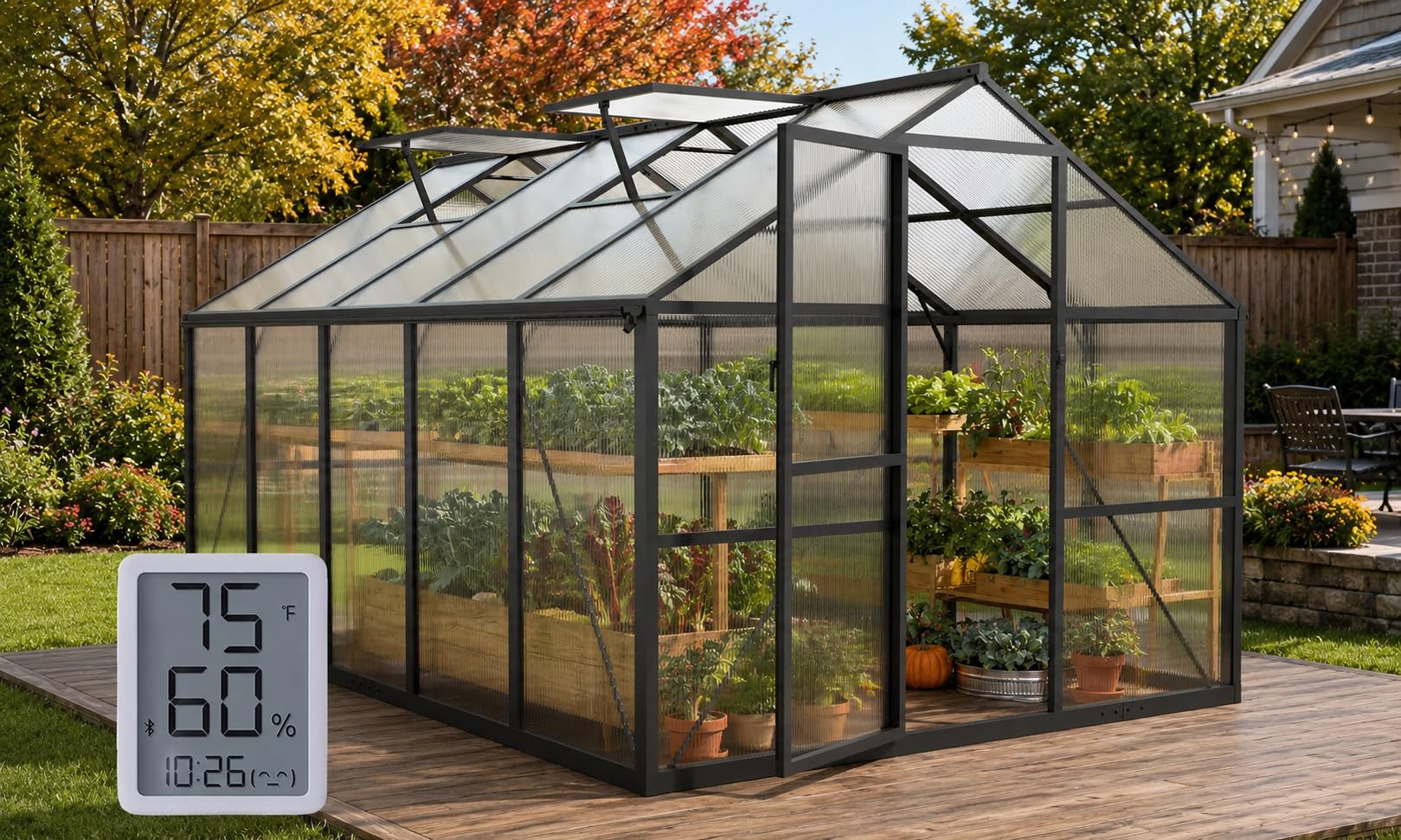
This 8 x 10 ft greenhouse pairs a sturdy aluminum alloy frame with 4mm thick twin-wall polycarbonate panels (720g), giving you strength and clarity in a mid-size package. It’s spacious enough to store tools and even add a chair, so you can sit among your plants—but the hidden ace is the included thermometer hygrometer.
That gauge pairs with an app to monitor real-time temperature and humidity remotely, with a sensor accurate to ±0.54°F and ±3%RH, refreshing every 2 seconds.. You can access 14-day data graphs and export half a year of data, which is a genuine breakthrough for anyone who travels or works away from home. It rarely gets better than checking your greenhouse climate from your phone.
The aluminum frame resists corrosion, and the adjustable ventilation window plus lockable door keep airflow in check. The trade-off: the actual growing space felt smaller than some expected—reviewers suggest looking at the dimensions carefully—and assembly is a labor-intensive, two-person project that runs long. Owners note the thermometer needs its own battery, which isn’t included.
What Stands Out
- Live app tracking of temperature and humidity
- Shatterproof, UV-blocking 720g PC panels
What to Know
- Some owners found the space smaller than advertised
- Assembly is a serious time commitment
Reach for this if: you want to monitor conditions remotely without buying extra sensors.
Look elsewhere if: you need a guaranteed, precise fit for a specific footprint and prefer a quick setup.
5. Palram – Canopia Snap & Grow 8′ x 20′
A premium 20-foot ridge-style house where serious hobbyists graduate to real yields.
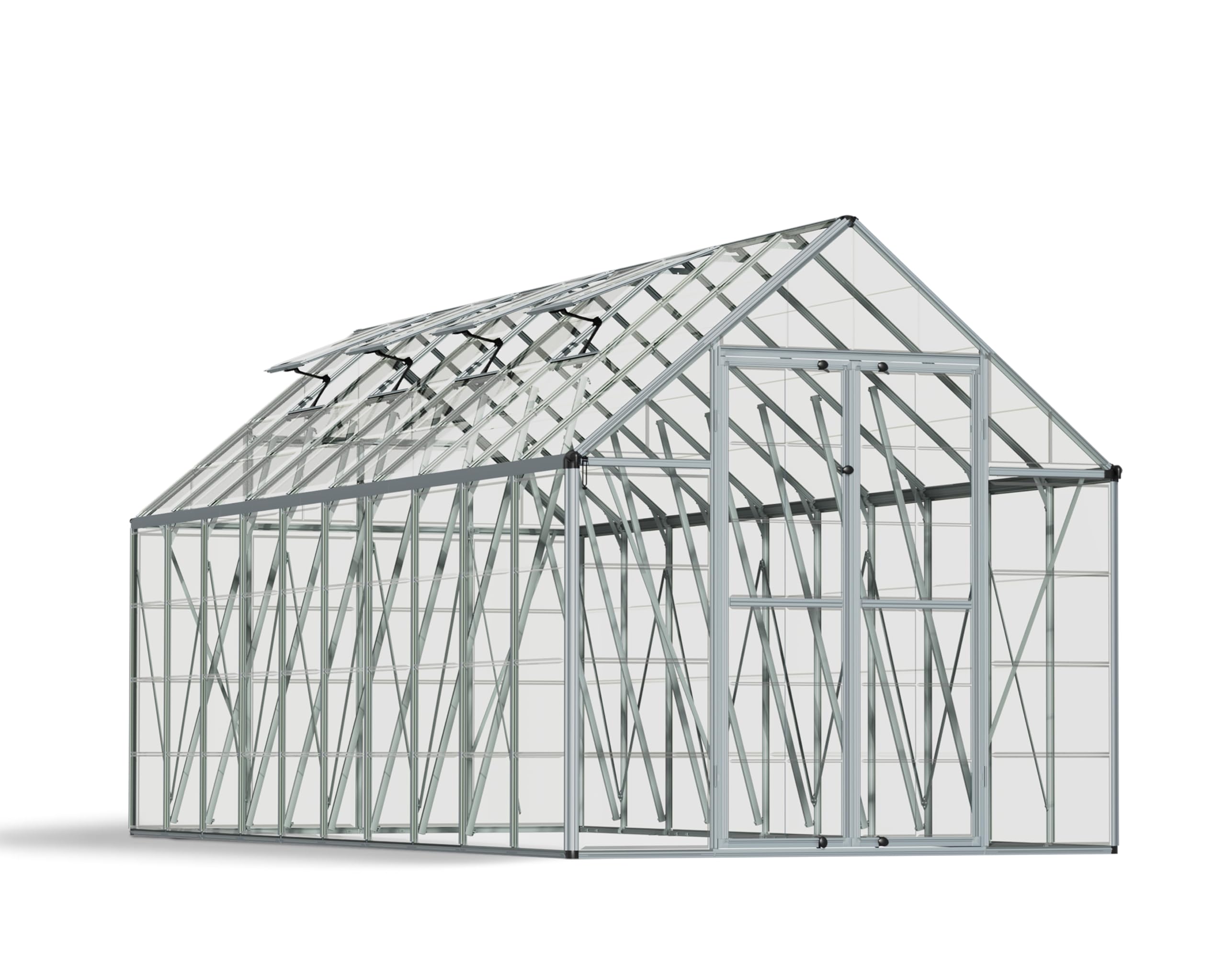
The Canopia is a step up in both price and ambition. It gives you 164 square feet of growing space with 6.8 feet of head room, so a 6-foot-5 adult can move around easily. The clear polycarbonate walls block 100% of UV rays and transmit over 90% of light., which is exceptional for plant growth.
This is a structural beast if assembled properly. It includes double-wide doors, four adjustable roof vents, rain gutters, and a lockable door handle. Reviewers point out it surviving 40-50+ mph winds when anchored, with interiors 25-30°F warmer than outside.. The 5-year warranty signals the manufacturer’s confidence.
The catch is the assembly, which is consistently described as a multi-hour, two-person marathon with picture-only instructions. You must level a base before you start, and many owners recommend upgrading the fasteners. In colder climates, you’ll still want bubble wrap and a heater to keep it frost-free. But for a permanent, high-capacity growing space, the payoff is worth the effort.
Best for big harvests: This is the largest rigid, walk-in polycarbonate structure on the list, built to last for years.
Budget for setup: Factor in a weekend and a helper, plus a level base and possible anchor upgrades.
6. Sylviera 6×8 FT Greenhouse
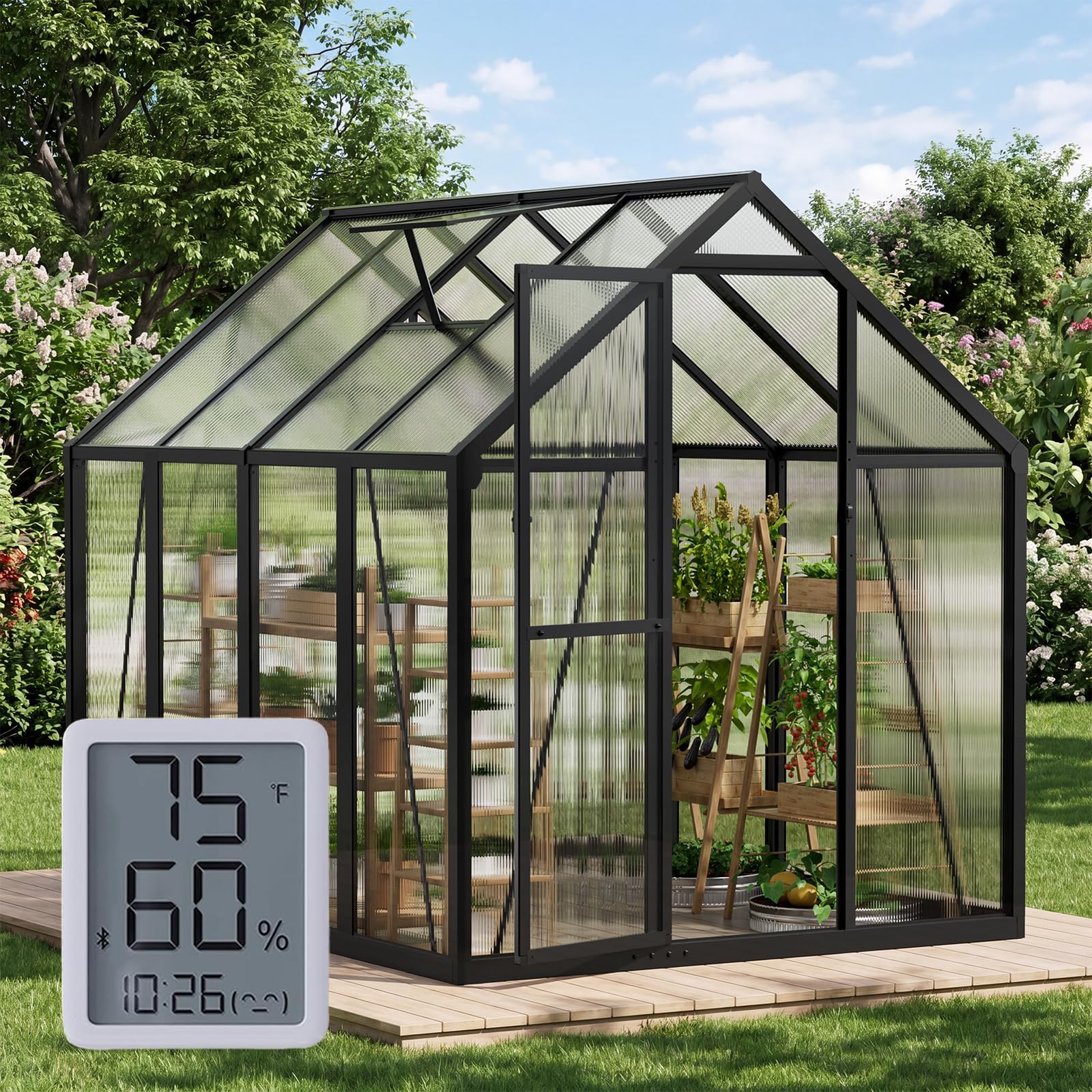
A light-filled, sturdy box that protects a serious collection without dominating the yard.
This 6×8 ft greenhouse nails the balance between size and presence. The reinforced aluminum alloy frame keeps the structure light enough for two people to manage, while the 4mm thick, 580g double-wall polycarbonate panels are clear, impact-resistant, and block harmful UV rays. It’s a sealed environment that keeps a stable interior temperature for your plants.
The roomy interior fits a four-tier shelf plus extra room to move, and the adjustable roof vent plus lockable door promote good airflow. A built-in hygrometer helps you track humidity levels for seedlings. Buyers found it survived two-day storms when anchored properly, though most recommend sealing the panel gaps with silicone (not included) to make it fully windproof.
The honest trade-off is the assembly. The instructions are inconsistent—some owners find them easy, others report a multi-day project. You’ll want a helper and a level surface. But for the price, you get genuine polycarbonate panels and a heavy-duty aluminum frame that outperforms the PE-covered tunnels in durability.
Best for serious hobbyists: Compact and sturdy, with real insulation for season extension.
Set aside time: Assembly is labor-intensive; plan for a helper and use the included tools carefully.
7. CROWN SHADES 8×6 Pop Up Greenhouse
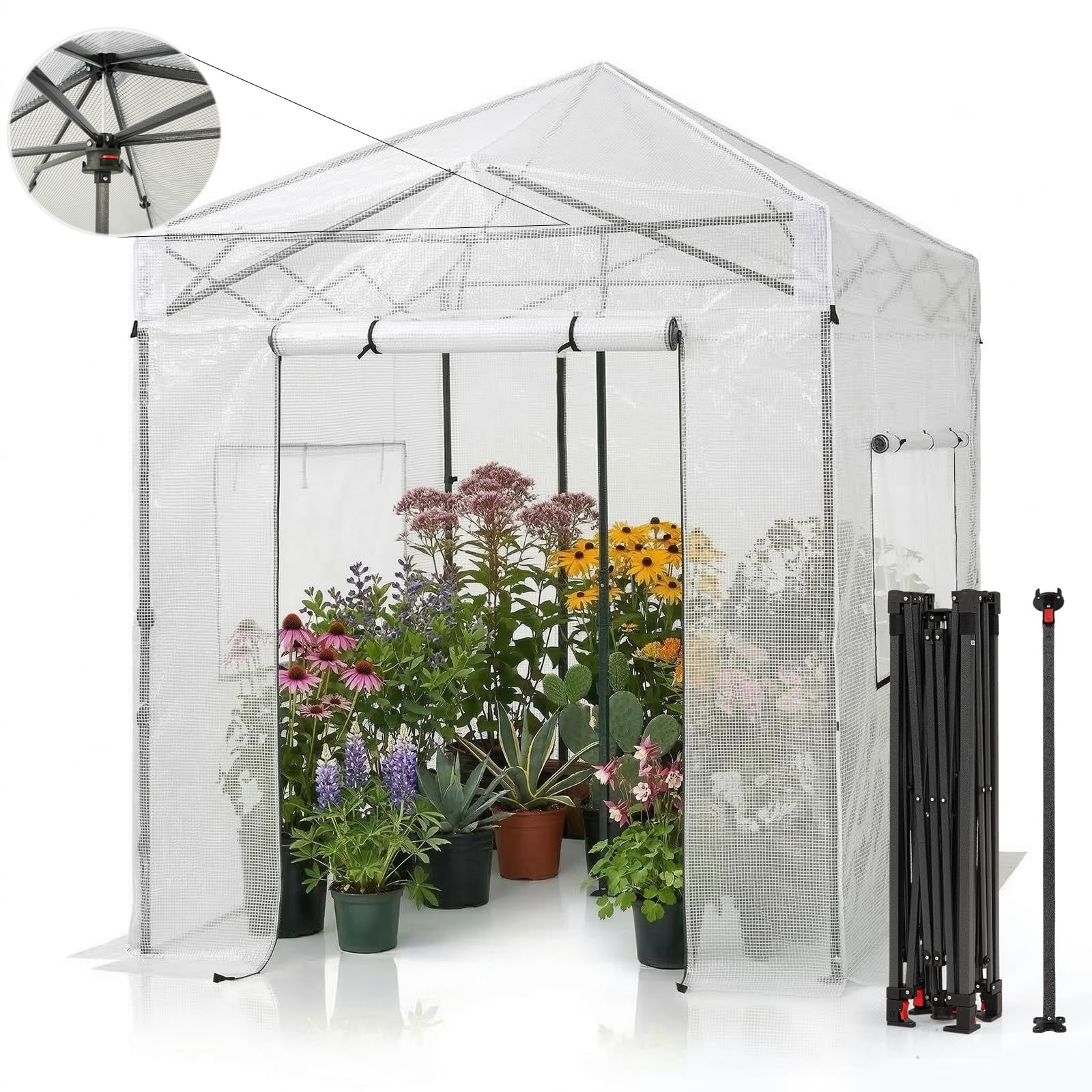
A true instant tent that goes from box to protecting plants in just a few minutes.
This is the answer for anyone who wants to extend the growing season this afternoon, not next month. The patented one-push center lock system pops the steel frame open with no tools, so you can have it up in seconds. It’s the easiest greenhouse on this list to set up and take down, which makes it a legitimate option for renters or temporary protection.
The 8 x 6 ft footprint is roomy enough to fit four half-barrel beds, with 3 adjustable height levels to accommodate different plant sizes as they grow. The upgraded anti-aging PE cover protects from sunlight, light rain, and dust, and the roll-up zippered door plus mesh windows provide decent airflow for warmer seasons. An internal support pole under the hub improves stability over other pop-ups.
Shoppers say it survived two storms in a windy area after being secured with sandbags, stakes, and a folded cover tucked under the beds. That anchoring is key—the recurring note is that the grommets can tear out over time if the cover flaps in the wind. It’s best treated as a season extender for mild weather, not a permanent structure.
Why It’s a Great Start
- Sets up in seconds with no tools
- Roomy enough for several raised beds
Know Its Limits
- Not for severe weather or heavy snow
- Requires sandbags or stakes for wind
Reach for this if: you want cheap, instant protection for tender plants in mild months.
Look elsewhere if: you need a permanent, insulated, year-round structure for harsh winters.
8. Outsunny 8′ x 6′ Polycarbonate Greenhouse
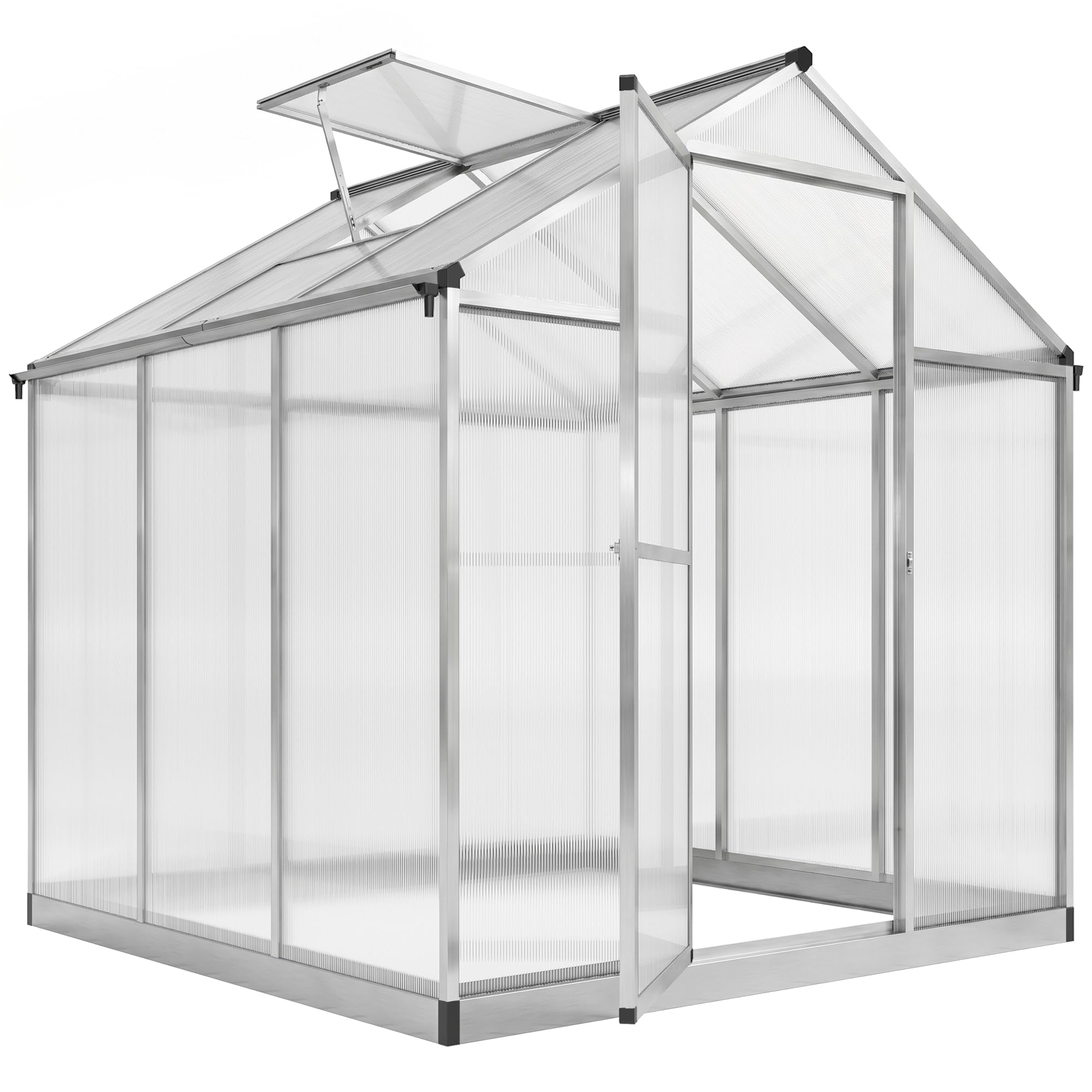
A mid-size polycarbonate house that collects its own water, perfect for self-sufficient gardeners.
This Outsunny greenhouse (8′ L x 6.25′ W x 6.4′ H) uses a corrosion-resistant aluminum frame and thick polycarbonate walls that let in 90% of light while stopping UV damage. It’s a solid, rigid structure intended to stay in the soil all year, protecting plants from cold, wind, rain, and wild animals.
The standout feature is the included rain gutter system: you can attach a hose to collect natural rainwater, which is a thoughtful touch for anyone trying to cut water costs. An adjustable roof vent helps you fine-tune humidity and temperature, and the hinged door makes entry easy with armloads of pots.
Quality is genuinely praised, but durability has a split reputation — some owners find the 4mm panels crack if panels aren’t sealed and anchored, and assembly instructions are consistently described as confusing. Many recommend caulking all seams and anchoring immediately. The included rain gutters add real value; just make sure to check your boxes the day they arrive, as missing or bent parts are a common complaint.
Best for water-conscious gardeners: The rain gutters and clear panels make this a smart, self-sufficient mid-size choice.
Plan for upgrades: Budget time for caulking, anchoring, and deciphering the manual to get the most stability.
Understanding the Specs
Snow Load
The maximum weight of snow a greenhouse roof is designed to hold before collapsing. This is a critical spec for northern climates, as a heavy, wet snow can easily exceed a light frame’s limit. Look for a number in pounds; a rating like 2,800 pounds shows a serious structure, while PE-covered tunnels may not have a rating at all.
Wind Speed Rating
The maximum wind velocity (in mph) a greenhouse can withstand while properly anchored. A higher rating means a more rigid frame. Remember that this rating depends on your anchoring system—even a high-rated greenhouse needs sandbags, stakes, or a concrete base to meet its claim.
FAQ
Which material is better for a greenhouse cover, polycarbonate or PE plastic?
Do I need to build a foundation for a backyard greenhouse?
How do I keep my greenhouse warm in the winter?
How long does it take to assemble a backyard greenhouse?
Can a greenhouse withstand strong winds and storms?
What size greenhouse do I need?
Should I buy a greenhouse with a built-in ventilation window?
Can I leave my greenhouse up all year round?
Final Thoughts: The Verdict
For most gardeners serious about growing, the backyard greenhouse winner is the Backyard Discovery Willow because it offers the most complete package: real cedar wood, insulated panels, and integrated power and water, all backed by a 5-year warranty. If you want the biggest possible growing space for the least money, the VEVOR Hoop House is the value pick. And for instant, temporary protection, the CROWN SHADES pop-up gives you a greenhouse in seconds. Whichever you choose, anchor it well and you’ll enjoy homegrown harvests for years.
How We Picked
We do not accept paid placement. Every pick is matched to a real buyer and a real use-case; we do not hands-on test units.
Sources & Methodology
Specifications: manufacturer listings and product documentation. Review insights: verified customer reviews, as of August 2026. Pricing: not shown on this page (it changes often); check the current price via the retailer link.
As an Amazon Associate, Gadgets Feed earns from qualifying purchases. This does not affect which products we feature.