
Carrying a heavy load for miles without a proper frame means every ounce digs into your shoulders, shifts with every step, and turns a trail into a punishment. A bag with a frame is the difference between a pack that feels half its weight and one that fights you the entire way. The internal or external frame transfers the load from your shoulders to your hips, stabilizes the center of gravity, and prevents the bag from collapsing into an unmanageable lump when fully loaded.
I’m Min — the co-founder and writer behind Gadgets Feed. I’ve spent countless hours analyzing frame materials, suspension designs, and real-world user reports to separate bags that actually shift weight from those that just add bulk to your back.
Whether you are loading up for a multi-day trek, hauling hunting gear into the backcountry, or simply need a pack that won’t sag under a heavy daily carry, this guide breaks down the key specs and top options to help you find the best bag with frame for your specific load and terrain.
How To Choose The Best Bag With Frame
The right frame pack isn’t just about capacity — it is about how the chassis interacts with your body geometry and the weight you plan to carry. Choose wrong and you accept hip belt chafing, shoulder fatigue, and a load that wobbles on uneven terrain.
Frame Type: Internal vs. External vs. H-Frame
Internal frames use a single contoured aluminum stay or a wire frame that sits inside a sleeve, keeping the profile close to your back for better balance on technical trails. The Osprey Rook uses a LightWire frame that bends with your movement. External frames place the load higher and farther from your back, which can feel top-heavy but offers superior ventilation. The ALPS OutdoorZ uses a tubular aluminum H-frame that is purpose-built for hauling heavy, dense loads like boned-out meat. For ultralight trekking, a wire or single-stay frame is often enough; for heavy pack-outs, an H-frame is the right choice.
Suspension and Torso Adjustment
A frame is useless if it doesn’t fit your torso length. Adjustable torso systems, like the multi-position setup on the MOUNTAINTOP 70L, let you dial in the fit so the hip belt sits on your iliac crest — not your waist. The hip belt should carry roughly 80 percent of the load. If the belt is too thin or lacks anti-sway straps, the weight will slide back to your shoulders. The ALPS OutdoorZ Traverse features a three-layer waist belt with anti-sway straps specifically to lock the load in place.
Load Capacity and Pack Weight
A frame pack’s real-world limit is defined by its frame gauge and hip belt padding. The Mardingtop 60L handles 50 pounds under 20 miles, but its hip belt lacks padding for loads past that. The Osprey Rook is comfortable up to 35 pounds, while the ALPS H-frame is designed for heavy pack-outs exceeding 60 pounds. Heavier frames add durability but cost you in base weight — the ALPS weighs 7.8 pounds empty, while the Osprey weighs 3.9 pounds. Choose the frame that matches your worst-case load, not your average day hike.
Quick Comparison
On smaller screens, swipe sideways to see the full table.
| Model | Category | Best For | Key Spec | Amazon |
|---|---|---|---|---|
| ALPS OutdoorZ Traverse EPS | Premium | Heavy hunting pack-outs | Tubular aluminum H-frame | Amazon |
| Osprey Rook 65L | Premium | Multi-day backpacking | LightWire frame / 3.9 lbs | Amazon |
| Peak Design Travel 45L | Premium | One-bag travel / carry-on | Frame sheet / 35-45L expandable | Amazon |
| Oakley Kitchen Sink | Mid-Range | Heavy daily carry / travel | Padded frame sheet / 34L | Amazon |
| Mardingtop 65L+10L | Mid-Range | Modular military-style loadouts | Internal frame / MOLLE webbing | Amazon |
| MOUNTAINTOP 70L | Mid-Range | Budget-friendly backpacking | Aluminum alloy frame plate | Amazon |
| Mardingtop 60L Military | Budget | Entry-level camping / rucking | Internal frame / 4.5 lbs | Amazon |
In‑Depth Reviews
1. ALPS OutdoorZ Traverse EPS Pack
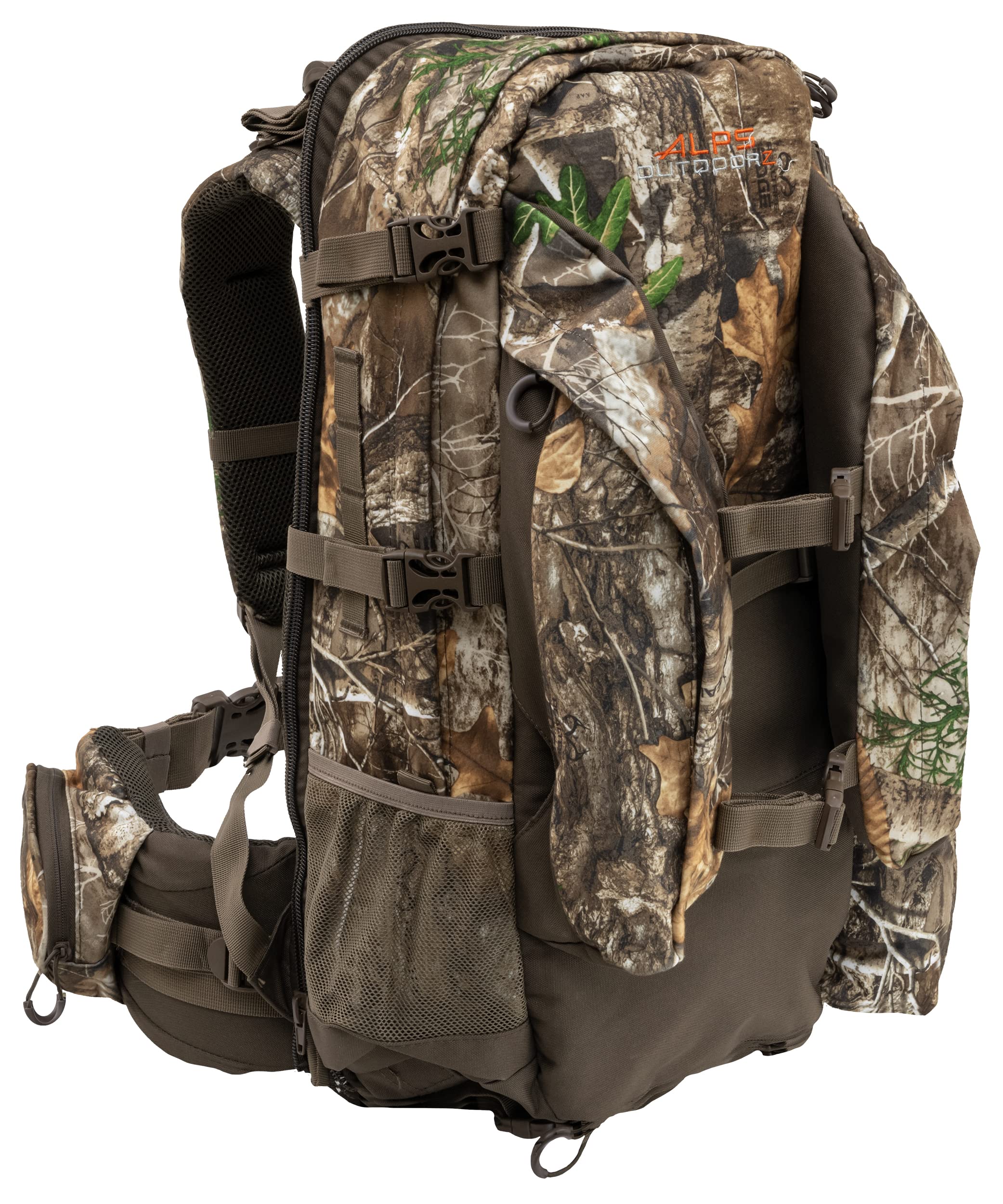
The ALPS OutdoorZ Traverse is built around a heavy-duty tubular aluminum H-frame that is designed for one thing: hauling serious weight into and out of the backcountry. The packing-out section expands by 1,200 cubic inches specifically for boned meat, decoys, or bulky gear, and the combination of anti-sway straps on the three-layer waist belt and load-lifter shoulder straps keeps the load locked to your hips. At 7.8 pounds empty, this is not an ultralight pack — it is a hauling chassis for loads that would collapse a standard internal frame.
The weapon carry system is the most refined I have seen in this price range. Front zippered wing pockets secure a rifle or bow without pulling the pack away from your back, and a drop-down pocket adds a second carry option. The included blaze orange rain cover stows in a dedicated bottom pocket and deploys quickly when weather turns. After three years of hard hunting use reported by owners, the frame and zippers remain intact — the H-frame shows no sign of bending under repeated heavy loads exceeding 60 pounds.
What holds it back is the empty weight and the lack of a dedicated small-item organizer inside the main compartment. The belt pockets are sized for a rangefinder and a few calls, but if you want a pen slot or key clip for everyday organization, you will have to add your own pouches. The zippers occasionally catch on the fabric webbing near the gussets, though the pulls are glove-friendly and robust. For hunters who need a do-it-all pack that will survive a decade of abuse, this is the frame to beat.
Why it’s great
- Tubular aluminum H-frame handles extreme loads without flex
- Expandable pack-out section adds 1,200 cubic inches for hauling meat or gear
- Integrated weapon carry system with wing pockets and drop-down pocket
- Included blaze orange rain cover stored in dedicated bottom pocket
Good to know
- Empty weight of 7.8 lbs is heavy for day hikes or ultralight trips
- No small-item organizer pocket inside the main compartment
- Zippers occasionally catch on fabric webbing near gussets
2. Osprey Rook 65L Men’s Backpacking Backpack

The Osprey Rook 65L strikes a near-perfect balance between weight, comfort, and load capacity for traditional backpacking. The LightWire frame is a single peripheral alloy stay that wraps around the pack body, transferring weight efficiently to the hip belt while allowing the pack to flex laterally with your stride. At 3.9 pounds, it weighs half as much as the ALPS hunting frame but still carries comfortably up to 35 pounds — exactly the sweet spot for a 3-5 day resupply interval. The AirSpeed backpanel uses tensioned mesh to create a gap between your back and the pack, which dramatically reduces sweat buildup on warm ascents.
The extended fit (EF) version accommodates hips up to 70 inches, which is rare in a 65-liter class pack. The hip belt is plush without being mushy, and the load lifter straps angle the pack onto your back naturally. The integrated removable rain cover stows in its own pocket, and the angled water bottle pockets allow you to reach a bottle without taking the pack off. After several hundred miles of use reported by owners, the fabric and zippers show no signs of premature wear — typical of Osprey’s build quality.
The Rook lacks a large outer mesh pocket for stuffing a wet shell or quick-access layers, and there is no back-panel access to the main compartment, so you have to dig through the top lid to reach gear at the bottom. The sternum strap can feel thin for users with a wider chest, and the waist strap has been known to dig into narrow hips if the load pushes past 30 pounds. For lightweight backpackers who prioritize ventilation and a proven frame design, the Rook is a top-tier choice.
Why it’s great
- LightWire frame provides excellent load transfer at only 3.9 lbs
- AirSpeed tensioned mesh backpanel offers superior ventilation
- Extended fit version accommodates hips up to 70 inches
- Integrated removable rain cover with dedicated storage pocket
Good to know
- No large outer mesh pocket for quick-access wet gear
- No back-panel access to main compartment
- Waist strap can dig into narrow hips under heavier loads
3. Peak Design Travel Backpack 45L
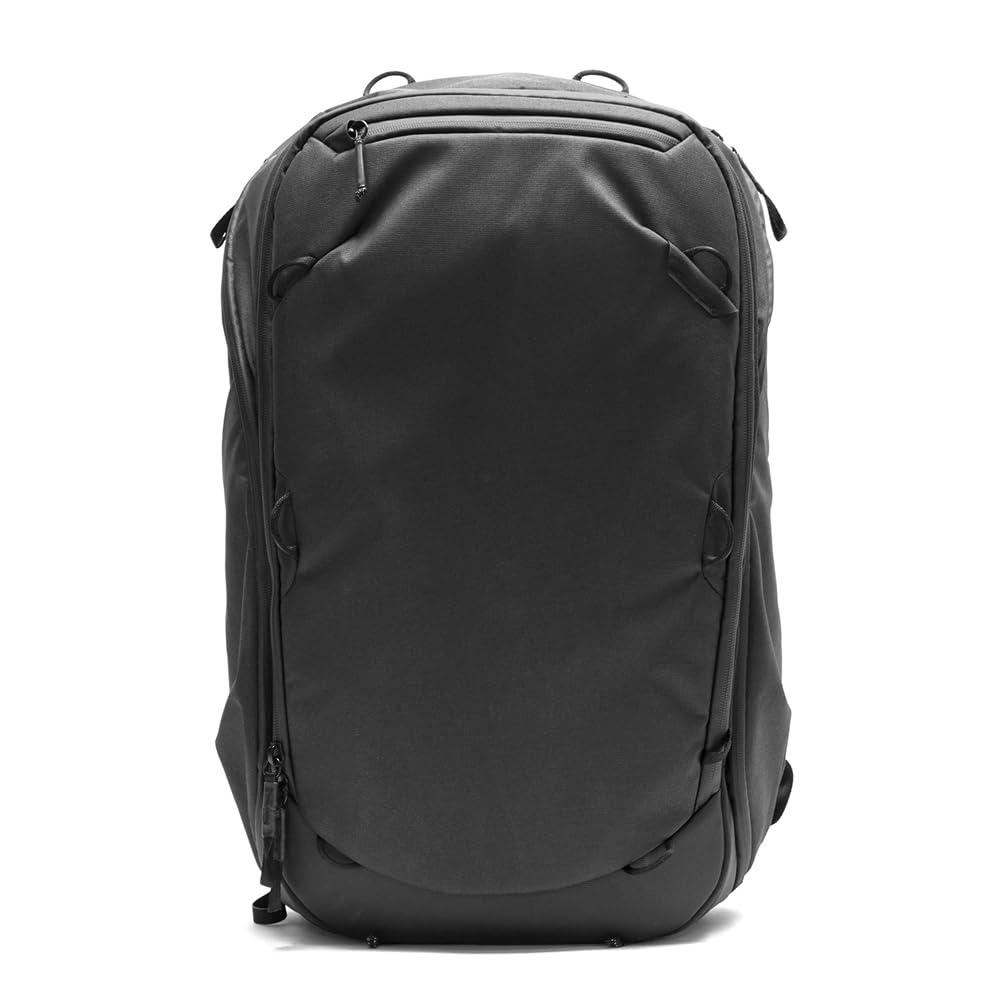
The Peak Design Travel Backpack 45L redefines what a frame can do in a travel pack. Instead of a rigid alloy stay, it uses a buried frame sheet that provides enough structure to keep the bag from collapsing when loaded, while allowing the entire pack to compress for under-seat storage. The expandable design moves from 35L to 45L via a zippered gusset, and the side pockets expand to hold a 1L bottle or a travel tripod. The weatherproof 400D recycled nylon canvas and #10 UltraZip are built to survive airport baggage tosses and unexpected downpours.
The organization is extraordinary for a single-bag travel setup. Rear and top access let you grab a laptop or a change of clothes without unpacking everything. The tuck-away shoulder straps and hip belt convert the pack into a clean carry-on that slides into overhead bins without snagging. The luggage pass-through slides over your roller bag handle, and the 360-degree handles make it easy to grab from any angle. Owners report fitting a 16-inch MacBook Pro and two weeks of gear for an international trip with room to spare on the return for souvenirs.
The frame sheet provides enough structure to keep the bag comfortable at moderate loads, but it is not designed for the 60-pound pack-outs the ALPS H-frame handles. The shoulder straps have been criticized for being a bit narrow for larger frames, and the waist strap is too short for taller or larger users, which pushes more weight back onto the shoulders. At a listed weight of 0.15 grams (spec error — actual weight is about 4.5 pounds), the real-world weight is noticeable but acceptable for the build quality. For urban and airport travel gear that demands structure, this is the best framed travel pack available.
Why it’s great
- Frame sheet provides structure while allowing compression for under-seat storage
- Expandable 35L to 45L with zippered gusset
- Weatherproof 400D recycled nylon shell with #10 UltraZip
- Tuck-away straps and luggage pass-through for seamless airport transit
Good to know
- Frame sheet is not designed for heavy loads above 35 lbs
- Shoulder straps feel narrow for larger body frames
- Waist strap too short for taller or larger users
- Actual weight is heavier than the listed spec suggests
4. Oakley Kitchen Sink Backpack

The Oakley Kitchen Sink is a 34-liter urban pack with a padded frame sheet that gives it structure without the weight of a traditional hiking frame. The frame sheet is bonded into the backpanel, providing enough rigidity to prevent the pack from sagging when loaded with a laptop, books, and gym gear. The main compartment includes a dedicated padded laptop sleeve and a separate shoe compartment at the bottom — a rare feature in a frame-equipped bag of this size. The adjustable mesh-lined shoulder straps and padded back panel distribute the load better than a standard commuter pack.
The build quality is unmistakably Oakley. The exterior uses a weather-resistant fabric, the zippers are cable-tie compatible for added security, and the metal loops on the front allow you to hang additional gear. The side pockets are deep enough for a 32-ounce Nalgene bottle. Owners report using this bag as a freight conductor’s work pack, a travel companion, and a daily gym-to-office bag — all without the frame sheet losing its shape. The 34-liter capacity is deceptive; the pack holds considerably more than expected due to the boxy, uncompressed shape maintained by the frame sheet.
The Kitchen Sink is not designed for multi-day backpacking loads. The frame sheet has no load lifters or adjustable torso — it simply prevents collapse and adds backpanel structure. The hip belt is minimal and not designed to transfer significant weight. For anyone who needs a structured daily carry that doesn’t scream “hiking gear,” the Kitchen Sink delivers a clean, rugged silhouette with enough organization for heavy tech and travel loads. The price is steep for a daypack, but the materials and hardware justify the investment for a bag that will survive years of daily abuse.
Why it’s great
- Padded frame sheet prevents sagging under heavy daily loads
- Dedicated laptop sleeve and separate shoe compartment
- Weather-resistant fabric with cable-tie compatible zippers
- Deep side pockets fit a 32-ounce Nalgene bottle
Good to know
- No adjustable torso or load lifters for weight transfer
- Hip belt is minimal and not designed for significant load bearing
- Price is higher than typical commuter backpacks
5. Mardingtop 65L+10L Internal Frame Backpack
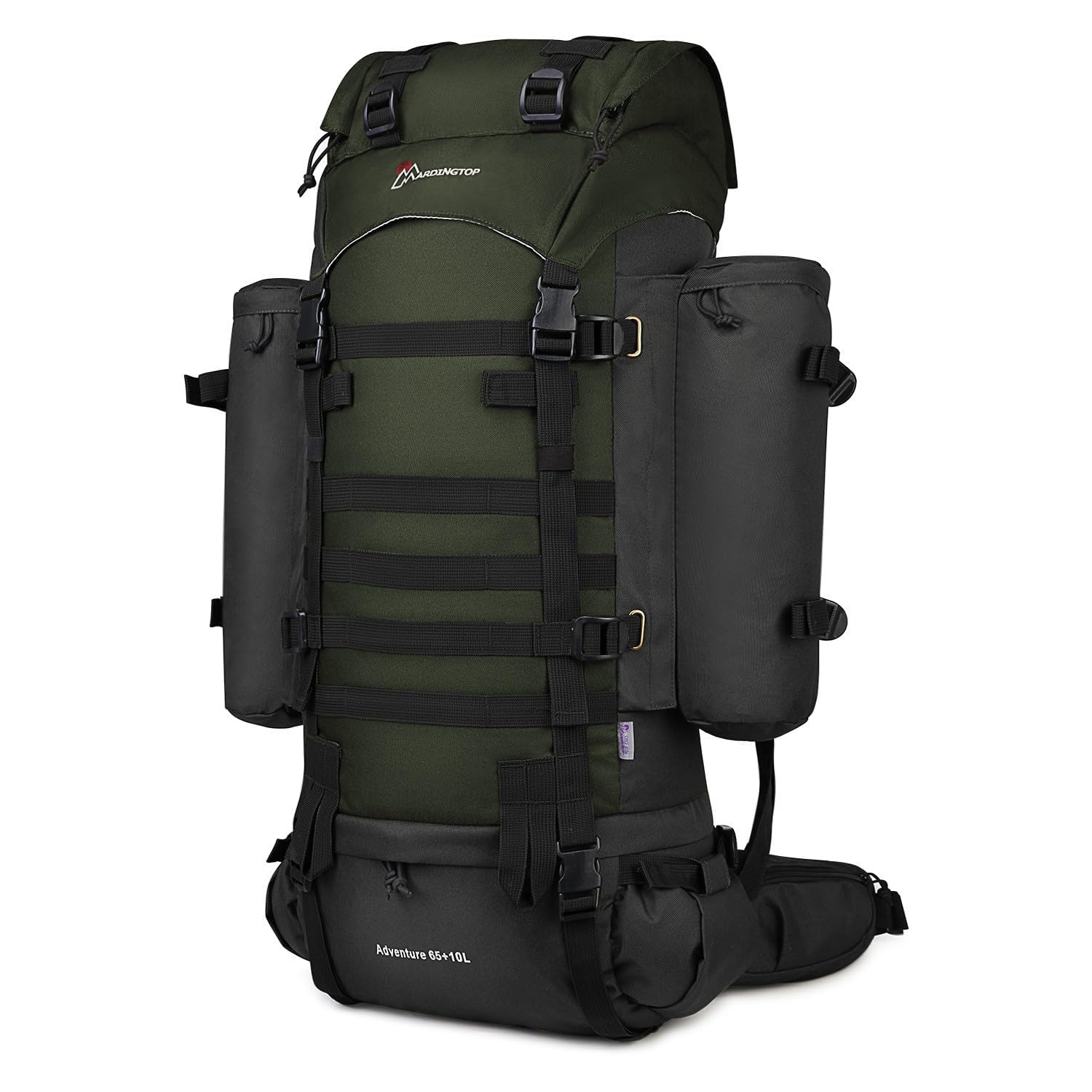
The Mardingtop 65L+10L is a military-style framed pack with a focus on modularity and durability at a mid-range price point. The internal frame uses a heavy-gauge stay that provides enough structure to handle loads up to 50 pounds, and the extensive MOLLE webbing on the front and sides lets you attach pouches, sleeping pads, or utility kits. The main compartment has an internal drawstring separator that divides the bag into upper and lower sections, which is useful for keeping a sleeping bag separate from your clothing.
The side pockets are secured with a combination of Velcro, zippers, and compression straps — a triple-redundant closure that prevents items from falling out even on rough terrain. The fabric is heavier than typical hiking pack material, and the single-stitch seams use thick thread that has held up well after five years of regular use, according to owners. The removable daypack adds 10 liters of capacity and can be used as a summit pack or carry-on. The included rain cover is effective, but owners note the elastic band loses tension over time.
The hip belt lacks the padding and width needed for loads above 50 pounds, and the waist buckle can feel flimsy against the rest of the robust hardware. The side zipper on the main compartment has a tendency to unzip slightly under load, and there is no dedicated hydration hose outlet — the tube must be routed through the top, which compromises the seal of the main closure. For campers and hunting scouts who want to customize their setup with MOLLE attachments, this pack offers exceptional value if you keep your total weight under 45 pounds.
Why it’s great
- Extensive MOLLE webbing for modular attachment of pouches and gear
- Triple-redundant side pocket closures prevent gear loss
- Internal drawstring separator for organizing sleeping bag vs. clothing
- Removable 10L daypack adds versatility for summit trips
Good to know
- Hip belt lacks padding for loads exceeding 50 lbs
- No dedicated hydration hose outlet — tube routes through the top
- Side main compartment zipper tends to unzip slightly under load
6. MOUNTAINTOP 70L Internal Frame Backpack

The MOUNTAINTOP 70L Internal Frame Backpack is the cleanest expression of the value proposition in this category. The aluminum alloy frame plate is lighter than a full H-frame but provides enough rigidity to transfer the load to the hip belt for typical weekend trips. The torso is adjustable with a multi-position ladder system that fits a wide range of body sizes. The side zipper entry into the main compartment is a genuinely useful feature at this price — you can access the middle of the pack without digging through the top lid.
The included rain cover is effective in sustained downpours, and the hydration sleeve fits a 3-liter bladder. The padded mesh backpanel and shoulder straps are comfortable for loads around 30 pounds, which is the realistic sweet spot for this frame design. The MOUNTAINTOP has been a consistent performer for travelers and weekend hikers, with owners reporting it holds up well for short trips and as a budget-friendly travel pack for flights where you need to check gear. The 70-liter capacity is true to size.
The hydration port is too small for most aftermarket tube fittings, and the top seam stitching has shown fraying on some units after extended use. The pack is heavy for its class at 4.4 pounds, and the frame lacks the lateral stiffness needed for technical off-trail hiking — the load shifts noticeably on uneven terrain. The pockets are sufficient but not extensive; there is no dedicated fleece-lined sunglasses or electronics pocket.
Why it’s great
- Aluminum alloy frame plate provides solid load transfer for weekend trips
- Side zipper entry allows easy access to the middle of the pack
- Multi-position torso adjustment fits a wide range of body sizes
- Included rain cover performs well in sustained downpours
Good to know
- Hydration port is too small for most aftermarket tube fittings
- Top seam stitching has shown fraying on some units
- Frame lacks lateral stiffness for technical off-trail hiking
7. Mardingtop 60L Military Internal Frame Backpack
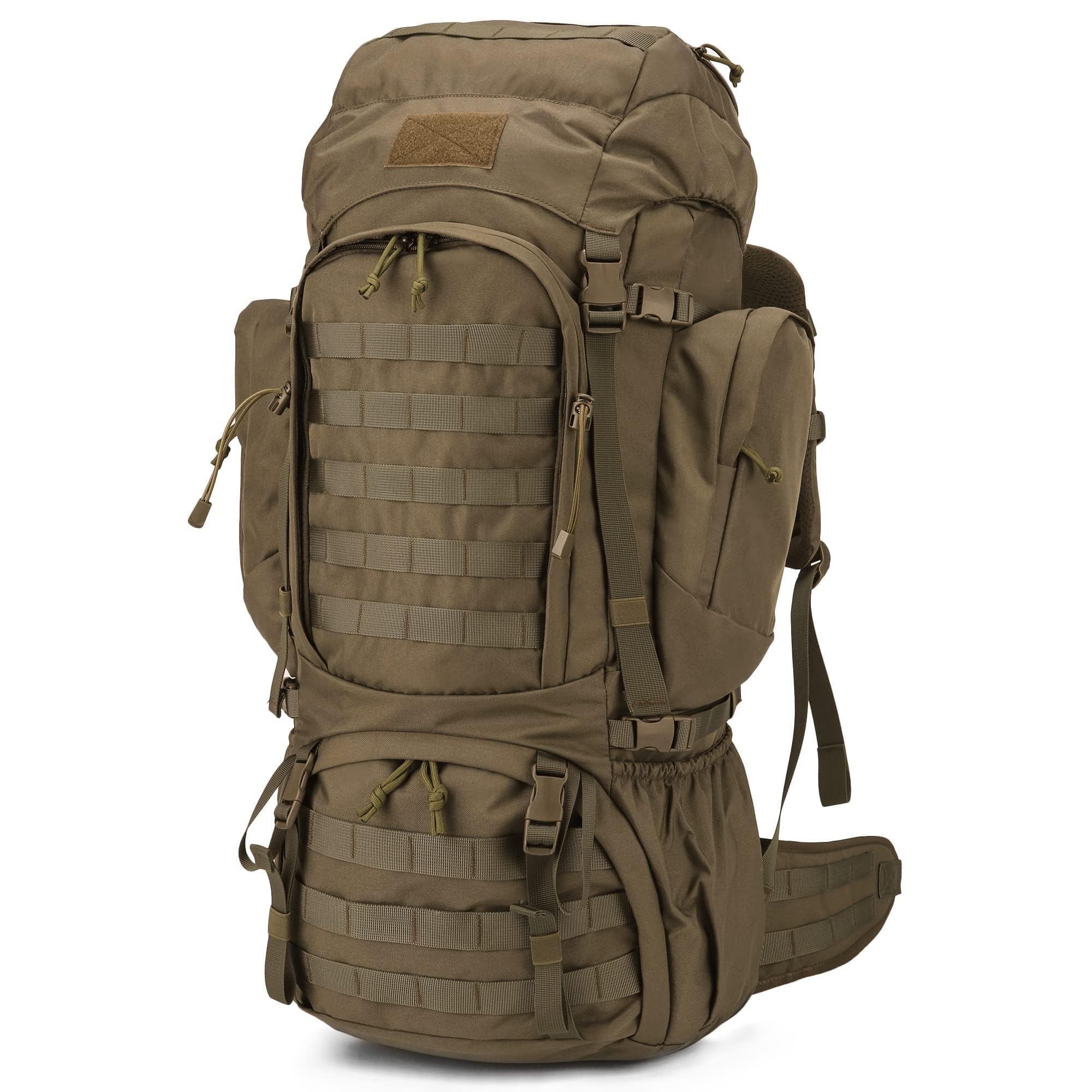
The Mardingtop 60L Military is the entry-level benchmark for framed packs, and it sets a surprisingly high bar. The internal frame is paired with YKK zippers throughout — a detail usually reserved for packs costing twice as much. The 60-liter capacity is true to size and includes a sleeping bag compartment, adjustable straps, and a MOLLE system on the front panel that allows some customization. The pack is built from a balanced material that is durable enough for camping, hiking, and light rucking without feeling like a canvas duffel.
The frame handles loads up to 50 pounds for distances under 20 miles, which is impressive for this price tier. The waist belt is the weakest link — it lacks the padding and width of premium packs, and owners report chafing during long carries. The shoulder straps are narrow and can become painful under heavy loads, though they are functional for weekend trips. The rain cover has cheap elastic that deteriorates quickly, but the four tie-down points keep it in place during steady rain.
The expandable design with the MOLLE system lets you grow the pack to roughly 75 liters by attaching side pouches, making it a versatile platform for beginners who want to add gear over time. The stitching is clean with no loose threads reported across hundreds of reviews, and the internal frame stay holds its shape after repeated packing and unpacking. For someone stepping into overnight camping for the first time — or for a rucking bag that won’t break the bank — the Mardingtop 60L proves you don’t have to spend a premium to get a legitimate internal frame.
Why it’s great
- YKK zippers throughout at a budget-friendly price point
- Internal frame handles loads up to 50 lbs for moderate distances
- MOLLE system and expandable design allow for future customization
- True-to-size 60L capacity with sleeping bag compartment
Good to know
- Waist belt lacks padding and causes chafing on long carries
- Shoulder straps are narrow and become painful under heavy loads
- Rain cover elastic deteriorates quickly; rely on tie-down points
FAQ
What is the difference between an internal frame and an external frame backpack?
How much weight can a typical internal frame backpack hold comfortably?
Can a framed backpack be used for travel and carry-on luggage?
Final Thoughts: The Verdict
For most users, the best bag with frame winner is the ALPS OutdoorZ Traverse EPS because its tubular aluminum H-frame handles the heaviest loads without flex, and the expandable pack-out section is purpose-built for hunting or gear-heavy trips. If you want a ventilated, lightweight pack for multi-day backpacking, grab the Osprey Rook 65L. And for urban and travel gear that needs structure without a hiking profile, nothing beats the Oakley Kitchen Sink.