
Our readers keep the lights on and my morning glass full of iced black tea. As an Amazon Associate, I earn from qualifying purchases.
Specs are compiled from manufacturer listings and verified buyer reviews and can change over time — please confirm the key details on the product page before buying.
One bagged compost can feel like heavy, wet clay that cakes into bricks.. Another is light, crumbly, and smells like lobster shells.. The source material determines whether your tomatoes thrive or your roses sulk.. This guide compares six bagged composts by their actual contents so you can match one to your soil and plants..
I’m Min — the founder and writer behind Gadgets Feed. This guide is built by comparing the manufacturers’ published specifications and the patterns across verified customer reviews, so you get each pick’s real strengths and trade-offs instead of marketing spin.
Whether you are amending heavy clay soil, refreshing a container garden, or starting a vegetable patch, choosing the right bagged compost means matching the texture, nutrient source, and bag size to your specific planting project.
Quick Picks
- Michigan Peat Baccto Wholly Cow Horticultural — Best Overall
- Espoma Organic Land and Sea Gourmet Compost — Nutrient-Dense
- Coast of Maine Organic & Natural Planting — Container Champion
- Old Potters Organic Compost — Clay Buster
- Brut Cow Compost – Nutrient-Rich Composted Cow — Budget-Friendly
- R&M Organics Premium Organic Compost 10 lb — Nursery Rescue
How To Choose The Best Bagged Compost
Bagged compost is concentrated organic matter that feeds soil microbes and improves texture.. The main factors are source material, particle size, bag volume versus weight, and organic certifications..
Source Material: What Is Inside the Bag
Cow manure compost is the most common — it is balanced, safe for roots when fully composted, and widely available. Some blends add lobster or crab meal for extra calcium and chitin (a natural polymer in shellfish), which the brand claims can help plants resist fungal issues. Plant-based composts, made from yard waste or food scraps, tend to be lighter and have a finer texture. The source determines the nutrient profile and how quickly it breaks down in your soil.
Bag Volume vs. Weight: What You Are Really Paying For
A 40-quart bag that weighs 34 pounds is far more water-dense than a 20-quart bag that weighs 21 pounds. Heavier bags usually mean more moisture content, which adds weight but also means you are hauling water. Lighter bags, like some plant-based composts, give you more volume for the weight but may need more frequent watering because they dry out faster. Match the weight to how far you have to carry the bag and if you want a wetter or drier starting material.
Smell and Texture: What to Expect at the Garden Center
Fully composted manure should smell earthy, not sour or like raw manure. A screened compost — one that has been sifted — will be uniform with few sticks or clumps. Unscreened compost might have visible wood chips or twigs that can tie up nitrogen as they decompose. If you are using it as a top dressing, a finer texture spreads more evenly; if you are digging into beds, a coarser texture improves aeration.
Quick Comparison
| Model | Best For | Volume | Weight | Source Material | Amazon |
|---|---|---|---|---|---|
| Michigan Peat Baccto Wholly Cow | Large beds & mushroom growing | 40 Quarts | 34 Pounds | Peat + cow manure | $25.49$26.99Amazon |
| Espoma Organic Land and Sea | Nutrient-dense planting mix | 1 Cubic Foot | 24 Pounds | Lobster & crab meal | $28.37Amazon |
| Coast of Maine Organic | Tomatoes & container veggies | 20 Quarts | 21 Pounds | Composted manure + peat moss | $37.13Amazon |
| Old Potters Organic Compost | Improving heavy clay soil | 768 Fluid Ounces | 25 lbs | Plant-based | $39.99Amazon |
| Brut Cow Compost | Small containers & gentle feeding | 10 Quarts | 10 Pounds | Pure cow manure | $24.99Amazon |
| R&M Organics Premium | Spot-treating ailing plants | 0.31 Cubic Feet | 10 Pounds | Dairy cow manure | $24.49Amazon |
In‑Depth Reviews
1. Michigan Peat Baccto Wholly Cow Horticultural Compost and Manure
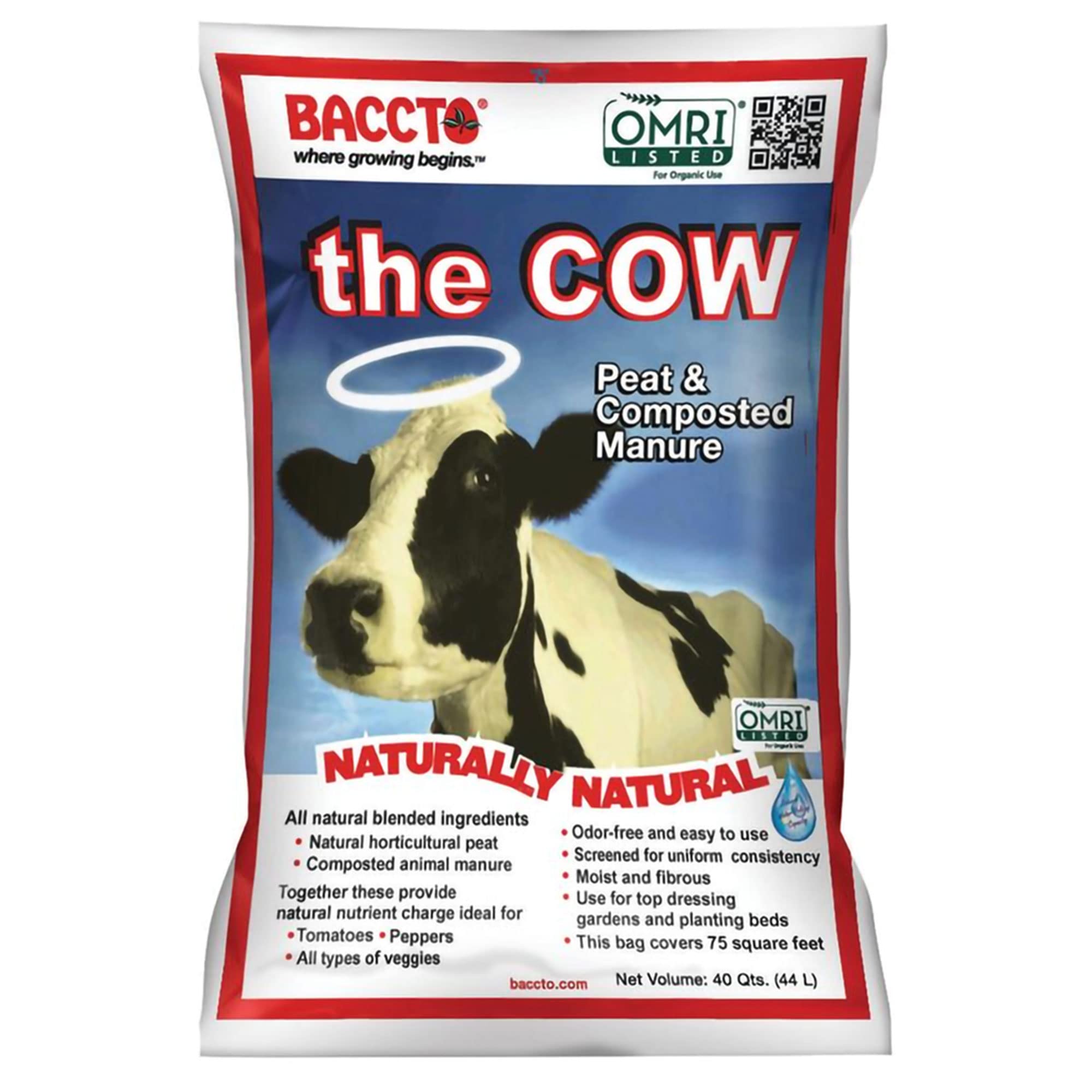
The 40-quart bag covers a whole garden bed in one trip without stinking up your garage.
You get 40 Quarts in a 34-pound bag — that is 40 Quarts compared to the Brut Cow Compost’s 10 Quarts. One reviewer noted using it to make 12 to 15 five-pound mushroom substrate bags from a single 35-pound bag. The blend mixes peat with composted animal manure, so the smell is mild. The brand claims the screened texture means fewer sticks or clumps, and buyers describe the scent as having “little to no smell.” A gardener said their roses were “doing well” after mixing it in. But the 34 pounds is a real lift — far heavier than the 10-pound R&M Organics bag, so you will want a wheelbarrow if your garden is far from the car.
What Gives It an Edge
- 40-quart size covers large areas — the biggest volume in this roundup
- Odor-free formula means you can use it near patios or indoor plants
- High manure concentration works for both vegetables and mushroom substrates
What to Watch For
- 34-pound bag is heavy to carry long distances
- Peat content means it can be slightly acidic — test pH (a measure of acidity or alkalinity) for acid-sensitive plants
For big projects and bulk growers: If you need to fill multiple beds or make mushroom substrate, this is the most economical per quart option here.
If you are working in containers: The heavy bag and large volume may be overkill for a few patio pots — a 10-quart option would be easier to handle.
2. Espoma Organic Land and Sea Gourmet Compost with Lobster & Crab Meal

Lobster and crab shells in the bag give you a calcium boost that prevents blossom-end rot in tomatoes.
The Espoma bag uses lobster and crab meal (ground shellfish shells) for a calcium source that standard manure composts lack — crucial for preventing blossom-end rot (a sunken, black spot on the bottom of tomatoes). It also contains Myco-Tone, a proprietary blend of mycorrhizae (beneficial fungi that help roots absorb more water and nutrients). One buyer reports, “I been using Espoma Organic Land and Sea compost for 3 years and I’m happy with it.” Compared to the Michigan Peat bag, which relies on peat and cow manure, the Espoma bag is richer in trace minerals from the ocean. It comes in granule form, not loose soil, so you mix it into native soil rather than using it straight. At 24 pounds for 1 cubic foot, it is denser than some — less volume for the weight — but the nutrient density justifies the premium. Buyers report it works well for hostas, vegetables, trees, and shrubs when blended.
Ocean-fed nutrition: The lobster and crab meal provides a rare calcium source that most bagged composts lack, plus the added mycorrhizae help roots take up nutrients longer.
Best mixed, not used straight: This is a concentrated amendment meant to be blended with existing soil — using it alone in containers might be too rich.
Grab this if you grow tomatoes, peppers, or hostas: The calcium and mycorrhizae specifically target plants prone to blossom-end rot or needing strong root support.
Look elsewhere if you need a loose, fluffy potting mix: The granule form is dense and works best dug into garden beds, not poured straight into pots.
3. Coast of Maine Organic & Natural Planting Soil for Vegetables & Tomatoes
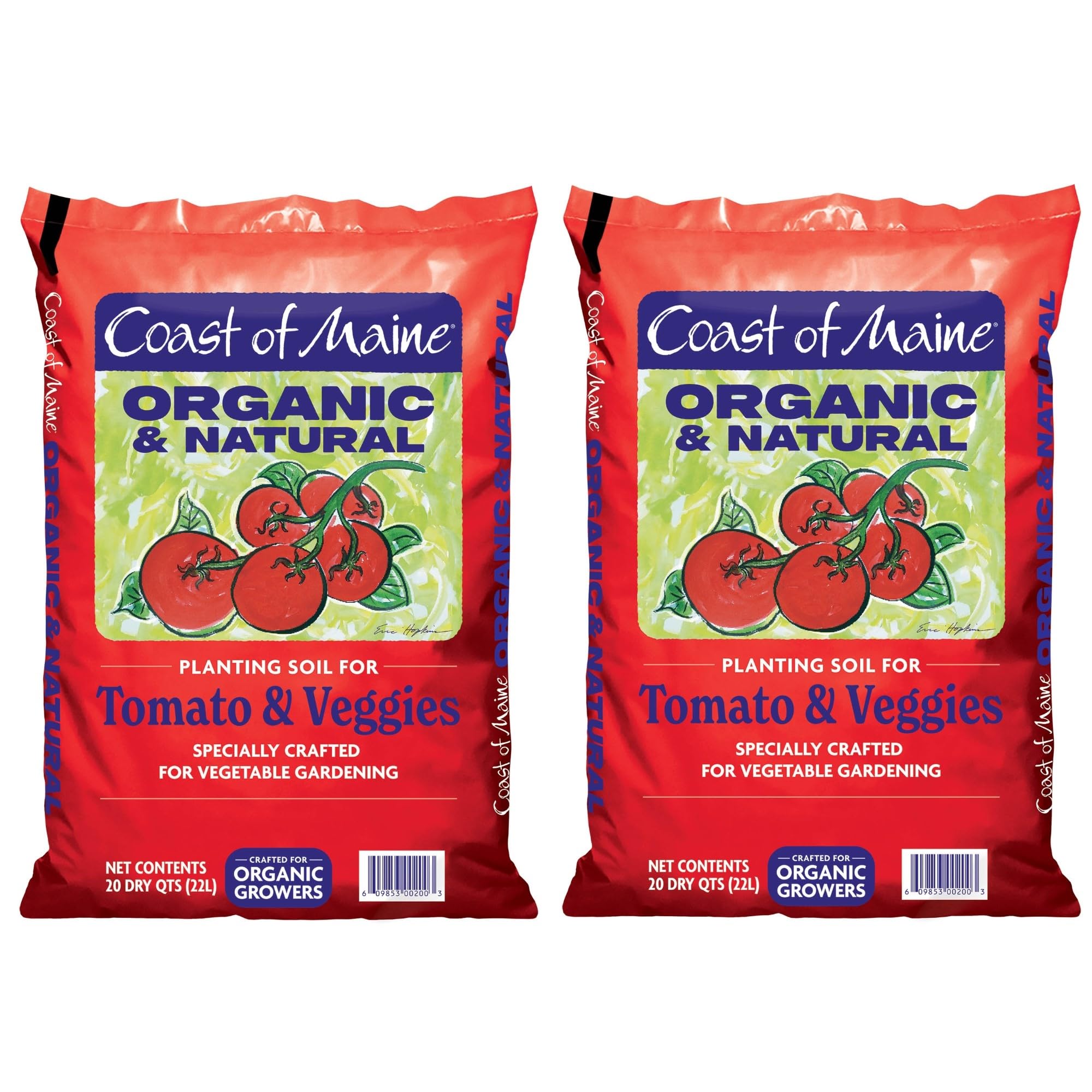
A 20-quart bag that stays light enough to carry but holds water long enough for thirsty tomatoes.
Coast of Maine formulated this 20-Quart bag to balance moisture retention and drainage — two qualities that matter most in container gardening. At 21 Pounds, it is noticeably lighter than the Michigan Peat bag (34 Pounds for double the volume), meaning it is less water-logged and easier to carry. One reviewer notes that “one bag per 5-gallon pot” is the right ratio for tomatoes. A gardener who used it for heirloom tomatoes praised the visible growth within days. It is OMRI (Organic Materials Review Institute) listed, meaning it is approved for certified organic use — no synthetic additives. The texture is lightweight, but owners mention occasional twigs or undecomposed matter that you may want to pick out for a fine finish. It is sold as a 2-pack, so you commit to two bags at once.
Why Container Gardeners Like It
- Lightweight enough to carry across a yard easily
- Holds moisture well without becoming soggy
- OMRI listed for certified organic gardening
A Minor Catch
- Sold as a 2-pack — you cannot buy a single bag
- May contain small twigs that need hand-removal for fine soil
Ideal for tomato growers and container vegetable gardens: The drainage-and-moisture balance is tuned for plants that hate soggy roots but need consistent hydration.
skip it if you only need a small top-dressing: The 2-pack forces you to buy more than a single pot might require.
4. Old Potters Organic Compost – Plant Based Potting Soil
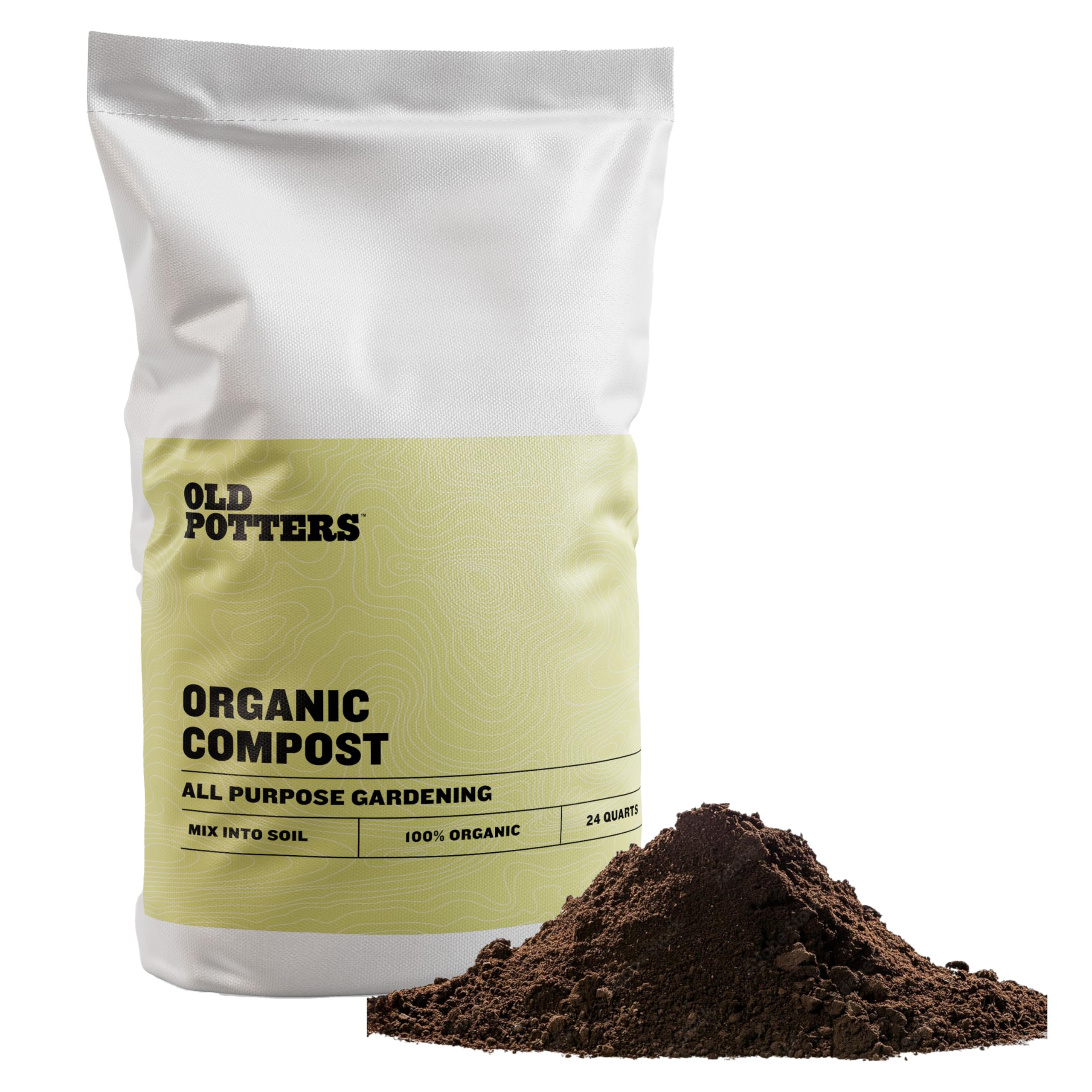
Plant-based material breaks up clay soil without the risk of burning roots from manure.
Old Potters uses only plant-based materials, so you get zero manure odor and no risk of over-feeding sensitive roots. At about 25 Pounds for 768 Fluid Ounces, the bag is substantial. A reviewer in zone 7a (a climate zone with mild winters) said it helped 10 bare-root roses thrive despite flooding, drought, and frost — “against all odds, this compost wins.” They mixed it with worm castings and mycorrhizae on heavy clay soil. Compared to the cow-manure-based bags like Brut or R&M Organics, this one releases nutrients more slowly as the plant material breaks down. One buyer mentioned it was “a bit clumpy, I had to manually crumple the clumps, most of which were clayish.” You may need to break it apart by hand before spreading.
The Big Win
- Plant-based means no manure smell at all
- Safe for sensitive seedlings — no risk of root burn
- Improves clay soil structure gradually
One Heads-Up
- Can be clumpy — you will need to crumble it by hand before use
- Slower nutrient release than manure-based composts
Perfect for improving heavy clay or sandy soil: The organic matter content works on texture over time without shocking plants.
Not ideal if you need a fast green-up: For instant nutrient boost, a manure-based compost feeds faster.
5. Brut Cow Compost – Nutrient-Rich Composted Cow Manure

A 10-quart bag of pure cow manure you can lift with one hand — no odor, no additives.
Brut Cow Compost is 100% composted cow manure, OMRI listed for organic gardening. At 10 Quarts and 10 Pounds, it is small enough to carry in one hand — the most manageable bag here for a single planter or houseplants. A first-time grower reported using a 3:2 ratio of this compost to soil, and their tomato seeds — planted March 1st — were thriving by April 22nd. The manure is fully composted, so there is no risk of burning plant roots, and customers note it has no odor. The fluffier, more aerated texture mixes well with existing potting soil. The trade-off is that you get 10 Quarts, while the Michigan Peat bag is 40 Quarts — you will need multiple bags for a large garden bed.
Why It Works for Small Gardens
- Small, lightweight bag is easy to lift and pour
- OMRI listed — you know it is clean organic material
- Fluffy texture mixes well with existing potting soil
The Trade-Off
- Small volume means you will need multiple bags for a large garden bed
- No added amendments like mycorrhizae or calcium boosters
Great for beginners and small projects: You can try it on one tomato plant or a flower pot without waste or heavy lifting.
If you are covering a whole vegetable patch: The Michigan Peat bag gives you 4x the volume for comparable money per quart.
6. R&M Organics Premium Organic Compost 10 lb Bag
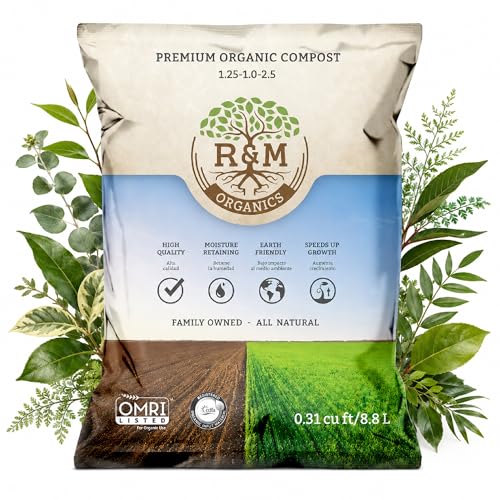
The fine-textured compost that turned a dying tomato plant green in one week, according to a buyer.
R&M Organics Premium Compost is made from dairy cow manure, fully composted and screened to a texture like fine top soil. One specific story stands out: a retired gardener whose single tomato plant was spindly with yellow leaves after six weeks mixed most of this 10-pound bag into a 27-gallon planter, and within a week the leaves turned green and buds appeared. Reviewers point out it has “absolutely no characteristics of manure (except hopefully the good ones)” — no smell, no clumps. At 10 Pounds and 0.31 Cubic Feet, it is the smallest bag by volume on this list, similar to the Brut bag but denser. The Brut bag holds 192.0 fluid Ounces, 20% more than R&M’s 160.0 Ounces. The mixing ratio listed is 5:1 (five parts soil to one part compost), giving you a gentle feeding. Compared to the Coast of Maine bag, formulated for container tomatoes, this one is a general-purpose soil amendment you work into existing beds or pots.
Precise feeding, no smell: The 5:1 mixing ratio and odor-free finish make it ideal for indoor plants or small patio gardens where neighbors are close.
Not for large-scale coverage: At 10 pounds, you will need many bags to fill a raised bed — the Michigan Peat bag is the better bulk option.
Best for one-plant rescues and small container gardens: The fine texture and low odor let you use it indoors or on a balcony without a fuss.
If you are planting a whole vegetable patch: The cost per pound is higher than bulk options, so stick with larger bags for bigger projects.
Understanding the Specs
Bag Volume vs. Weight
Volume (in quarts or cubic feet) tells you how much space the compost will fill in your garden. Weight (in pounds) tells you how much organic matter and moisture you are carrying. A heavier bag for the same volume usually means higher moisture content — great for thirsty soil, but harder to haul. For example, Michigan Peat gives you 40 quarts at 34 pounds, while Coast of Maine gives 20 quarts at 21 pounds — that second bag is heavier per quart because it holds more moisture.
OMRI Listing
OMRI (Organic Materials Review Institute) listing means the compost has been reviewed and approved for use in certified organic farming. It guarantees no synthetic fertilizers, pesticides, or sewage sludge. If you grow food crops or care about chemical-free gardening, an OMRI-listed bag like Brut Cow Compost or Coast of Maine gives you that confidence.
FAQ
Can I use bagged compost straight out of the bag as potting soil?
How much bagged compost do I need for a raised bed?
Does bagged compost expire or go bad?
Will bagged compost smell bad on my patio or balcony?
What is the difference between compost and fertilizer?
Is cow manure compost safe for vegetable gardens?
Which bagged compost is best for tomatoes?
How do I fix clumpy compost from a bag?
Can bagged compost burn my plants?
Final Thoughts: The Verdict
Across the board, the bagged compost winner is the Michigan Peat Baccto Wholly Cow because it gives you the best balance of volume, purity, and price per quart — 40 quarts of odor-free, nutrient-rich material that covers large beds or feeds mushroom substrates while staying affordable. If you want the richest nutrient profile for tomatoes and heavy feeders, grab the Espoma Organic Land and Sea, with lobster meal and mycorrhizae that standard manure blends do not offer. And for small container gardens or ailing plants, the standout is the R&M Organics Premium Compost, which shoppers say turning around yellow leaves in a week with no smell or mess.
How We Picked
We do not accept paid placement. Every pick is matched to a real buyer and a real use-case; we do not hands-on test units.
Sources & Methodology
Specifications: manufacturer listings and product documentation. Review insights: verified customer reviews, as of July 2026. Pricing: not shown on this page (it changes often); check the current price via the retailer link.
As an Amazon Associate, Gadgets Feed earns from qualifying purchases. This does not affect which products we feature.
Related Guides
Product prices and availability are accurate as of the date/time indicated and are subject to change. Any price and availability information displayed on Amazon at the time of purchase will apply to the purchase of this product. As an Amazon Associate I earn from qualifying purchases.
CERTAIN CONTENT THAT APPEARS ON THIS SITE COMES FROM AMAZON. THIS CONTENT IS PROVIDED "AS IS" AND IS SUBJECT TO CHANGE OR REMOVAL AT ANY TIME.
Amazon and the Amazon logo are trademarks of Amazon.com, Inc. or its affiliates.