
Our readers keep the lights on and my morning glass full of iced black tea. As an Amazon Associate, I earn from qualifying purchases.
Specs are compiled from manufacturer listings and verified buyer reviews and can change over time — please confirm the key details on the product page before buying.
Bagged garden soil is where great harvests start, but the shelf is a maze of peat, perlite, and promises. Choose a mix that matches your gardening setup, whether that’s windowsill herbs, patio containers, or a full raised bed. Avoid mixes that drain like clay or hold water like a sponge, as both will stress your plants.
I’m Min — the founder and writer behind Gadgets Feed. This guide is built by comparing the manufacturers’ published specifications and the patterns across verified customer reviews, so you get each pick’s real strengths and trade-offs instead of marketing spin.
We’ve dug through the leading mixes so you can find the best bagged garden soil for your specific setup, your plant types, and your patience level.
Our Picks at a Glance


How To Choose The Best Bagged Garden Soil
Start by deciding whether you’re filling containers or amending in-ground beds. Container plants live or die by drainage and aeration, while in-ground gardens need a mix that blends with the native dirt beneath. Once you know your use case, the label details start to make sense.
Potting Mix vs. Garden Soil
A potting mix is built for the confined world of a container — light, fluffy, and engineered so roots never sit in a puddle. Garden soil, on the other hand, is denser and meant to be mixed into your existing ground. Using the wrong one means either waterlogged roots in a pot or a raised bed that collapses into mud.
Read the Ingredient List, Not Just the Brand
Look for named ingredients like peat moss or coir for moisture, perlite or vermiculite for aeration, and worm castings or composted manure for nutrients. If a bag lists only “compost” and nothing else, you’re buying mystery dirt. Look for named ingredients that tell you exactly how the mix will behave when wet.
Quick Comparison
| Model | Best For | Volume | Key Ingredient | Use Case | Amazon |
|---|---|---|---|---|---|
| FoxFarm Ocean Forest★ Best Overall | Container power | 12 quarts | Earthworm castings | Pots & seedlings | Amazon |
| Espoma Organic Garden SoilBest Value | In-ground beds | 1 cubic foot | Mycorrhizae | Vegetable patches | Amazon |
| Midwest Hearth Premium MixTop Performer | Potted perennials | 8 dry quarts | Vermiculite & perlite | Container plants | Amazon |
| Rosy Soil Herb Mix | Kitchen herbs | 4 quarts | Biochar | Indoor herb pots | Amazon |
| Michigan Peat Garden Magic | Big bare-bones jobs | 40 lbs | Reed sedge peat | General purpose | Amazon |
| Michigan Peat Premium | Repotting marathons | 50 lbs | Perlite & sand | Pots & raised beds | Amazon |
| Miracle-Gro Organic Indoor | Houseplant safety | 16 quarts (2-pack) | Sphagnum peat & coir | Indoor pots | Amazon |
| Coast of Maine Roses & Flowers | Blooming shrubs | 20 quarts | Composted manure | Roses & perennials | Amazon |
| Miracle-Gro Potting Mix | Feeding containers | 8 qt (3-pack) | Slow-release feed | Outdoor pots | Amazon |
In-Depth Reviews
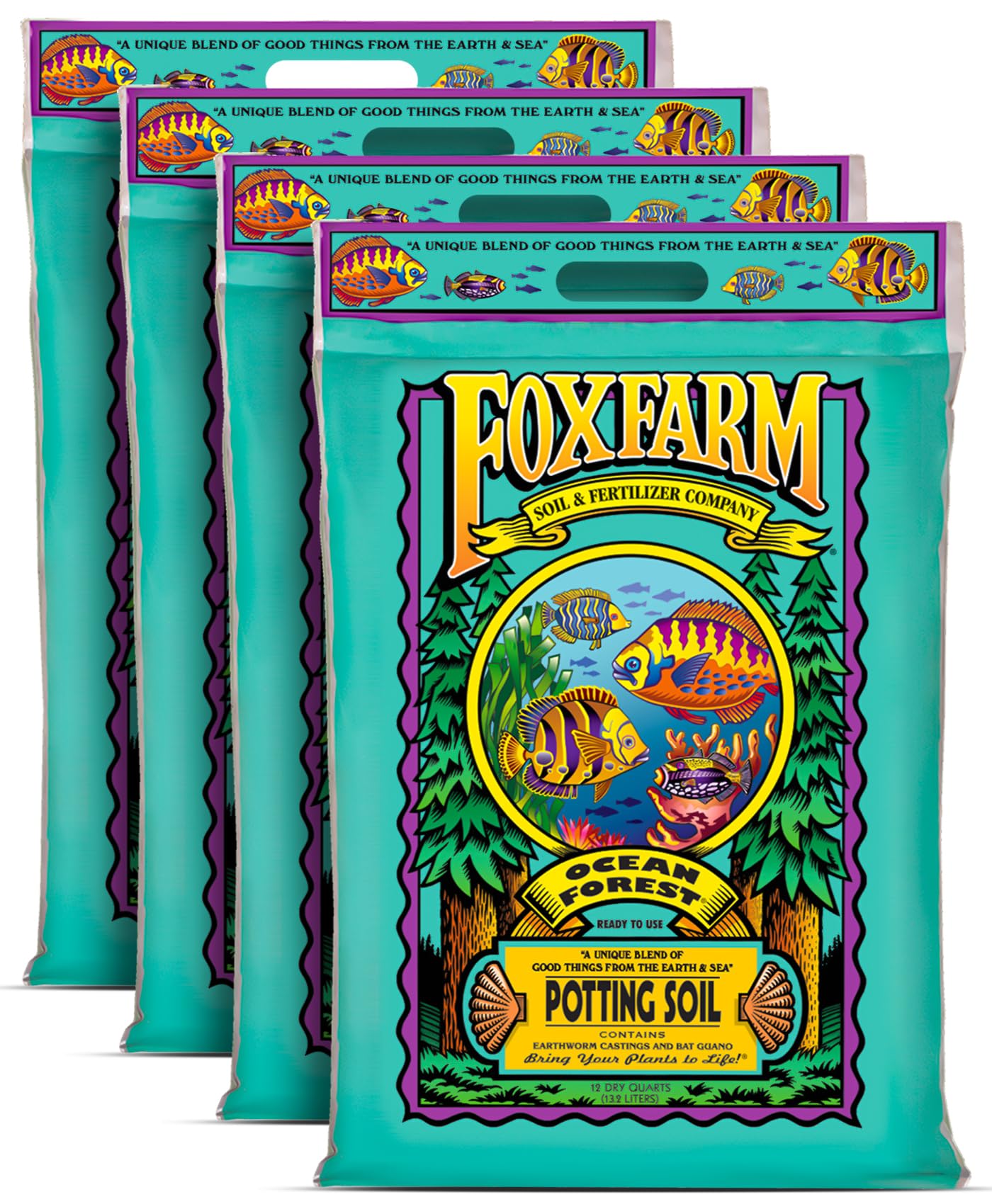
1. FoxFarm Ocean Forest Potting Soil
Our pick — over 4.5★ from 7,500+ verified ratings; the strongest balance of quality and price.
A nutrient-dense, ready-to-use blend that container gardeners consistently rank as the best they’ve tried.
Open the bag and you’re holding a blend of aged forest products, sandy loam, and sphagnum peat moss designed for one thing: containers that perform. The texture is light and aerated, so roots get the oxygen they crave, and it drains well enough that you won’t see water pooling on top. You can use it straight out of the bag, which removes the guesswork of mixing your own recipe.
The feeding power comes from fish meal, crab meal, and earthworm castings — a trio that supports seedlings and plant starts with a slow release of nutrients. That’s why the crowd favorite earns a 4.7-star rating from thousands of owners who report “exceptional results.” What wins people over is the quality: the single most-praised trait, with owners specifically calling out how it beats the competition in both price and quality on this 12qt bundle.
One honest note: this is a premium blend, and the price reflects it. A few buyers mention the cost as the only real drawback, but they consistently say the results justify it, describing it as “pricy but well worth it.” If you’re growing houseplants, patio containers, or anything in a pot, this is the soil that makes everything else feel like a compromise.
What the roots love
- Nutrient-rich with worm castings, fish meal, and crab meal
- Light, aerated texture with great drainage
- Use right out of the bag — no mixing needed
Fair trade-offs
- Premium price point — you pay for the quality
- Ready-made for containers, not ideal for amending big yard beds
Reach for this if: you want a container mix that feeds your plants from day one without any extra fertilizer.
Consider another if: your project is a huge in-ground vegetable patch where a budget bulk bag makes more sense.
2. Espoma Organic Vegetable & Flower Garden Soil
An in-ground ally that enriches your native soil while keeping things purely organic.
Unlike the container-focused mixes, this one is made for planting and transplanting directly into your garden. It’s a rich blend of natural and organic ingredients, boosted with earthworm castings, that you simply mix thoroughly with your native garden soil. That makes it a volume-friendly choice for vegetable patches and flower beds — the 1 cubic foot bag goes a long way.
The secret weapon is Myco-Tone, a proprietary blend of endo and ecto mycorrhizae — beneficial fungi that help roots pull in more water and nutrients. Home gardeners report tomatoes and marigolds thriving in it, with one noting “plants in this mix outperformed those in a store-bought organic product.” The quality is the most-cited strength, and the moisture retention gets consistent praise for keeping beds from drying out too fast.
There’s a split in the feedback about gnats, with some lauding it for stopping gnat problems while others report finding fungus gnats in the bag. For indoor use that’s a real concern, but for outdoor beds where you’re mixing it into the ground, it’s far less of an issue. This is the pick for the organic gardener who wants to improve what’s already in the yard rather than start from scratch.
Why it wins: the mycorrhizae blend and earthworm castings give your in-ground plants a head start, and the 1 cubic foot size means fewer bags to haul for a full bed.
Who it’s not for: strictly indoor potted plants, where the gnat reports are a fair caution.
3. Midwest Hearth Premium Potting Soil Mix
The precise pH-balanced blend that makes potted perennials and young trees feel right at home.
This mix uses the same formulation as professional growers, which is a fancy way of saying the balance is dialed in. It combines peat moss for moisture, perlite and vermiculite for aeration — the classic trio that gives roots both water and air. The pH is controlled to a level that suits a broad spectrum of plants, so you don’t have to worry about adjusting it for most common flowers and vegetables.
What owners rave about is how well it holds moisture without getting soggy, keeping plants thriving — particularly young trees, vines, and potted perennials. The quality is the top-cited strength, and one long-time gardener called it “one of the best I’ve ever used,” praising the blend as “spot-on.” It’s also a clean bag with no weeds, which saves you the hassle of pulling sprouts from your pots.
The catch: at 8 dry quarts, the bag is on the smaller side. As owners put it: “My plumerias are thriving! Good stuff! The bags are too small though…” If you’re repotting a collection, you’ll likely need several bags. But for a few quality containers or a single dedicated plant, the professional-grade formulation is worth the premium feel.
Professional touches
- pH balanced for a wide range of plants
- Peat moss, perlite, and vermiculite for perfect moisture control
- Clean, weed-free bag
Watch out
- Bag size is small — 8 dry quarts won’t go far for big projects
- No added fertilizer, so you’ll need to feed later
Grab this for: a few high-value pots — young trees, vines, or perennials — where root health is the priority.
Look elsewhere if: you’re filling a raised bed and need volume over precision.
4. Rosy Soil Herb Mix
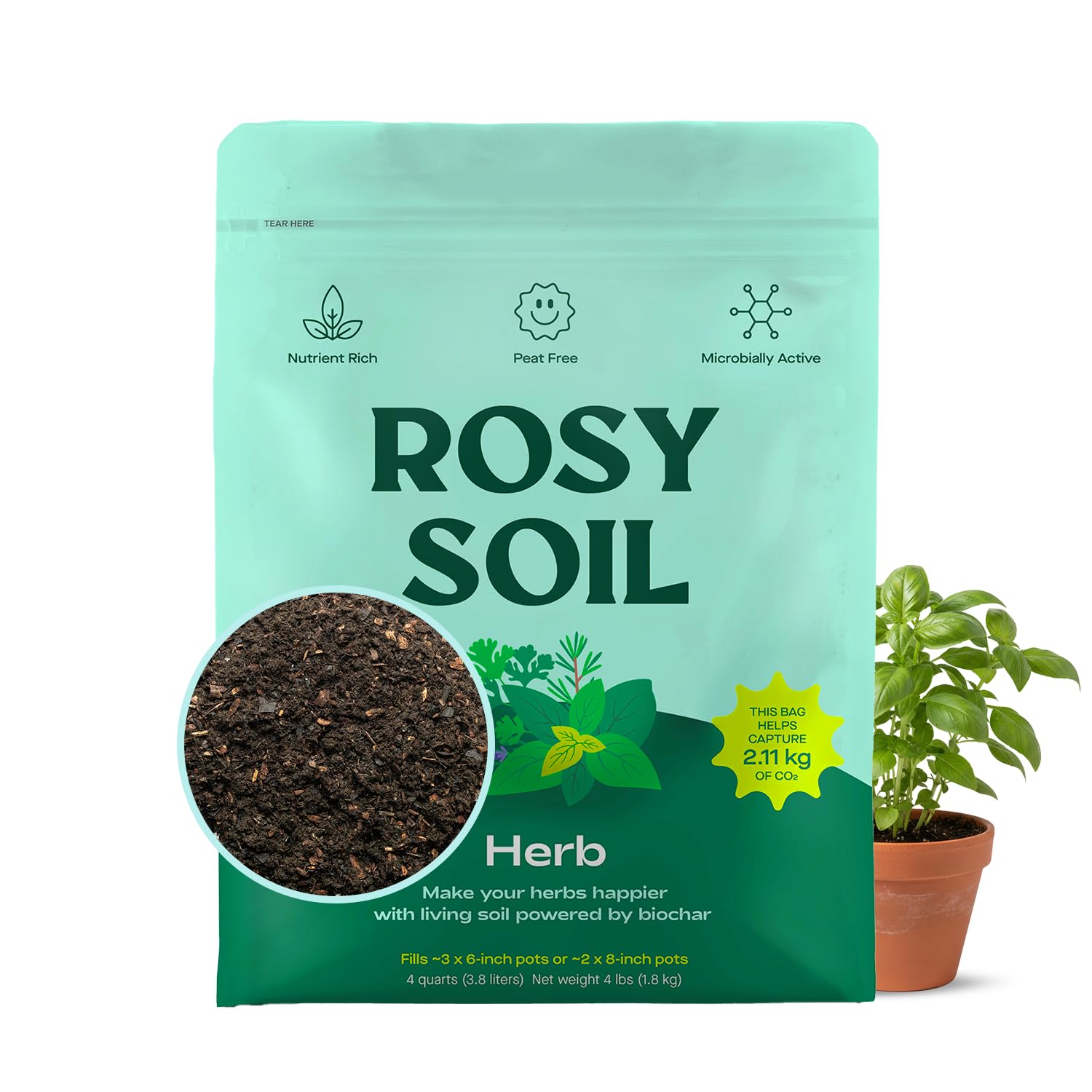
A carbon-negative, peat-free haven for basil, mint, and your kitchen windowsill.
For the indoor herb gardener, this mix is a different animal. It skips peat moss entirely, building instead on wood biochar, compost, worm castings, bark fines, and beneficial mycorrhizae fungi. The biochar acts like a sponge, holding onto nutrients and water while hosting microbes that help roots access what they need — a “living soil” approach that feeds your herbs over time.
At 4 quarts, it fills 2 to 3 medium 6-inch pots, and it’s ready straight from the resealable bag. It drains fast, which keeps roots healthy and gives soil impurities less standing moisture to thrive in. Novice growers have had striking success — one self-described plant killer reported an indoor plant “still alive and healthy 4 months later,” while a total beginner got 4 of 5 herb pots to bloom.
The trade-off is that it’s designed for herbs like basil, cilantro, lavender, thyme, mint, and rosemary, and it’s a premium-priced bag for its size. A few owners note it’s too chunky for delicate seeds and recommend mixing it with a seed starter, and one found it underfilled. It’s also worth knowing it holds water well, so you’ll want pots with good drainage. If you’re serious about a windowsill herb garden, this is the most thoughtful, eco-conscious choice on the shelf.
The standout: the biochar-worm casting-mycorrhizae blend creates a genuinely living soil that’s peat-free and carbon-negative.
The honest limit: a small, premium bag best suited to herbs and seedlings, not bulk repotting.
5. Michigan Peat Garden Magic Potting Soil
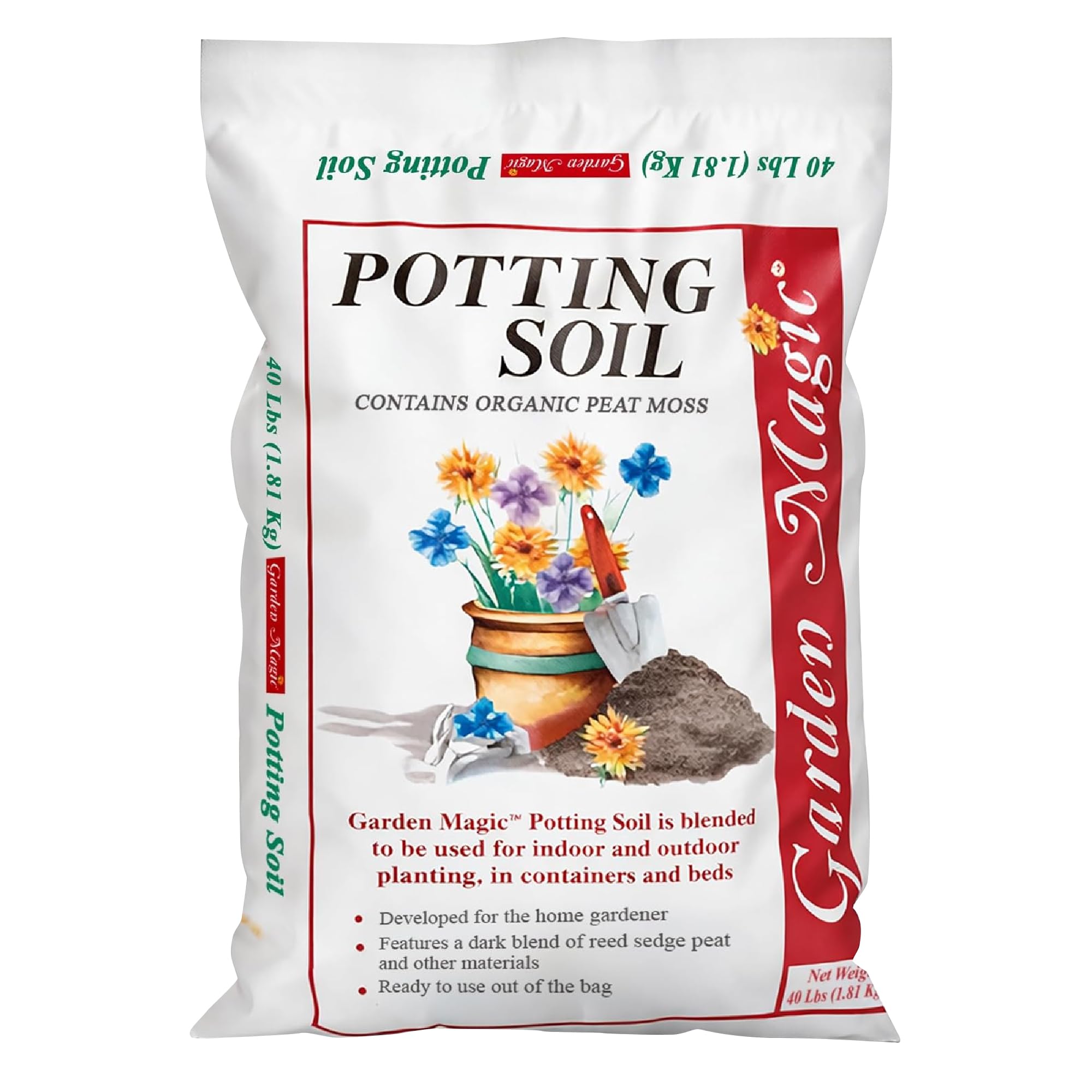
A 40-pound workhorse that feeds a whole season of flower pots without emptying your wallet.
When you need to fill a lot of pots or top up a small bed without thinking too hard about premium blends, this is the bag. It’s a general-purpose mix of reed sedge peat and organic peat moss, built to retain enough moisture to get your plants through moderate dry spells. At 40 pounds, it’s a true bargain — owners repeatedly describe it as “a real bargain” and “good size bag for the price.”
It’s a clean, bug-free, no-smell soil that works for both germinating seeds and repotting, with one grower noting seeds popped up in a couple of days and repots showed “no shock.” The quality is the top-praised trait, and the vibrant black color draws compliments. For indoor and outdoor flower pots, raised beds, and general planters, it’s ready to use out of the bag with zero mixing.
The honest caveat: germination results are mixed. While some report fast sprouting, others say nothing grows in it, and it’s a dense, peat-heavy mix that may hold more water than some plants like. This isn’t a precision blend — it’s a solid, no-nonsense soil for everyday gardening where you’re not chasing prize-winning blooms.
Budget wins
- Massive 40-pound bag for a low price per pound
- Clean, bug-free, and no strange smells
- Ready to use out of the bag
Know before you buy
- Mixed germination results — not ideal for finicky seeds
- Dense, peat-heavy texture can hold a lot of moisture
Best value for: filling a bunch of flower pots or a small raised bed without spending a fortune.
skip it if: you’re starting delicate seeds or need precise drainage for fussy plants.
6. Michigan Peat General Purpose Premium Potting Soil

The 50-pound heavyweight with fertilizer built in, ready for a marathon repotting session.
This is the big sibling of the Garden Magic bag, and the extra 10 pounds comes with a meaningful upgrade: perlite and sand mixed into the rich dark reed sedge peat. That translates to better drainage and aeration than the standard mix, which is why it earns strong loyalty from owners. It also skips the mixing step — it’s pre-blended and ready to pour straight into pots, planters, and raised beds.
The feeding advantage is real: starter and slow-release fertilizers are included, so your vegetables, flowers, and bulbs get a sustained nutrient supply without you remembering to feed them weekly. Owners praise it for repotting and starting new plants, describing the plant growth and water absorption as “great” and reporting “extra success” wherever they’ve used it. The soil quality is the most-praised aspect, and it’s hailed as a strong value.
Two honest caveats. First, moisture retention is a double-edged sword — some find it keeps plants perfectly moist while others say it holds too much water, so be careful with plants that hate wet feet. Second, there are scattered reports of gnats emerging from the bag, so it’s one to keep outdoors or monitor closely inside. For a big, versatile, fertilizer-charged blend, it’s a tough value to beat.
Why it stands out: the 50-pound size plus included slow-release fertilizer means one bag handles a big project with built-in feeding.
The caution: moisture retention and gnat reports make it a better outdoor than indoor choice.
7. Miracle-Gro Organic Indoor Potting Mix (2-Pack)

The organic houseplant mix that forgives your watering mistakes and keeps roots happy.
If you’re the type who kills plants by over-loving them with water, this mix is built for you. Its whole pitch is protecting indoor plants against over and under watering, using responsibly sourced sphagnum peat moss and coir — a fiber that’s naturally great at holding moisture without drowning roots. It’s OMRI listed for organic use, which means it meets strict standards for organic gardening.
The 2-pack gives you two 16-quart bags, each filling a 12-inch container. Houseplant owners love how it works with all types of indoor container plants — houseplants and herbs — and it’s also great for starting seeds. The results speak for themselves: one self-described plant killer admitted “I kill everything” but saw replanted plants “still alive months later,” calling it a miracle. Quality and plant growth are the top-cited strengths.
The elephant in the room is fungus gnats, with several owners reporting infested bags — some severely. It’s a known risk with many organic mixes, not unique to this one, but it’s worth weighing if you’re bringing it into a gnat-free home. For the organic indoor gardener who wants a moisture-forgiving, responsibly sourced mix, this delivers on the essentials, just be ready to inspect your bag.
Indoor benefits
- Protects against over and under watering
- OMRI listed with responsibly sourced peat
- Two 16-qt. bags fill several containers
Indoor risks
- Fungus gnat reports are the recurring negative
- Organic blend can be variable in quality
Choose this if: you want an organic indoor mix that’s forgiving of your watering habits.
Think twice if: you’ve had gnat problems before and can’t risk an infested bag indoors.
8. Coast of Maine Organic Planting Soil for Roses & Flowers
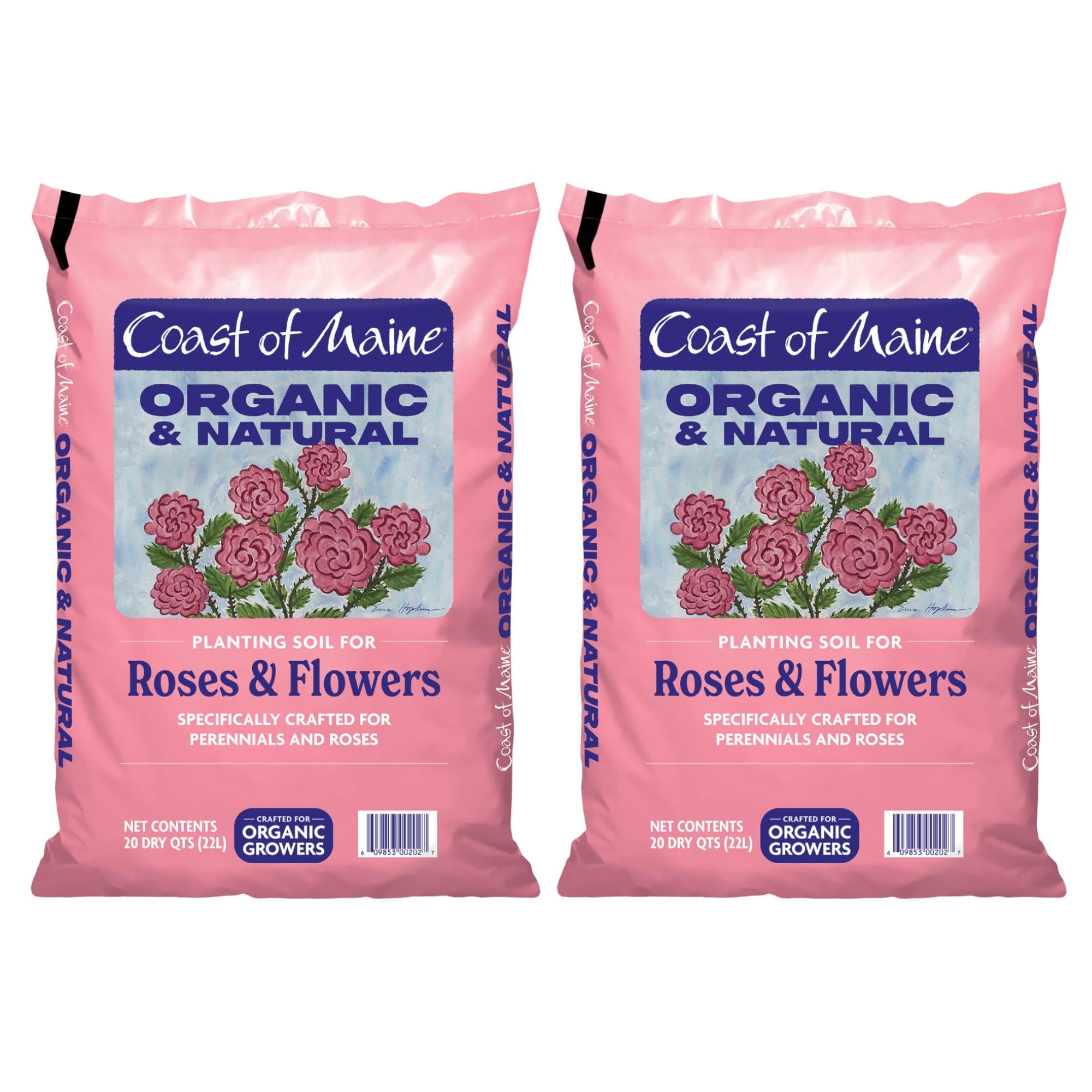
A compost-rich, OMRI-listed blend formulated specifically for roses and perennials.
Its composted manure and sphagnum peat moss balance moisture retention with drainage for roses. It’s an organic compost blend made with composted manure and sphagnum peat moss, crafted specifically to improve and revitalize soil for rose varieties, flowers, and perennials. It strikes a balance between moisture retention and drainage, so it works whether you’re planting in containers or flower beds.
Buyers report new rose growth within a month and blooms by month three. Owners mention replanting new roses and seeing new growth within a month, then beginning to bloom by month three. It’s OMRI listed for organic use, reflecting the brand’s commitment since 1996 to sustainable, regenerative practices. The quality is the most-praised aspect, with its suitability for roses a close second — one gardener called it “the best soil for roses” and another raved about their whole line of products.
It’s a premium bag, and the price reflects that. Some have found it works beautifully as an organic mulch or a revitalizing add-in for tired soil, spreading it around perennials and annuals. There’s a minor note that an occasional bag arrives wet or moldy, but the customer service is quick to make it right. For the gardener who wants their prized blooms to feel spoiled, this is the soil that delivers.
The magic: composted manure and peat moss create a rich, balanced bed that roses and perennials visibly love.
The premium catch: you’re paying for specialty quality, and an occasional bag may arrive less than perfect.
9. Miracle-Gro Potting Mix (3-Pack)

The self-feeding container mix that grows plants twice as big, minus the fertilizer math.
Here’s the convenience play: this potting mix has plant food built in that feeds for up to 6 months. That means you fill your outdoor containers once and don’t think about fertilizing for the entire growing season. It’s designed for all types of outdoor potted plants — flowers, vegetables, shrubs, annuals, perennials — and the maker’s claim is that it grows plants twice as big compared to unfed plants.
The 3-pack of 8-quart bags is a smart format: each bag fills two 8-inch containers, so you get a season’s worth of pots without hauling one giant heavy sack. Owners love that it’s well-draining and doesn’t pack down into hard clumps, keeping the soil loose so water reaches the roots. The quality is the top-praised trait, and its versatility gets strong billing — it works for both outdoor and indoor planting.
The trade-off is the bag size, with several owners describing the individual bags as small. If you have a big container garden, you’ll go through the pack quickly. And while most find it a decent value, a few consider it pricey for the volume. But for a tidy collection of pots where you want to plant-and-forget the feeding, this is a genuinely convenient, trusted choice.
Set-and-forget perks
- Built-in feed lasts up to 6 months
- Three 8-qt. bags are easy to handle
- Well-draining and doesn’t pack down hard
Fair warnings
- Bags are small — you’ll need several for a bigger garden
- Value is decent but not exceptional
Pick this for: outdoor pots where you want built-in feeding and easy-to-lug bags.
Pass if: you’re filling large beds or prefer a mix without chemical fertilizers.
Understanding the Specs
Quarts, Pounds, and Cubic Feet
Bag sizes tell you how far the soil goes, but they’re measured in different units. Quarts and cubic feet measure volume — how much space the soil fills — while pounds measure weight, which includes moisture and dense ingredients. A 40-pound bag doesn’t fill nearly as much space as you’d think because wet, heavy peat compresses. Match the unit to your job: quarts for pots, cubic feet for beds.
Perlite and Vermiculite
These two white specks control water, and they’re not interchangeable. Perlite is volcanic glass popped like popcorn — it creates air pockets for drainage and oxygen. Vermiculite is a mineral that absorbs water like a sponge, holding moisture for slow release. A mix with both, like the Midwest Hearth blend, gives you the balance most plants want: airy roots that stay evenly moist.
FAQ
How much bagged soil do I need for my pots?
What is the difference between potting mix and garden soil?
Why does my bagged soil have fungus gnats?
What does OMRI listed mean for garden soil?
Should I add fertilizer to bagged potting soil?
What is biochar and why is it in Rosy Soil?
What does mycorrhizae do for my plants?
Can I use the same soil for indoor and outdoor plants?
Final Thoughts: The Verdict
The strongest pick overall is the FoxFarm Ocean Forest, because its nutrient-rich, ready-to-use blend earns a 4.7-star rating from thousands of container gardeners who consistently call it the best they’ve used. If you want an organic mix for enriching your in-ground vegetable patch, the Espoma Organic Garden Soil with its mycorrhizae blend is the value pick. And for a kitchen windowsill herb garden, the Rosy Soil Herb Mix is the most thoughtful, peat-free choice on the shelf.
How We Picked
We do not accept paid placement. Every pick is matched to a real buyer and a real use-case; we do not hands-on test units.
Sources & Methodology
Specifications: manufacturer listings and product documentation. Review insights: verified customer reviews, as of August 2026. Pricing: not shown on this page (it changes often); check the current price via the retailer link.
As an Amazon Associate, Gadgets Feed earns from qualifying purchases. This does not affect which products we feature.