
Our readers keep the lights on and my morning glass full of iced black tea. As an Amazon Associate, I earn from qualifying purchases.
Specs are compiled from manufacturer listings and verified buyer reviews and can change over time — please confirm the key details on the product page before buying.
The frustration with bagged mulch for flower beds usually isn’t about whether it works—it’s about finding one that holds moisture without washing away or sprouting surprises. You want something that looks sharp in your beds, keeps the soil from drying out, and doesn’t turn into a chore to spread or replace.
I’m Min — the founder and writer behind Gadgets Feed. This guide is built by comparing the manufacturers’ published specifications and the patterns across verified customer reviews, so you get each pick’s real strengths and trade-offs instead of marketing spin.
Whether you’re refreshing a front border, dressing up containers, or mulching a veggie patch, the right bagged mulch for flower beds saves water, blocks weeds, and keeps your beds looking neat all season.
Our Picks at a Glance

How To Choose The Best Bagged Mulch For Flower Beds
Your flower beds need mulch that locks in moisture, discourages weeds, and breaks down at a pace you can live with. The biggest mistake beginners make is grabbing any bag without checking how much material is actually inside once it expands, or ignoring the hidden trade-offs each type carries.
Compressed Volume vs. Loose Bags
A compressed coconut husk brick may look small, but a 10lb block can expand into a surprisingly large pile—some expand to over 2 cubic feet after soaking.. That means you get more coverage per bag and easier shipping, but you do have to factor in the time to hydrate and break it apart before spreading.
Moisture Retention and Watering Frequency
The whole point of mulching a flower bed is to stop the soil from drying out. Coconut husk chips retain up to 3 times more water than bark, reducing watering frequency., and A straw layer can slash watering needs by up to 50%.. If your beds bake in full sun, this directly translates into fewer trips with the hose.
Weed Suppression and Longevity
A proper layer—about 2 to 3 inches thick—blocks sunlight from reaching weed seeds. Some materials like rubber mulch last for over a decade without breaking down, while organic options like straw and cocoa shells decompose and enrich the soil, which means you’ll need to refresh them more often.
The Hidden Catch: Seeds and Mold
Straw is wonderful for holding moisture, but poorly cleaned bales can bring a burst of grass or weed seeds straight into your beds. Cocoa shells look gorgeous and smell like chocolate, but they are prone to mold in damp shade and are toxic to dogs if ingested. Always weigh these facts against your own garden and pets.
Quick Comparison
| Model | Best For | Volume | Weight | Moisture Retention | Amazon |
|---|---|---|---|---|---|
| Houseplant Mulch★ Best Overall | Pots and small planters | 8 quarts | 3.7 pounds | Keeps moisture in | Amazon |
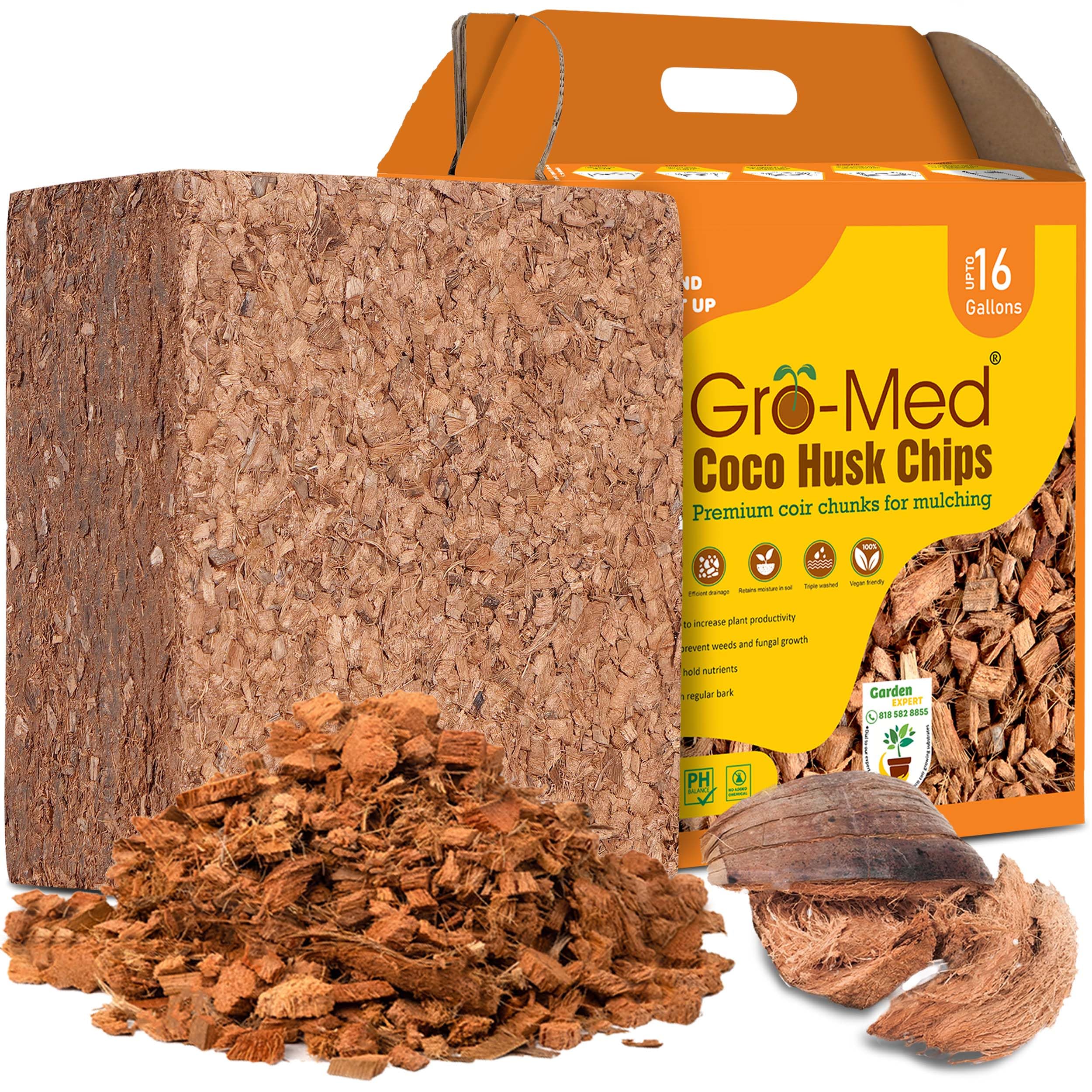
| Gro-Med Coco Husk ChipsAlso Great | Big beds on a budget | 65 quarts | 10 pounds | 3X more than bark | Amazon |
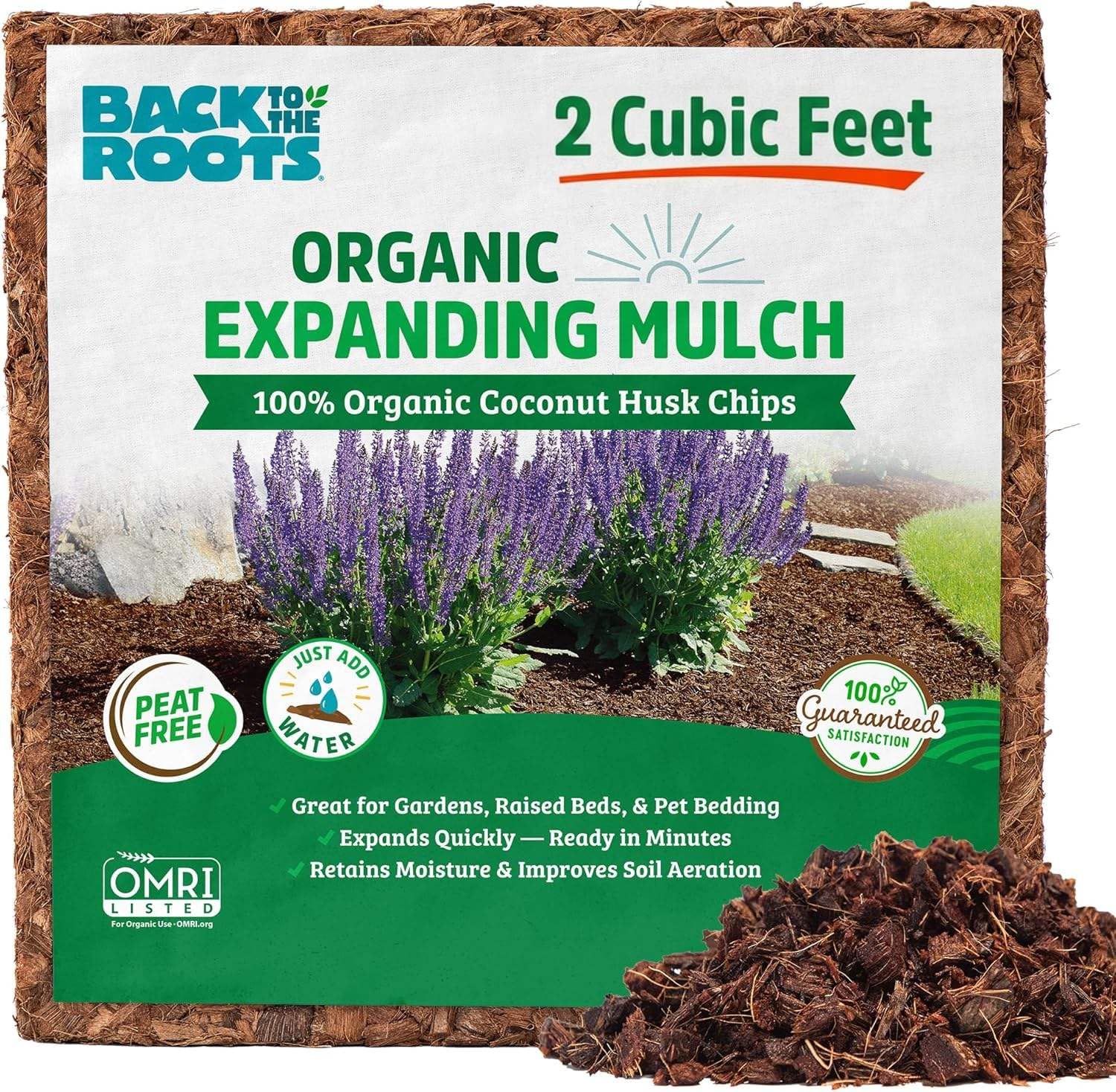
| Back to the RootsPremium Pick | Easy expansion, OMRI listed | 2 cubic feet | 10lb block | Reduces evaporation | Amazon |
| Plantonix Coco Chips | Clean, consistent chips | 15 gallons | 10lb block | Long-lasting retention | Amazon |
| Rubberific Rubber Mulch | Permanent, no-fade beds | 0.8 Cu. Ft. | 16 pounds | Does not absorb water | Amazon |
| Garden Elements Cocoa | Fragrant, rich color | 2 cu ft | 30 pounds | Retains soil moisture | Amazon |
| Hull Farm Cocoa Shell | Classic chocolate scent | 2 Cubic Feet | 10lb block | Good for containers | Amazon |
| HealthiStraw GardenStraw | Vegetable and herb beds | 3 cu ft | 20 lbs | Cuts watering by 50%. | Amazon |
| Blue Mountain Hay Straw | Seeding and cover | 10lb box | 10 pounds | Regulates soil temp | Amazon |
In‑Depth Reviews
1. Houseplant Mulch (8 Quarts)
Our pick — over 4.5★ from 850+ verified ratings; the strongest balance of quality and price.
A no-fuss, pour-and-go bark chip mulch that’s made for indoor pots and small patio planters.
For container gardeners, this small-barrel bark mulch is the easiest possible entry—it’s ready to use straight from the bag with no soaking, mixing, or breaking apart. The 8-quart volume is best measured against the Gro-Med block’s 65 quarts, which is an 8.1x gap, so this is clearly a finishing touch for pots rather than a bed-filler. Owners say it keeps the moisture in their indoor plants and, importantly, didn’t bring pests with it.
The chips are longer lasting than coconut coir or shavings, and the visual consistency is the draw—it gives potted plants a neat, uniform soil covering that looks intentional. Gardeners describe the color as nice and the application as simply opening and pouring. It’s light at 3.7 pounds, so it’s easy to handle and store in a small space.
What wins people over is the convenience and the tidy finish. The honest catch is value: a few customers note that for the quantity you get, it’s not the cheapest way to mulch, since the same money buys far more material in a compressed brick. It’s a fair trade if your whole project is a shelf of houseplants.
Reviewers point out: “Keep the moisture in my indoor plants. Didn’t seem to bring pests with it either.”
Best when: you need a quick, clean mulch for indoor pots and small containers.
Think twice if: you’re covering a large outdoor bed—a compressed brick gives far more volume per dollar.
2. Gro-Med Coco Husk Chips (10lb)
The compressed brick that turns one heavy block into a huge pile of moisture-holding mulch for big beds.
For covering serious ground without buying a dozen bags, this 10lb block expands up to 65 quarts of husk chips—roughly 8.1 times the volume of the 8-quart Houseplant Mulch bag. That makes it the clear value leader for anyone mulching a full flower border or raised bed rather than just a few pots. It’s also 2X more resilient than regular bark, so it holds its structure through a whole season of weather.
Gardeners report they use these chips for nearly everything—mixing into chunky soil for orchids, topping containers, and laying over beds. The triple-washed chips keep EC levels low and a stable pH, which translates to healthy roots without the guesswork. Buyers report: “10lb block expands to 16 gallons,” and they say the chips stay moist after watering without becoming so wet that roots rot.
What wins people over is the water retention—these hold up to 3 times more water than regular bark, so you water less often and the soil stays consistently damp. The texture does get mixed feedback because it’s more shredded than chunky in places, but that’s a minor quibble when the chips breathe and drain so well.
Why It Wins
- Enormous 65-quart expansion for the money
- Holds 3X more water than bark, reducing watering
- Triple-washed for low EC and balanced pH
Worth Knowing
- Texture is more shreds than uniform chunks
- Needs soaking and breaking apart before use
Reach for it if: you’re mulching a big area and want maximum coverage per dollar.
Look elsewhere if: you need perfectly uniform chunks for a decorative top-dress.
3. Back to the Roots Organic Mulch
A single 10lb brick that fluffs up into over two cubic feet of clean, organic mulch for beds and pots.
If you like watching your garden supplies do something impressive, this one’s fun—the compressed coconut husk block expands to over 2 cubic feet when you hydrate it. Home gardeners say it grows to 6-8 times its packaged size, which means one brick can fill a wheelbarrow and cover a surprising amount of bed space. It’s a particular hit on hydrangeas, where owners mention it holds in moisture and keeps blooms looking strong.
The peat-free formula carries the OMRI Listed seal, which assures organic production, handling, and processing. For container vegetable gardens, it’s praised for keeping evaporation down so the soil doesn’t dry out between waterings. Just be prepared for some muscle work: the brick is hard to break apart, and reviewers recommend doing the soaking in a big tub or right by a hose rather than in a small apartment sink.
What wins people over is the sheer convenience—no bags to haul, no shovel work, just rehydrate and spread. The trade-off is that friability; it arrives so compact that breaking it into usable pieces takes effort before you can actually mulch with it.
Why It Shines
- Peat-free and OMRI Listed for organic gardens
- Huge expansion means excellent coverage per brick
- Loved for moisture retention in containers
Worth Knowing
- Dense brick is tough to break apart
- Best hydrated outdoors with a hose or large tub
Grab it if: you want certified organic mulch that expands dramatically for beds and raised plots.
Pass if: you want a ready-to-spread material without the soaking step.
4. Plantonix Coco Chips Mulch Brick
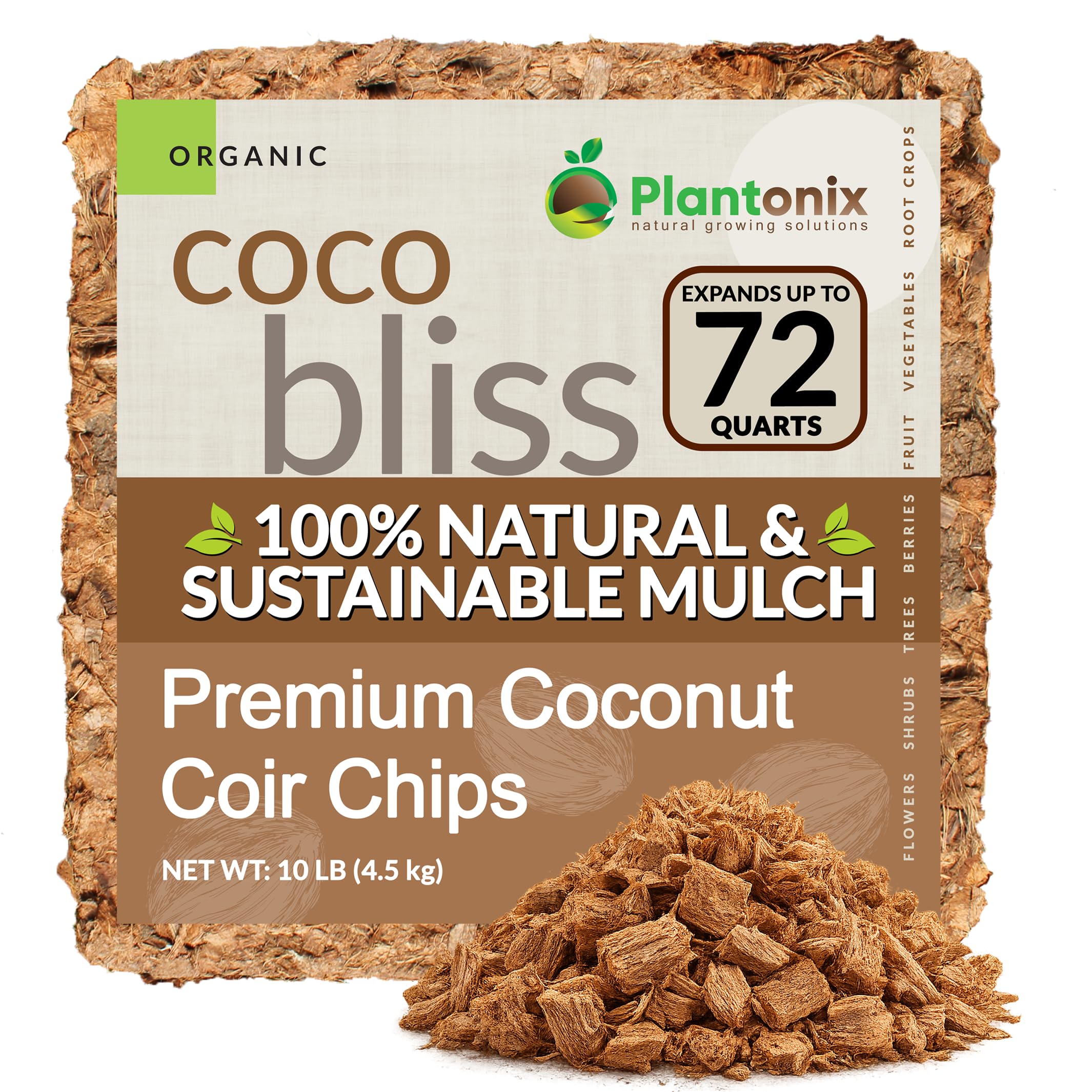
A clean, consistent coco chip brick that keeps a tidy look while holding moisture in arid gardens.
This is the mulch for the gardener who hates the mess of loose bags. The 10lb compressed block expands into 15 gallons of chips that are consistent in size and stay put once spread—owners in Nevada note it doesn’t seem as dry as typical mulch and looks visually appealing. Even better, this block weighs 10 pounds versus the 3.7 pounds of the Houseplant Mulch bag, giving you far more material for your money.
The long-lasting moisture retention is the headline here. These chips cover the soil and shield it from direct heat and sunlight, which cuts down on water evaporation and keeps root temperatures regular. It’s also a cleaner alternative to wood mulches that compact and break down unevenly; the chips stay light and airy while still blocking weeds.
What wins people over is the value—buyers consistently say they get more for less compared to premium brands, and the chips work well mixed into potting soil or used as a top layer. There is a small hassle: a few white pieces in the brick need picking out, and one owner found the brick thinner than expected, so the expansion can vary.
Solid pick for: anyone wanting a clean, budget-friendly coco mulch that holds moisture well in hot, dry climates.
Minor hassle: the compressed brick requires full hydration to reach its listed 15-gallon volume.
5. Rubberific Shredded Rubber Mulch

The set-and-forget option that looks like wood but never fades, rots, or needs replacing.
If you’re tired of refreshing bark mulch every year, this shredded rubber is the long-term play. It carries a 12-year color warranty, so the brown stays brown season after season without fading, rotting, or compressing. It’s heavier than organic options at 16 pounds per 0.8 cu ft bag, but that weight is exactly why it stays put—it doesn’t blow around or wash out of the bed.
Homeowners note it looks like real shredded wood landscaping and feels soft underfoot. On a garden bed, it holds position and, combined with a weed barrier, delivers a clean, weed-free look all summer. Some owners even report that dogs and cats won’t walk or dig on it, which is a nice bonus for keeping animals out of freshly planted areas.
The recurring trade-off is the upfront cost—owners are clear that it’s pricey per bag, especially if you’re covering a large area. It also has a strong rubber smell when fresh, which fades over time. But that cost buys years of no maintenance, no re-mulching, and no color refresh.
As owners put it: “guaranteed to maintain color for 12 years.”
Choose this if: you want a permanent-looking, low-maintenance mulch and are willing to pay more upfront.
skip it if: you mulch large beds on a budget or want organic material that enriches your soil.
6. Garden Elements Cocoa Bean Shell Mulch

A fragrant, deep-brown mulch that turns a flower bed into a chocolate-scented showpiece.
This isn’t just mulch—it’s an experience. Made from the outer shells of cocoa beans with no added dyes or fragrances, it fills the garden with a rich, natural chocolate aroma that owners can’t stop praising. The dark brown color resists fading, so your beds keep a fresh, finished look well into the season. It’s light at 30 pounds for the 2-cu-ft bag, making it easy to lift and spread over larger areas.
Practically, it retains soil moisture, suppresses weeds, and even helps keep slugs out of the garden. It delivers a thick weed barrier that stays put, and as an organic material it breaks down over about a year, feeding the soil with an NPK value of 2.5-1-3 and a pH of 5.8. The catch is that it can develop white mold when damp—mostly cosmetic and harmless—and it’s best placed in sunny spots rather than deep shade.
The critical caveat is pet safety: this mulch is toxic to dogs because it contains theobromine and caffeine, so skip it entirely if your dog likes to explore the garden. It also draws mixed feedback on price, with some finding it worth it and others put off by the cost.
Specialist choice: for gardeners who want a gorgeous, fragrant mulch and don’t have dogs.
Non-negotiable: keep it away from any pet that might snack on garden materials.
7. HealthiStraw GardenStraw
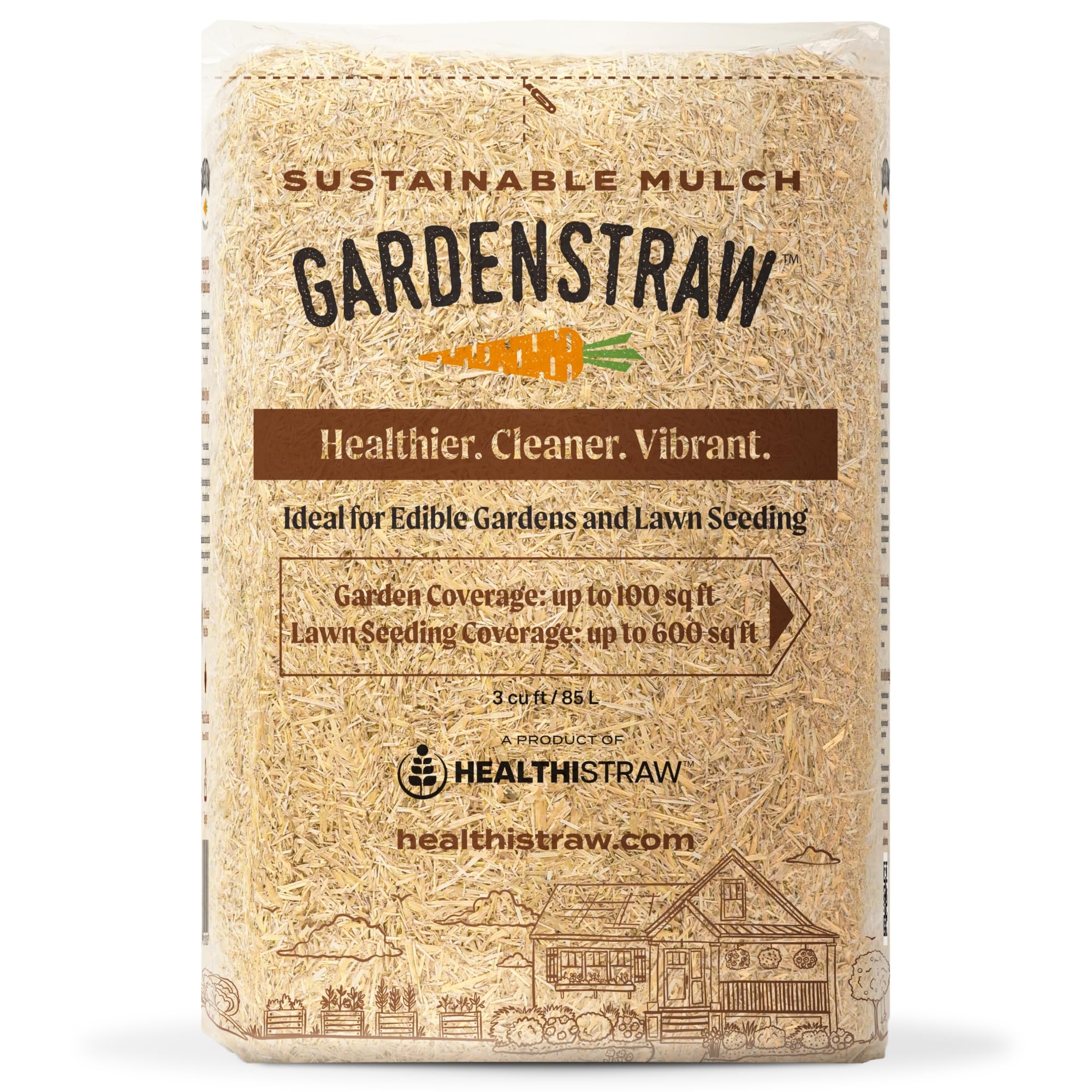
A water-conserving wheat straw that keeps vegetable beds cool and cuts your watering in half.
For vegetable gardens and flower beds where conserving water matters most, this all-natural wheat straw is a standout. The specs claim it cuts watering needs by up to 50%., and the 3-cu-ft compressed bale covers up to 100 sq ft at a 2-3 inch layer. It’s sustainably sourced, 100% non-GMO, and naturally filtered to remove dust, dirt, and as many seeds as possible for a cleaner, purer mulch.
Gardeners say it stays put after one watering and resists wind and rain without any chemical binders, because the cut fibers interlock when wet. One bag covered two 30-sq-ft beds plus 30 pots, which shows off the expansive coverage. For tomato and pepper beds, it keeps soil moist for long periods and gives the whole plot a clean, tidy look. As a bonus, it’s great for chicken coops too, according to some owners.
The main thing to watch is seed content—feedback is genuinely mixed, with some finding it nearly seedless while others report grass sprouting in every bed. If you’re meticulous about weeds, check a handful before laying the whole bale. It breaks down quickly and adds carbon to compost, but that also means refreshing it each season.
Why Gardeners Love It
- Cuts watering needs by up to 50%.
- Stays put in wind and rain, no binders
- Covers up to 100 sq ft per bale
Watch Out For
- Seed content varies; some bales sprout grass
- Breaks down fast, needs yearly refresh
Ideal for: vegetable and flower growers who want serious water savings and a clean look.
Not for: gardeners who can’t tolerate any stray grass sprouts in their beds.
8. Hull Farm Cocoa Bean Shell Mulch

A chocolate-scented shell mulch that adds instant class to front-yard beds and container plantings.
Few mulches get as much “wow” as this one simply for the smell. The cocoa shell mulch makes the front porch or entry beds smell like chocolate for weeks, and owners describe the deep brown look as adding class to the front yard. It’s a favorite for container plants in hot climates, where the shells hold moisture without being heavy or messy.
It carries an approximate fertilizer value of 2.5-1-3 and won’t burn vegetation, so it feeds the soil gently as it breaks down. Said buyers, the shells are easy to spread, splinter-free, and prettier than wood mulch, enriching clay soil over time. For houseplants, it’s compact and non-messy, working well in pots where you want a tidy top layer.
The honest downsides are the cost and the upkeep. Owners are direct that it’s pricey—often more than three times what you’d pay locally—and it’s not cost-effective for large outdoor areas. The scent fades after a few weeks, and some bags arrive with mold growth if they were stored damp. You’re paying for the experience as much as the mulching.
For the aesthetic: you get a strong, pleasant scent and a deep, dark color that makes your front beds and pots look polished and inviting.
Budget reality: the price per bag is steep, so reserve it for small, visible areas rather than whole lawns.
9. Blue Mountain Hay Organic Garden Straw
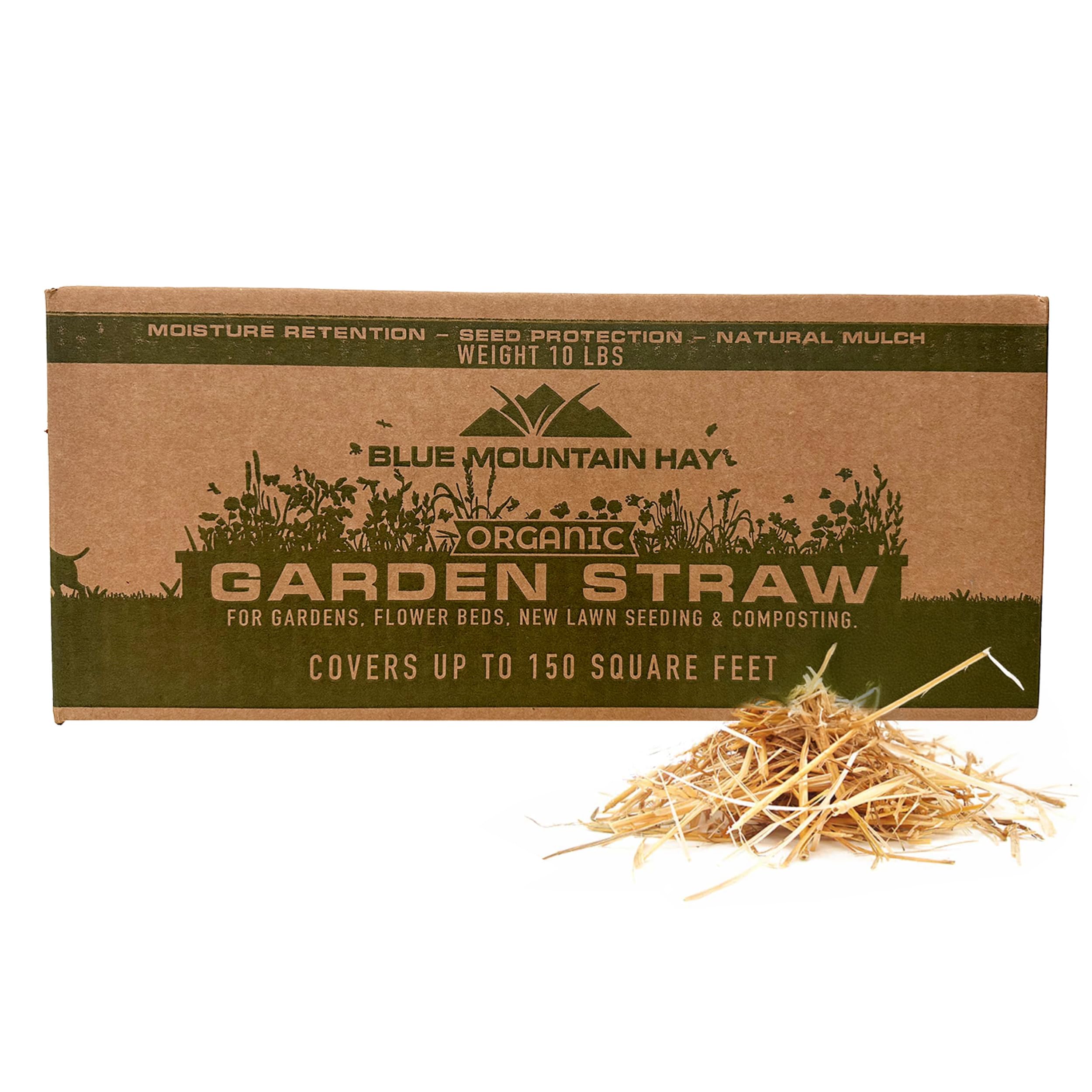
A clean, low-dust straw box that spreads easily over beds, seeds, and compost layers.
This organic garden straw is compressed for easy handling and storage, then expands when opened to spread evenly over raised beds, vegetable gardens, flower beds, and even cat-grass kits. Gardeners like that it’s clean, soft, and pure straw with no dirt or bugs, making it pleasant to work with. One box lightly covers a 200-sq-ft garden, which makes it a practical budget option for covering ground.
It helps retain moisture, regulates soil temperature, and protects grass seed during new lawn seeding while improving soil structure. The straw is dried naturally and minimally processed, which keeps it clean and easy to spread. For potted plants, onions, garlic, and potato layering, a single box was more than enough for several gardeners.
The catch, and it’s a real one, is seed content. Some shoppers say grass sprouts, which actually confirms it’s real straw rather than hay—the annual grain seeds are weak and easy to pull. But one buyer had a genuinely bad experience with seeds choking a corn crop, so if your soil is precious, inspect a handful first. The value for money also draws mixed reviews, with some finding it excellent and others not worth the price.
Good for: budget-friendly cover on beds and seed starting where easy spreading matters.
Proceed with caution: seed content varies, so check the box before spreading it over a critical crop.
Understanding the Specs
Expanded Volume
Compressed bricks list a volume they reach after you add water—like 65 quarts or 2 cubic feet. That’s the real coverage you’re paying for. Loose bags show their volume directly, so compare the final expanded size, not the size of the package, when deciding how many you’ll need for your beds.
Moisture Retention
This number tells you how much water the mulch holds against evaporation. Coconut husk chips can hold up to 3 times more water than regular bark, while Straw can reduce watering needs by up to 50%.. Higher retention means the soil stays damp longer, which means fewer trips with the hose and less plant stress in summer heat.
FAQ
How many inches of mulch should I put down in a flower bed?
Is rubber mulch safe to use around my flower beds?
Will cocoa bean mulch hurt my dog?
How do I expand a compressed coconut husk brick?
Which mulch holds moisture the best for flower beds?
Why does my straw mulch have grass growing out of it?
How often do I need to replace organic mulch?
What’s the difference between straw mulch and hay?
Can I use indoor plant mulch outside in my flower beds?
Will mulch keep weeds out of my flower bed completely?
Final Thoughts: The Verdict
Across the board, the bagged mulch for flower beds winner is the Gro-Med Coco Husk Chips because its 65-quart expansion and 3X water retention deliver the most coverage for the money. If you want certified organic material that expands dramatically, grab the Back to the Roots brick. And for a gardener with pets who wants a fragrance showpiece, the Garden Elements Cocoa Shell is the one to reach for—just steer clear if you have dogs.
How We Picked
We do not accept paid placement. Every pick is matched to a real buyer and a real use-case; we do not hands-on test units.
Sources & Methodology
Specifications: manufacturer listings and product documentation. Review insights: verified customer reviews, as of August 2026. Pricing: not shown on this page (it changes often); check the current price via the retailer link.
As an Amazon Associate, Gadgets Feed earns from qualifying purchases. This does not affect which products we feature.